

In 1960 cork came off living trees, stripped by hand with a curved axe by men who had to cut through the bark without wounding the tissue underneath.
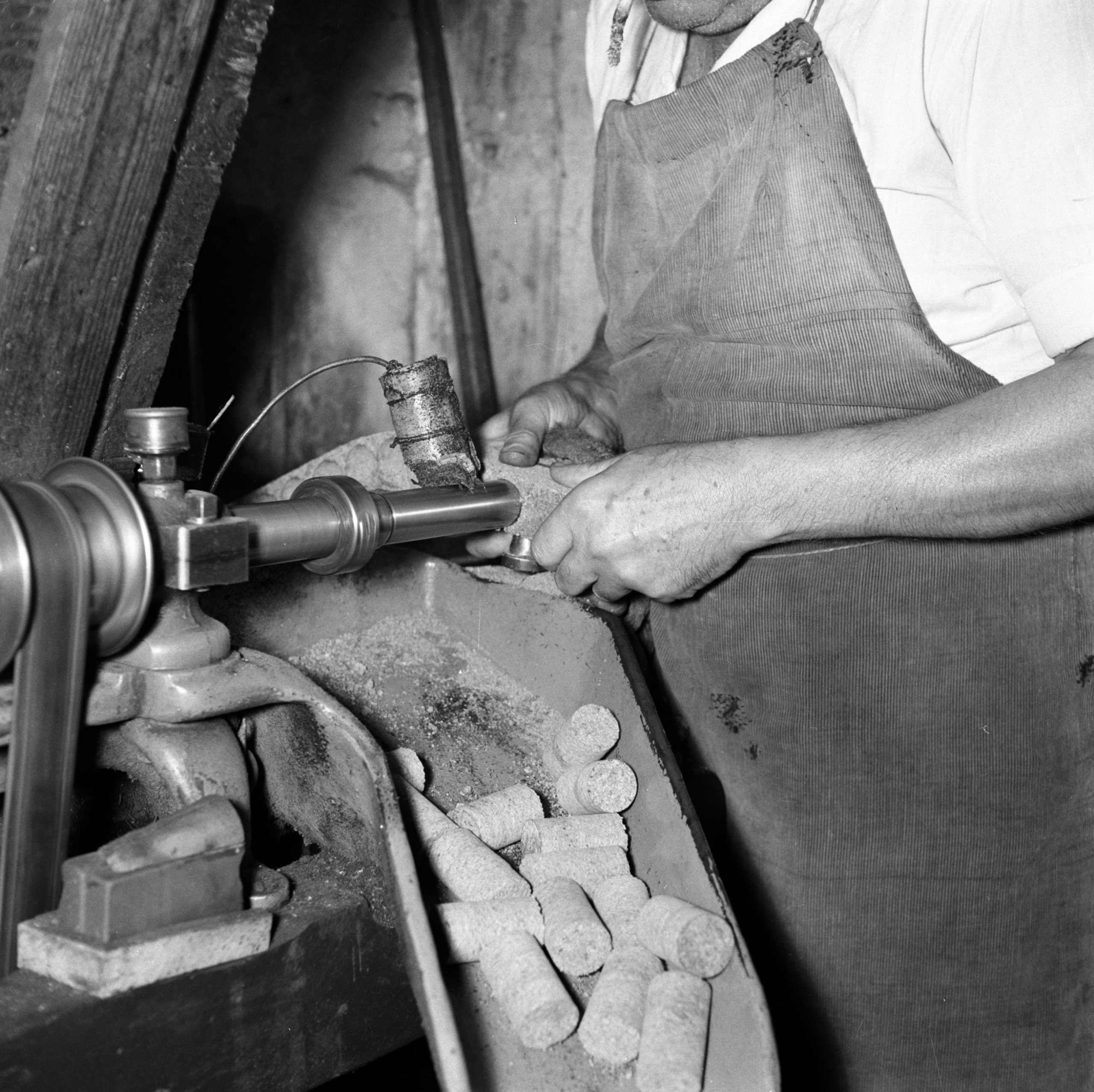
The slabs were then stacked outdoors for months to season, boiled to flatten them and expand the cells, and punched into cylinders by a worker pushing the strip against a rotating hollow cutter and placing each cut to avoid the flaws in a natural material. The corks were then graded by eye into a long ladder of qualities with very different prices.
Here are twelve things that were normal in a cork works in 1960, and what became of each one.
1. The Bark Was Stripped Off Living Trees and the Tree Was Not Harmed
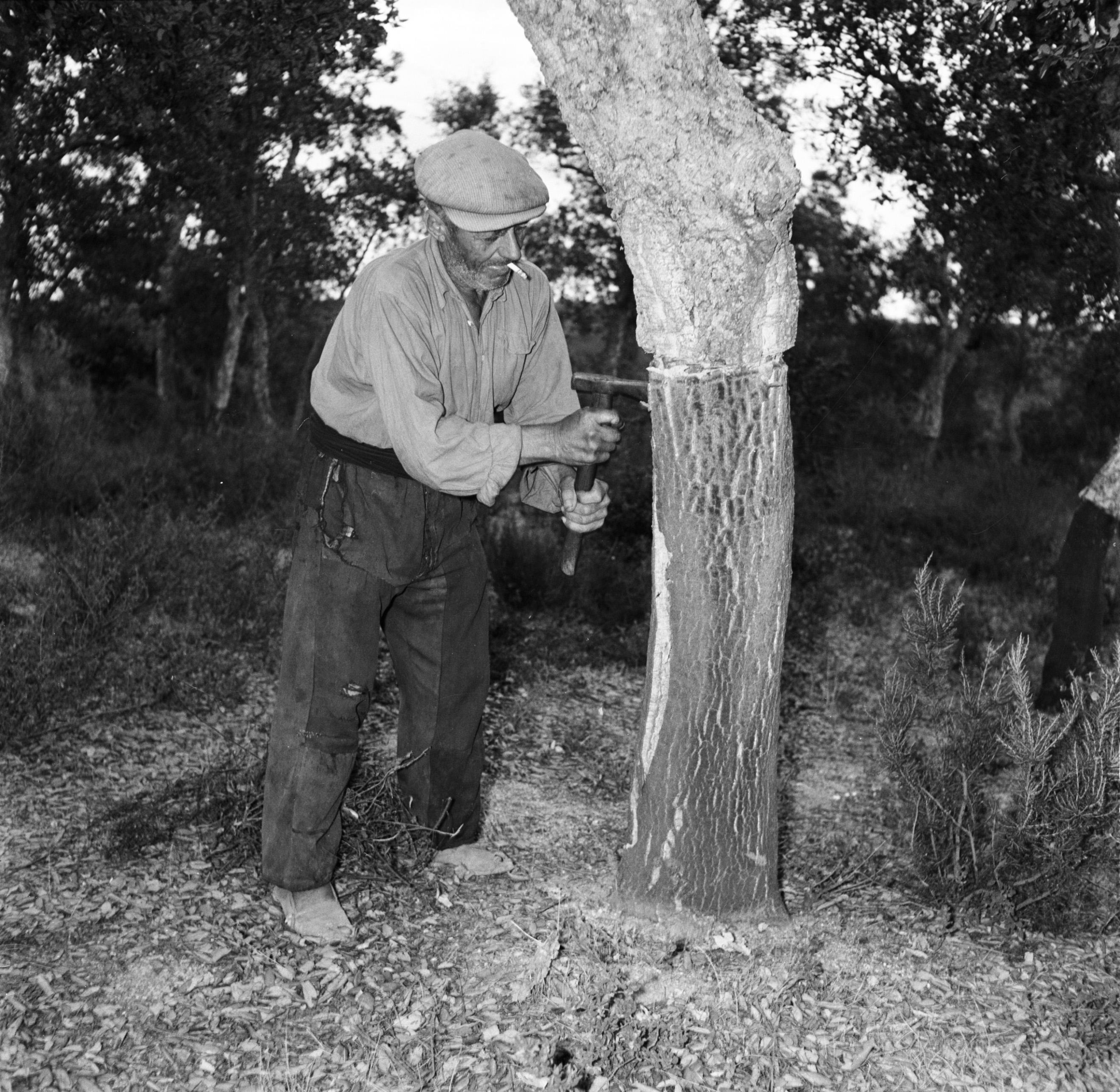
Cork is the outer bark of a particular oak, and it was removed from standing living trees by hand with a curved axe, in large curved slabs, by strippers who had to cut through the outer layer without wounding the living tissue beneath.
Still harvested exactly this way, by hand, by skilled strippers, because no machine can judge the depth. It is one of the very few commercial crops taken from a living tree without felling it, and the tree regenerates its bark and is stripped again.
The interval is the thing that makes this industry unlike any other in this series. A cork oak is left roughly nine years between strippings, and takes about twenty-five years before its first harvest and longer before the bark is good enough for bottle corks – so a works in 1960 was processing bark from trees planted by people long dead, on a cycle no commercial pressure could shorten.
Like our content? Follow us for more.
2. The Slabs Were Stacked Outdoors to Season for Months
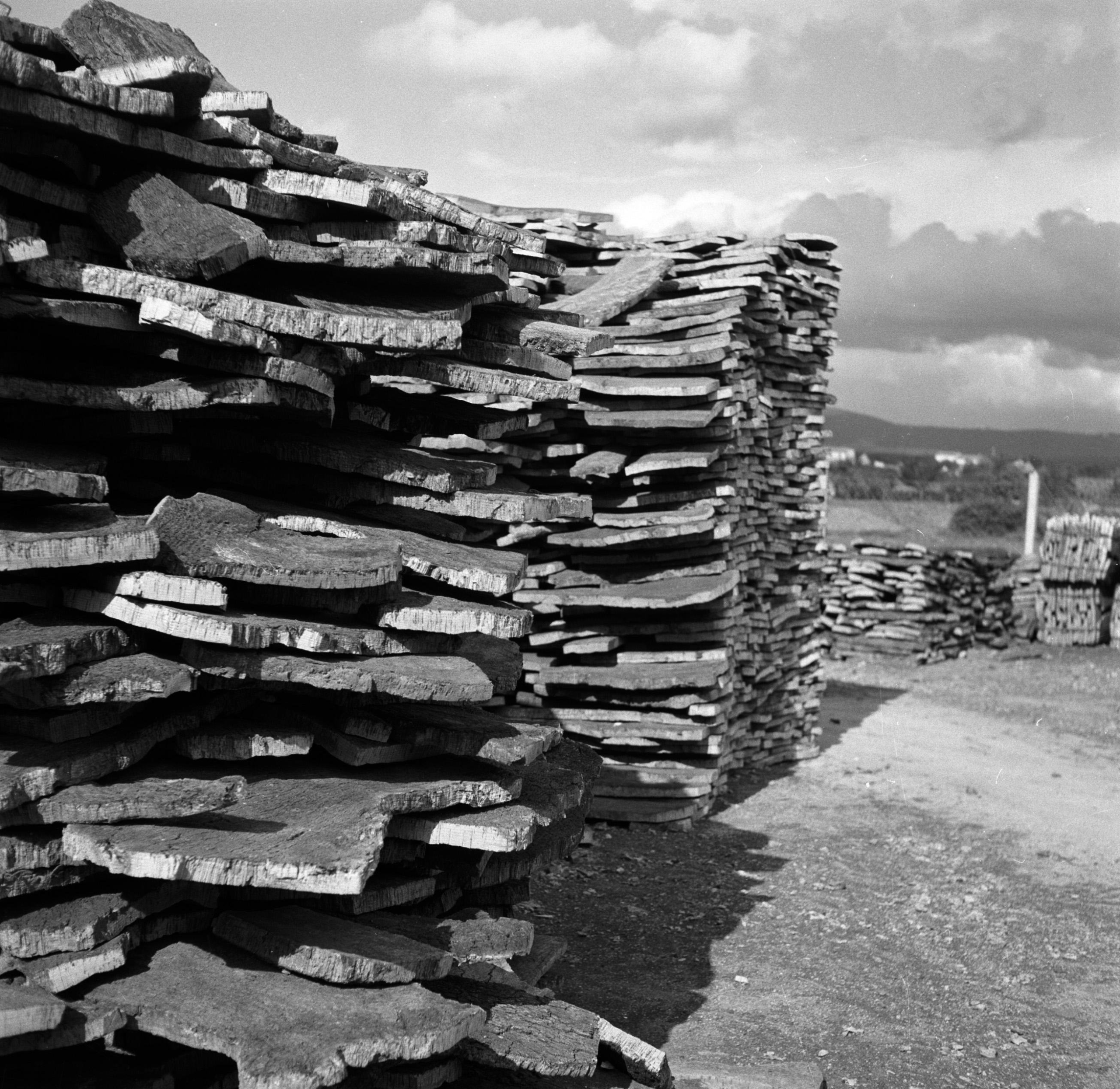
Stripped bark was stacked in the open in regular piles on clean ground and left for a period of months, exposed to weather, before any processing began.
Still seasoned, now on concrete standings under controlled conditions with the duration specified. Seasoning flattens the natural curve of the slab, allows the moisture content to even out, and lets compounds in the raw bark break down or wash out.
Skipping or shortening it was the classic false economy. Bark processed too soon produced corks that were harder, more brittle, more likely to crumble and more likely to carry a taint into the wine – so a yard full of stacked bark doing nothing was not idle stock but part of the process.
3. The Slabs Were Boiled and That Changed the Material Completely
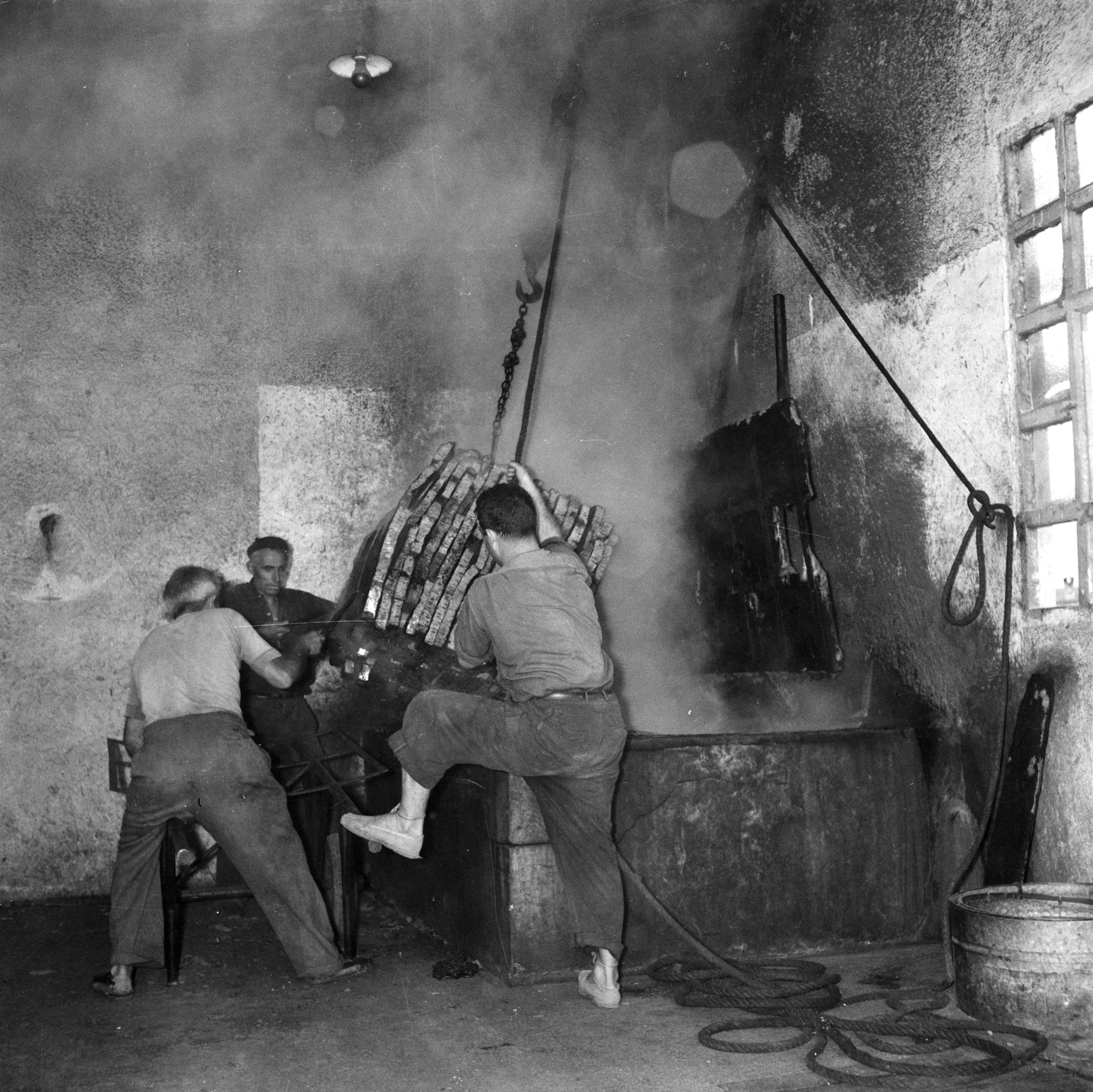
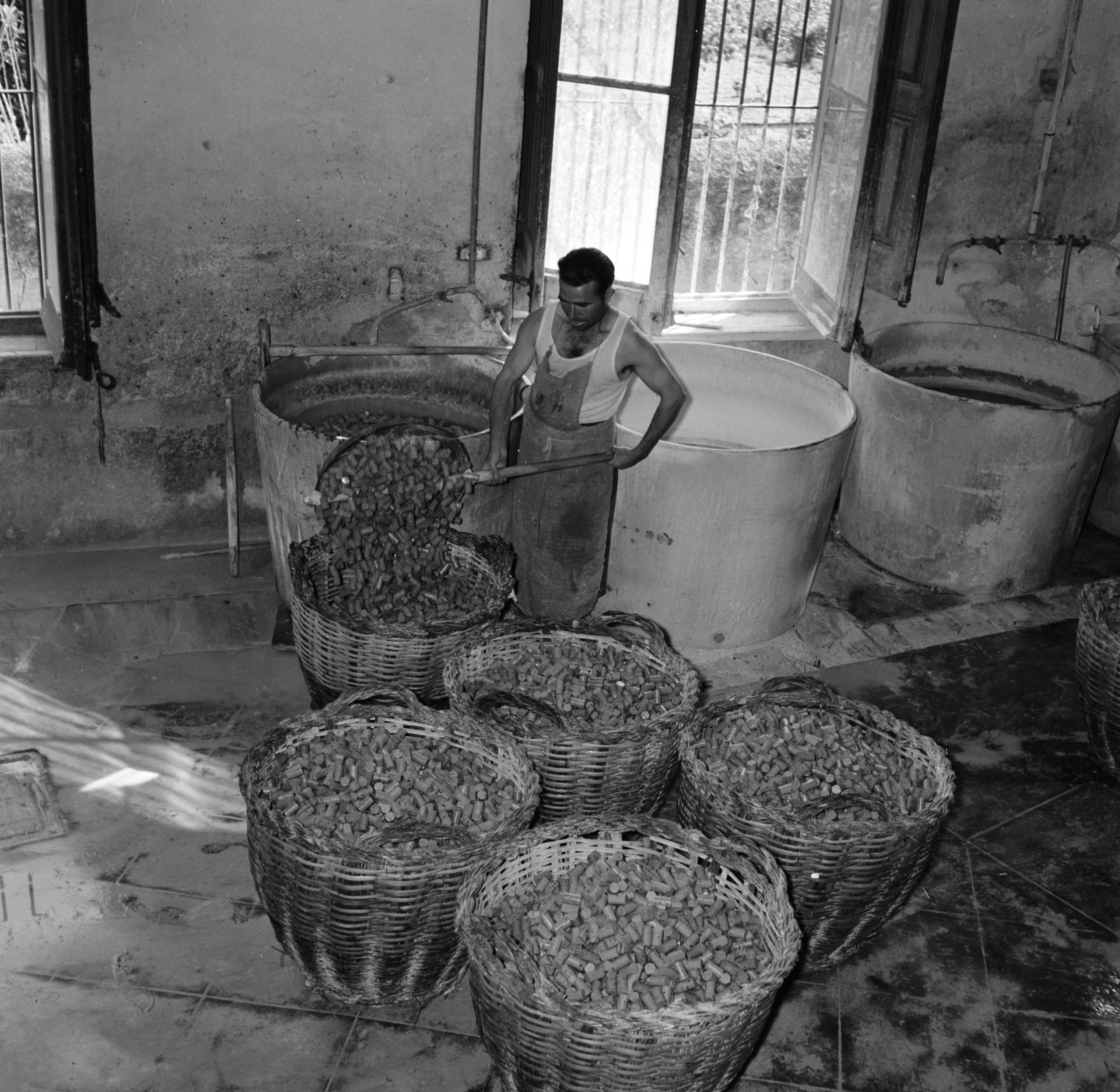
Seasoned slabs were boiled in water for a controlled period, which cleaned them, extracted soluble compounds, softened the cork, and – the important part – caused the cellular structure to expand so the slab flattened and increased in volume.
Still boiled, in filtered and regularly changed water, with the chemistry monitored. Boiling is the single most important operation in the whole process: it makes the material workable, flattens the curve enough to cut from, and improves the elasticity that the cork’s entire function depends on.
The water itself turned out to matter enormously. Reusing boiling water concentrated extracted compounds, and that practice is now understood to have been a route by which taint-causing contamination spread through a batch – which is why modern operations filter and change the water and treat it as a controlled input rather than as a utility.
4. Bottle Corks Were Punched Out of the Slab by Hand
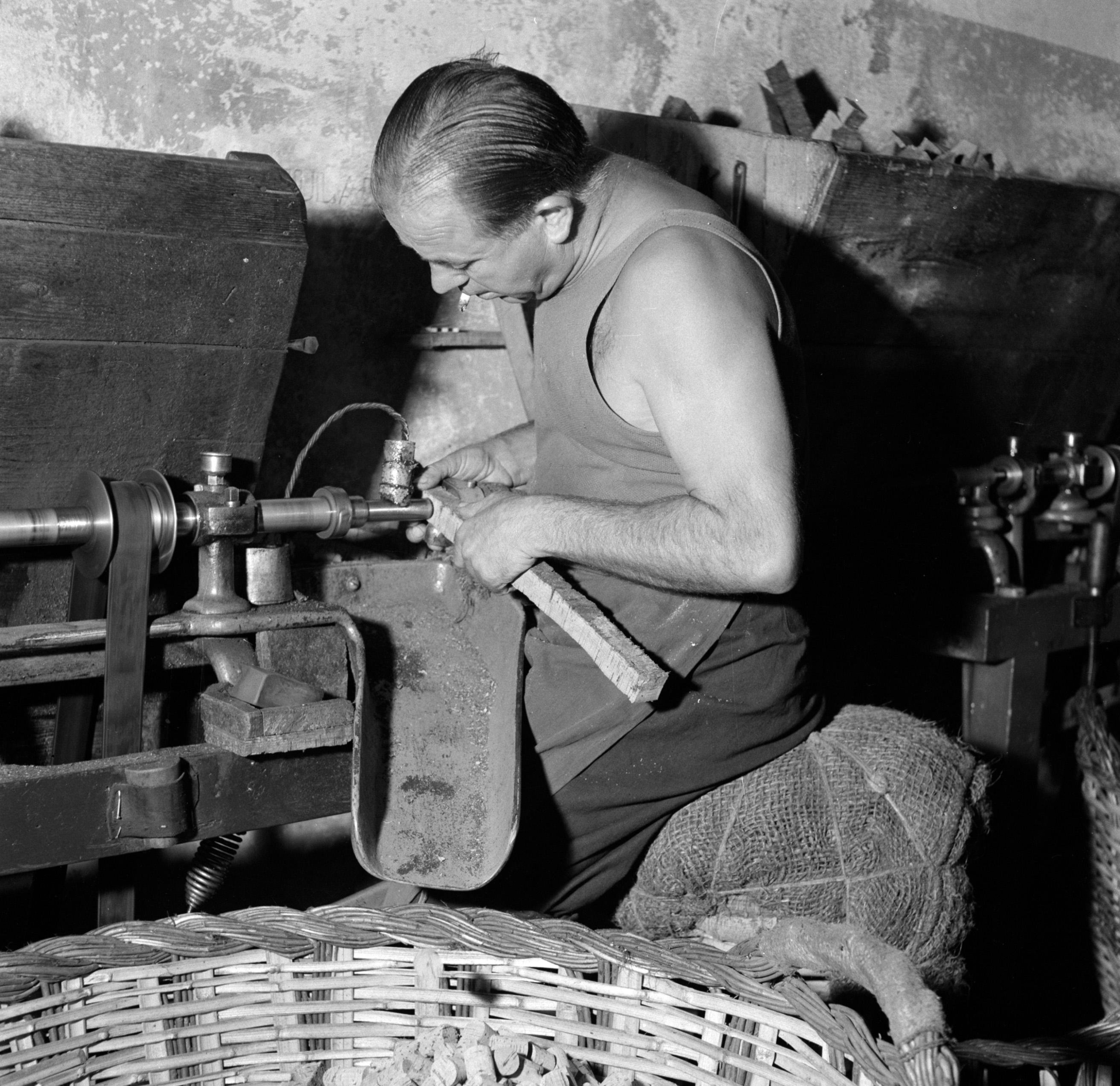
A worker held a strip of boiled cork against a rotating hollow cutting tube and pushed it through, punching out a cylinder, then repositioned the strip by a fraction and punched again, working around the flaws in the material.
Automated punching with optical scanning that places the cut to avoid defects. The skill was entirely in placement: natural cork is full of voids, lenticels and hard inclusions, and the punch operator was deciding, dozens of times a minute, where in an irregular natural material a flawless cylinder could be found.
The yield tells you how demanding that is. Only a modest proportion of a good slab becomes bottle corks at all, and the operator’s judgement determined how much – so a skilled puncher was worth a great deal more than an unskilled one, and the offcuts went into everything else the works made.
5. The Corks Were Graded by Eye Into a Long Ladder of Qualities
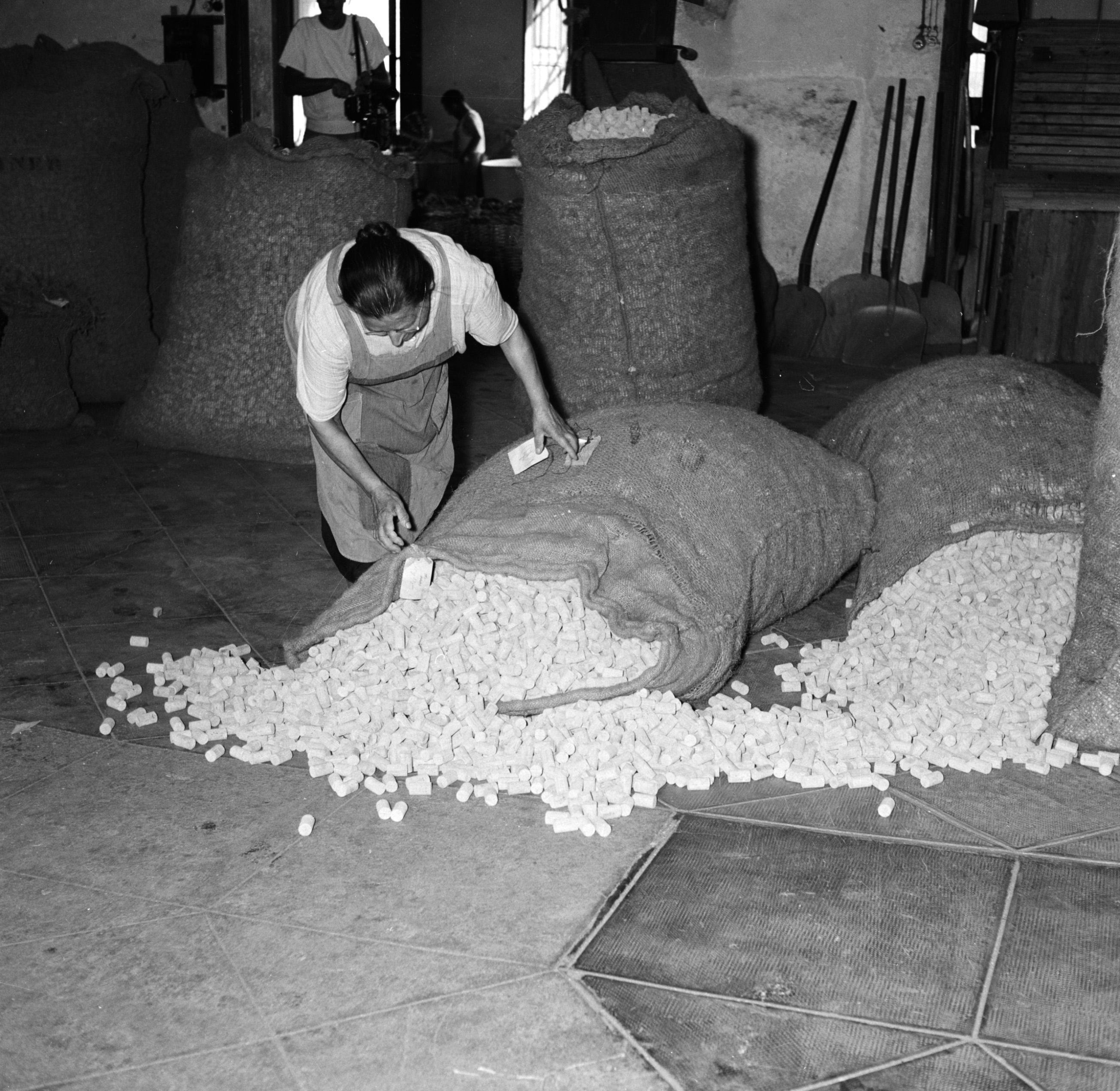
Punched corks were sorted by hand by graders who assessed each one for porosity, the number and size of visible voids, uniformity and shape, and assigned it to one of a long series of grades with substantially different prices.
Optical grading by machine, with hand grading retained at the top. Grading was pure judgement against remembered standards, applied at speed, and two graders could disagree – which they did, continually, because real money depended on it.
The grades existed because the end uses were so different. A cork destined for a bottle intended to be laid down for twenty years has to be nearly perfect; one for a wine to be drunk within the year does not; and the lower grades went to spirits, to agglomerated products or to the non-bottle side of the business entirely.
6. Everything That Was Not a Bottle Cork Became Something Else
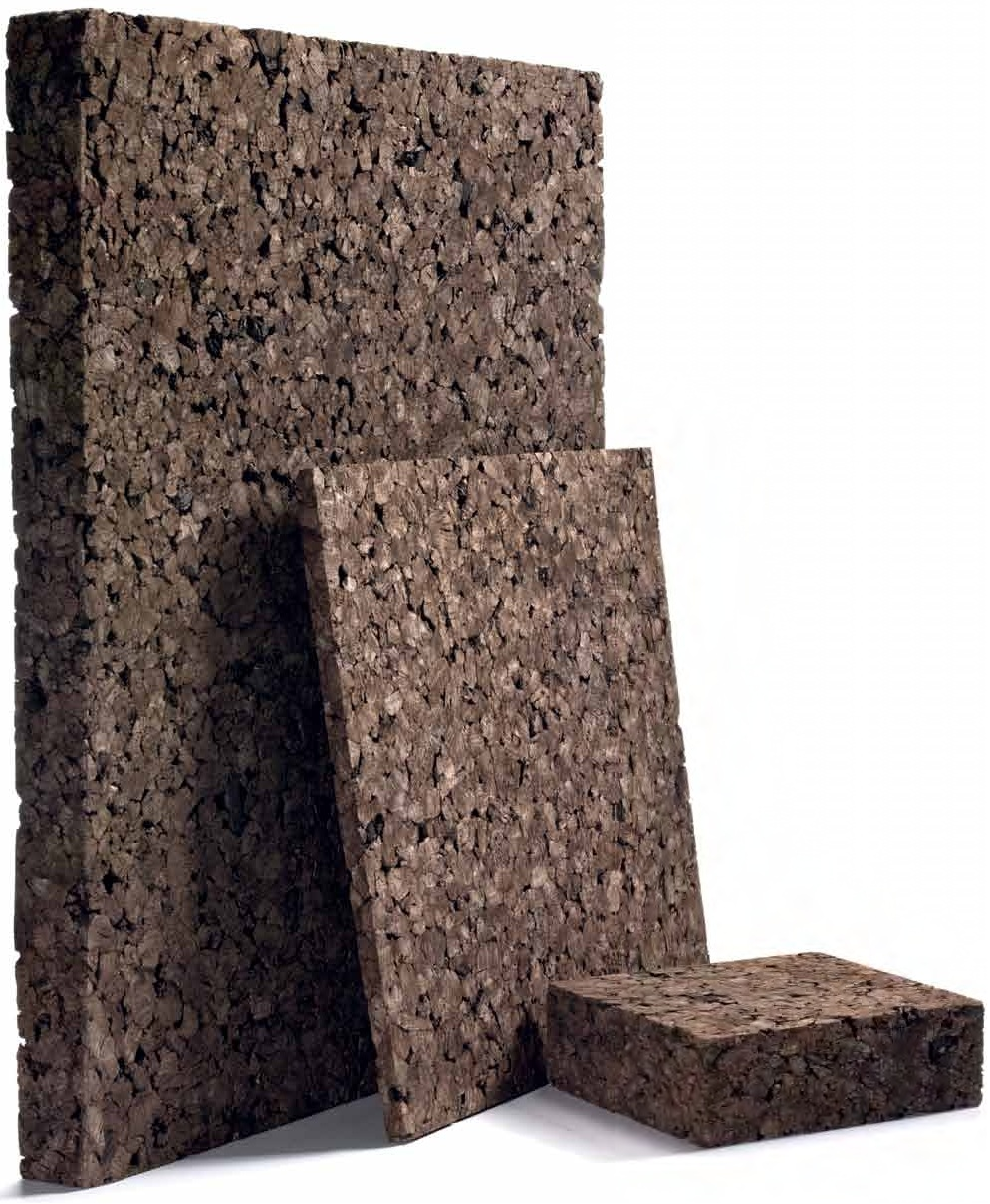
The offcuts, the punched-out waste, the inferior slabs and the bark too poor for corks were ground up and used for insulation board, flooring, gaskets, washers, bungs, floats, cork tiles, pinboard, shuttlecock bases, cricket ball cores, polishing blocks and composition sheet.
All still made, with the composition side now the larger part of the industry by volume. The non-bottle business was never a sideline: it was what made the economics work, because the proportion of raw bark that becomes a bottle cork is small.
The insulation use is worth singling out because it was substantial. Cork is an excellent thermal insulator, and granulated and compressed cork board was a standard insulation material for cold stores, refrigeration and building work before synthetic foams existed – which means a great deal of a works’ output went into walls rather than into bottles.
7. Agglomerated Cork Was Made by Baking Granules Together
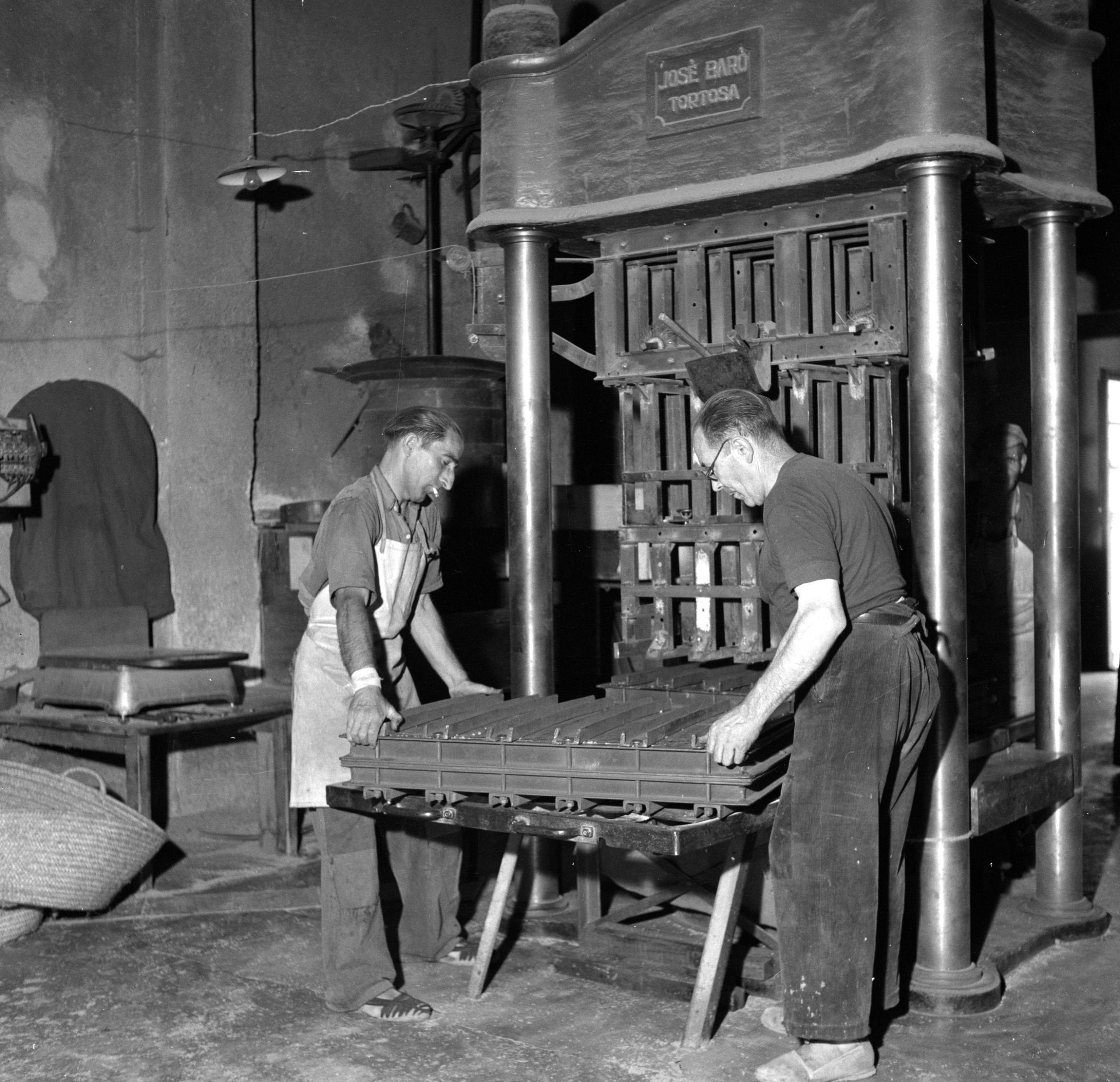
Ground cork granules were pressed into moulds and heated, and at the right temperature the cork’s own resins bound the granules together into a solid mass with no added adhesive at all.
Still made this way for some products, with adhesives used for others. Self-binding was discovered rather than designed and it remains slightly remarkable: a waste material that will bond to itself under heat and pressure into a usable solid, with nothing added.
It is also the foundation of the modern cork closure business. Most wine closed with cork today uses an agglomerated or technical cork rather than a single natural punched cylinder, which means the waste stream of 1960 became the mainstream product – and the natural one-piece cork retreated to the top of the market.
8. The Taper and the Compression Were Calculated, Not Guessed
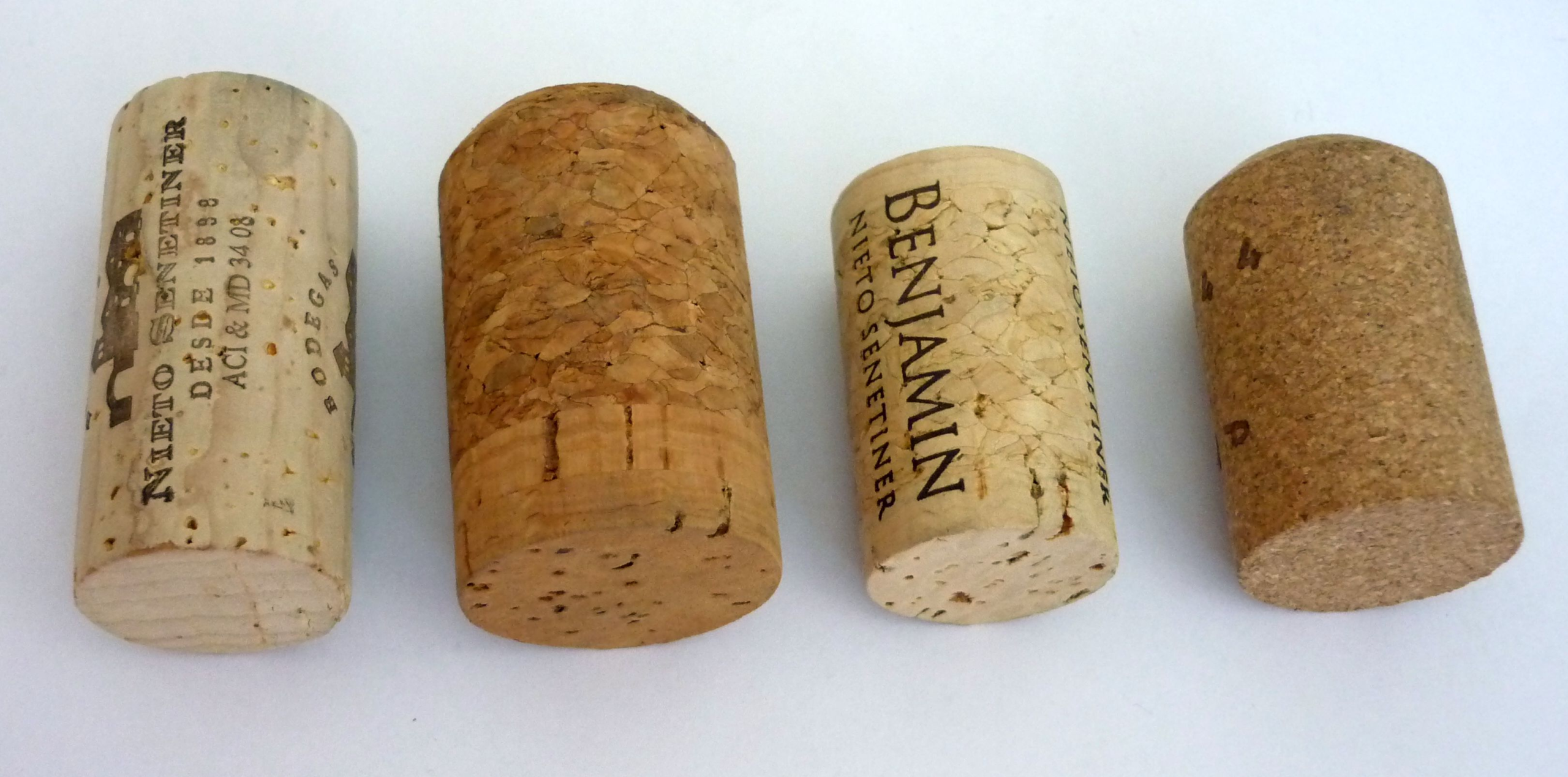
A bottle cork is punched slightly larger than the bottle neck and is compressed as it is driven in, so the seal is made by the cork’s own attempt to return to its original size pressing against the glass.
Unchanged, with compression ratios specified and matched to the neck. Cork works because its cells are closed, gas-filled and elastic: it can be squeezed to a fraction of its diameter and will push back for decades, which is a combination of properties almost no other material has.
The consequence is that cork diameter, neck bore and compression have to be designed together. Too little compression and the bottle leaks or oxidises; too much and the cork is damaged, the cells are crushed and it loses the elasticity that makes it work at all – which is why corks and bottles are specified as a system rather than separately.
9. The Corks Were Washed, Sorted and Branded Before Shipping
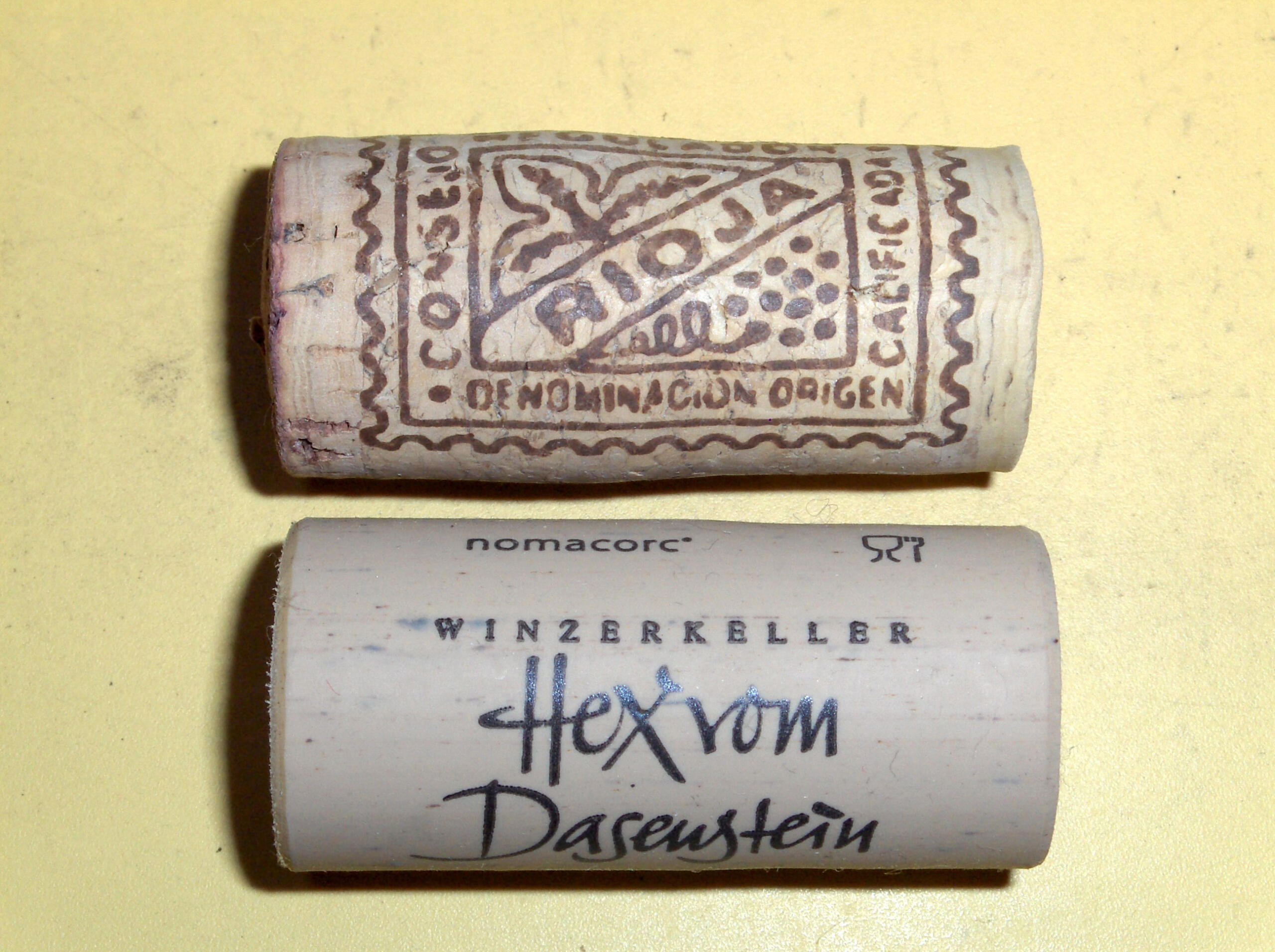
Finished corks were washed, dried to a specified moisture content, sometimes surface treated with paraffin or silicone to ease insertion and extraction, branded with the producer’s name by hot iron or ink, and packed.
The same operations with controlled chemistry and moisture specification. Moisture content is critical in both directions: too dry and the cork is brittle and will crumble on extraction, too wet and it is vulnerable to microbial growth in storage.
Washing is also where the industry’s worst problem was partly created. Chlorine-based washing was used for a long period to clean and lighten corks, and that practice is now understood to have contributed to the formation of the compound responsible for cork taint – so a step intended to improve hygiene was making the central defect worse.
10. The Whole Industry Had One Defect and It Took Decades to Identify
Some proportion of corked bottles developed a musty, damp-cardboard smell that ruined the wine, which the trade knew about, could not predict, could not test for and did not understand.
The principal cause is now identified as a specific chloroanisole compound produced by microbial action on chlorinated precursors, and it is controlled by eliminating chlorine from processing, filtering and changing boiling water, improved storage hygiene and batch screening – with individual cork screening available at the top of the market.
The scale of the problem is why this matters. A few per cent of bottles affected is a very large number of bottles across a global wine industry, with the loss falling on the producer and the drinker rather than on the cork maker, and the inability to identify the cause for so long is the single reason synthetic closures and screw caps got the opening they needed.
11. Then Screw Caps and Synthetics Took a Large Part of the Market
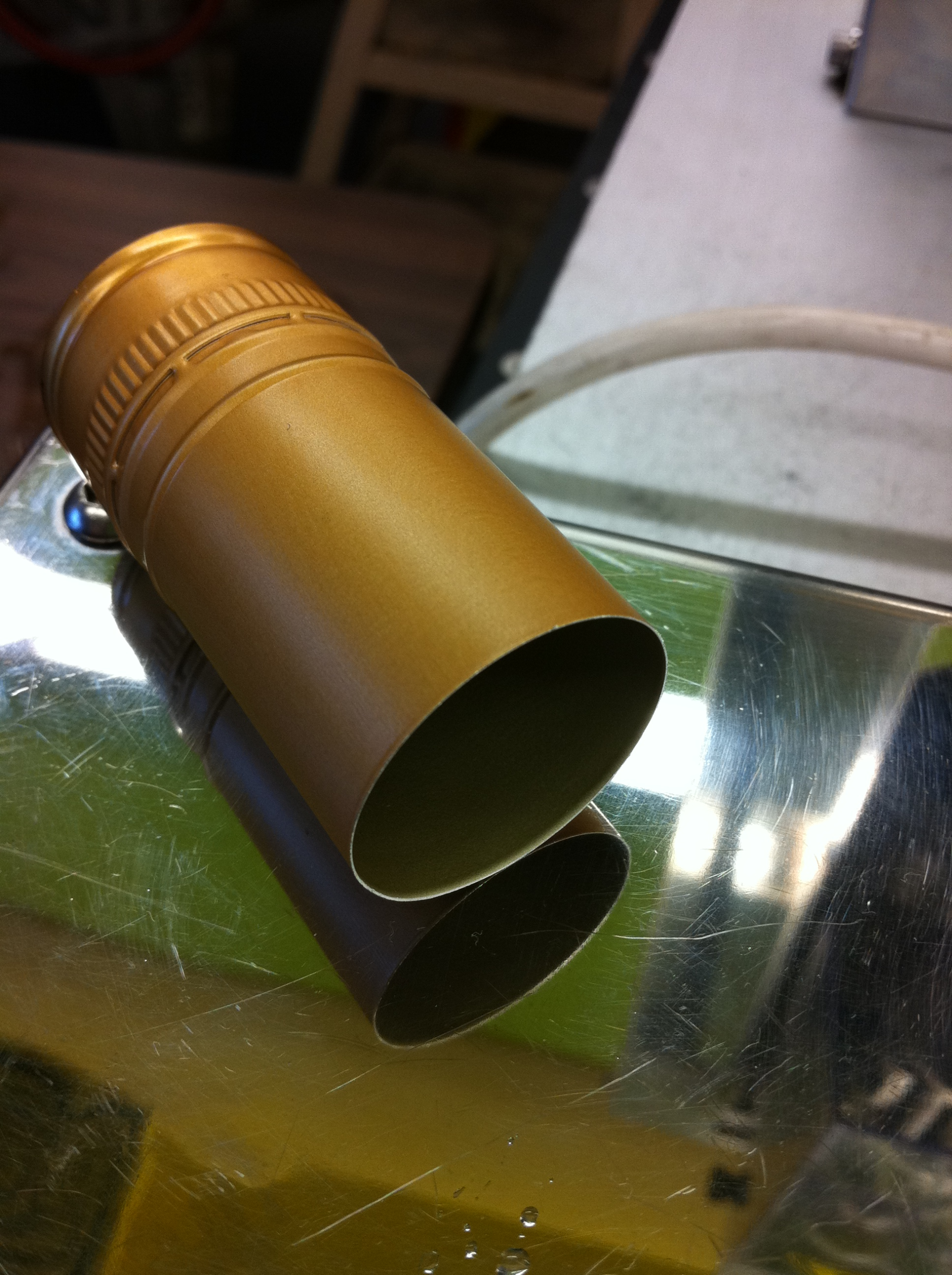
In 1960 natural cork was the closure for wine, with essentially no competition, and the industry’s position looked unassailable.
Screw caps and synthetic closures took a substantial share, led by producers who had simply had enough of taint, and in some markets they became the norm for wines intended for early drinking. Cork responded by attacking the taint problem directly and has recovered ground.
The argument has also turned out to be more interesting than a simple quality contest. Closures differ in how much oxygen they allow over time, and that affects how a wine develops, so for wines intended to age the choice is a technical decision about oxygen transmission rather than a matter of tradition – and for wines meant to be drunk young, the case for a screw cap is strong and is mostly accepted.
12. The Trees Are Still Being Stripped by Hand, on the Same Nine-Year Cycle

Harvesting in 1960 meant skilled men with curved axes removing bark from living trees by judgement, on a cycle measured in decades.
Harvesting today means skilled people with curved axes removing bark from living trees by judgement, on the same cycle. It has not been mechanised because no machine can judge the depth of cut on an irregular living trunk without wounding the tree, and the trees are too valuable to risk.
There is a conservation argument attached to this that is worth stating accurately. Cork oak landscapes support considerable biodiversity and are maintained because the bark has commercial value, so demand for cork is part of what keeps those woodlands standing rather than converted to other uses. That is a genuine point and it is also one the cork industry makes in its own commercial interest, which does not make it wrong but is worth knowing when you hear it.
The Industry Spent Decades Making Its Own Worst Problem
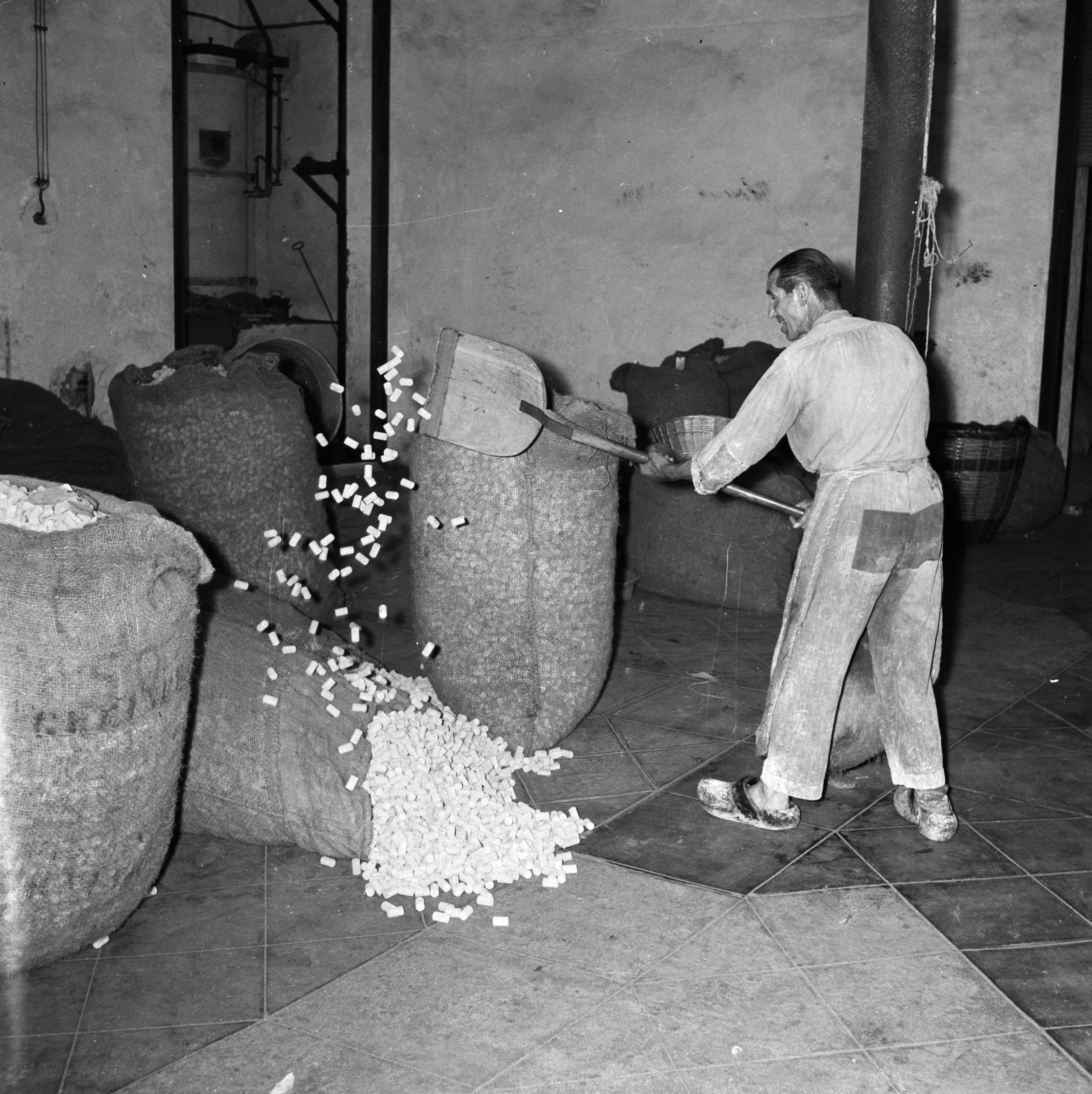
There is a sequence in this trade that is almost painful to lay out, and it is the reason cork nearly lost the wine business.
For as long as anybody could remember, a proportion of bottles came out musty – a smell of damp cardboard or wet basement that ruined the wine entirely. Everybody in the trade knew it happened. Nobody could predict which bottles, test for it in advance, or explain the cause. It was treated as an unavoidable feature of a natural product, the way a bad batch of fruit is unavoidable.
The cause, identified much later, is principally a chloroanisole compound formed by microbial action on chlorinated precursors. And the industry had been introducing those precursors itself.
Corks were washed in chlorine-based solutions, for decades, to clean and lighten them. Boiling water was reused rather than changed, which concentrated extracted compounds and spread contamination through batches. Storage conditions in some yards and warehouses allowed exactly the microbial activity involved. Each of those practices was adopted for a sensible reason – hygiene, economy, convenience – and together they were manufacturing the defect that was destroying the product’s reputation.
Meanwhile the cost of the defect fell on somebody else. A tainted cork costs the cork maker the price of a cork. It costs the winemaker a bottle of wine they spent years making, and the drinker the bottle they were looking forward to. That misalignment is probably why it went unsolved for so long: the people losing most had no way to act on it, and the people who could act were not the ones paying.
What broke the stalemate was competition. Screw caps and synthetic closures arrived, producers who had lost enough wine switched, and the cork industry – facing the loss of its central market – eliminated chlorine, controlled its water, cleaned up its storage and introduced screening. The taint rate fell substantially.
Which is a useful and slightly uncomfortable lesson. The problem was solvable the whole time. What was missing was not the science but a reason to go and find it.
If you have ever poured a bottle away because it smelled of damp cardboard, that was a chemical compound the industry was accidentally helping to make.
And the bark it came from was stripped off a living tree by somebody with an axe, about nine years after the last time.
Like our content? Follow us for more.
