
Most trouble with officialdom abroad is not hostility and not language as such: it is notation, name order, register and asking the wrong question. Here are fourteen things that decide how it goes.
1. The official version of any text is the one in the local language

Where an authority publishes a form, a notice or a set of rules in more than one language, the local-language version is almost always the one that governs, and translations are provided for convenience.
That is usually stated somewhere on the page in small print, and it matters when a translation is ambiguous or when an English version has not been updated.
So a discrepancy between versions is not an argument you will win, and the safe assumption is that the local text is the rule. For anything consequential, having the local-language text checked by somebody who reads it properly is worth more than reading three machine translations of it. For anything consequential, having the local-language text checked by somebody who reads it properly is worth more than reading three machine translations of it. That is a short piece of paid work for a translator or an hour of a local colleague’s time, and it is cheap against the cost of submitting the wrong thing and waiting for the next appointment.
Like our content? Follow us for more.
2. Machine translation is excellent for meaning and unreliable for procedure
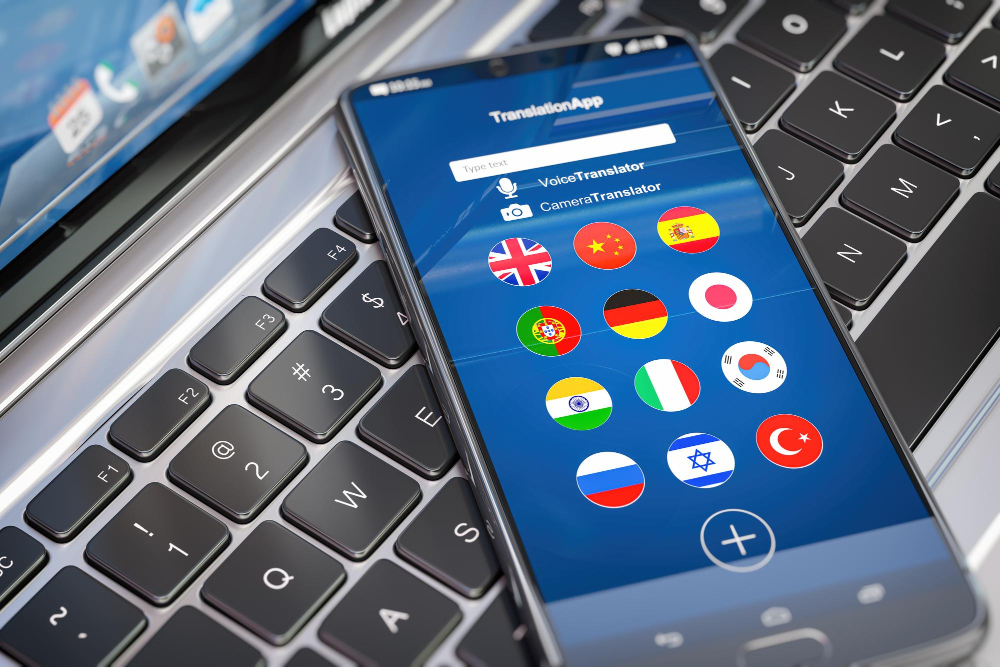
Translation applications are now very good at conveying what a sentence is about, which is enough for signs, menus, timetables and most conversation.
They are considerably less reliable on the exact words that carry legal or administrative weight: the difference between may and must, between a certified copy and a copy, between an application and a notification.
So they are the right tool for understanding a counter conversation and the wrong tool for deciding what a form requires. Using the application to get through the interaction, and a person to confirm anything that commits you to something, is the division that works.
3. Officials are frequently not permitted to advise, only to process
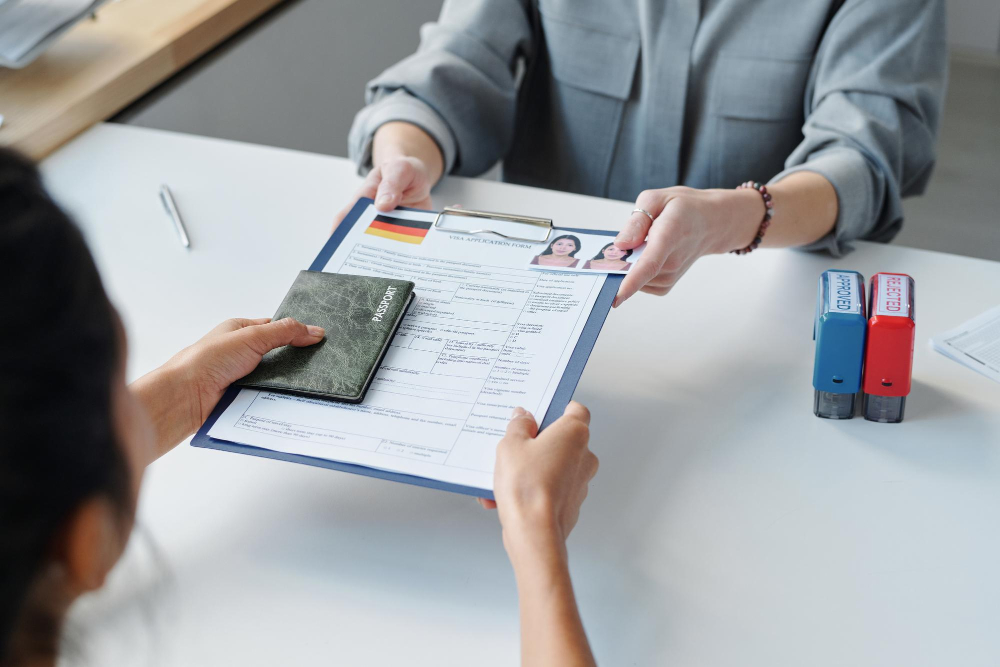
A counter clerk in most systems is authorised to accept, check and process, and is often explicitly not authorised to advise on what somebody should do or which route applies to their situation.
That produces the frustrating experience of being told a form is wrong without being told which form is right, which is a rule rather than unhelpfulness.
Where advice is needed, the route is usually a different channel: an information line, a published guide, an appointment with a caseworker, or a professional. Asking a clerk ‘what do I do now’ is therefore less effective than asking ‘which office or which document deals with this’, which is a question they can usually answer. Asking a clerk ‘what do I do now’ is therefore less effective than asking ‘which office or which document deals with this’, which is a question they can usually answer. It is also the question that gets written down, and a note of the office and the document name is something you can act on after you leave the building.
4. Who may interpret for you is sometimes regulated

In many administrative and almost all legal settings the authority will not accept a friend, a relative or a passer-by as interpreter, and requires an accredited interpreter instead.
That is a protection rather than an obstruction: it exists so that what is recorded is what was said, and so that nobody with an interest in the outcome is doing the translating.
In some proceedings an interpreter is provided at public expense, and in others it is at the individual’s cost and must be arranged in advance. Asking when an appointment is made whether an interpreter will be provided, or must be brought, prevents an appointment being wasted and rebooked weeks later.
5. Your name may be transliterated, and the version on the document governs

Where a name moves between scripts, it is transliterated according to a standard, and the result may not be the spelling you would choose or the one on another document.
The version in the machine-readable zone of a passport is usually the one that systems use, and a mismatch between that and a booking, a certificate or a local registration is a routine cause of refusal.
So the practical rule is to use the passport spelling everywhere, exactly, including any middle names or their absence. Where a document already carries a different transliteration, getting the discrepancy documented by the issuing authority is easier than arguing it at each counter. Where a document already carries a different transliteration, getting the discrepancy documented by the issuing authority is easier than arguing it at each counter. A single letter from the authority that issued both spellings, carried with the documents, settles the question wherever it comes up instead of each time.
6. Name order and the idea of a surname are not universal
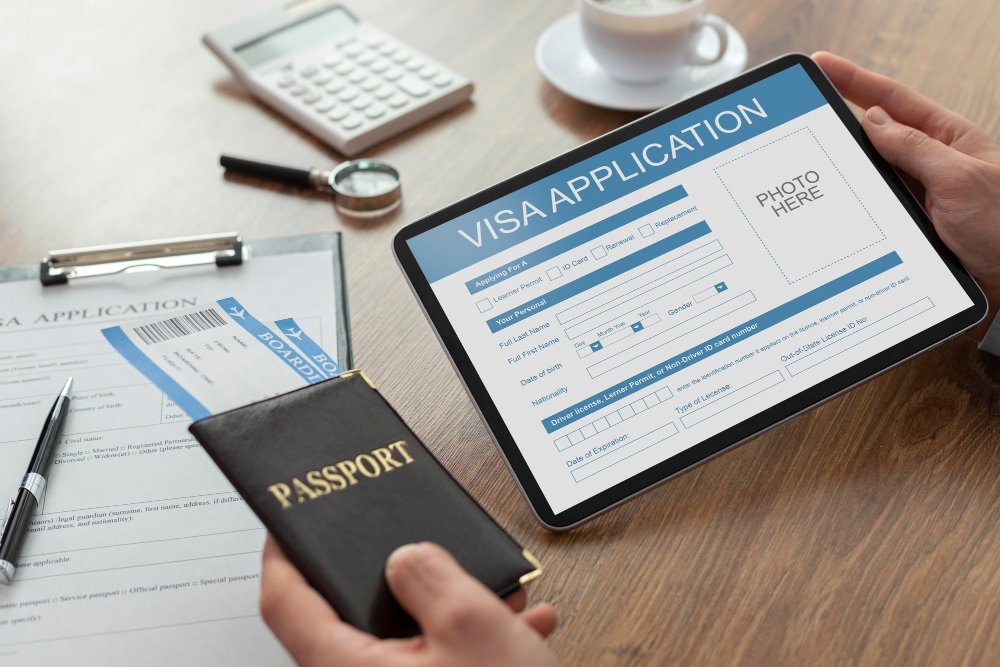
Forms designed in one country assume one structure — given name then family name — and a great many of the world’s naming conventions do not fit it: family name first, two family names, patronymics, names with no family name at all.
Systems handle this badly, and the result is a record in the wrong order, a boarding pass that does not match a passport, or a search that finds nothing.
The workable approach is to fill in the fields as the passport presents them — surname field from the passport’s surname line, given names from the given names line — and not to interpret. Where a form has a single name field, entering it exactly as the passport’s machine-readable line does, with the family name first, is the convention most systems expect.
7. Dates are written in at least three orders and the ambiguity is real

Day-month-year, month-day-year and year-month-day are all in common official use, and a date like 03/04 is genuinely ambiguous between two of them.
The unambiguous forms are the year-first numeric order and writing the month as a word, and official forms increasingly specify which they want.
For anything consequential — a booking, an appointment, an insurance date, a contract — the month as a word removes the problem entirely. It is also worth knowing that some countries use a different calendar alongside or instead of the common civil one for official purposes, in which case a document may carry two dates.
8. Numbers use the opposite separators in much of the world

In a large part of the world a comma is the decimal mark and a full stop or a space is the thousands separator, which reverses what many travellers expect, so 1.500 is one and a half thousand and 1,5 is one and a half.
This appears on price labels, on bills, on fuel pumps, on contracts and on official forms, and misreading it by a factor of a thousand is easy and common.
Printed and handwritten digits also differ: the one with a long upstroke, the seven with a bar, the comma used where a point is expected. When a figure matters, having it confirmed in words, or shown on a screen, removes the ambiguity in a way that staring at it does not. When a figure matters, having it confirmed in words, or shown on a screen, removes the ambiguity in a way that staring at it does not. Writing the figure down and showing it back is the same move in reverse, and it is a normal thing to do at a counter rather than a sign of confusion.
9. Addresses and telephone numbers have formats that systems insist on
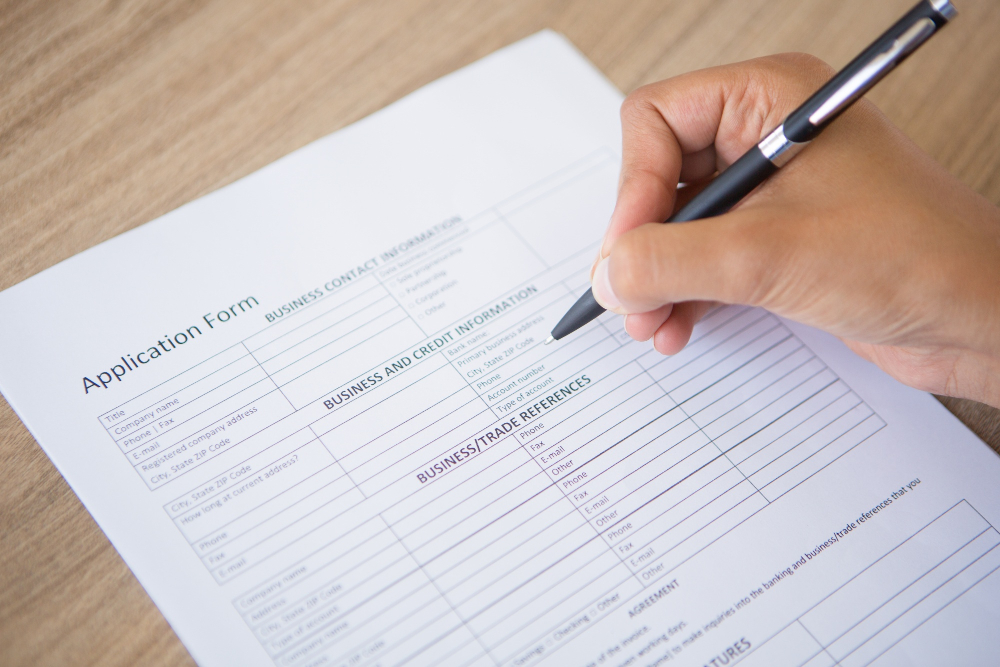
Address field order, the position of the postcode, the presence of a district or a building block, and whether a floor is written separately all vary, and online forms frequently validate against the local format.
Telephone numbers are the sharper problem: a local number given in national format will not work from abroad, and the international format with the country code is the only version that always does.
For anything that may need to reach you — a booking, a delivery, an appointment confirmation — a number in full international format avoids a whole class of failure. The same applies in reverse to a number given to you, which is why a number copied from a local sign may need a code added to be dialled from a foreign handset.
10. Ground floor, first floor and the numbering of buildings differ

In much of the world the floor at street level is the ground floor and the one above it is the first, while in others the street-level floor is the first, so the same written address points at two different places.
Building numbering also varies: odd and even on opposite sides, sequential around a block, numbering that restarts, and in some systems no street numbers at all with blocks and lots instead.
This is the most common reason a visitor cannot find an address that is correctly written. A map pin, shared by whoever is expecting you, resolves it instantly and is worth asking for in preference to any written address.
11. Formality in address is a real rule in many languages

A great many languages distinguish formal and informal forms of address, and using the wrong one with an official, a stranger or an older person is a genuine discourtesy rather than a charming error.
Most phrasebooks and applications default to a reasonable register, and the formal form is the safe one everywhere except among people who have invited otherwise. Titles matter too: in some countries a professional or academic title is used routinely in official correspondence and leaving it out reads as rudeness.
None of this requires fluency, and the few formal phrases needed at a counter are worth learning for any stay long enough to involve one.
12. Written requests work better than spoken ones across a language barrier

Where a matter is complicated, putting it in writing — translated, short, numbered, with the reference numbers and dates — is far more effective than attempting it at a counter, because the recipient can read it with their own tools and reply in their own time.
It also creates a record, which is what every subsequent step depends on if the matter does not resolve.
Many authorities have an online contact form or a formal written procedure, and using it is usually faster in the end than queueing. Keeping the original and the translation together, and referring to the authority’s own reference number, is what makes a written exchange work.
13. Silence and bluntness are not what they look like

Directness in official interaction varies enormously: a flat statement with no softening is ordinary politeness in some places and brusque in others, and the absence of pleasantries is often a matter of professional register rather than attitude.
Travellers routinely read an efficient official as hostile, and respond in a way that makes the interaction worse.
The reliable approach is to stay polite, stay brief, bring the documents and accept the answer, which works in every system. Where an answer seems wrong, the route is the published complaints or review procedure rather than the counter, and that procedure exists in almost every administration.
14. The question to ask is which document, not whether it is possible

Administrative systems are built around documents, and almost every refusal is really a statement that a particular document is missing or is not the right kind.
So the productive question at any counter, in any language, is which document is required and who issues it, which is specific, answerable and usually answered.
That question also survives translation far better than an explanation of your circumstances, which is where most cross-language administrative conversations fail. The summary: the local-language text governs, so have anything consequential checked by a person; use translation applications for understanding and not for deciding what a form requires; expect clerks to process rather than advise, and ask which document and which office; check whether an interpreter will be provided or must be brought, and expect accreditation to be required; use the passport spelling and the passport’s field order for your name everywhere; write months as words and watch the decimal comma; give telephone numbers in full international format and ask for a map pin rather than an address; use the formal register; and put anything complicated in writing with reference numbers.
Ask which document, not whether it is possible

Administrative systems run on documents, and nearly every refusal is a statement that a particular document is missing or is the wrong kind. That makes one question productive in any language: which document is required, and who issues it. It is specific, it is answerable by the person in front of you, and it survives translation in a way that an explanation of your circumstances does not. Everything else here is notation and register: use the passport’s spelling and field order for your name, write months as words, watch the decimal comma, give telephone numbers in international format, use the formal register, and put anything complicated in writing with the reference numbers in it.
Ask when the appointment is made whether an interpreter will be provided or must be brought. In many settings a friend or relative is not accepted and an accredited interpreter is required.
Like our content? Follow us for more.