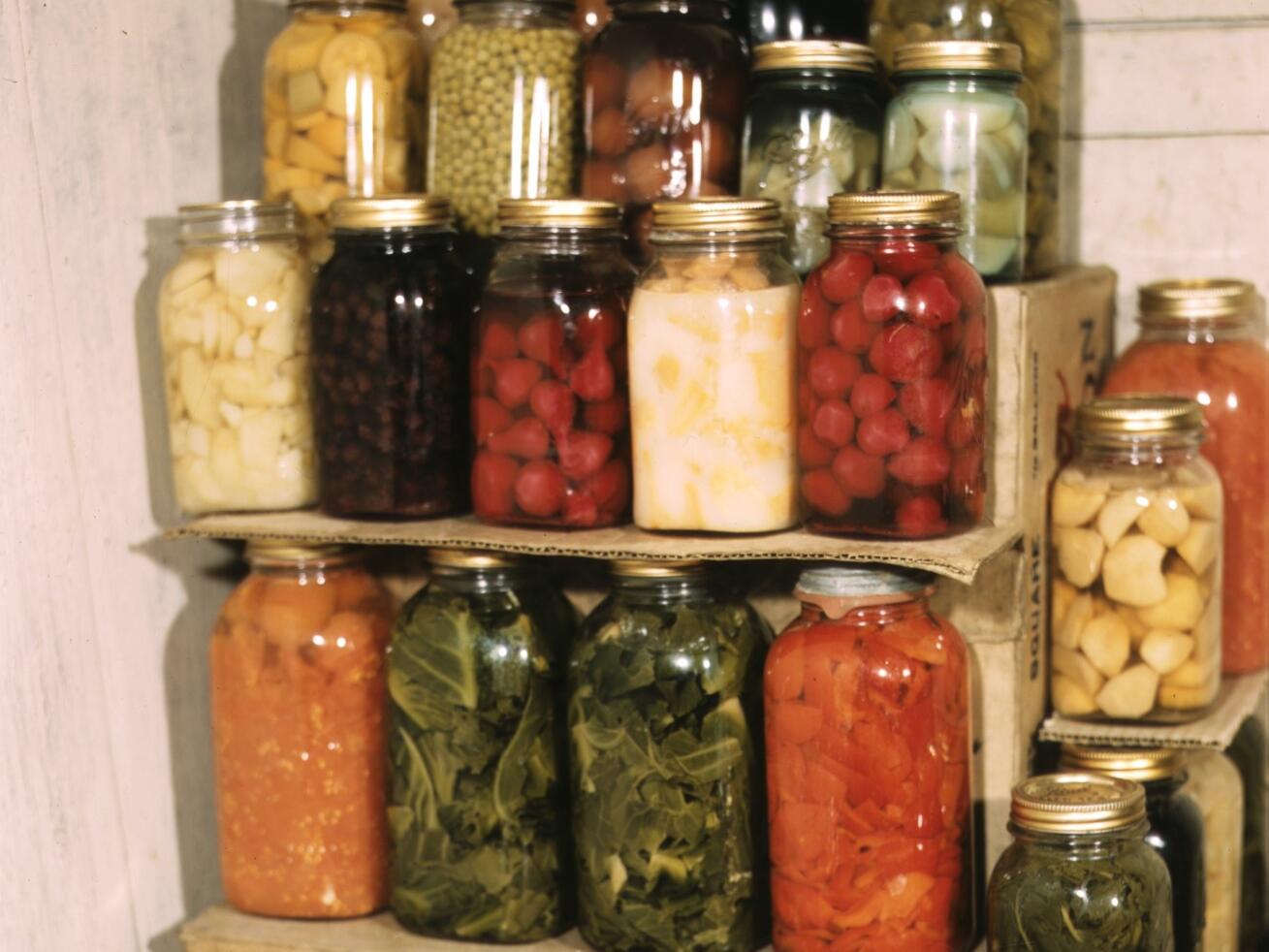
In 1974 canning season was not a plan. It was something that happened to a household when ninety pounds of tomatoes ripened at once and had to be dealt with inside a week.
The jars were counted before the season started, because they set the limit. The work fell in August, in a kitchen with no air conditioning, with a stove running all day. The result arrived as a series of small metallic pings as the lids pulled down. And the full shelf in the cellar was a readable measure of how secure the winter was going to be.
Here are fifteen things every household did during canning season, and what is left of each.
1. It Started Because of a Glut Nobody Could Control
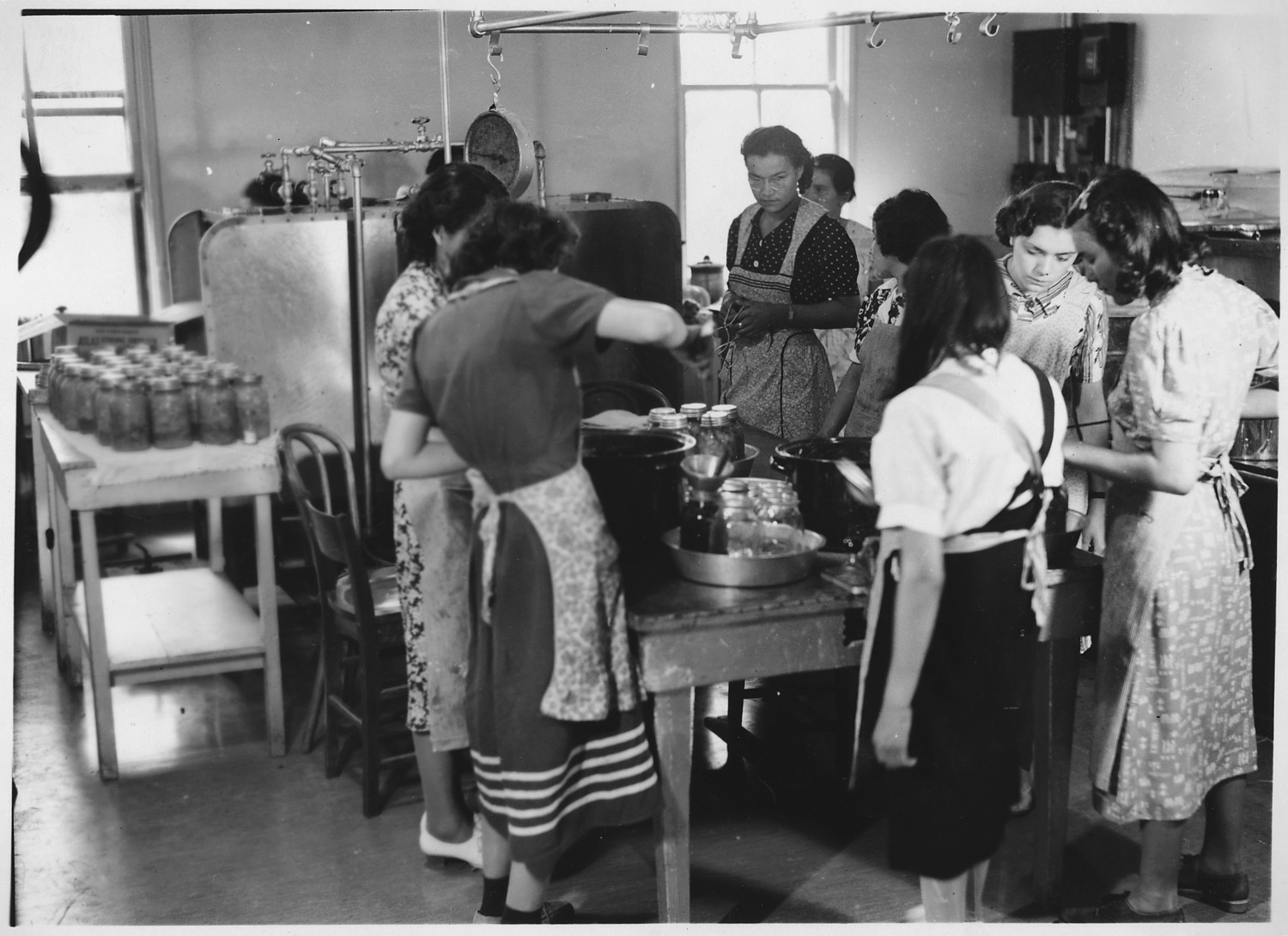
The season was not chosen. A garden, an orchard, a neighbour’s surplus or a cheap bulk buy produced more perishable food in a fortnight than a household could possibly eat, and it had to be dealt with immediately or lost.
Nothing comparable. Produce arrives in the same modest quantity every week of the year, and a glut is now something that happens to commercial growers rather than to kitchens.
The involuntary timing is the thing hardest to convey. Nobody decided that Thursday was a good day for tomatoes. The tomatoes ripened, there were ninety pounds of them, and everything else in the household’s week rearranged itself around that fact for as long as it took.
Like our content? Follow us for more.
2. The Jars Were Capital and They Were Counted
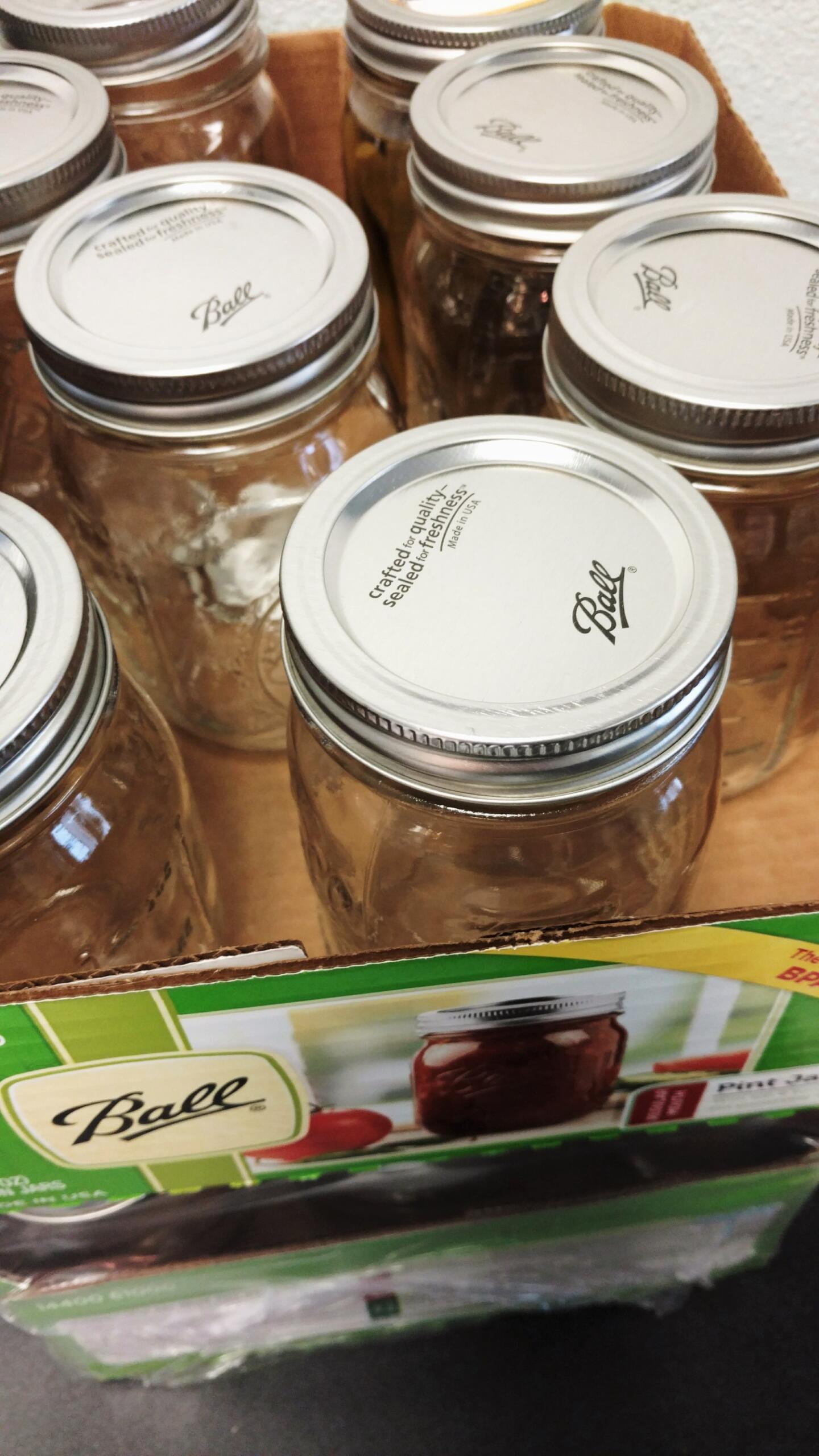
Glass jars were a real asset, bought over years, inherited, kept in boxes in a cellar, and counted before the season to establish how much the household could actually put up.
Jars sold year-round at low cost as a hobby supply, bought in the quantity a project needs rather than accumulated across decades as a household’s working stock.
The counting determined the plan, which is the part that sounds strange now. A household did not decide how much to preserve and then obtain containers. It established how many jars it owned, and that number set the ceiling on how much of the harvest could be saved at all.
3. The Lid Had Changed, and the Old Kind Was Still in the House
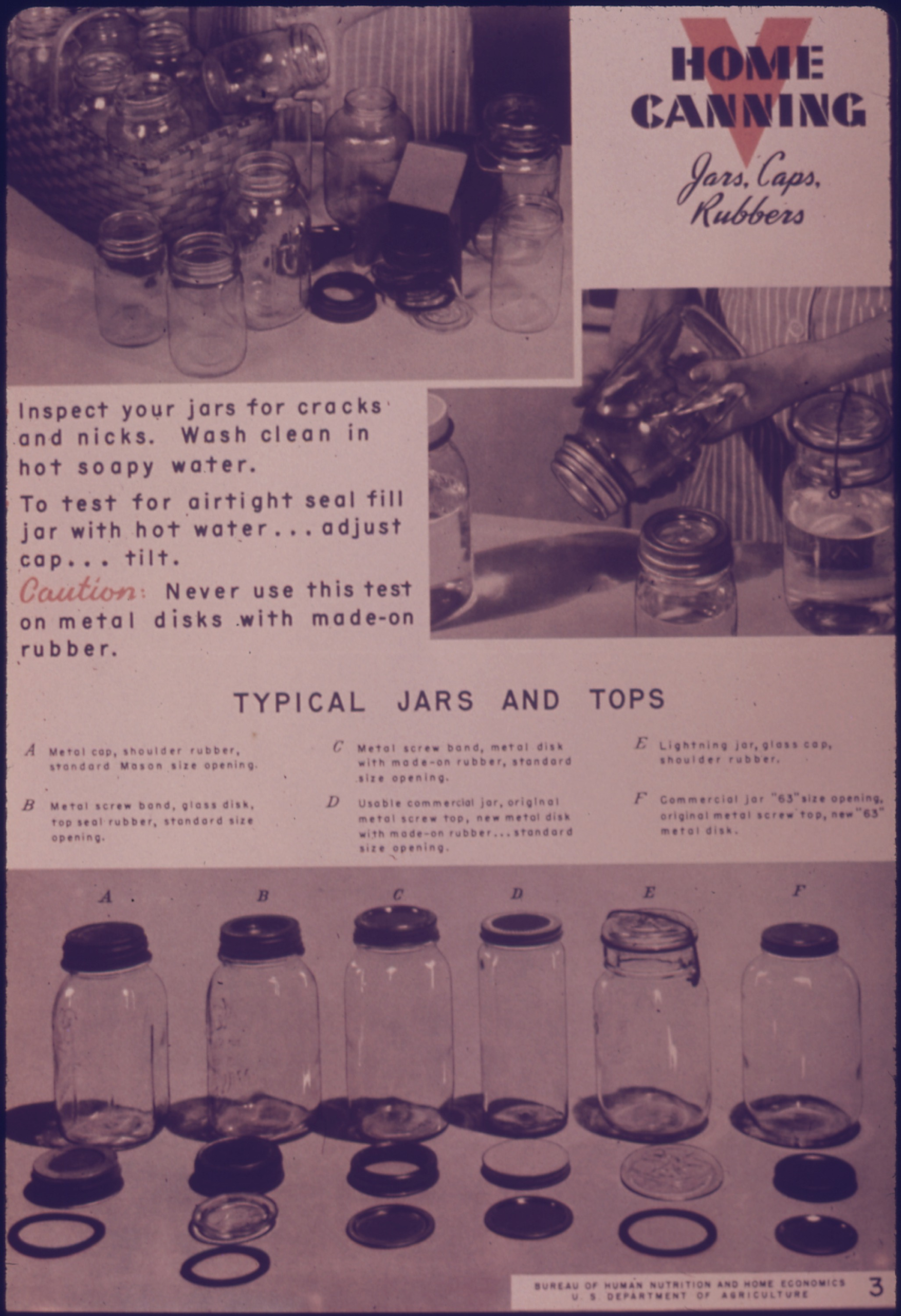
Older jars closed with a zinc cap over a separate rubber ring. Newer ones used a flat metal disc with a sealing compound round the rim, held down by a screw band – and the two systems sat side by side in most kitchens.
One system almost everywhere, with the flat disc and band having won completely, and the older closures now collected as objects rather than used.
The changeover mattered because reliability differed and because the rubber rings perished. A household with both had to know which jars took which closure and which rings were too old to trust, which is the kind of specific, consequential knowledge that was simply assumed in a kitchen and has now vanished entirely.
4. There Were Two Different Machines and You Had to Know Which
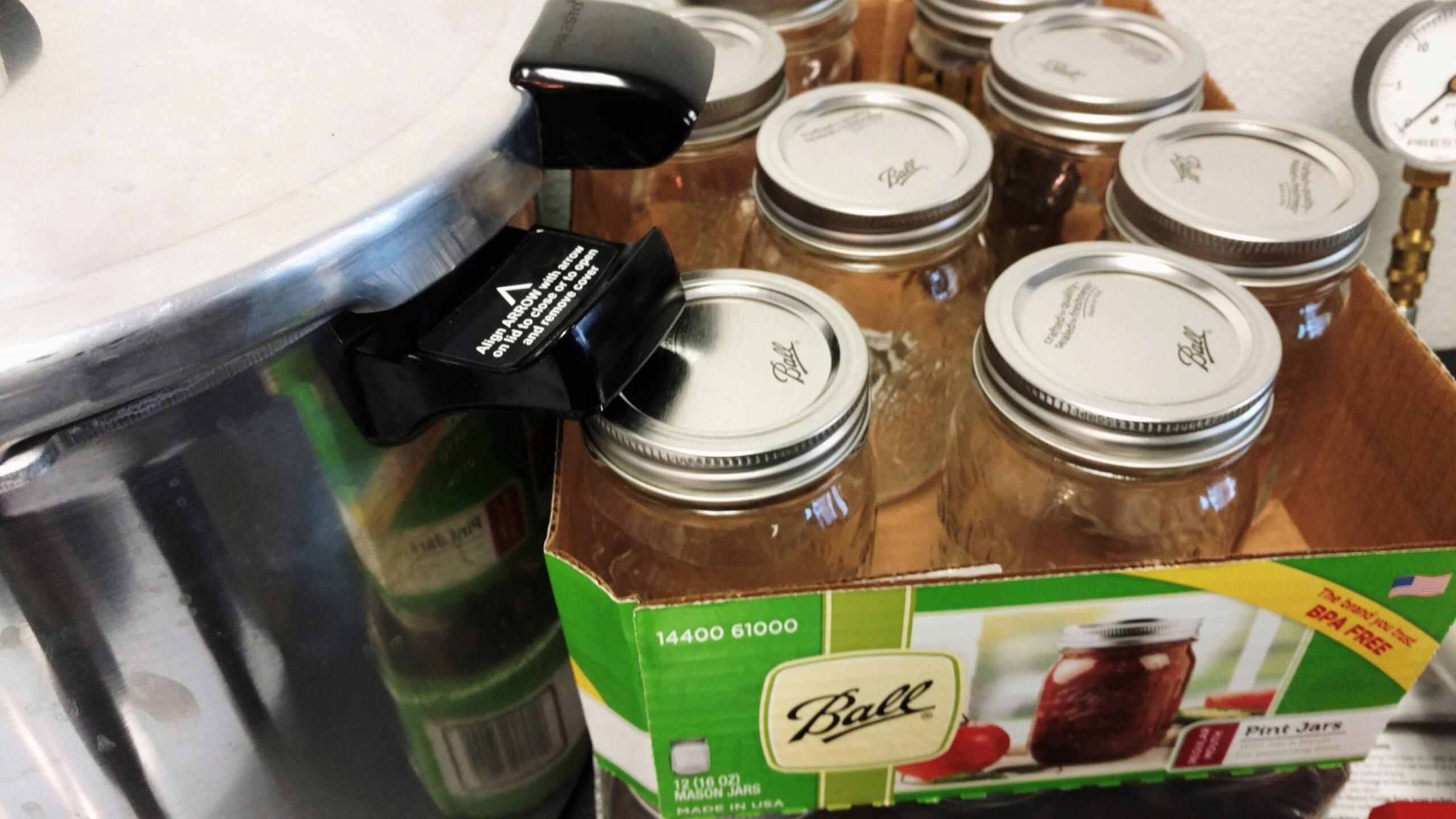
The household did not own one preserving vessel but understood that two existed for two distinct categories of food, and that using the wrong one was not a matter of quality but of safety.
The same division, better documented and much more clearly explained – and anybody preserving food now should work from current published guidance rather than from any remembered method, which is why no procedure of any kind appears in this piece.
What is worth recording is that the distinction was general knowledge. An ordinary household in 1974 could say which category a food belonged to and what that implied about equipment, without looking it up, because it had been taught directly and because the consequence of getting it wrong was something everybody had heard about.
5. It Happened in August, in a Kitchen With No Air Conditioning
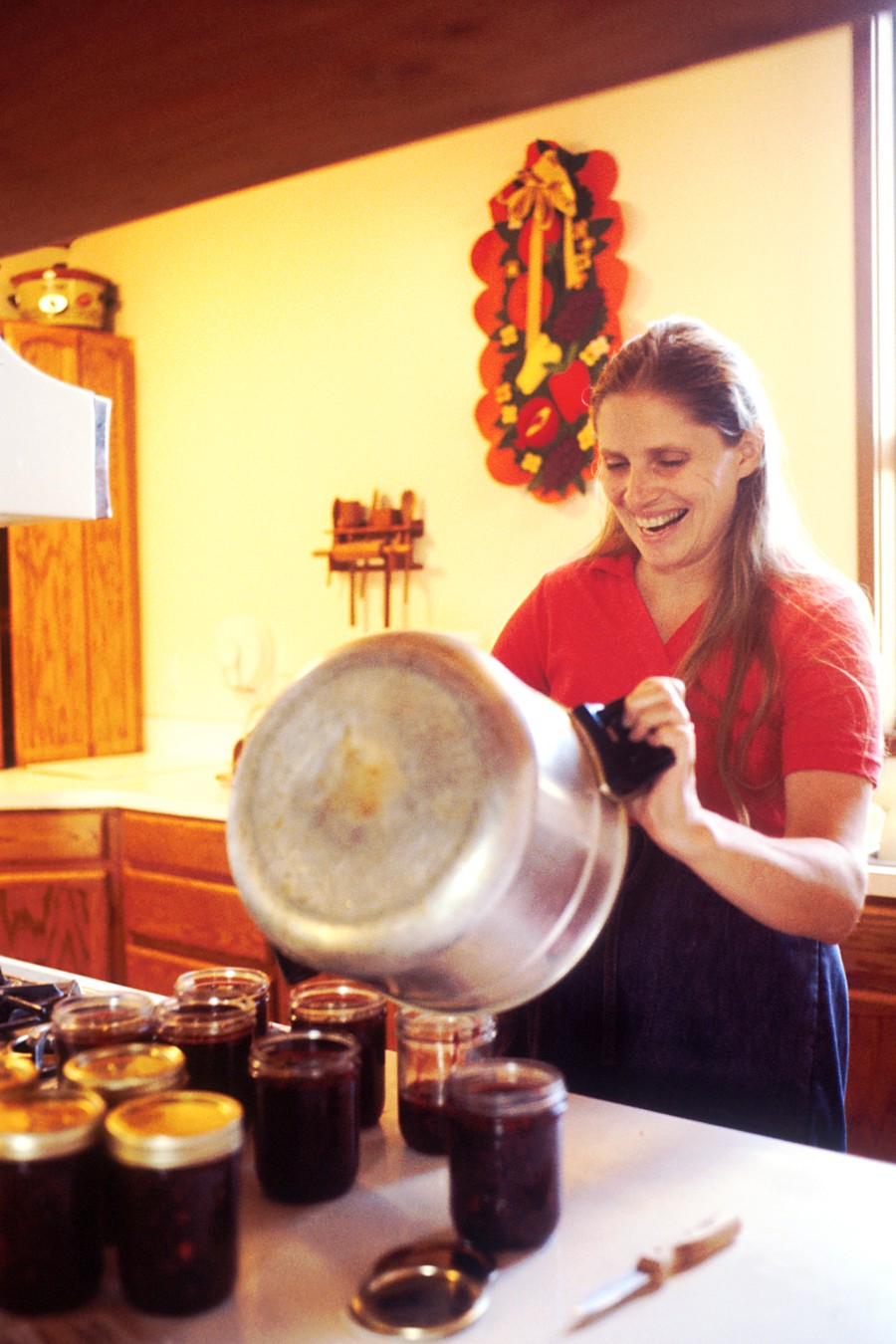
The work fell in the hottest weeks of the year by definition, since that is when things ripen – and it meant running a stove at full output all day, for hours, in a closed room, in high summer.
Nothing, since the activity is now optional and can be scheduled for a cool Saturday in October with produce bought for the purpose.
The heat is the detail that everybody who did it remembers first and that no account of the practice conveys. A kitchen with a boiling vessel going from eight in the morning until late evening, in August, with the windows open and a fan in the doorway, is a genuinely punishing environment, and it was not a one-day event but a recurring one for six or eight weeks.
6. The Ping Was the Result, and People Listened for It
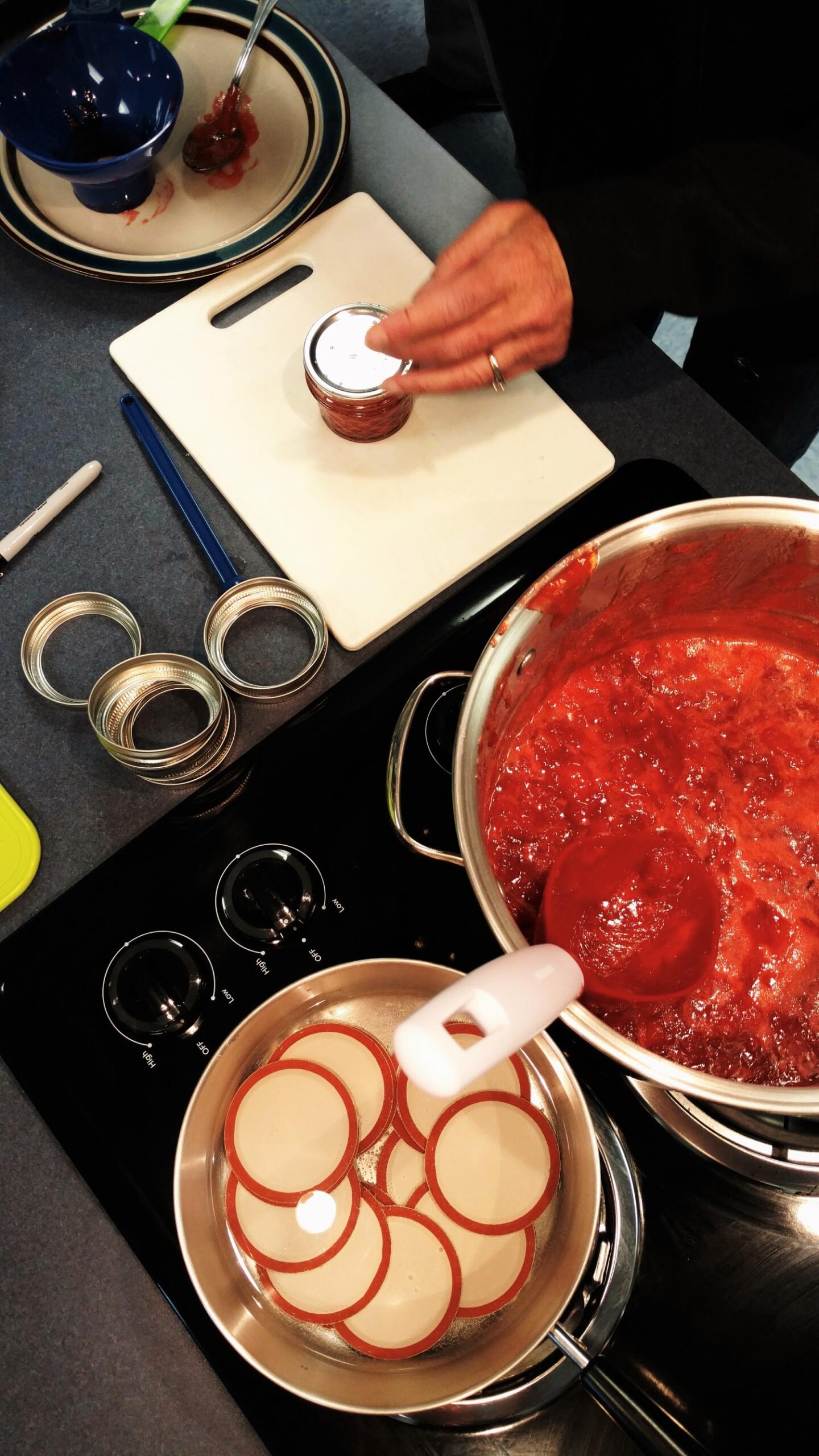
As the jars cooled on a towel on the counter, each lid snapped downward with an audible metallic ping as the vacuum formed – and the household counted them from the next room.
Nothing in ordinary life, though the sound is still the moment that anybody who preserves food waits for and still means exactly what it meant.
It was the only direct feedback the whole operation provided. Hours of work produced no visible result until the jars cooled, and then a series of small sharp sounds over the following hour told you how much of the day had succeeded. A jar that stayed silent was a problem, and you knew before you looked.
7. Every Seal Was Checked Before Anything Went on a Shelf
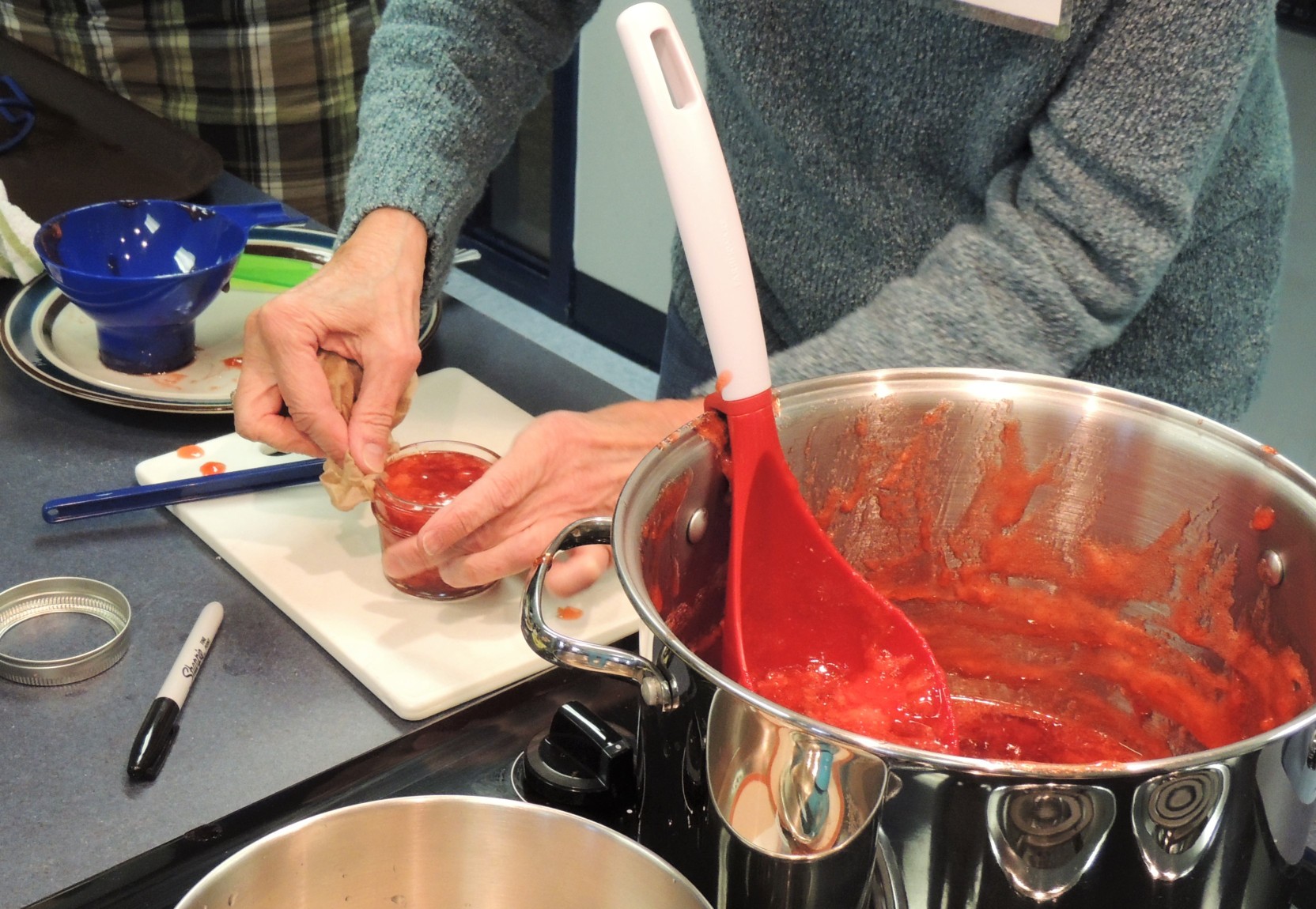
Once cool, each lid was examined – whether it had pulled down, whether it moved under a finger, whether the jar had held – and anything that had not sealed was set aside to be dealt with at once rather than stored.
The same practice, in the much smaller number of households that still do this, and with far better published explanation of what to look for.
The checking was not optional and nobody treated it as fussy. A sealed jar and an unsealed jar look nearly identical on a shelf and are completely different things, which is why the inspection happened on the same day, every time, before anything was carried downstairs.
8. The Screw Band Came Off for Storage
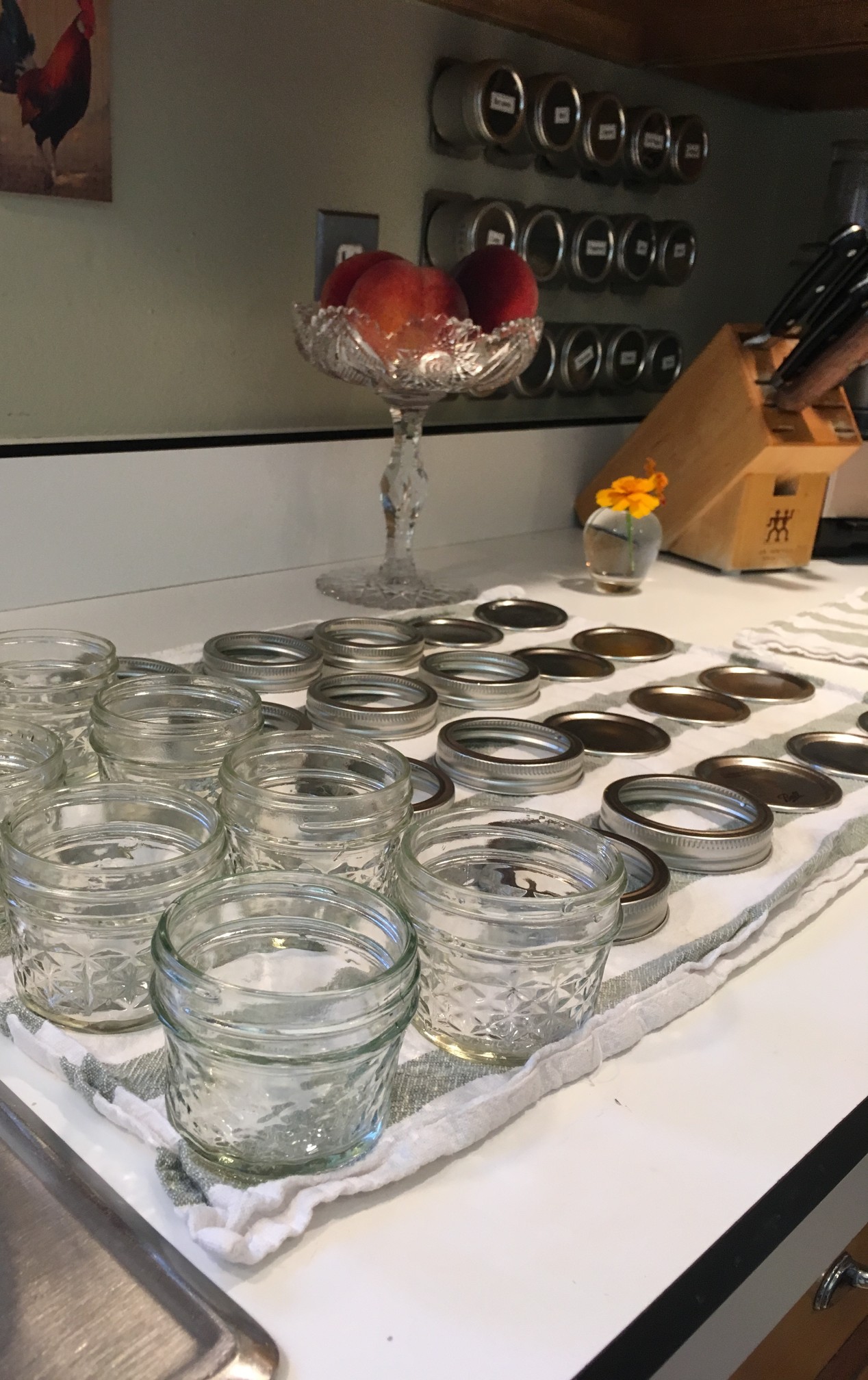
Once a jar had sealed and cooled, the metal band was unscrewed and removed, and the jar went onto the shelf held only by the vacuum under its flat lid.
The same instruction, still given and still widely ignored, which is why a great many people assume the band is part of the storage arrangement.
There were two reasons and both were practical. A band left on can hold a lid in place that has lost its seal, hiding a failure that would otherwise be obvious. And a band left on a jar in a damp cellar rusts onto the glass and becomes extremely difficult to remove a year later.
9. Everything Got Written On
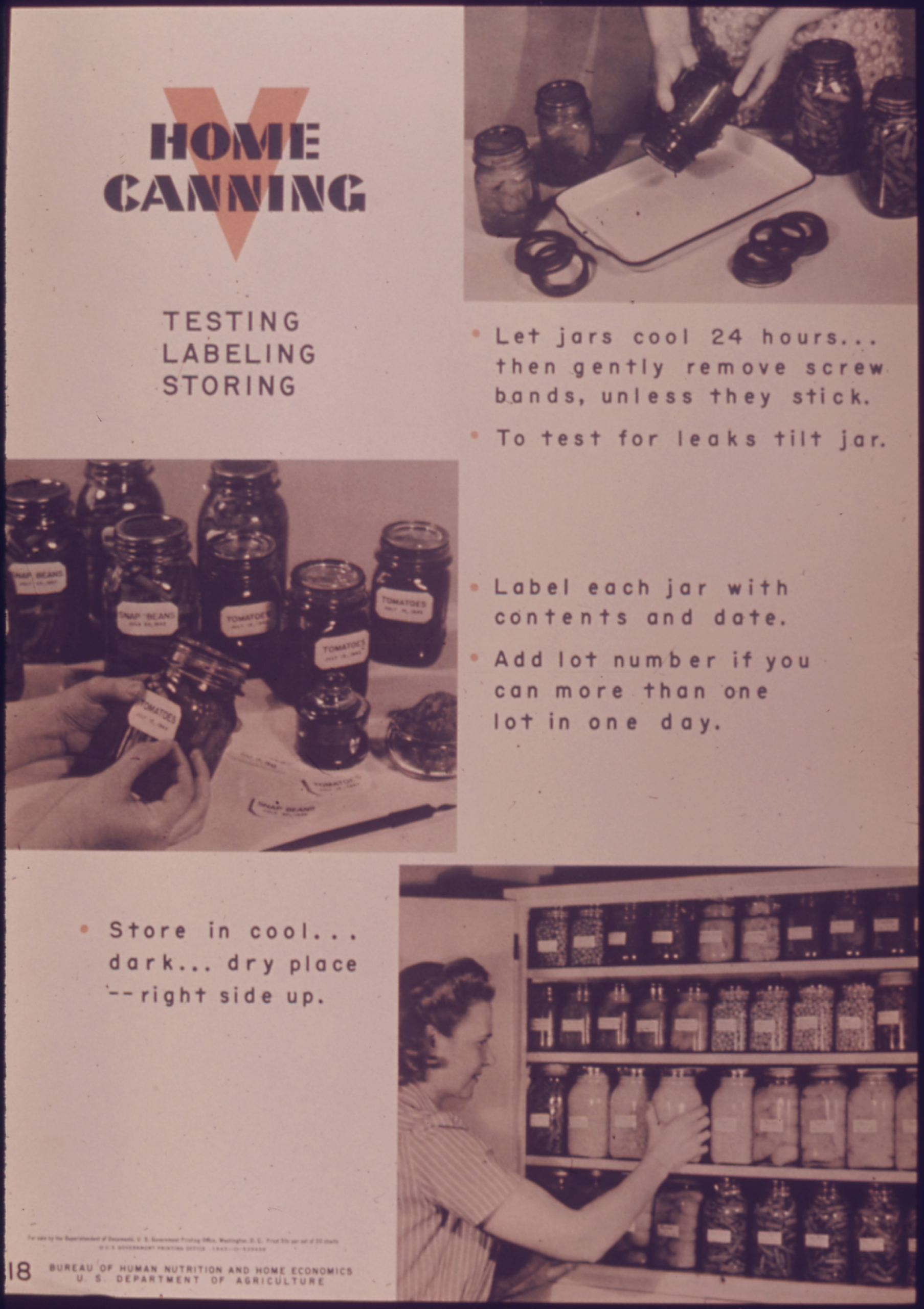
Each jar was labelled with its contents and the year, in pencil on a gummed paper label or in grease pencil on the glass, because a quart of something pale is indistinguishable from a quart of something else pale.
The same, where the practice survives, with better materials – and the underlying problem persists exactly as it was, since unlabelled preserved food is a guessing game.
The year was the important half. Preserved food is good for a long time and not forever, and a cellar shelf accumulates several years at once, so the date determined what got eaten first. Rotating the stock by date was a household routine with its own small discipline.
10. The Shelves Were a Balance Sheet
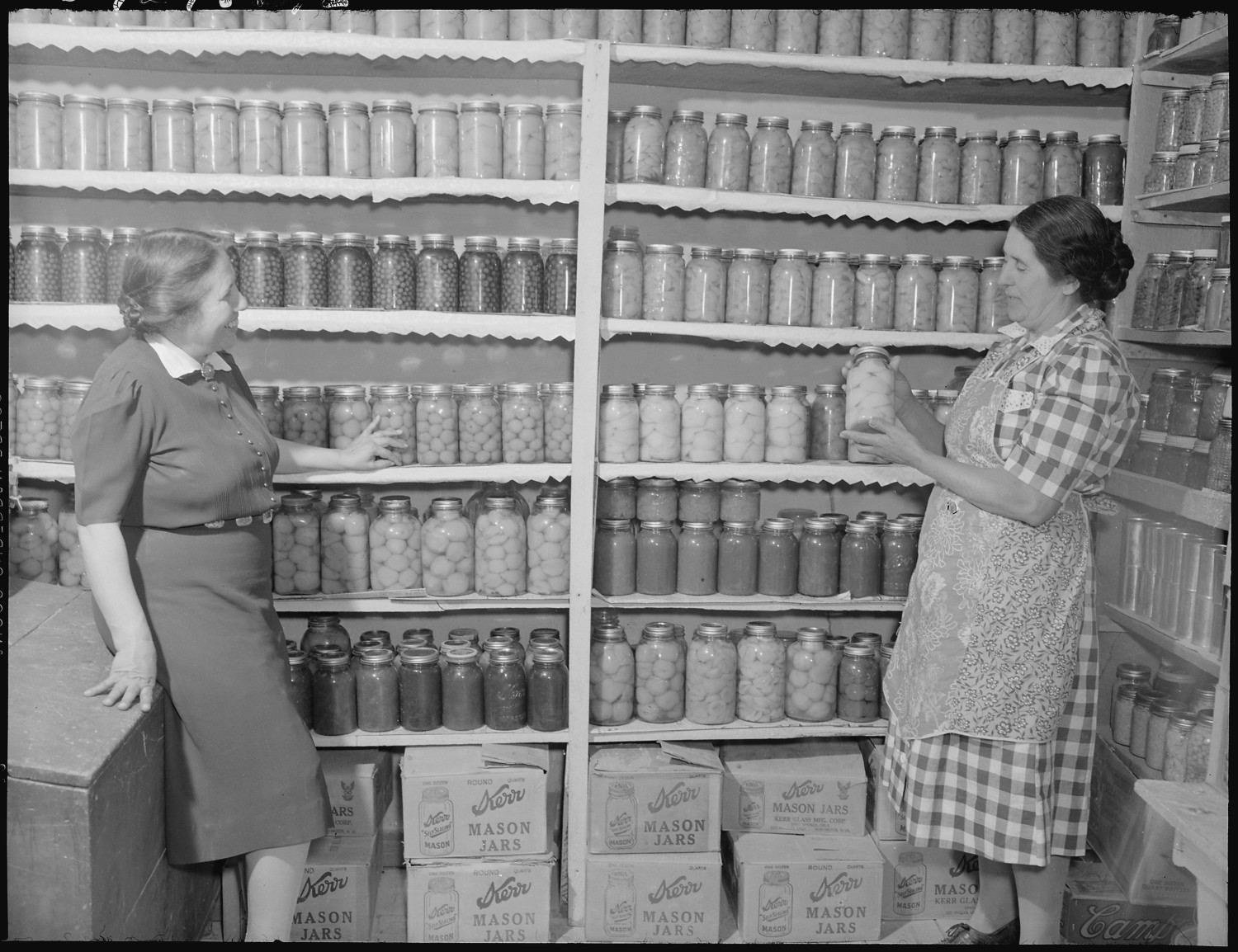
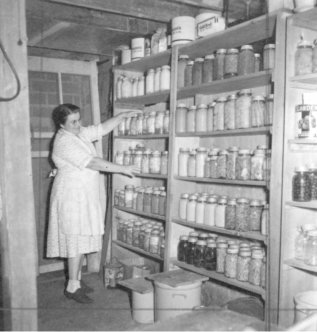
A full cellar shelf was not a hobby display. It was a measurable quantity of the coming winter’s food, and the household could look at it and know roughly how well the year had gone.
Nothing, because the function moved to a supermarket and a weekly budget. Nobody can now look at a single surface in their home and read off how secure their next six months of eating is.
Which gave the work a weight that is easy to miss. A woman standing in front of two hundred filled jars in September was looking at something she had made that would feed people she loved in February, and she could count it. That is a very different relationship with food storage from the one a full refrigerator provides.
11. The State Published the Numbers and People Followed Them
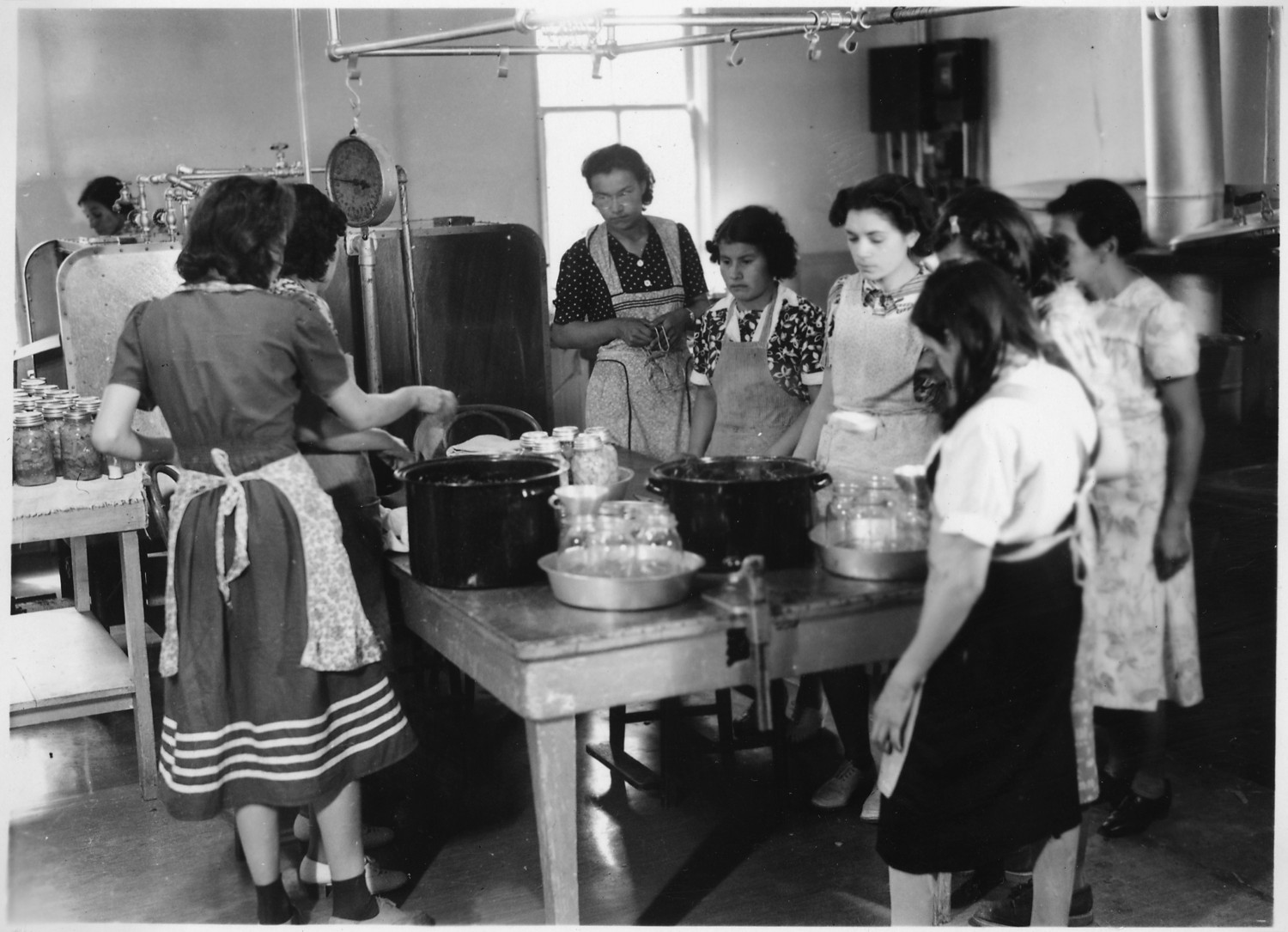
Agricultural extension services issued free printed bulletins giving processing times, quantities, methods and categories for every common food, revised as the recommendations changed, available to any household that asked.
The same function continuing, now mostly online, and considerably more rigorous – and it remains the right place for anybody doing this to get their information.
The bulletins are the unsung part of the whole system. A nationwide network of publicly funded, regularly updated, free technical advice on food safety, distributed to ordinary kitchens, is a remarkable piece of public infrastructure – and it is why household knowledge in this one area was as good as it was.
12. Surplus Was Traded Rather Than Sold
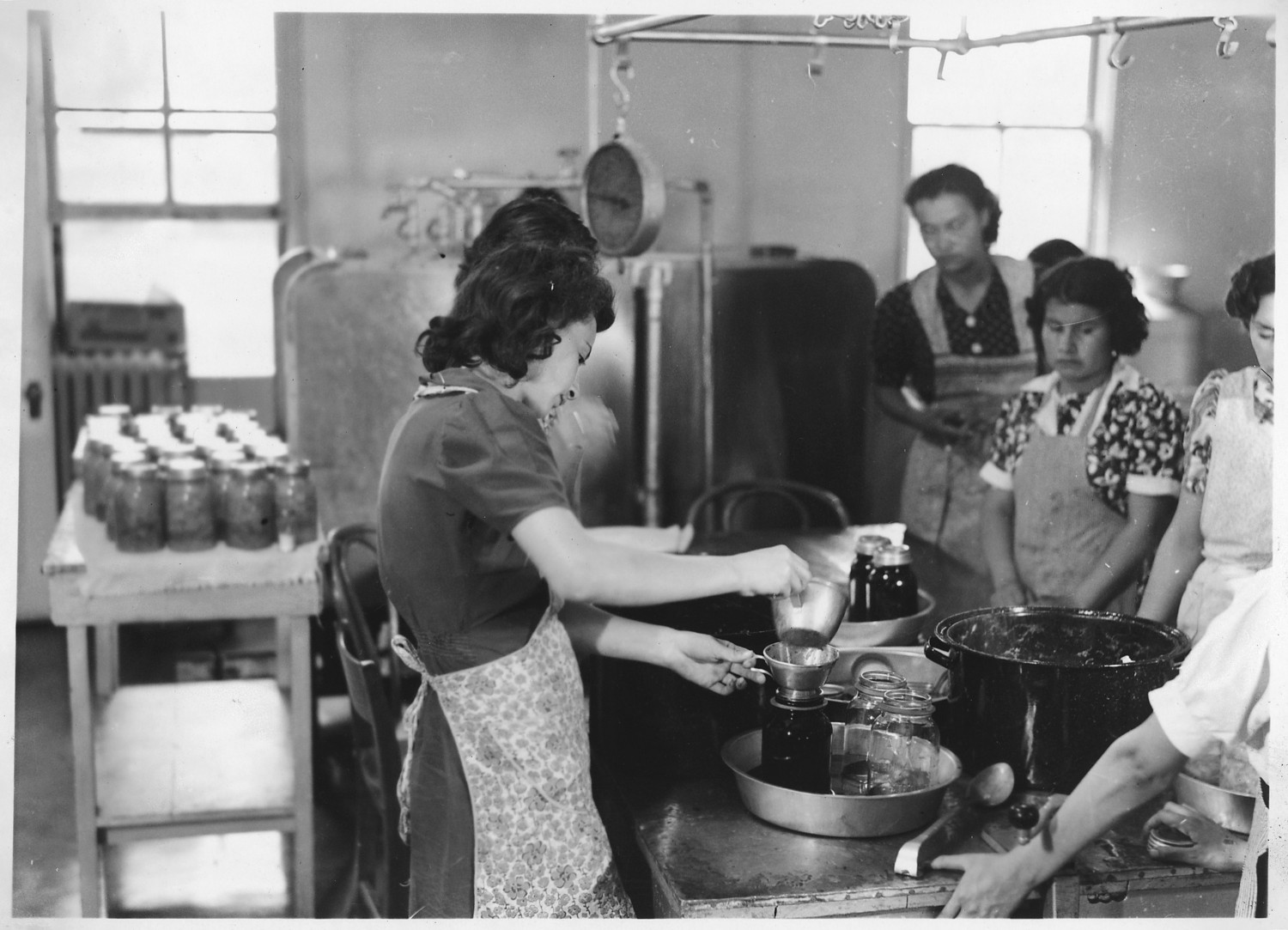
Households ended the season with too much of whatever they had grown and none of what they had not, and the gap was closed by exchange – tomatoes for beans, peaches for pickles, a dozen jars for a dozen jars.
Essentially nothing. The same impulse appears in produce swaps and gardening groups and reaches a very small fraction of the people it once did.
The trading was a genuine economy and nobody called it one. It was conducted without money, without record-keeping and without any sense of obligation being tracked, and it reliably converted one household’s monoculture surplus into a varied winter larder for several.
13. The Jar Came Back to You
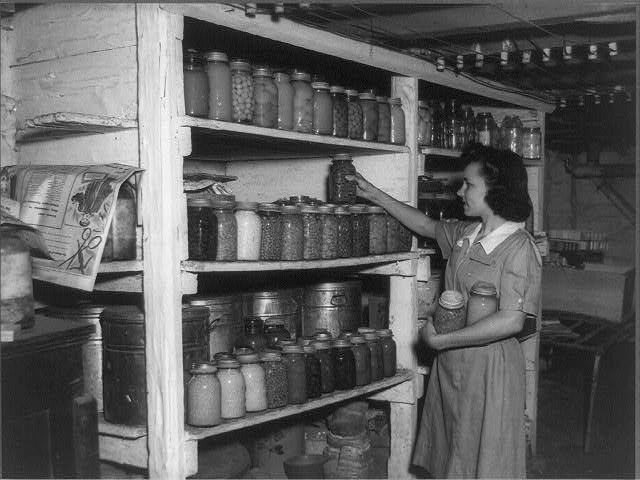
A jar given away full was understood to be returnable empty, and it came back – across a fence, at church, with a child sent on an errand – because jars were worth real money and everybody knew it.
Nothing, since the container is now disposable in practice. A jar of anything given as a gift is not expected back by anybody.
This made gift-giving slightly complicated and slightly binding in a way that was quietly useful. The empty jar had to come home, which meant a gift created a small guaranteed future contact between two households – and a reputation for not returning jars was a real thing a person could acquire.
14. It Was Work, and It Was Specific People’s Work
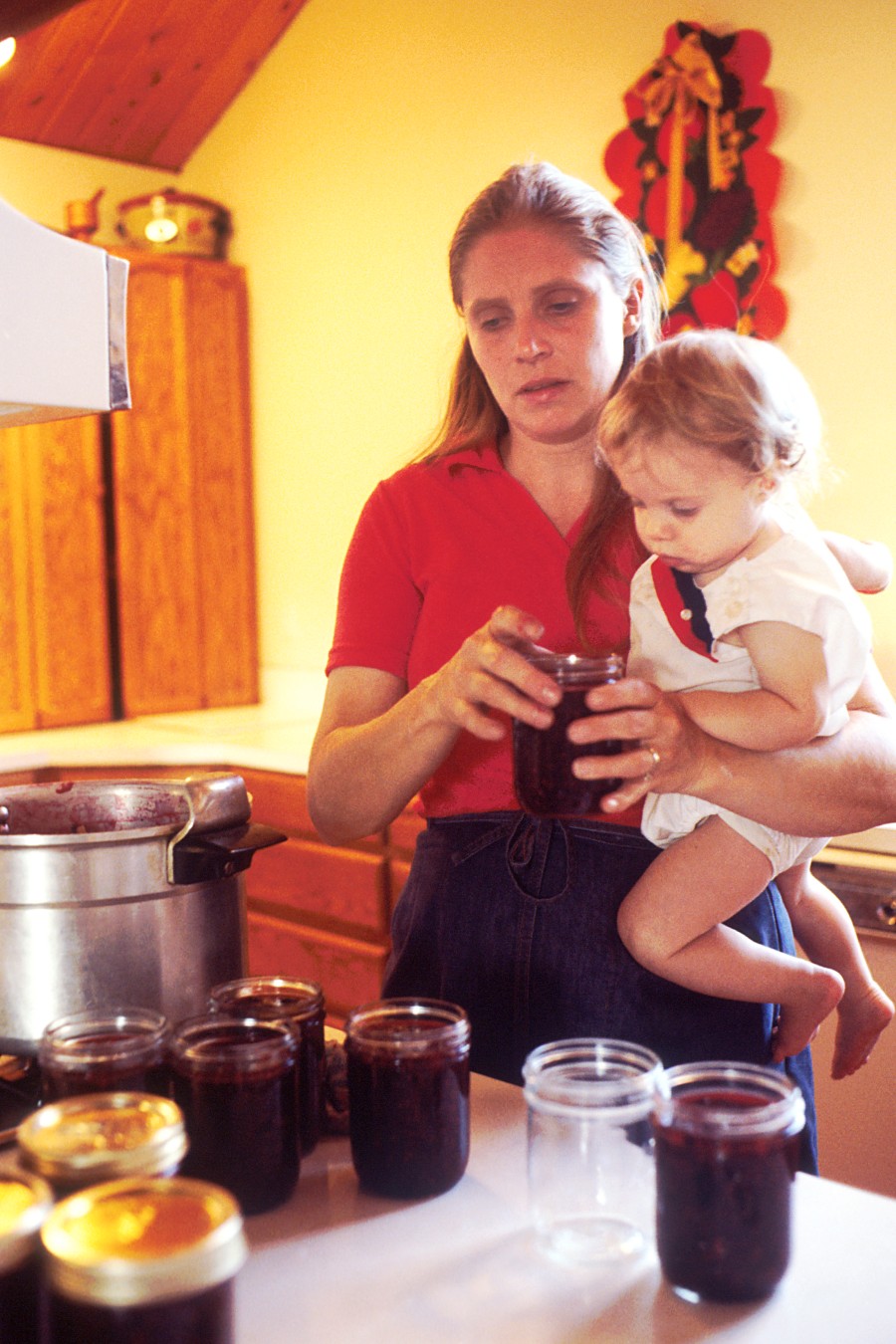
Canning was done overwhelmingly by the women of a household, frequently across two or three generations in the same kitchen, for long days, for weeks, as an unpaid and largely unremarked part of running a home.
The task is now shared where it happens at all, and is almost always chosen rather than assigned – which changes its meaning completely even when the method is identical.
Naming that plainly matters to any honest account of the practice. The skill was real, the output was economically significant, the hours were long and physically hard, and none of it appeared in any measure of what a household produced. The nostalgia for full shelves is usually not nostalgia for the eight hours in an August kitchen that filled them.
15. Then the Labour Became the Expensive Part
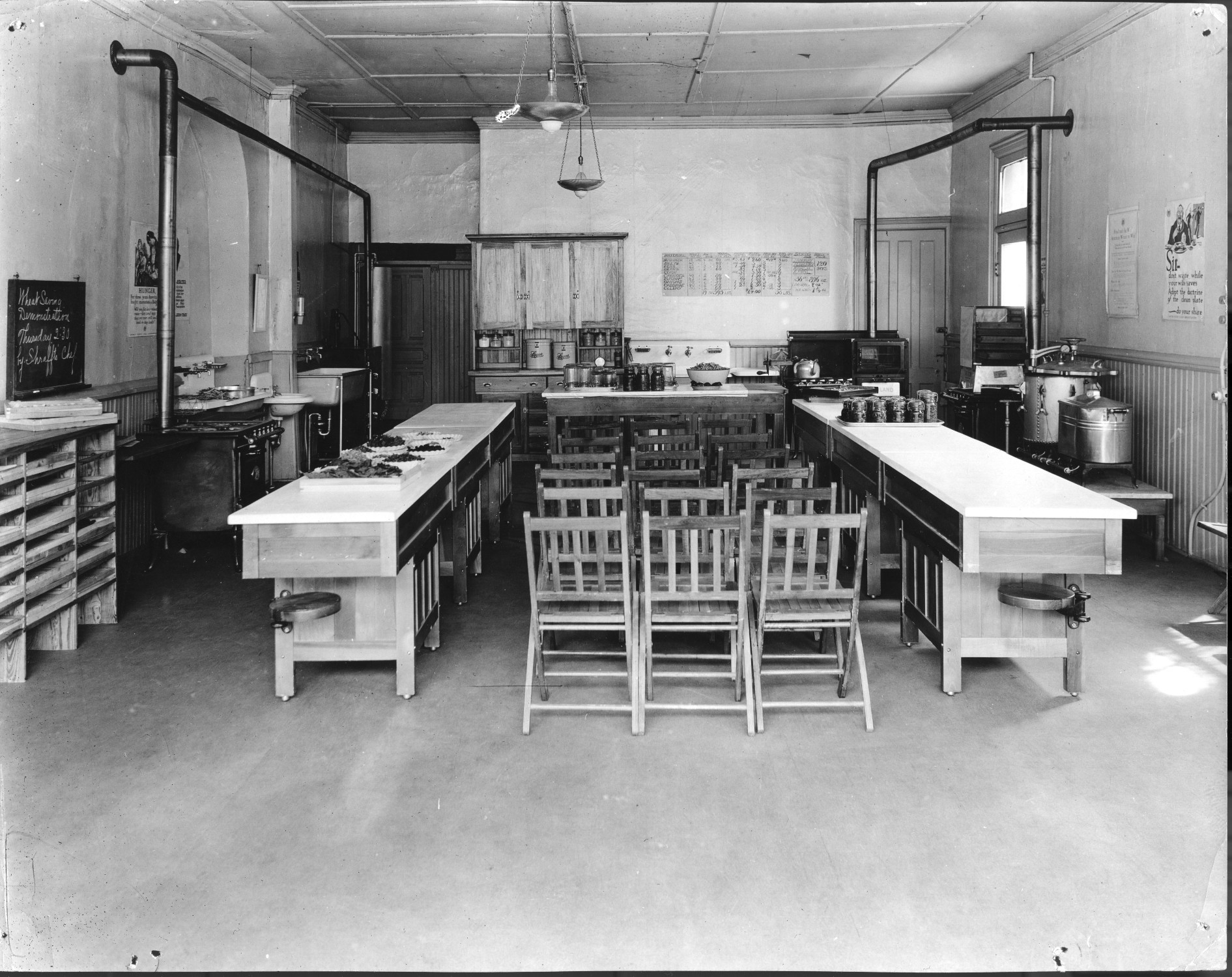
Preserving worked because the arithmetic worked. A household converted free or near-free perishable produce into a year of shelf-stable food using heat, glass it already owned and time it did not count.
A hobby undertaken for flavour, control and interest, done with purchased produce, at a cost per jar that is frequently higher than the commercial equivalent – which is to say, for all the reasons the old arithmetic never counted.
And the thing that broke the arithmetic was not the freezer, and not the supermarket on its own. It was that the time stopped being free. When women’s hours acquired a wage and a labour market, a day spent putting up tomatoes stopped being a day that cost nothing, and the same tomatoes could be bought already canned for a fraction of what that day was now worth. Every other change – cheap year-round produce, home freezers, smaller households, no garden – pushed in the same direction, but that is the one that settled it. The practice did not become unnecessary. It became expensive, in the one input nobody had ever put a price on.
The Input Nobody Had Priced
Ask why home canning stopped and the usual answers come quickly. Freezers. Supermarkets. Cheap canned goods. No garden. Smaller families.
All of those are real and none of them is the answer.
Look at what the practice actually was. A household received, grew or was given a large quantity of perishable food at a moment it did not choose. It owned glass jars accumulated over years and counted them to find out how much it could save. It knew which of two categories of food it was handling and what equipment each required. It worked through the hottest weeks of the year with a stove at full output in a closed kitchen. It listened for the lids to pull down, checked every seal the same day, took the bands off, wrote the year on everything, and carried it all downstairs onto a shelf that could be read at a glance as a quantity of winter.
And it did all of that with three inputs: produce that was effectively free, equipment it already owned, and time that nobody counted.
That last one is the whole thing.
The arithmetic of home preserving was unbeatable as long as the labour was outside the economy. A woman’s August was not a cost on any ledger anywhere, so a day spent putting up ninety pounds of tomatoes converted free perishable calories into a year of shelf-stable food at a price of approximately nothing. Against that, no commercial canner could compete, and none needed to try.
Then the time acquired a wage.
Once a woman’s hours had a market value – once she had a job, or could have one, and her day could be spent earning instead – the day in the kitchen stopped being free and started being the single most expensive input in the whole process. And at that price the comparison reverses completely: the same tomatoes, already canned, cost less than the value of the day it would take to can them.
Everything else pushed the same way. Produce arrived cheaply all year, so there were no gluts. Freezers handled the vegetables with a tenth of the work. Houses lost their gardens and their cellars. Households got smaller, so the volumes stopped making sense.
But the decisive change was an accounting one. The practice did not become unnecessary and it did not become harder. It became expensive, in the one input nobody had ever put a price on – and when that input was finally priced, the arithmetic that had held for a century collapsed in about fifteen years.
Which is why what survives is a hobby. People now can for flavour, for control over what is in the jar, and because the process is satisfying – every one of which is a reason the old arithmetic had no column for.
The shelves are mostly gone. The pinging sound is the same.
If your family did this, you can still hear the pings, and you know how many you were listening for.
And you know the bands came off, which is the one part almost everybody now gets wrong.
Like our content? Follow us for more.