
The gap between a hotel’s advertised nightly rate and the amount that appears on the card has widened steadily, and it is now made up of a dozen separate charges, most of which are disclosed somewhere and almost none of which are in the number used to compare one hotel against another.
Some of them are taxes and are not the hotel’s doing. Some are genuinely discretionary at the front desk. And a few of them come off the bill if somebody asks. Here are sixteen charges to know about, and what can actually be done about each one.
1. The resort fee, which is not optional and not a tip

A mandatory daily charge added at the property, variously called a resort fee, destination fee, amenity fee, facility fee or urban fee. It is levied per room per night, it is payable whether or not you use any of the things it supposedly covers, and it is typically collected at check-out rather than taken with the room payment.
The things it is said to cover are usually wifi, a fitness room, pool towels, local phone calls and a newspaper, several of which the hotel was providing free a decade ago and none of which a guest can decline in exchange for a reduction.
The practical point is that it is part of the price of the room and should be treated that way when comparing options. A cheaper nightly rate with a high daily fee is frequently the more expensive stay.
Like our content? Follow us for more.
2. The advertised price may still not be the price

The reason the fee exists is that it historically sat outside the advertised rate, which made a hotel’s headline price look lower in a search comparison than a competitor charging the same total without a fee. That is the entire commercial logic.
American rules on this have tightened. The Federal Trade Commission’s rule on unfair or deceptive fees in live-event ticketing and short-term lodging requires that the total price including mandatory fees be displayed up front in advertising and before a booking is completed, and several state attorneys general have pursued hotel groups over the practice separately.
Enforcement and compliance are uneven, and the practical habit worth keeping is to look for a line labelled total before you book rather than to assume the displayed nightly rate is complete.
3. Parking is charged separately and often has no alternative

Self-parking and valet parking are charged per night, at rates that in city centre properties can approach the cost of the room, and at resort properties there is frequently nowhere else to leave a car. Hotels increasingly charge for parking even where the lot is their own and empty.
This is the charge that most often surprises people driving to a destination, because it does not appear in a flight-and-hotel comparison at all. It is also one of the few that is genuinely negotiable at some properties and for some loyalty tiers.
Check it before booking if you are arriving by car, and check whether a nearby public garage is cheaper, because at many urban hotels it is.
4. Early check-in and late check-out are now priced

Both were traditionally granted as a courtesy where the hotel could manage it. Both are now, at a growing number of properties, a product with a price, sold in blocks of hours, and the courtesy version is increasingly reserved for loyalty members.
The reason is straightforward: housekeeping scheduling is the constraint, and a room held past the standard time has a real cost. The result is that a guest with an evening flight is being asked to pay for something that used to be a question at the desk.
Ask at check-in rather than booking it in advance, because availability on the day is often the deciding factor and the answer at the desk is frequently free.
5. Declining housekeeping earns a credit that costs the hotel nothing

The green programme that offers loyalty points or a food and beverage credit in exchange for declining daily housekeeping is presented as an environmental measure. It also reduces labour cost, which is the larger effect, and it has been opposed by hospitality unions for that reason.
There is a genuine environmental argument about laundry and water, and there is a genuine labour argument about hours and about the heavier cleaning required after several days. Both are true at once and a guest is not obliged to resolve them.
If you take the credit, know what you are trading. If you want the room cleaned, asking for it is always available and is not a special request.
6. The minibar may be charging you for lifting a bottle

Sensor-equipped minibars register the removal of an item and bill it, which means moving a bottle to make space for your own water can appear on the bill. Restocking charges and markups of several hundred per cent are standard.
The charge is disputable and hotels generally remove it when challenged, because the sensor cannot distinguish removal from consumption. The dispute is easier before you check out than afterwards.
The simplest approach is not to move anything in it. If you need the space, ask for the minibar to be emptied, which most properties will do.
7. The in-room safe sometimes has a daily charge
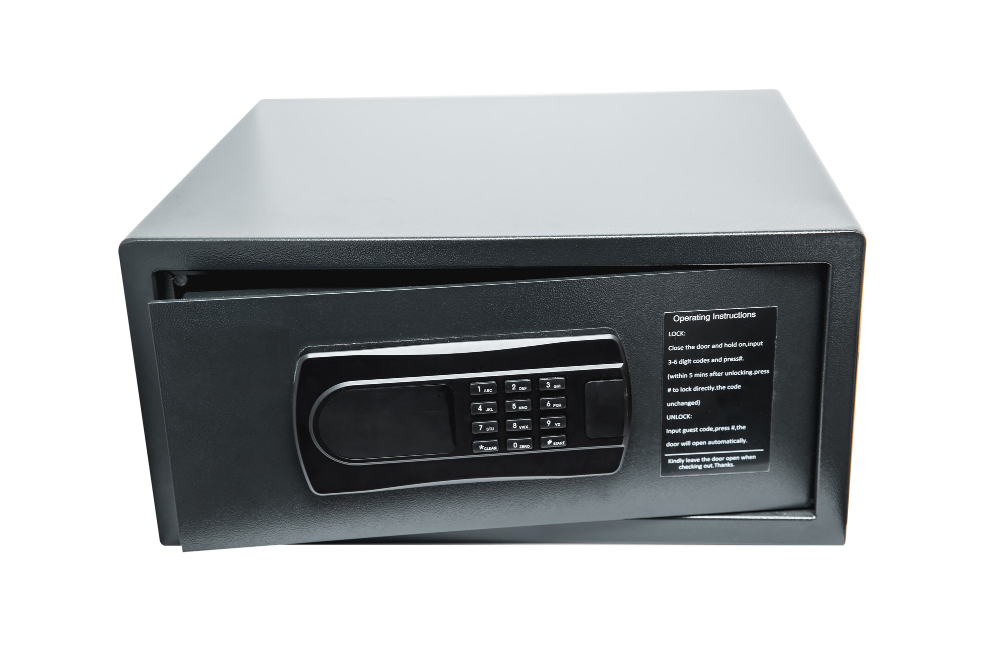
A small number of properties levy a safe fee, sometimes described as a security or insurance charge, applied whether or not the safe is used. It is one of the least defensible items on a folio.
It is also usually removable on request for exactly that reason. A charge for the existence of a piece of furniture in a room you have already paid for does not survive a polite question at the desk.
Where it appears, it is normally disclosed somewhere in the booking terms, which is the argument the hotel will make, and it is still worth asking.
8. The wifi is free, except the useful tier

Basic internet access is now near-universally included, frequently as one of the things the resort fee covers. What is charged for is the faster tier, marketed as premium or streaming-capable, and the basic tier at some properties is deliberately slow enough to make the upgrade feel necessary.
Loyalty programme membership, which is free to join, includes the higher tier at many chains, which makes signing up before a stay a straightforward saving.
If you need to work, check what the included tier actually delivers rather than assuming. A video call is the test that fails most often.
9. The cancellation window is shorter than it used to be

Free cancellation up to 24 hours before arrival was the industry standard for years. It has moved: 48 or 72 hours is now common, some properties and rates require a week, and peak dates and events frequently carry non-refundable terms.
The non-refundable prepaid rate is the other half of this. It is genuinely cheaper, it is final, and the discount is the price of the risk transferring to you. It is a reasonable product and it is often selected by accident by travellers clicking the cheapest option.
Read the cancellation line before confirming, and treat a non-refundable rate as a purchase rather than a reservation.
10. Extra occupants are charged, and the limits are enforced

Room rates are quoted for a stated occupancy, usually two, and an additional adult carries a per-night charge. Occupancy limits are also real limits, set by fire regulation rather than by hotel preference, and a family that books a double room for four may be refused.
Children’s policies vary enormously between chains and between countries, with some including children under a stated age free in existing bedding and others charging per person regardless. The age threshold is the detail that catches people.
Book for the number of people who will actually be in the room. Arriving with an undeclared extra person is the one issue on this list that can end with the hotel declining to accommodate you at all.
11. The card hold is not the same as the charge

At check-in the hotel places an authorisation on your card for the room plus an incidental amount per night, which reduces your available balance without being a payment. On a debit card it removes access to the money for the duration and for some days afterwards.
The release is controlled by your bank rather than by the hotel, which is why the hotel’s assurance that it has been released does not mean the money is back. Several days is normal and longer is not unusual.
This is the reason to use a credit card rather than a debit card for hotel check-in. It is not about the charge; it is about which pot of money is immobilised.
12. The city tax is collected at the desk and is not in the rate

Many destinations levy a tourist, occupancy or city tax, charged per person or per room per night, often varying by the property’s star rating and sometimes by season, and it is generally collected at the property rather than included in an online rate.
It is a tax rather than a hotel charge, which means it is not negotiable, not refundable and not something the hotel can waive. Rates change by municipality and are frequently revised, so a figure from a guidebook or an old article may be wrong.
Budget for it as a separate line, particularly in European cities, where a family of four on a week’s stay can find it a meaningful sum.
13. Who fixes a problem depends on who you booked through

A booking made through a third-party site is a contract with that site, and a hotel’s ability to change, upgrade, refund or resolve it is limited — sometimes genuinely and sometimes conveniently. A direct booking makes the hotel the only party involved.
The practical difference shows up in exactly the situations that matter: a room not as described, an overbooking, a cancellation, a date change or a dispute about a charge. A desk clerk who cannot access your reservation terms cannot fix them.
Third-party rates are often lower and the trade-off is real. For a short simple stay the saving usually wins; for anything complicated, anything expensive or anything on a date that cannot move, booking direct is worth the difference.
14. Loyalty status is the only reliable lever on fees
Almost every item on this list — parking, late check-out, wifi tier, upgrades, the occasional resort fee waiver at certain properties and brands — is affected by loyalty tier, and the base tier of every major programme is free and instant.
The programmes are designed to convert travellers into direct bookers, which is why the benefits are concentrated on direct reservations and often excluded on third-party ones. That is the actual mechanism and it is worth understanding before deciding the points are the point.
Joining before a single stay takes two minutes and sometimes pays for itself immediately in the wifi tier alone. Nothing further is required.
15. The folio is where the errors are, and nobody reads it

The itemised bill produced at check-out routinely contains charges a guest did not incur: a minibar sensor reading, a restaurant charge keyed to the wrong room, a day of parking after the car left, a fee that was supposed to be waived.
The correction is trivially easy at the desk on the morning of departure and substantially harder by email from another country a week later. Hotels resolve these quickly in person because the dispute cost exceeds the charge.
Ask for the folio the night before, read it, and raise anything wrong before you hand the keys back. It is the single most reliably valuable two minutes on this list.
16. And the one thing that actually reduces the total

Ask, at the desk, at check-in, in a friendly way, what is included and what can be removed. A surprising proportion of these charges are discretionary at property level: safe fees come off, parking is sometimes reduced, late check-out is granted, a resort fee is occasionally waived for a complaint or a loyalty tier or no reason at all.
None of that is available to somebody who notices the charges at check-out, and all of it is available to somebody who raises them at the start. The person at the desk usually has more latitude than the website does and is the only human in the transaction.
The summary is unglamorous: compare totals rather than nightly rates, book direct when the stay matters, join the free loyalty tier, use a credit card rather than a debit card, and read the folio before you leave. Those five habits cover almost everything on this list.
Which of these are fixed and which are not

Sorting the list is more useful than the list. The city or tourist tax is a tax: it cannot be waived, negotiated or refunded by anybody at the hotel, and the only sensible response is to budget for it separately. Occupancy limits are fire regulation rather than policy and are equally immovable.
The mandatory fees — resort, destination, amenity — are the hotel’s own and are the subject of the Federal Trade Commission’s total-pricing requirement, which means they must be shown up front rather than appearing later, though compliance is uneven and the habit of looking for a total before booking remains necessary. Several state attorneys general have separately pursued hotel groups over the practice.
Everything else on the list is softer than it looks. Parking, early check-in, late check-out, wifi tier, safe fees, minibar sensor charges and folio errors are all routinely adjusted at property level, and the determining factor is almost always whether the guest raised it at check-in rather than at check-out.
The five habits at the end of the list are the whole of the practical advice: compare totals rather than nightly rates, book direct when the stay is expensive or complicated, join the free loyalty tier before you arrive, present a credit card rather than a debit card at check-in, and read the folio the night before you leave.
Fees and rules change constantly and vary by property, brand and city, so anything specific here is worth checking against the booking terms in front of you rather than against an article.
Like our content? Follow us for more.