


The useful question about any symmetrical thing is not why somebody made it that way but what process would produce that arrangement without anybody deciding. Here are sixteen answers.
1. Moving Forward Requires Matched Sides
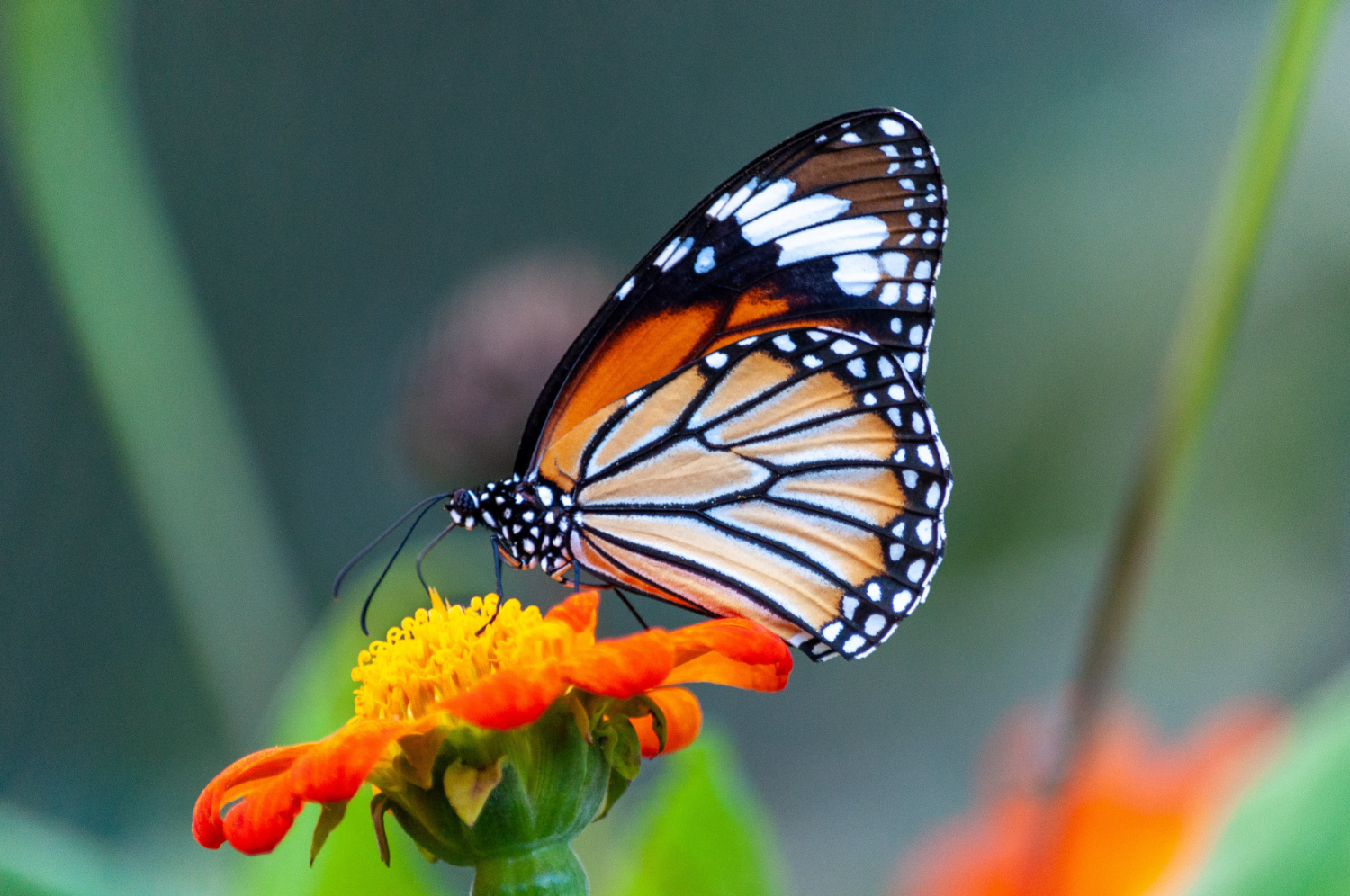
An animal that travels in a direction benefits from sensory organs, limbs and musculature that are equivalent on left and right, because the world on each side presents the same problem.
Mismatched sides would steer. Bilateral symmetry is the arrangement that directed movement requires.
Like our content? Follow us for more.
2. Which Is Why the Front End Has the Sensors

Once an animal moves consistently forward, the end that arrives first is the useful place for detection, which concentrates sensory organs and nervous tissue there.
That concentration is the origin of a head. Forward orientation is the consequence that follows from bilateral symmetry rather than the reverse.
3. Not Moving Removes the Requirement

An organism that is fixed in place, or that drifts, encounters its environment from every direction equally, and has no reason to distinguish left from right.
Radial symmetry follows directly. Circular arrangement is the solution for anything with no forward.
4. The Inside Does Not Match

Bilaterally symmetric animals are frequently asymmetric internally, because packing organs efficiently into a body cavity has no directional requirement.
The outside faces the world and the inside does not. Internal asymmetry is the evidence that symmetry is functional rather than aesthetic.
5. Both Sides Are Built From the Same Instructions

Developmental symmetry arises because the same genetic programme runs on each side in the same conditions, so the two sides converge on the same result without being coordinated.
Nothing is comparing them. Shared instructions are the mechanism that produces matching without measurement.
6. So Deviation Indicates Disturbance

Because both sides should develop identically, a difference between them indicates something interfered during development – stress, injury, nutrition or environment.
Biologists use this as a general indicator in organisms. Developmental asymmetry is a record of conditions rather than of design.
7. Crystals Are Symmetrical for No Reason At All

A crystal is symmetrical because identical units stack in a repeating arrangement, and the symmetry of the whole reflects the geometry of the unit.
No function is involved and nothing benefits. Crystal symmetry is the case where the pattern is purely a consequence of stacking.
8. Which Is Why Snowflakes Have Six Sides

The angle at which water molecules bond determines a six-fold arrangement, and every arm grows in the same conditions at the same time, producing near-matching branches.
The conditions change as the crystal falls, which is why every one differs. Six-fold ice is symmetry from molecular geometry plus a shared history.
9. Flowers Aimed at Everybody Are Round

A flower pollinated by many species benefits from being approachable from any direction, so radial symmetry suits generalist strategies.
No particular approach is privileged. Radial flowers are the design for an undifferentiated audience.
10. Flowers Aimed at One Species Are Not

Where a flower depends on a specific pollinator that must approach in a particular orientation, bilateral symmetry provides a landing arrangement that only works one way.
The shape is an instruction. Bilateral flowers are the design that specifies who may visit and how.
11. Spirals Come From Growing Proportionally

Adding material at a constant proportional rate while turning produces a spiral, which is why shells, horns and some plant arrangements share a form despite no relationship.
Nothing is following a formula; the formula describes what proportional growth does. Spiral growth is the pattern that emerges from a rule about rate.
12. Packing Produces Regularity

Objects of similar size pressed together adopt regular arrangements because that is what fits, which produces hexagons in bubbles, cells and cracked ground alike.
No coordination is required. Packing regularity is the symmetry that comes from things being squeezed.
13. Symmetry Is Cheap to Specify

A symmetrical structure requires less information to describe than an asymmetrical one, since one side plus a rule generates the other.
That matters where instructions are limited. Informational economy is the reason symmetry is common in things that must be encoded.
14. Perfect Symmetry Is Rare

Living things are never exactly symmetrical, because growth involves variation, and measurement always finds differences between the two sides.
Near-symmetry is the norm and exact symmetry is essentially absent. Imperfection is the condition of every symmetrical organism.
15. Some Asymmetry Is Deliberate

A number of organisms are asymmetric for a reason – a specialised limb, an offset feature, a coiled structure – and those cases are informative precisely because they break an otherwise reliable pattern.
Asymmetry that persists is doing something. Functional asymmetry is the exception that shows the rule is not aesthetic.
16. Everything Exists Because Symmetry Broke

At the largest scale, physics indicates that a perfectly symmetrical arrangement would produce no structure at all, and that the existence of matter, forces and objects depends on early symmetries not holding exactly.
Perfect symmetry is empty. Symmetry breaking is the reason there is anything to be symmetrical.
The Same Process Running Twice

Matched sides from matched instructions, radial arrangement from having no direction, crystal faces from stacking, spirals from proportional growth – and none of it requires anybody to have chosen a shape.
The item worth carrying away is the fifth. Two sides of an animal match not because anything measured them against each other, but because the same instructions ran twice in the same conditions – which means symmetry is not an achievement of biology so much as what happens when nothing goes wrong.
Like our content? Follow us for more.
