

Almost everything a 1965 American household believed about backs has been revised, and in several cases reversed outright. The advice was confident, it was consistent, it came from doctors as well as from relatives, and it was built on a model of the spine as a delicate mechanical structure that could be damaged by a single wrong movement and then had to be protected from movement in general.
That model turned out to be the problem. The research of the following decades found that the spine is considerably sturdier than the 1965 picture allowed, that ordinary back pain is usually not a structural injury at all, and that the treatments built around protecting it were in several cases actively delaying recovery. This is an account of how the guidance changed and is not medical advice; anything about a particular back belongs with a clinician who can examine it.
Bed rest, which was the centrepiece and is now the clearest reversal
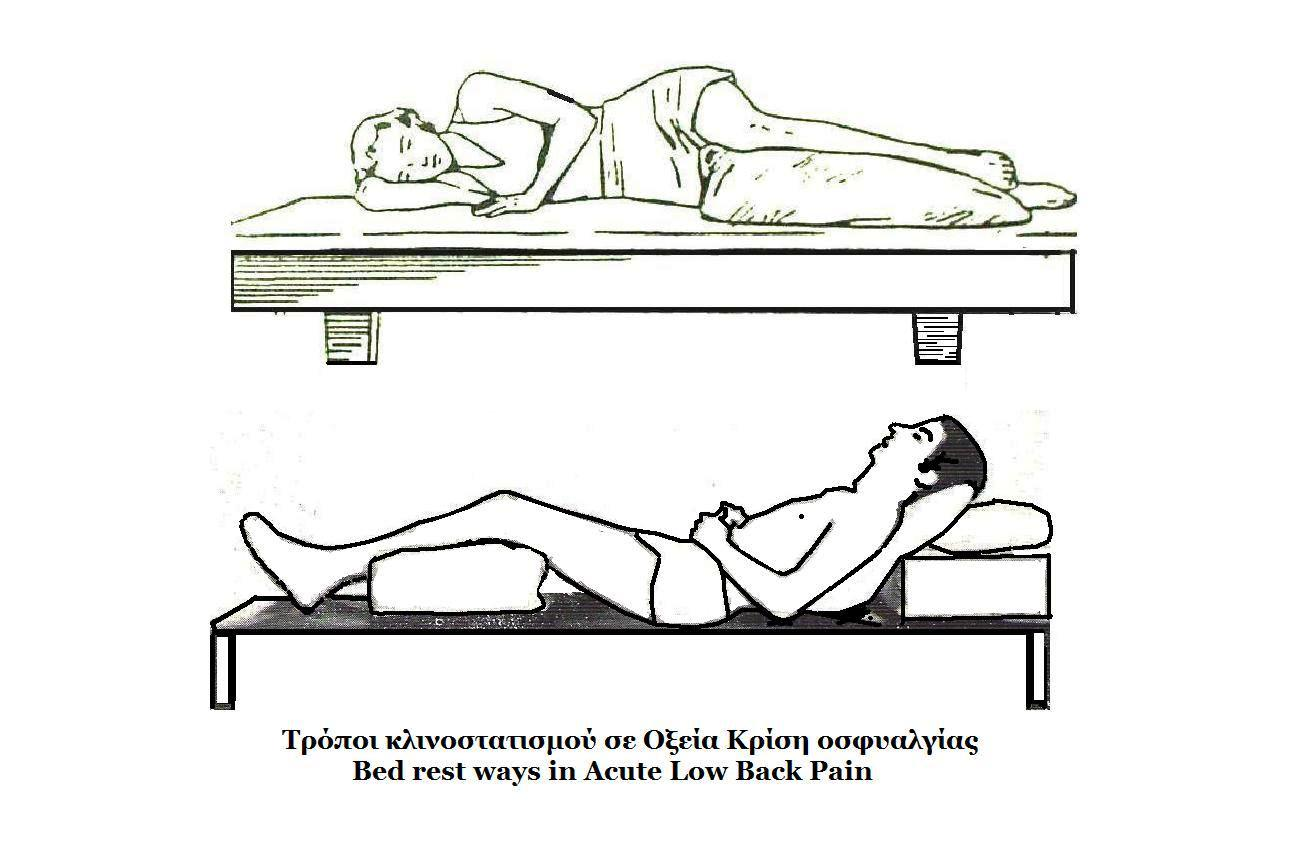
The instruction was to lie flat, on a firm surface, for one to two weeks, and in more serious cases for longer. A board was put under the mattress. Getting up was discouraged. The reasoning was mechanical and seemed obvious: a damaged structure should be unloaded while it heals, as you would rest a sprained ankle.
The trials that tested this found the opposite. Prolonged bed rest for non-specific low back pain is associated with slower recovery, more pain and more disability than staying active, and the mechanism is not mysterious: muscle conditioning falls off quickly when unused, joints stiffen, and the experience of being put to bed as an invalid reinforces the idea that the back is fragile and must be guarded, which becomes its own obstacle. Current guidance in the United States and internationally is to remain as active as the pain allows, to continue ordinary activity including work where possible, and to treat bed rest as something to be avoided rather than prescribed.
This is the single most consequential reversal in the whole subject, because the 1965 advice was not merely useless. A fortnight in bed made a two-week problem into a longer one, and a generation learned from the experience that their backs were unreliable.
Like our content? Follow us for more.
Bend your knees and keep your back straight
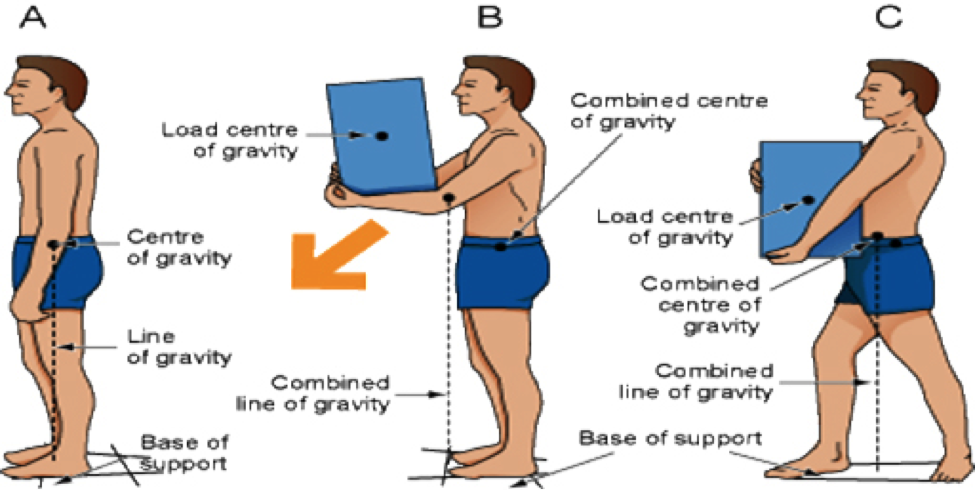
Every American workplace, school and household taught the same lifting instruction: feet apart, knees bent, back straight, load close, lift with the legs. It was printed on posters, demonstrated in training films and enforced by supervisors, and it remains the most widely known piece of occupational health advice ever issued.
The awkward finding is that teaching it does not appear to prevent back injury. Reviews of workplace lifting-technique training programmes have repeatedly found no meaningful reduction in back pain or injury rates compared with no training, which is a genuinely surprising result that the occupational health field spent years absorbing. What does reduce injury is changing the job: reducing how much is lifted, how often, from what height and in what posture, using mechanical aids, and redesigning the task so the lift does not have to happen.
None of this means the technique is wrong or that it is bad to lift sensibly. It means that instructing individuals in a posture is a weak intervention compared with changing the load, and that the 1965 approach of putting the responsibility on the worker’s form was addressing the wrong level of the problem.
Sit up straight, and the posture that was supposed to prevent everything
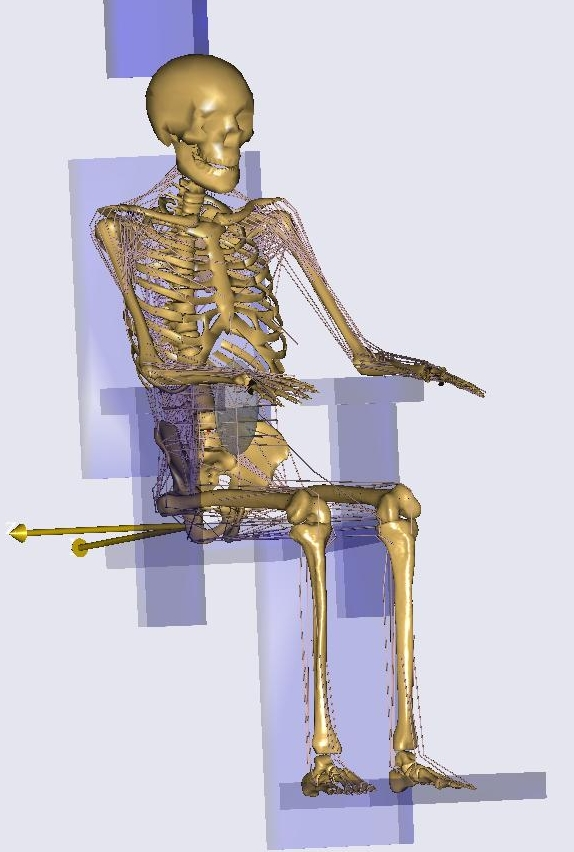
Posture occupied a moral position in 1965 that is difficult to convey now. Children were corrected constantly, schools ran posture checks and in some places posture competitions, slouching was treated as a character failing as much as a physical one, and a straight back was understood to prevent later trouble.
The evidence has not supported the central claim. Studies looking for an association between habitual sitting or standing posture and the development of back or neck pain have not found a consistent one, and there is no single correct posture that has been shown to protect against it. What does appear to matter is variation and movement: the problem with sitting is mostly the staying still, and the useful instruction is to change position regularly rather than to hold a prescribed one.
The practical effect of the 1965 framing was to make people anxious about an inherently harmless thing. A person convinced that their slouch is damaging them is more likely to interpret ordinary sensations as damage, and that interpretation is one of the better-established predictors of how long back pain lasts.
The firm mattress, and the board under it
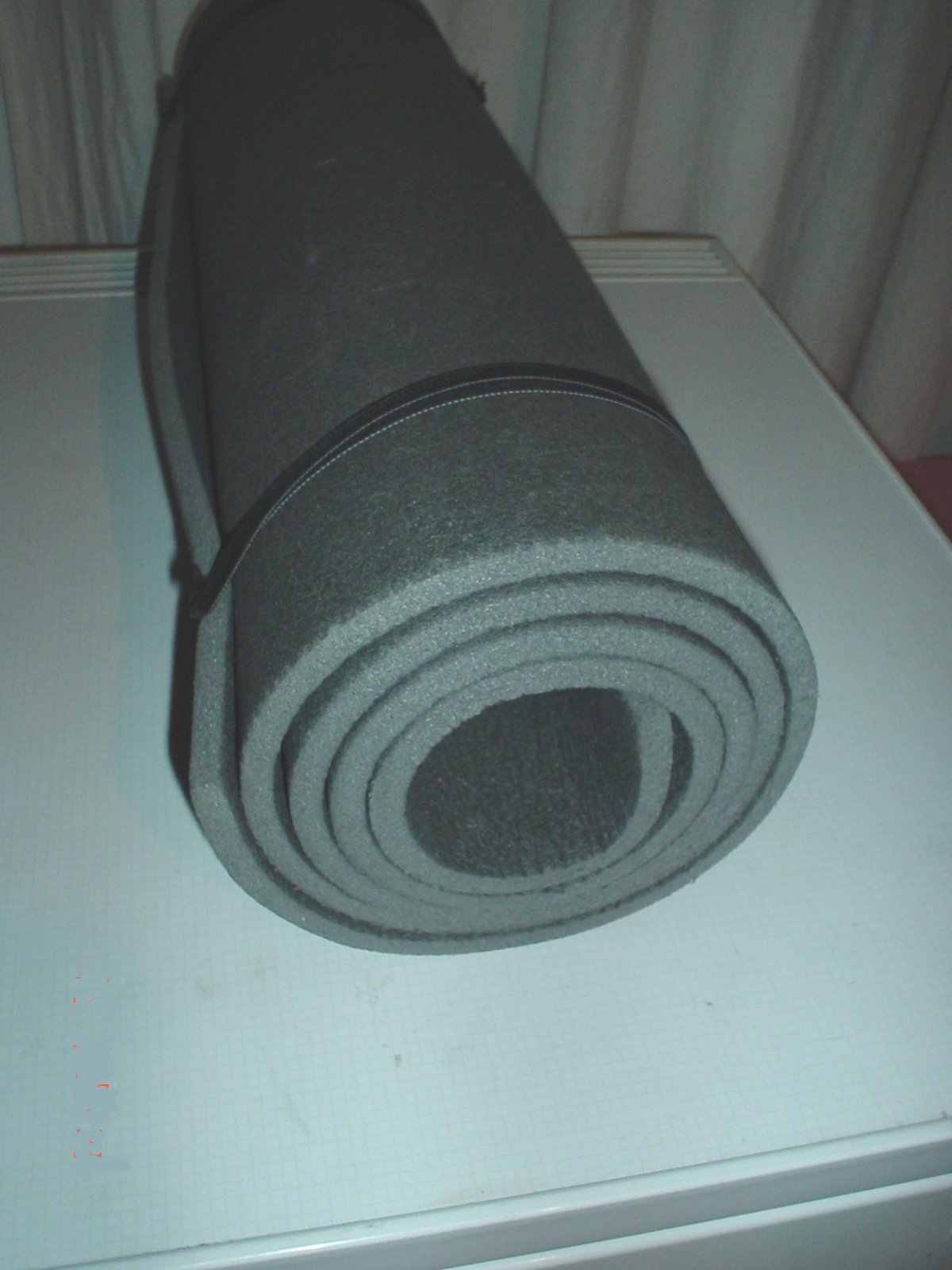
The firm surface was non-negotiable. A soft mattress was understood to let the spine sag out of alignment, orthopaedic mattresses were sold on that reasoning, and the plywood board under the mattress was a standard American household response to a family member’s back trouble.
The trial evidence points the other way. Comparisons of mattress firmness for people with low back pain have generally favoured medium-firm over firm, with the firmest surfaces performing worst, and the broader finding is that the effect of any mattress is modest and highly individual. The current position is close to common sense: sleep on what is comfortable, and a mattress is not a treatment.
The board is the detail worth retiring explicitly, because it is still in circulation as family advice. It was an attempt to make a sleeping surface as hard as possible on a theory about spinal alignment during sleep that was never demonstrated.
Get it X-rayed to find out what is wrong
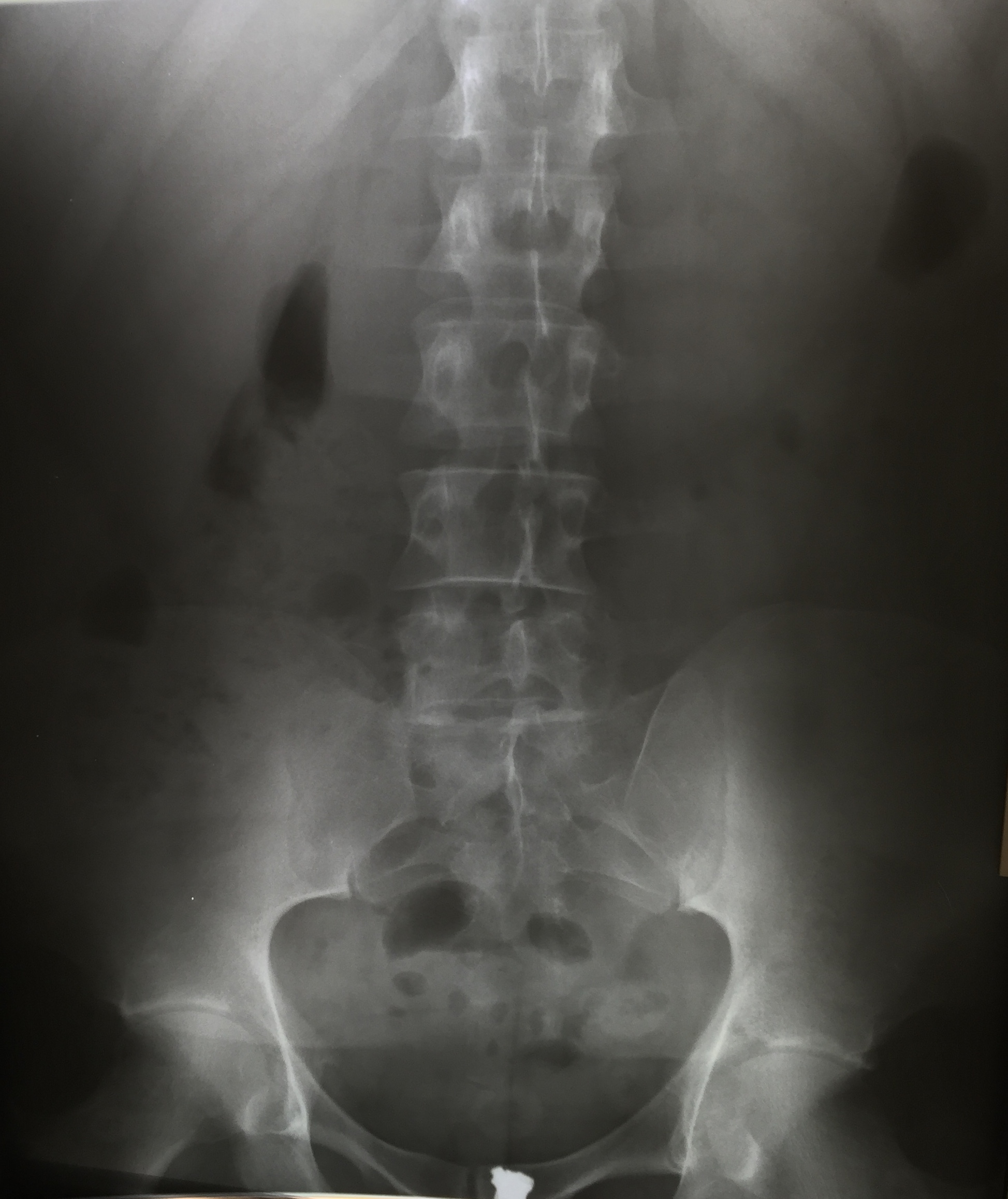
The 1965 instinct was to image, and the assumption was that an X-ray would show the cause. The vocabulary of the period — a slipped disc, a trapped nerve, something out of place — reflected a belief that back pain is a visible mechanical fault.
The finding that changed this is that the features visible on spinal imaging are extremely common in people with no pain whatsoever. Disc degeneration, bulges and other age-related changes are found in large proportions of entirely asymptomatic adults and become more common with age, which means a scan showing them does not establish that they are causing anything. American and international guidance now advises against routine imaging for non-specific low back pain in the absence of specific warning features, partly because it does not change management and partly because an incidental finding reported to an anxious patient can make the outcome worse.
There is an important exception that belongs in any honest account of this. There are specific features — a short list that clinicians are trained to ask about — which do indicate prompt investigation, and the reason not to list them here is that they need to be assessed rather than self-checked. Anybody with back pain that is not behaving like ordinary back pain should be seen.
Traction, corsets and the devices
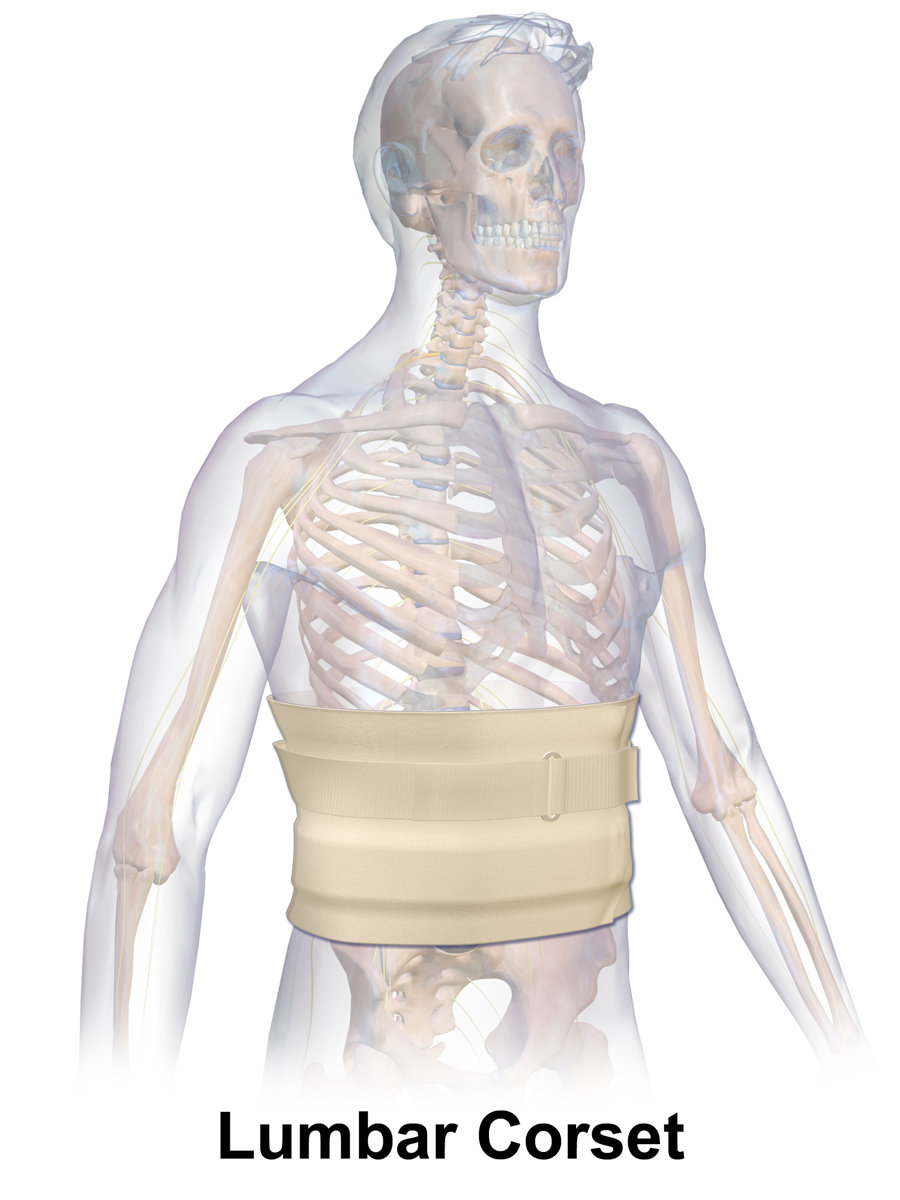
A 1965 physiotherapy department offered mechanical traction, which pulls the spine lengthwise on the theory of restoring space between vertebrae, and it was a mainstay for sciatica in particular. Reviews have not found it to be effective for low back pain or sciatica, and it has largely disappeared from guideline-based practice.
Back belts and corsets had the same fate. They were issued to workers as preventive equipment on a large scale, and the evidence for preventing injury in healthy workers did not materialise. Postural braces for children, pulled over the shoulders to hold them back, belong in the same category: there is no evidence they alter the development of posture, and the condition they were often aimed at — adolescent scoliosis — is managed with a specific type of medical brace prescribed and fitted clinically, which is an entirely different object.
The heavy schoolbag deserves a note because the belief is so persistent. Carrying a loaded bag is uncomfortable and can cause short-term pain, but the evidence that it causes lasting spinal problems or scoliosis has not held up.
What held up, and what to take from it
The findings that survived are unglamorous. Staying active is the single most supported piece of advice for ordinary back pain. Exercise, of almost any kind the person will actually continue, reduces recurrence. Understanding that ordinary back pain is usually not a sign of damage shortens its duration measurably, which is why explanation is now treated as part of treatment rather than as reassurance offered afterwards. And the risk factors with the best evidence are general ones — overall physical condition, smoking, and the psychological and workplace factors that influence how long an episode lasts — rather than anything about how a person sat or lifted on a particular afternoon.
The 1965 model got one thing right by implication, which is that the back deserves to be taken seriously; it simply drew the wrong conclusion about what taking it seriously means. The modern answer is to keep using it. The 1965 answer was to stop.
Nothing here is a substitute for examination, and the whole point of the imaging section is that the distinction between ordinary back pain and the kind that needs investigating is a clinical judgement rather than a reading exercise. What this history is useful for is recognising inherited advice for what it is: if the instruction in your family is a board under the mattress and a fortnight flat on your back, that instruction is sixty years old and the evidence went the other way.
Like our content? Follow us for more.
