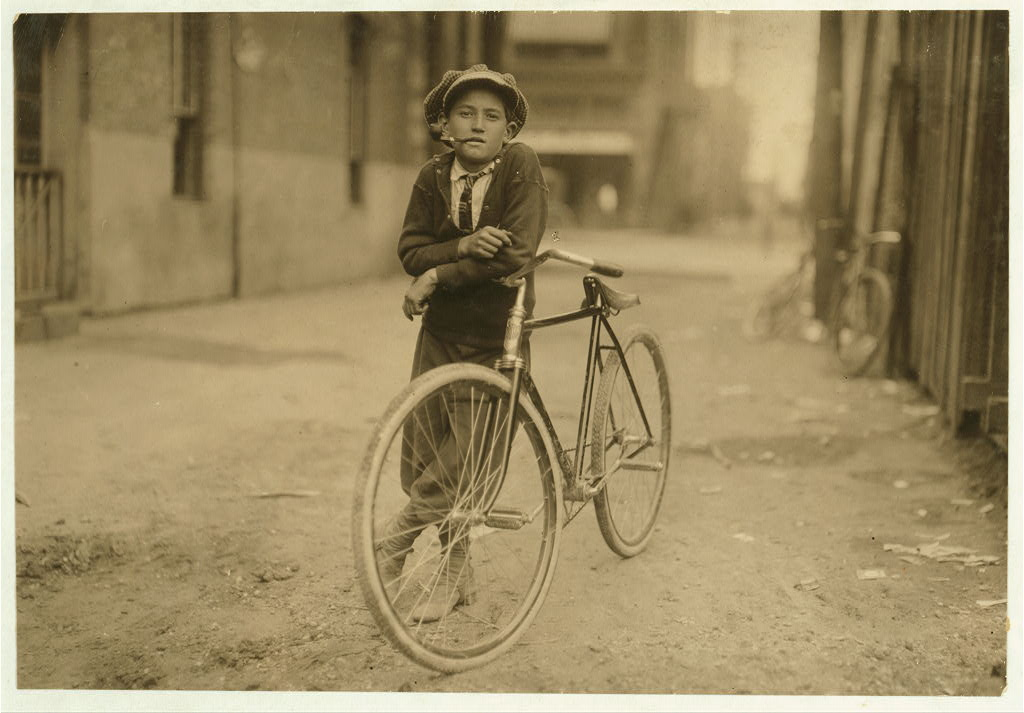
There is a particular kind of job that disappears so completely that the word for it stops making sense. The telegram boy is one of them. For about a century he was the fastest way to get a message from one place to another, he was a fixture of every town, and within a generation of the telephone reaching ordinary houses he was gone entirely, along with the network behind him.
What makes the job worth looking at is not the bicycle or the uniform, although both were specified down to the last detail. It is that a teenage boy on a bicycle was the delivery mechanism for every important message in the country, in both directions — births, results, contracts, winning bids, and the worst news a family would ever receive — and that the system was engineered around speed to a degree that is difficult to credit now.
What the job actually was
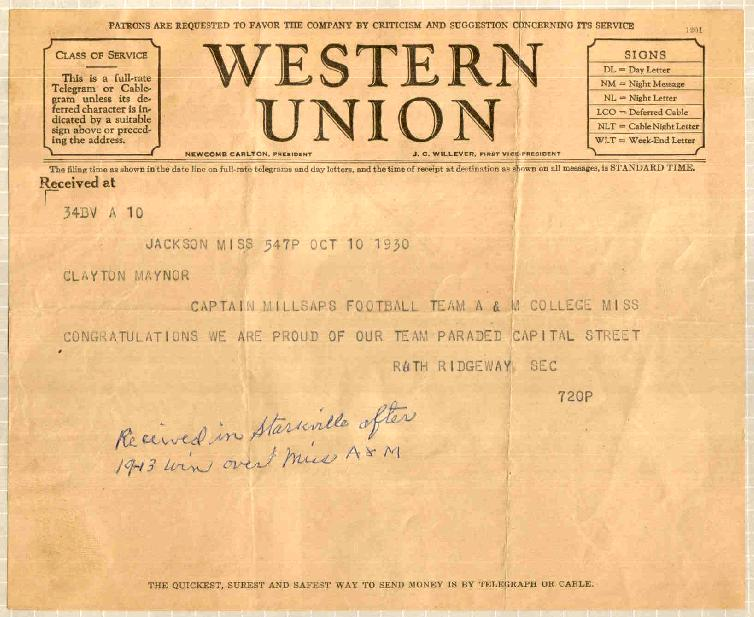
A telegram was not a letter and was not treated like one. A message handed in at a post office counter was transmitted electrically to the office nearest the recipient, typed or pasted onto a form there, and then put into the hand of a boy who took it to the door. The delivery was the last few hundred yards of a system that had already crossed the country in seconds, and the whole point was that the last leg should not be the slow one.
The boys were employed by the post or telegraph administration, usually from about fourteen or fifteen, in a uniformed grade with its own rules and its own promotion ladder. It was a recognised first job with a recognised next step: a boy who did it well moved into the counter, the sorting office, the engineering department or the telegraph instrument room itself.
The work was physical and relentless. A busy office sent boys out continuously through the day, each with one message or a handful for the same district, and the boy came straight back for the next. There was no batching, no round and no route in the sense a postman would recognise, because a telegram that waited for a round was a telegram that had defeated the purpose of the network.
The volume is the part that surprises people. In the peak decades the number of telegrams handled annually in a developed country ran into the tens of millions, and a town of any size had an office with a permanent staff of boys on duty from early morning until late in the evening, including weekends.
Like our content? Follow us for more.
The uniform and the machine were both specified
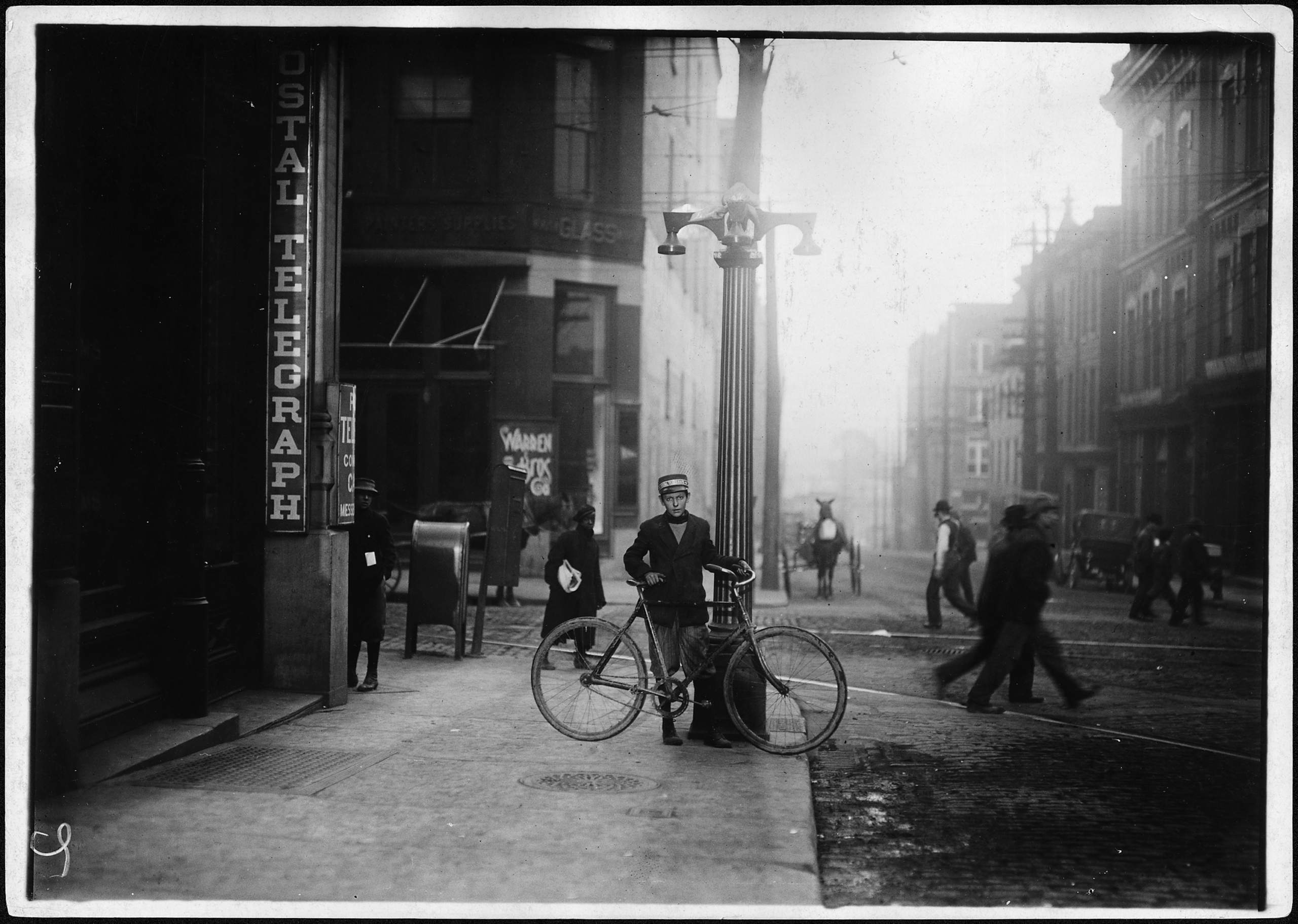
The uniform was a point of institutional pride and was issued rather than bought: a tunic or jacket with the service’s buttons, a cap with a badge, a belt, and a pouch for the message forms. It existed to be recognised instantly at a door, because a boy in that uniform was not selling anything and did not need to explain himself.
The bicycle was supplied and maintained by the office, built heavy and upright with a carrier, and in many services it was a standard machine fitted to the job rather than anything a boy would have chosen. Larger offices also ran motorcycles for outlying districts, and the motorcycle grade was a promotion.
Both were checked. A boy turned out for inspection, and a machine with a soft tyre or a dry chain was a disciplinary matter rather than a personal inconvenience, because the whole arrangement depended on the thing being ready to go at any moment.
What the boys themselves remember is the weather. There was no vehicle, no cover and no option to wait, and a wet winter evening in an industrial town, on an unlit road, on a heavy bicycle, in a uniform that was not waterproof, was simply the job. Capes were issued and were of their time.
Speed was measured, and the measurement mattered
The telegraph services kept statistics on the interval between a message arriving at the receiving office and being delivered at the door, and those figures were reported, compared between offices and published. A delivery target of a small number of minutes within the town’s central area was ordinary.
That is a level of measurement most modern delivery operations would recognise, achieved with a clock, a logbook and a boy’s own legs. Each delivery was timed out and timed in, and a boy who was slow was noticed quickly.
The consequence of the measurement was a working culture that was genuinely fast. Accounts from the period describe boys running the last part of a delivery, taking stairs two at a time, and waiting at the counter already astride the bicycle. It was also, inevitably, a culture that put teenagers on bicycles in traffic under time pressure, and the accident rate was not something anybody was keeping published statistics about.
The modern equivalent is instructive. Delivery work is still timed, still measured and still produces exactly the same pressure on the person doing it, which is now a recognised workplace health and safety issue with route planning, time allowances and incentive structures examined by regulators in several countries. None of that framework existed, and the boys absorbed it.
The job included carrying news nobody wanted
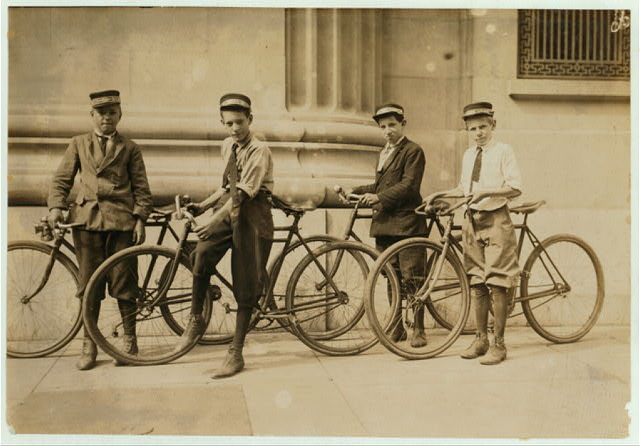
This is the part every account of the work comes back to. A telegram was the medium for urgent news of every kind, which meant that the same boy who delivered an examination result or a birth announcement also delivered notification of a death, and in wartime delivered it in volume.
Nothing about that is described here. What belongs in a file about the job is what it did to the people doing it: that a fourteen-year-old was handed an envelope and sent to a door, with no training, no preparation and no support afterwards, and frequently with an instruction to wait in case there was a reply. Boys learned to read the form before they knocked so that they knew what they were walking into. Some offices had an informal practice of sending an older boy or a member of counter staff for the worst of them, and some did not.
The contrast with modern practice is total and it is not really about telegrams. Any role that involves delivering serious news — in healthcare, in policing, in the coroner’s service, in the armed forces — now carries training for the task, a protocol for how it is done, and access to support for the person who did it, because the cumulative effect on them is understood as a workplace matter rather than a private one.
It is worth saying plainly that the boys were not consulted about any of it and that very little was written down. What is known about that side of the job comes almost entirely from what the men themselves said about it decades later.
The office behind the boy

The telegraph instrument room was the other half of the job and is the part that has vanished most completely. A town office held operators working teleprinters or, earlier, sounders and keys, receiving messages as they arrived, with the traffic peaking around business hours and at particular times of year.
The technology moved under the operators’ feet repeatedly within a single career. Hand-keyed Morse gave way to teleprinters, teleprinters to switched teleprinter networks, and the switched networks eventually to the telephone and then to everything after it. An operator who started on a key and finished on a keyboard was ordinary.
The working conditions in those rooms were their own subject: continuous noise from mechanical printers, repetitive keyboard work for full shifts long before anybody used the phrase repetitive strain, and in older offices lead-acid batteries and mercury in switching components sitting in the same room as the staff. None of it was monitored.
The boys sat in the middle of it, on a bench by the door, waiting. Every account mentions the bench. It was where you learned the office’s gossip, the operators’ shorthand, and which districts were worth volunteering for.
Why it ended, and how quickly

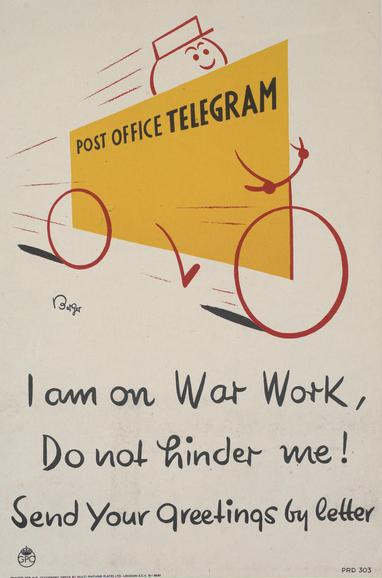
The telegram did not lose to one thing. It lost to the telephone reaching ordinary homes, which removed the need for an urgent written message between individuals, and then to the telex and the fax for business traffic, and then to everything electronic. In most countries domestic telegram traffic fell away through the 1960s and 1970s and the service was wound down or reduced to a greetings product.
The messenger grade went first, before the telegram itself, because the economics of a boy on a bicycle delivering a single message collapse as soon as the volume falls. Offices consolidated, deliveries went by post or by telephone call, and the uniformed grade was closed to new entrants.
It is one of the cleanest technological displacements of the century, and unlike many of the trades in this series nobody argues that something valuable was lost in the engineering. A telephone call is faster, cheaper and more reliable than a boy on a bicycle, and the service’s own administrators said so at the time.
What was lost was the thing the uniform represented. A recognised, uniformed, physically capable first job with a ladder attached, available to a fourteen-year-old with no qualifications in every town, which led somewhere. That particular shape of employment has very few modern equivalents, and the ones that exist are generally worse.
What the job was, underneath
A boy on a bicycle was the last link in the fastest communication system that had ever existed, and he knew it. The accounts are full of pride about speed, about knowing every short cut in a town, about the number of deliveries in a shift, and about the uniform.
They are also full of the other thing, told more quietly, about the envelopes nobody wanted to carry and the doors nobody wanted to knock on, and about being far too young to be doing it.
Both of those are true at once, and the honest summary of the job holds both. It was a genuinely good first job — structured, respected, physical, with a route onward — that also put children in front of the worst moments of strangers’ lives with nothing to prepare them and nobody to talk to afterwards. The first half of that has largely disappeared from the labour market. The second half is the part that modern practice has actually fixed.
Like our content? Follow us for more.