

From Southwest’s end of open seating to a $45 TSA fee for non-Real ID travelers, several major rule changes are now in effect. Most travelers don’t know about them yet — and the financial impact for unprepared travelers can be substantial.
The American air travel system in 2026 is meaningfully different from what it was in 2024. Several major policy changes — some by airlines, some by federal agencies — took effect in late 2025 and early 2026, and most travelers haven’t yet adjusted to the new rules. The financial impact for unprepared travelers can be substantial, ranging from $35 to several hundred dollars per trip in unexpected fees and missed savings.
Here are five of the most consequential changes, with what they actually mean.
1. Southwest Airlines ended 50+ years of open seating on January 27, 2026
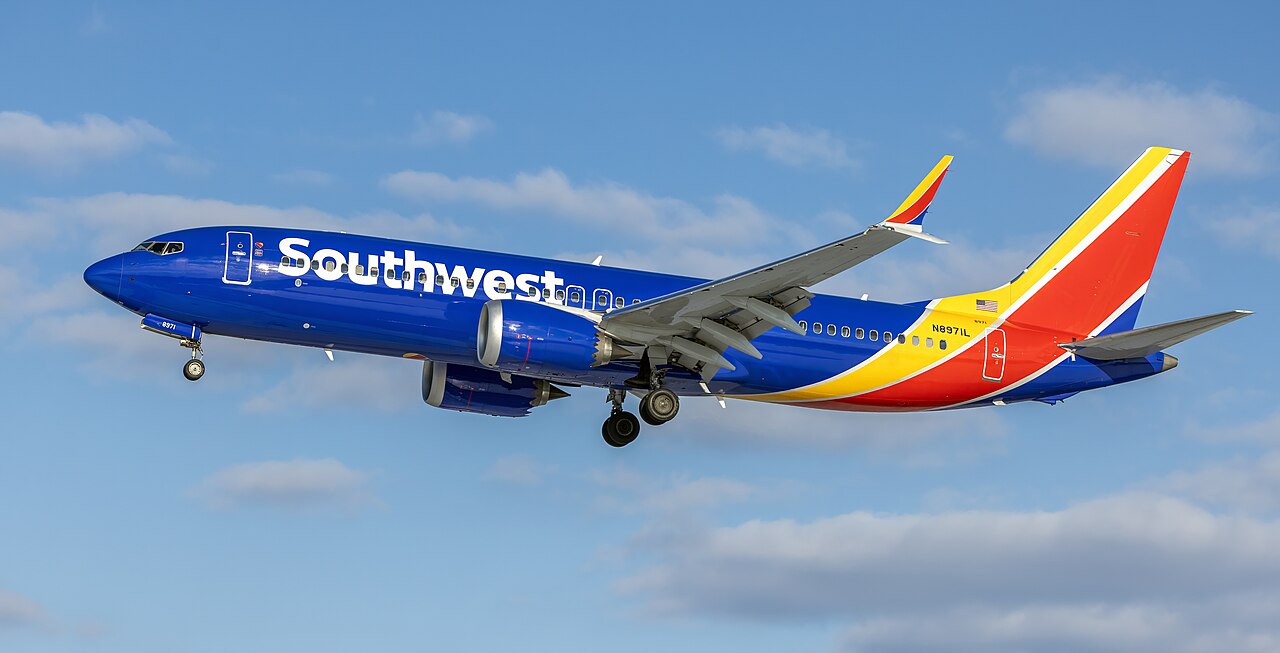
This is the most significant single change in American domestic aviation in a generation. Southwest Airlines — which operated for over 50 years on an open-seating boarding model — moved to assigned seats on January 27, 2026, fundamentally changing how Americans book and board the airline.
Under the new system, Southwest sells four fare types: Basic, Choice, Choice Preferred, and Choice Extra. Seats come at three tiers: Standard (regular assigned seat), Preferred (front cabin, early boarding), and Extra Legroom (exit rows and bulkhead). Boarding is now organized into Groups 1 through 8, replacing the old A/B/C+number system. Group 1 boards first; Group 8 boards last.
The traditional Southwest perks have largely disappeared. EarlyBird Check-In and Upgraded Boarding both ended after January 26, 2026. They’ve been replaced by a paid Priority Boarding option that costs varying amounts per flight (purchased between 24 hours and 60 minutes before departure). Free checked bags ended for Basic, Choice, and Choice Preferred fares — the first checked bag now costs $35 and the second costs $45 for tickets booked or changed on or after May 28, 2025. (A-List Preferred members and Choice Extra fares retain free checked bags. Hawaii residents traveling between islands also retain two free checked bags.)
For most Southwest customers, the practical implications are clear: you now need to choose seats during booking, you’ll likely pay for at least the first checked bag, and the historic “show up early to get the front row” strategy no longer works. Family seating is now an explicit policy: Southwest “will do our best” to seat children 13 and younger next to at least one adult. For Basic fares, family seating happens at check-in or gate; for Choice/Preferred/Extra, families select seats during booking.
A specific complication for plus-size travelers: Southwest’s “Customer of Size” policy changed alongside the seating change. Previously, Southwest allowed customers needing extra space to discuss seating with a gate agent and provided complimentary additional seats when needed. From January 27, 2026 forward, “Customers who encroach upon the neighboring seat(s) should proactively purchase the needed number of seats prior to travel to ensure the additional seat is available.” Refunds for the second seat are available after the trip if requested and if specific conditions are met.
2. Real ID enforcement is now mandatory — and a $45 fee may apply for non-compliance
Real ID enforcement officially began on May 7, 2025, but 2026 is when the consequences became unavoidable. Travelers without compliant identification — a Real ID-marked driver’s license, a U.S. passport, or other approved documents — face significant problems at TSA checkpoints. According to TSA reporting, approximately 6% of American travelers (roughly 140 million passengers annually) still lacked compliant identification as of late 2025.
A specific element of the new enforcement: starting February 1, 2026, the TSA implemented a $45 fee for travelers without Real ID who require additional identity verification. (This fee was widely reported in early 2026 coverage and remains in effect.) Travelers can also be subjected to extra screening, significant delays, or denial of boarding entirely if their identity cannot be verified through alternative means.
The good news on identification: TSA has expanded its acceptance of mobile driver’s licenses at over 250 airport checkpoints, including support for Apple Wallet, Google Wallet, Samsung Wallet, and several state-specific apps. For travelers who want to avoid carrying physical documents, mobile ID acceptance has grown substantially in 2026.
A separate change: TSA reversed its decades-old shoe-removal policy in July 2025. Travelers no longer need to remove shoes at most security checkpoints (with exceptions for specific equipment used at certain airports). This applies to travelers of all ages and is the first major TSA screening procedural reduction since post-9/11 protocols were established.
3. Automatic compensation for flight delays is no longer required

This is the policy change that most travelers don’t know happened. The Biden-era Department of Transportation rule that would have required airlines to pay $200-$755 for “controllable delays” (mechanical issues, crew shortages, etc., as opposed to weather-related delays) was cancelled by the Trump administration in 2025.
The practical effect: U.S. airlines are now setting their own delay-compensation policies. Some offer meal vouchers and hotel accommodations during long delays. Some offer essentially nothing. Travelers are entitled to a full refund only if a flight is fully cancelled — not delayed. This is a meaningful change from the framework that had been expected to take effect.
The travel insurance industry’s recommendations in 2026 have shifted accordingly. For domestic flights with tight connections or critical arrival times, travel insurance — particularly trip-delay coverage — has become more valuable than it was when automatic compensation was expected to be available. For international flights, the EU’s flight-delay compensation rules (EC 261/2004) still apply on EU-departing flights, providing €250-€600 in delay compensation for many situations. There’s no equivalent in the U.S.
4. Personal item enforcement is being automated at the gate
Travelers who used oversized backpacks, totes, or carry-on hybrid bags as “personal items” to avoid checked bag fees should expect this loophole to close in 2026. According to multiple 2026 reports, airlines are installing automated bag-sizing machines at boarding gates that measure personal items and carry-ons to the millimeter.
The enforcement difference matters financially. Bags flagged at the gate as oversized “personal items” face a check fee of $35-$65, depending on the airline and route. Some airlines are now blocking overhead bin access entirely on basic economy fares unless customers pay an additional fee.
American Airlines updated its bag fees effective April 9, 2026: the first checked bag is $50 ($45 if paid online), and the second checked bag is $60 ($55 if paid online) for domestic and most international travel. Other major U.S. carriers have similar pricing structures.
The practical guidance from travel professionals in early 2026: measure your bag against your specific airline’s published personal-item dimensions before traveling, use a structured bag that maintains its shape (rather than an over-stuffed backpack), and pay for any needed checked bag online rather than at the airport — which saves $5-$10 per bag.
5. International flights now require advance passenger information for many destinations

A less-publicized 2026 change is that more international destinations now require detailed advance passenger information (passport details, contact information, accommodation address) submitted before departure rather than at the destination’s border. This applies particularly to flights to the United Kingdom, the European Union (under the new ETIAS system), and several Asian destinations.
The European Union’s Entry/Exit System (EES), which was scheduled for late 2024 launch and progressively rolled out through 2025-2026, now requires biometric data collection (fingerprints and facial photos) for many non-EU travelers entering the Schengen Area. The ETIAS visa-waiver system, intended to require pre-travel authorization for Americans visiting Europe, is also now operational, though the specific date for full enforcement has been pushed to 2026.
For Americans planning European trips in 2026 and beyond: check the specific entry requirements for your destination country before booking. The “show up at the airport with a passport” approach that worked in 2019 is increasingly being supplemented with pre-travel digital authorization requirements.
A separate but related issue: skipping the first leg of a multi-flight itinerary now automatically cancels the rest of your ticket on most airlines, with fewer exceptions than before. Travelers who book “skiplagging” itineraries (booking a route through a connecting city, then skipping the second leg) are increasingly being detected by airline systems and having their remaining flights cancelled.
What all this actually means for travelers in 2026
The cumulative effect of these changes is a more expensive, more rule-bound, more identification-strict travel environment than American travelers experienced even five years ago. The Southwest seating change alone removed a significant low-cost option that millions of travelers had relied on. The Real ID enforcement requires every American traveler who flies domestically to verify their identification status well before their next trip. The personal-item enforcement makes carry-on travel less reliable as a way to avoid bag fees. The DOT compensation rule change means flight disruptions are more financially risky than expected.
The realistic adjustments for a 2026 traveler: verify your driver’s license is Real ID-compliant before any flight, expect to pay for at least one checked bag on most U.S. carriers, factor in $35-$50 in additional fees per flight beyond the advertised fare, consider trip-delay travel insurance for any trip with tight connections or critical arrival times, and check your destination’s specific entry requirements 60+ days before international travel.
These aren’t catastrophic changes individually. But they collectively shift the cost and complexity of American air travel in ways that consumers haven’t fully internalized yet. A traveler who flew comfortably under 2019 rules and hasn’t flown in 2025-2026 should expect a meaningfully different experience and budget for it accordingly.

