

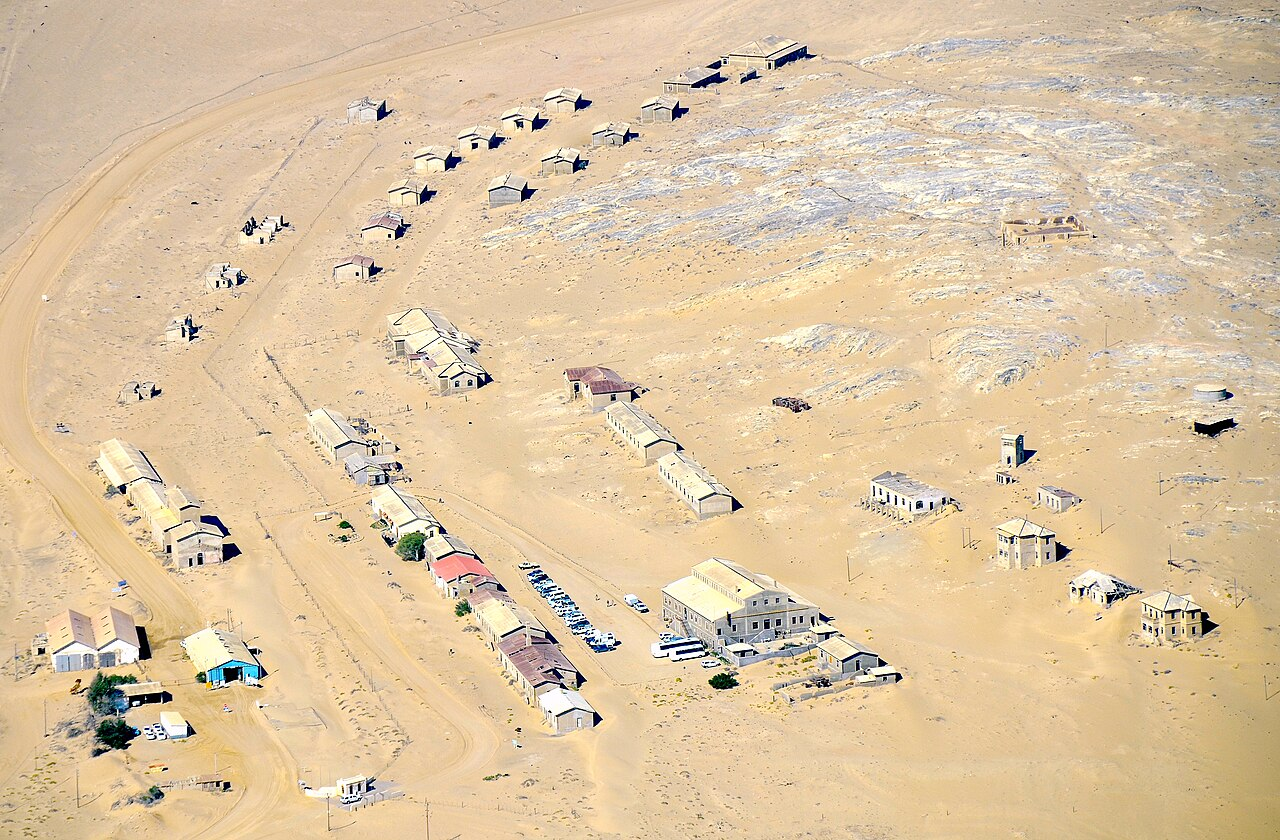
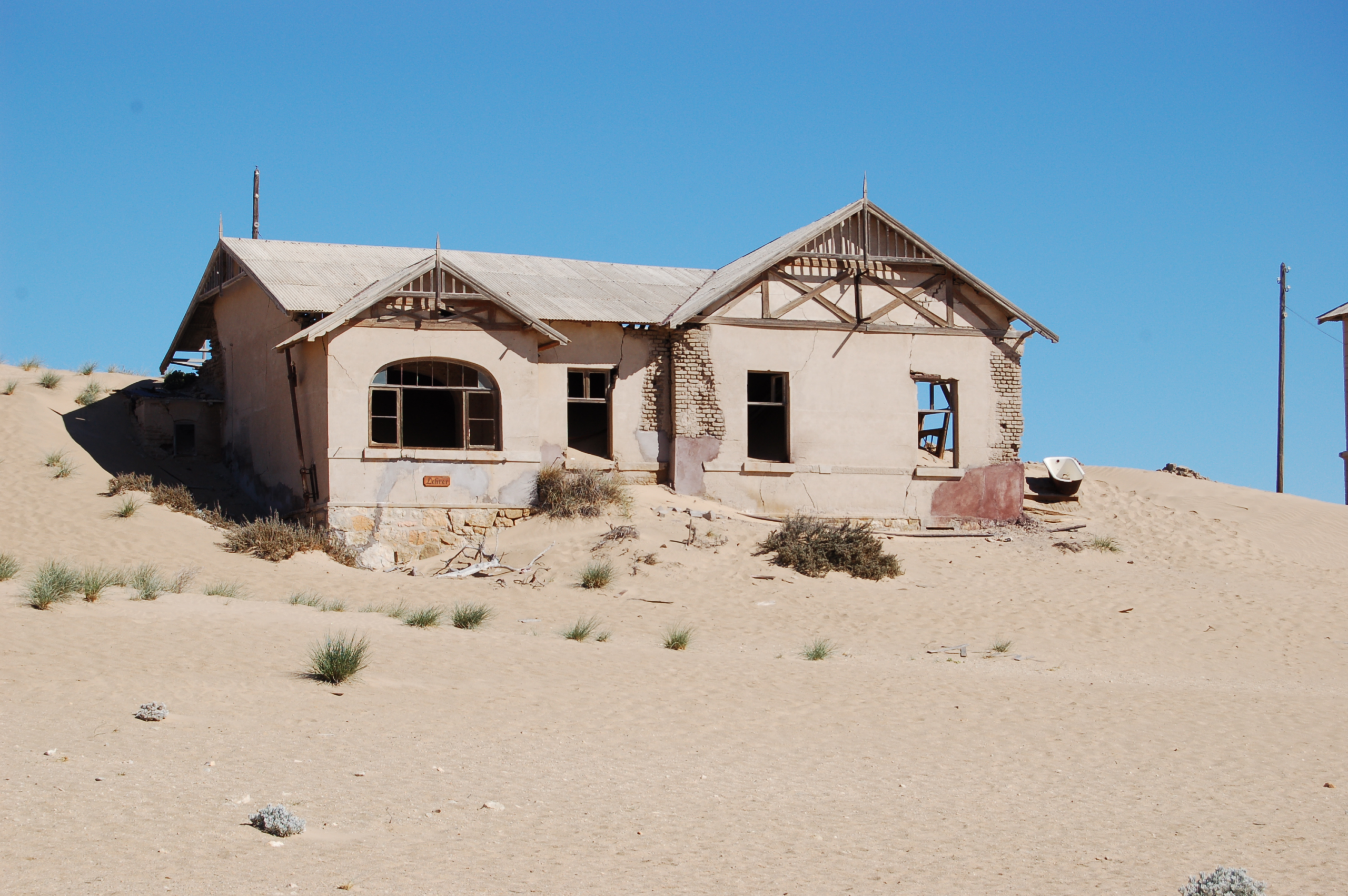
Few places on Earth are as surreal as Kolmanskop. In this abandoned town in the Namib Desert, elegant early-20th-century houses stand with their doors and windows open to the dunes, their once-grand rooms now half-submerged in smooth banks of golden sand. Sunlight slants through broken panes onto peeling wallpaper, and the desert pours in where families once lived in luxury. Kolmanskop was, for a few glittering decades, one of the wealthiest towns in Africa, built on a diamond rush in the sands. Then the diamonds ran out, the people left, and the desert moved in to reclaim it. Here is its remarkable story.
A Diamond in the Sand
Kolmanskop’s story began in 1908, near the coastal town of Lüderitz in what was then German South West Africa. A railway worker named Zacharias Lewala, clearing drifting sand from the tracks, noticed a glittering stone in the ground. He showed it to his German supervisor, who identified it as a diamond. Lewala himself was reportedly never rewarded for the discovery that would make others enormously rich.
Word spread fast, and prospectors descended on the desert, where, in the early days, diamonds could famously be picked right off the sand. By 1912, a town had sprung up, and the area was producing around a million carats a year, an astonishing share of the world’s total diamond output at the time. German authorities moved to control the riches, declaring a vast stretch of the region a Sperrgebiet, or restricted “forbidden zone,” reserving prospecting rights and barring ordinary entry.
Like our content? Follow us for more.
A Town of Astonishing Luxury
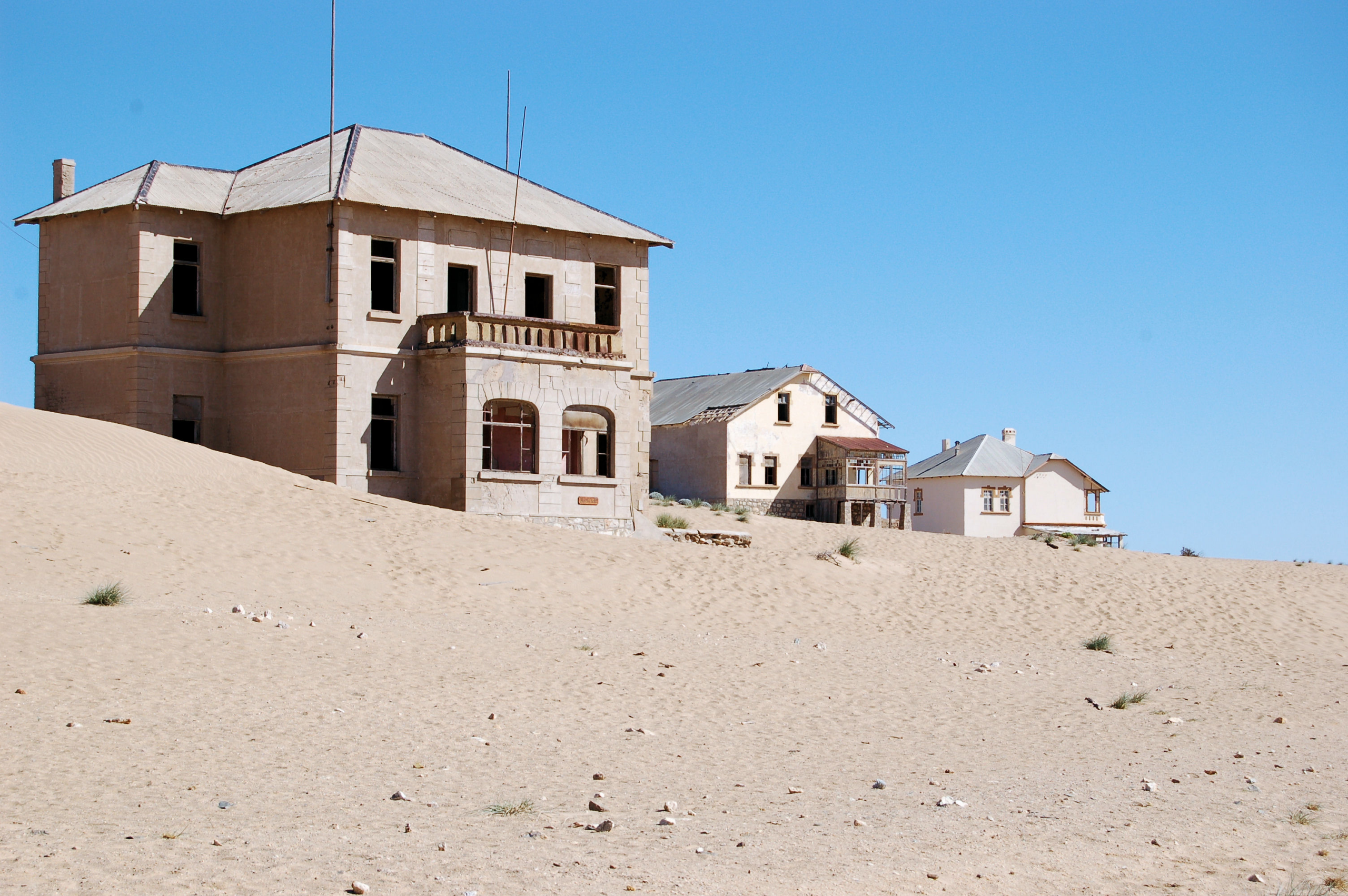
Flush with diamond wealth, Kolmanskop was built into a town of remarkable opulence for its remote desert setting. German settlers constructed grand homes and imported European comforts and architecture. The town boasted amenities far beyond what its harsh location might suggest, including a ballroom and concert hall, where opera performers were brought in from Europe, a hospital said to have housed the first X-ray machine in southern Africa, a bowling alley, and an ice factory.
Water was transported in by rail across the desert, used in part to keep green gardens alive amid the dunes, and the ice plant let residents enjoy cold drinks and fresh ice in the heat. Life for the town’s privileged residents was one of champagne, parties, and surprising refinement in the middle of one of the world’s oldest deserts. One resident even famously kept a pet ostrich. It was a glittering, improbable oasis built entirely on diamonds.
This prosperity, however, rested on a harsher reality. The diamond operations relied heavily on laborers, and local people displaced by the restricted zone were often put to work in difficult, tightly controlled conditions, a sobering part of the town’s history that sits alongside its tales of luxury.
The Desert Takes It Back
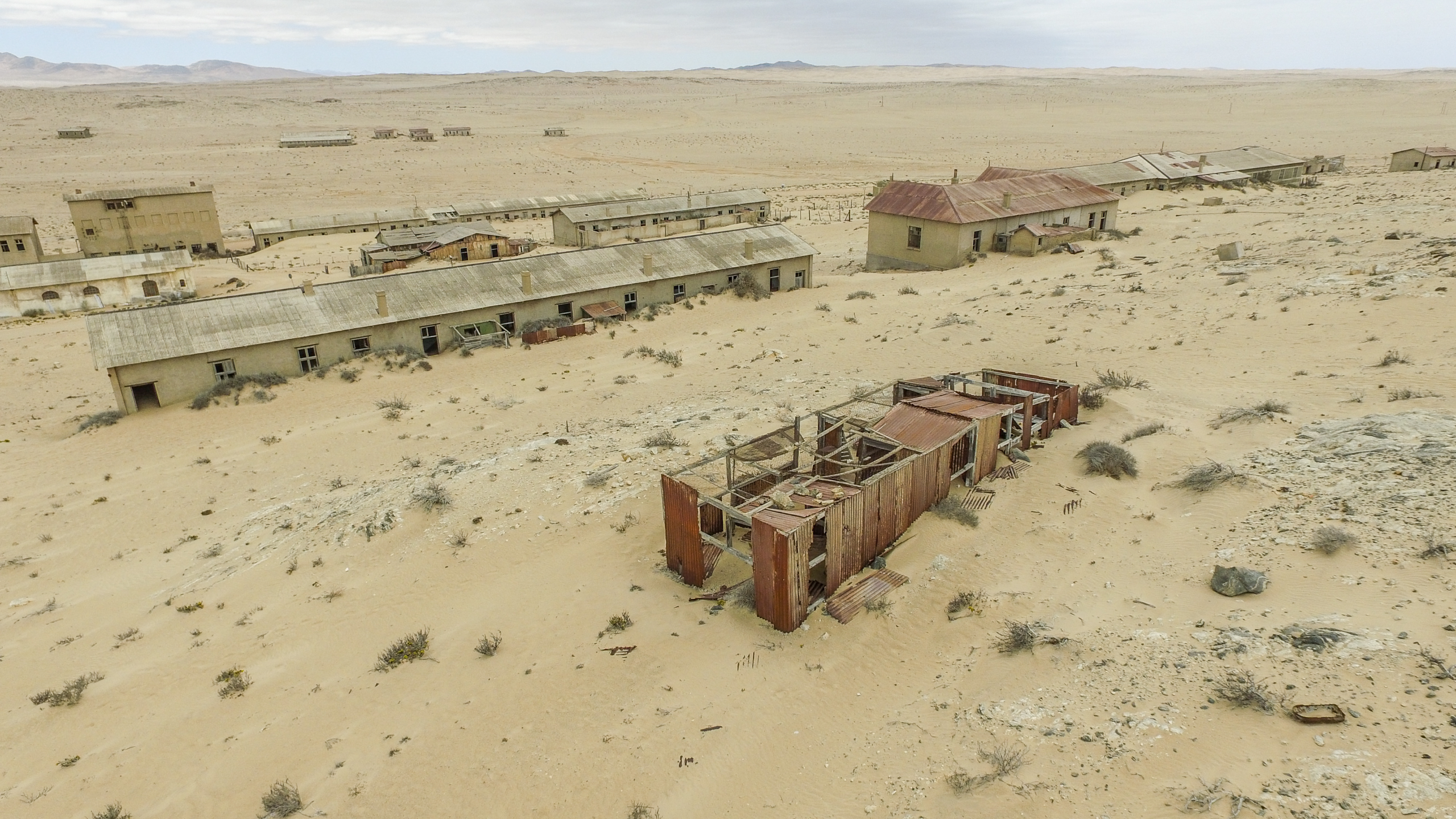
Kolmanskop’s decline began almost as suddenly as its rise. In 1928, far richer diamond deposits were discovered to the south, near Oranjemund, and the rush shifted there. People began leaving Kolmanskop in droves, drawn to the new fields. The mining company that controlled the deposits wound down its presence, and over the following years the town steadily emptied.
Mining around Kolmanskop ceased by about 1950, and within a few years the town was completely abandoned, with the last residents gone by the mid-1950s. Once the people left, the desert wasted no time reclaiming what was once its own. With no one to sweep back the ever-encroaching dunes, sand began pouring through doorways and windows, piling up in drifts inside the grand houses. Decade by decade, the desert has buried Kolmanskop, turning its elegant rooms into dunes and its streets into sand.
A Surreal Destination Today
Far from vanishing entirely, Kolmanskop has found new life as one of Namibia’s most striking tourist attractions and a magnet for photographers from around the world. The haunting images of sunlit, sand-filled rooms, with dunes spilling across cracked floors and faded wallpaper, have made the town famous. In the 1980s, the diamond company that long controlled the area restored some of the structures and established an on-site museum, and today visitors can obtain a permit and wander freely through the eerie, beautiful ruins.
Located a short distance from Lüderitz on Namibia’s southern coast, Kolmanskop sits within the historically restricted diamond zone, and a visit takes some planning given its remote desert location. But for travelers drawn to history, photography, or simply the otherworldly sight of a town being swallowed by sand, it is unforgettable. Some visitors come for the ghost stories that have grown up around the silent town; most come for the haunting beauty of the place itself.
Kolmanskop stands as a powerful monument to boom and bust, a town that rose from the sand on a fortune in diamonds and was returned to the sand once the riches were gone. Walking through its half-buried rooms, where the desert and the remnants of vanished luxury meet, is a striking reminder of how quickly fortune can fade, and how patiently the desert waits to reclaim what was built upon it.
Like our content? Follow us for more.
