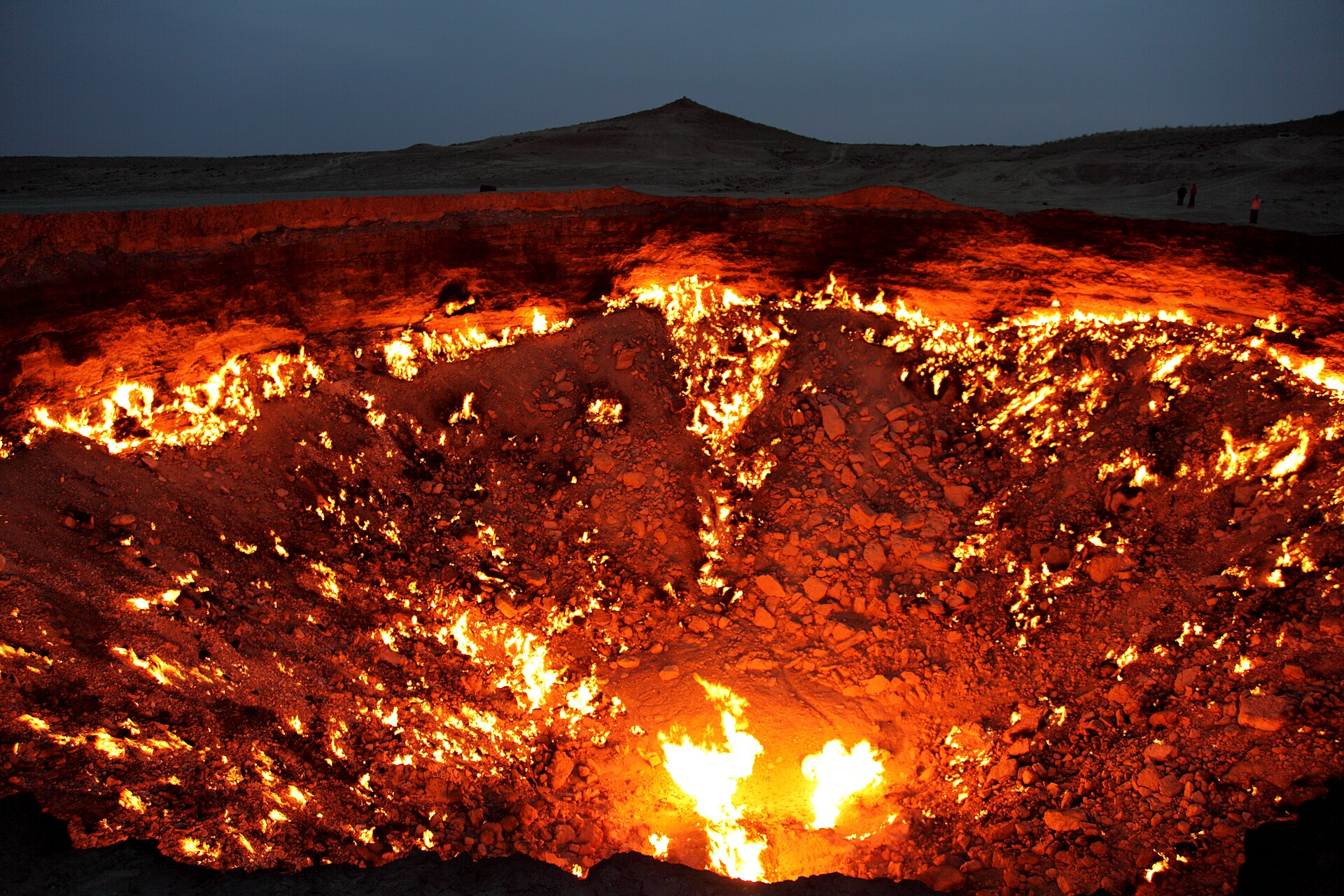
Deep in one of the emptiest deserts on Earth, a giant hole in the ground has been on fire for over fifty years. The Darvaza gas crater, in the Karakum Desert of Turkmenistan, is one of the planet’s strangest and most haunting sights: a flaming pit roughly 230 feet wide that throws orange light across the dunes every single night. Travelers who make the difficult journey to see it call it the “Door to Hell” or the “Gates of Hell,” and standing at its edge, feeling the heat and hearing the roar of the flames, it’s easy to understand why. This is the story of how it came to be, why it’s still burning, and what may finally put it out.
A Fiery Accident in the Desert
The most widely told origin story dates the crater to 1971, when Soviet geologists were drilling for natural gas in this remote stretch of Turkmenistan, then part of the Soviet Union. According to the popular account, the ground beneath their rig gave way, collapsing into an underground cavern and forming a large crater that began leaking methane gas. Fearing the poisonous gas would endanger the nearby village of Darvaza and the surrounding desert, the geologists decided to set it alight, expecting the gas to burn off harmlessly in a matter of weeks.
But the flames never went out. The underground gas supply turned out to be far larger than anyone realized, and the crater has been burning continuously ever since, for more than five decades. It’s worth noting that the story is hard to verify: Turkmenistan has no official record of the event, and some local geologists suggest the crater may have collapsed in the 1960s and only been ignited later, in the 1980s. Whatever the precise truth, the crater has now been on fire longer than the Soviet Union existed after it was lit.
Like our content? Follow us for more.
A Coliseum of Fire
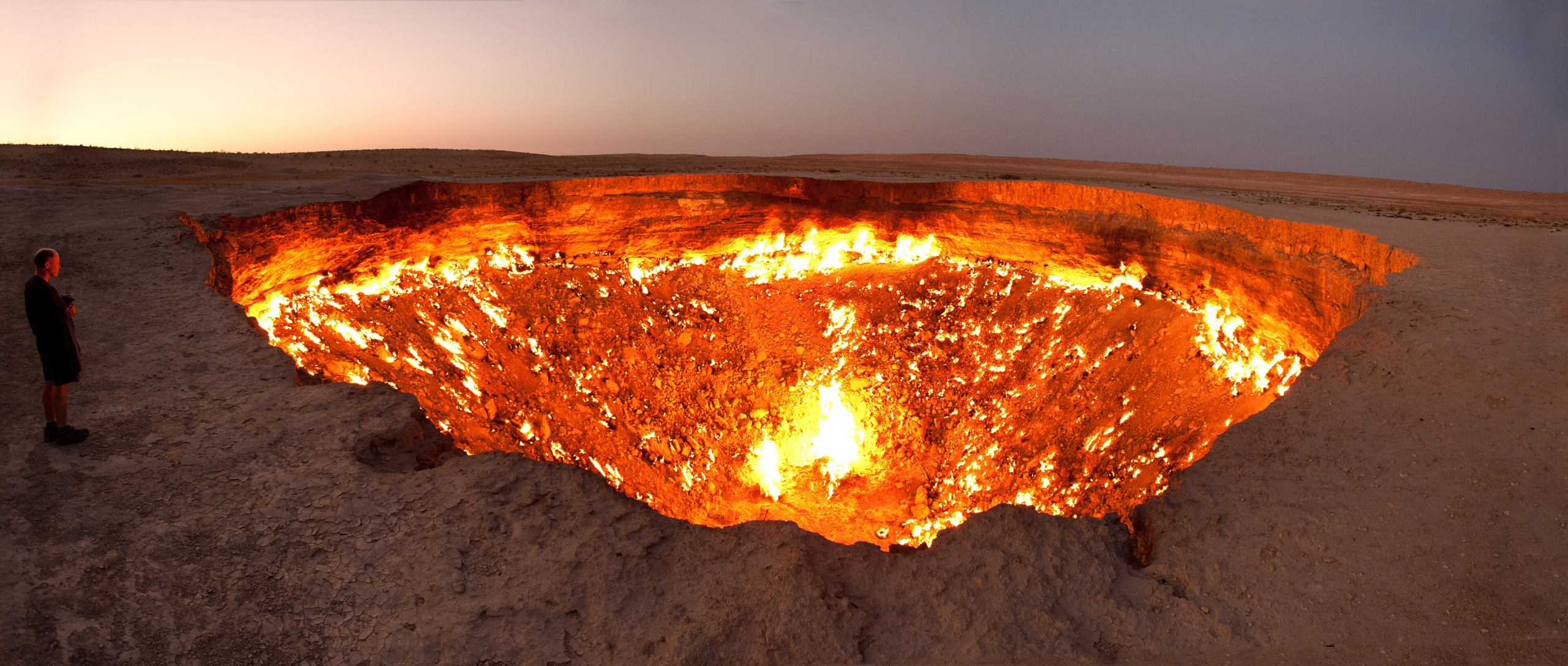
Measuring roughly 200 to 230 feet across and around 100 feet deep, the Darvaza crater is a near-perfect circle of fire in an otherwise dark and empty landscape. Its glow can be seen from miles away, drawing the eye across the desert at night. The fire isn’t a single blaze but thousands of individual flames, flickering wherever methane seeps up through fractures in the crater’s walls and floor and meets the oxygen in the air.
Those who have stood at the rim describe an almost otherworldly experience: intense, radiating heat that’s hard to bear at certain points along the edge, a roaring sound like a jet engine, and the smell of gas carried on the wind. One explorer who descended into the crater in 2013, the first person ever to do so, gathering soil samples during his brief time at the bottom, described it as a “coliseum of fire,” surrounded on all sides by flame. The clean-burning gas produces no smoke, leaving every lick of fire vividly visible against the desert sky.
One of the World’s Least-Visited Places
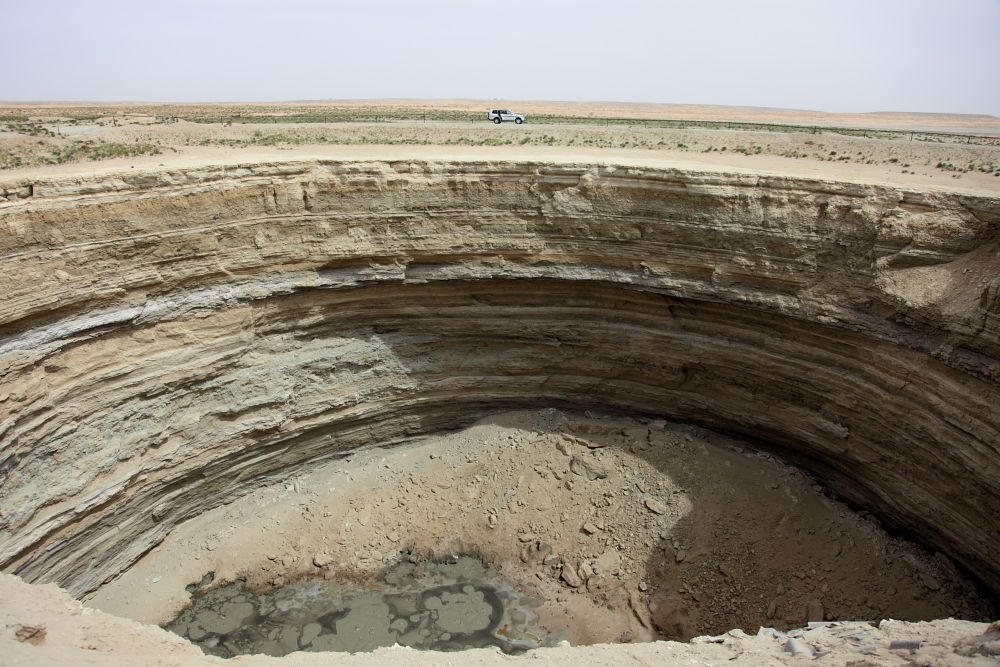
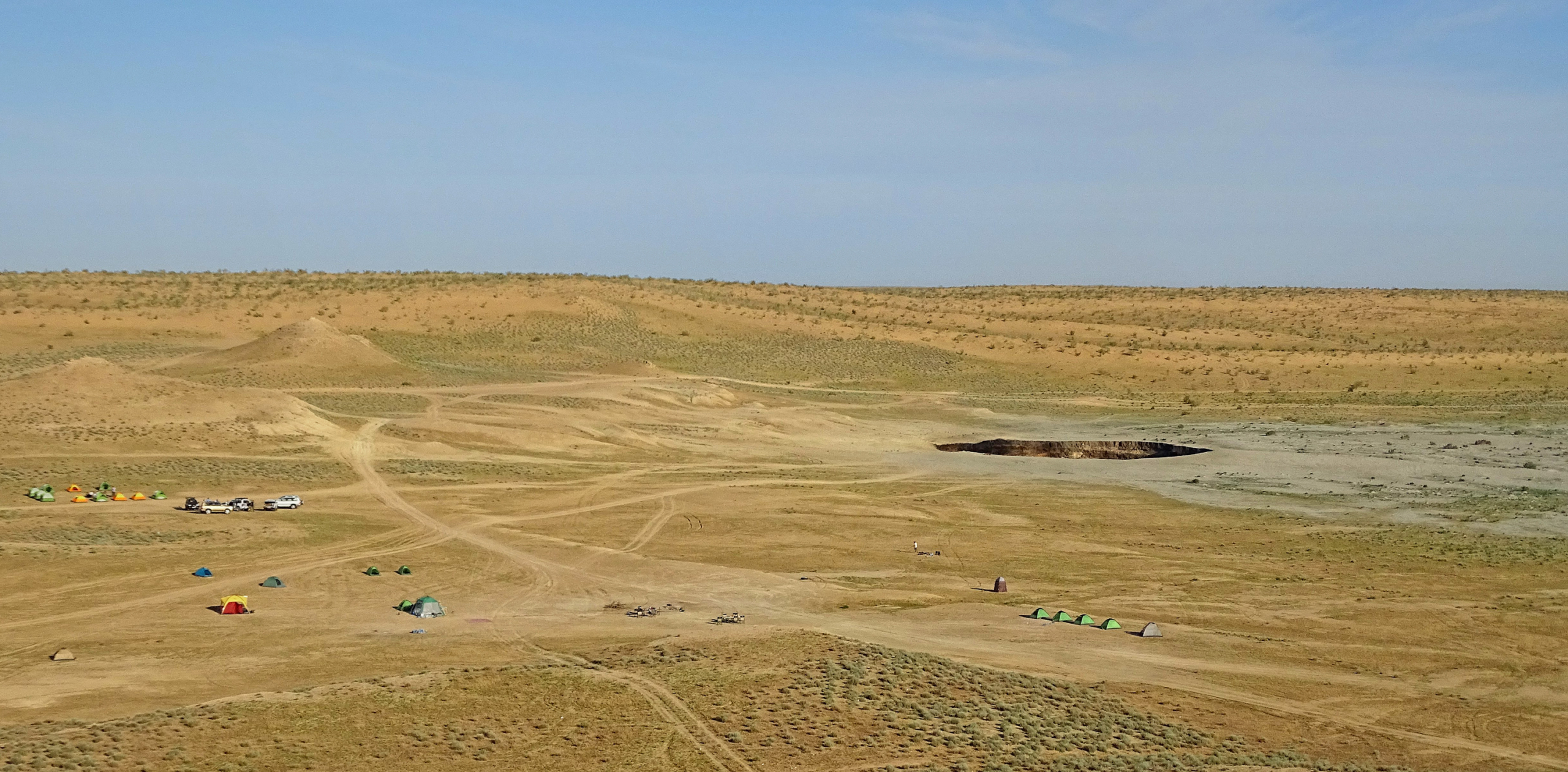
Reaching the Door to Hell is no easy feat. Turkmenistan is one of the least-visited countries in the world, known for its strict visa requirements and limited tourism. Independent travel is difficult, and most visits must be arranged through a tour operator. From the capital, Ashgabat, the crater lies roughly 160 miles, or about four hours’ drive, to the north, much of it on rough, unpaved desert roads.
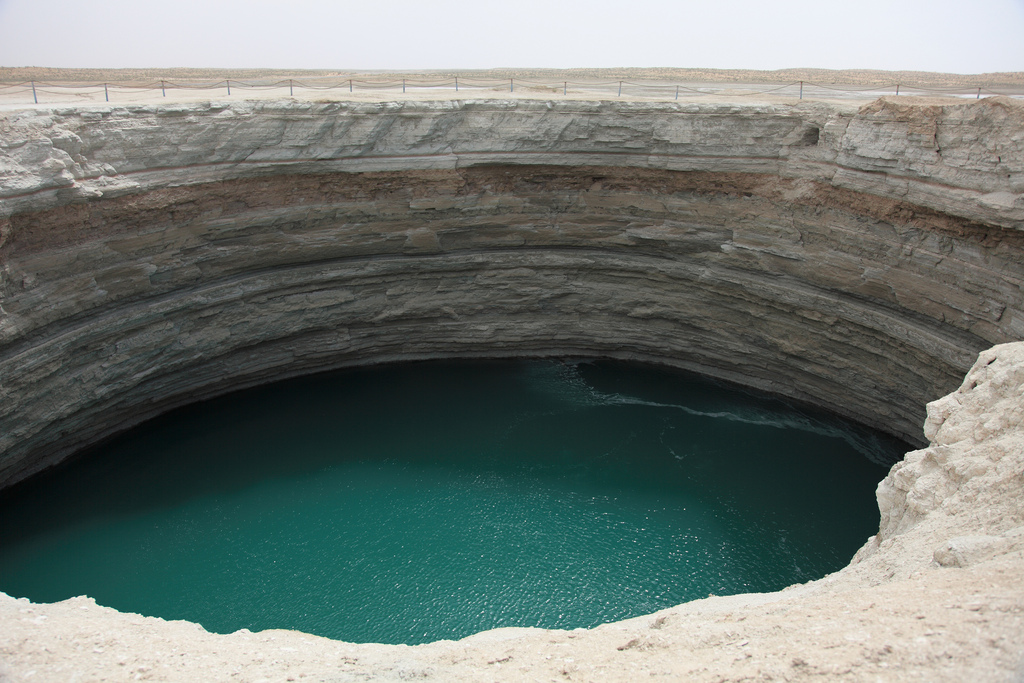
Despite the difficulty, the crater has become Turkmenistan’s most famous landmark and a genuine draw for the adventurous travelers who do make it. The surrounding area was declared a natural reserve in 2013, and yurts have been set up nearby for those who want to camp and watch the flames after dark, when the spectacle is at its most dramatic. Nearby, there are two other curious sights: a water-filled crater and a mud crater that bubbles with escaping gas. For those willing to endure the journey, the reward is a view quite unlike anything else on Earth.
Will the Flames Finally Go Out?
After more than fifty years, the Door to Hell’s future is uncertain. Turkmenistan’s leaders have, at various points, expressed a desire to extinguish it. Officials have framed the endlessly burning crater as both an environmental problem, since burning methane contributes to greenhouse gases and the country has high methane emissions, and an economic waste, since the escaping gas is a valuable export resource simply going up in flames.
Plans to put out the fire were flagged as far back as 2010, and in January 2022 the country’s then-president announced renewed efforts to extinguish it. More recently, scientists at the state energy company have proposed drilling new wells nearby to divert the gas away from the crater and starve the flames. There have even been reports that the fires have been dwindling, with one official claiming a significant reduction. Yet sealing the crater is harder than it sounds: the fire is fed by a diffuse network of underground fractures, not a single source, and capping it could simply force the gas to vent elsewhere. For now, the Door to Hell continues to glow, outlasting every confident prediction of its end.
A Window Into the Earth
The Darvaza gas crater stands as one of the most striking accidental landmarks on the planet, a reminder of both the immense energy locked beneath the Earth’s surface and the unpredictable consequences of human activity. What began, by most accounts, as a quick fix to a drilling mishap has become a decades-long phenomenon that draws travelers from around the world to one of its most remote corners.
Whether the flames are eventually extinguished or continue to burn for decades more, the Door to Hell has already earned its place among the world’s great natural curiosities. It’s a destination that rewards the few who reach it with an unforgettable sight: a fiery window into the Earth, glowing alone in the silence of the desert night. For now, it remains lit, a half-century-old fire still burning bright in the heart of the Karakum, waiting for the next chapter in its remarkable story.
Like our content? Follow us for more.