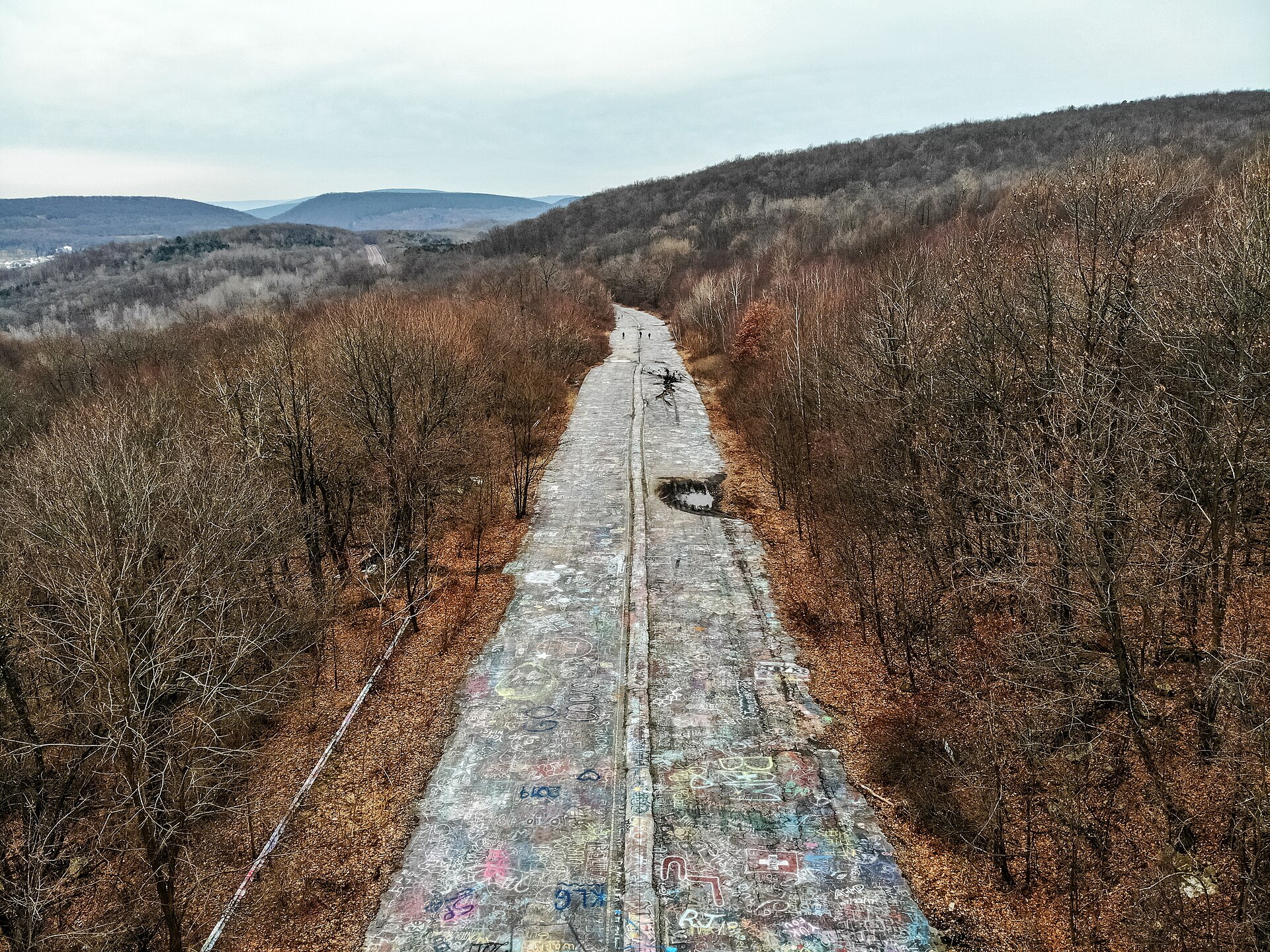
Drive through the wooded hills of eastern Pennsylvania’s anthracite country and you can pass Centralia without noticing it: a grid of empty streets with almost no houses, overgrown sidewalks leading nowhere, and a few scattered buildings where a town of more than a thousand people once stood. What you can’t see from the car is the reason, because the reason is underground, where a coal fire that started in 1962 is still burning today.
The Fire That Started at the Dump
The most widely accepted account traces the disaster to May 1962, when a fire at the town landfill, sitting in an old strip-mine pit, ignited an exposed seam of anthracite coal. Anthracite burns hot, slow, and stubborn, and the fire slipped into the labyrinth of abandoned mine tunnels beneath the town, where it found a nearly limitless fuel supply and almost no way for anyone to reach it. Early attempts to dig it out or smother it failed one after another, hampered by cost, geology, and the sheer difficulty of fighting a fire you cannot see.
Like our content? Follow us for more.
Two Decades of Living Over a Furnace
For years, Centralia’s roughly 1,400 residents lived uneasily above the spreading fire, monitoring carbon monoxide in their basements, watching snow melt in strange bare patches, and smelling sulfur on certain streets. The turning point came in 1981, when the ground opened beneath a twelve-year-old boy in his grandmother’s backyard, a sudden sinkhole venting hot, toxic gases, and he survived only by clinging to tree roots until his cousin pulled him out. The near-tragedy made national news and forced the question the town had been living with for two decades: whether Centralia could be saved at all.
The Government Buys a Town
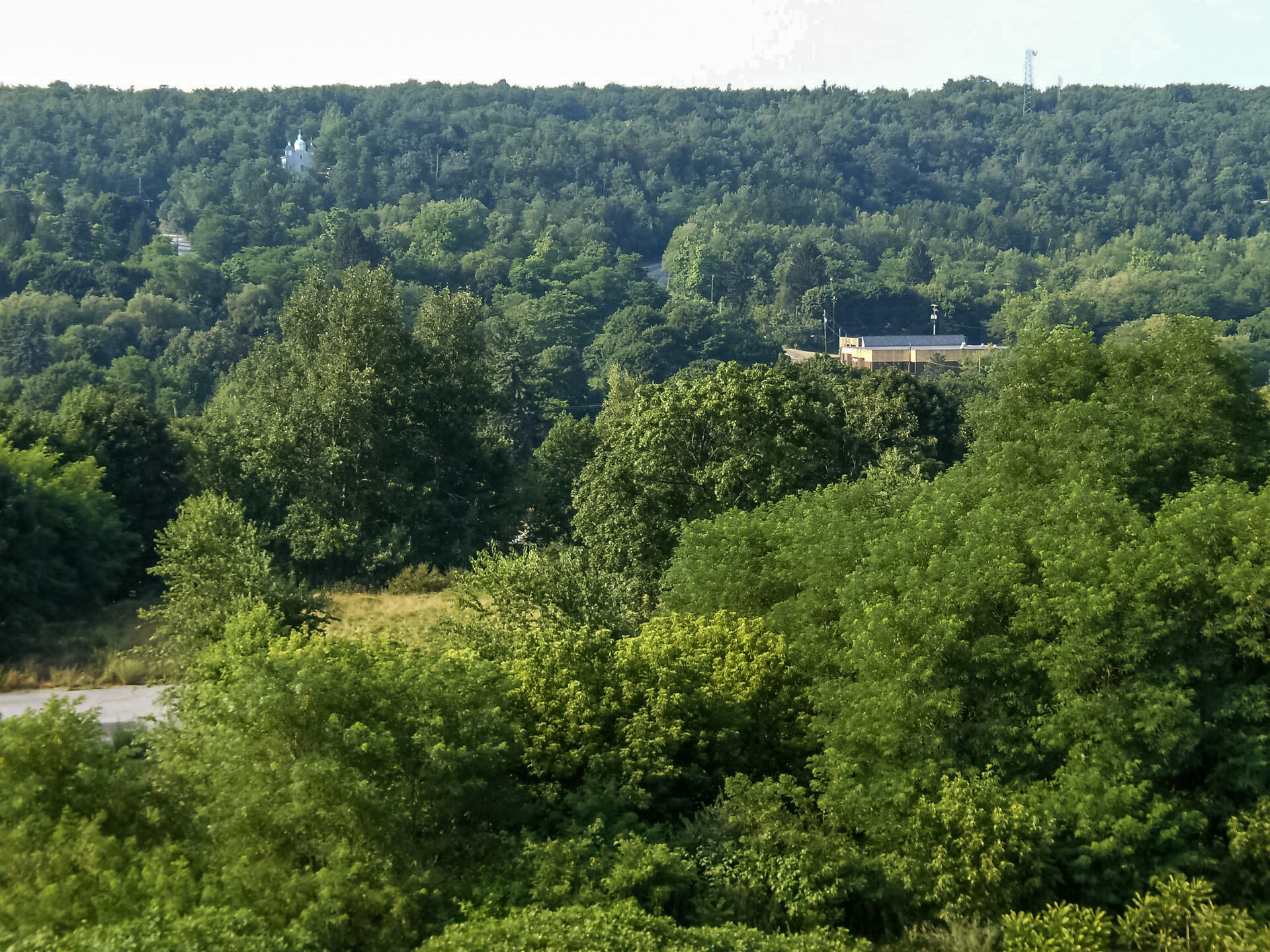
In 1983, after engineers estimated that truly extinguishing the fire could cost more than the entire town was worth, Congress appropriated roughly $42 million for a voluntary relocation program instead. Most residents took the buyouts through the 1980s, their houses demolished behind them, and in 1992 the state condemned the remaining properties under eminent domain. In 2002, the U.S. Postal Service revoked Centralia’s ZIP code, one of the quietest ways a town can officially stop existing. A final legal fight ended in 2013, when the last holdout residents, then numbering fewer than a dozen, reached a settlement allowing them to live out their lives in their homes, after which the properties revert to the state.
What a Visitor Actually Sees
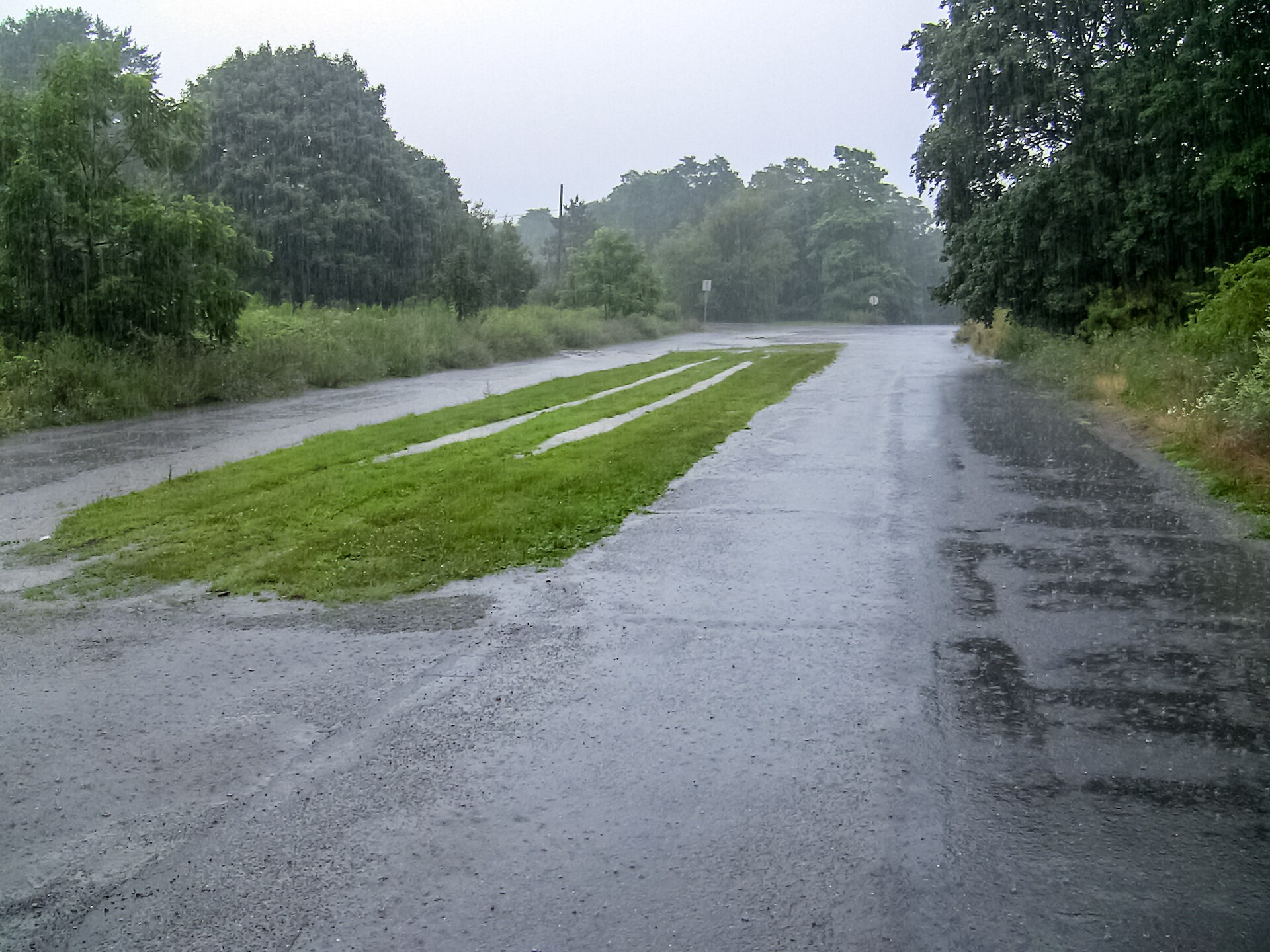
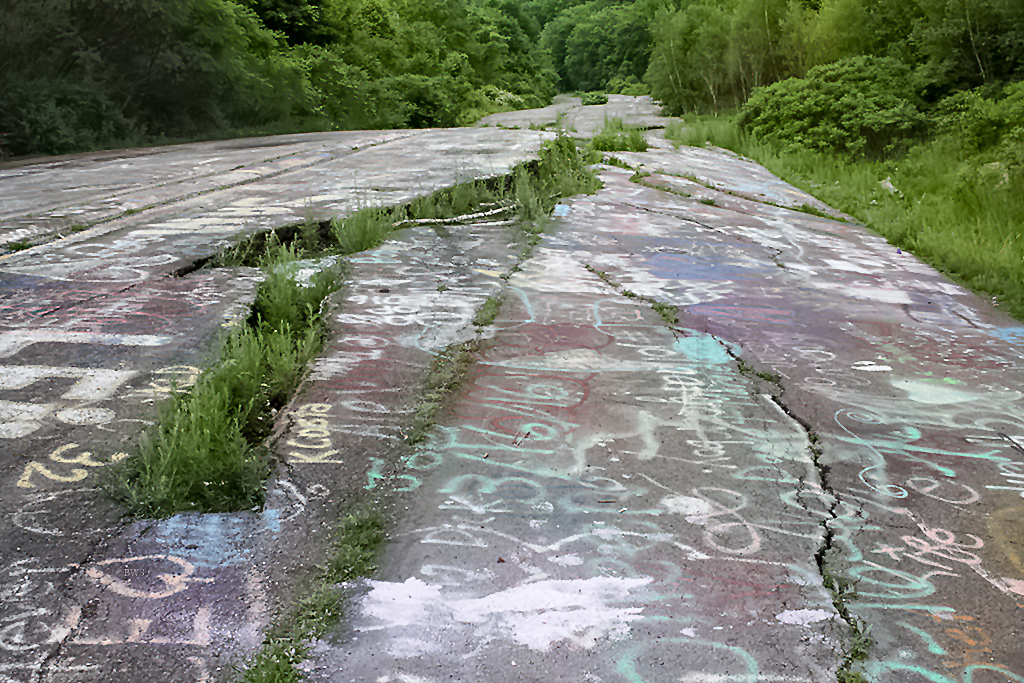
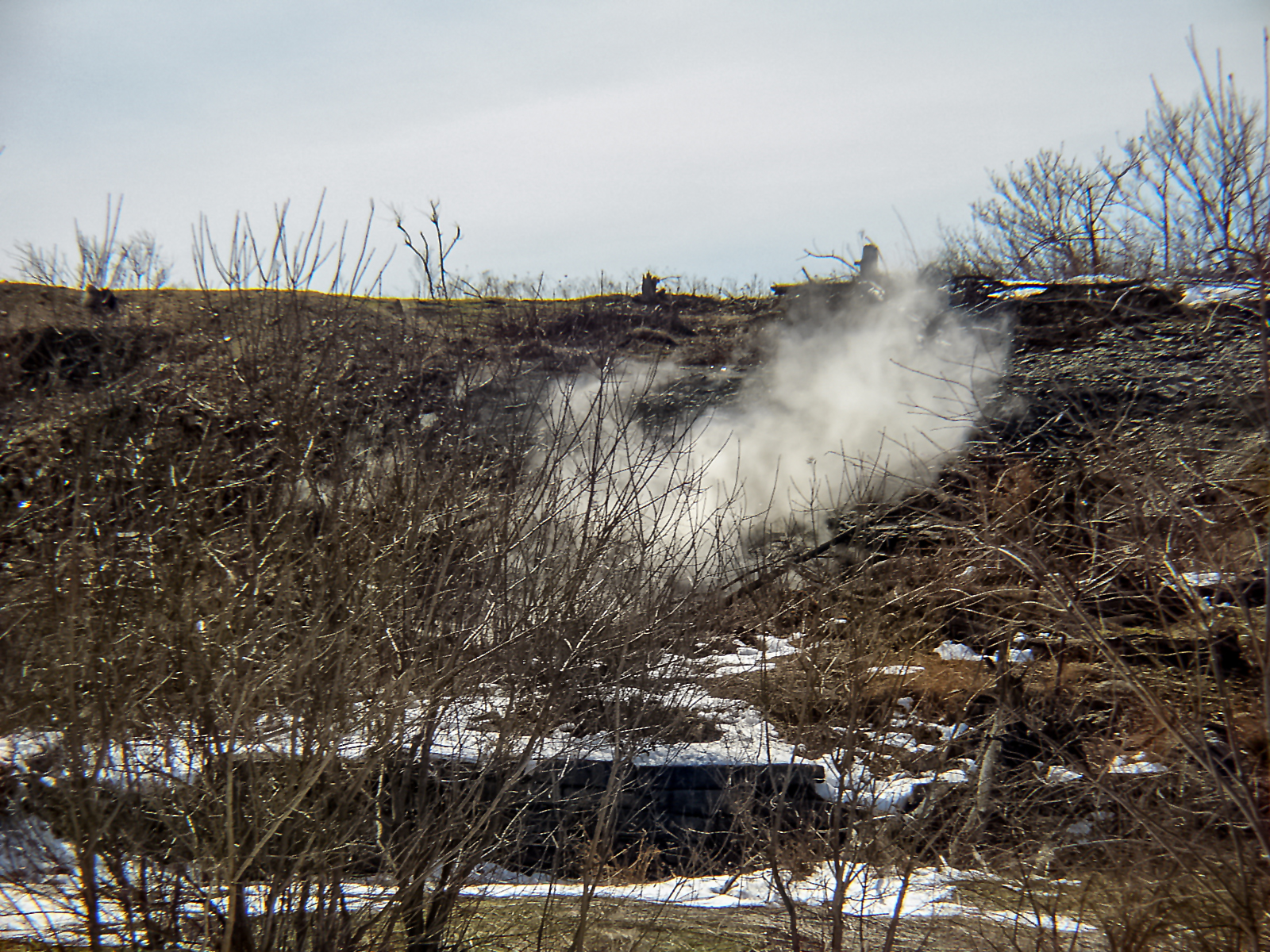
Today Centralia is less a ghost town than the outline of one: streets and curbs without houses, cemetery grounds that remain carefully tended, a hilltop church that still holds weekly services, and, in cold weather especially, wisps of steam rising from fissures in the ground on the fire’s active edges. For years the town’s most famous attraction was the “Graffiti Highway,” an abandoned, buckled stretch of old Route 61 covered in decades of spray paint, but its owners buried it under truckloads of dirt in 2020 to discourage trespassing. Visitors still come, drawn by the strangeness and by the town’s pop-culture afterlife, Centralia is widely cited as an inspiration for the fog-shrouded setting of the “Silent Hill” film.
How Long Will It Burn?
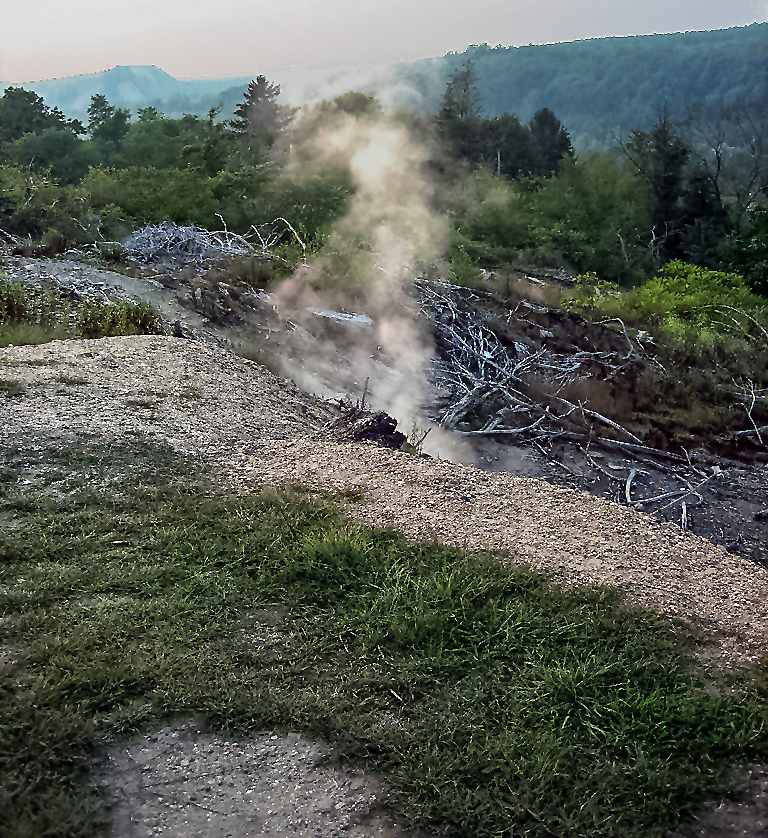
Estimates suggest the fire could continue burning along its coal seams for a century or more, potentially two, with some projections running to 250 years, because nothing about the geology has changed: the anthracite is abundant, the old tunnels feed it air, and extinguishing it remains as impractical as it was in 1983. The fire moves slowly, a few tens of feet a year along its fronts, indifferent to the town it already consumed.
Visiting Respectfully
Centralia sits along Route 61 between Ashland and Mount Carmel, an easy detour for travelers exploring Pennsylvania’s coal region, and pairs naturally with the area’s mining heritage sites, including a nearby tour that takes visitors into an actual anthracite mine. The essentials for a visit are simple: stay on public roads, keep clear of fenced and posted areas and any venting ground, which is genuinely unstable and hot, and remember that a few people still live here by hard-won right, in what remains, legally and emotionally, their hometown.
Centralia is what a slow-motion disaster looks like sixty years on, not dramatic ruins, but an absence: a town reduced to its street grid by a fire nobody could put out, still burning patiently beneath the grass.
Like our content? Follow us for more.