Walk through Seattle’s Pioneer Square neighborhood and look down: set into the sidewalks are grids of small glass squares, glowing faintly purple, worn smooth by a century of shoes. They are skylights — and skylights only make sense if there’s something underneath. There is. Beneath the oldest blocks of Seattle runs a second Seattle: the original one, with its 1880s sidewalks, its storefront windows, its hotel entrances and bank doorways, all buried a story deep when the city decided, after burning down, that the only way forward was up.
The Seattle Underground is one of American travel’s best strange-but-true experiences — a subterranean city block tour that starts with a catastrophic fire, detours through a plague scare and a Prohibition-era shadow economy, and ends with the improbable 1960s campaign that saved both the buried city and the historic neighborhood above it. It’s also, guides delight in noting, a story that begins with glue.
The Glue Pot That Erased a City
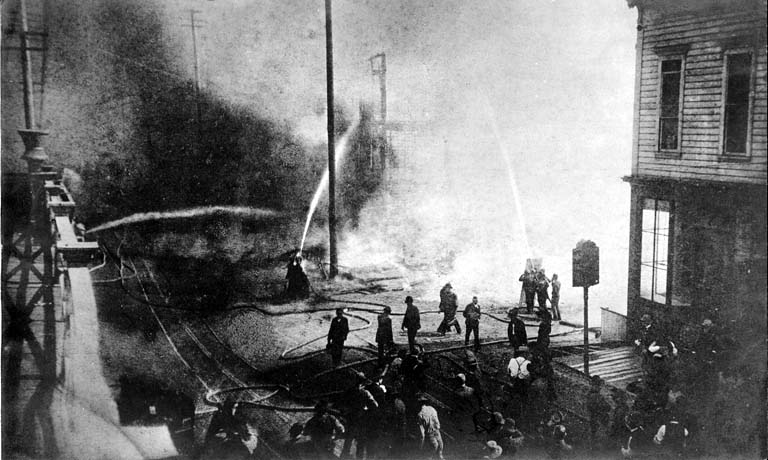
June 6, 1889, was a hot, dry afternoon, and in the basement of a cabinetry shop at Front and Madison, an assistant let a pot of glue boil over onto a floor strewn with wood shavings. The fire that followed found a downtown built almost entirely of wood, standing on tideflats, with an underpowered water system that failed almost immediately — and in roughly twelve hours the Great Seattle Fire consumed the city’s entire business district, some 25 to 30 blocks, wharves and all. Astonishingly, the human toll was minimal; the economic toll was total. A city of about 40,000 watched its commercial core become a smoking field in a single afternoon.
What happened next explains everything underground today. Seattle’s original downtown had been built barely above the tide, on filled and soggy ground with a sewage situation best described as gravity-optional — at high tide, the plumbing famously ran in reverse, a civic humiliation the newspapers cataloged with relish. The fire, catastrophe though it was, handed the city a blank slate, and Seattle’s leaders made two decisions within weeks: buildings would henceforth be brick and stone, and the streets themselves would be raised — a full story or more in places — to lift the city out of the muck for good.
Like our content? Follow us for more.
The Decade Seattle Lived on Two Levels
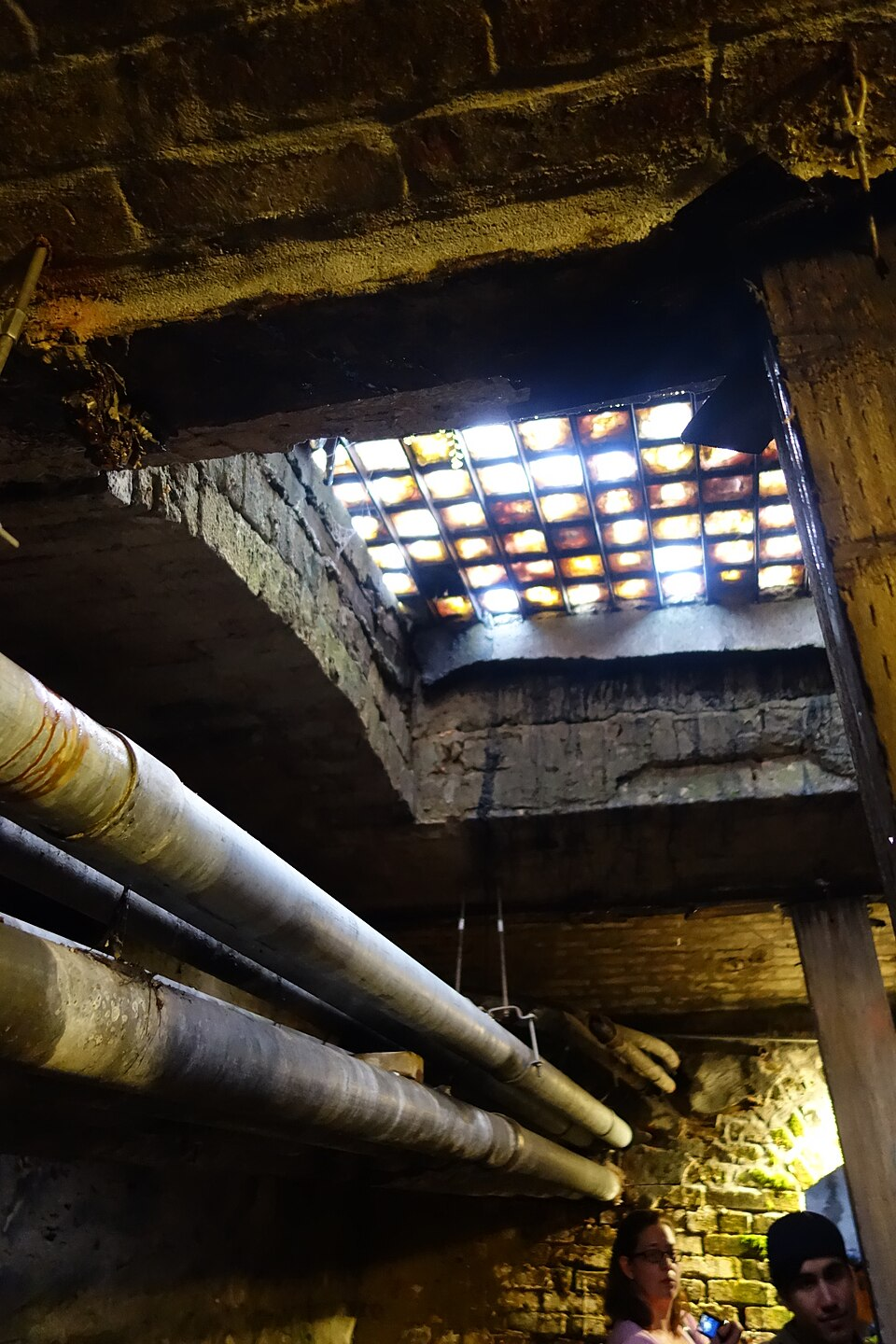
The catch was that business owners, racing to rebuild, could not wait for the city’s street-raising project — so they rebuilt at the old level while the city, on its own schedule, walled the streets beside them with retaining walls and filled the roadbeds with regrade dirt, raising the streets eight to thirty feet above the sidewalks. The result, through the 1890s, was one of the strangest downtowns in American history: streets at the new height, sidewalks and shopfronts down in trenches beside them, with ladders — and eventually stairways — connecting the levels. Contemporary accounts and later lore agree pedestrians and the occasional horse took falls into the gaps; the guides’ cheerful statistics on this point are best enjoyed as seasoning.
Eventually the sidewalks were bridged over at street level, and the old ground floors became basements — but the buried sidewalks weren’t abandoned at first. Merchants glazed the new sidewalk vaults with those purple-glowing glass prisms (clear when installed; decades of sunlight turned the manganese in the glass violet), and the under-level carried on for years as passages, storage, and workspace, a functioning mezzanine of the old city one story down. Shoppers of the 1890s could walk below the sidewalks past display windows still dressed for a street that no longer existed.
Sealed, Forgotten, and Put to Colorful Use
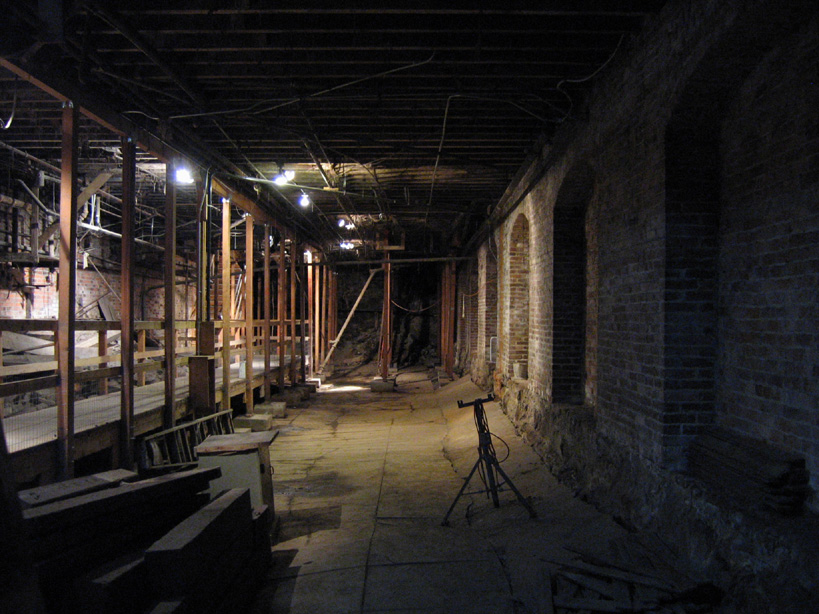
The underground’s official life ended in 1907, when the city — citing fears of bubonic plague and its rat carriers — condemned the below-grade passages, and the buried city began its long second act as Seattle’s basement of ill repute. During Prohibition, portions served the purposes underground spaces always serve: speakeasies, card rooms, storage for goods that preferred not to be inventoried, and the general shadow economy of a port city — an era the tours narrate with relish and appropriate hedging, since the underground’s outlaw years generated more legend than paperwork. Above, Pioneer Square itself slid downhill for half a century as the city’s center of gravity moved north, leaving the old blocks — and their buried twins — intact mainly through neglect, the great accidental preservationist.
Rediscovery arrived with a personality attached. In the 1950s and 60s, a local columnist and promoter named Bill Speidel began writing about the buried city, and when public curiosity swelled, he organized tours — first as a one-off civic stunt that drew hundreds, then, from 1965, as a permanent operation. Speidel had a second motive: Pioneer Square was then threatened with demolition-minded redevelopment, and the tours built the constituency that helped win the neighborhood historic-district protection in 1970. The buried city, in other words, helped save the living one above it — a rare case of a basement rescuing its own building.
What You See Down There
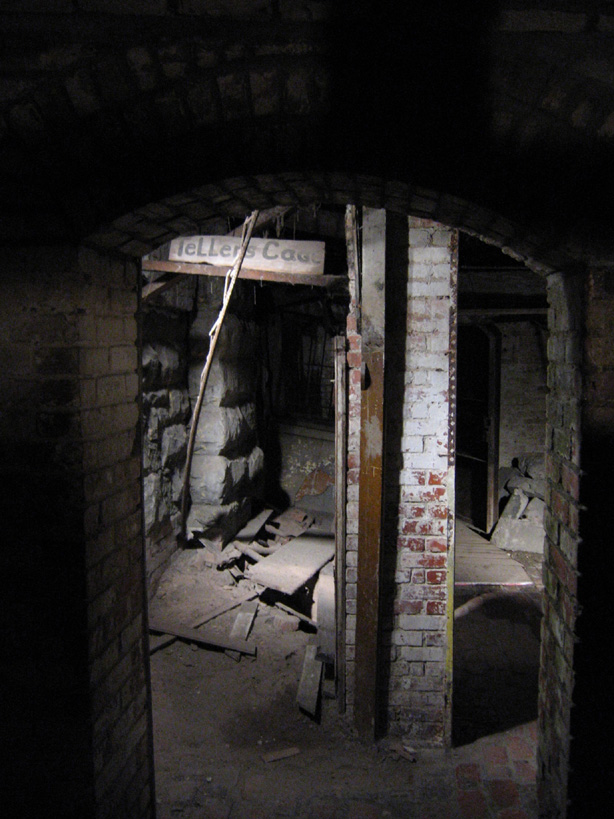
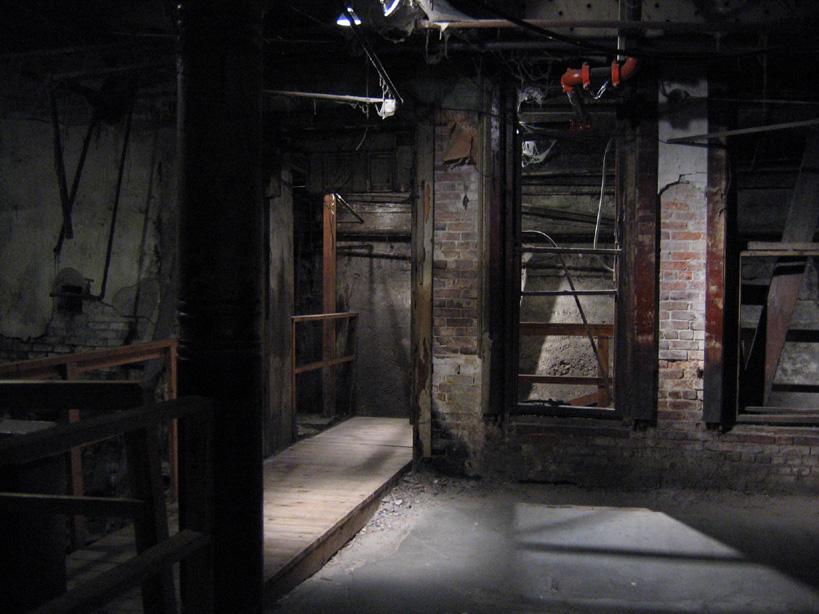
The tours today — Speidel’s original operation continues, alongside variations including evening versions trading in the underground’s ghostlier reputation — depart from Pioneer Square and descend into several restored sections of the buried sidewalks and storefronts beneath the surrounding blocks. Down in the cool, dim passages, the details do the work: original brick and timber, an intact bank teller’s window, storefront frames still holding wavy 1890s glass, old plumbing fixtures that prompt the tour’s beloved reverse-tide anecdotes, and overhead — the signature moment — the sidewalk skylights glowing violet with the daylight of the modern city, footsteps of present-day pedestrians passing audibly above. It is history at its most literal: the past isn’t behind Seattle, it’s directly underneath, at a depth of one flight of stairs.
Pioneer Square rewards lingering above ground before or after the descent. The neighborhood the underground saved is now the city’s historic heart: the 1890s Romanesque buildings that rose from the fire’s ashes house galleries and cafés, the ornate 1909 iron pergola presides over its cobbled square, and — a fitting neighbor for a buried city — the Klondike Gold Rush National Historical Park occupies a storefront museum telling how 1897 Seattle got rich outfitting stampeders bound for the Yukon, the boom that filled the rebuilt city’s coffers barely eight years after it had burned. Fire, regrade, gold rush: the blocks above the tour route compress Seattle’s whole origin story into a ten-minute walk, most of it over the heads of the sidewalks you just left.
Guides keep the tone brisk and comic — this is a story with a glue pot in it, after all — while the artifacts keep it honest. Practicalities: tours run daily year-round (the underground holds a steady cool temperature that makes it a refuge in both August and January), the walking is moderate with stairs and uneven floors, and Pioneer Square’s surface attractions — the ornate iron pergola, the totem pole with its own outrageous acquisition story, the first-growth architecture that rose from the ashes of 1889 — round out an easy half day. Book ahead in summer; the underground’s capacity is, by definition, fixed, and the small-group evening tours sell out first in October for reasons the marketing department did not have to invent.
A tip from repeat visitors: go early in the day, when the passages are least crowded and the skylights are at their brightest — the purple glass performs best under high sun — and pair the tour with lunch in one of the surrounding 1890s buildings, eating at the raised street level the fire invented while the original ground floor sits in the dark a few feet below your table. Few meals anywhere come with better historical footnotes.
The City That Kept Its First Draft
Most cities erase their mistakes; Seattle filed its first draft one story down and moved on. That’s the underground’s lasting charm — it isn’t a recreation or a museum set but the actual street where the actual glue pot boiled over, preserved by fill dirt and forgetfulness, then rescued by a columnist with a flair for promotion. Visitors come up the stairs afterward and, without exception, look at sidewalks differently — checking for purple glass, recalculating what “ground floor” means, aware for the rest of the trip that a city is a decision about where to stand.
Seattle made its decision in 1889: a story higher, brick this time, and keep the old one underneath. A century and a half on, that buried first draft has become one of the city’s proudest attractions — proof that the best response to burning down may be building up, and that no city ever really loses its past. Sometimes it just puts a sidewalk over it and sells tickets.
Like our content? Follow us for more.