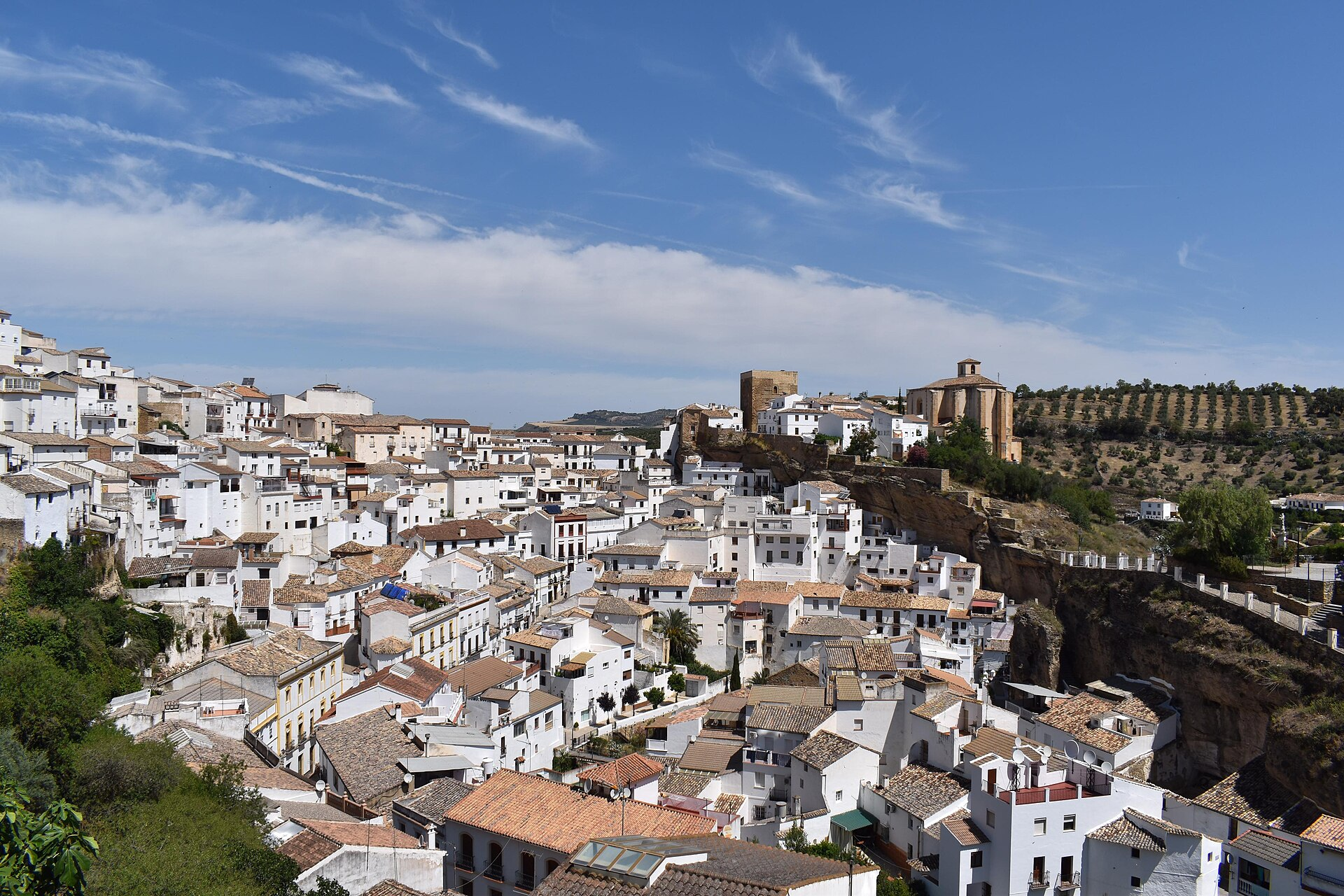
Some towns are built beside a landmark; Setenil de las Bodegas is built under one. In this small town in the hills of Andalusia, in southern Spain, entire streets disappear beneath a colossal overhang of rock — a natural stone roof, tons upon tons of it, jutting out over the road so that the houses, shops, and cafés below are quite literally living inside the cliff, going about their day beneath a ceiling that nature, not architecture, provided. Walk its most famous streets and you find yourself in shade cast not by buildings but by a mountain leaning over you, close enough to touch, with the whitewashed façades of homes tucked into the darkness where the rock meets the street.
It is one of the most striking towns in Spain, and one of the most photographed — that image of café tables set out under a low, immense stone overhang has made Setenil a sensation — but the town is no theme park. It is a living community of a few thousand people who have inhabited these cliff dwellings for centuries, and the rock over their heads is not a novelty but the reason the town exists at all. Setenil is a masterclass in a way of building the modern world has almost entirely forgotten: not conquering the landscape, but moving into it.
A Town That Grew Into the Cliff
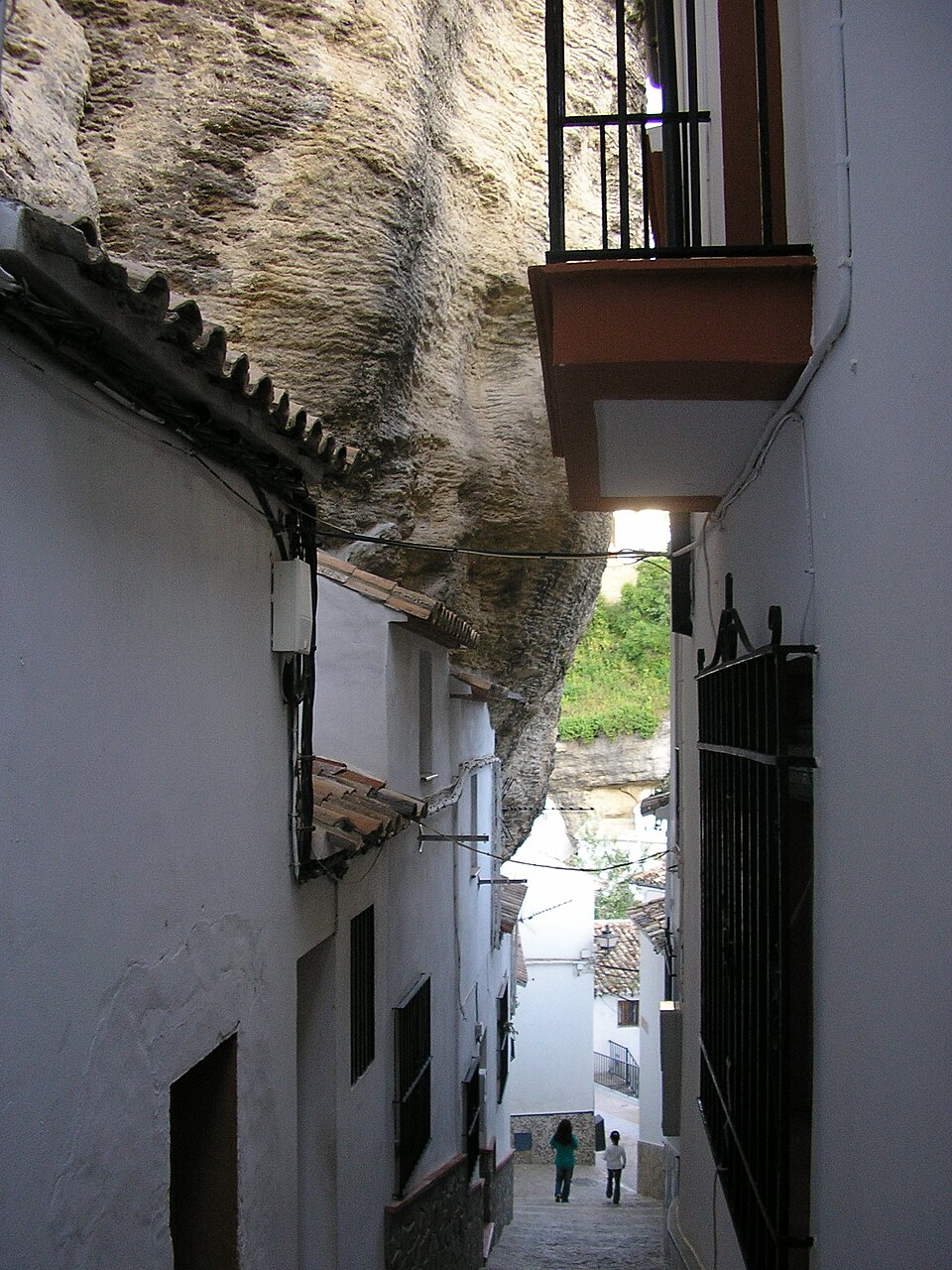
Setenil sits in a gorge carved by the Río Trejo, and its unusual architecture is a direct response to that geography. Over millennia, the river cut down through the soft rock, leaving behind dramatic overhangs where the harder stone above jutted out over the eroded space below — natural shelters, deep and sheltered, ready-made for habitation. And habitation came early: the caves and overhangs of the area show evidence of human use stretching back to prehistoric times, long before there was a town, when the natural rock shelters offered exactly what shelter has always offered.
The town proper grew up around these overhangs in the medieval period, and its very name tells part of the story. “Setenil” is popularly linked to the difficulty of conquering the town — the fortified settlement reportedly withstood repeated sieges before finally falling, and one folk etymology traces the name to a Latin phrase meaning “seven times nothing,” a nod to how many attempts it took to take it. The second half of the name, “de las Bodegas,” refers to the wine cellars — the bodegas — for which the town became known, the cool, cavern-like spaces under the rock proving ideal for storing and aging wine. The rock, in other words, shaped everything: the town’s defensibility, its industry, and its unmistakable form.
Like our content? Follow us for more.
Living Under the Rock
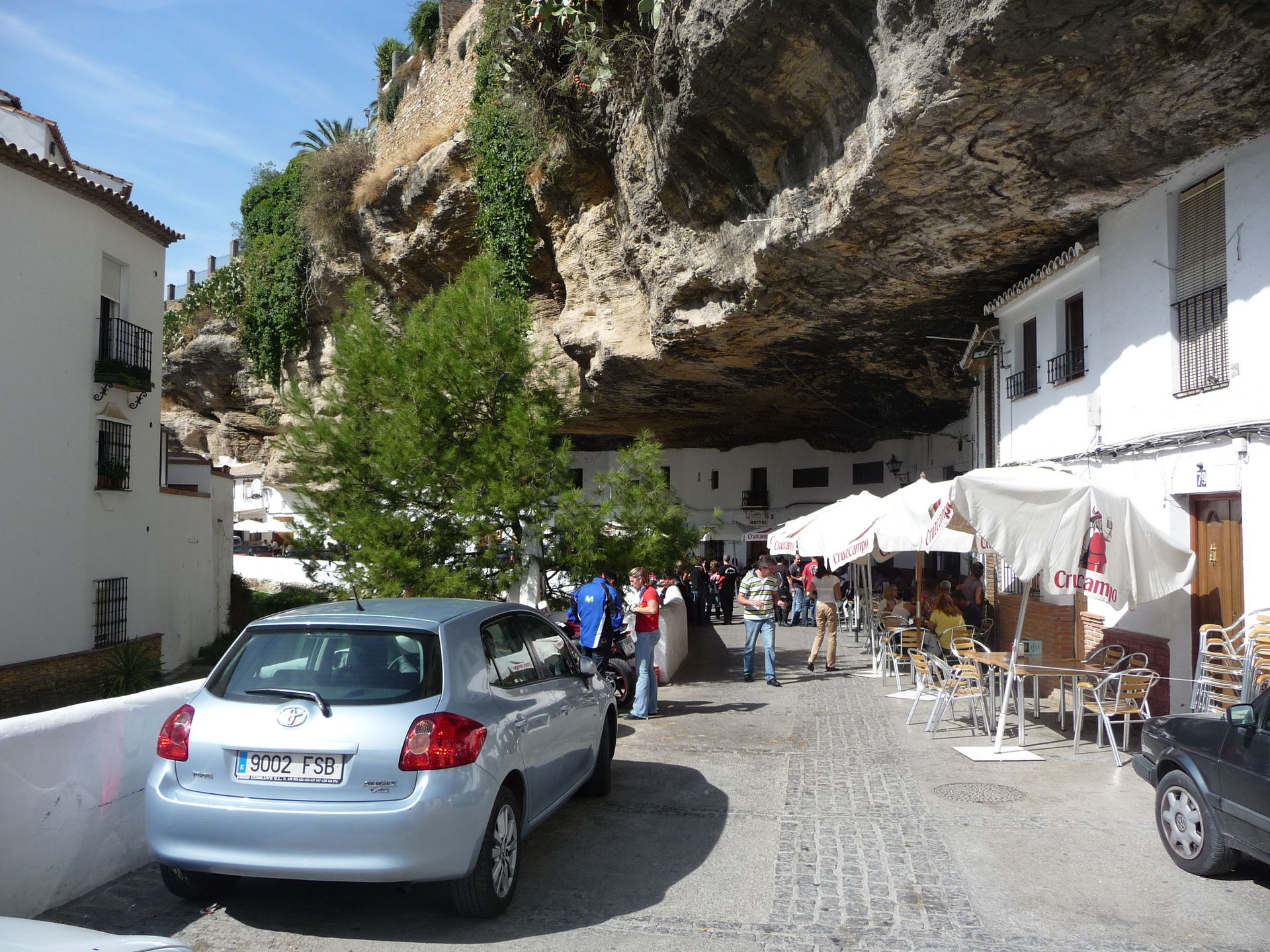
The genius of Setenil’s architecture is its economy. Rather than quarry stone to build a roof, the townspeople simply used the roof that was already there: they built the fronts of their houses out to enclose the space beneath the overhang, so that a home might have a conventional whitewashed façade with a door and windows, while its ceiling, and sometimes its back wall, is the living rock of the cliff itself. Whole streets are configured this way — most famously the streets known as Calle Cuevas del Sol (Street of the Sun Caves) and Calle Cuevas de la Sombra (Street of the Shade Caves), named for which side of the gorge catches the sun — where the road runs along the base of the cliff and the overhang forms a continuous stone canopy above the buildings, cafés, and heads of everyone passing beneath.
There are real, practical advantages to this that the townspeople have enjoyed for generations. The thick rock overhead provides extraordinary natural insulation, keeping the dwellings cool through the fierce Andalusian summers and warmer in winter — a form of climate control that requires no energy at all, the mass of the mountain moderating the temperature year-round. It’s a lesson in sustainable, vernacular building that predates the concept by centuries: the people of Setenil solved the problem of surviving a harsh climate not with technology but by moving into the thermal mass of the earth itself, and they’ve been comfortable under their rock while the exposed towns baked and shivered around them.
The Rock That Doesn’t Fall
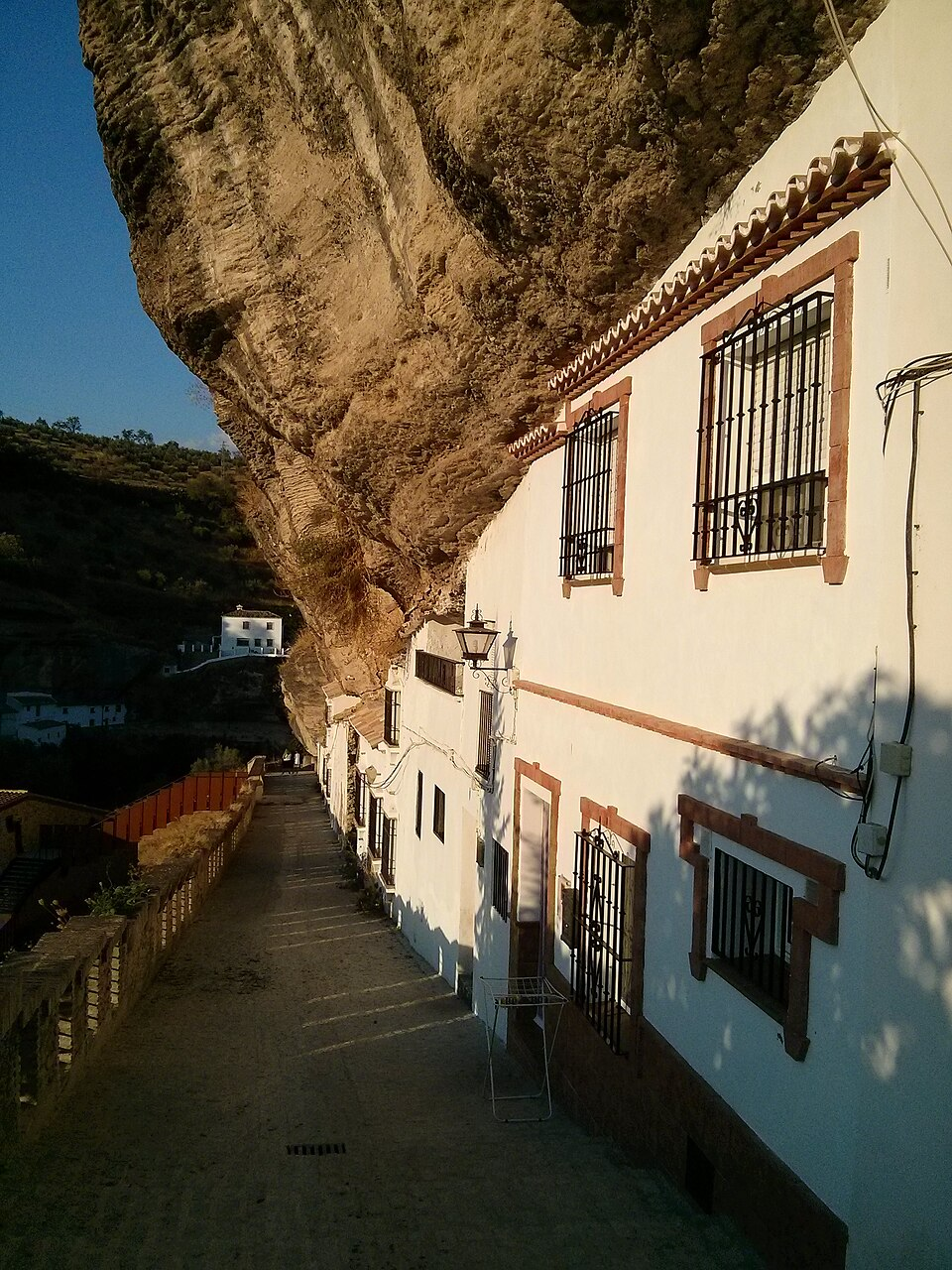
The obvious question every visitor asks — standing under an overhang of rock that appears to hang precariously over the streets — is whether it’s safe, and the reassuring answer is that these formations are extraordinarily stable, the product of natural erosion that removed the softer rock and left the hard, sound stone above. This is not a boulder balanced on a ledge; it is the intact roof of a much larger rock formation, the same stone that forms the hills around the town, and it has sheltered human beings for thousands of years without incident. The overhangs are, in effect, permanent geological features, no more likely to collapse than the cliffs they’re part of.
Understanding this transforms the experience of visiting. What can look, in photographs, like a town living under constant threat is in fact a town enjoying one of the most stable and sheltering natural structures imaginable — the difference between a rock about to fall and a rock that has been exactly where it is since long before humans arrived. The people of Setenil sit under their overhang and drink their coffee with complete equanimity, because they know what the nervous first-time visitor soon learns: the rock isn’t going anywhere. It’s the most permanent thing in town.
Visiting Setenil
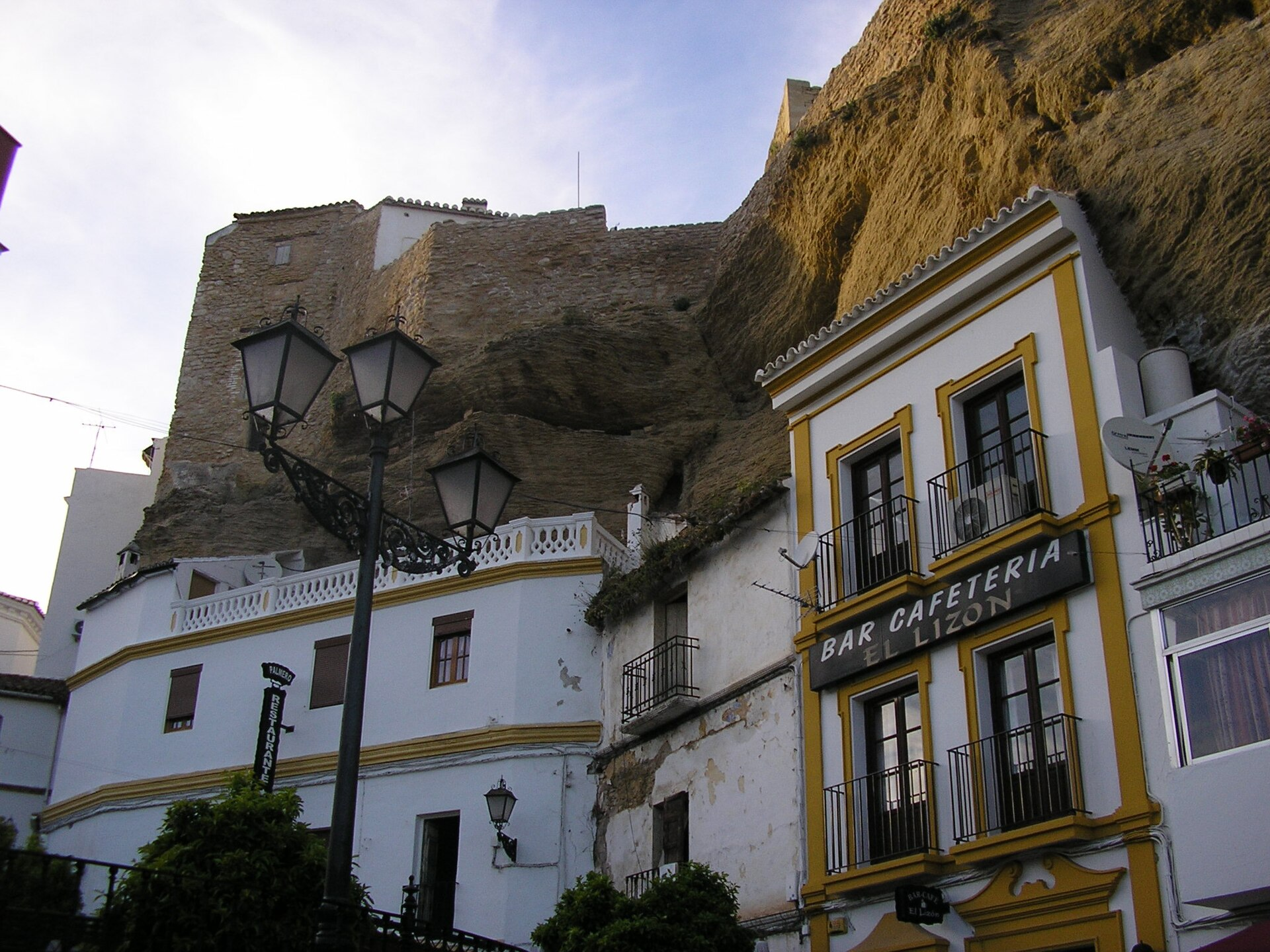
For travelers, Setenil de las Bodegas is one of Andalusia’s great day trips and an increasingly beloved stop on the region’s “white towns” route — the string of whitewashed pueblos blancos scattered through the hills of southern Spain. It sits within easy reach of Ronda, the spectacular gorge-straddling town that anchors the region, and pairs naturally with a tour of the white towns or a base in Seville, Málaga, or the Costa del Sol. The town itself is compact and made for wandering: the famous cave streets are the highlight, but the pleasure is in the whole experience of a place where the boundary between the built and the natural has dissolved.
The essential Setenil activity is simply to sit down. The cafés and tapas bars set their tables out under the overhang, and eating a plate of the region’s excellent food — the town is known for its meats and its wine, the bodega tradition still alive — in the cool shade of the giant rock, watching the life of the town pass by beneath the stone, is the entire point. Climb to the viewpoint by the old church and the castle keep for the postcard view over the tumbling white rooftops and the gorge; wander the sun and shade streets to feel the temperature change as you pass under the rock; and take the photograph everyone takes, of the café tables and the whitewashed walls under their impossible stone ceiling. Go early or late in the day to beat both the heat and the crowds, which have grown as the town’s fame has spread.
Setenil is not alone in the idea, but it may be its most dramatic expression. Cave and rock dwellings appear across the Mediterranean world and beyond, wherever soft stone and hot climates met, but few places have integrated the living rock into a functioning modern town as completely and visibly as Setenil, where the overhang shelters not a scattering of caves but whole streets of active homes, shops, and cafés. It is a town, not a ruin — inhabited, working, and thoroughly alive under its stone roof.
A Different Way of Belonging to a Place
Setenil de las Bodegas endures as more than a photogenic curiosity; it’s a small, living argument about how human beings might relate to the landscapes they inhabit. Most of the modern world builds by imposing on a place — leveling, clearing, quarrying, air-conditioning against a climate we’ve walled ourselves off from. Setenil did the opposite: it found the shelter the land already offered and settled into it, letting the rock be the roof, the mountain be the insulation, the gorge be the town’s shape. The result is a place of extraordinary character that has kept people cool, sheltered, and rooted for centuries with almost no cost to the environment around them.
Standing under that overhang, coffee in hand, watching a town go about its ordinary business beneath a stone ceiling older than history, a traveler feels something that the great built monuments rarely deliver: a sense of a community not perched on the landscape but woven into it, at home inside the earth itself. Setenil is beautiful, and strange, and endlessly photographable — but its deepest charm is the quiet wisdom of the choice at its heart, the decision, made and remade for a thousand years, simply to live under the rock rather than move it. The mountain provided a roof. The town said yes.
Like our content? Follow us for more.