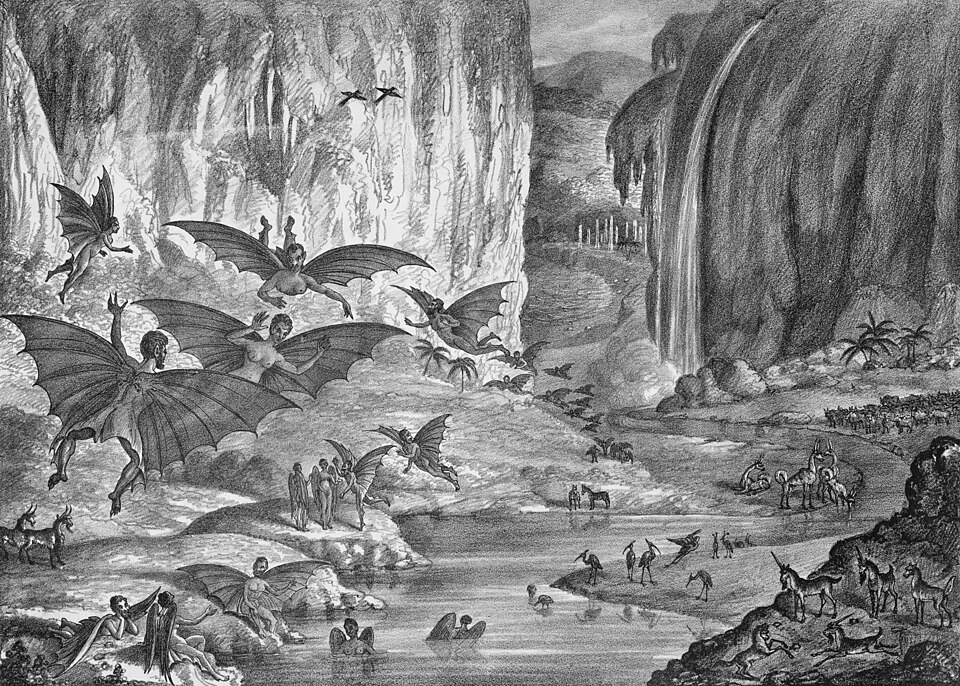
On August 25, 1835, readers of a cheap New York daily called the Sun opened their paper to an astonishing announcement. A celebrated astronomer, working from an observatory at the Cape of Good Hope with a telescope of unprecedented power, had made discoveries that would transform humanity’s understanding of its place in the universe. Over the following days, the paper delivered the details in instalments, and they escalated magnificently.
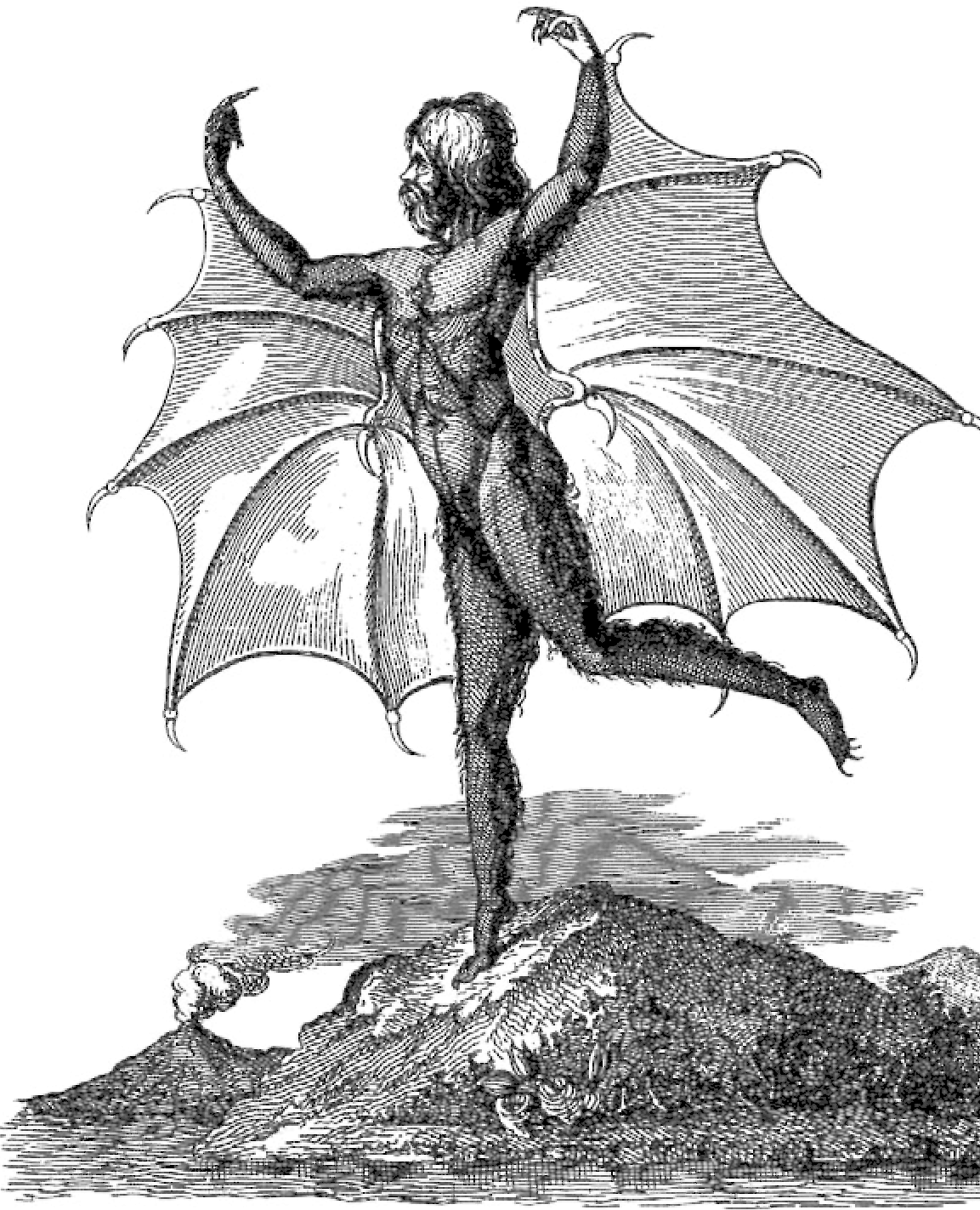
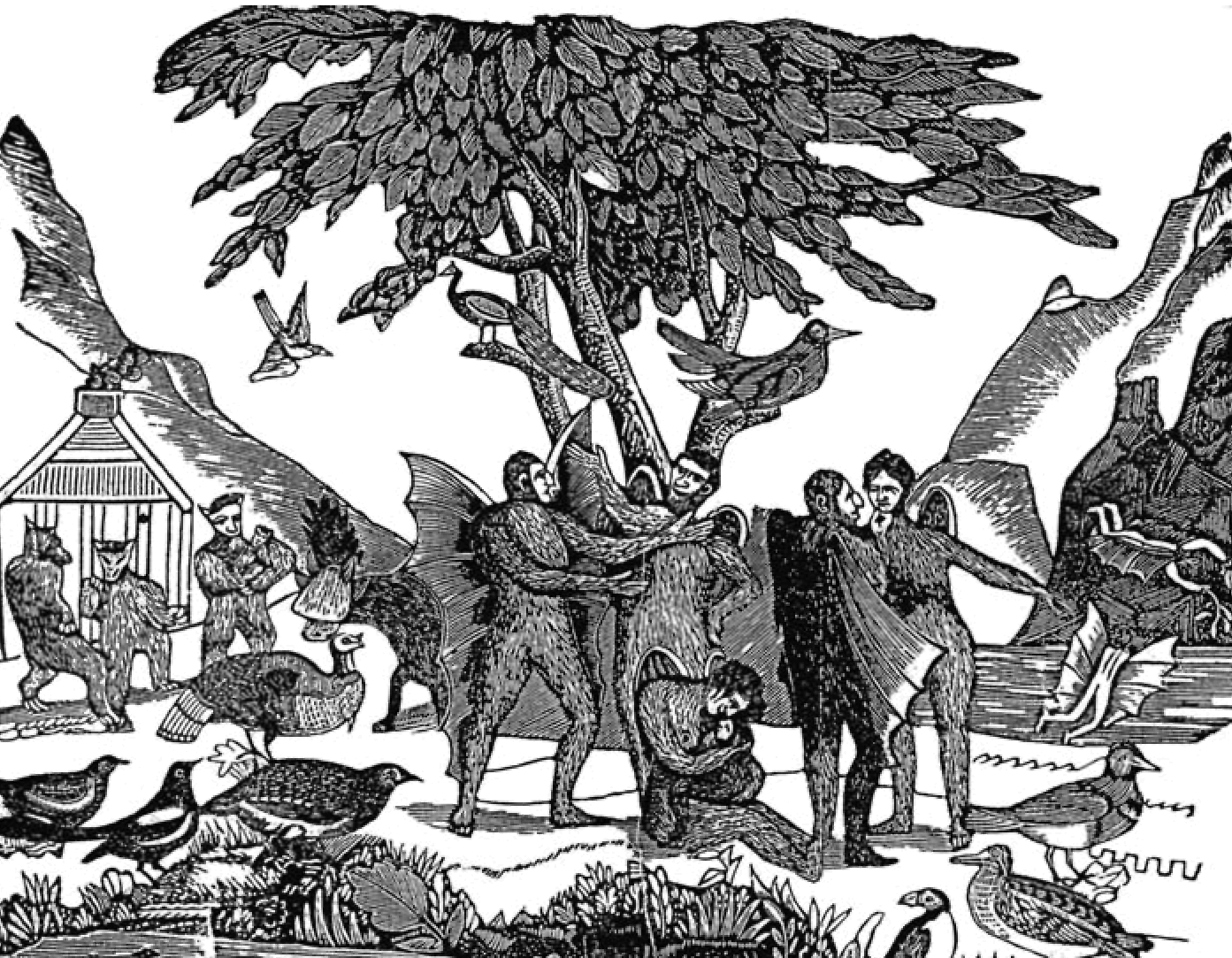
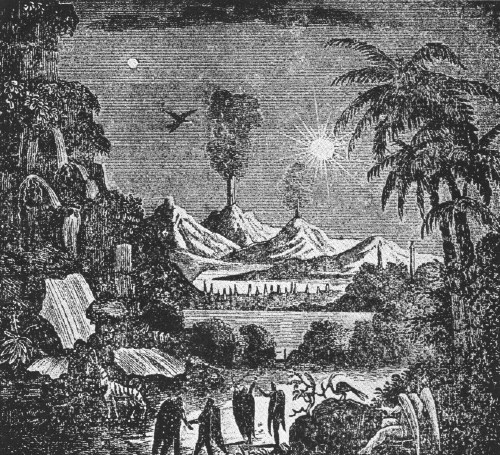
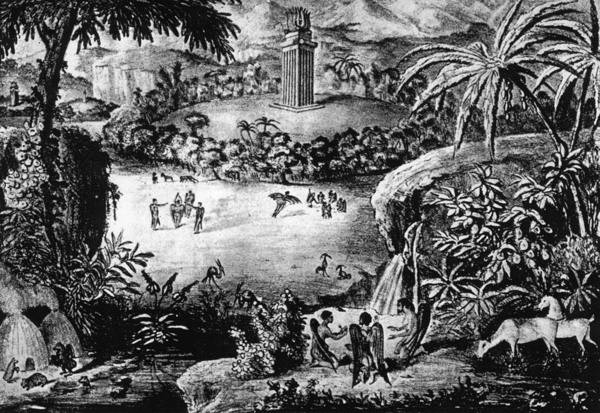
The Moon, readers learned, had oceans, beaches, and forests. It had fields of enormous crystals and cascading waterfalls. It had herds of bison-like animals, goats resembling unicorns, and beavers that walked upright on two legs and built huts with chimneys. And then, in the most spectacular instalment, it had people — winged humanoids covered in copper-colored hair, who flew, conversed, built temples, and lived in what the paper described as a state of innocent happiness. It was a complete alien civilization, reported as established scientific fact in a daily newspaper, and a great many people believed every word.
The Setup
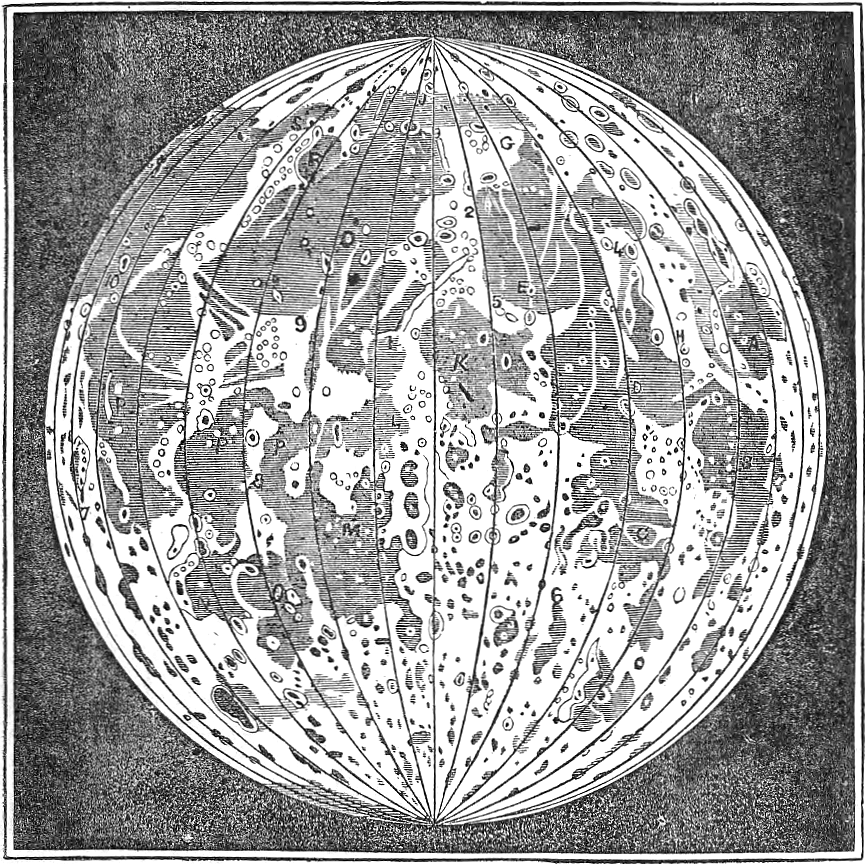
The hoax worked because it was engineered to be plausible to a nineteenth-century reader. The articles were presented as reprints from a scientific journal — a real publication, though one that had ceased operating, a detail no ordinary reader could check. The astronomer named was Sir John Herschel, one of the most respected scientists alive and the son of an even more famous astronomer, who truly was at the Cape of Good Hope conducting real astronomical observations at that moment. Anchoring the fantasy to a real scientist in a real place doing real work was the crucial move.
The technical descriptions were dense with invented but confident-sounding detail about the telescope and its optical arrangement, and the prose adopted the measured, cumulative tone of a scientific report rather than the breathless register of sensation. The revelations were also released in sequence over several days, each instalment more remarkable than the last, which kept readers buying the paper and built credibility incrementally — nobody was asked to swallow the winged people on day one.
The cultural moment helped as well. The 1830s were a period of rapid scientific advance and real public excitement about astronomy, and serious people had speculated about life on other worlds. The gap between “a better telescope reveals new things” and “a better telescope reveals moon bison” was, to a non-specialist audience without competing sources of information, harder to see than it looks now.
Like our content? Follow us for more.
The Reaction
The Sun’s circulation climbed dramatically, and by the end of the series the paper was claiming a readership that made it one of the most widely read papers in the world. Copies were reprinted as pamphlets and sold. The story spread to other American papers, several of which reprinted it as news — some, embarrassingly, claiming to have seen the original journal articles themselves. It crossed the Atlantic and circulated in Europe.
The stories that have attached themselves to the reaction are colorful, and some are better documented than others. It is frequently reported that a group of Yale scholars traveled to New York to inspect the original scientific papers and were politely shuffled between offices by Sun staff until they gave up. Accounts of religious groups organizing to consider missionary work among the lunar inhabitants are also repeated, though the evidence for those is thinner and they may be embellishment. What is clear is that a substantial portion of the reading public took the series seriously, and that the paper made a great deal of money.
The Author and the Motive
The series was almost certainly written by Richard Adams Locke, a British-born journalist working at the Sun, who never made a full public confession but is generally accepted as the author. His motive is usually described as a mix of the commercial and the satirical. Commercially it was straightforward: the Sun was part of the new “penny press,” cheap mass-market papers competing ferociously for street sales, and a sensational serial was excellent business.
The satirical motive is more interesting. Locke is thought to have been mocking a genre of contemporary writing that combined astronomy with speculation about extraterrestrial life and religious implications — work that treated the plurality of inhabited worlds as a near-certainty and reasoned confidently about the beings living on them. The moon hoax, read this way, was a parody that got away from its author, taken literally by readers who missed that anything was being sent up. If so, it is a very early example of a satire indistinguishable from the thing it mocks — a problem that has not gone away.
Herschel himself, the real astronomer at the center of it, was in South Africa and had no idea. He learned that he had discovered a lunar civilization when the story caught up with him, and he was reportedly amused at first and rather less amused later, as he found himself fielding correspondence from people who wanted to know more about the winged people.
How It Ended
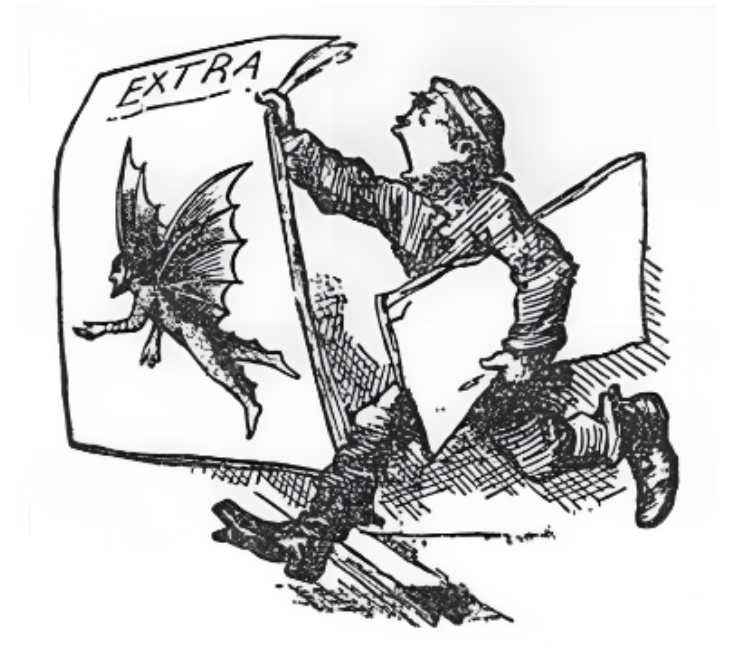
The hoax unwound gradually rather than collapsing. Other papers grew skeptical, a rival publication is generally credited with exposing the series as fiction, and the Sun never issued a full, unambiguous retraction — it acknowledged the material’s nature in fairly relaxed terms and moved on, having thoroughly enjoyed the circulation boost. There was no great scandal and no meaningful consequence. The paper continued publishing for many decades afterward.
That non-ending is part of what makes the episode so modern. There was no correction that reached everyone who had read the original, no mechanism to un-inform the public, and no penalty for the outlet that had done it. The story simply drifted from fact to entertainment to legend, with a residue of people who had believed it and never found out otherwise.
Why It Still Matters
The Great Moon Hoax has become a standard case study for anyone thinking about misinformation, and the reasons are uncomfortably familiar. It succeeded by attaching an invented claim to a real, respected authority who was not in a position to respond quickly. It exploited a verification gap — readers could not check the source, and the source it cited was conveniently defunct. It used the format and tone of credible reporting rather than obvious sensationalism. It was released in instalments that built belief incrementally. It was amplified by other outlets that reprinted without checking. And the correction never traveled as far as the original.
Every one of those mechanisms is in daily operation now, at incomparably greater speed. The 1835 version required typesetting, printing, and horses; the modern version requires a phone. What has not changed is the underlying vulnerability, which is that people extend trust to information that looks like the kind of information they usually trust, and that checking is effortful in a way that believing is not.
The Rival Who Took It Personally
There’s a footnote to the affair involving one of American literature’s most famous names. Edgar Allan Poe had published his own moon-voyage story in a Southern paper only weeks before the Sun series began, and he was convinced the hoax had borrowed from his work. He wrote about the matter afterward with a mixture of professional admiration and obvious irritation, acknowledging the ingenuity of the execution while making clear he thought the ground had been taken from under him.
The grievance had a sequel. Poe went on to publish his own newspaper hoax some years later — a report of a transatlantic balloon crossing that ran as fact in the same paper before being retracted — which suggests the lesson he drew from 1835 was less about ethics than about method. The penny press of the period had a substantially more relaxed relationship with invention than modern journalism claims to, and hoaxes of this kind were a recognized, if disreputable, genre rather than a singular scandal. That is part of why the Sun faced so little consequence: a substantial portion of the trade understood exactly what had been done and regarded it, professionally speaking, as a good trick well played.
The Moon Bison Endure
There’s a temptation to feel superior to the readers of 1835, and it should probably be resisted. They were not fools. They were presented with a plausible-looking scientific report, attributed to a real and eminent astronomer working at a real observatory, published in a paper they had reason to read, reprinted by other papers, with no practical means of verifying any of it. Given those inputs, believing it was not an unreasonable act.
The hoax survives as one of the most entertaining episodes in the history of journalism — a newspaper that invented an entire alien civilization, complete with bipedal beavers, and got away with it completely. But it also survives as a permanent, slightly embarrassing reminder of how the trick works, and how little the trick has needed to change. Somewhere in the archives, the winged people of the Moon are still going about their business in eight columns of confident nineteenth-century prose, waiting for the next reader who doesn’t think to check.
Like our content? Follow us for more.