
Picture a carrot, and you almost certainly picture something orange. The vivid orange color is so bound up with our idea of the vegetable that it seems inseparable from it; an orange carrot is simply what a carrot is. But this everyday assumption turns out to be historically backwards. For the vast majority of the time that humans have been growing and eating carrots, they were not orange at all. The orange carrot is a relative newcomer, and its rise to dominance is one of the more surprising and hotly debated tales in the history of food.
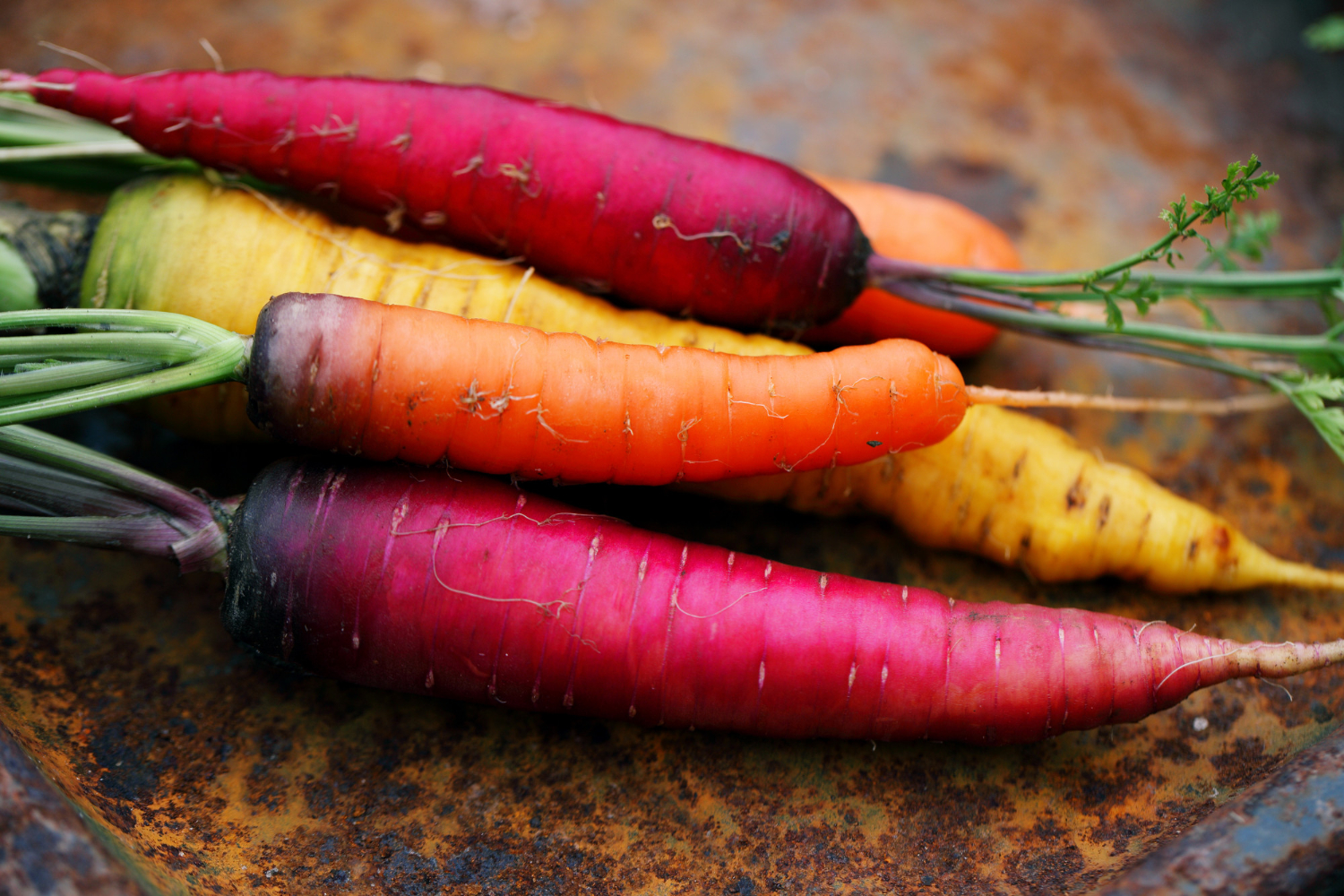
The original carrots, and the carrots that people ate for many centuries, came in other colors entirely: shades of purple, white, and yellow. The orange carrot, as we know it, was created through deliberate cultivation only a few hundred years ago, in a specific time and place. And the question of exactly why orange carrots came to be, and why they went on to conquer the world and push the other colors aside, has produced one of the most charming and persistent stories in food history, a tale involving a royal dynasty and national pride. But that popular story is also disputed, and the real explanation may be more practical and less romantic. Here is the colorful, contested history of how the carrot became orange.
A Rainbow of Roots

Long before the orange carrot existed, people were growing and eating carrots in a variety of other colors. The carrot was first domesticated from wild ancestors thousands of years ago in the region of Central Asia and the Middle East, and the early cultivated carrots were not the uniform orange root we know today. Instead, they came in colors like purple and yellow, with white varieties as well.
These early carrots spread across the ancient world, cultivated in different regions and diversifying as they went. For a very long time, purple and yellow carrots were the norm, the ordinary carrots that people grew in their gardens and sold in their markets. The idea of an orange carrot would have been unfamiliar, even strange. It’s worth pausing to appreciate just how thoroughly our modern assumption has erased this history: the “natural” color of a carrot, in the eyes of most people today, is a color that carrots did not even commonly have for most of their history as a cultivated food. The rainbow of purple, white, and yellow roots was the reality of the carrot for centuries upon centuries, and the orange carrot that now seems so definitive was waiting in the wings, yet to be created. That creation would happen in a particular place, at a particular time, and it would change the carrot forever.
Like our content? Follow us for more.
The Birth of the Orange Carrot

The orange carrot as we know it emerged a few centuries ago, and the story centers on the Netherlands. It was Dutch growers, during the period of the Dutch Golden Age, who are credited with developing and popularizing the orange carrot, breeding it into the sweet, uniform, richly orange root that would go on to become the world standard.
The process was one of selective cultivation. Growers took carrots, likely working with yellow varieties and their natural mutations toward orange hues, and bred them over successive generations to enhance and stabilize the orange color, along with other desirable qualities. The result was a new kind of carrot: reliably orange, sweet, and well-suited to cultivation. This orange carrot was a success, and over time it spread from the Netherlands across Europe and eventually around the world, gradually displacing the older purple, white, and yellow varieties until orange became, for most people, the only color of carrot they ever saw. Today, the orange carrot utterly dominates global production and consumption, so much so that the other colors, though they still exist and have even enjoyed a revival as heirloom or specialty vegetables, strike many people as novelties. The question that has fascinated so many is not so much how the orange carrot was made, through selective breeding, but why the Dutch made it orange in the first place, and here the story becomes truly contested.
The Patriotic Legend

The most popular and beloved explanation for the orange carrot is a wonderfully appealing story that connects the vegetable to Dutch national identity and royalty. According to this account, Dutch growers bred the carrot orange as a tribute to the House of Orange, the princely dynasty that led the Dutch struggle for independence and became central to the identity of the Dutch nation. The color orange, associated with this royal house and its most famous figure, a prince known as William of Orange, became a powerful national color for the Dutch, and the story holds that patriotic growers created an orange carrot to honor the dynasty and celebrate their national color.
It’s easy to see why this explanation has become so widely repeated and cherished. It’s a charming and memorable tale, linking a humble vegetable to grand themes of nationhood, revolution, and royalty, and offering a satisfying “reason” for something we might otherwise take for granted. The timing, too, seems suggestive, with the rise of the orange carrot coinciding roughly with the era of the House of Orange’s prominence. For generations, this patriotic origin story has been passed along as the explanation for why carrots are orange, a fun piece of trivia that seems to reveal a hidden layer of meaning in the everyday vegetable. But is it actually true? When historians and scientists have looked closely at the claim, they have found reasons to be skeptical, and the picture that emerges is substantially more complicated than the tidy legend suggests.
What the Evidence Suggests

The problem with the patriotic legend is that there is little solid documentary evidence to support the idea that Dutch growers deliberately bred orange carrots specifically to honor the royal House of Orange. Researchers who have investigated the history of the carrot have pointed out that the claim, however popular, rests largely on tradition and appealing storytelling rather than firm historical proof, and some have argued forcefully that carrots were not developed simply as a royal tribute.
Instead, the more likely explanation for the triumph of the orange carrot may be practical and agricultural. Orange carrots, it turns out, had real advantages that would have driven their adoption regardless of any patriotic motivation. By many accounts, the orange varieties that Dutch growers developed were sweeter and better-tasting than the older purple and yellow ones, and they were more uniform and appealing in appearance, without the muddy or off-putting colors that other varieties could impart to a dish. They also grew well in the Dutch climate and proved reliable and productive for farmers. On top of all this, there was a strong commercial incentive: a superior, attractive, sweet orange carrot would sell better, both at home and in the export markets that Dutch traders served across Europe. In this view, the orange carrot won out not because of royal symbolism but because it was simply a better product, tastier, prettier, more reliable, and more marketable, and the practical advantages, combined with the promotional efforts of Dutch merchants, spread it across the continent. The color may have been, at least in part, a happy byproduct of breeding for these other qualities.
A Grain of Truth in the Legend
That said, the patriotic story is not entirely without foundation, and the relationship between the orange carrot and the House of Orange is more nuanced than a simple “myth versus fact” framing would suggest. While the evidence may not support the idea that carrots were bred specifically to honor the royal family, there does seem to be a real connection between orange carrots and Dutch national identity and pride.
Some accounts suggest that once orange carrots existed, they became associated with the Dutch national color and were embraced as a symbol of national identity, even if that wasn’t the original reason for their creation. The color orange was, and remains, deeply significant in Dutch culture, tied to the House of Orange and to national celebrations, and it would be natural for a homegrown orange vegetable to become caught up in that symbolism. So the truth may lie somewhere in between the romantic legend and a purely practical explanation: the orange carrot likely rose to prominence largely for practical, agricultural, and commercial reasons, but it also became entwined with Dutch identity and the beloved national color along the way. The legend, in other words, may have things backward, with the carrot’s orange color coming first, for practical reasons, and the association with the royal house developing afterward, rather than the color being created to honor the dynasty. It’s a case where a great story contains a kernel of truth wrapped in a good deal of embellishment.
The Vegetable With a Hidden History
The next time you reach for a carrot, it’s worth remembering that its familiar orange color carries a surprisingly rich and contested history. What seems like the most natural thing in the world, an orange carrot, is actually a human creation of the last few centuries, bred into existence by Dutch growers and spread around the globe until it eclipsed the purple, white, and yellow carrots that came before. And the reason behind its color remains a matter of real debate, caught between a charming patriotic legend and a more practical tale of taste, appearance, and commerce.
This little mystery of the everyday is a perfect example of how even the most ordinary things around us can hold unexpected stories, and how the explanations we casually accept for why things are the way they are sometimes turn out to be more myth than fact. The orange carrot reminds us to be a little curious and a little skeptical, to appreciate that the familiar can be strange when you look closely, and that history is full of surprises hiding in plain sight, or in this case, hiding in the vegetable drawer. Purple, white, yellow, and finally orange, the carrot has taken a colorful journey through history, and the vivid orange root on your plate is the product of centuries of cultivation and a story still being argued over today.
Like our content? Follow us for more.