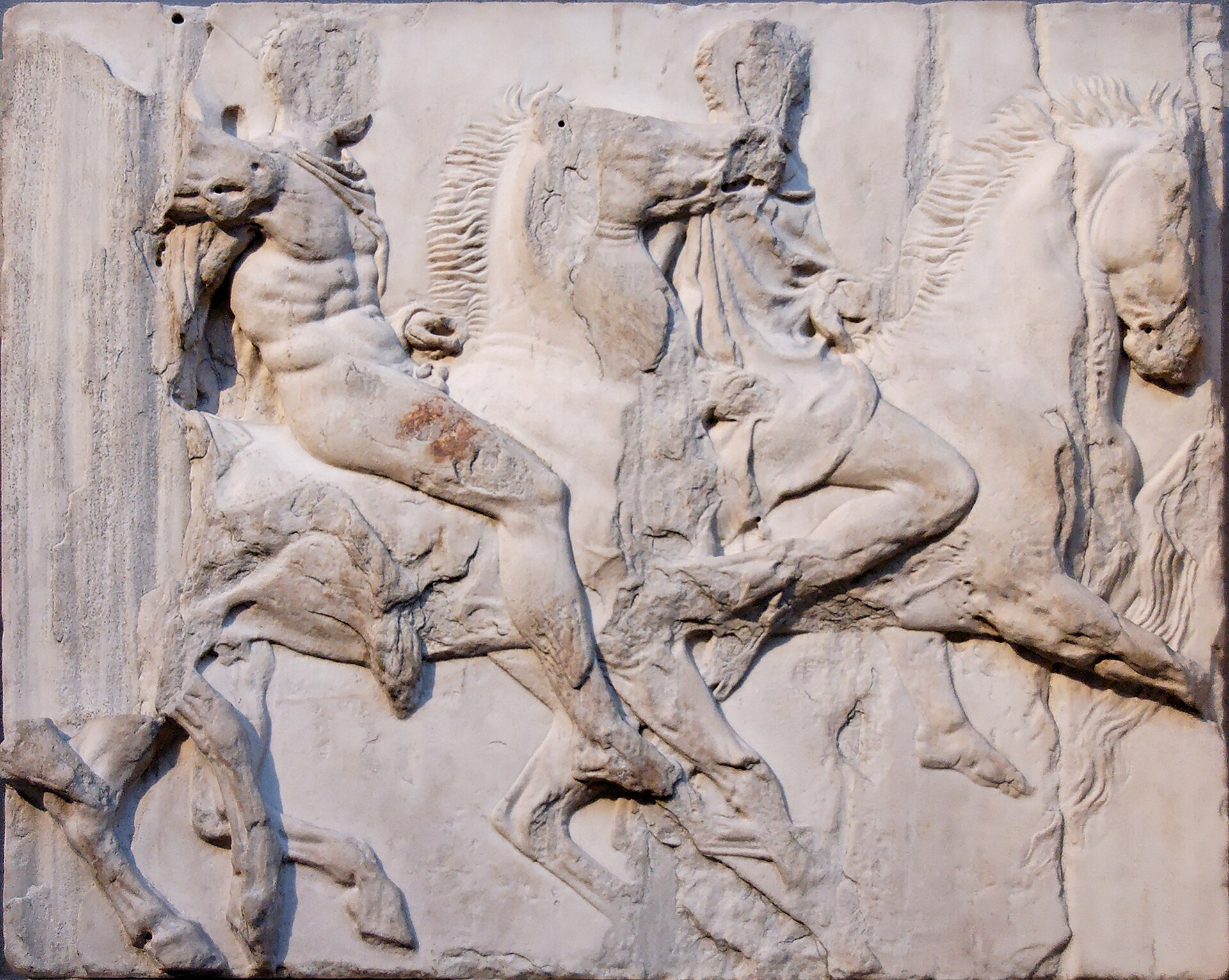
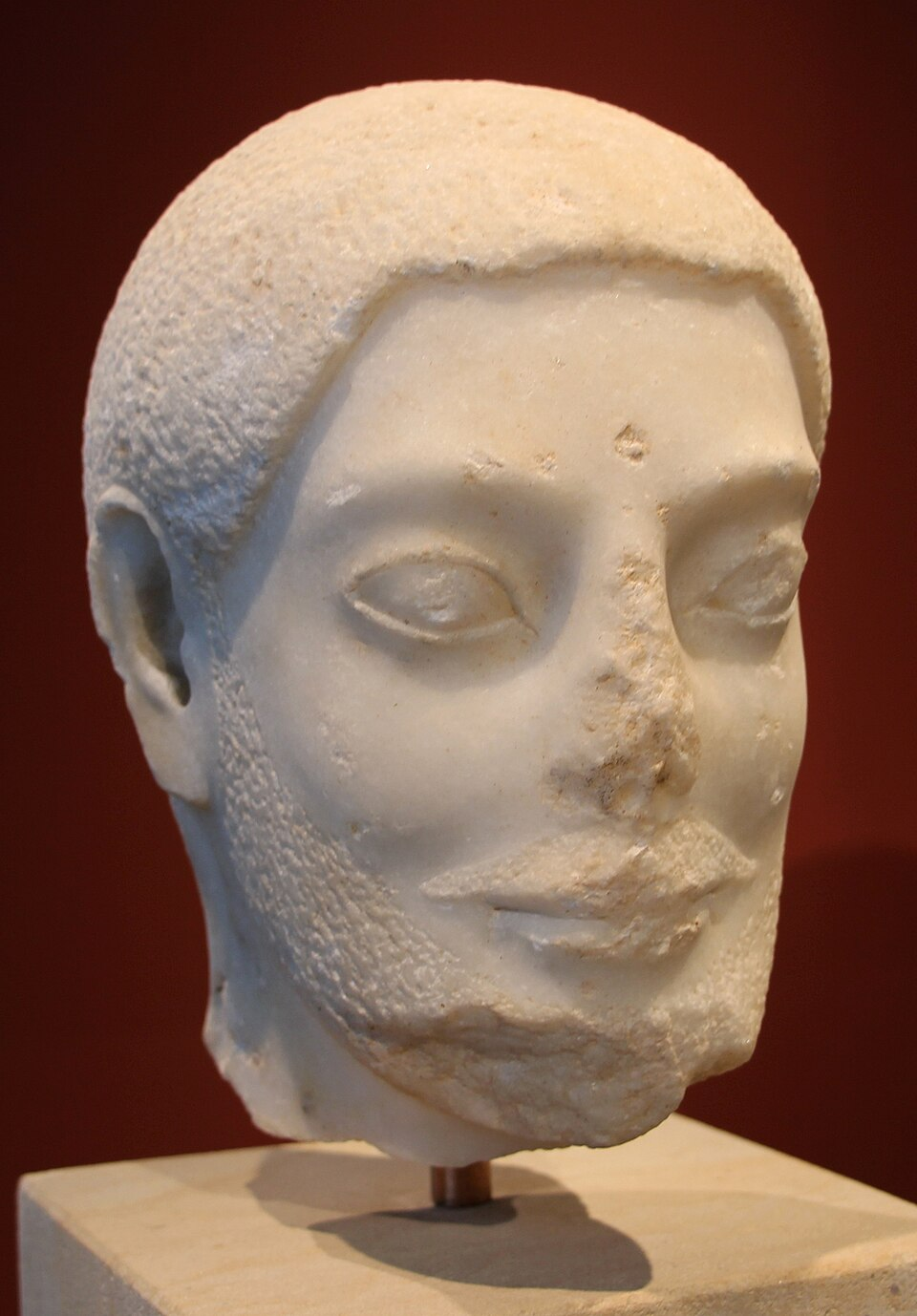
Picture a Greek statue. Almost certainly you pictured white marble: smooth, pale, unpainted, dignified. That image is so fixed that it shapes everything downstream of it, from museum lighting to garden ornaments to the way we imagine the ancient world felt to live in.
It is also, as an account of what those objects actually looked like, close to entirely wrong. The sculptures of ancient Greece and Rome were painted, and not subtly. They carried skin tones, patterned and brightly colored garments, painted eyes and lips and hair, and were frequently fitted with metal attachments and inlays of gemstone or colored marble. The technical term is polychromy, from the Greek for “many colors.”
The whiteness we see is not the artwork. It is what remains after two thousand years of weather, burial, and cleaning stripped the surface away. And the last of those three is the part of the story that tends to surprise people most. Here is how the ancient world lost its color.
What the Statues Actually Looked Like
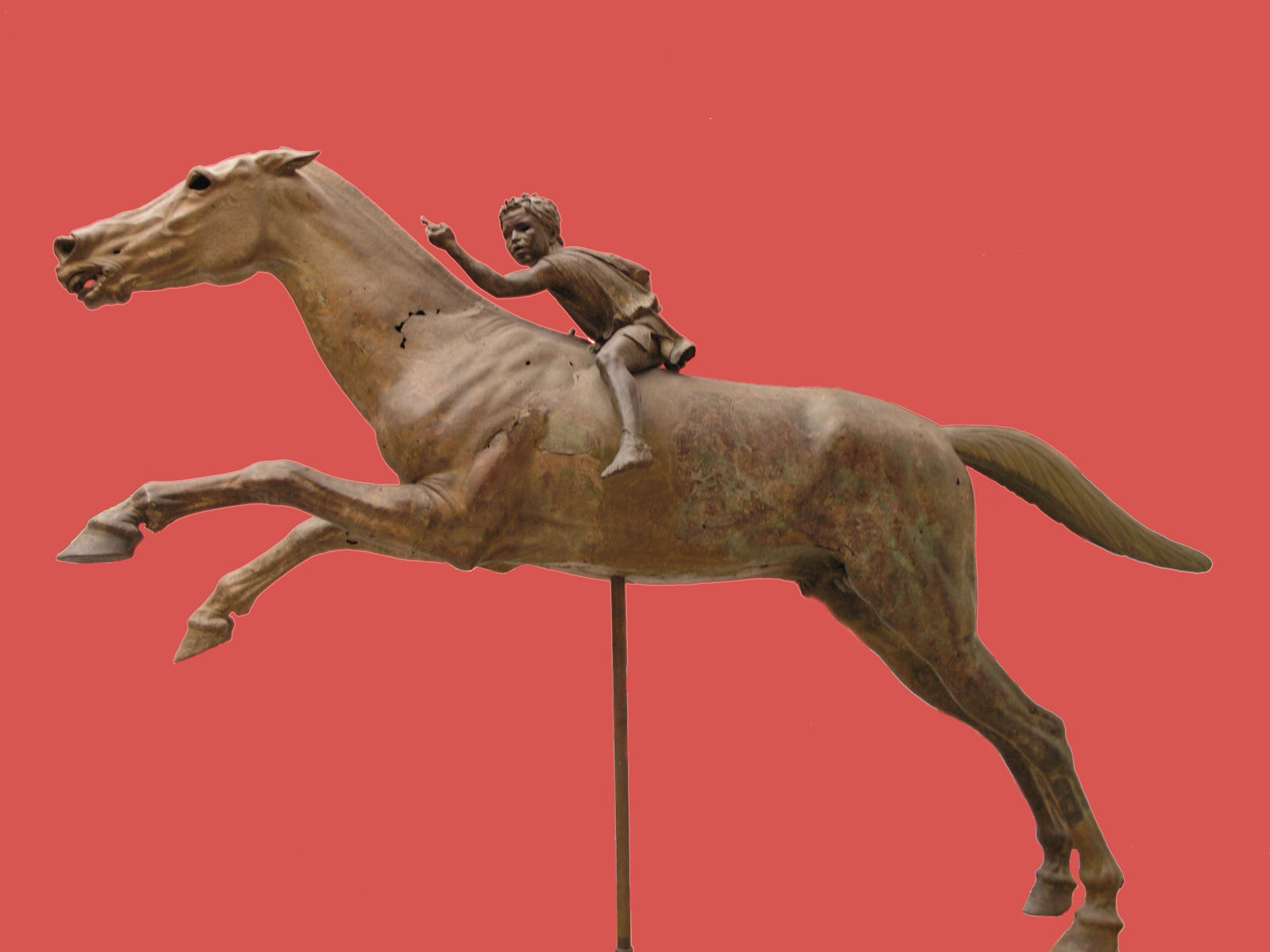
The reconstructions are startling the first time you see one. Where we expect restraint, there are bold blocks of color: garments in deep blue and red with intricate repeating patterns, warm ochre skin, dark outlined eyes, painted hair.
The palette was not limited or improvised. Analysis of surviving traces identifies specific ancient pigments used deliberately: Egyptian blue, one of the first synthetic pigments ever manufactured; iron-based ochres in a range of earth tones for flesh; copper-based greens such as malachite for vegetation; lead white for highlights; and gilding for details like weapon fittings and jewelry.
Paint was not the whole of it either. Sculptors incorporated bronze, copper, silver, and gold for shine, and used gemstones and colored marbles to create inlaid, textured effects. A finished statue was closer to a lifelike, decorated figure than to the pale abstractions in our museums.
There is a further detail that makes the point vividly. A Danish study drawing on Roman writers and inscriptions on Greek temples found that cult statues were also, at times, perfumed with scented oils as part of their decoration. As the researcher behind that work put it, a marble statue was not meant to be perceived as a statue in stone at all; it was supposed to resemble the god it depicted.
Like our content? Follow us for more.
How We Know
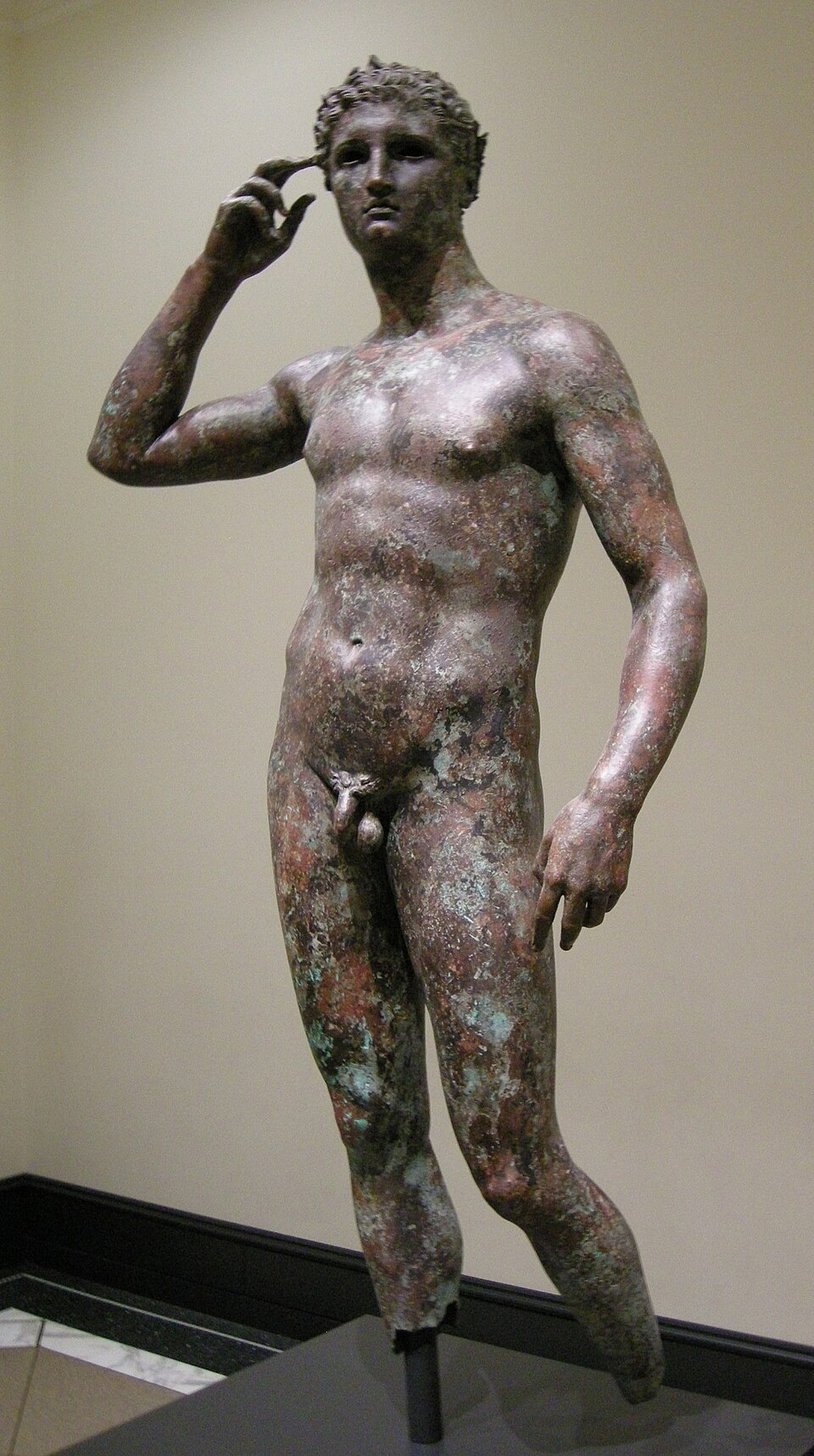
The obvious objection is that this could be speculation dressed up as science. It is not, and the evidence runs along several independent lines.
The first is physical residue. Pigment survives in protected crevices, in undercuts, and in surface pores, invisible to a casual glance but detectable with the right techniques. Researchers use raking light, in which illumination at a shallow angle reveals surface differences, along with ultraviolet and infrared imaging that make faded traces visible. Laboratory methods including X-ray fluorescence, Raman spectroscopy, and analysis of binder residues identify which specific pigments were used, and electron microscopes can analyze a fleck of paint smaller than a grain of sand.
The second is the sculpture itself. Surfaces show incised guidelines for pattern placement, nail holes where metal attachments were fixed, and corrosion shadows left where those attachments sat. The stone was finished in ways that only make sense if it was going to be painted.
The third is documentary. Ancient wall paintings and painted vessels depict statues as colored objects, and Greek and Latin texts refer directly to the practice of painting figures. The Greeks and Romans were not being secretive about this. They wrote it down and drew pictures of it.
A well-publicized recent case involved the Parthenon sculptures held at the British Museum. Using non-invasive digital imaging, researchers detected microscopic traces of paint, identifying purple, white, and blue, in work published in 2023. These are among the most examined sculptures on Earth, and the color was still there, waiting for a technique sensitive enough to find it.
The Part Where People Removed the Evidence

Here is where the story turns uncomfortable. Traces of pigment were noticed on excavated sculpture as far back as the eighteenth and nineteenth centuries. The information was available. It was, substantially, ignored, and in some cases actively destroyed.
Two things drove that. The first was an aesthetic idea that hardened into orthodoxy. In the late eighteenth century, the German art historian Johann Joachim Winckelmann popularized the view that ancient sculpture was always intended to be white, and that whiteness represented purity and beauty. That interpretation became the foundation of how classical art was taught and appreciated, and it was self-reinforcing: white statues were the standard, so colored ones must be anomalies.
The second was commercial. Dealers understood what buyers wanted, and buyers wanted white. Statues that came out of the ground with pigment still attached were sometimes scrubbed until the color was gone, because a clean white piece sold for more. When rare examples with intact color turned up, experts sometimes argued they must be the product of a different and, in their view, lesser culture, rather than accept that the Greeks had painted their own work.
So the record was thinned twice over: once by time, and once by people who had the evidence in their hands and removed it. Serious acceptance did not really arrive until the 1960s, with the full picture emerging through the 1980s and after.
The Exhibition That Made It Real
Argument in academic journals is one thing. Seeing it is another.
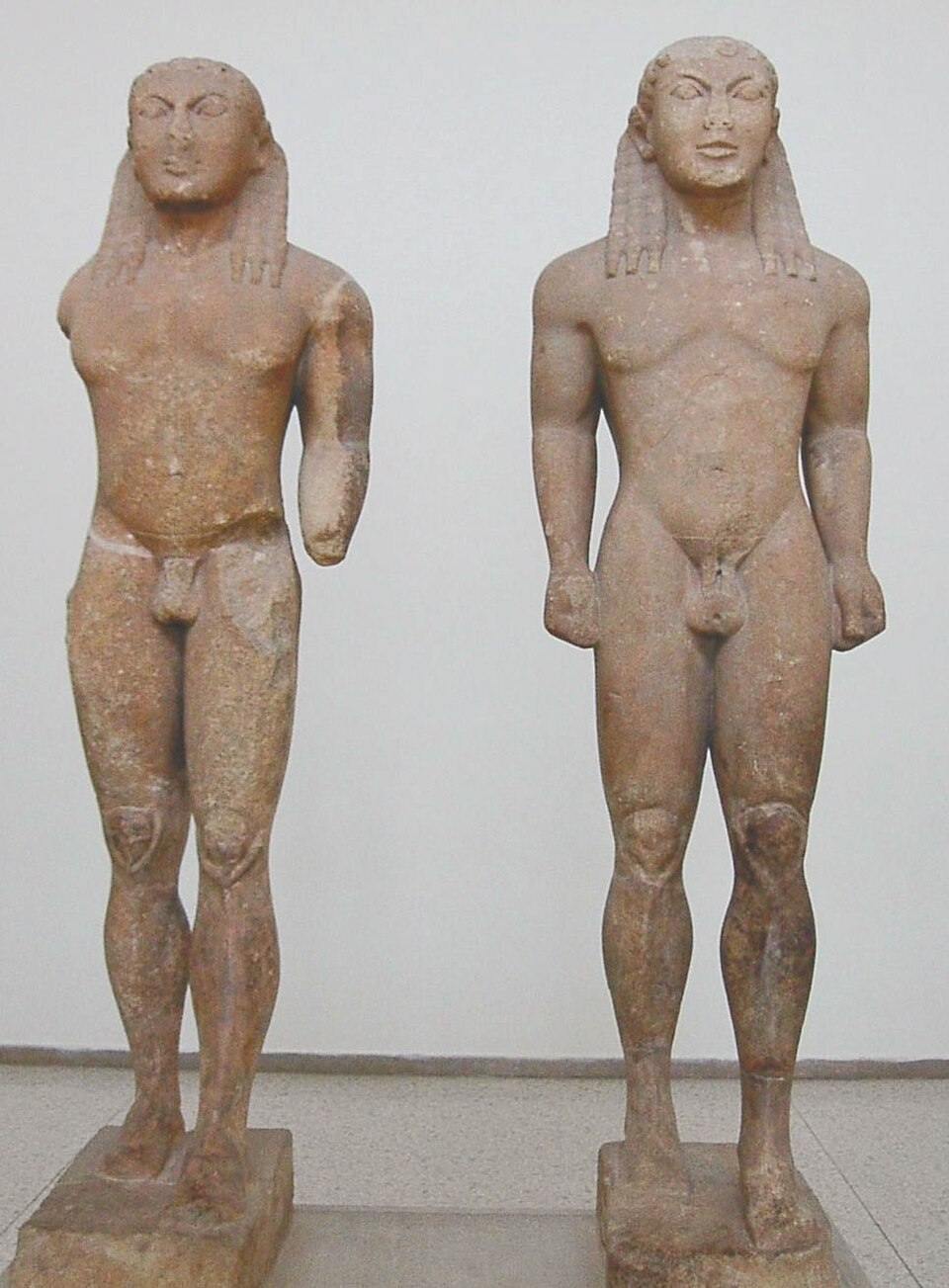
Beginning in the 2000s, the German researchers Vinzenz Brinkmann and Ulrike Koch-Brinkmann applied raking light and ultraviolet photography to sculptures including those from the Temple of Aphaia on the Greek island of Aegina, and then did something more provocative: they built full-color reconstructions based on the traces they found.
The results toured internationally as an exhibition of ancient sculpture in color, running for over a decade and eventually informing displays at major museums including the Metropolitan Museum of Art in New York. The reaction was mixed, and revealingly so. Many visitors found the painted versions garish, even tacky, and said so. A sociologist studying the exhibition noted that the unpainted version we know is essentially an accident of decay that later became bound up with cultural values about taste and restraint.
That discomfort is itself the interesting finding. People were not objecting to the evidence. They were objecting to being asked to give up an image they liked.
An Honest Caveat About Brightness
It is worth being precise about the limits of what reconstructions can claim, because the responsible practitioners in this field are precise about it themselves.
Reconstruction begins from evidence: pigment traces mapped by imaging and chemical analysis, incised guidelines, attachment holes, binder residues. From there it proposes colors and patterns consistent with that evidence, with comparable examples from the same period and region, and with the technical constraints of ancient painting. Careful work labels each element as either directly attested or inferred by analogy, and does not blur the two.
The question of brightness is real and unresolved. Exhibition reconstructions made for public impact sometimes push color saturation beyond what the surviving evidence strictly supports, partly because a bold reconstruction communicates the central point more forcefully than a tentative one. Ancient pigments also aged, and the original surfaces may have been more nuanced, more blended, or more subtly modeled than a flat reconstruction suggests.
So the honest position is this: that the sculptures were painted is settled beyond reasonable dispute. Exactly how bright, how blended, and how sophisticated the painting was remains an active area of work.
Why It Matters What Color They Were
This is more than a correction to a factual detail, because the white-marble image did real work in shaping how the ancient world is imagined.
An austere, monochrome antiquity suggests a particular kind of culture: restrained, severe, philosophical, aesthetically minimal. A brightly painted one suggests something else entirely: a world of visual noise, decoration, and spectacle, where temples and statues were vivid rather than solemn. The second picture is the accurate one, and it changes the texture of everything you imagine about walking through an ancient city.
There is also a useful lesson about how knowledge goes wrong. This was not a case of missing evidence. The pigment was there, the ancient texts described the practice, and the painted vessels showed it. What failed was the willingness to see it, because an appealing idea had already occupied the space where the answer should have gone, and because there was money in leaving it undisturbed.
The statues in the museum are still beautiful. They are just not finished objects; they are what is left of finished objects. Next time you stand in front of one, it is worth doing the mental work of putting the color back, and imagining a room full of them, painted, gilded, gleaming, and possibly perfumed.
Like our content? Follow us for more.