There are natural phenomena that photographs oversell, and this is one of the few that photographs undersell, largely because cameras struggle with it.
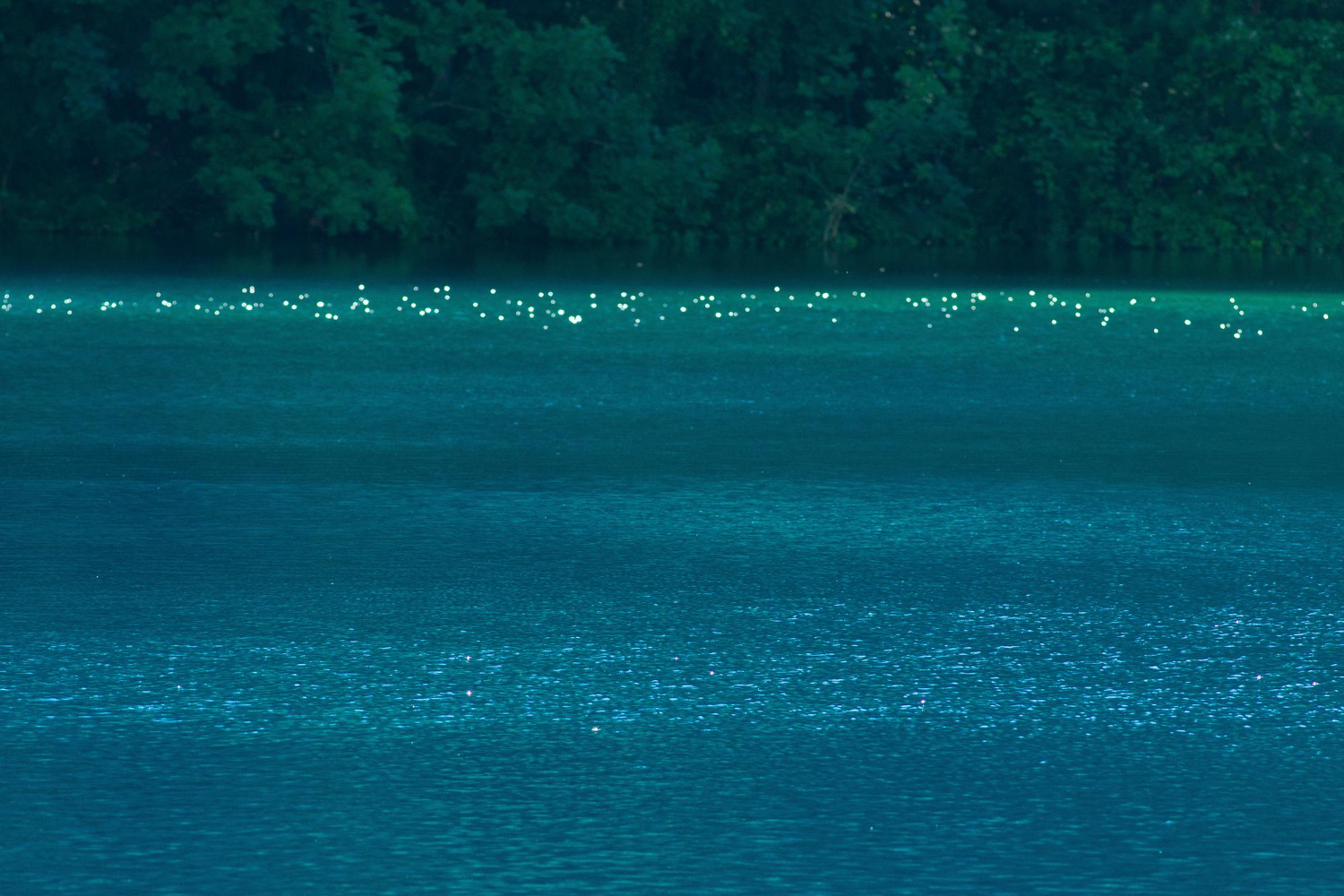
The effect is simple to describe. In certain shallow, sheltered bays, the water produces light when it is disturbed. Move a paddle and a blue-green glow follows it. Trail your fingers and they leave luminous streaks. A fish passing beneath the surface draws a line of light behind it.
It is not reflection, phosphorescence in the loose sense, or anything artificial. It is a living organism responding chemically to movement, in real time, in numbers large enough to light up a lagoon.
There are only a handful of places in the world where this happens consistently enough to be reliable, and three of them are in Puerto Rico. Here is what causes it, where to see it, and why it is more fragile than it looks.
What Is Actually Glowing
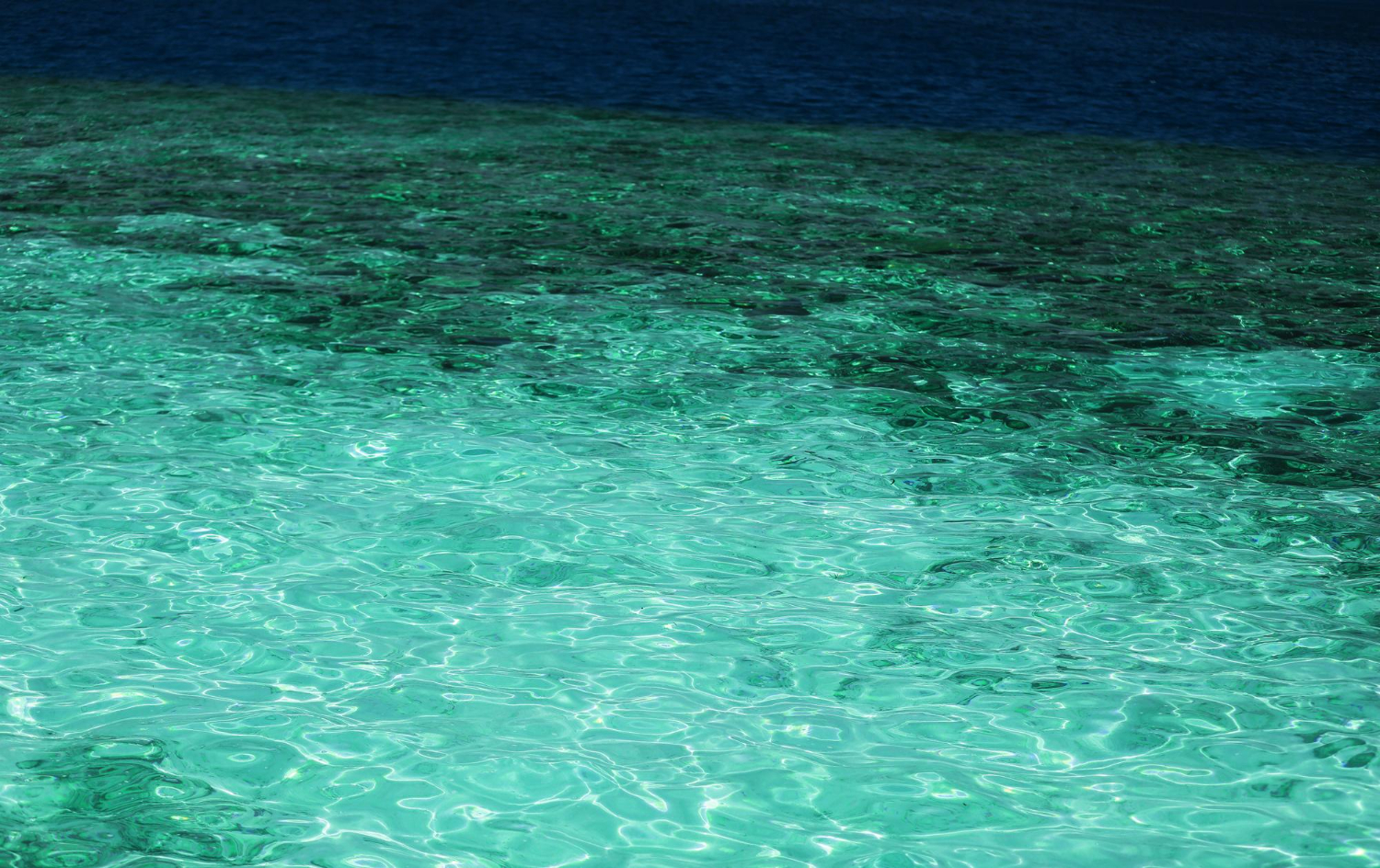
The organisms responsible are dinoflagellates — microscopic, single-celled, and technically neither plant nor animal, sitting in a group of their own.
The species behind the Puerto Rican bays is Pyrodinium bahamense, a name that translates roughly as whirling fire, which is a rare case of scientific nomenclature doing exactly the right thing.
When the water around them is disturbed — by a paddle, a swimmer, a fish, rain — the cells emit a brief flash of blue-green light lasting a fraction of a second. The reaction is chemical, and it is the same broad phenomenon that makes fireflies glow, occurring in a creature far too small to see individually.
The spectacle depends entirely on concentration. Individually these organisms are invisible; the glow is the collective flash of enormous numbers responding at once. Reported densities for Mosquito Bay run to roughly 700,000 organisms per gallon, or figures around 160,000 per litre, which are among the highest ever recorded anywhere.
That concentration is what separates a bay that glows spectacularly from water that merely sparkles faintly on a good night.
Like our content? Follow us for more.
Why This Particular Bay
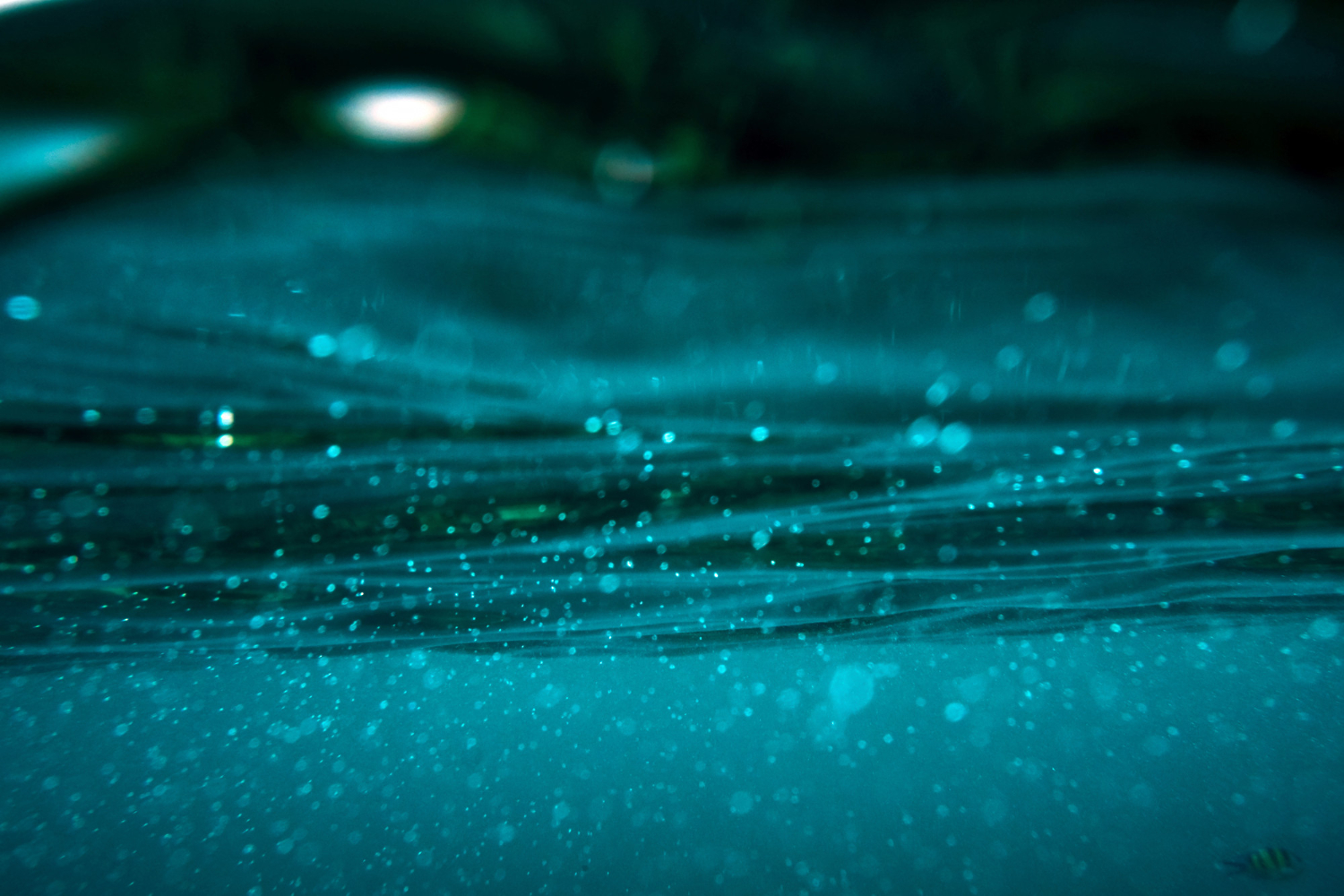
The conditions that produce such density are specific, and understanding them explains both the bay’s brightness and its fragility.
Mosquito Bay sits on the southern coast of Vieques, a small island off Puerto Rico, and it is a shallow lagoon with a narrow mouth. That geometry matters enormously: the narrow opening restricts exchange with the open ocean, so the organisms are effectively trapped and protected inside rather than dispersing.
The bay is ringed by red mangroves, and this is the second essential ingredient. Fallen mangrove leaves decompose in the water and create the nutrient-rich conditions the dinoflagellates need to multiply. The mangrove ring also stabilises the sandbars that protect the bay.
The third factor is darkness. Vieques has very little light pollution, and the bay sits within a protected nature reserve, so there is no competing artificial light to wash out the glow.
Shallow, sheltered, nutrient-rich, warm and dark. Remove any one of those and the effect diminishes or disappears — which is precisely why so few places on Earth manage it.
The Three Bays, and When to Go
Puerto Rico has three bioluminescent bays, and they are not equivalent.
Mosquito Bay on Vieques is the brightest, recognised by Guinness World Records in 2006. Laguna Grande in Fajardo, reachable from the main island, is next. La Parguera in Lajas is the least bright, which is attributed to overuse and weaker conservation over the years — a useful illustration of what happens when these systems are not protected.
The single most important planning factor is the moon. The glow is faint in absolute terms, and moonlight overwhelms it. The best viewing is on a new moon or when the moon is a thin crescent and the sky is at its darkest.
This is taken seriously enough to be regulated. Tour operators have been restricted from running trips around the full moon, with the Vieques and La Parguera bays reported closed the night before, of, and after a full moon. General advice is to avoid the window of several nights either side.
Mosquito Bay glows year-round, which is unusual — in most parts of the world bioluminescence is seasonal. Concentrations tend to peak in late summer and early autumn when the water is warmest, though that overlaps with hurricane season, and heavy rain can stir up sediment and dim the bay for several nights.
Getting There, and the Rules
Access is restricted, and the restrictions are the reason the bay is still worth visiting.
You cannot enter Mosquito Bay independently. Visits are permitted only through licensed tour operators, as a conservation measure, and booking in advance is required. Most tours depart from Esperanza, a small fishing village on the island’s southern coast.
Trips run by kayak or by electrically powered boat — electric specifically, to avoid fuel and engine contamination in a delicate system.
Swimming is generally not permitted unless a guide explicitly allows it, and where it is allowed, the standing instruction is to rinse off beforehand. Sunscreen, insect repellent, lotion and perfume all harm the organisms, and washing them off before entering the water is a basic courtesy to the bay.
Photography is difficult. The glow is far dimmer than it appears in edited images, and phone cameras generally cannot capture it. Most operators advise arriving prepared to look rather than to photograph.
How Fragile This Actually Is
The threats to these bays are specific and mostly local, which is unusual for a natural spectacle and means they are also mostly addressable.
Artificial light from nearby development can outshine the natural glow, effectively erasing the phenomenon without harming anything biologically.
Pollution, dredging, land development and overuse of the bay’s water can affect the dinoflagellates directly. Destruction of the mangroves would be the most serious blow of all: the mangrove ring supplies nutrients and stabilises the protective sandbars, and losing it could end the phenomenon in that bay altogether.
The La Parguera example shows this is not hypothetical. That bay’s diminished glow is attributed to overexploitation and inadequate protection over time.
There is a more encouraging data point too. After Hurricane Maria in 2017, residents feared for Mosquito Bay — and it recovered, reportedly returning brighter than before. These systems are delicate but not fragile in every direction.
Why an Organism Would Bother Glowing
The obvious question is what the dinoflagellates get out of it, since producing light is metabolically expensive and they are not doing it for tourists.
The leading explanation is known as the burglar alarm hypothesis, and it is elegantly indirect. A dinoflagellate cannot harm the small grazing animal eating it. What it can do is make that grazer conspicuous.
A sudden flash of light in dark water draws the attention of whatever is hunting the grazer. So the glow does not defend the individual cell being eaten; it raises the risk to the animal doing the eating, which over evolutionary time makes grazers avoid feeding where the water flashes.
That explains why the response is triggered by mechanical disturbance rather than by light or chemistry. Something moving through the water is exactly the signature of an approaching grazer, and the flash is the alarm going off.
It also explains why your paddle sets it off. The organisms cannot distinguish a kayak from a fish; they respond to movement in the water, and a boat is simply an extremely large disturbance.
Bioluminescence itself is widespread in the ocean, occurring in a great many organisms at depth. What is rare is the combination of a species that does it, at a concentration high enough to see, in water shallow and sheltered enough to visit.
Worth Rearranging a Trip For
A few honest expectations, because this is a phenomenon that disappoints people who arrive with the wrong picture.
It is not as bright as the photographs. Long-exposure and processed images exaggerate it substantially. What you actually see is a soft blue-green glow, most visible in the disturbed water around your paddle and hands.
It depends on conditions you do not control. Moon phase, recent rainfall, sediment and cloud all affect it, and operators will tell you honestly if the bay has been dim.
And it requires patience and darkness. Your eyes need time to adjust, and the experience is quiet — which is part of why the electric boats and kayaks suit it.
Given all that, it remains one of the few truly unusual things a traveller can arrange to see. Bioluminescence exists throughout the world’s oceans, but concentrated reliably enough to light up a lagoon every night of the year, in water you can put your hand into, it exists in only a handful of places.
Somewhere in a mangrove-ringed lagoon off Vieques tonight, several hundred thousand organisms per gallon are waiting for something to move.
Like our content? Follow us for more.