The Dead Sea produces one of the most recognisable travel photographs there is: a person lying on their back on the surface of the water, reading a newspaper, entirely unsupported.
The image is real and requires no trick. What most people do not know is that it is not optional. In water that dense, floating is not something you achieve; it is something that happens to you, and staying upright or submerging is the difficult part.
The lake sits in the Jordan Rift Valley, bordered by Jordan to the east and by Israel and the West Bank to the west, fed principally by the Jordan River.
Almost everything commonly said about it is slightly off, starting with the name. Here is what is actually going on.
Not a Sea, and Not Quite Dead
Two corrections before the physics.
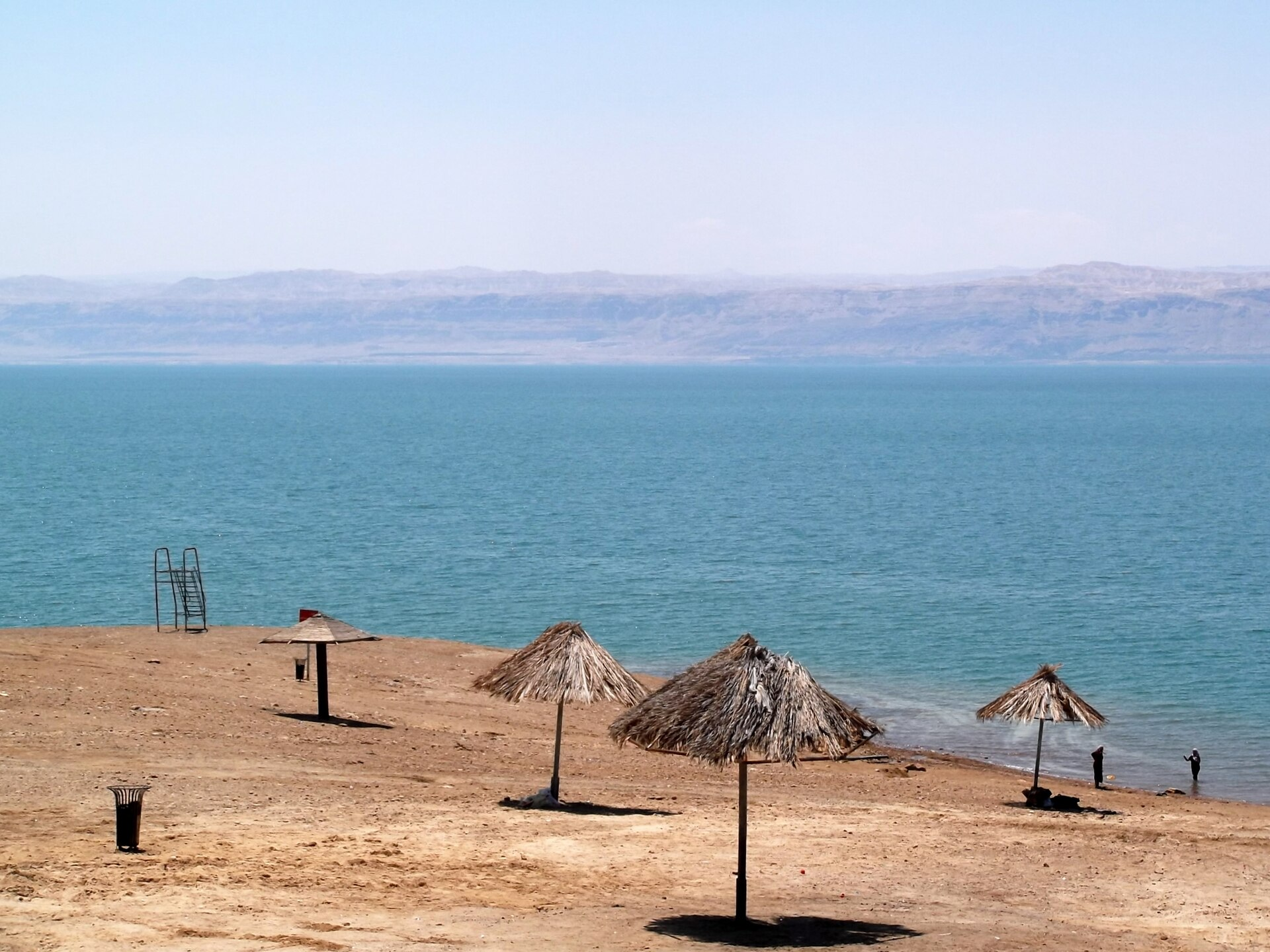
It is not a sea. A sea connects to the ocean; this is a hypersaline lake with no outlet at all. Water flows in from the Jordan River and smaller streams and leaves only by evaporating in the desert heat, which is precisely why the salt concentrates.
And it is not entirely dead, though the name is a reasonable description. Fish, plants, algae and animals cannot survive at that salinity, and fish carried in from the Jordan River do not last. But microbial life does persist — salt-tolerant archaea and a green alga of the genus Dunaliella among them. Ancient observers had no way to see any of that, so the name stuck.
There is also a common misconception about the superlative. The Dead Sea is extraordinarily salty but not the saltiest water on Earth; it ranks behind several smaller hypersaline bodies, including Gaet’ale Pond in Ethiopia’s Danakil Depression, measured at around 43 percent salt by weight in a 2017 study, along with Don Juan Pond in Antarctica and Lake Assal in Djibouti.
What the Dead Sea is, unambiguously, is the deepest hypersaline lake in the world, and by a wide margin the largest and most accessible body of water of this kind.
Like our content? Follow us for more.
Why You Float
The floating is a straightforward application of a principle worked out more than two thousand years ago.
Ocean water is about 3.5 percent salinity, with a density around 1.03 grams per cubic centimetre. The average human body sits close to 1.0. That small difference is why most people float in the sea but sit low in the water and have to paddle to keep their face clear.
Dead Sea water is about 34.2 percent salinity, roughly ten times the ocean’s, giving it a density of about 1.24 grams per cubic centimetre — approximately 24 percent denser than a human body.
Archimedes’ principle states that an object in a fluid experiences an upward force equal to the weight of the fluid it displaces. In water that much denser than you, you only need to displace a small volume before that upward force matches your weight. So you settle high, with a substantial proportion of your body above the surface.
The practical consequences are the ones visitors find disorienting. You cannot swim normally, because your legs will not stay down. Diving is effectively impossible. Standing upright in deep water is awkward, because your feet keep rising.
The mineral composition is unusual too, and not only in quantity. Ocean salt is dominated by sodium chloride, at something like 85 to 97 percent of dissolved salts. The Dead Sea is dominated by magnesium chloride at roughly half, with sodium chloride around 30 percent and significant calcium and potassium chlorides — a profile essentially unique among major water bodies.
The Water Is Not Friendly
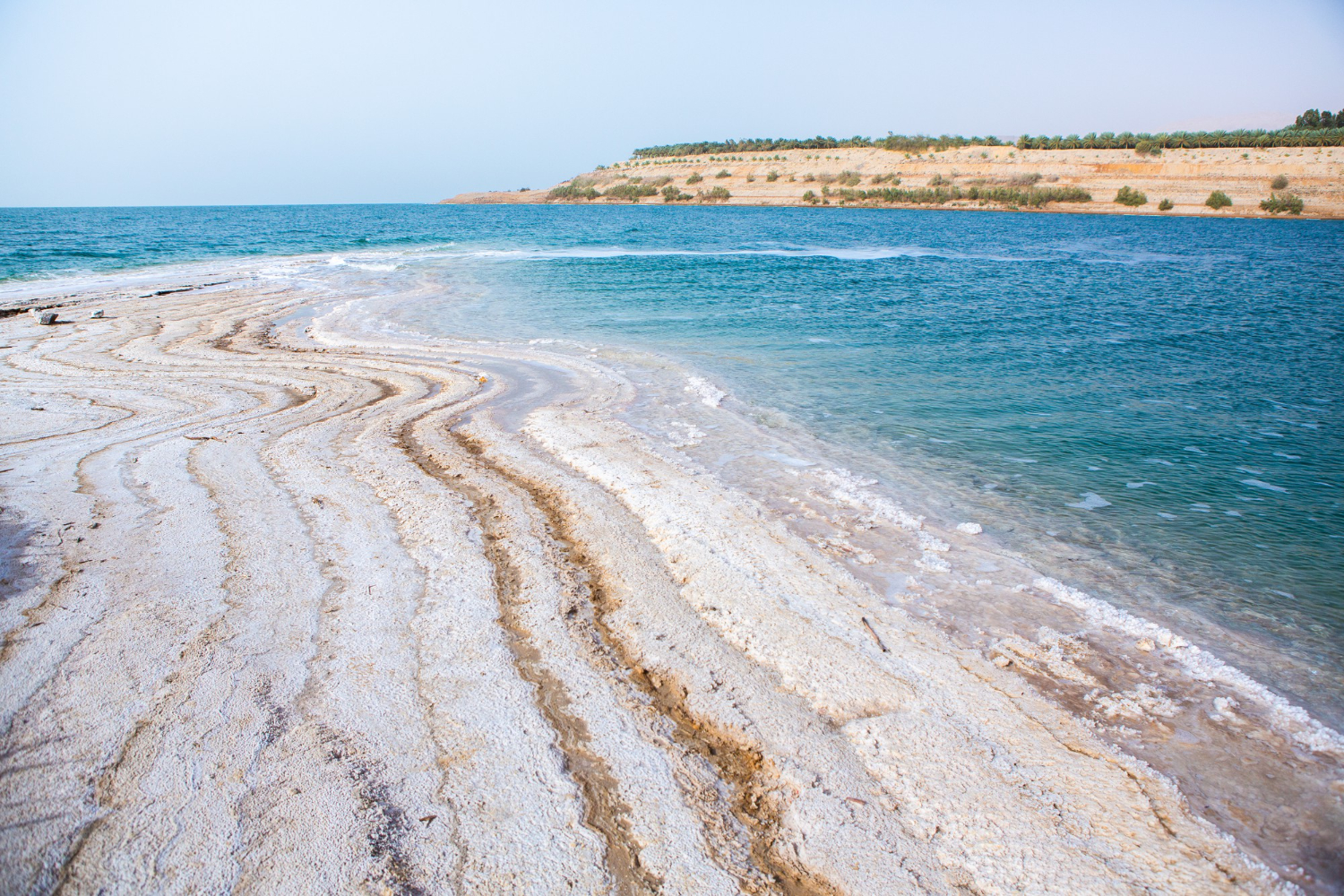
The density that makes floating effortless comes with consequences that every visitor is warned about, and they are worth taking seriously.
Getting the water in your eyes is intensely painful. The salt concentration causes severe stinging, and rinsing at a freshwater shower is the standard response. Every operator warns against splashing.
Any cut or graze will make itself known immediately, and shaving before a visit is widely advised against for that reason.
The water should not be swallowed. At that concentration it draws moisture out of the body rather than hydrating it, and the mineral load is not something the body handles well.
And putting your head under is discouraged both because of the eyes and because the buoyancy makes it truly awkward to right yourself if you end up face down. The sensible approach is to float on your back, keep your face clear, and get out and rinse when you are done.
None of this is exotic advice. It is simply what follows from being in water that is a third dissolved mineral.
The Lake Is Getting Smaller
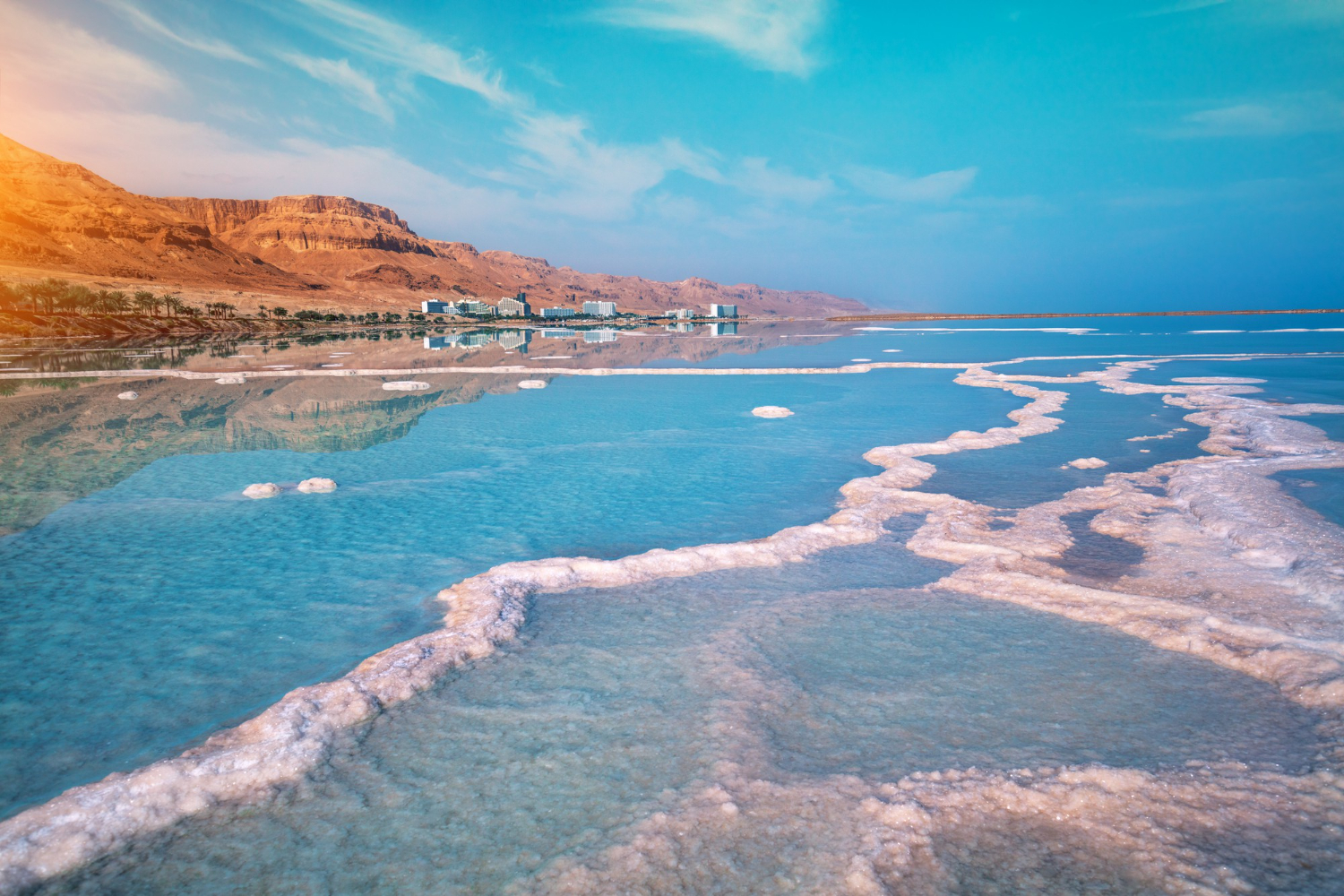
The most significant fact about the Dead Sea today is that there is less of it every year, and the mechanism is well documented.
Its surface level has been dropping by roughly one metre annually since the 1990s, with monitoring by the Israeli Geological Survey confirming a decline of around one to 1.2 metres per year. Its surface area has contracted substantially since the 1960s, with figures cited running from a third to over 40 percent.
Two causes account for most of it. The first is that the Jordan River, historically the lake’s main inflow, is now heavily drawn upon by the surrounding countries for agriculture and drinking water, so a small fraction of the original flow reaches the lake. The second is mineral extraction, principally potash production, which pumps water into evaporation ponds in the shallow southern basin.
A visible consequence is sinkholes. As the water table drops, fresh groundwater dissolves underground salt layers, and the ground above collapses; thousands have formed along the retreating shoreline since the 1980s.
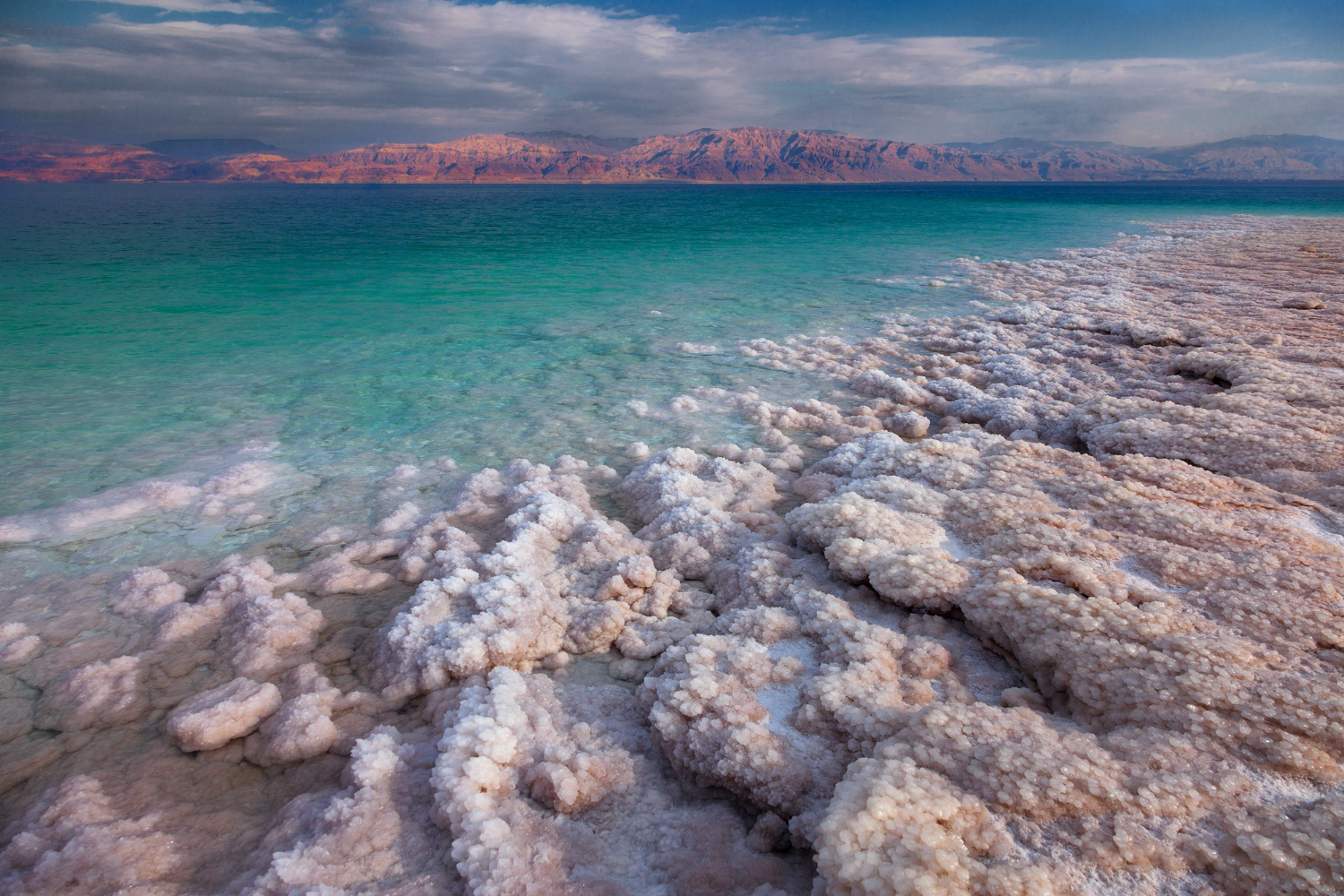
There is a counterintuitive detail worth including. Because the lake is already at or near mineral saturation, further evaporation does not make it meaningfully denser — excess salt simply precipitates onto the bottom as halite. So the famous buoyancy is stable rather than intensifying, even as the lake shrinks.
This is reported here as a documented physical process rather than as an argument for any particular policy, which is a matter for the countries involved.
What It Is Actually Like
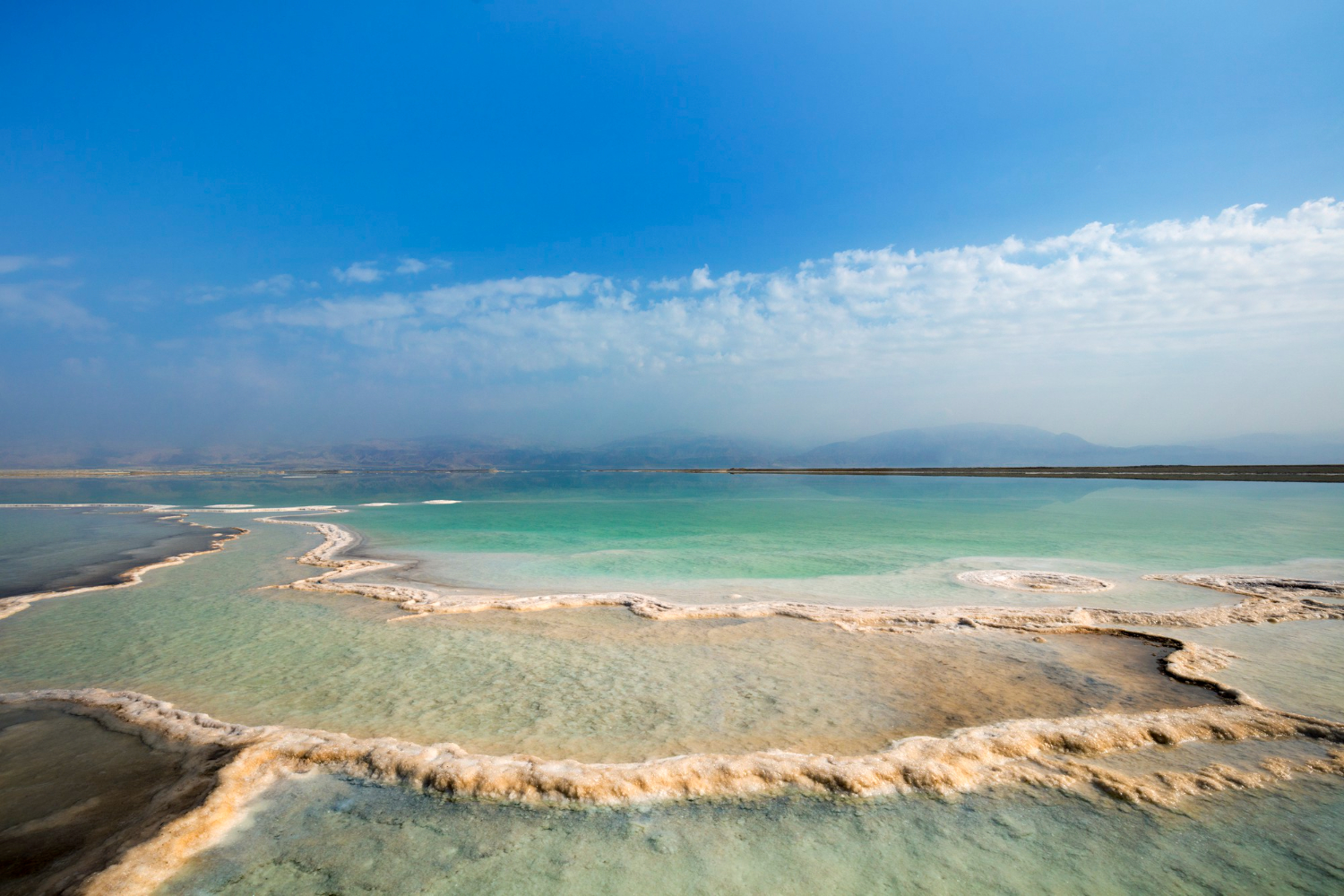
For anyone considering a visit, a few practical realities beyond the physics.
The lake has two basins. The northern one is deep, reaching around 300 metres. The southern one is very shallow, and most resorts are located there — which means the water many visitors float in is a managed, shallow section rather than the deep lake.
The surroundings are desert. Summer temperatures regularly exceed 40 degrees Celsius, and winter is mild. Because the shore sits so far below sea level, the atmospheric conditions differ noticeably from anywhere else.
Black mineral mud is a fixture of the experience, applied and then rinsed off, and it is sold commercially worldwide.
The Dead Sea Scrolls were found in caves above the western shore in 1947, which adds a layer of significance to the surrounding landscape that has nothing to do with the water.
How It Got That Way
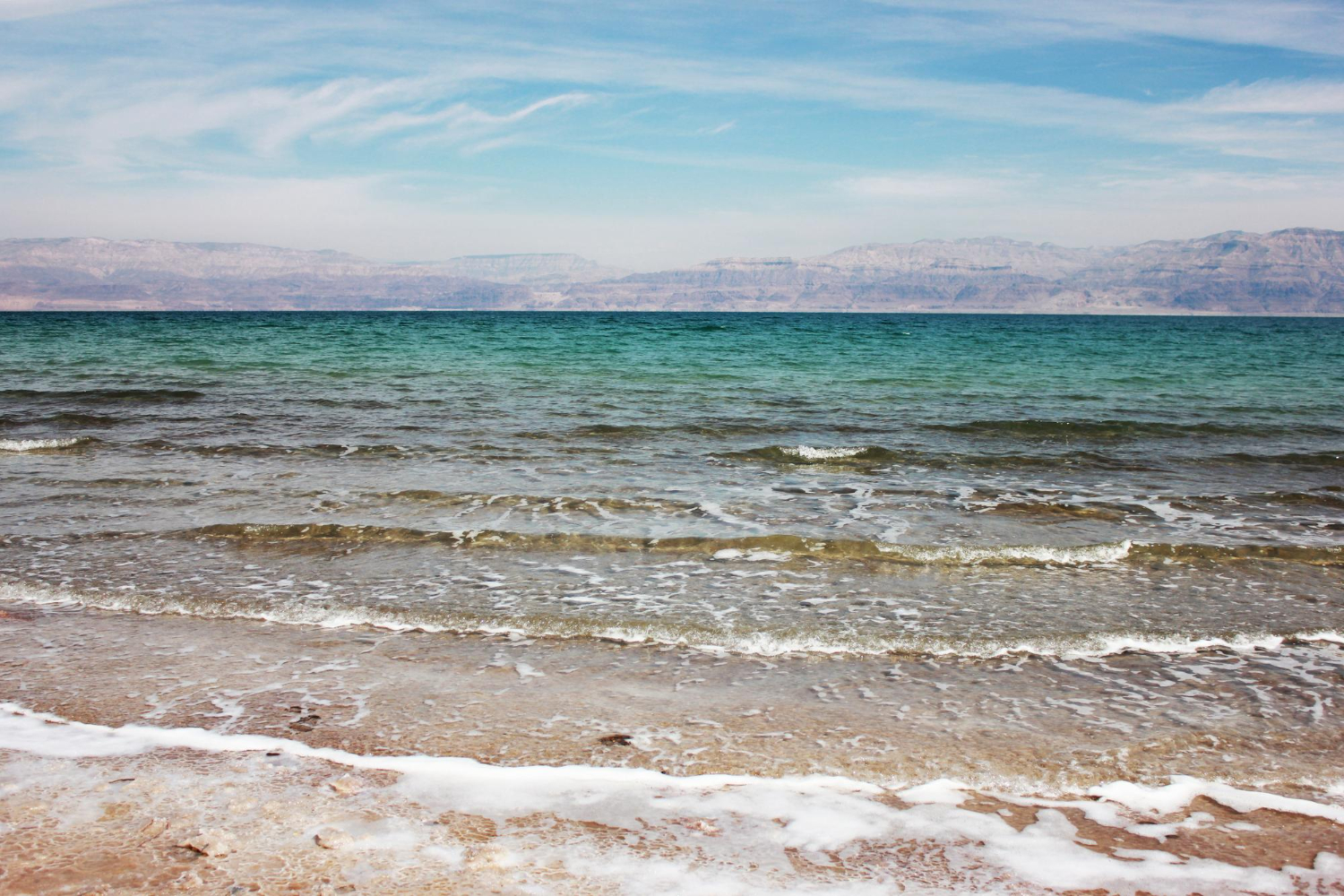
The salt did not arrive all at once, and the mechanism is worth spelling out because it explains why the lake is unique rather than merely unusual.
Rivers everywhere carry dissolved minerals, picked up as water moves over and through rock. In an ordinary river system that load eventually reaches the ocean, where it is distributed through an enormous volume and circulated globally, which is why seawater salinity stays fairly stable at around 3.5 percent.
The Dead Sea has no such outlet. The Jordan River and smaller streams deliver their mineral load into a basin sitting in the lowest place on the planet’s land surface, and the only exit for water is evaporation into desert air.
Evaporation removes water and leaves everything dissolved in it behind. Repeat that for thousands of years in a hot, arid climate and the concentration climbs until the water is approaching saturation.
The unusual mineral profile follows from the specific geology of the surrounding rock, which supplies more magnesium than the sodium-dominated inputs feeding the oceans.
So the lake is the product of three conditions arriving together: a closed basin, an extremely arid climate, and a long time. Change any one and you get an ordinary lake.
A Lake That Explains Itself
What makes the Dead Sea worth understanding rather than simply photographing is how completely one variable determines everything about it.
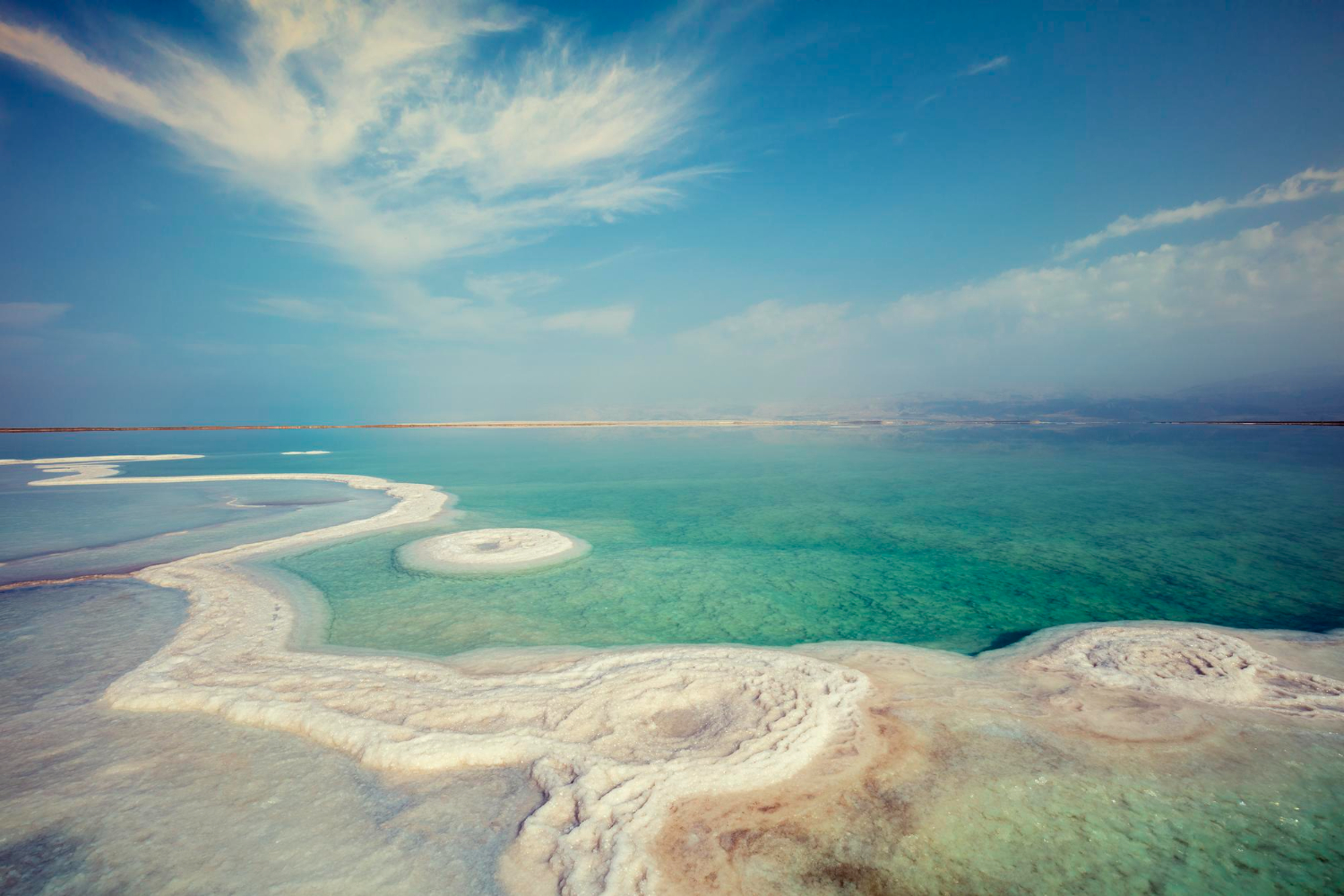
The salinity explains the floating, through density and Archimedes. It explains the name, because nothing large can live at that concentration. It explains the stinging and the warnings. It explains the mineral industry on its shores. It explains the crystalline salt formations along the edges. And the reason for the salinity is itself simple: water comes in, nothing goes out except evaporation, and everything dissolved stays behind, accumulating for thousands of years.
That is an unusually clean piece of natural cause and effect, sitting at the lowest point on the surface of the Earth, doing something to visitors that no other large body of water can.
Like our content? Follow us for more.