

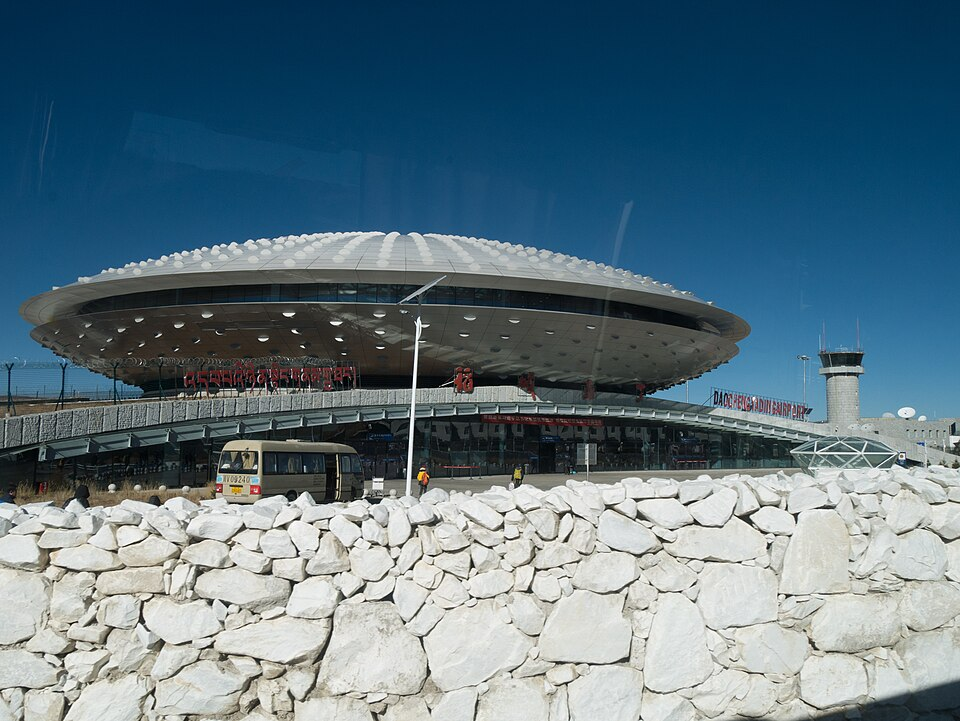
Daocheng Yading Airport, in the far west of Sichuan in China, sits at around 14,470 feet and opened in 2013, taking the title of the world’s highest civil airport from another Tibetan-plateau airfield that had held it for decades. The practical consequences of that altitude are the whole subject, and they are more interesting than the number.
Everything about a high-altitude airport is a response to one fact: air at that elevation is thin. That single property reaches into the length of the runway, the weight the aircraft can carry, the engines it needs, the time passengers spend on the ground and the medical provision in the terminal.
What thin air does to an aeroplane
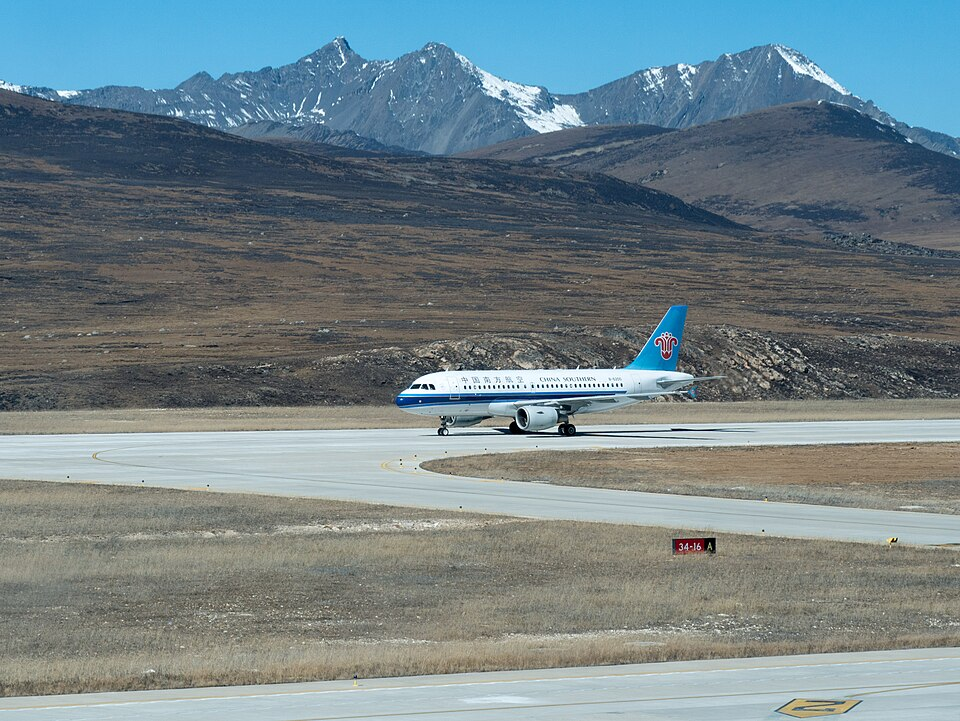
Three things at once, and they compound. A wing generates lift in proportion to air density, so a thinner atmosphere produces less lift at the same speed. A jet engine produces thrust by accelerating a mass of air, so a thinner atmosphere produces less thrust. And the airspeed at which the wing works is a function of density, which means the aircraft must reach a higher true speed over the ground to achieve the same indicated airspeed.
The result is an aircraft that accelerates more slowly to a higher required ground speed with a wing that generates less lift, and the runway has to accommodate all three. The rule of thumb used in aviation is that required takeoff distance increases substantially with altitude, which is why airports on the Tibetan plateau have some of the longest runways in the world despite handling a small number of flights.
The effect is made worse by temperature, because warm air is thinner still. The combined measure is called density altitude, and a hot day at a high airport can present an aircraft with conditions equivalent to an even greater elevation, which is why high-altitude operations are planned against the conditions on the day rather than against the airfield’s published elevation. The same arithmetic catches small aircraft at much lower airfields on hot summer afternoons, which is why density altitude is one of the first things a pilot is taught to calculate and one of the more common factors in general aviation performance accidents.
Like our content? Follow us for more.
What it does to the payload
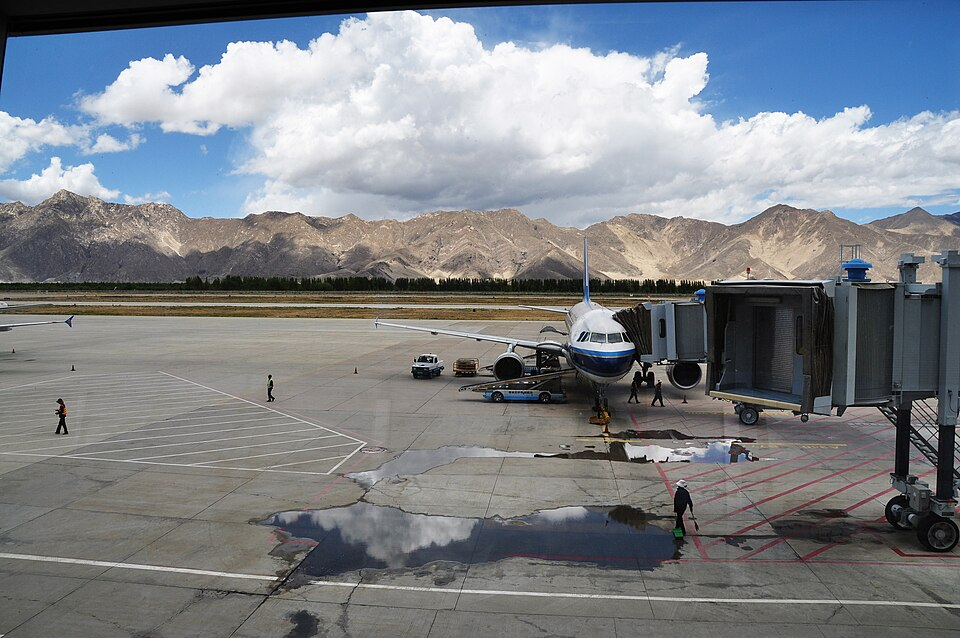
The commercial consequence is weight. If an aircraft cannot achieve the required performance, the answer is to carry less, which in practice means fewer passengers, less cargo or less fuel, and the last of those limits the range.
That is why high-altitude airports are served by particular aircraft types and frequently by specially certified examples, with engine and systems modifications and operating procedures approved for the conditions. It is also why services from such airports are often short hops to a lower airport where a full fuel load can be taken on.
The economics follow from the physics. An airline flying into a high plateau airport is operating an aircraft below its normal capacity on a route that exists because there is no practical alternative, which is why these services are typically supported as a matter of regional policy rather than as straightforwardly commercial operations. The aircraft themselves tend to be chosen for a high thrust-to-weight ratio rather than for efficiency, which is the opposite of the calculation made for an ordinary route.
What it does to the people
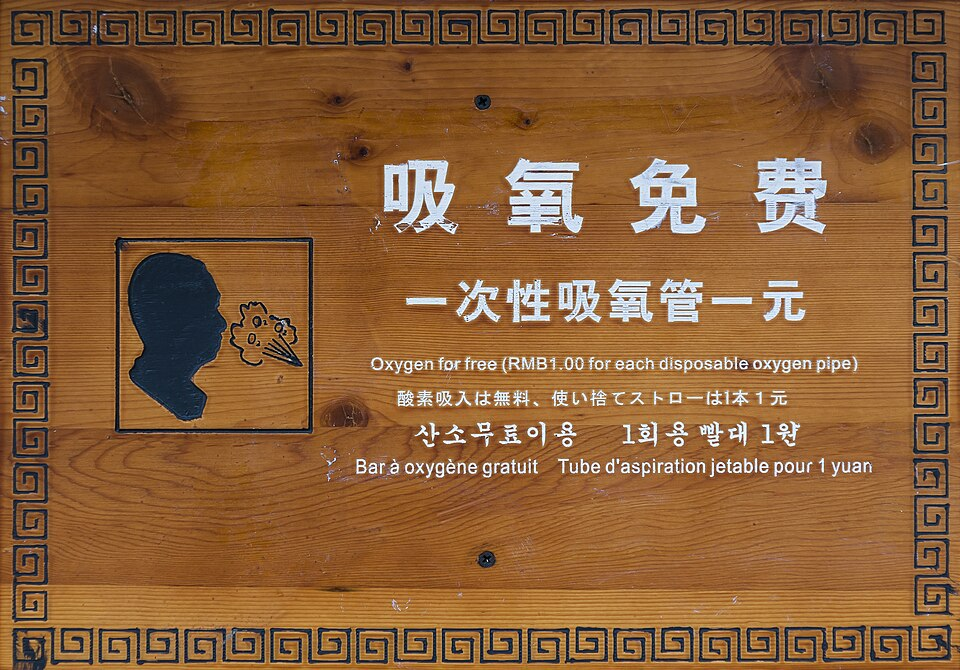
At that elevation the air contains roughly half the oxygen available at sea level, and passengers arriving by air have had no opportunity to acclimatise — they were at low altitude an hour or two earlier.
The response is medical rather than engineering. High-plateau airports in China and in South America maintain oxygen supplies in terminals, have medical staff or facilities on site, and publish advice to arriving passengers about moving slowly and resting on arrival. The predictable effects of sudden exposure begin within hours and include headache, breathlessness on exertion, poor sleep and nausea, with a minority of people progressing to conditions that require descent.
Anybody travelling to an airport at this kind of elevation, and particularly anybody with a significant heart or lung condition or who is pregnant, should be discussing it with a doctor well before booking rather than reading about it afterwards. The published route advice for high-plateau destinations is specific and is not decorative.
The airport that held the record before
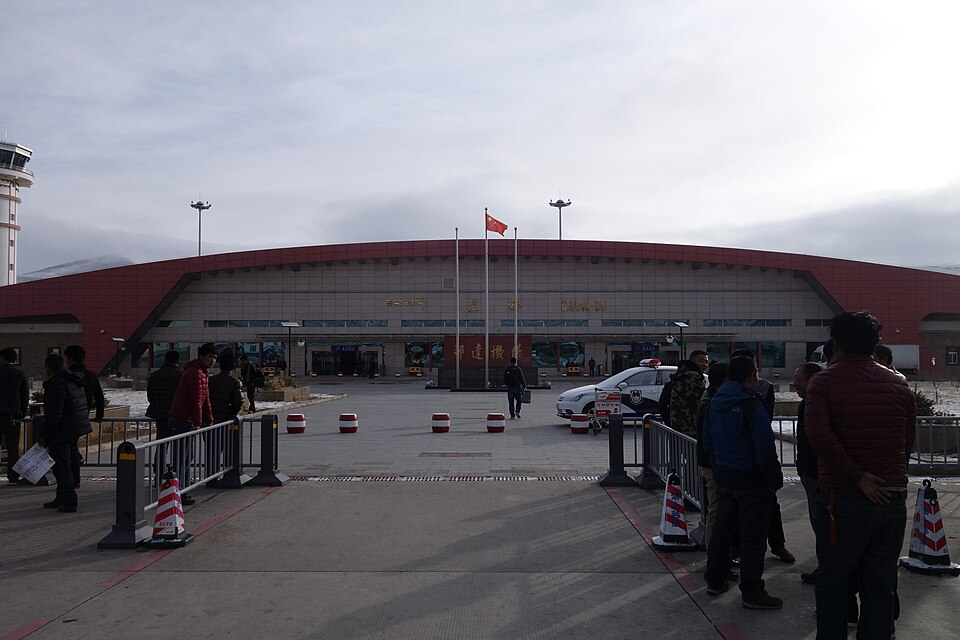
Qamdo Bamda, also on the Tibetan plateau, held the title for many years at a slightly lower elevation, and it had the distinction of possessing one of the longest paved runways in the world — built to that length precisely because of the performance problem described above.
That is the clearest single illustration available of what altitude costs. A remote airfield handling a handful of movements a day needed a runway longer than those at the world’s busiest international hubs, not because of the traffic but because of the air.
Several other airports on the plateau operate in the same regime, and the highest airports outside Asia are in the Andes, where El Alto serving La Paz is the highest international airport of any significant size and faces the same arithmetic. South America has a cluster of them, because the Andes combine high plateaux with substantial cities in a way no other continent does, and the operating practices developed there and on the Tibetan plateau have largely converged.
The approach is the other half of the problem
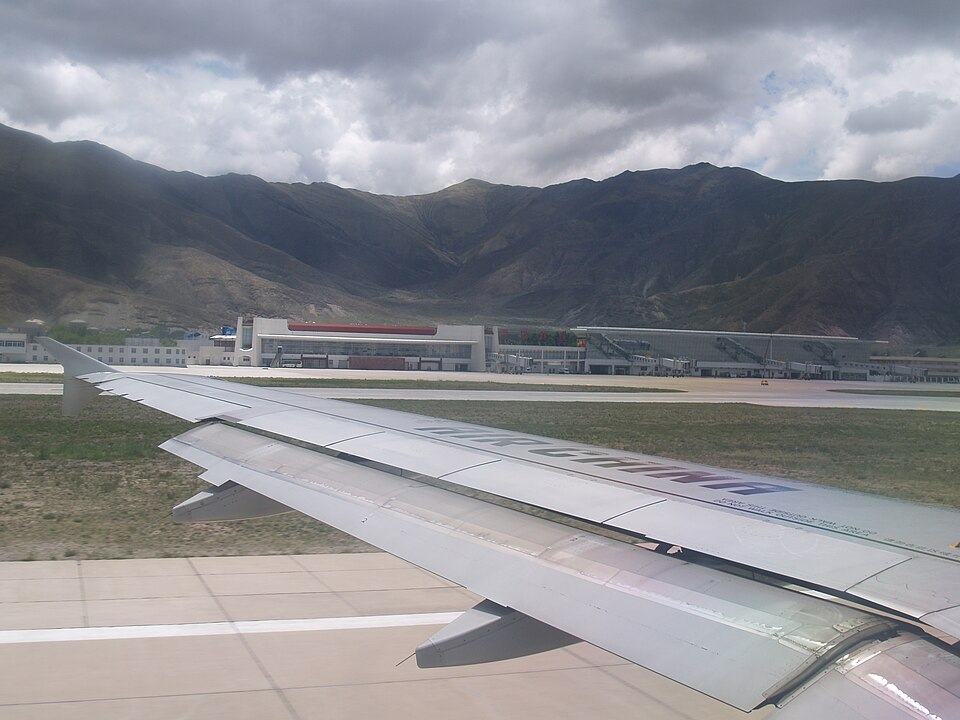
Altitude affects more than the runway. Terrain around a high plateau airfield is frequently high itself, which constrains approach and departure paths, and the aircraft’s reduced performance means the climb gradient available after takeoff is lower exactly where obstacles are higher.
That combination produces the specific procedures these airports use: defined departure tracks, higher minimum altitudes, weather minima that are stricter than at a sea-level field, and in some cases daylight-only operation. Weather closes them frequently and the schedule reflects that. A passenger booking a flight to one of these airports is booking an intention rather than an arrangement, and the sensible practice is to leave a clear day at each end of any onward connection.
Navigation technology has changed this materially. Satellite-based approach procedures allow precise tracks through terrain that conventional ground-based navigation could not support, and the opening of several high and terrain-constrained airfields in the past two decades is a direct consequence of that capability.
Why anybody builds them
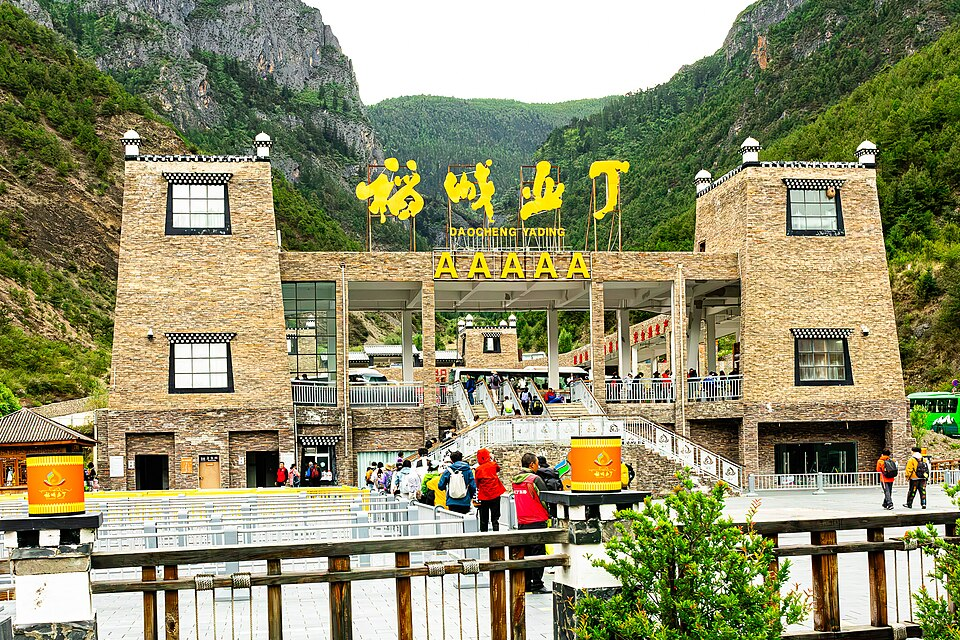
The case is access. The Tibetan plateau is enormous, the surface journey to the nearest city is measured in days over high passes, and an airport converts that into a flight of a couple of hours. For medical evacuation, for government administration, for freight of high value and low weight and for tourism, the difference is categorical.
The tourism argument is the one these airports are usually built on and is the most debated. An airfield that delivers large numbers of unacclimatised visitors directly into a high-altitude environment with a fragile landscape and a small resident population creates pressures that the surface journey previously regulated by being difficult.
That tension is genuine and is not resolvable by an article. What is clear is that the people who live on the plateau have generally wanted the connection, and that the arguments about volume and management are separate from the argument about whether access should exist at all.
The number, and what it is worth
The elevation record will move, because airports continue to be built on the plateau and the engineering is understood. What will not change is the physics, which is the reason the record is interesting: an aircraft at 14,000 feet is operating in the condition that defines the limit of ordinary aviation, and everything about the airport is shaped by that.
It is also a good example of a superlative that is a consequence rather than an achievement. Nobody set out to build the world’s highest airport; somebody set out to connect a particular valley, and the altitude came with the location.
For a traveller the useful conclusions are short. Flights to these airports are weather-dependent and cancel readily, the arrival is an abrupt altitude change with real physiological effects, the published advice about resting on arrival is worth following, and anybody with a relevant medical condition should have the conversation with a clinician before the ticket is bought rather than after.
The last point is the one most often skipped. A flight is the one way of arriving at high altitude that offers no acclimatisation at all: a traveller who drives or takes a train gains height over hours or days and arrives partly adjusted, while a traveller who flies steps out of a pressurised cabin into air containing half the oxygen they were breathing an hour earlier. That is why the terminals have oxygen in them, and it is why the advice to sit still for a while after landing is worth taking seriously rather than treating as excessive caution.
Like our content? Follow us for more.
