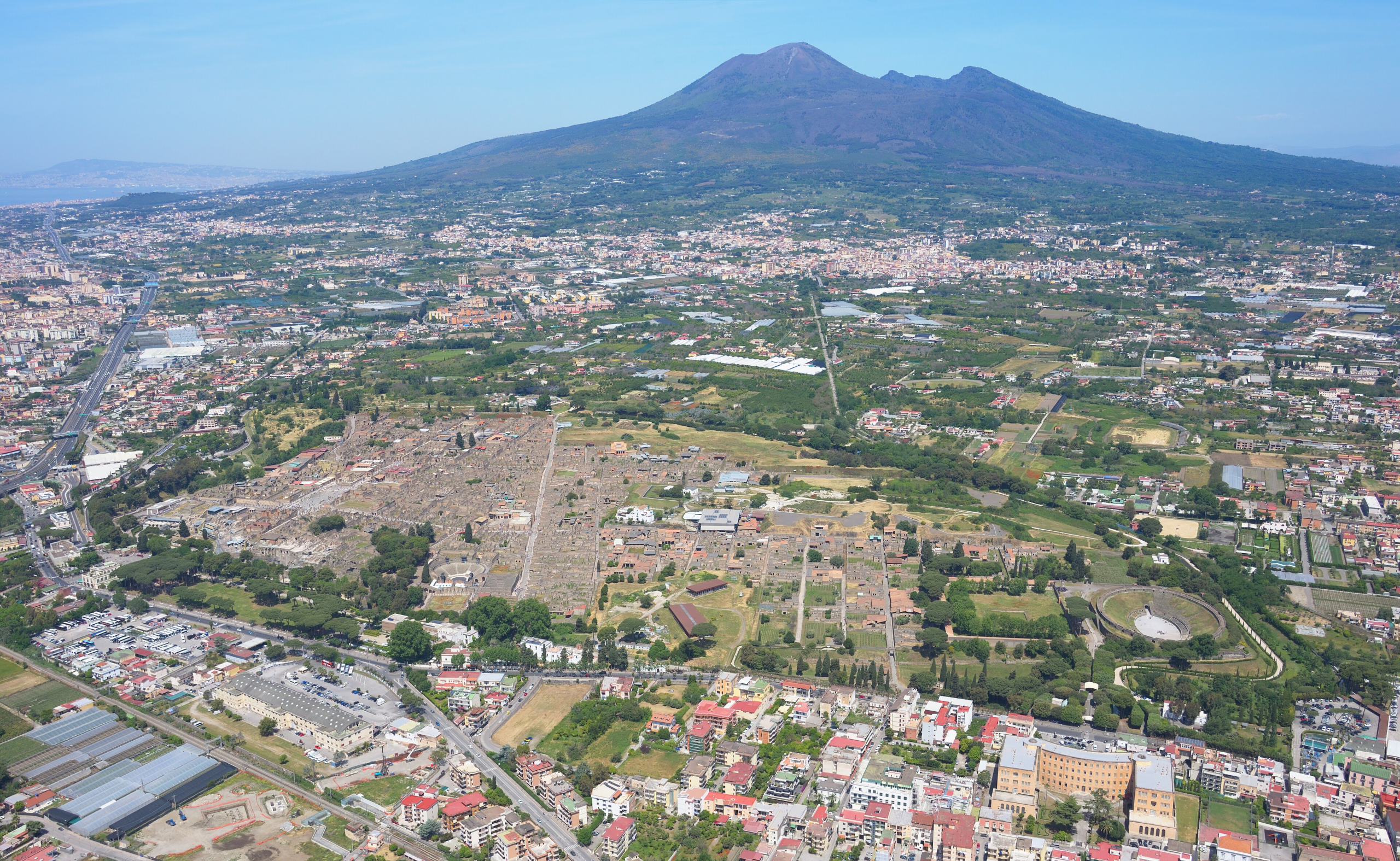
Most people assume Pompeii has been fully uncovered. The photographs suggest a complete Roman town sitting in the open, streets and houses and shopfronts, waiting for visitors.
Roughly two-thirds of it has been excavated. The remaining third lies under a layer of volcanic material, mapped in outline, deliberately untouched.
That decision is the interesting part, and it runs against every instinct about archaeology. The reasoning is straightforward: an excavated building begins deteriorating the moment it is exposed, and Pompeii has spent much of the last century demonstrating exactly how expensive that becomes.
Meanwhile the current dig has produced some of the most striking finds in the site’s history. Here is what is coming out of the ground, and why they intend to stop.
Why Leaving It Buried Is the Plan
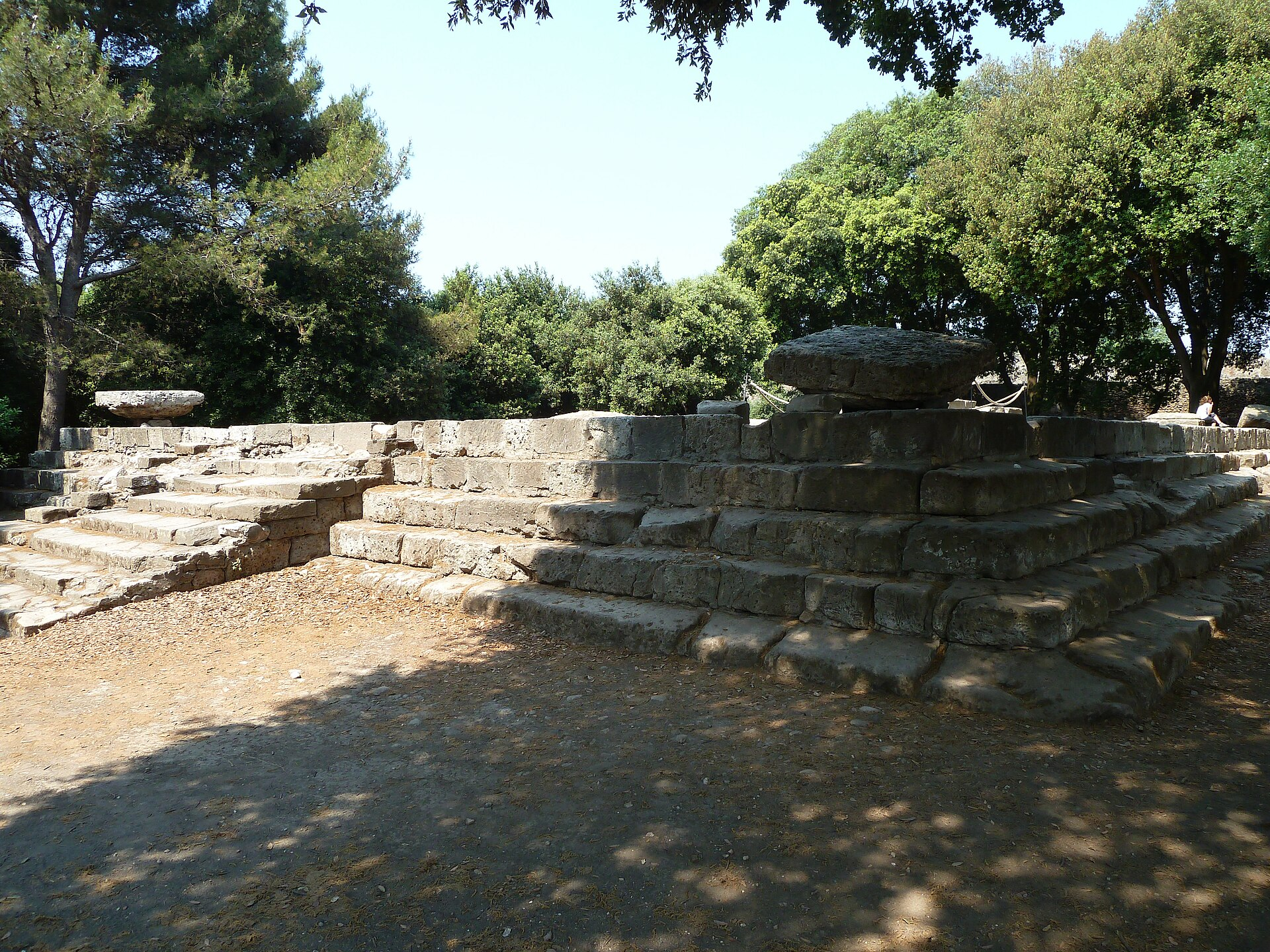
The volcanic deposits that buried Pompeii preserved it by sealing it from air, water and light. Once a room is opened, all three return.
Frescoes that survived nineteen centuries underground begin to fade within years of exposure. Plaster detaches. Mortar washes out of walls, and walls that lose their mortar eventually fall. Rain, frost, plant roots, sunlight and visitors all contribute.
The site has already accumulated an enormous conservation liability from earlier excavations conducted with more enthusiasm than long-term planning, and periods of neglect made it worse. Structures collapsed. Emergency programmes were required.
So the current policy is that excavation should be limited, targeted and accompanied by the resources to conserve what it produces. The unexcavated third is regarded as being safest where it is — including for future archaeologists with techniques nobody has invented yet.
That is a unusual position for a discipline whose popular image is about digging things up.
Like our content? Follow us for more.
The Dig in Regio IX
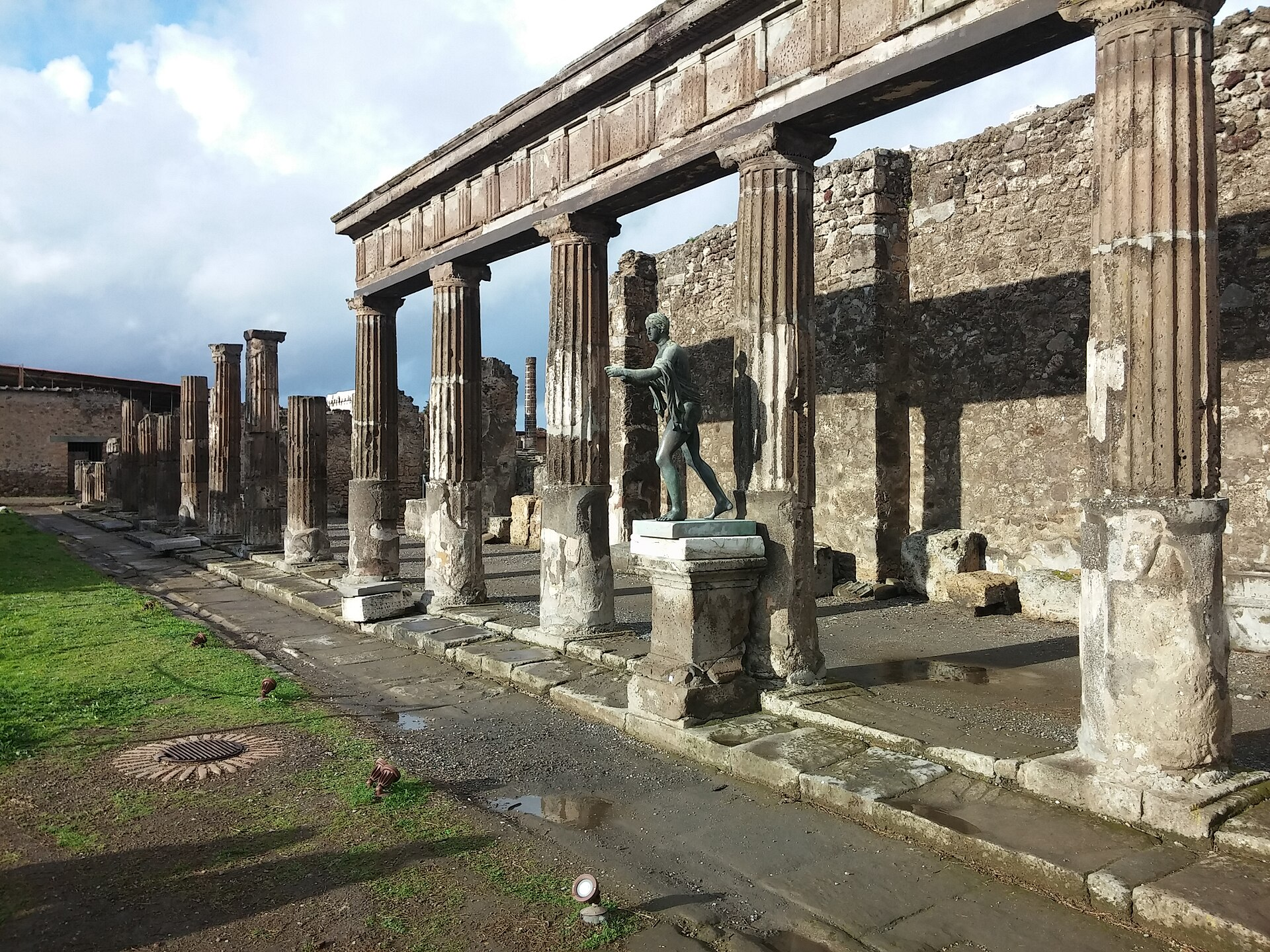
The exception is a substantial excavation in Regio IX, a block near Via Nola where work began in the nineteenth century and was abandoned after a few years.
It resumed recently, partly for a practical reason: the boundary between the excavated and unexcavated areas was unstable, and securing it required investigating what lay behind. That is now the largest dig at Pompeii in a generation.
It has uncovered more than fifty previously unknown rooms, and what makes them valuable is that they are ordinary. Most of Pompeii’s famous interiors belong to substantial villas; this block includes atrium houses that were converted during the first century into working premises.
One house has a laundry installed in its atrium, with work benches and tubs for washing and dyeing. Another has a bakery with an oven, space for millstones and rooms for food preparation on a scale intended to supply the wider city.
That conversion — grand houses becoming workshops — is a piece of social history that monumental architecture does not record.
What Has Come Out
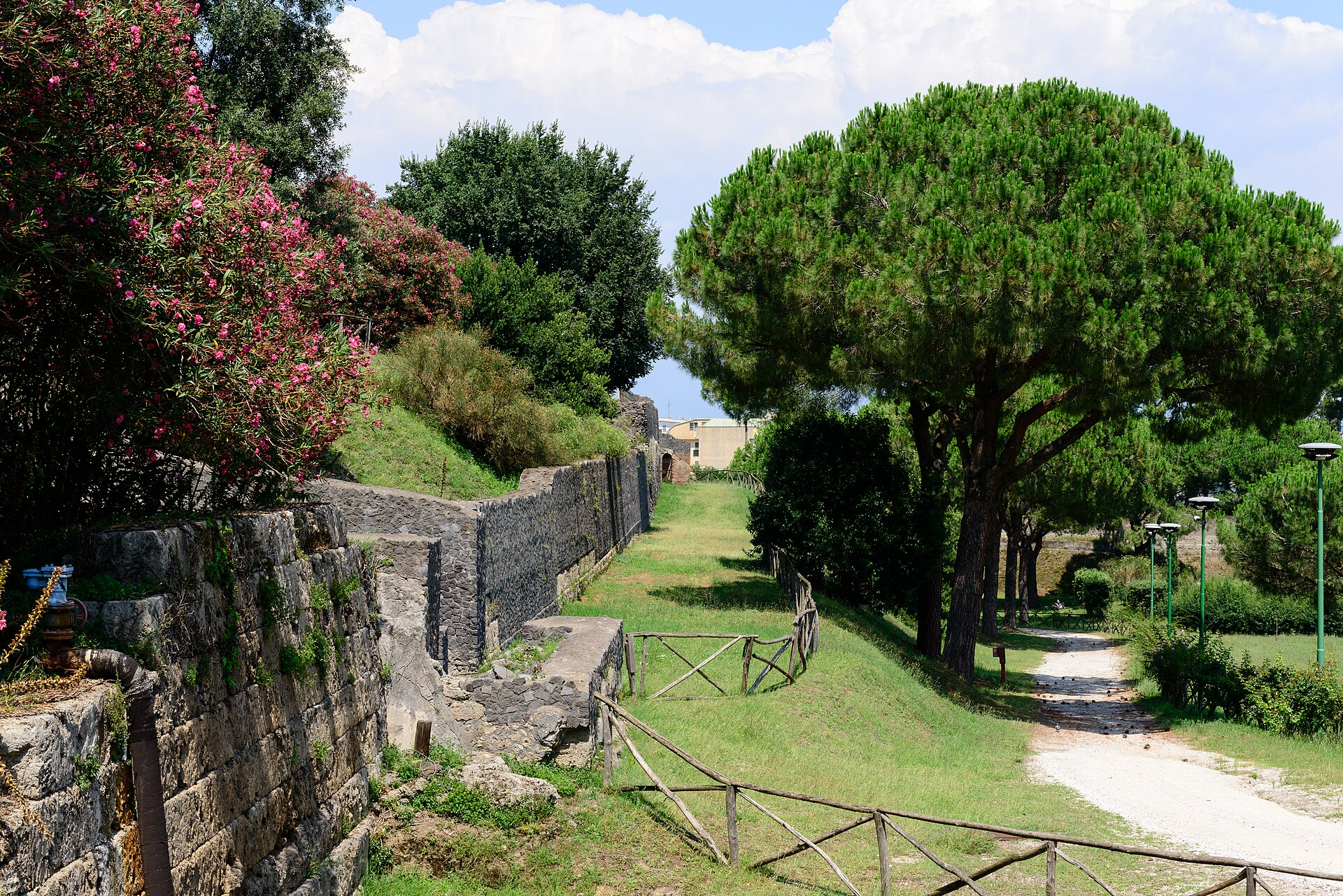
The individual finds have been remarkable, and several have made international news.
In one room excavators found a fresco depicting a silver platter holding fruit, nuts and a flat round bread carrying what appear to be pomegranates and dates, beside a goblet of wine. It was widely described as an ancient ancestor of pizza, which is an overstatement — no tomato or cheese was involved — but it is a real and unusually detailed depiction of Roman food.
Archaeologists connected it to a passage in Virgil, in which Trojans eat the bread they had been using as plates, fulfilling a prophecy about devouring their own tables.
Another room, excavated in 2024, was described as containing some of the finest art found at the site. It has a white mosaic floor and black walls, and the interpretation is practical: the dark walls concealed soot from the oil lamps used to light it after sunset, which suggests a room for entertaining in the evening. Fifteen large transport amphorae, bronze jugs and lamps were found in it.
In 2025 a large-scale frieze emerged in a banquet hall, running around the room at close to life size, depicting a procession associated with Dionysus, including hunting imagery. The Italian culture minister described it as an exceptional historical document, and it has been compared to the frieze in the Villa of the Mysteries as one of only two of its kind.
Elsewhere at the site, other recent work has revealed a private bath complex within a wealthy household, with changing rooms, a heated room and a cold plunge pool, decorated with mosaics and frescoes of athletes.
The Small Houses
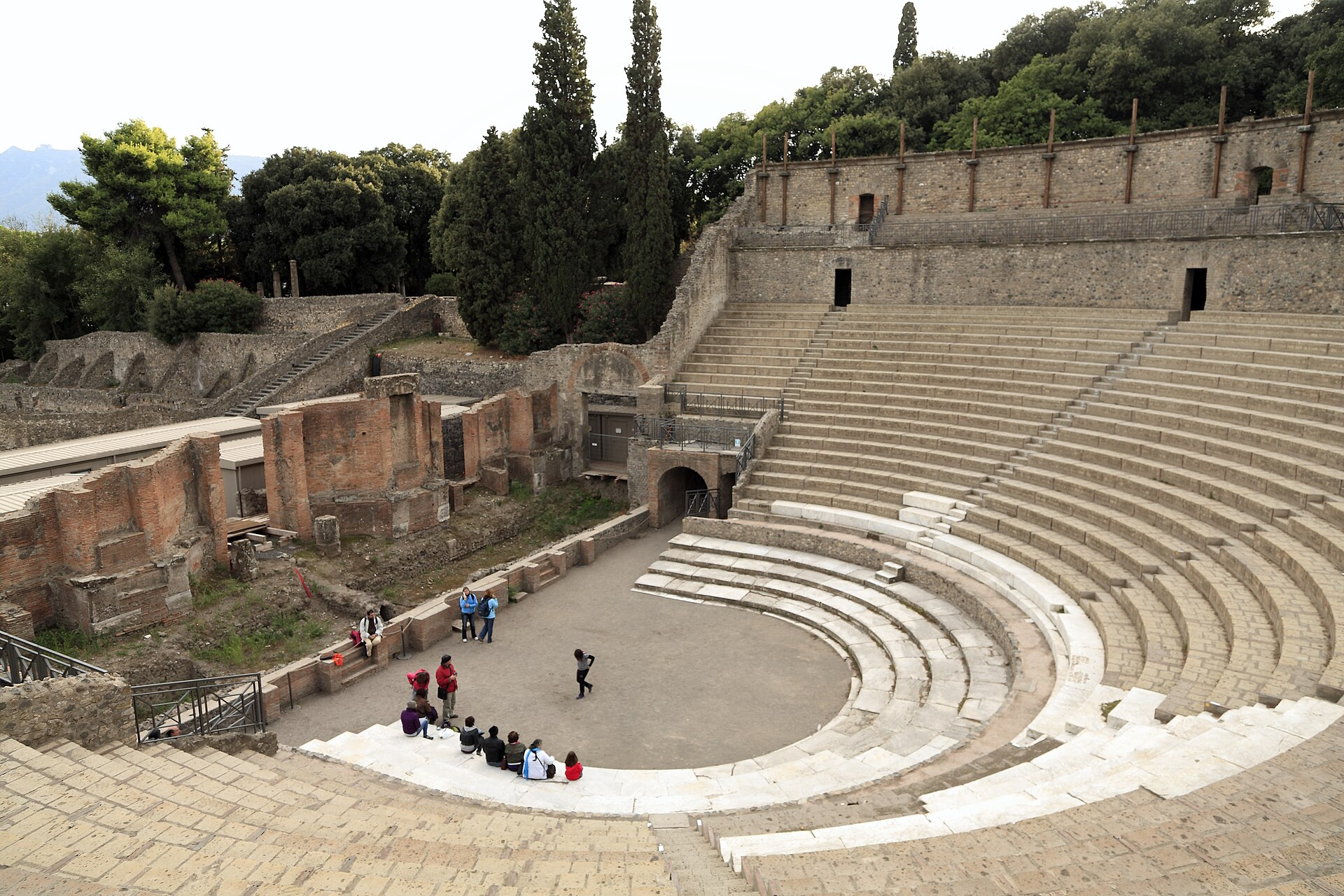
One finding matters more than its modesty suggests.
Alongside the villas, archaeologists have identified smaller residences without the atrium that defines the standard Roman house plan. They are nonetheless decorated with frescoes drawing on Greek mythology, and one contains a domestic altar painted with snakes, birds and plants.
This is evidence about people who are otherwise invisible. The historical record of the Roman world is overwhelmingly about the wealthy, because the wealthy commissioned the buildings and the inscriptions that survive. Households of ordinary means decorating small rooms with mythological scenes tells you something about aspiration and cultural literacy at a level of society that rarely leaves traces.
Related work has examined the seasonal and agricultural imagery in household shrines, connecting domestic religion to the farming calendar the local economy depended on.
Being Honest About What This Site Is
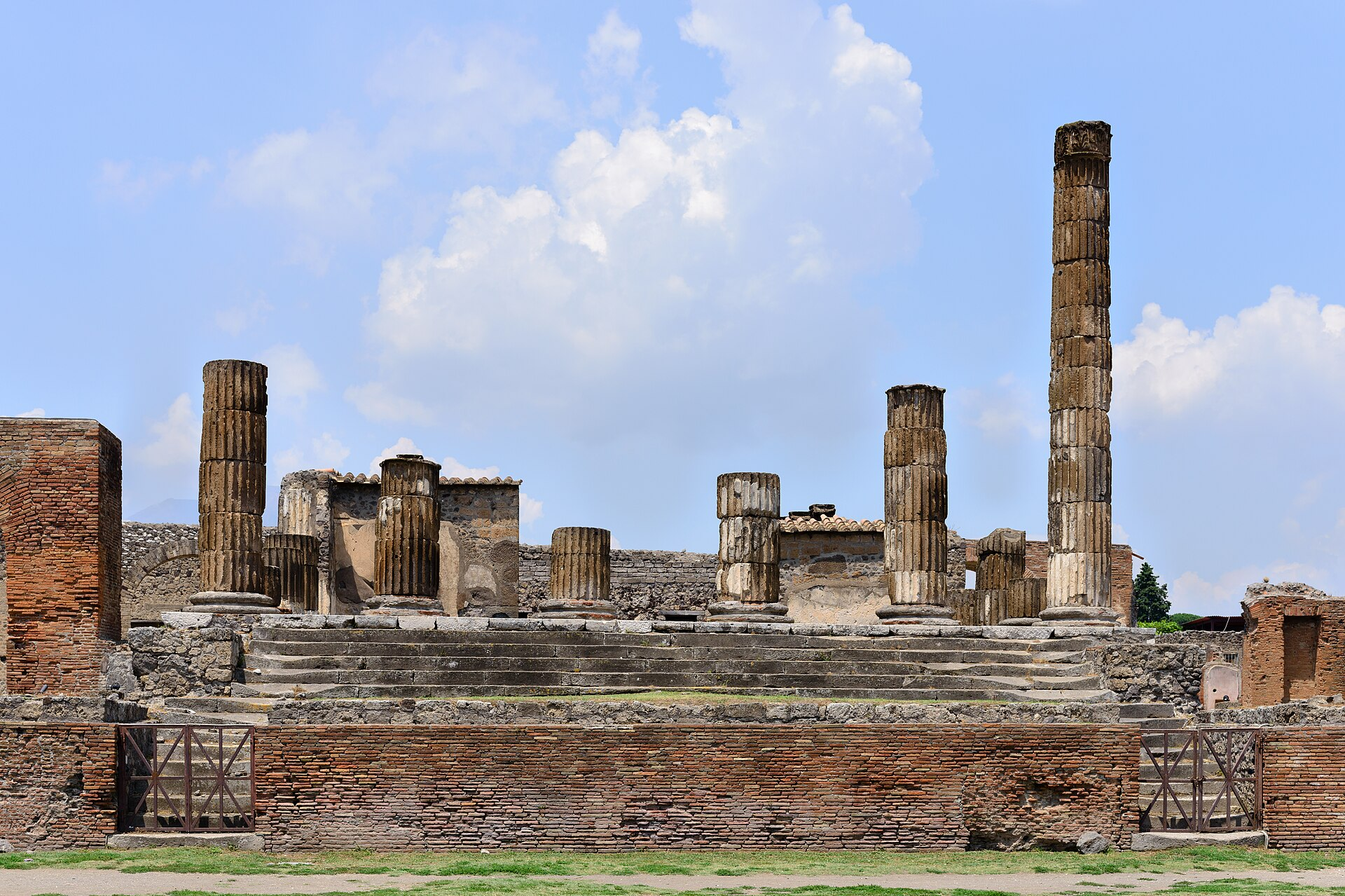
Any account of Pompeii has to acknowledge what preserved it, and the site itself does not shy away from this.
The town was buried by the eruption of Vesuvius in 79 CE, and the people who did not leave in time did not survive. Their remains, and the voids their bodies left in the hardened ash, are part of the archaeological record and are displayed at the site.
That is stated here plainly and without detail, because the alternative — writing about Pompeii as though it were simply a well-preserved town — would be dishonest. The preservation and the loss are the same event.
The park has increasingly framed its work around the people rather than the buildings, including recent exhibitions examining the lives of women in the city across the social range, from priestesses and businesswomen to enslaved people.
Who Actually Lived Here
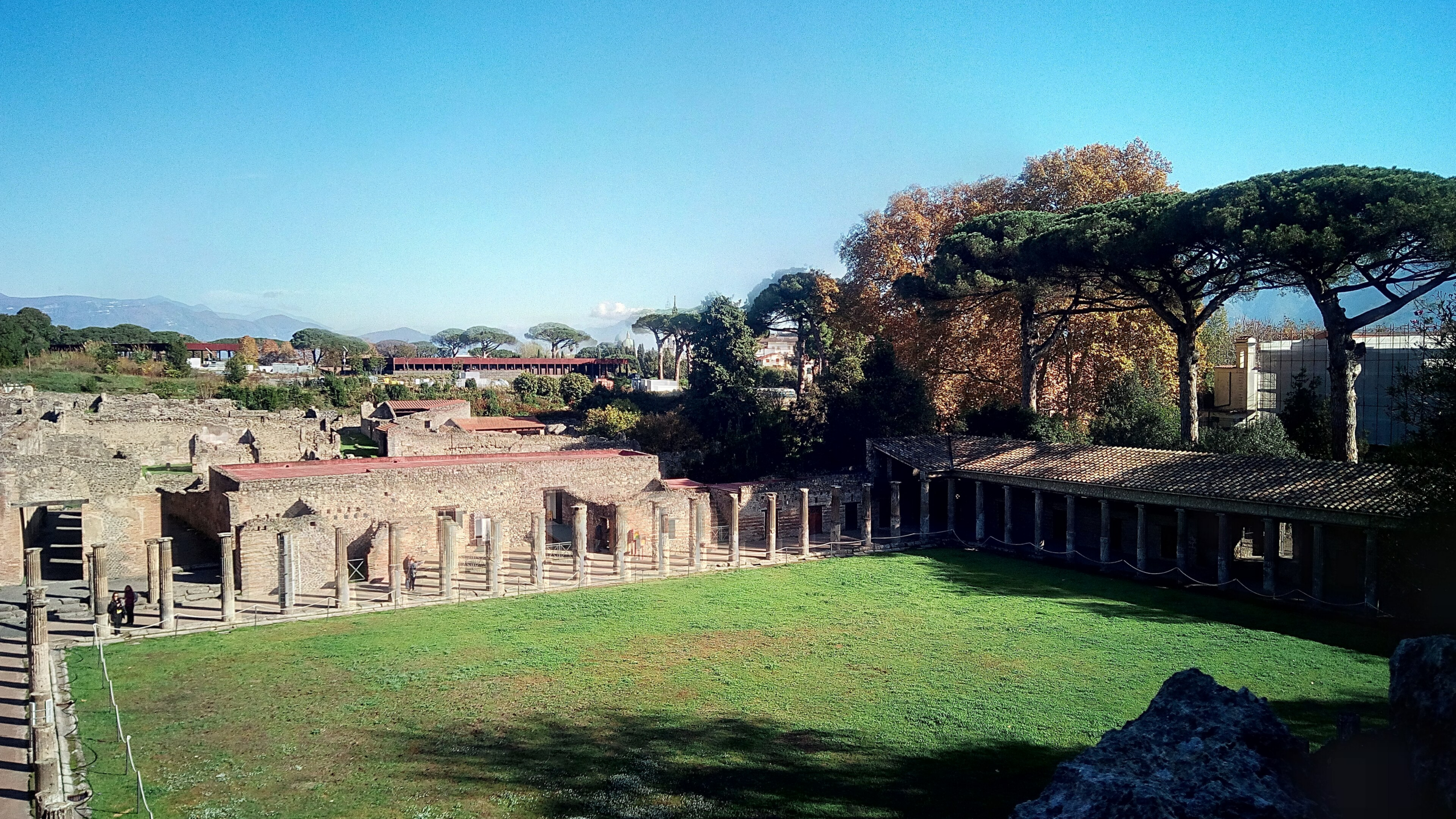
One of the more useful consequences of digging ordinary buildings is that it changes the population you can describe.
Pompeii was a working town of perhaps ten to twelve thousand people, and the great majority were not the villa owners whose houses fill the guidebooks. They were bakers, launderers, shopkeepers, labourers, freed people and enslaved people, and the archaeology of their lives is thinner because they built less and commissioned nothing.
The Regio IX block is valuable precisely because it captures that stratum. A bakery producing bread at scale, a laundry occupying what had been a formal reception space, workshops fitted into old houses — these describe an economy rather than a lifestyle.
Graffiti adds to it. Pompeii preserves an unusual quantity of casual writing scratched into walls: election notices, prices, complaints, jokes, declarations of affection and the ordinary rudeness of any town. It is one of the largest surviving bodies of informal writing from the ancient world, and almost none of it was written by the people who commissioned frescoes.
Children left drawings on walls too, at the height a child could reach, which is the sort of detail that no monumental record ever preserves.
Seeing It Now
For visitors, a few practical realities.
The site is very large and cannot reasonably be covered in a short visit; most people see a fraction and are surprised by the scale. Sturdy footwear matters, because the streets are original Roman paving, deliberately uneven, with raised stepping stones at crossings that were designed for people who were not carrying a camera.
There is almost no shade in the excavated areas, and the summer heat in Campania is substantial, which catches out a great many visitors who arrive in the middle of the day. Early morning and late afternoon are both cooler and considerably emptier.
Many of the best-preserved interiors are locked and opened on a rotating basis, so what is accessible varies from week to week. A number of the most famous frescoes and mosaics have also been moved to the archaeological museum in Naples for conservation, which means the originals of several things people go to Pompeii to see are in a different city entirely.
Access to areas under active excavation and conservation changes constantly. For a period, limited numbers of ticket holders were taken on daily tours of the new Regio IX rooms before they closed for conservation work, which is an unusual level of openness for a live dig. Check what is currently accessible before travelling rather than assuming.
Nearby Herculaneum is smaller, less crowded and in some respects better preserved, and it is where carbonised scrolls have recently been read using imaging and computational techniques without unrolling them.
What stays with you about Pompeii now is not the ruins so much as the specificity — a laundry in someone’s front hall, a room painted black so the lamp soot would not show, a picture of what somebody had for lunch. And a third of it still down there, mapped, understood in outline, and left alone on purpose.
Like our content? Follow us for more.