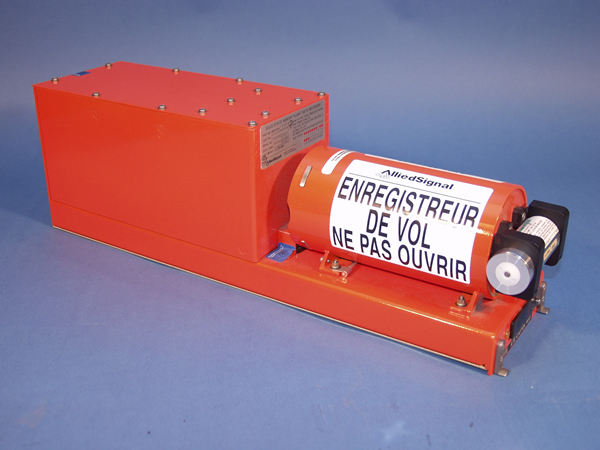
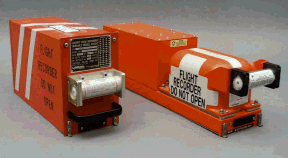
Ask anyone to picture an aircraft black box and they will picture something black. It is one of the most widely held misconceptions about aviation, and it is wrong in a way that is easy to verify: photographs of recovered recorders show a bright orange casing, and regulations require it.
The colour is not decorative. Orange stands out against charred metal, against water, against forest and against snow, and reflective tape is applied to improve the odds further. Every design decision on these devices points the same way — toward being found.
So the name is a misnomer, and the interesting part is that nobody can say definitively where it came from. Here is what the devices actually are, and the competing accounts of how they got a name that describes the wrong colour.
Two Devices, Not One
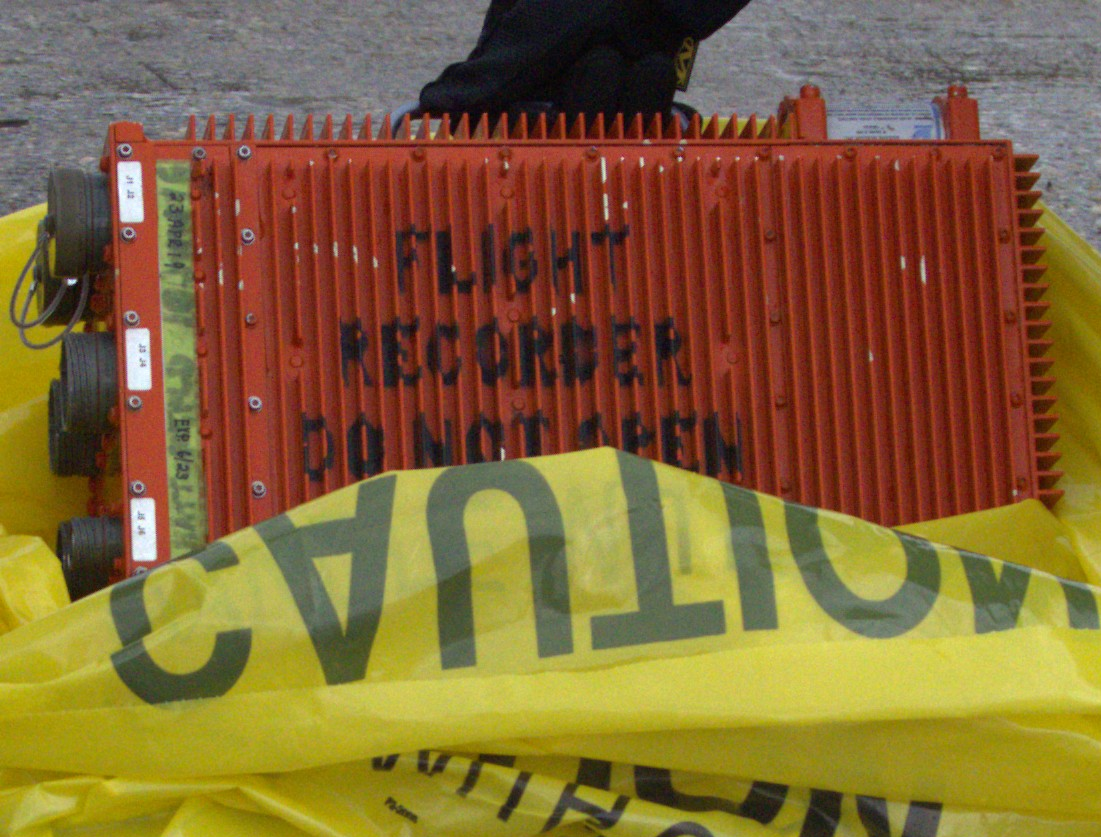
The first correction is that a black box is not one object.
Every commercial aircraft carries a Flight Data Recorder and a Cockpit Voice Recorder. The first logs flight parameters — control positions, instrument readings, system inputs and atmospheric data. The second captures audio from the cockpit. On some aircraft the two are combined into a single unit.
Both run on a loop, continuously overwriting their oldest data. Typical retention is around 25 hours of flight data and around two hours of cockpit audio, which means the final phase of any flight is always available while older material is discarded.
That loop is a deliberate compromise. Investigators need the most recent period; retaining every hour of every conversation a crew has ever had would raise obvious privacy questions, and the design balances the two.
The units are mounted in the tail. That is not arbitrary either — the rear of the aircraft is statistically the section most likely to survive an impact intact.
Like our content? Follow us for more.
Built to Be Found
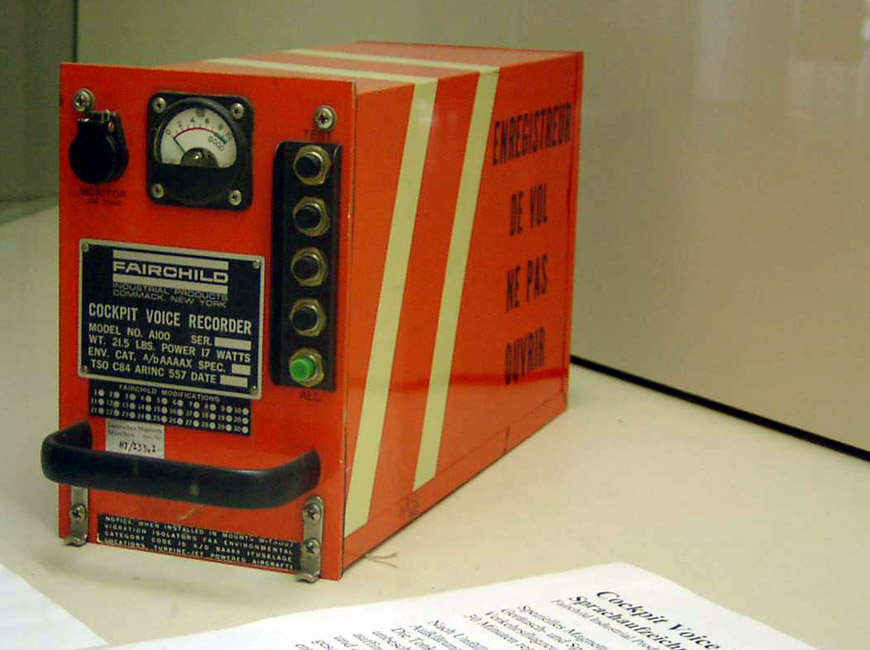
The engineering specification is the part that impresses people who work with materials.
The recording medium sits inside a multi-layer protective shell, with an outer casing made from materials such as titanium or stainless steel. Modern recorders are built to withstand temperatures in the region of 1,100 degrees Celsius for an hour, and pressures corresponding to depths of several thousand metres.
They carry an underwater locator beacon that activates automatically on contact with water, emitting a signal for a period of weeks so that search teams have a target.
And they are orange. Since regulations were tightened in the 1960s, flight recorders have been required to be painted international orange — the same high-visibility shade used on the Golden Gate Bridge and on safety equipment generally, chosen because it contrasts with most natural backgrounds in most conditions.
Put together, the design brief is unusually singular. Almost every other component on an aircraft is optimised for weight, cost or performance. This one is optimised for surviving and then being noticed.
Four Explanations for One Name
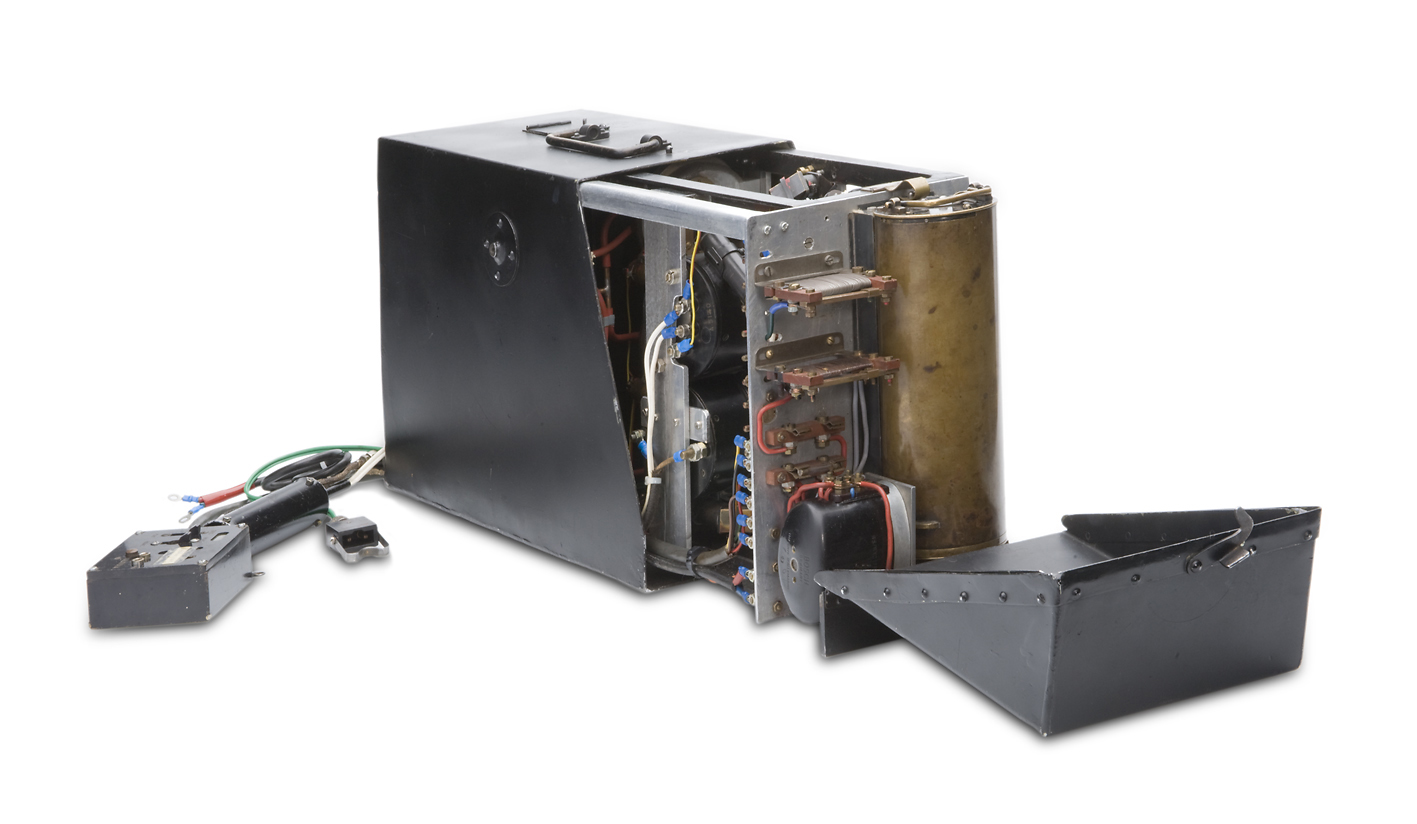
Here is where the story becomes truly unresolved, because the origin of the term is uncertain and the phrase is only used colloquially. At least four accounts circulate, and none has been established.
The engineering metaphor. In engineering and cybernetics, a black box is any system whose internal workings are hidden or irrelevant — inputs go in, outputs come out, and what happens between is not examined. The term was widespread among radar and electronics engineers during the Second World War, when unexplained components were referred to as black boxes or boxes of tricks. On this account the name was simply borrowed from existing jargon.
The dark interior. Early flight recorders used photographic film or light-sensitive paper, which required the inside of the unit to be completely dark, much like a darkroom. The interior really was black, and the name may describe that rather than the outside.
The original casing. Some accounts hold that early recorders were encased in fireproof boxes painted black to protect the metal and prevent rust, before the orange requirement came in.
The charred recovery. A more macabre explanation is that recovered units were frequently scorched dark by the time investigators saw them, so the boxes people actually encountered were black regardless of their original colour.
There is also a fifth story, specific and appealing: that after a demonstration of the Australian prototype, a journalist told its inventor that it was a wonderful black box, and the phrase stuck.
Any of these could be right. Several could have contributed. What is certain is that the name does not describe the device as it exists today.
The Man Who Was Told Nobody Wanted It
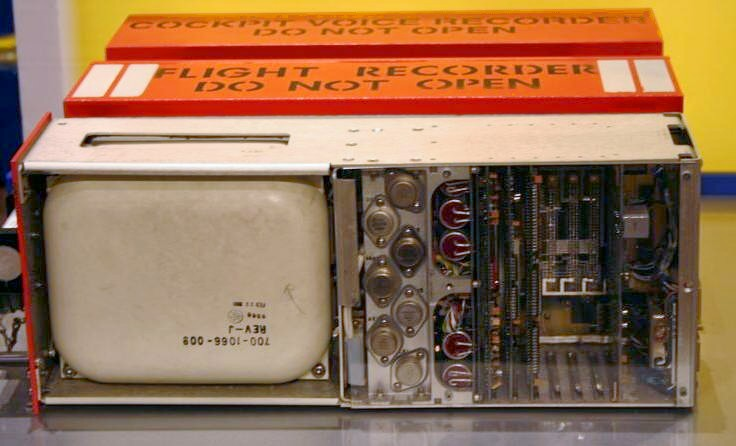
The modern flight recorder has a clear inventor, and his story is the best part of the history.
David Warren was an Australian research scientist at the Aeronautical Research Laboratories in Melbourne. In 1953 he was part of a panel investigating a series of unexplained failures involving the de Havilland Comet, the world’s first commercial jet airliner, where investigators had no direct record of what had happened on board.
Warren reasoned that a device capturing both cockpit audio and instrument data would answer exactly that problem. He built a prototype — known as the ARL Flight Memory Unit, and nicknamed the Red Egg — with a working version completed in Melbourne by the late 1950s.
Australian aviation authorities initially rejected it. They saw no need for such a device.
British and American experts visited Australia toward the end of the decade and interest grew from there, and the concept eventually became mandatory equipment worldwide.
Warren was not the only person working on the problem. Earlier designs existed, including a French photographic recorder developed in the late 1930s that used scrolling film to log instrument data, and an American professor patented a flight recorder in the United States in the same year Warren began his work. Warren’s distinctive contribution was combining instrument data with cockpit voice recording in a device intended specifically for post-incident investigation of civil aircraft.
What Investigators Actually Get
The value of the recorders lies in what the two of them provide together, and it is more than a list of numbers.
The Flight Data Recorder captures a large number of parameters simultaneously and continuously — altitude, airspeed, heading, control surface positions, engine settings, autopilot status and a great many system states. Modern units record vastly more channels than early ones, which recorded a handful.
That produces a reconstruction. Investigators can replay a flight, plot the aircraft’s path and attitude, and see precisely what the machine was doing at each moment.
The Cockpit Voice Recorder supplies the other half: what the crew said, what alerts sounded, and the ambient noises of the flight deck. Audio frequently establishes when a crew became aware of something, which the data alone cannot show.
Neither is much use without the other. Data explains what happened; audio explains what the people involved understood to be happening, and the gap between those two is often where the useful finding sits.
The recorders are also read for reasons other than investigation. Routine data is used to monitor operational trends and identify problems before anything goes wrong, which is a quieter and much larger use of the same technology.
Why This Misconception Is So Durable
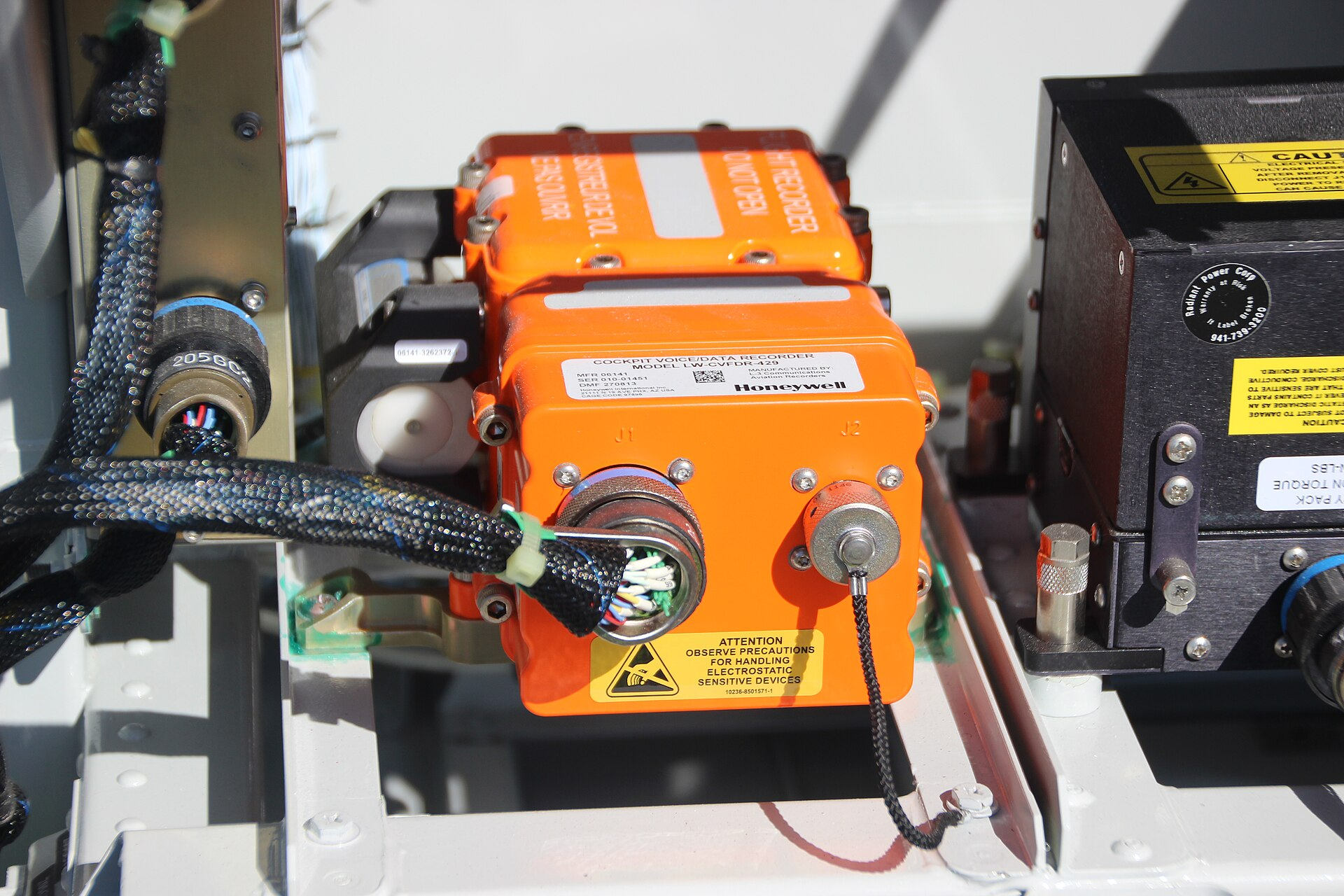
It is worth asking why almost everyone believes the boxes are black when a photograph settles it instantly.
Part of it is that the name is doing the work. Most people never see a flight recorder and have no reason to picture anything other than what the words describe. A name that contains a colour is taken as a description.
Part of it is that the correct information is only encountered in a specific context — coverage of investigations — and the devices are rarely the focus of general reporting.
And part of it is that the phrase is useful in other domains. Black box has become the standard term for any system whose internals are opaque, from algorithms to biology, and that broader usage reinforces the aviation term rather than correcting it.
The result is a piece of engineering that is famous, misnamed, and misremembered by nearly everyone, sitting in the tail of every aircraft, painted the brightest colour anyone could find, waiting to be noticed.
The One Thing Worth Remembering
If there is a takeaway beyond the trivia, it is about what the design tells you.
Almost everything on an aircraft is engineered to work. These two units are engineered to be recovered — armoured, heat-resistant, pressure-rated, beacon-equipped, mounted in the most survivable section, painted the most visible colour available and finished with reflective tape.
That is a very unusual brief, and it exists because a scientist in Melbourne in the 1950s looked at an investigation with no evidence and concluded that the aircraft ought to keep its own record. He was told it was not needed. It is now on every airliner in the world.
The name is wrong. The colour is orange. And the object itself is one of the more steadily remarkable pieces of engineering anyone has ever flown with.
Like our content? Follow us for more.