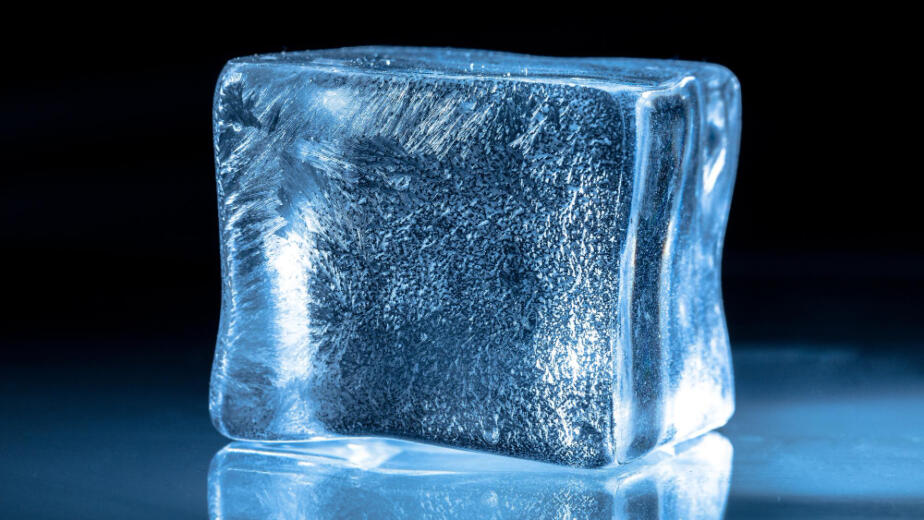
Ice is the only common solid that behaves this way. Glass is smooth and you do not slide on it. Polished stone is smooth and you do not slide on it. Ice is not even particularly smooth at a molecular level, and yet you cannot stand up on it.
The explanation most people were taught goes like this: pressure lowers the melting point of ice, so the weight of a skater concentrated on a thin blade melts a film of water, and the skater glides on that film. It appears in textbooks, it is repeated by teachers, and it has the appealing quality of connecting two things people already know.
It is also insufficient, and physicists have known this for a long time. What is truly interesting is that the replacement explanation is not settled either. This is a live scientific question about one of the most ordinary substances on Earth.
Here is what is actually going on, and what remains in dispute.
Where the Pressure Story Came From
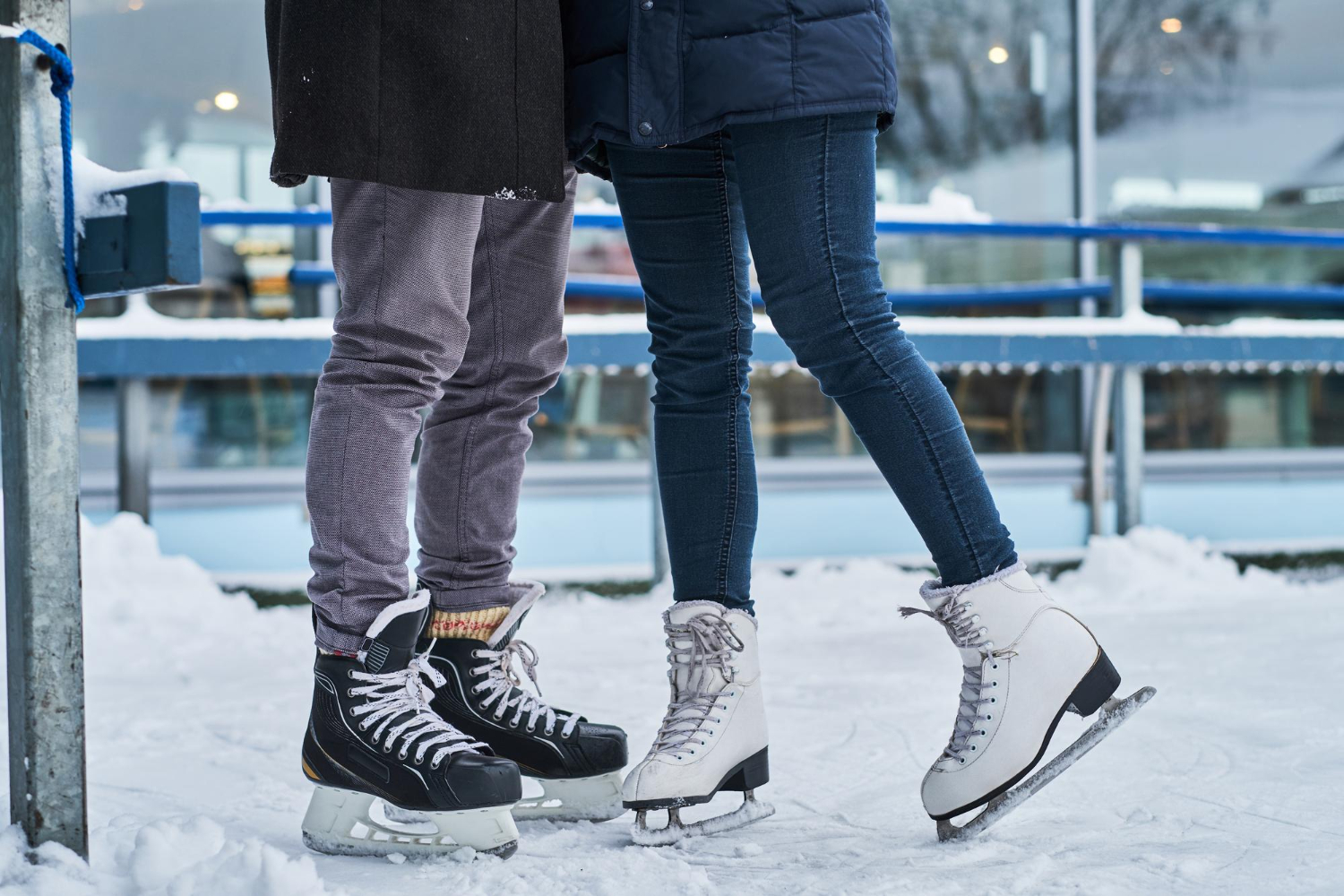
The pressure explanation has a respectable origin, which is part of why it stuck.
Ice is unusual in that it is less dense than liquid water, which is why it floats. A consequence is that applying pressure to ice can push it toward the liquid state, lowering its melting point slightly. That is real physics, and it was understood in the nineteenth century.
The idea was then applied to skating, and reinforced by a famous demonstration: a weighted wire laid across a block of ice slowly passes through it, with the ice refreezing above. That looked like decisive evidence for pressure melting.
The textbook version was consolidated by experiments in the 1930s at an ice cave in the Swiss Alps, and it entered general education from there.
Like our content? Follow us for more.
Why the Numbers Do Not Work
The objections are quantitative, and there are several.
The first is magnitude. A skater on a blade exerts pressure on the order of a few hundred atmospheres, which sounds enormous. It lowers the melting point of ice by only a few degrees at most.
That is nowhere near sufficient. Ice rinks are typically kept well below freezing, and outdoor ice remains slippery at temperatures far lower than any pressure a human can apply could account for. If pressure melting were the mechanism, ice at minus twenty would be as grippy as concrete. It is not.
The second problem concerns the wire demonstration. When the experiment is done carefully at temperatures well below freezing, the wire still passes through, and calculation shows the pressure-induced melting-point drop is far too small to explain it. The motion is slow enough that friction plays no role, and analysis of the energy involved rules out creep as well.
The third objection applies to a related fallback explanation, frictional heating — the idea that the blade melts ice by rubbing. For a ski or skate moving at realistic speed, experiments indicate the heat generated is insufficient to cause melting on its own. And frictional heating cannot explain why ice is slippery when you are standing still, which anyone who has stepped onto a frozen path can confirm.
The Layer That Is Always There

The idea that eventually replaced pressure melting was proposed long before it could be tested, by Michael Faraday in the nineteenth century.
Faraday suggested that ice spontaneously forms a thin layer of liquid-like water on its surface, even at temperatures well below freezing, and that this layer acts as a lubricant. His experiments were the first investigation of what is now called premelting.
The modern explanation for why it exists is elegant. Molecules in the interior of an ice crystal are locked into a rigid lattice, bonded on all sides. Molecules at the surface have fewer neighbours to bond with, so they are less constrained, and the outermost layers behave in a disordered, liquid-like way rather than a rigidly crystalline one.
This is called the quasi-liquid layer, and it is not a puddle. It is a molecularly thin zone — measured in nanometres — that is easier to shear than solid ice.
Its thickness depends on temperature. Near the melting point it is thicker and ice is more slippery; at very low temperatures it thins substantially and ice becomes noticeably grippier, which matches everyday experience in extremely cold conditions.
Crucially, this layer requires no pressure and no movement. It is simply what the surface of ice is like, which explains why ice is slippery when you are standing still.
The Argument That Is Still Running
Here is where the honest account has to acknowledge that this is not finished.
Scientists broadly agree the premelted layer exists, at least near the melting point. They disagree about how much of ice’s slipperiness it accounts for, and the disagreement is active.
One influential line of work comes from simulations, which allow researchers to watch individual molecules in a way physical experiments cannot. A team led by Luis MacDowell at the Complutense University of Madrid ran simulations to test which of the three hypotheses — pressure, friction or premelting — best explains slipperiness.
Their finding was that all three operate simultaneously, to differing degrees depending on conditions. The simulated ice was coated with a liquid-like layer a few molecules thick, as premelting predicts. When a heavy object slid across it, the layer thickened, as pressure theory predicts. And at lower temperatures, where the premelted layer was thin to begin with, frictional heating from the sliding object did melt ice and thicken the layer.
Related simulation work has found that premelting films barely a nanometre thick are sufficient to lubricate, behaving much like bulk supercooled water, and that the outcome depends on the material sliding on the ice — water-repelling surfaces slip readily, while water-attracting ones grip enough to generate the heat that creates their own lubrication.
Other researchers have proposed further mechanisms, including the idea that the interface disorders itself during sliding. And at least one study has argued that hexagonal comb-like liquid equilibrium accounts are insufficient, keeping the debate open.
The reasonable summary is that ice is slippery for several overlapping reasons whose relative importance shifts with temperature, speed, load and what is doing the sliding — and that the single-cause textbook answer was never going to be right.
What Skaters and Curlers Actually Exploit
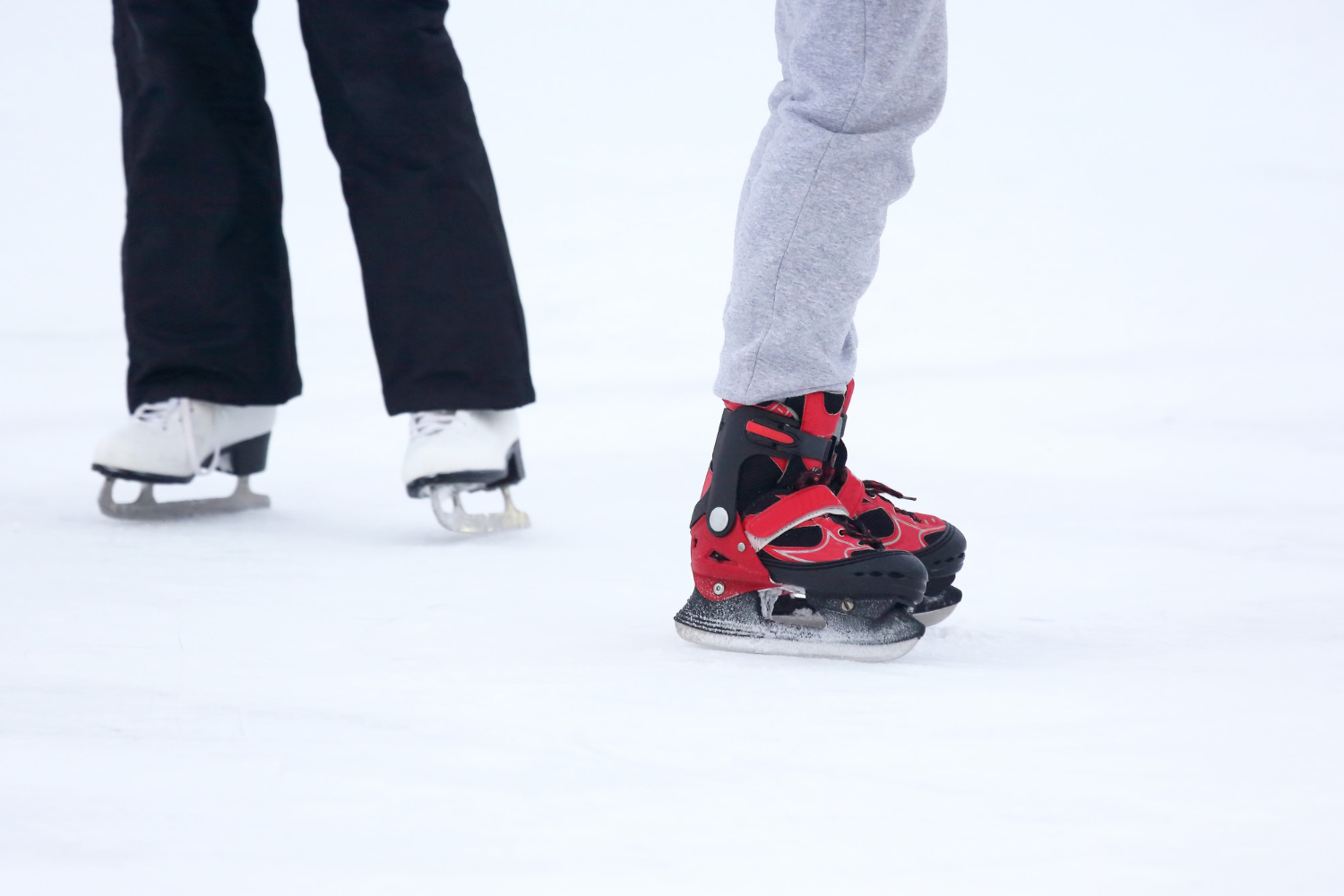
The applied side of this is instructive, because winter sports have arrived at solutions empirically without waiting for the physics to be settled.
Speed skating blades are ground flat and long, maximising contact length, which is the opposite of what the pressure-melting story would recommend. If pressure were the mechanism, the optimal blade would be as narrow as possible to concentrate weight. It is not.
Figure skating blades carry a hollow groove along their length, producing two edges that bite into the surface. Here the requirement is grip as much as glide, and the design reflects that.
Ice temperature is managed deliberately in different sports. Rinks for speed events are typically kept harder and colder than those for figure skating, because the ideal balance between glide and grip differs. That management would make no sense if slipperiness were simply a fixed property of ice.
Curling is the clearest case of all. Ice for curling is prepared with a sprayed layer of droplets that freeze into small bumps, called pebble, which reduces the contact area between stone and surface. And sweeping ahead of a moving stone briefly alters the surface it is about to cross.
Every one of these practices is a manipulation of the interface between object and ice, which is exactly where the unresolved physics lives.
Why This Is Worth Knowing
There is a temptation to file this as a correction to a minor detail. It is more useful than that, for two reasons.
The first is practical. Understanding that slipperiness depends strongly on temperature explains a familiar observation: ice near freezing is far more treacherous than ice in a deep cold snap. The quasi-liquid layer is thickest just below the melting point, which is precisely when people assume conditions are milder and therefore safer.
The second is about how science actually works. This is not an obscure phenomenon at the edge of physics. It is ice, which everybody encounters, which has been studied since Faraday, and which sits under an entire winter sports industry. And the mechanism is still being argued over in journals in the 2020s.
That is worth sitting with. The confident single-sentence explanation in a textbook was wrong for decades, the correction is really complicated, and the people best placed to settle it are still publishing competing accounts.
Every time you slip on a frozen pavement, you are experiencing a phenomenon that is simultaneously completely ordinary and not fully explained — which is a fairly good description of a great deal of physics.
Like our content? Follow us for more.