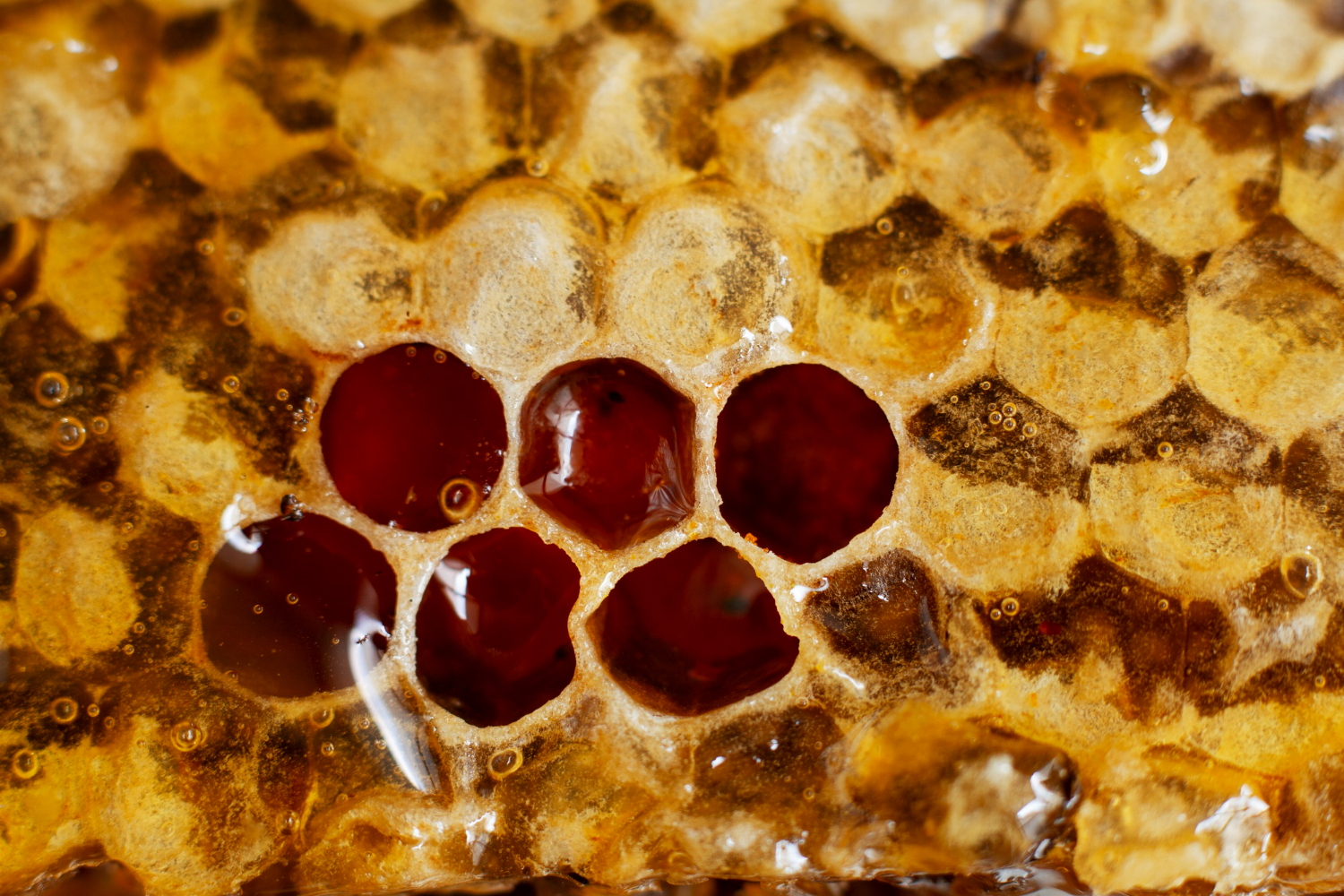
The honeycomb is probably the most cited example of mathematics in nature. Rows of near-identical hexagonal cells, walls meeting at consistent angles, packed with no wasted space — and produced by an insect with a brain the size of a sesame seed.
The observation is ancient. Pappus of Alexandria, writing in the fourth century, attributed to bees a kind of forethought, a mathematical instinct directed at building the most efficient possible structure. Variants of that idea have circulated ever since, some of them, as one researcher put it, incredible, esoteric and even bizarre — including the belief that bees could somehow measure angles.
The hexagon truly is the optimal solution to the problem. What has come undone is the assumption that bees are the ones solving it.
Here is what the research actually found, and why the answer is being argued about again.
The Cells Start Round
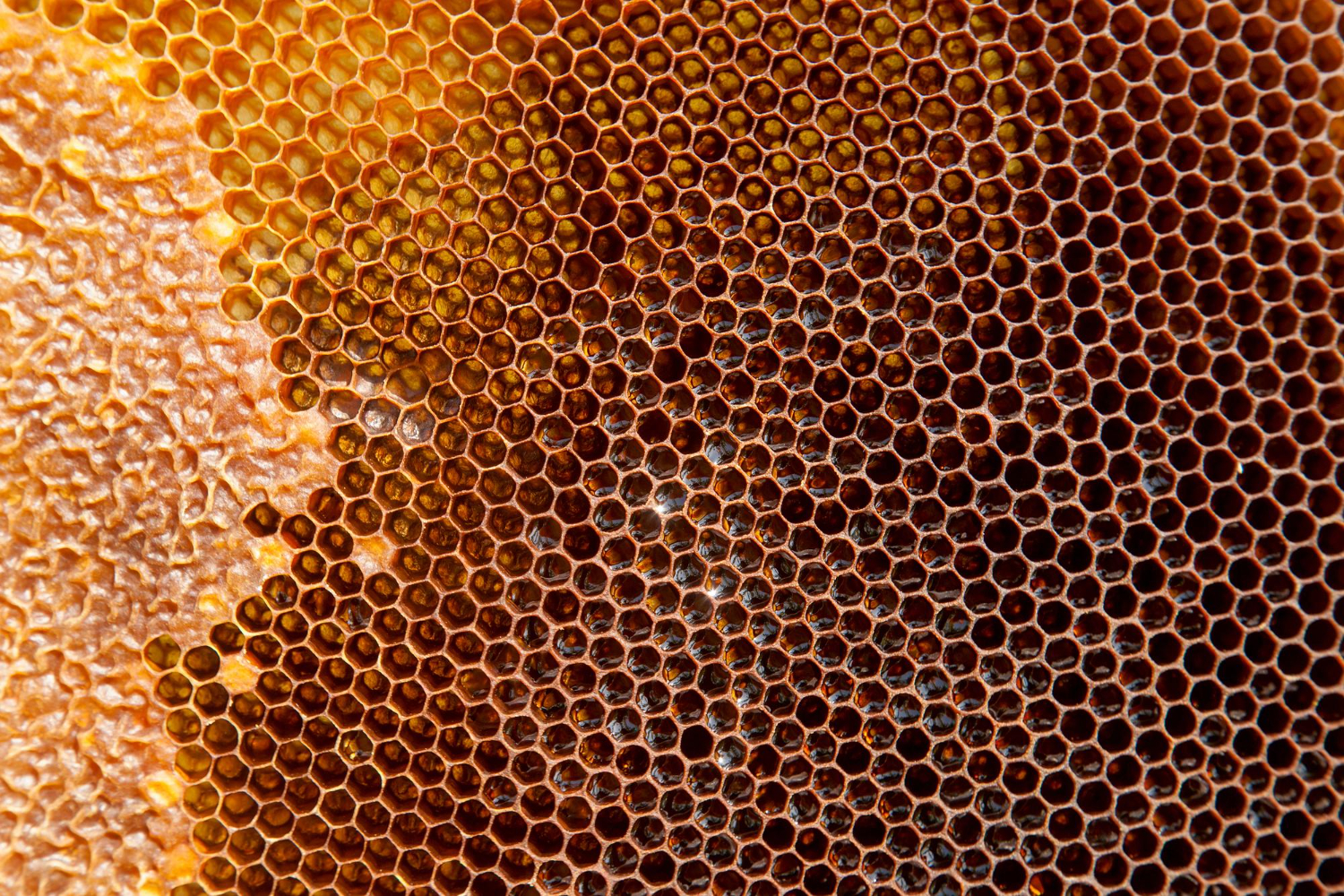
The finding at the centre of this is simple and was hiding in plain sight: honeycomb cells are not hexagonal when they are built.
Examine a comb in its earliest stage of construction — before the bees have finished — and the cells are approximately circular in cross-section, with curved walls. This was suspected by ancient observers and is straightforward to demonstrate by studying wax combs early in construction.
The round shape makes sense. A bee building an isolated cell would produce something like a circular tube, which is what solitary bees and bumblebees do in their own nests. Circular is the natural output of an animal working around itself.
What changes is that honeybee cells are not isolated. They are densely packed, each in contact with its neighbours, and the final shape emerges from what happens where they meet.
The transformation is fast. Researchers describe cells flowing into a hexagonal pattern within seconds of formation.
Like our content? Follow us for more.
The Wax Does the Work
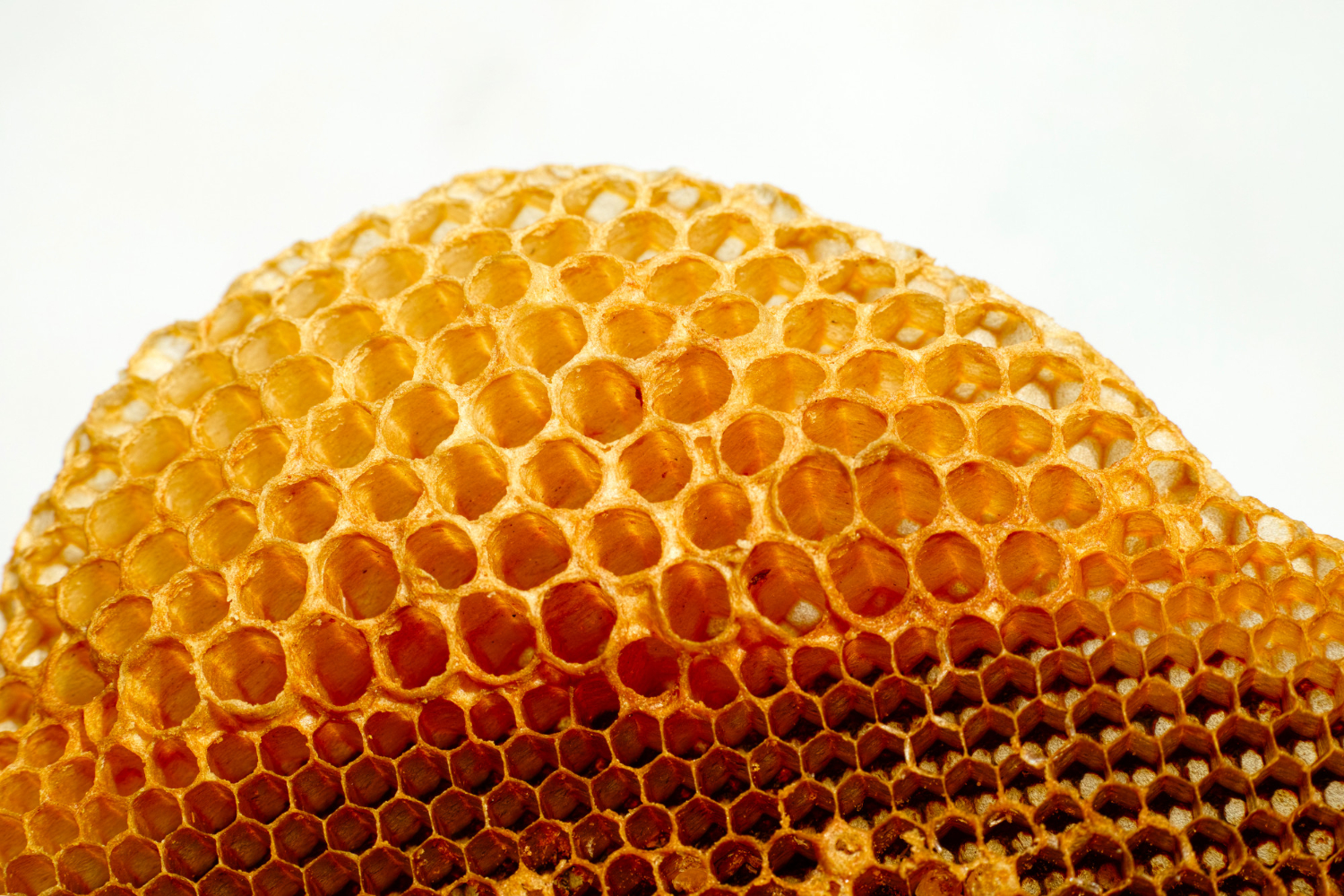
The mechanism identified by the most influential study is a matter of fluid behaviour rather than animal behaviour.
Research led by Bhushan Karihaloo at Cardiff University’s School of Engineering, with colleagues at Beijing Institute of Technology and Peking University, published in the Journal of the Royal Society Interface in 2013, set out how the transformation occurs.
Their account runs as follows. Bees build circular cells, packed closely together. Specialist worker bees generate heat, and at around 45 degrees Celsius the wax begins to soften and flow as a viscous, elastic liquid. Where three cell walls meet at a junction, surface tension pulls the softened wax into the configuration that minimises surface energy — which produces three walls meeting at 120 degrees, and therefore hexagons.
It is the same physics that governs adjoining bubbles in foam. Push circular bubbles together and the walls flatten and meet at consistent angles, because that is the lowest-energy arrangement available. Karihaloo described it as physically the simplest and most stable way for cylinders to merge.
Both experiments and models have supported this picture, and it built on much older suggestions. In the seventeenth century Rasmus Bartholin proposed that hexagons would result automatically from bees enlarging cells against one another, and in 1917 D’Arcy Thompson argued in his book on form that surface tension moulds soft wax into hexagons at triple junctions. Later work studying wax condensing around an array of rubber bungs pointed the same way.
The implication was stated bluntly by the science writer Philip Ball, who suggested there did not seem to be much room left for the honeybees’ engineering prowess.
What the Comb Is Actually For
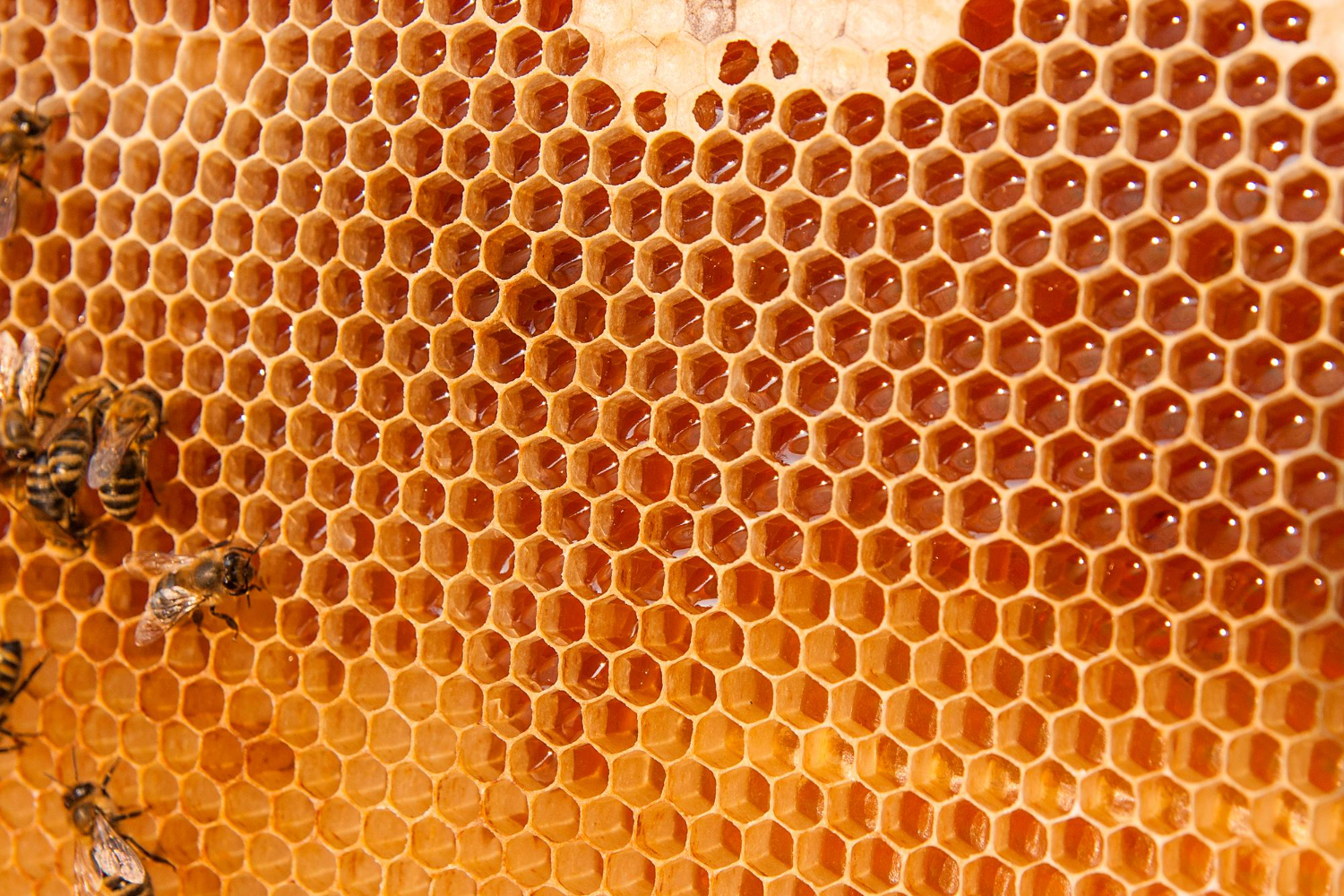
It helps to know what the structure does, because the demands on it explain why the geometry matters.
A comb is not a single-purpose object. The same array of cells serves as a nursery for developing brood, a store for honey, a store for pollen, and the structural framework of the colony’s living space. Bees walk on it, cluster on it, and use it as a communication surface.
The cells are not all identical either. Worker brood cells, drone cells and honey storage cells differ in size, and queen cells are built entirely differently — larger, hanging vertically, and unmistakable. So the comb is a structure with several cell types built to different specifications within one packed array.
Combs are also constructed as double-sided sheets, with cells on both faces sharing a common base, angled slightly upward so that stored honey does not run out. That upward tilt is a construction feature rather than a consequence of surface tension.
And the material is expensive. Producing wax costs a colony a significant quantity of honey, which is why economy of material is under real evolutionary pressure rather than merely being tidy.
Set against that, the emergence of hexagons through physics is one part of a build that also involves size regulation, orientation, tilt, cell-type differentiation and thermal control.
Why Hexagons Are the Right Answer Anyway
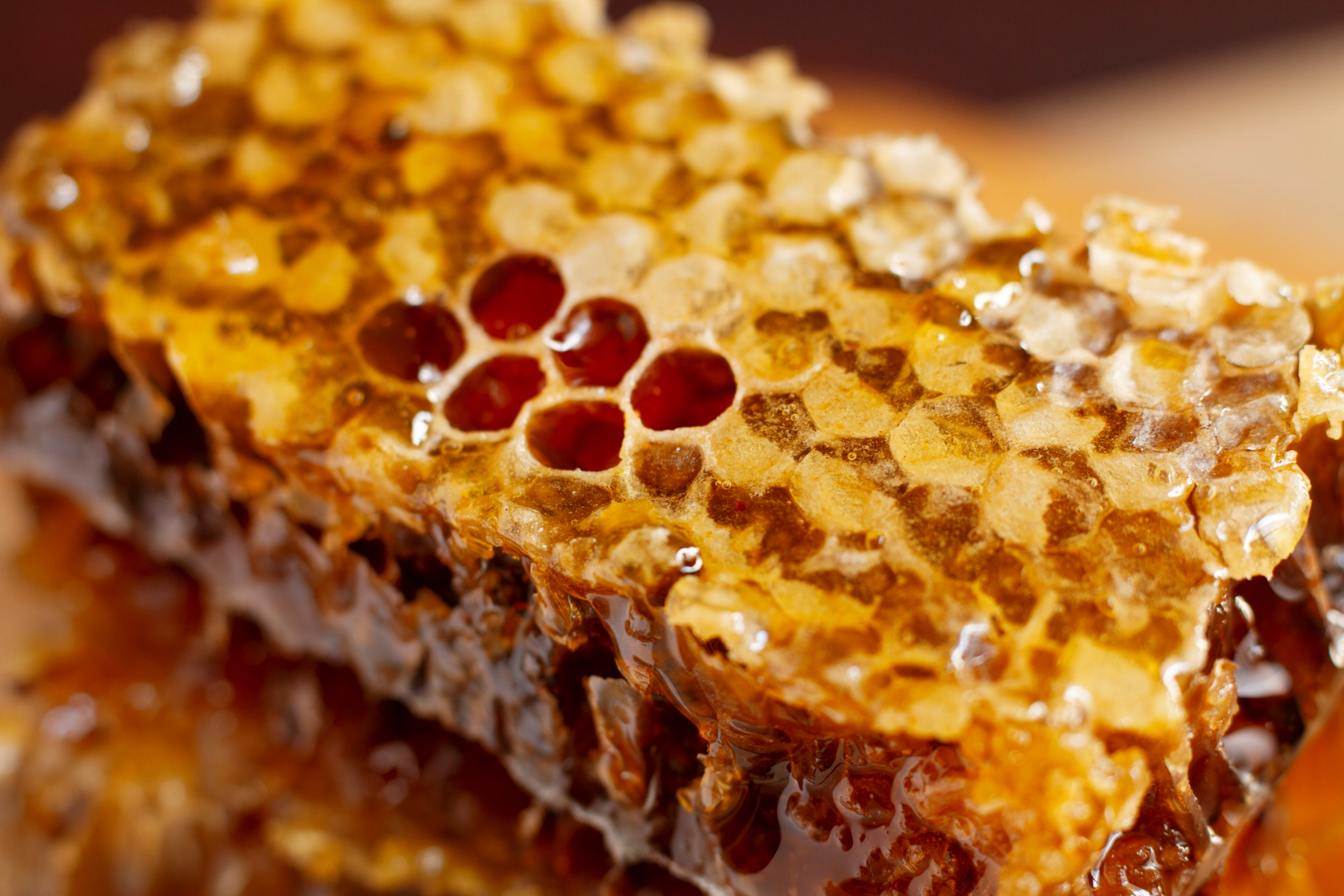
None of this makes the hexagon less remarkable. It is truly the optimal shape for the job, and the reasons are worth stating.
To divide a flat area into equal cells with no gaps, only three regular shapes work: triangles, squares and hexagons. Of those, hexagons enclose the greatest area for the least perimeter, which for a bee means the most storage space for the least wax.
Wax is metabolically expensive. Producing it costs a colony a substantial quantity of honey, so any saving in wall material is a real saving in food.
Hexagons also distribute stress evenly across six walls, which is why the structure is strong enough to hold honey and the weight of thousands of bees on thin sheets of wax. The principle is borrowed throughout engineering, in aircraft components, panels and lightweight structural materials, precisely because of that strength-to-weight ratio.
So the outcome is optimal. What the research changes is the explanation for how the optimum is reached — not through calculation, but because the physics of packed circles under surface tension arrives there automatically.
The Argument Is Not Over
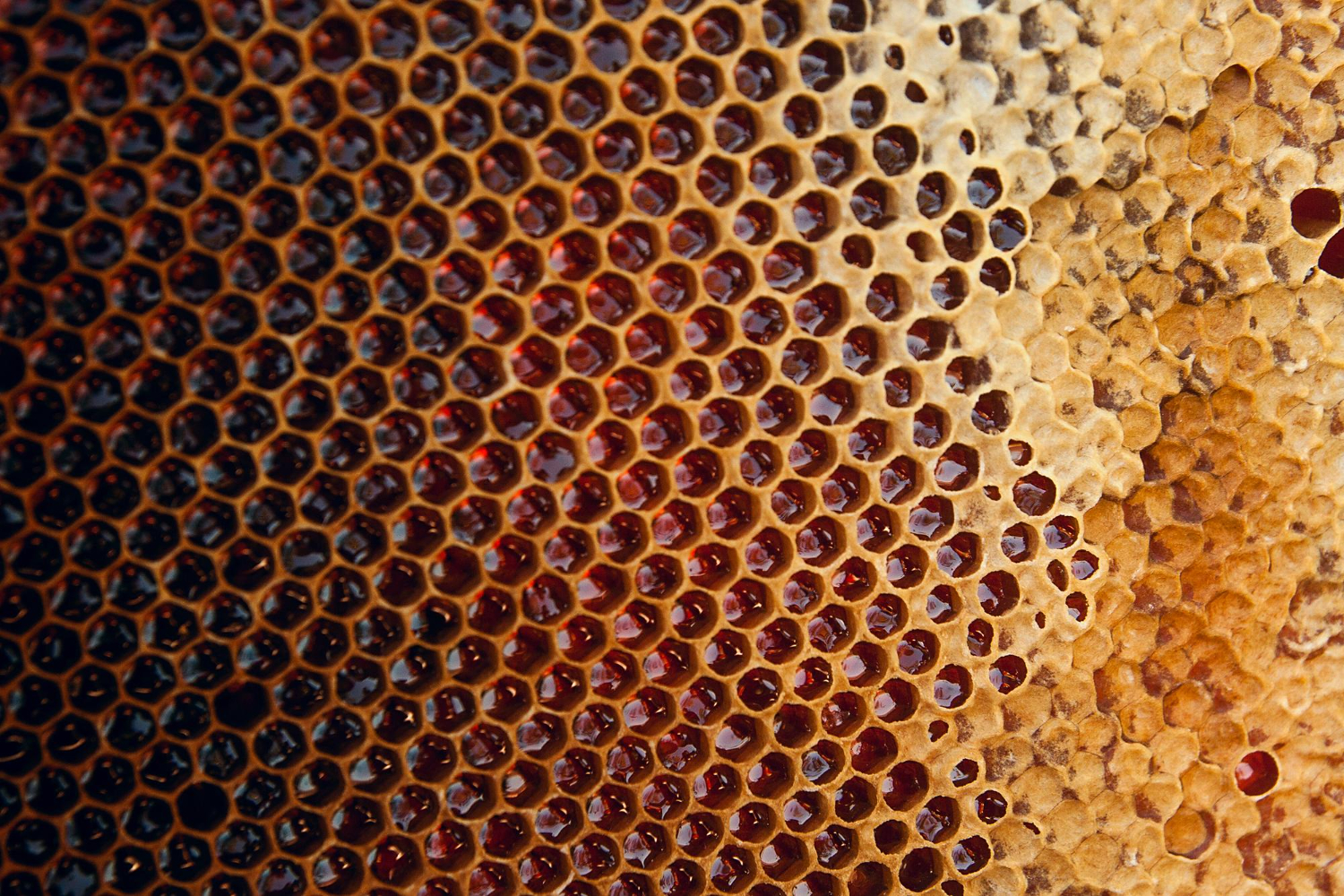
Here the story becomes more interesting than the headline version, because the surface-tension account has been challenged.
A study published in Naturwissenschaften argued that hexagonal comb cells are not produced via a liquid equilibrium process, on the grounds that the wax does not actually reach the temperature the flow model requires.
Subsequent work has proposed that mechanical shaping by the bees plays a real role — that the progression from curved to straight walls, and the equalisation of angles at junctions, may be governed by rule-based behaviour rather than by physics alone.
One line of argument makes a specific point about arrangement. Surface tension can only produce the observed geometry if the circular cells are first arranged so that each is surrounded by six others. That arrangement is itself a product of how bees build, which means the bees supply a necessary condition even if physics does the final shaping.
Related research has framed the outcome as an equilibrium between the efforts of builders attending to each cell, rather than as pure physical inevitability.
Reviews of the field describe the current position honestly: it is accepted that bees build cylindrical cells which later become hexagonal prisms, through a process that is still debated. Early explanations invoking geometric skill have been abandoned, but recent data suggest mechanical shaping by bees plays some part.
Attempts at real-time imaging of the process have been made, and the debate remains unresolved.
The Same Pattern Everywhere Else
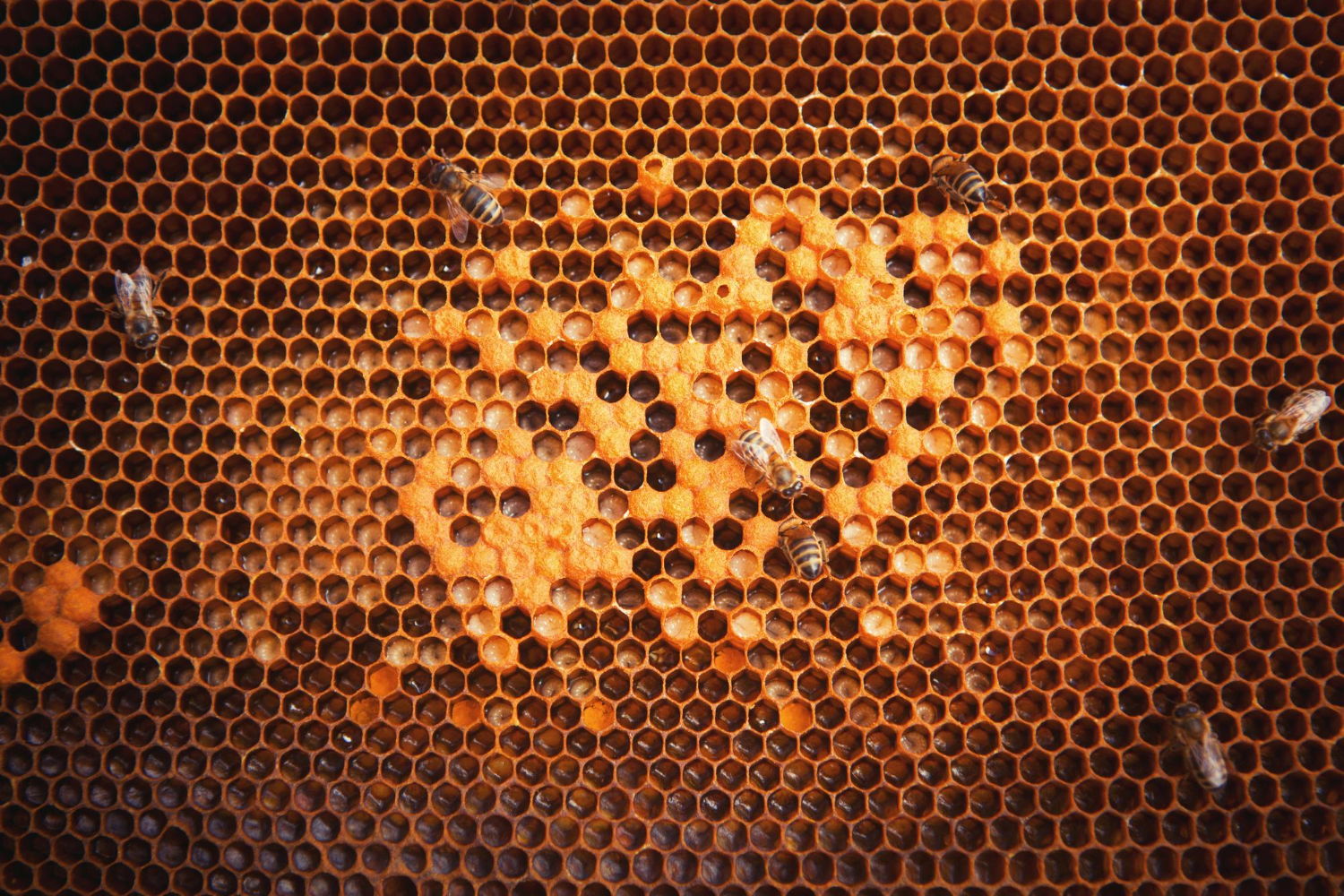
Hexagons appear repeatedly in nature, and the honeycomb explanation illuminates why.
Soap foam is the clearest parallel. Bubbles packed together flatten against one another and meet at consistent angles, producing hexagonal faces, for exactly the reason the wax does — surface tension minimising energy at the junctions.
Basalt columns form when thick lava cools and contracts, cracking into a network of joints that tends toward hexagonal cross-sections. No organism is involved at all, and the geometry is the same.
Mud cracks in a drying riverbed, the cells in some plant tissues, and the packing of certain crystal structures show comparable patterns.
The unifying principle is that hexagonal packing is what you get when equal-sized units are pressed together in a plane and something acts to reduce boundary length. That situation arises constantly, in living systems and entirely dead ones.
Which puts the honeycomb in useful context. It is not evidence that bees understand geometry. It is evidence that bees build round cells close together in warm wax, and that packed circles under tension become hexagons whether anyone intends it or not.
What the Correction Is Actually Worth
There is a way of telling this story that overcorrects, and it is worth avoiding.
The overcorrection says bees are doing nothing clever — that physics builds the comb and the insects are incidental. That is not supported either. Bees select the site, build cells of remarkably consistent size, arrange them in the specific packing that makes the transformation possible, generate and regulate the heat involved, and construct combs to a consistent thickness and orientation. Removing the geometry claim does not remove the engineering.
What the research replaces is a specific and rather condescending idea: that the hexagon proves bees perform calculations. As Karihaloo noted, the explanations people reached for were often esoteric when the answer was much more straightforward.
The broader lesson generalises well. Striking order in nature frequently emerges from simple physical rules acting on simple behaviour, rather than from any organism computing an optimum. Foam, mud cracks, basalt columns and honeycomb all arrive at similar geometry by similar routes.
The comb in a hive is still one of the most efficient structures made by any animal. It just turns out that the bee’s contribution is building a great many identical round cells very close together, and letting surface tension finish the job.
Like our content? Follow us for more.