


Almost every unit of time you use is a measurement of something physical.
The day is the Earth turning once. The month is roughly the Moon going through its phases. The year is one trip around the Sun. Each of these is an observation dressed up as a unit, and any civilisation anywhere would eventually arrive at all three, because they are events you can watch.
The week is not like this. Seven days corresponds to no celestial event at all. It does not divide evenly into a lunar month, it does not divide evenly into a year, and consequently it slides across both — which is why your birthday lands on a different day each year and why the calendar has to be reprinted.
It is, in other words, entirely invented. And it is arguably the most rigid unit of time in modern life, governing work, rest, school, worship and commerce more tightly than the month does.
Here is where it came from and why it has proved impossible to shift.
Seven Moving Lights
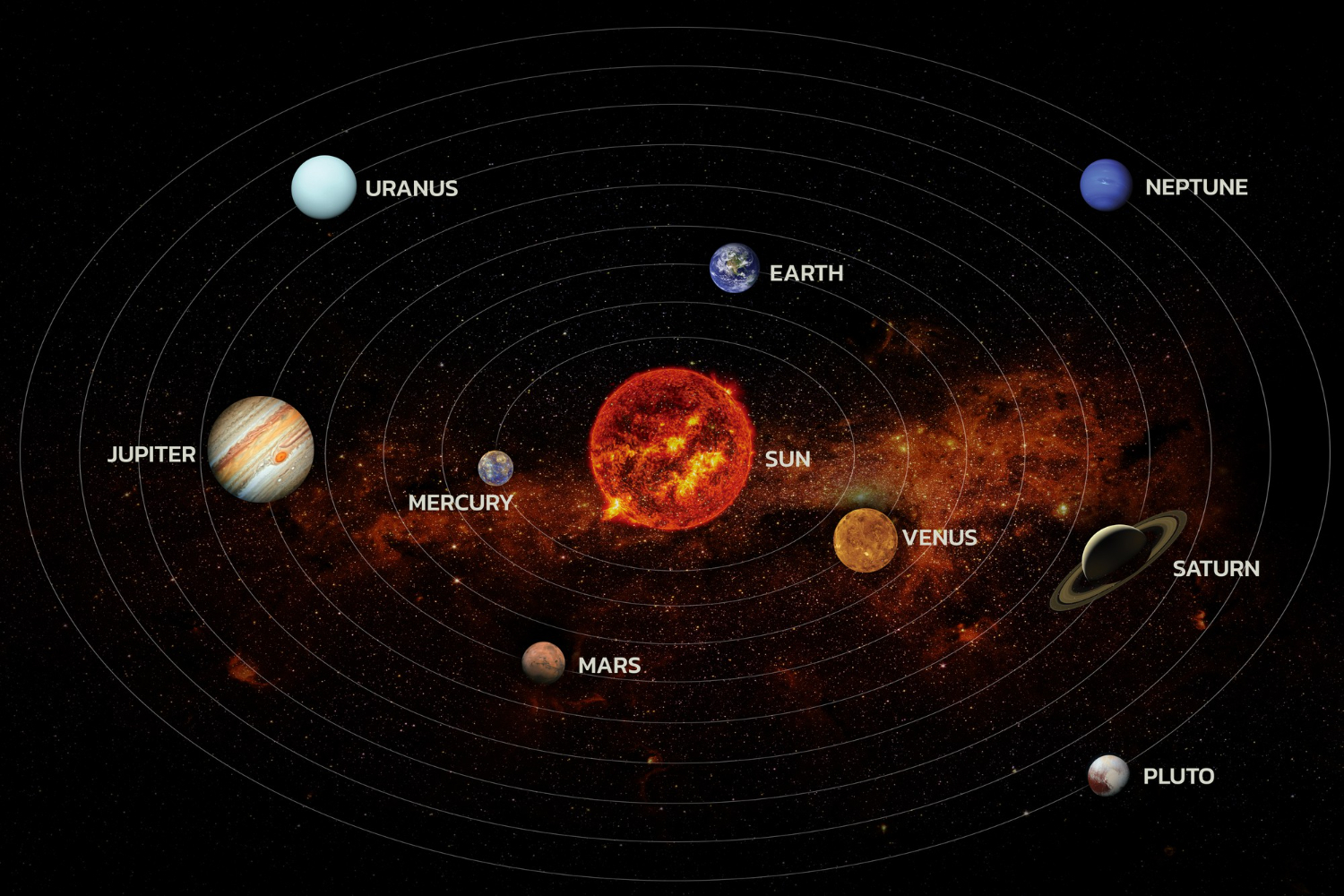
The origin traces to Mesopotamia, and specifically to careful naked-eye astronomy.
Ancient observers watching the sky noticed that while the stars held fixed positions relative to one another, a small number of objects moved against that background. There are exactly seven of them visible without instruments: the Sun, the Moon, Mercury, Venus, Mars, Jupiter and Saturn.
Seven wandering objects. That number acquired significance, and Babylonian practice divided the lunar month into periods of seven days, with the final day carrying particular religious weight.
The number is worth pausing on, because it is a real coincidence. There are seven visible wanderers because of which planets happen to be bright enough and close enough to see, which is an accident of the solar system. Had Uranus been slightly brighter, the week might have eight days.
There is a supporting mathematical convenience. The lunar cycle runs roughly twenty-nine and a half days, and a quarter of that is about seven and a third — so a seven-day period approximates a lunar quarter reasonably well, which allowed the week to be tied loosely to the Moon even though it does not divide it evenly.
Like our content? Follow us for more.
Two Traditions Reinforcing Each Other

The seven-day cycle then acquired a second foundation, and the combination is what made it durable.
Alongside the Babylonian astronomical framework, a religious tradition developed in which the seven-day period carried moral and structural meaning — a rhythm of six days of work and one of rest, presented as built into the order of creation rather than as a scheduling convenience.
Notably, that tradition did not name its days after celestial bodies. Days were numbered, with only the final one receiving a name.
So two entirely different systems arrived at the same seven-day period for different reasons: one astronomical and astrological, one moral and theological. When both circulated in the same eastern Mediterranean world, they reinforced one another rather than competing.
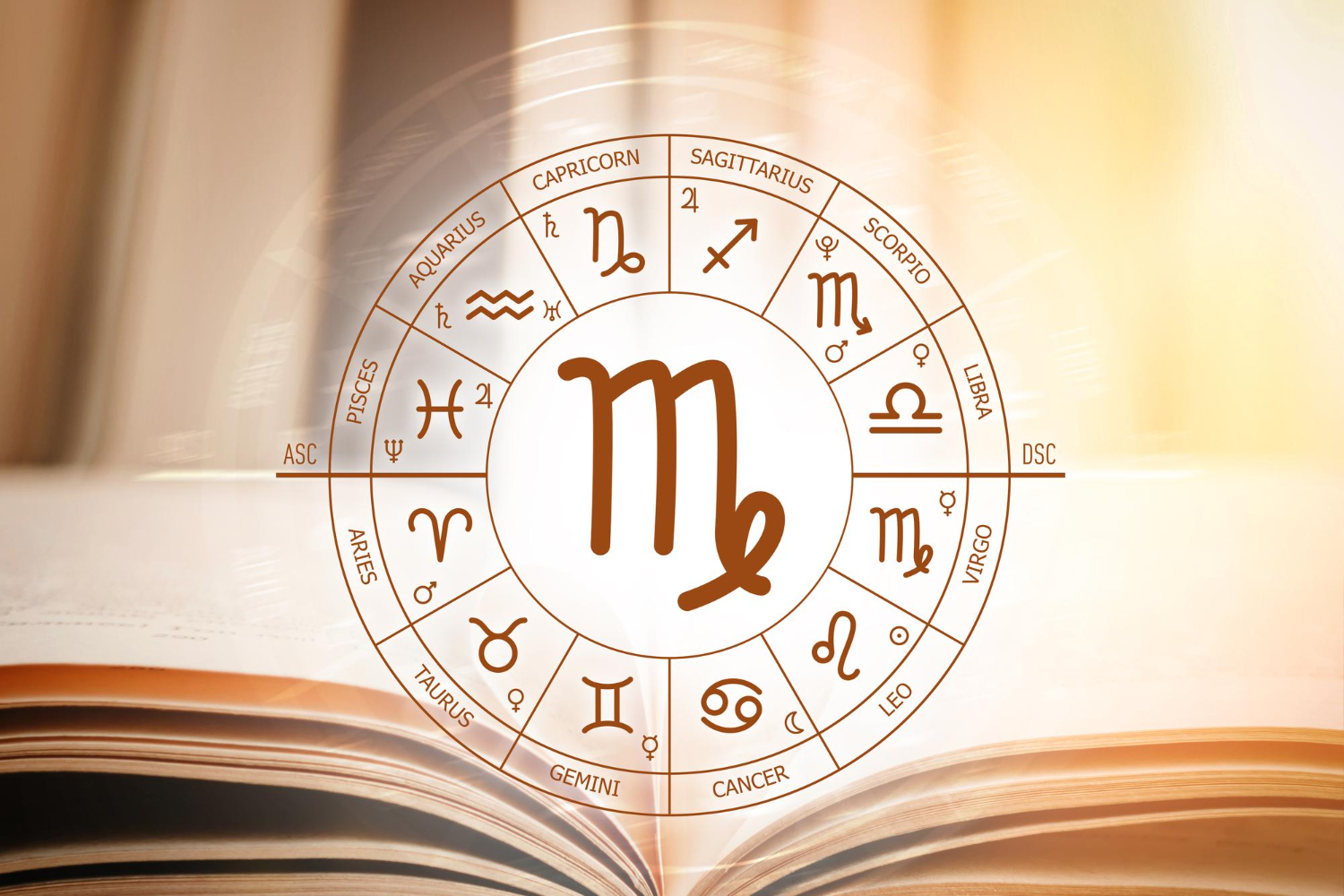
Greek astronomers absorbed Babylonian planetary knowledge, and Hellenistic astrology attached each day to a planetary deity — which is the point at which the naming convention we still use was fixed.
Rome Made It Official
The Romans did not start with a seven-day week. Their traditional civil cycle was eight days, organised around a market day, and it worked perfectly well for administrative purposes.
The seven-day planetary week arrived from the Hellenistic east and circulated alongside the eight-day system for a considerable period, gradually displacing it.
Formal adoption came in the early fourth century, when the seven-day week became state convention across the empire. Once that happened, the structure was exported wherever Roman administration reached, and subsequent religious adoption locked it in further.
The naming shows the layers clearly. Romance languages preserved the Latin planetary names directly. English and other Germanic languages substituted local deities for several of the Roman ones while retaining the planetary structure underneath, which is why some English day names sound nothing like their French or Spanish equivalents while occupying identical positions.
Adoption elsewhere was much later. Several parts of the world used entirely different systems and moved to the seven-day week only in the modern period, largely through trade and administration rather than conviction.
Two Serious Attempts to Abolish It

The strongest evidence that the week is arbitrary is that people have tried to replace it, and the strongest evidence that it is entrenched is that they failed.
Revolutionary France introduced a ten-day cycle as part of a wholesale calendar reform, explicitly intended to break the religious structure of the year. It ran for roughly a decade before being abandoned.
The Soviet Union attempted something more radical in the late 1920s: a continuous production calendar in which workers were divided into groups with staggered rest days, so that factories never stopped. The cycle was initially five days and was later stretched to six. After about eleven years it was abandoned and the seven-day week reinstated.
The Soviet failure is the more instructive of the two, because it identifies precisely what a week does. Staggered rest days meant that a household could have its days off on different days from one another. Friends could not meet, families could not eat together, and organised activity outside work became impossible to schedule.
That is the function nobody accounts for when redesigning the calendar. A week is not primarily a way of counting days; it is a mechanism for making a very large number of people idle at the same moment. Its value lies entirely in being shared.
Which means the seven-day week survives not because seven is correct but because coordination is worth more than arithmetic, and any replacement has to overcome the coordination cost of everyone switching at once.
What the Week Actually Does

Researchers who study how people orient themselves in time have noted something further: the weekly cycle functions as a mental map.
Because the pattern repeats and includes a marked break, the weekend acts as a landmark that lets people locate themselves within the flow of time. Days acquire character — Monday feels different from Thursday — in a way that dates in a month do not.
That structure is doing cognitive work that a decimal cycle would have to replicate, and it is not obvious that a ten-day period with a single break at the end would do it as well. The French experience suggests it did not: a nine-day stretch between rest days was substantially less popular than a six-day one.
There is a reasonable argument that seven survived partly because it happens to sit in a workable range — long enough to organise substantial activity, short enough that the break never feels far away.
The Names Record the Route

The day names are a good illustration of how the week travelled, because they preserve the layers of transmission like sediment.
The underlying scheme is planetary and comes from Hellenistic astrology: each day was assigned to one of the seven moving bodies.
Latin took that directly, and the Romance languages preserve it with very little disguise. The days of the week in French, Spanish and Italian are recognisably the Moon, Mars, Mercury, Jupiter and Venus, with the seventh and first days modified by later religious usage.
English did something more complicated. The structure was inherited intact, but several of the Roman deities were replaced by rough Germanic and Norse equivalents — the god of war for Mars, the chief god for Jupiter, and so on. So Tuesday, Wednesday, Thursday and Friday occupy the same positions as their Latin counterparts while sounding nothing like them.
Saturday, Sunday and Monday escaped the substitution and remain straightforwardly Saturn, Sun and Moon.
Other languages took an entirely different approach. Several simply number the days, in exactly the manner of the older religious tradition, avoiding the planetary scheme altogether.
So you can read the transmission history off a calendar. A numbered week points one way, a planetary week points another, and English points both at once — the Roman structure with Norse names dropped into four of the slots.
An Invention That Outlasted Its Reasons
What makes the week worth thinking about is how completely the justification has fallen away while the structure has not.
Nobody now organises their week around the seven visible planets. The astrological framework that named the days is not something most people take seriously. The astronomical coincidence that produced the number seven is understood to be a coincidence.
And the week is more rigid than ever. Employment, education, sport, worship, retail and broadcasting all run on it, and a proposal to change it would be received as an absurdity rather than a reform.
That is a substantially stronger position than most units of measurement enjoy. The metre has been redefined repeatedly, the second is now anchored to atomic physics, and the calendar has been reformed within living memory in some countries.
The week has never been anything other than seven days because somebody in Mesopotamia counted the moving lights and got that number — and it will almost certainly still be seven long after everything else about how we measure time has been revised again.
Like our content? Follow us for more.

