Look at the cap of a cheap ballpoint pen. There is a small hole in the top of it.
Most people assume it is a moulding artefact, or something to do with air pressure when the cap goes on. Both of those are partly true for some designs.
The main reason is that people swallow them, and a solid cap that lodges in an airway blocks it completely, while a cap with a hole in it does not.
What the Hole Actually Does
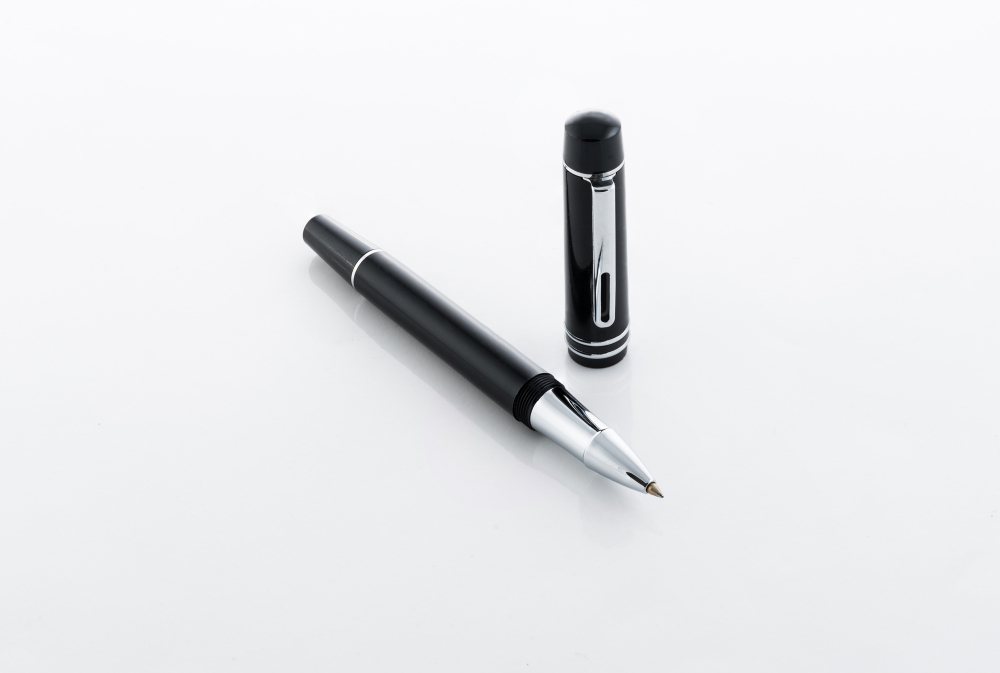
A pen cap is close to the worst possible shape for the problem. It is small, smooth, tapered, roughly the diameter of a child’s airway, and people put it in their mouths constantly – chewing it, holding it while writing, turning it over with their tongue.
If one is inhaled rather than swallowed, it can lodge in the trachea. A solid cap in that position seals the airway. A cap with an opening at the top, and with the bottom open as it already is, leaves a channel through it, and some air continues to pass.
That channel is not a solution. It does not make the situation safe, it does not remove the need for immediate emergency help, and the obstruction still has to be dealt with urgently. What it does is change a complete blockage into a partial one, which buys time, and time is the entire difference between outcomes in that situation.
So the hole is a mitigation, not a fix – and it was adopted precisely because the manufacturers accepted that they could not stop people putting the caps in their mouths.
Like our content? Follow us for more.
It Is a Standard, Not a Courtesy
This is not a feature individual companies added out of goodwill. It is specified.
Safety standards for writing instruments address the risk directly, and the approach is tiered. Caps above a certain size cannot be inhaled in the same way and are treated differently. Caps small enough to present the hazard have to meet a requirement – either an air flow rate through the cap, or a design that cannot be fully inhaled, depending on which standard applies.
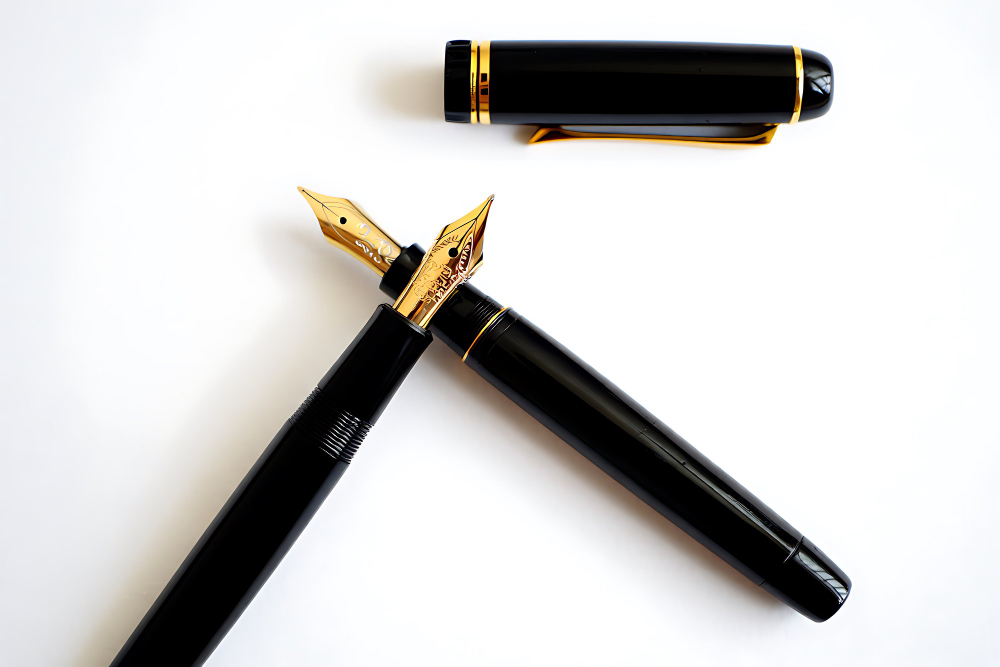
That is why the hole appears on cheap, slim, widely distributed pens and not on large-diameter caps, fountain pen caps, or caps designed so they cannot pass into an airway at all. It looks inconsistent until you realise the requirement is about the hazard rather than about pens in general.
It is also why the feature is so widespread across completely unrelated manufacturers in different countries: they are all meeting the same kind of requirement rather than copying each other.
The Other Things the Hole Does

Once the hole is there for safety, it does a few other jobs, which is why the explanations people offer are not entirely wrong.
It equalises pressure when the cap is pushed on, so the cap does not resist going on or pop off as trapped air expands. On a tight-fitting cap this is a real effect.
It stops the cap acting as a sealed chamber in a warm pocket or a car in the sun, which can otherwise push ink out of the tip.
And it simplifies the moulding slightly, because the pin that forms the inside of the cap can be supported at the top.
None of those would be sufficient reason on their own, and plenty of caps without the hazard profile have no hole and work perfectly well. But they are genuine secondary benefits, which is how a safety feature ends up looking like an ordinary piece of design.
The Cap Is Not the Only Object With This History

Pen caps are the famous case, and they are not unusual.
A great many small objects that end up in mouths have been reshaped by the same reasoning. Button cells are now frequently sold in packaging deliberately difficult to open and are increasingly fitted into products behind a fastener, because of what they do if swallowed. Small magnets sold as toys were restricted in several places after a pattern of serious internal injuries emerged, because two swallowed separately will find each other through tissue.
Whistles, small balls and model parts are subject to minimum-size rules based on a cylinder that approximates a young child’s throat, and anything that fits inside it cannot be sold for that age group. The size of that cylinder is a specified dimension, arrived at from measurements rather than from judgement.
The pattern is consistent. A hazard is identified from an incident record, a measurable test is written that distinguishes dangerous from acceptable, and the test is then applied to a whole category of objects regardless of what any individual manufacturer intended.
None of it is visible to the person buying the thing. The pen cap’s hole is one of the very few cases where the mitigation is physically obvious, which is why it is the one people notice and ask about.
Why the Design Was Not Simply Changed

The obvious question is why pens are still made with small removable caps at all.
Several answers, none of them satisfying. Retractable mechanisms cost more and fail more. A cap protects the tip from drying and from marking a pocket better than a retracting mechanism does. Tethered or non-removable caps are awkward to use and people dislike them. And the pen is one of the cheapest manufactured objects in wide circulation, which means almost any added cost is decisive.
So the industry did what industries do when a product cannot be redesigned and the hazard cannot be eliminated: it mitigated. Put a hole in the top, meet the standard, and accept that the object will continue to be chewed.
It is worth being clear that this is a reasonable outcome rather than a cynical one. The alternative – banning small caps – would have removed an enormously useful cheap object to address a risk that the hole substantially reduces. That is the normal arithmetic of product safety, and it is usually invisible because it is resolved before anything reaches a shop.
The Cap Is Also Why the Pen Still Works After a Year

Setting the hazard aside, the cap is doing a real job, and understanding it explains why pens behave the way they do.
A ballpoint relies on a ball rolling in a socket, picking up thick ink from a reservoir and depositing it. The ink is formulated to be viscous enough not to leak past the ball and thin enough to transfer, which is a narrow window. If the tip dries, the ink immediately behind the ball thickens, the ball stops picking up cleanly, and the pen skips.
The cap slows that drying by keeping a small volume of air around the tip that quickly becomes saturated. It does not seal – it cannot, because of the hole – but it does not need to. It just has to reduce air exchange enough that the exposed ink at the ball does not dry out between uses.
Which is also why a pen left uncapped for a week will often write again after a few scribbles: the dried plug at the tip is thin, and the ball drags it clear. And why a pen left uncapped for a year usually will not.
The trade-off is visible in the object. A hole large enough to pass air in an emergency is a hole that lets the tip dry out faster, and the size that is actually used is the compromise between those two requirements – which is a remarkable amount of consideration for a thing that costs almost nothing.
What It Tells You About Everything Else You Handle
The genuinely useful thing here is the habit of looking at a feature and asking what hazard it exists to address.
An enormous amount of ordinary design is defensive in this way, and almost none of it is labelled. The reason a bag of something small carries a suffocation warning, the reason a lid takes two coordinated actions to open, the reason a small toy component has a minimum size, the reason a cord has a breakaway connector, the reason a glass panel in a door is marked at eye level – every one of those exists because of a specific recorded pattern of harm, and every one of them was argued about before it became standard.
Most of them look like arbitrary details, and all of them are the visible end of an incident record that the person using the object never sees.
The pen cap is the clearest example because the feature is so small, so universal, and so completely unexplained on the product itself. There is a hole in the top of almost every cheap pen cap in the world, nobody is told why, and the reason is that it is a documented hazard with a documented mitigation.
Have a look at the pens on your desk. The slim ones will have it and the fat ones probably will not.
And that difference is not a style choice.
Like our content? Follow us for more.