

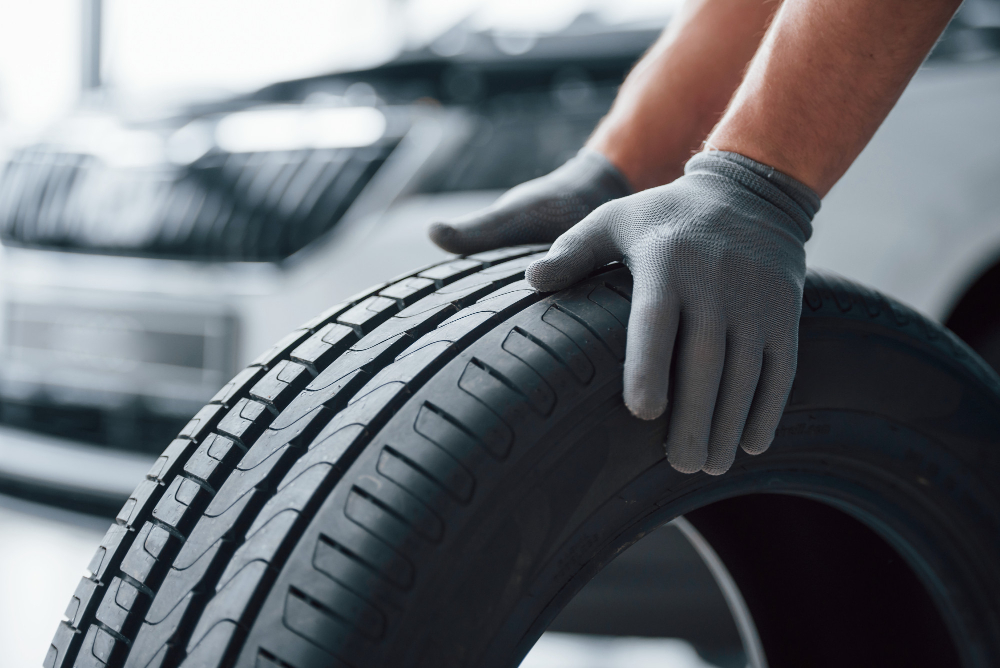
Every tyre on every car has a built-in gauge telling you when it is worn out, and almost nobody uses it, largely because almost nobody knows it is there.
It is not a sticker and it is not printed on the sidewall. It is moulded into the tread, at the bottom of the grooves, in several places around the tyre, and it reads out continuously for the entire life of the tyre without any equipment at all.
What You Are Looking For
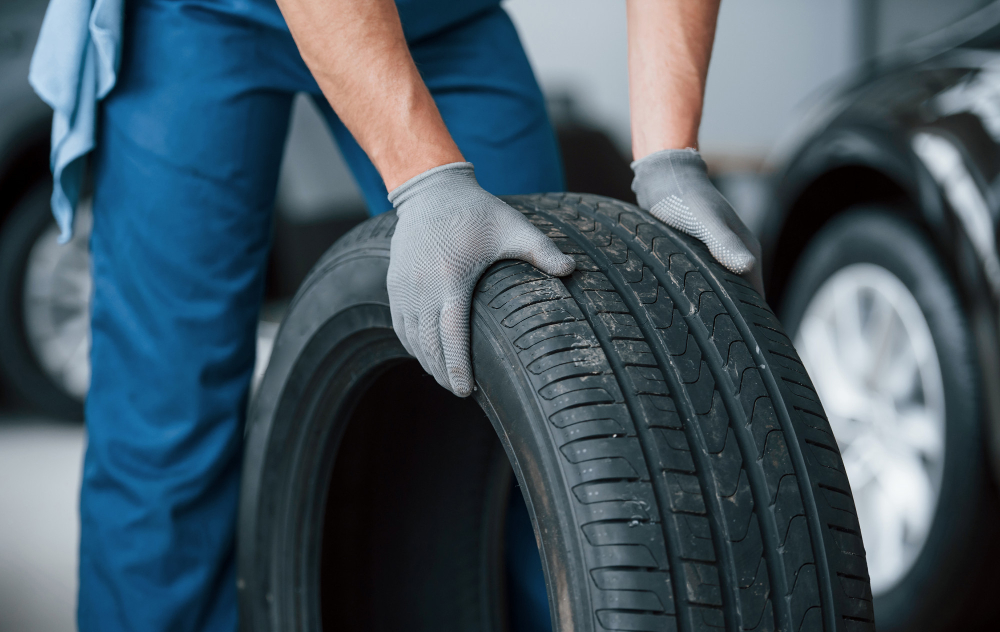
Run a fingertip along the bottom of a main tread groove. At intervals you will find a short raised bar crossing the groove, standing proud of the groove floor but currently below the level of the tread blocks either side.
Those bars are moulded to a fixed height above the base of the groove, corresponding to the minimum tread depth. As the tread wears down, the blocks either side get shorter while the bar stays exactly where it is. When the surface of the tread blocks reaches the top of the bar, the tyre is at the limit.
At that point the bar and the tread are flush, and the tyre shows a smooth band of rubber across the groove – visible at a glance, with no tool, no gauge and no judgement required.
To find them without groping around, look at the sidewall near the edge of the tread. There will be small triangular arrows, or letters, moulded into the rubber at intervals. Each one points to the position of a wear bar in the tread beside it. Those markers exist purely to tell you where to look, and they are on essentially every tyre made.
Like our content? Follow us for more.
Why a Worn Tyre Fails Suddenly Rather Than Gradually
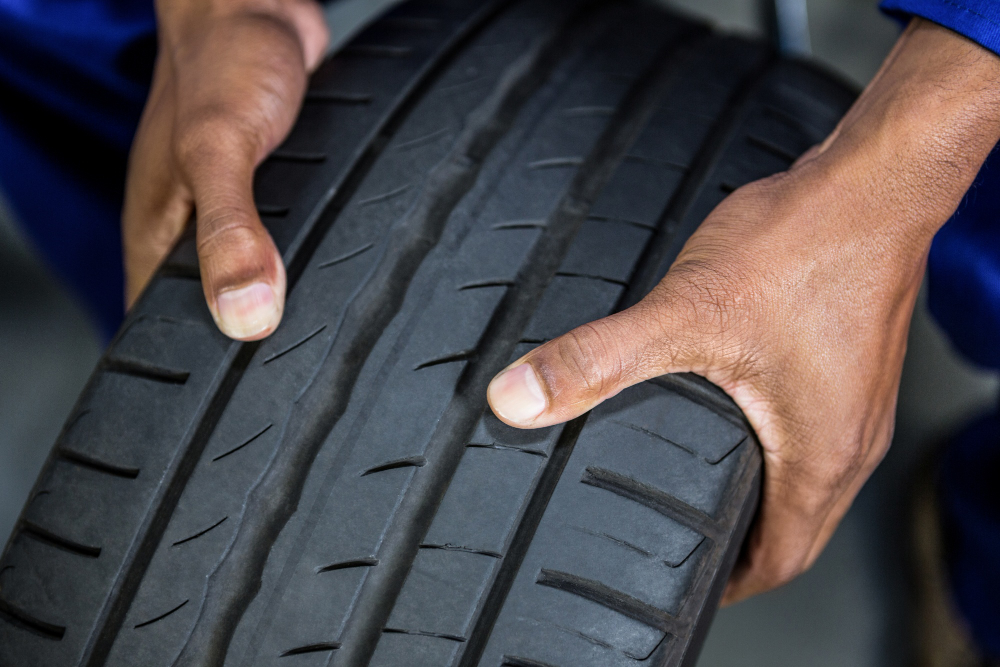
The reason a minimum depth exists at all is about water.
A tyre on a dry road does not need tread. Racing slicks have none, because on a dry surface the largest possible contact area gives the most grip, and grooves reduce that area.
Tread exists to deal with water. The grooves are channels that take water out from under the contact patch and throw it sideways and backwards, so that the rubber reaches the road surface rather than floating above a film. The volume of water a tyre can move per second depends directly on the cross-sectional area of those channels – which depends on how deep they are.
As the tread wears, the channel area falls, and so does the amount of water the tyre can clear. This is why performance in the wet does not decline in a straight line. For most of the tyre’s life the channels are more than adequate, the loss is barely perceptible, and then in the last few millimetres the capacity drops below what a heavy rain shower demands, and the tyre begins to lose contact at speeds where it previously would not.
A driver who has noticed no change in handling over three years is not being inattentive. The change genuinely is concentrated at the end.
It also explains why the first sign is frequently not a loss of grip but a change in sound. A tyre clearing less water is a tyre with more water passing under it, and the noise a tyre makes in the wet shifts as the tread shallows – which some drivers register without being able to say what has changed.
The Limit Is a Floor, Not a Target
The legal minimum depth is a threshold below which a tyre is not permitted on the road. It is a floor, and it is worth being clear that a tyre sitting exactly on the indicator is a tyre at the worst performance the law allows rather than a tyre that is fine until the moment it is not.
Independent testing has repeatedly found meaningful differences in wet braking distance between tyres at the legal minimum and tyres with several millimetres more depth – the kind of difference measured in car lengths at motorway speed, in exactly the conditions where it matters.
That is not an argument for replacing tyres early as a matter of course, and anybody’s decision depends on their own driving, climate and budget. It is an argument for knowing where your tyres actually are, which costs nothing, and for understanding that the indicator marks the end of the permitted range rather than the beginning of a problem.
The practical version: look at the bars occasionally, and treat them as a warning you are approaching the limit rather than a light that comes on when you have reached it.
The Coin Trick Is Worse Than the Bars

There is a widely repeated method involving inserting a coin into the tread and checking whether some feature of the design is obscured.
It works, roughly, in the sense that it gives an approximate depth reading for somebody with a coin and no gauge. But it is worse than the built-in indicator in three specific ways, and it is worth knowing why.
It depends on the coin. Different coins in different countries have different dimensions, so the test gives a different answer depending on what is in your pocket, and a person travelling or using a remembered version from somewhere else will get a wrong result with full confidence.
It measures the wrong place. Pushed into a groove at a random point, the coin may land on a section of tread that is not representative – including, if you are unlucky, directly on a wear bar, which will read as alarmingly shallow, or on an unworn shoulder, which will read as fine.
And it introduces a judgement where none is needed. The wear bar is binary: either the tread is flush with it or it is not. The coin method requires you to estimate how much of a design element is covered, by eye, in bad light, crouched by a kerb.
The coin is a reasonable fallback if you have forgotten what you are looking for. It is not an improvement on a gauge that the manufacturer moulded into the product for exactly this purpose.
Tread Depth Is Not the Only Thing the Tyre Is Telling You
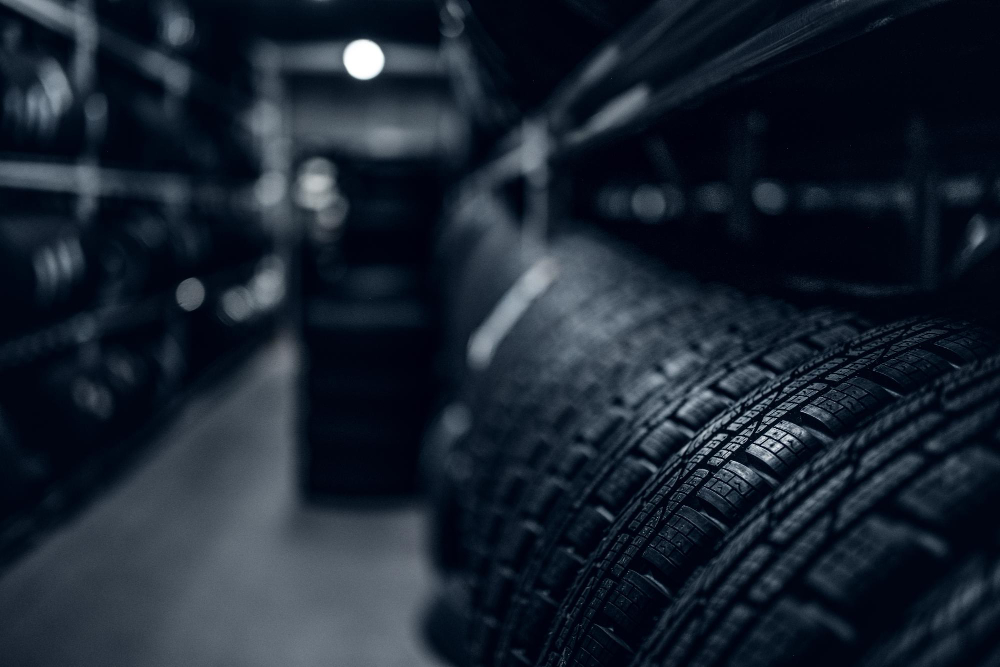
Since you are already looking, the tread carries several other readouts.
Wear across the width should be roughly even. Wear concentrated on both outer edges with the centre still good usually indicates persistent under-inflation, because an under-inflated tyre bulges and runs on its shoulders. Wear concentrated in the centre strip suggests the opposite. Wear heavily on one edge only generally points to alignment rather than pressure.
A scalloped or uneven pattern around the circumference, where the tread looks like it has been scooped at intervals, points at suspension or balance rather than at the tyre itself.
Cracking in the sidewall or at the base of the grooves is age rather than mileage. Rubber degrades over years regardless of use, which is why a tyre with plenty of tread on a vehicle that is rarely driven can still be unfit. There is a date code moulded into the sidewall giving the week and year of manufacture, which is the only way to know how old a tyre actually is.
None of this requires expertise. It requires looking, which is the part that does not happen, because a tyre is the one component of a car that is simultaneously the most important for safety and the least interesting to think about.
Why the Indicator Is Hidden in the First Place
It is reasonable to ask why, if this matters so much, the indicator is at the bottom of a groove rather than somewhere obvious.
The answer is that there is nowhere else it could be. The measurement is of tread depth, so the reference has to be at the bottom of the tread. Any indicator on the sidewall would be measuring nothing, because the sidewall does not wear. A system that showed a colour as the tyre wore down was tried in various forms and has never become standard, partly because of cost and partly because coloured rubber in the tread has to perform identically to the rubber around it or it creates a weak band.
So the bar at the bottom of the groove is not a compromise. It is the only place the information exists, and the arrows on the sidewall are the industry’s attempt to point at it.
What is missing is not the indicator. It is anybody telling drivers that it exists – which is why a feature present on every tyre on every vehicle for decades remains, for most people, a small unexplained lump of rubber in a groove.
Next time you are at the car, crouch down and find the little arrows on the sidewall.
Follow one in, and you will find the gauge that has been there the whole time.
Then do the same on the other three, because tyres do not wear at the same rate and the one you can see from the driver’s door is rarely the worst one on the car. The rear tyres on a front-wheel-drive car, in particular, tend to be forgotten entirely, and they are the ones holding the back of the vehicle in line when it is wet.
Like our content? Follow us for more.
