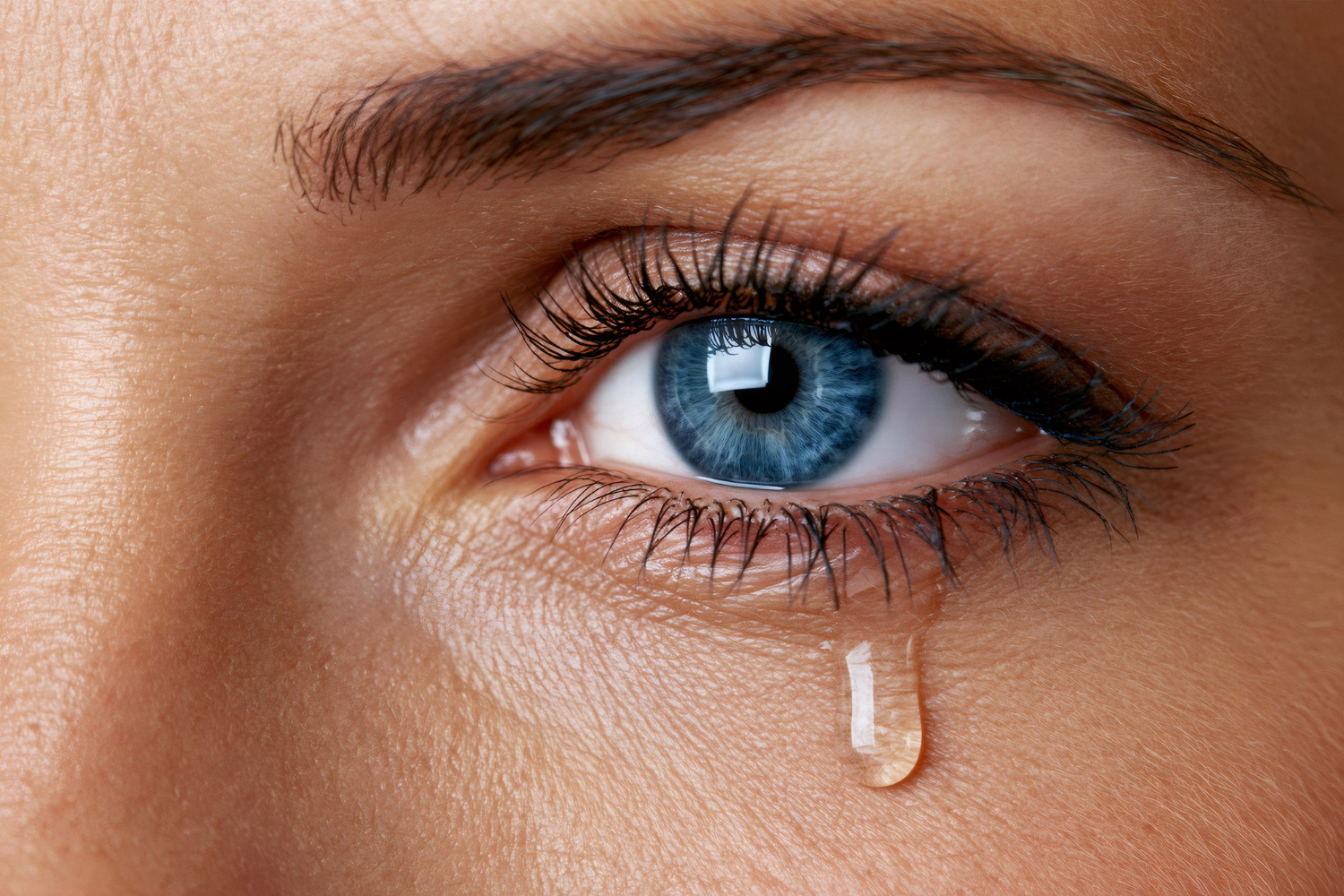
There is a category of human behaviour that is universal, immediately recognisable across every culture, entirely involuntary, and without a settled explanation.
Emotional crying belongs in it, alongside blushing and laughing, and it is the strangest of the three.
Tears themselves are unremarkable. Any animal with exposed eyes needs them, because a functioning eye requires a moist surface and mechanical protection. Producing fluid to keep an eye working is basic maintenance.
What is difficult to explain is why a specific class of internal states — grief, relief, frustration, joy, being moved by something — should cause fluid to run out of a person’s eyes. There is no mechanical problem being solved and no obvious benefit to the crier.
Here is what is understood and where the explanation runs out.
Three Different Kinds of Tear
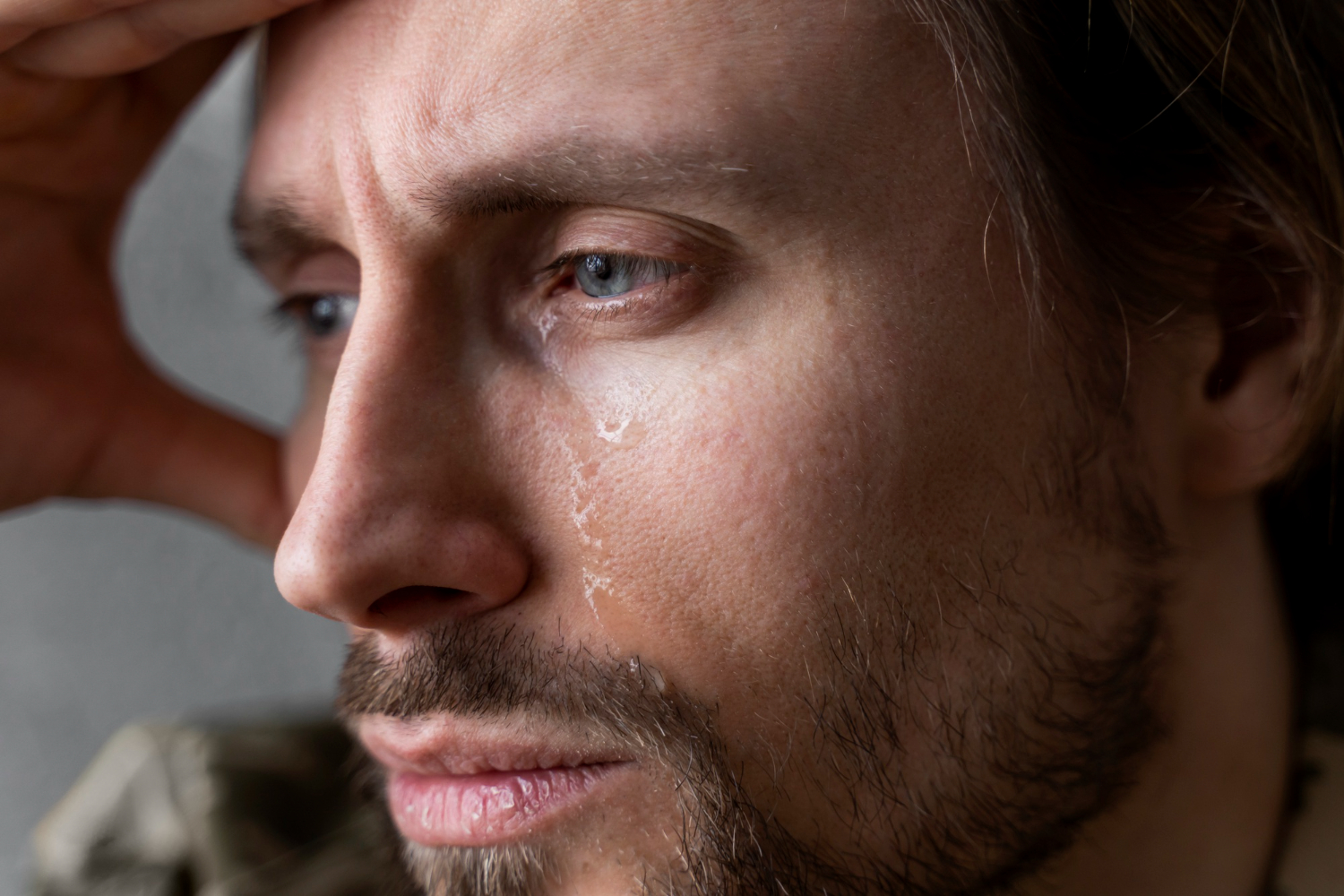
The first thing to establish is that tears are not one thing, which is frequently missed.
Basal tears are produced continuously to keep the eye surface moist and functional, spread across it by blinking, and drained away through ducts into the nose. This runs all the time without anybody noticing.
Reflex tears are produced in response to irritation — dust, wind, smoke, a foreign object, or the compounds released when an onion is cut. Production increases sharply to flush the irritant away. This is a protective response and is present across a wide range of species.
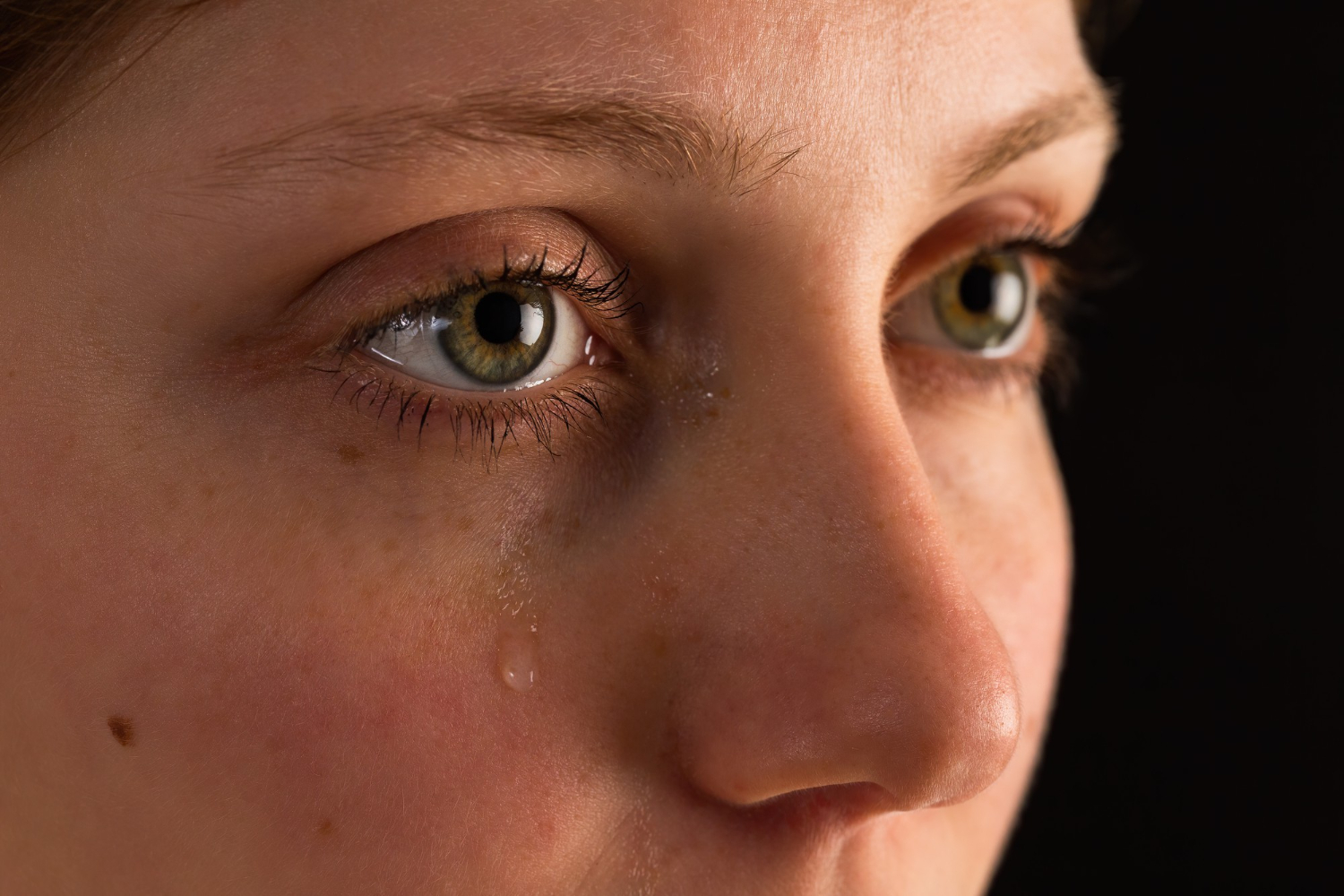
Emotional tears are the third category, produced in response to feeling rather than to any physical stimulus, and they are the ones that are difficult to account for.
The three are not identical in composition. Reported differences in protein and hormone content between reflex and emotional tears have been the basis of one proposed explanation, though the finding and its interpretation have been debated and should not be treated as settled.
Like our content? Follow us for more.
The Uniqueness Claim, Carefully Stated
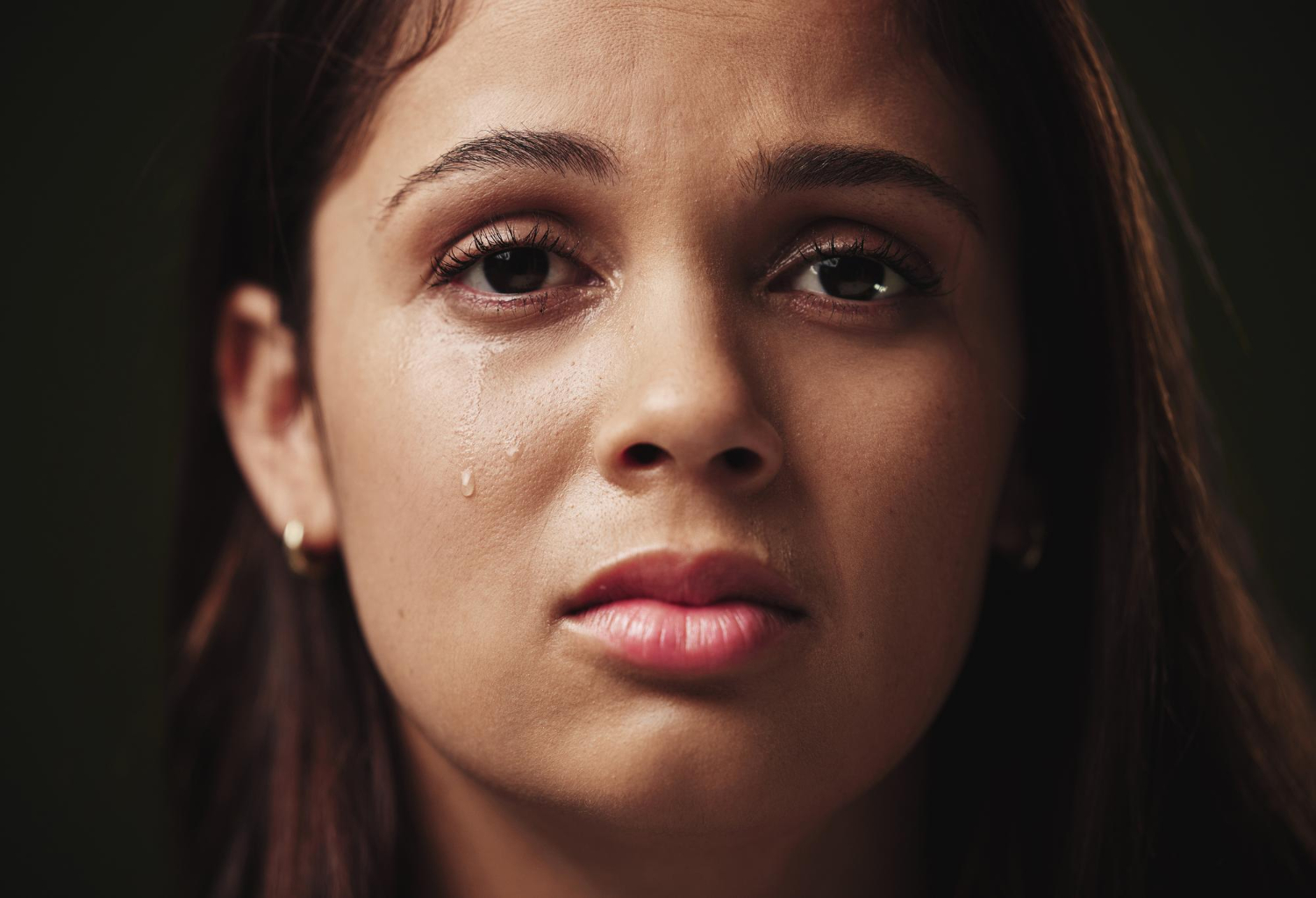
Emotional crying is very widely described as unique to humans, and the claim needs handling with some care.
What is well established is that no other species has been shown to produce tears in response to emotional states in the way humans do. Many animals vocalise in distress, and some produce tears for reflex or basal reasons at the same time, but tearing driven by emotion has not been demonstrated elsewhere.
What is harder to establish is a universal negative. Demonstrating that no animal anywhere does something is far more difficult than demonstrating that one does, and internal emotional states in other species are not directly observable.
So the defensible position is that emotional tearing appears to be unique to humans on current evidence, rather than that it definitively is. That is how the sources careful about it phrase it, and it is how this article phrases it.
Even stated cautiously, it remains remarkable. A behaviour with no clear parallel in any other species, appearing in every human population, is an unusual thing to find.
There is a developmental observation that any account has to accommodate. Newborn infants cry vocally but do not produce tears; tearing develops over the following weeks and months.
That gap is informative, because it separates the vocal distress signal from the tearing component and indicates they are not one system. Whatever tears are for, they arrive after the crying does.
The Leading Explanations
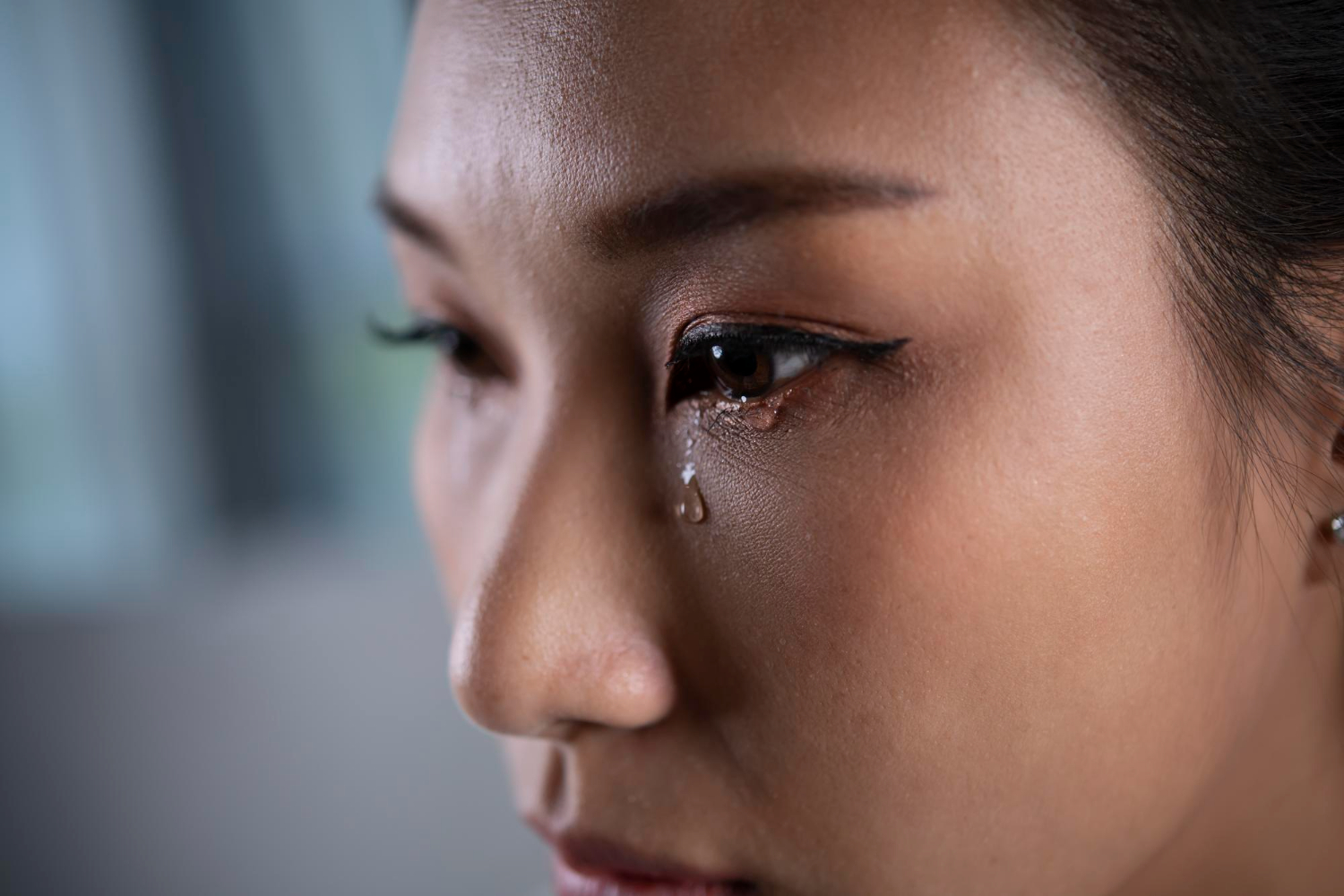
Several accounts are proposed and none is established.
The signalling account is the most widely discussed and parallels the reasoning applied to blushing. Tears are a visible, involuntary, difficult-to-fake indication of distress or of being emotionally affected, which makes them a reliable signal in a way that words are not. A social species dependent on cooperation benefits from a way of communicating real need that cannot easily be simulated.
That account has a specific supporting observation: tears blur vision temporarily, which reduces the crier’s own capacity to act and could function as a signal of vulnerability or of non-aggression.
The attachment account holds that crying originated in the extended dependency of human infants, as a mechanism for eliciting care, and that it persisted into adult life where it continues to elicit comfort and support from others.
The chemical account proposes that emotional tears remove stress-related substances from the body, which would explain the sense of relief people report. This is the account resting on composition differences, and it is the least well supported of the three.
There is also a simpler possibility that deserves stating: emotional crying may be a by-product rather than an adaptation — the emotional system and the tear system sharing enough neural connection that intense states spill over into a response that was never selected for.
Why It Is So Hard to Test

The methodological problem is severe and explains the lack of progress.
Emotional states cannot be induced reliably or ethically at the intensity required. Crying cannot be produced on demand for study. Self-report about whether crying helped is unreliable, since people expect it to help and report accordingly.
The relief many people describe afterwards may come from the crying itself, from the social response it produces, from the passage of time, or from the resolution of whatever caused it, and separating those is extremely difficult.
Cross-cultural comparison is complicated by enormous variation in what is socially permitted. Crying frequency and context differ substantially between cultures and between groups within them, and those differences are cultural rather than physiological — which makes it hard to establish what the baseline behaviour even is.
So the field has a phenomenon that is universal, obvious and almost impossible to study experimentally.
What Is Reasonably Established
Some things can be said with more confidence.
Crying is truly involuntary in the sense that matters. It can be suppressed with effort and cannot be reliably produced without one, which puts it in the same category as blushing — a signal not fully under the control of the person emitting it.
It is triggered by a broader range of states than distress alone. People cry at joy, at relief, at reunion, at music and at beauty, which any explanation confined to signalling distress has to account for.
It reliably produces a response in observers. Seeing someone cry elicits attention, sympathy and offers of help across cultures, which is consistent with a communicative function whether or not that is why it evolved.
And it changes across a life. Crying frequency and triggers alter with age in documented ways, which suggests something developmental is involved.
What Happens to the Face
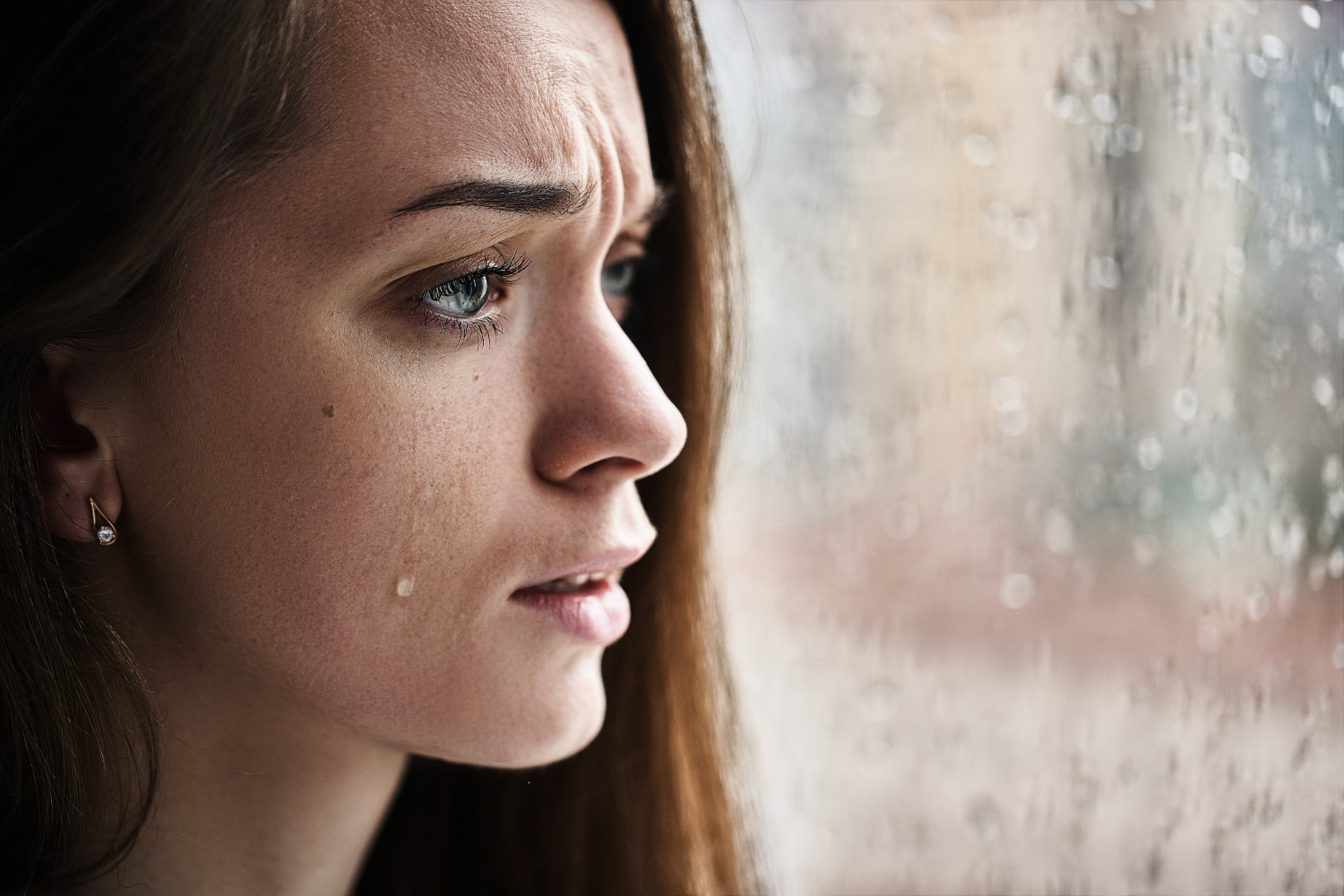
There is a component of crying that is easy to overlook and probably matters, which is that tears are only part of the display.
Crying involves a characteristic facial configuration, a change in the voice, altered breathing and frequently a change in posture. The tears are the most visible element and are accompanied by a substantial package of other signals.
That matters for the signalling account, because it means the display is multi-channel — visible at a distance through the face and posture, audible through the voice, and legible close up through the tears themselves.
It also complicates the uniqueness claim in an informative way. Distress vocalisation is widespread across species, and the facial and postural components have parallels elsewhere. It is specifically the tearing that appears to be ours.
Which raises a question the signalling account has to answer. If distress can be communicated by voice and face, as it is in other species, what does adding tears accomplish?
One suggestion is that tears work at close range and in silence, in circumstances where vocalising would be inadvisable or where the audience is already present. Another is that they are harder to fake than a facial expression, and therefore more reliable.
Neither is established, and both are the kind of proposal that is easy to make and very difficult to test — which is the recurring difficulty with this entire subject.
Living With an Unexplained Behaviour
There is a note worth making about how this subject is usually discussed.
A great many confident claims circulate about crying — that it releases toxins, that suppressing it is harmful, that a certain amount is necessary. These are stated as facts and are not established, and the evidence for the therapeutic account in particular is substantially weaker than its popularity suggests.
Nothing in this article is advice about crying, and anybody who is distressed, or who finds their emotional responses difficult to manage, should speak to a doctor or another qualified person rather than to a piece about evolutionary biology.
What the subject truly offers is an unusually clear example of something everybody does, everybody recognises, nobody chooses, and nobody can explain.
That combination is rarer than it sounds. Most universal human behaviours have at least a plausible account. This one has three competing ones, a serious possibility that it is a by-product of something else entirely, and no way to test between them.
The most human thing on the list, and the least understood.
Like our content? Follow us for more.