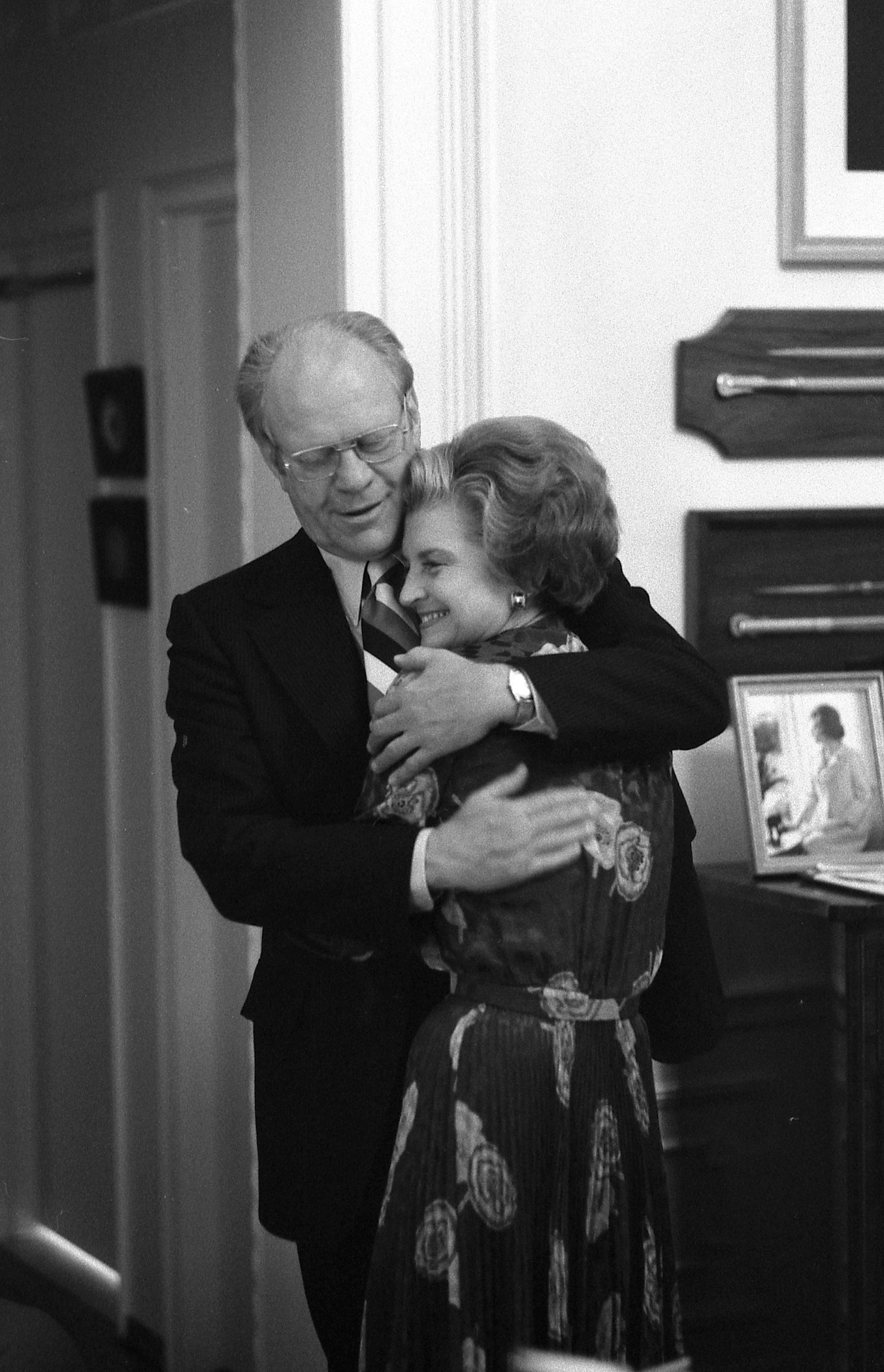
In 1976 you voted inside a steel machine by pulling a lever that closed a curtain behind you, moving small levers beside the names, and pulling the main lever again.
The polling place was a school gym with the basketball hoops winched up. The register was a bound book and the official checking you off was your neighbour. Nothing at all was known until the polls closed. Then the numbers came in by telephone, were chalked onto boards in a courthouse window, and were written by hand onto studio displays on live television.
Here are fifteen things every American household did on election night in 1976, and what became of each one.
1. You Voted Inside a Machine With a Curtain and a Row of Levers
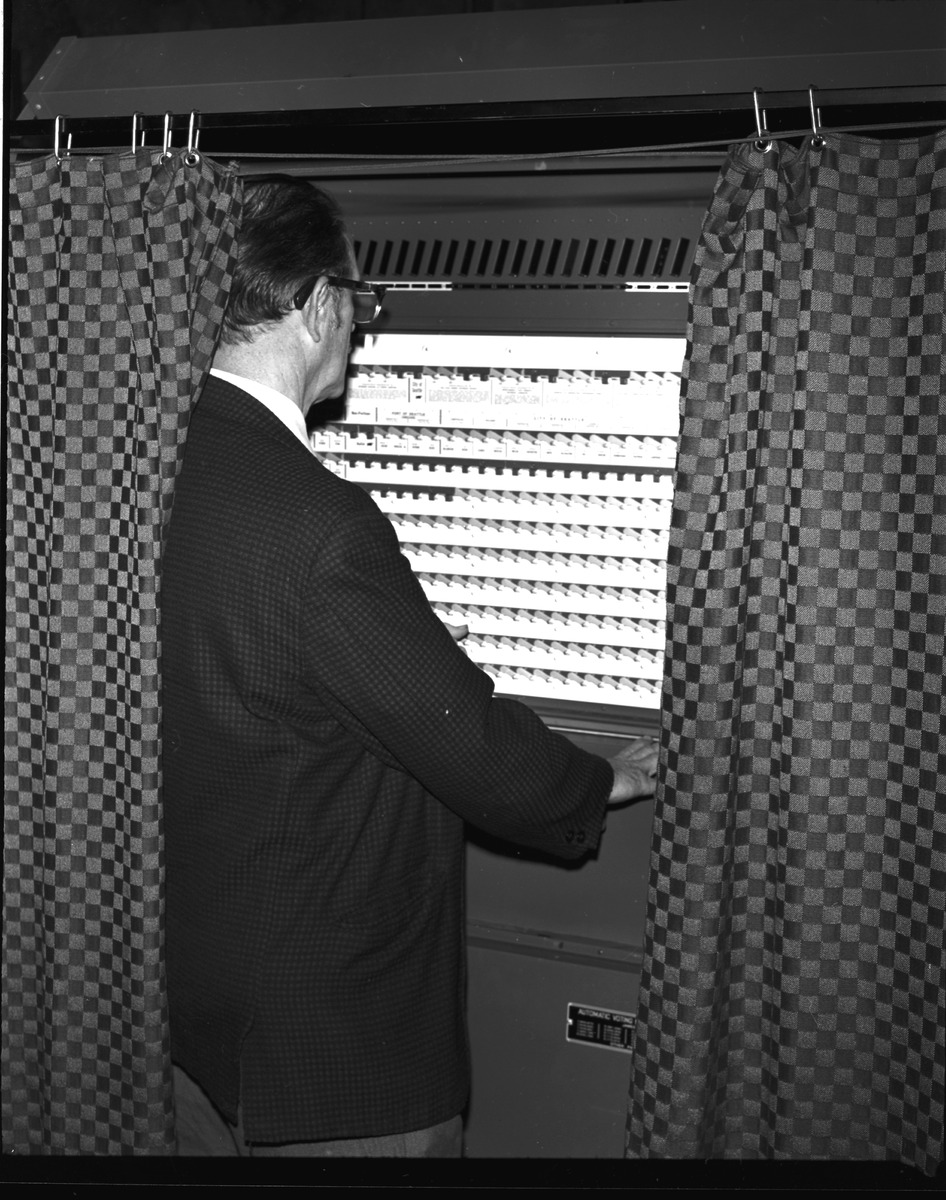
The booth was a steel mechanical voting machine: you stepped in, pulled a lever that closed a curtain behind you, moved small levers beside each name, and pulled the main lever again, which recorded the vote on internal counters and opened the curtain.
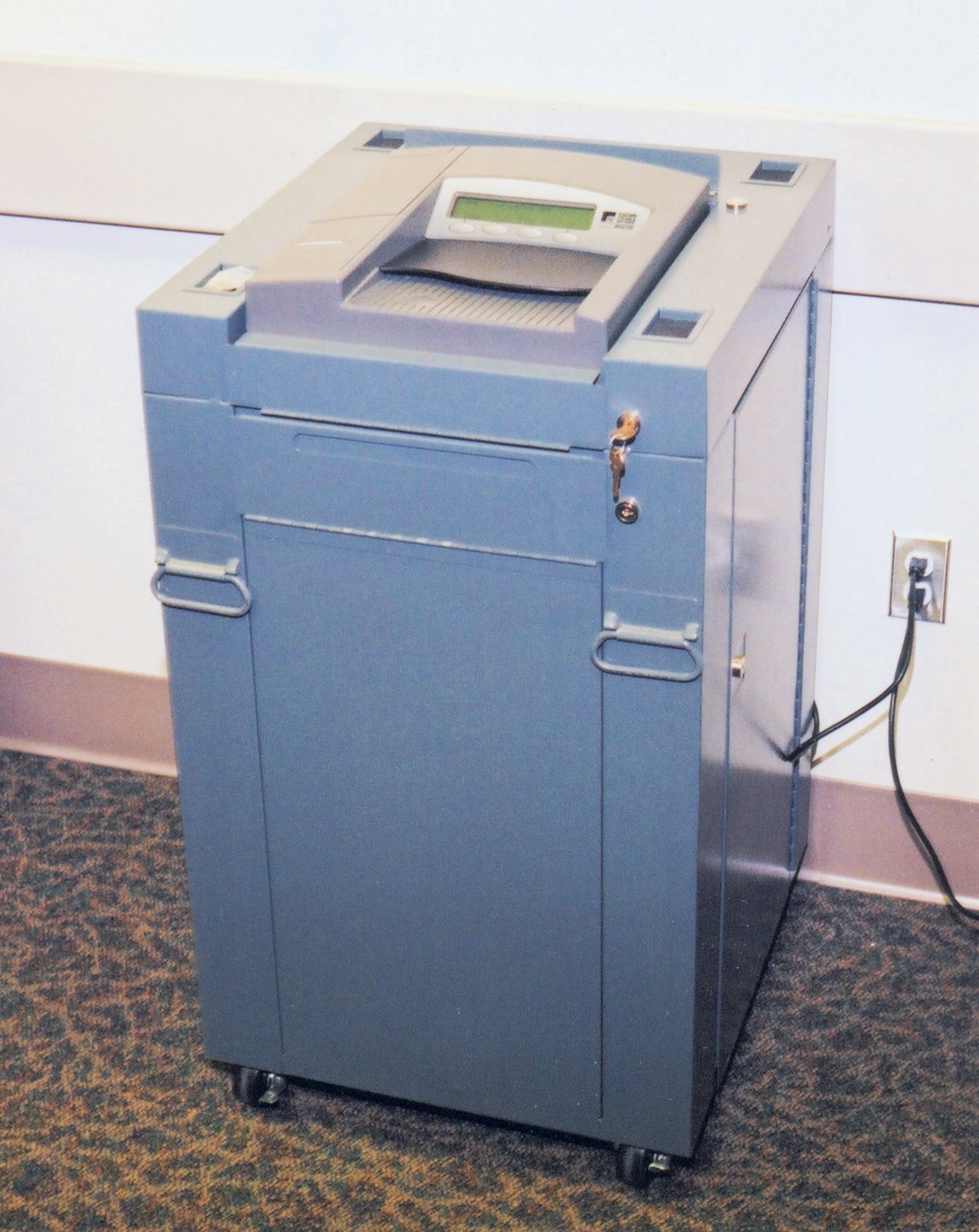
Optical scan paper ballots, marking devices and electronic systems with paper audit trails. The lever machine was entirely mechanical, with no paper record of an individual vote – the counters simply advanced, and the total was read off the back of the machine at the close.
The absence of a paper trail is why they are gone. A mechanical counter can be read and can be wrong, and there is no way to recount anything because no record of individual votes exists – which became an unacceptable property once auditability was understood as essential, whatever the machine’s considerable virtues in simplicity and speed.
Like our content? Follow us for more.
2. The Polling Place Was a School Gym, a Church Hall or a Fire Station
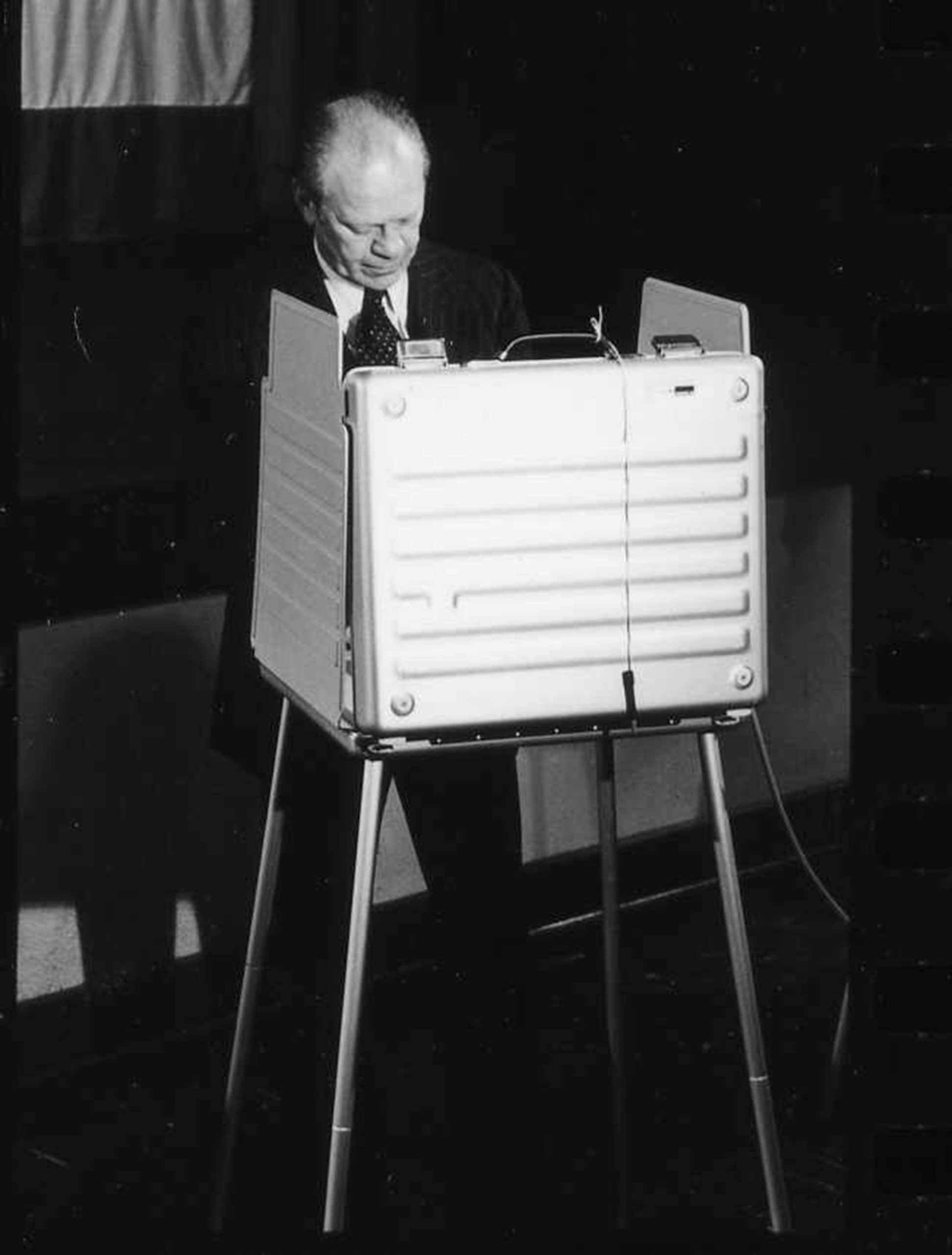
Precincts were sited in whatever public or semi-public building was available – a gymnasium, a church basement, a fire station bay, a library meeting room – with tables, screens and a flag, set up that morning and dismantled that night.
Much the same, with accessibility requirements, equipment security protocols and in a great many places early voting centres and mail ballots that spread the activity across weeks.
Voting in a building you used for everything else was part of the character of it. Casting a ballot in the gym where your children play basketball, with the basketball hoops winched up out of the way, makes the act feel like a civic routine rather than an administrative procedure – and a great many people describe that as the thing they miss most about it.
3. The Poll Workers Were Your Neighbours and Knew You by Name
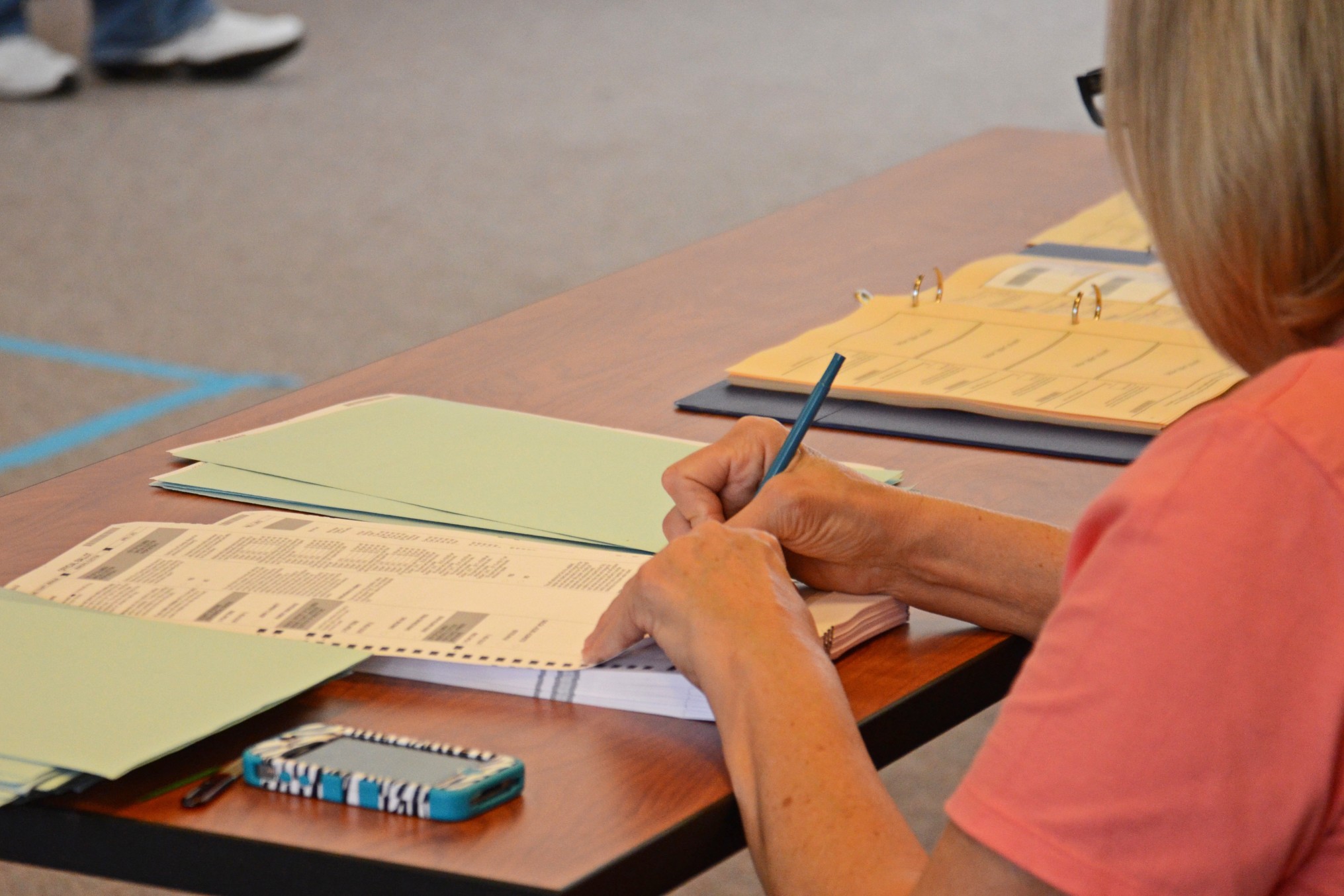
Precinct officials were local residents, frequently the same people year after year, who located your name in a bound register, checked you off by hand, and in a small precinct greeted you without needing to look you up.
Trained election workers with electronic poll books, identity procedures and standardised processes. The bound register was a physical book, annotated in pen, and the official’s local knowledge was part of how it functioned.
It worked on the basis of recognition, which is a strength and a weakness simultaneously. A neighbour who knows you cannot easily be deceived about who you are; a neighbour who knows you also knows that you came, roughly when, and can see the register – and the formalisation of the process since has traded that familiarity for consistency.
4. The Sample Ballot Came in the Newspaper and You Took It With You
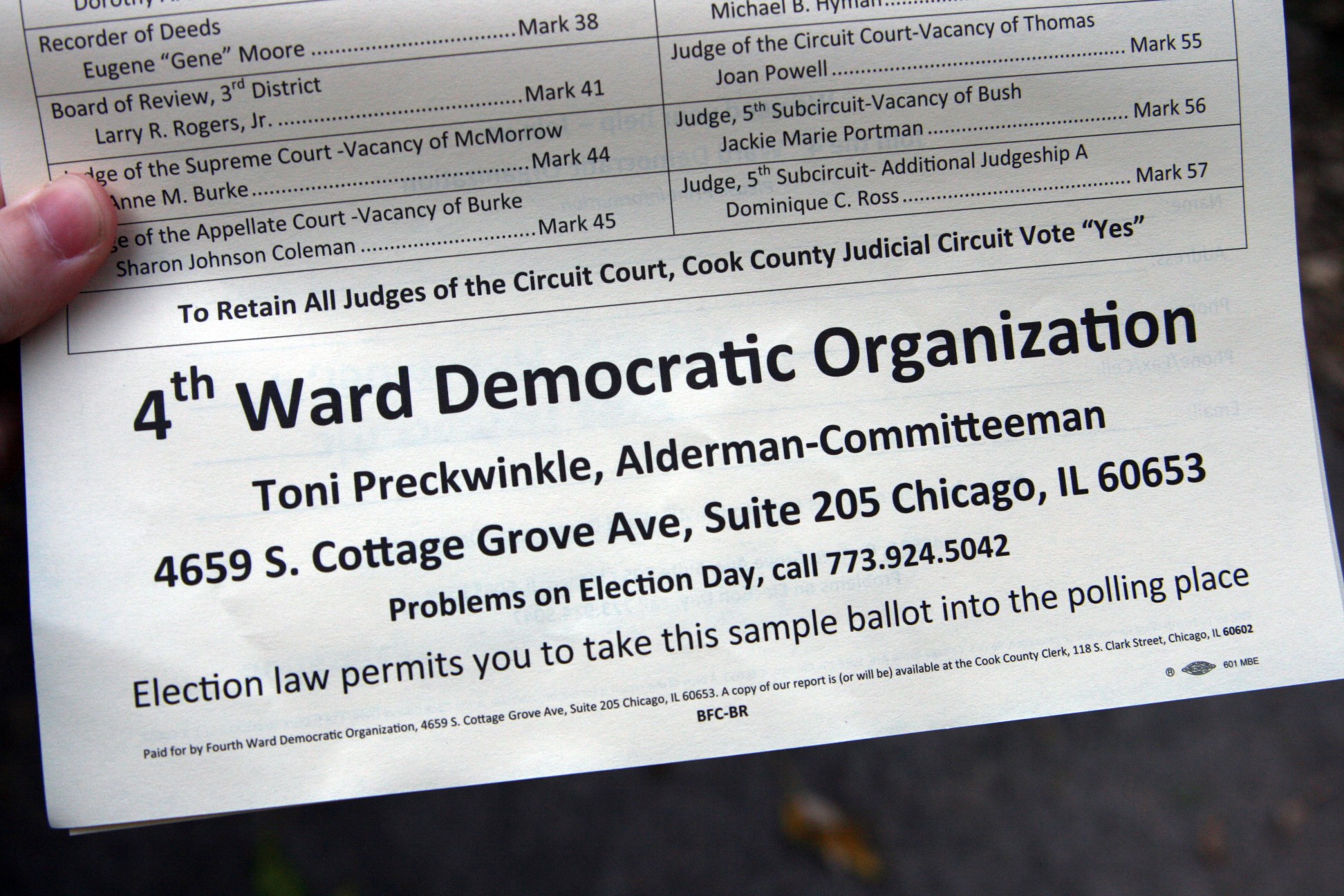
Newspapers printed a facsimile of the ballot in the days before, with every office and every question laid out, and voters cut it out, filled it in at the kitchen table and carried it into the booth as a reference.
Online ballot look-up tools, official sample ballots posted to voters and mobile applications. The kitchen-table preparation was the actual work: a long ballot with many offices, judges and local questions is not something anybody can decide standing in a booth.
That preparation is the part that has thinned rather than improved. The tools are better and more accurate and are used by far fewer people, because a printed ballot arriving in the newspaper reached everybody who took the paper whether or not they had thought about looking – and nothing pushed into a household now has that reach.
5. Everybody Wore the Sticker and It Was the Only Signal There Was
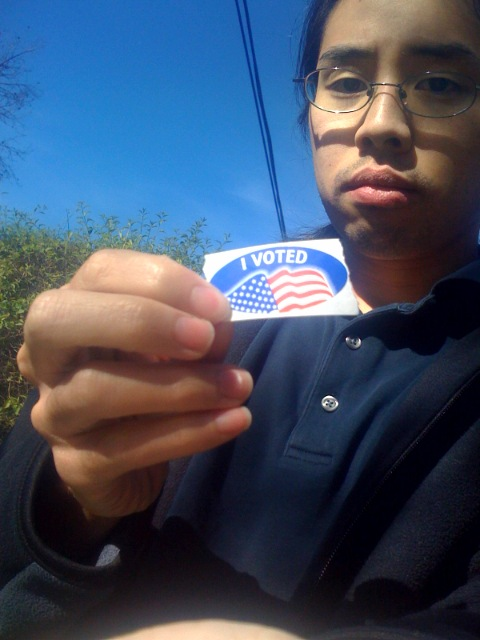
Voters received an adhesive sticker on leaving, worn on a coat or a shirt for the rest of the day, which was the sole visible indication of who had participated.
Still issued, and now substantially supplemented by photographs posted online. The sticker worked as social proof: seeing them accumulate on people through the day was a visible and local measure of turnout.
The mechanism is well understood and the sticker was an early instance of it. People are considerably more likely to do something when they can see that others are doing it, and a town in which half the people in the grocery store are wearing a sticker by five o’clock is applying a gentle and effective pressure to the other half.
6. Nobody Knew Anything All Day and That Was Normal
Through polling hours there was no information – no partial counts, no exit polling available to the public, no commentary on turnout and nothing to look at. The day was simply quiet.
Continuous coverage, live turnout data, published early voting figures and constant commentary from the moment polls open. The silence was not restraint but an absence of means: there was no mechanism to gather or distribute anything until counting began.
The consequence is that the evening had a genuine beginning. Nothing happened until the polls closed, at which point the entire story started at once – which produced a shared national moment that continuous coverage cannot, because a story that has been running all day does not start.
7. The Results Travelled by Telephone From Each Precinct
At the close, precinct officials read the machine counters or counted the paper, recorded totals on a form, and telephoned them to the county seat – where they were written onto boards and tallied by hand.
Electronic transmission with verification, uploaded from the precinct or carried on secured media. The telephone chain meant every result passed through several people speaking and writing numbers, with the transcription errors that implies.
Which is why early figures moved around so much. A number telephoned, written down, added to a running total and read out on air had multiple opportunities to go wrong, and corrections through the evening were routine rather than remarkable – a normal feature of the process that would now be treated as a significant failure.
8. The County Courthouse Posted the Returns in a Window
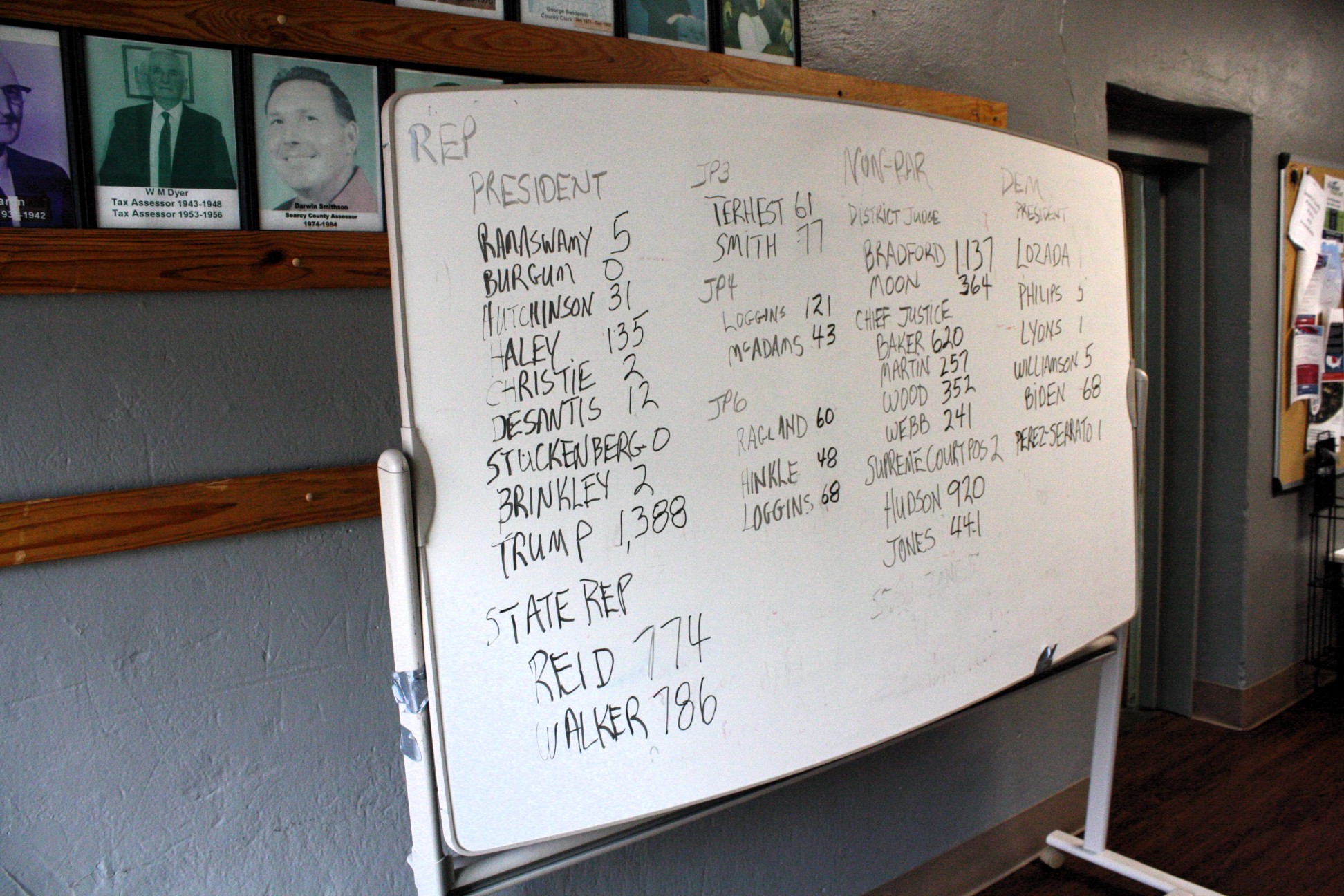
Totals were written on large boards or sheets and displayed in a courthouse or newspaper office window as they came in, with crowds standing outside in the street reading them.
Websites updating continuously. The window display was a genuine public gathering: people stood in the cold for hours watching numbers being chalked up by somebody inside, in company, with the people they lived among.
That is the single most completely lost element of the whole evening. Following results is now a solitary activity conducted on a handheld screen, and the practice of standing in a town square with your neighbours watching the same board has no modern equivalent at all – which changes the experience of a national event from a shared one into an individual one.
9. Television Coverage Used Physical Boards Written On by Hand
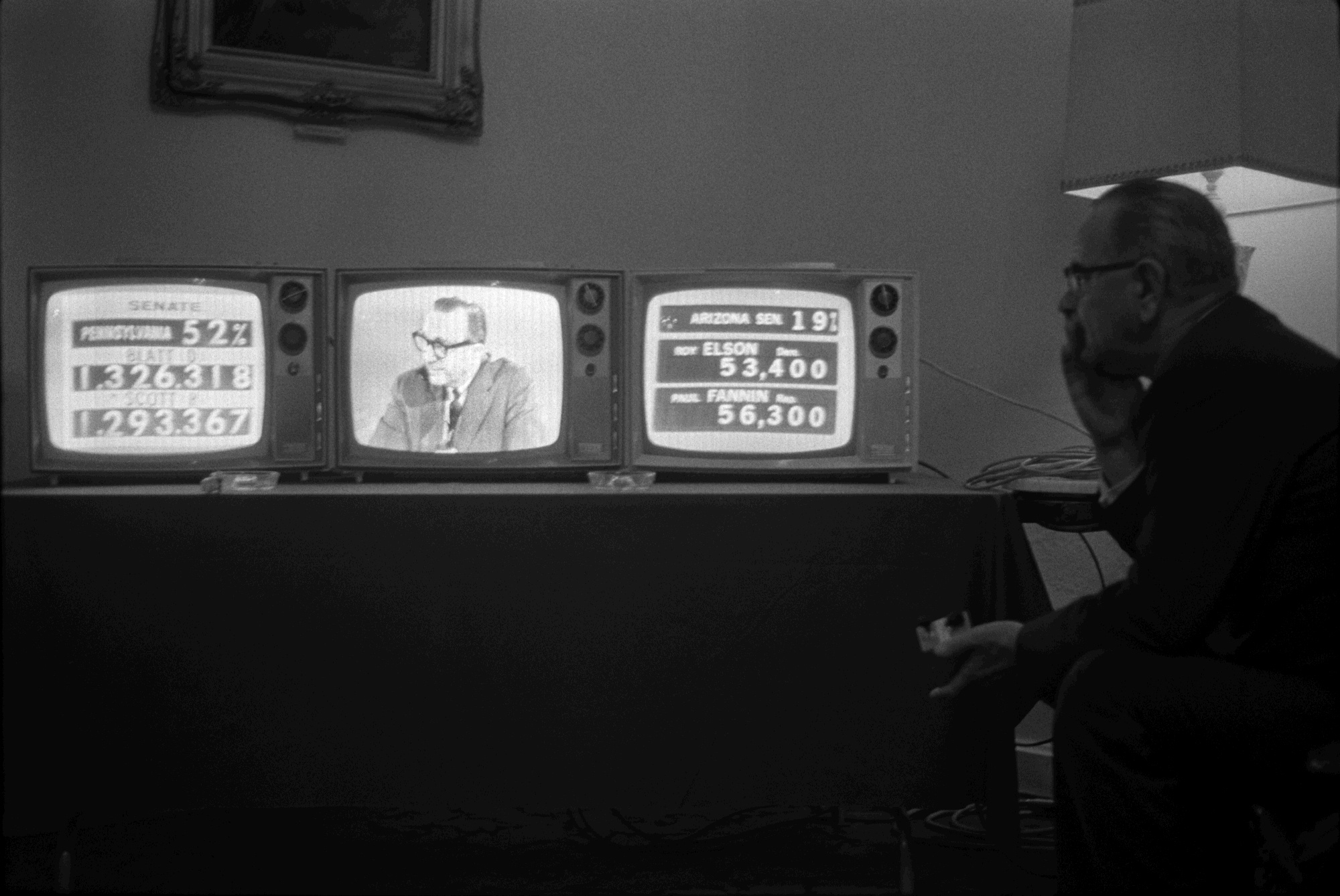
Studio sets were built around enormous display boards – painted grids of states and offices – with numbers chalked, marked or slotted in by technicians working behind and beside them, visible on camera.
Real-time graphics generated from live data feeds. The boards were a logistical operation: people receiving figures and physically writing them in, continuously, for hours, in the correct cells, on live television.
The errors were therefore visible and occasionally funny. A number written in the wrong box, a technician’s arm across the shot, a board that had to be corrected on air – all part of the broadcast, and all evidence that what you were watching was a room full of people doing arithmetic rather than a system reporting itself.
10. The Anchors Did the Arithmetic Out Loud
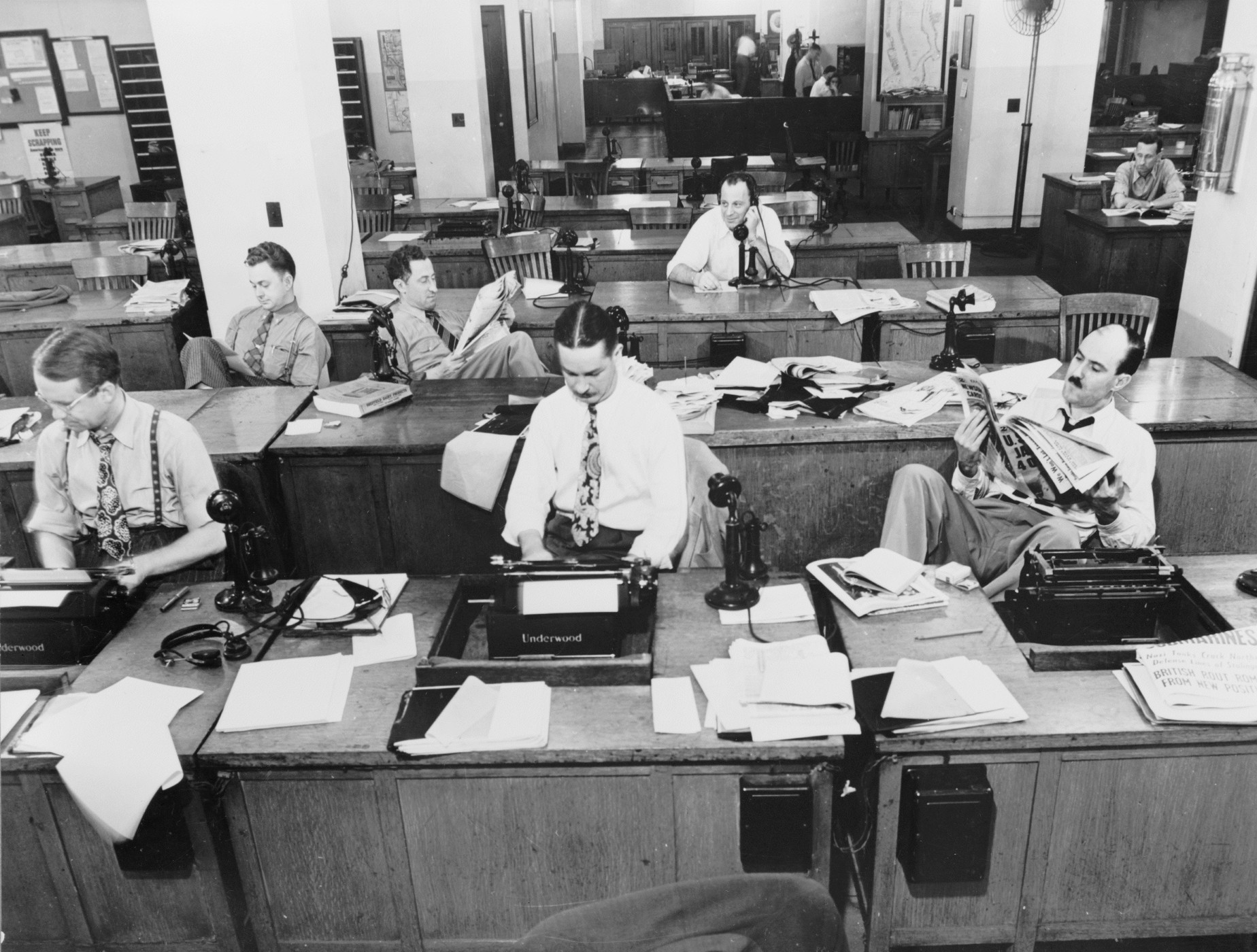
Presenters worked through the numbers on air – percentages reported, precincts outstanding, what a given county’s remaining vote would have to do – with paper, pencils and in some cases a slide rule or an adding machine on the desk.
Instant computation, projection models and probability displays generated automatically. The on-air reasoning was explicit: the audience heard the calculation rather than being shown a conclusion.
There is a real argument that this was better for the viewer regardless of how slow it was. Watching somebody reason from incomplete figures towards a cautious conclusion teaches you how the inference works and where it might fail, whereas a probability figure on a screen is a verdict with the reasoning removed – and audiences have become correspondingly less tolerant of uncertainty.
11. Nothing Was Called Until Very Late by Modern Standards
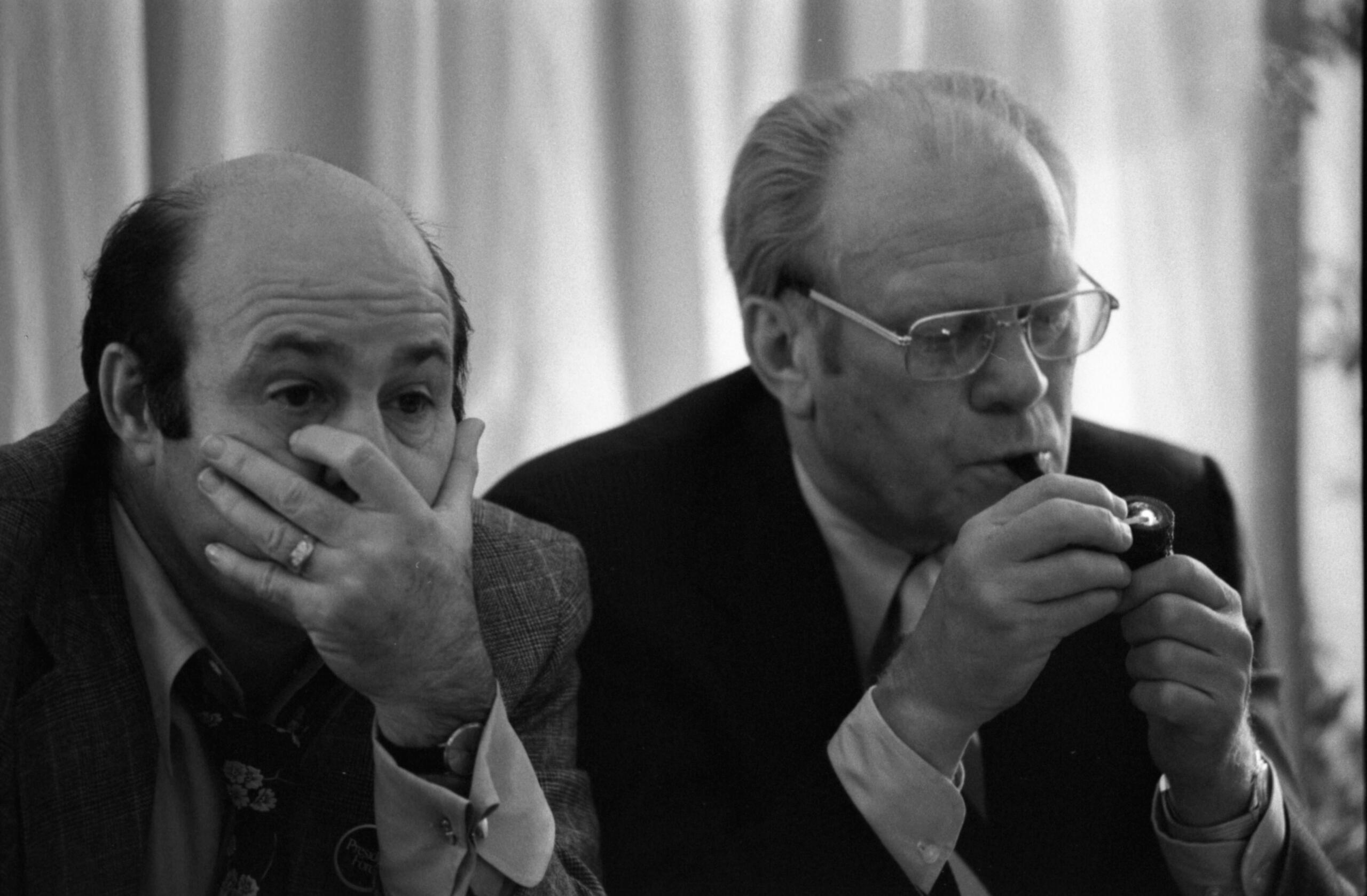
Broadcasters waited for substantial proportions of the vote to be counted before characterising a result, and declining to call a close contest for hours was normal and uncontroversial.
Statistical models call outcomes on small samples of counted vote combined with pre-election and exit data, frequently within minutes of a poll closing. The caution was partly methodological and substantially technological: without models there was nothing to call from except counted votes.
The trade-off is genuine and is still argued about. Faster calls inform people sooner and have occasionally been wrong in highly consequential ways, while slow calls left audiences uncertain for hours but could only be wrong about votes that had actually been counted – and which of those failure modes is worse is not a settled question.
12. Children Were Allowed to Stay Up, and It Felt Enormous
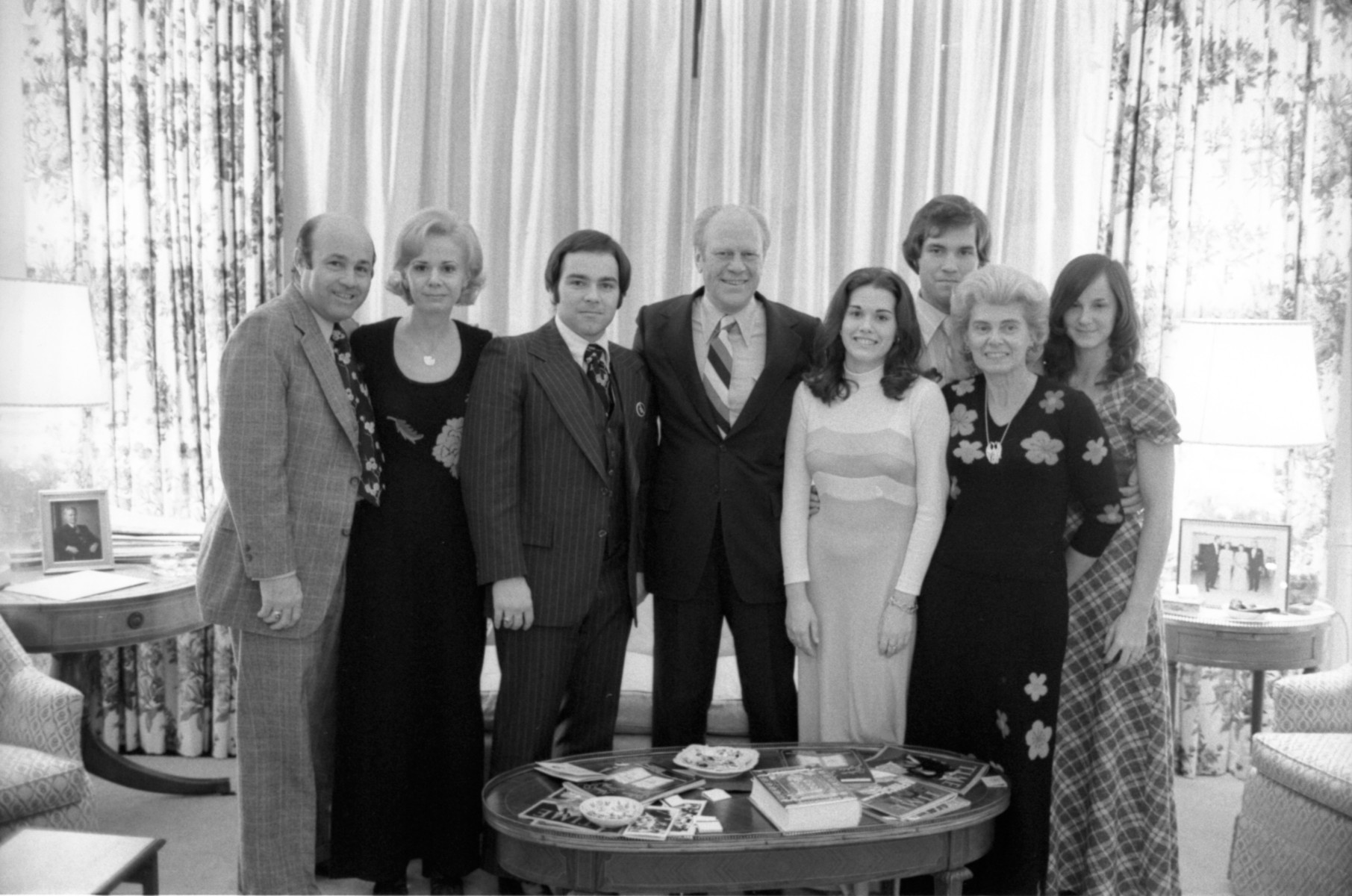
Election night was one of the two or three occasions a year when ordinary bedtime was suspended, and children sat up with the adults watching boards being filled in and numbers read out.
Results are checked on a phone in the morning. The permission to stay up is what fixed the evening in memory for an entire generation of children who understood almost nothing of what was happening.
That is worth noticing as a civic mechanism nobody designed. A child who sits up late with their family watching a national count, repeatedly through a childhood, acquires a sense that the thing is important without being taught it – and a result checked alone on a screen the next morning transmits nothing to anybody.
13. The Radio Carried It Where the Television Signal Did Not
In rural areas and in households without a set, coverage came by radio – local stations reading county returns, national networks carrying the broader picture, and continuous updates through the night.
Streaming and mobile data reach essentially everywhere. Radio coverage was frequently more locally detailed than television, because a local station read out the county and township numbers that no network would mention.
That local granularity has largely gone. National coverage reports states and national totals; the township result that actually tells a community about itself was read out on local radio at eleven o’clock at night by somebody who knew the places involved, and finding the equivalent now requires deliberately seeking out a county website.
14. The Morning Newspaper Was the Record and People Kept It
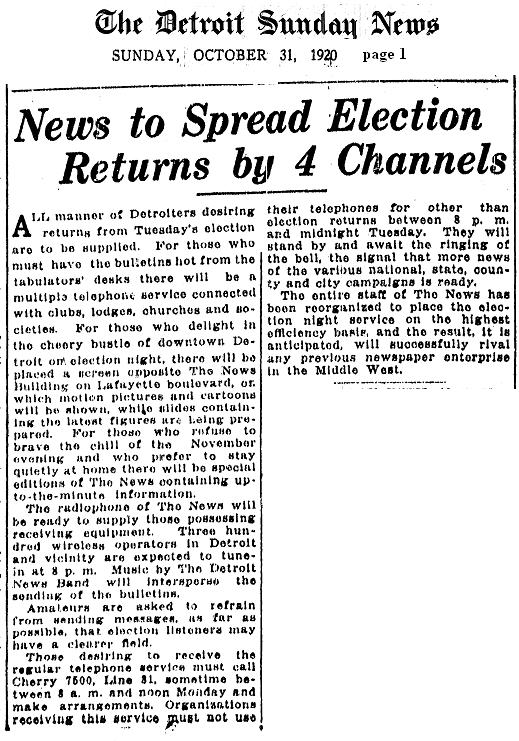
The following morning’s paper carried the results in full – every office, every county, in tables – and households kept copies of editions covering results they wanted to remember.
Digital archives, official certified results and online databases, all more complete and more accurate. The newspaper was the authoritative household record and was treated as such, folded into drawers and attics.
Those kept copies are now a genuine archival resource and a slightly poignant one. A newspaper saved by a household in 1976 was saved because somebody thought the night mattered, and it survives in attics in considerable numbers – which is more than can be said for any screenshot anybody has taken since.
15. Then It All Moved Onto a Screen You Check Alone
The evening was built from physical components: a machine with a curtain, a register in a book, a sticker, a telephone call, a board in a window, a hand-written studio display and a newspaper in the morning.
Every one of those has been replaced by something faster, more accurate and more auditable. Results are transmitted electronically, modelled statistically, displayed instantly and archived permanently, and the improvement in accuracy, accessibility and verifiability is not in question.
What has gone is the collective part. The booth, the gym, the neighbour with the register, the crowd at the courthouse window and the family staying up together were all occasions on which a person participated in something alongside other people they could see – and the same information now arrives faster, better and privately, which is a trade almost nobody noticed making.
Everything Got Faster and Better, and It Stopped Being Something You Did Together
Take the improvements first, because they are real and they are not close.
Mechanical lever machines left no record of individual votes, so nothing could be recounted – the counters simply advanced and were read off the back. Results were telephoned from precincts, transcribed by hand several times, and added up by people, which is why early figures moved around all evening and corrections were routine. Studio numbers were physically written onto painted boards by technicians. Nobody could verify very much of any of it.
Everything since has been better. Paper trails and auditable systems, electronic transmission with verification, instant computation, permanent archives, accessibility requirements, and results anybody can check against certified official totals. On accuracy, auditability and access the modern arrangement wins completely.
Now look at what every single element on that list had in common.
You went to a building you used for other things, where somebody you knew found your name in a book. You stood in a machine with a curtain. You came out with a sticker that everybody could see, and all day you watched them accumulate on people in the grocery store. In the evening you stood in the street outside the courthouse with your neighbours, in the cold, watching a man inside chalk numbers onto a board. Or you sat up with your family, children included, watching people on television do arithmetic out loud for five hours.
Every component was collective. Not as a design goal – nobody intended it – but because the technology of the time could not do any of it privately. Information moved through people, and so people had to assemble.
Now it is faster, more accurate, verifiable, archived and entirely solitary. You check a screen. The sticker is photographed rather than seen. The crowd at the window does not exist. The children are asleep.
Which is not an argument against any of the improvements, because the improvements concern whether the count is right and that matters more than atmosphere. It is only worth noticing that an evening which used to require a town to gather in several places now requires nobody to leave a chair – and that the thing a generation of children absorbed by being allowed to stay up is not being transmitted by anything.
If you were a child then, you were allowed to stay up, and you remember the boards far better than the result.
And somewhere in a family attic there is a newspaper from the following morning.
Like our content? Follow us for more.