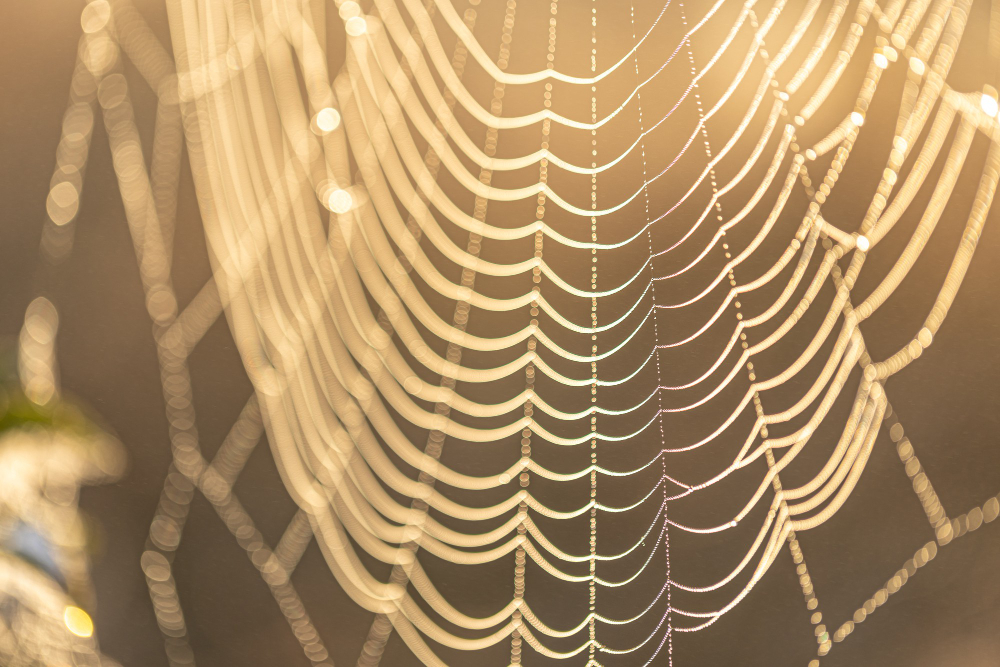
There is a category of biological material that outperforms engineered equivalents, and the interesting question is usually not the material but the manufacturing.
Silk is the clearest example. The properties are exceptional and well characterised. Various laboratories have produced the constituent proteins. Reproducing the fibre has proved far harder than reproducing the ingredients.
The reason is that the material is not simply a substance. It is a substance that has been processed in a particular way, at a particular rate, under particular conditions, and the properties come from that processing as much as from the composition.
That is a common situation in materials and it is easy to miss, because the finished object looks like the result of a recipe rather than the result of a process.
There is a measurement caution worth stating first. Figures quoted for silk vary substantially between studies, because they depend on which silk, from which species, tested at what rate, under what humidity – all of which affect the result.
Comparisons between silk and engineered materials are therefore approximate unless the conditions are specified, and popular figures rarely are.
What Makes It Remarkable
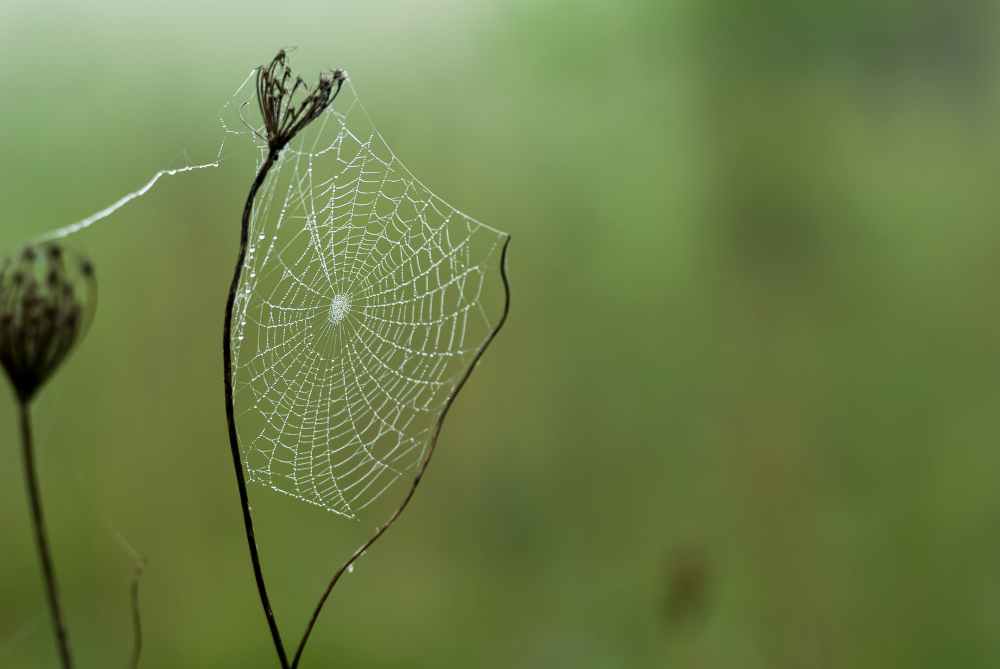
The properties are worth stating carefully because they are frequently reported in misleading ways.
Silk is strong, in the sense that it takes a substantial force to break a strand relative to its cross-section — comparable to steel by that measure, which is the comparison usually quoted.
More importantly, it is extensible. It stretches a long way before failing, which steel does not.
The combination is what matters. The energy a material absorbs before breaking is roughly the force multiplied by the distance it stretches, and silk scores well on both — so it absorbs more energy per unit mass before failing than steel or most engineered fibres.
That property is toughness rather than strength, and it is the relevant one for a web, which must stop a flying insect without breaking and without throwing it back out.
The comparison with steel is therefore accurate and incomplete. Silk is not stronger than steel in every sense; it is tougher by weight, which is a different and more useful claim.
Like our content? Follow us for more.
The Spinning Process
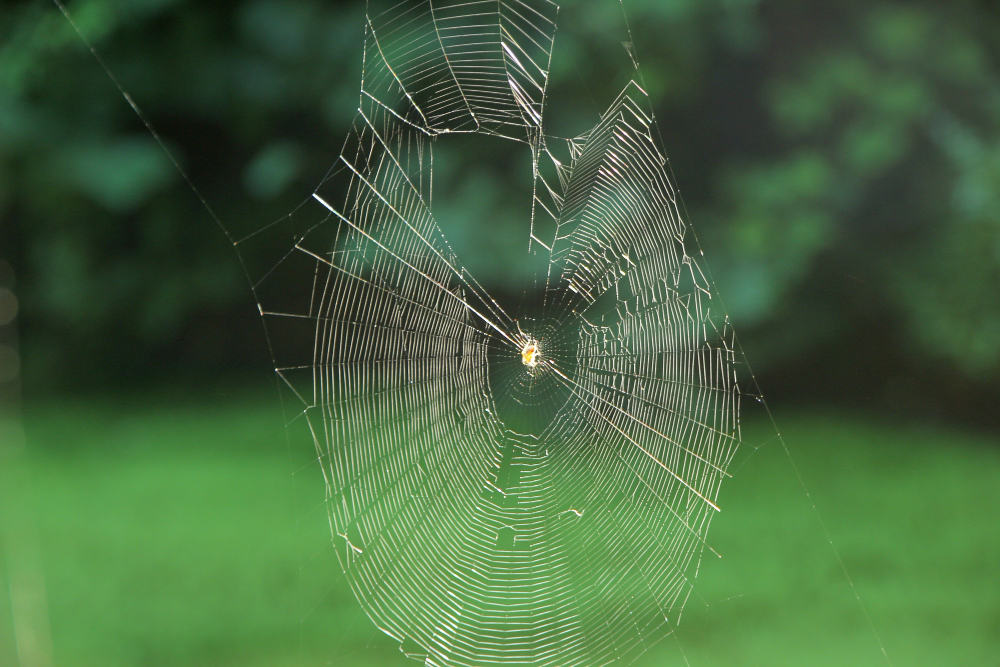
The manufacturing is where the difficulty lies, and it involves several things happening in sequence very quickly.
The protein is stored as a highly concentrated liquid, in a state that would normally cause it to solidify — and does not, because it is held in a specific arrangement that keeps the molecules from linking.
As it moves along a narrowing duct, several conditions change together. Acidity increases. Certain ions are removed and others added. Water is drawn out. And the fluid is subjected to increasing shear as it accelerates through the narrowing channel.
Those changes together cause the protein molecules to align along the direction of flow and begin linking to one another, converting the liquid into a solid fibre in the process of leaving.
The alignment is the key. The molecules end up oriented along the fibre rather than randomly arranged, which is what produces the strength — and the alignment is created by the flow itself rather than by any subsequent treatment.
That is why it is difficult to copy. Producing the protein is chemistry; producing the fibre requires reproducing a process involving simultaneous changes in chemistry, water content and mechanical stress, in the right order, at the right rate, in a duct of the right shape.
Several Different Silks
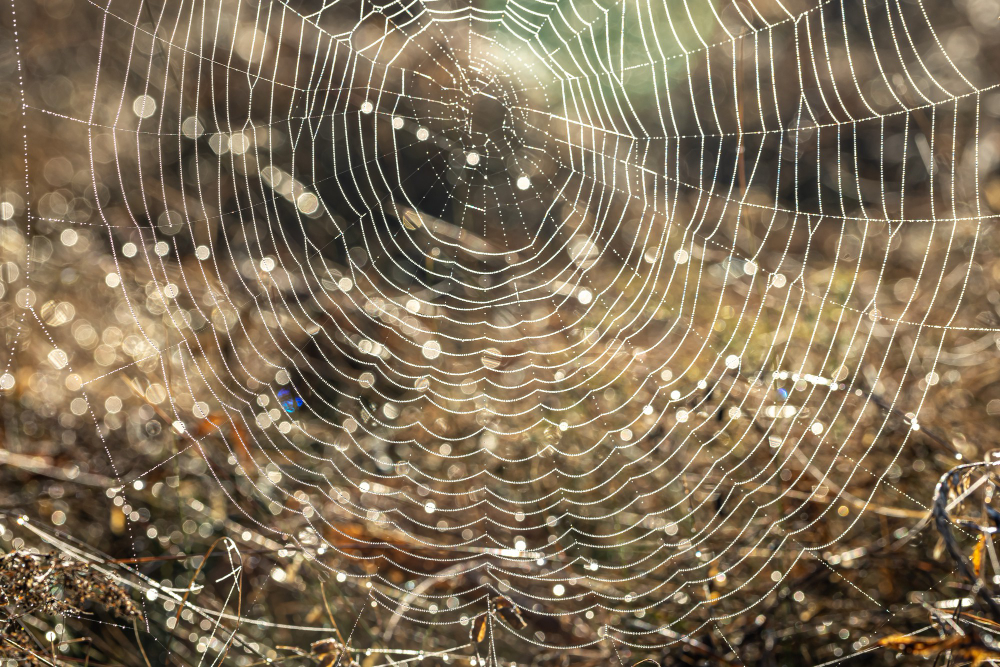
A detail that is frequently missed is that a spider does not make one material.
Different glands produce different silks with different properties, and a single animal may produce several — one for the frame of a web, one for the spiral, one for wrapping, one for a safety line, one for an egg case.
Those differ in composition and in properties. The frame silk is stiff and strong; the capture spiral is far more extensible and is coated to remain sticky; the wrapping silk is different again.
That means comparisons need to specify which silk is being discussed, and the figures quoted in popular accounts generally refer to the strongest type.
The capture spiral has a further refinement worth mentioning. It remains extensible and under tension partly through a mechanism involving droplets along its length, which take up slack as the thread stretches and releases — an arrangement that keeps the thread taut without any active adjustment.
What the Web Is Doing
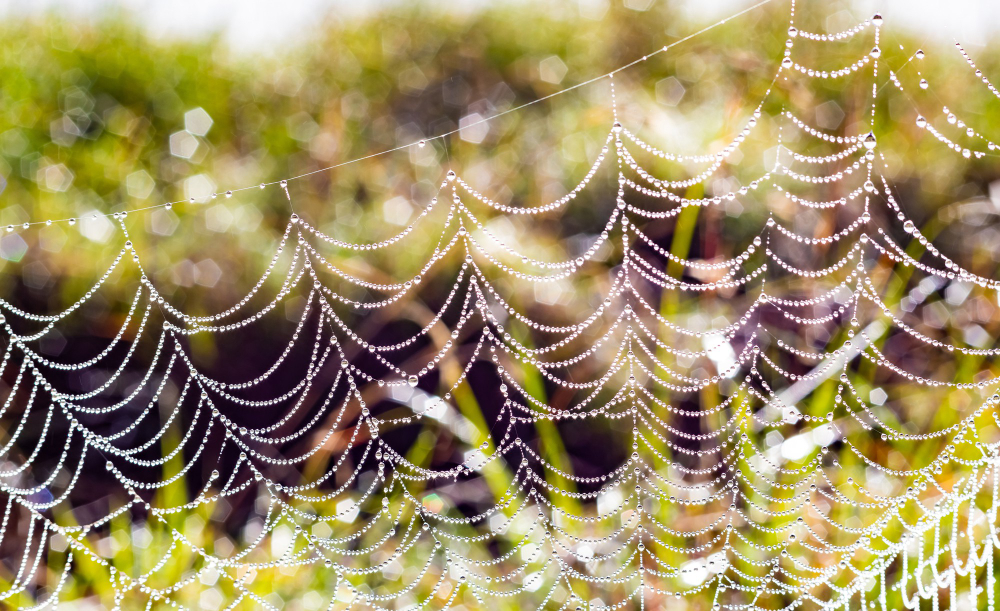
The structure the silk is used in is worth a section, because the material properties only make sense in relation to the job.
A web has to do several things simultaneously. It must intercept a fast-moving insect, absorb its kinetic energy without breaking, avoid throwing it back out, and hold it until the spider arrives.
Absorbing energy without breaking is the toughness requirement, and it is why extensibility matters as much as strength. A stiff strong material would stop the insect and rebound it.
Not throwing it back is a damping requirement, which is different again. The silk must dissipate the energy rather than storing and returning it, and the structure of the material allows that.
Holding it requires adhesion, which is a separate silk with a coating, and the coating must remain sticky in varying humidity without drying out.
And the web must survive wind, rain and debris without failing, which means the frame silk has different requirements from the capture silk — stiffer, stronger, less extensible, since a frame that stretches would let the whole structure sag.
That is at least four distinct material specifications in one structure, met by producing different silks from different glands and assembling them in a particular arrangement.
Which is the part that gets lost when silk is discussed as a single wonder material. It is a set of materials, each optimised for one job, used together — and copying any one of them still leaves the problem of the other three.
Why Farming It Does Not Work
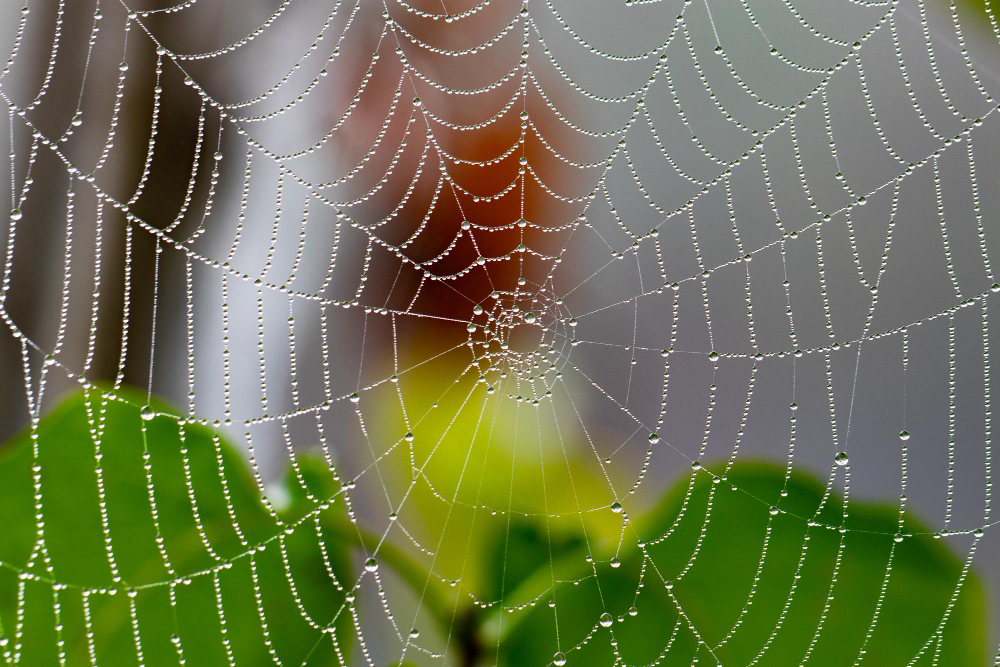
The obvious approach to obtaining silk is to keep the animals, and the reasons this fails are instructive.
Spiders are territorial and predatory toward one another, which means keeping them at density produces losses rather than production.
The quantity per animal is very small, so obtaining any useful amount requires enormous numbers.
And the silk cannot be reeled continuously in the way that some other silk-producing organisms allow, because the animal produces it on demand rather than continuously.
Attempts have been made, historically and recently, and have produced remarkable demonstration objects at enormous cost in labour and time — which establishes that it is possible and confirms that it is not practical.
That is why the effort has gone into producing the protein by other means and spinning it artificially, rather than into keeping the animals.
Several Different Silks Doing Different Jobs
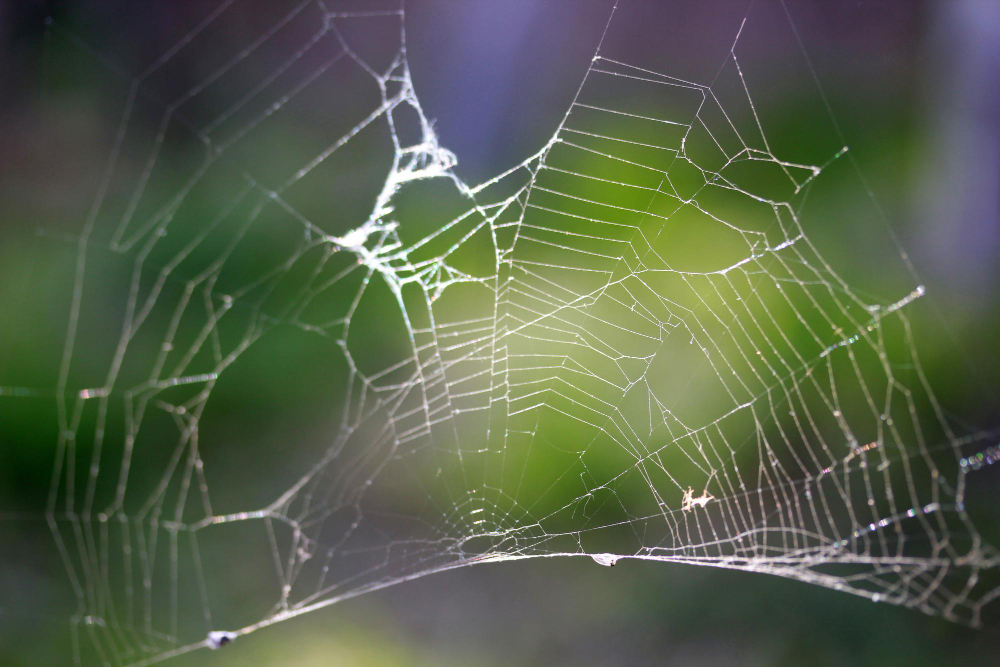
One further point belongs here. Because a spider produces several silks with different properties, any attempt to replicate the material must specify which one – and an artificial fibre matching the frame silk does not address the capture silk at all.
That multiplies the problem. Commercial interest has concentrated on the strongest type, which means the extensible and adhesive varieties have received far less attention despite being equally remarkable.
Where the Artificial Version Has Got To
The current position is worth describing accurately, because it is frequently overstated in both directions.
Producing the constituent proteins is achieved, by several routes, and is no longer the obstacle.
Spinning those proteins into fibre is possible, and the fibres produced have improved substantially over time.
They do not yet match natural silk across all properties simultaneously. A given artificial fibre may match on one measure and fall short on others, and matching the combination is the remaining difficulty.
The obstacles are understood rather than mysterious: reproducing the precise sequence of conditions in the duct, at the right rate, with the protein in the right initial state, is an engineering problem of considerable difficulty.
Progress is real and continuing, and claims that the problem is solved are premature while claims that it is impossible are unfounded.
What the case demonstrates is worth carrying beyond silk. A material’s properties may depend as much on how it was made as on what it is made of — and copying the composition while missing the process produces something that is chemically correct and mechanically disappointing.
Which is a reasonable description of a great many attempts to imitate biological materials, and the reason the manufacturing turns out to be the hard part far more often than the chemistry.
And it explains why the animal remains the only reliable producer. Everything about the fibre – the composition, the processing, the multiple varieties and their assembly – is integrated in a way that reproducing any single component does not approach.
Like our content? Follow us for more.