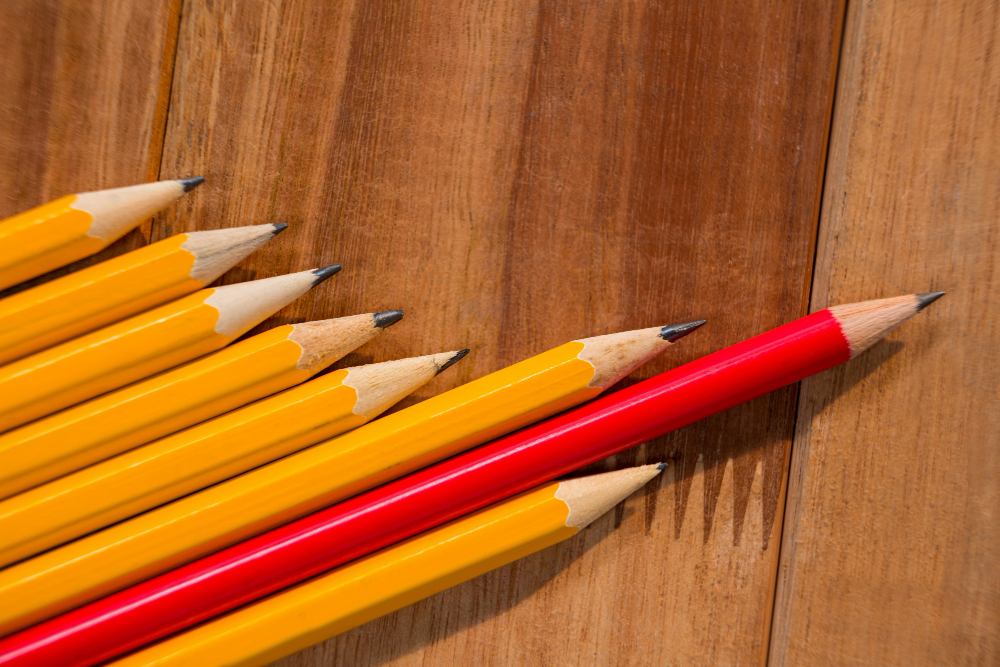
There is a class of everyday object where the design solves a problem so completely that the problem becomes invisible, and the pencil is a good example.
The problem is that the marking material is extremely soft. That softness is why it works — it is what allows it to leave a trace when drawn across paper — and it means the material cannot be used on its own in any practical way.
A stick of the raw substance would crumble, mark everything it touched, break under any pressure and coat the hand of whoever held it.
Almost everything about a pencil is an answer to that, and the answers were worked out over several centuries.
There is a terminology note worth setting out first. The marking component is universally called the lead, the instrument is named after it, and neither has ever contained the metal – which makes this one of the more durable misnomers in any language.
The rest of the article uses core rather than lead, which is what the trade calls it.
What the Material Actually Is
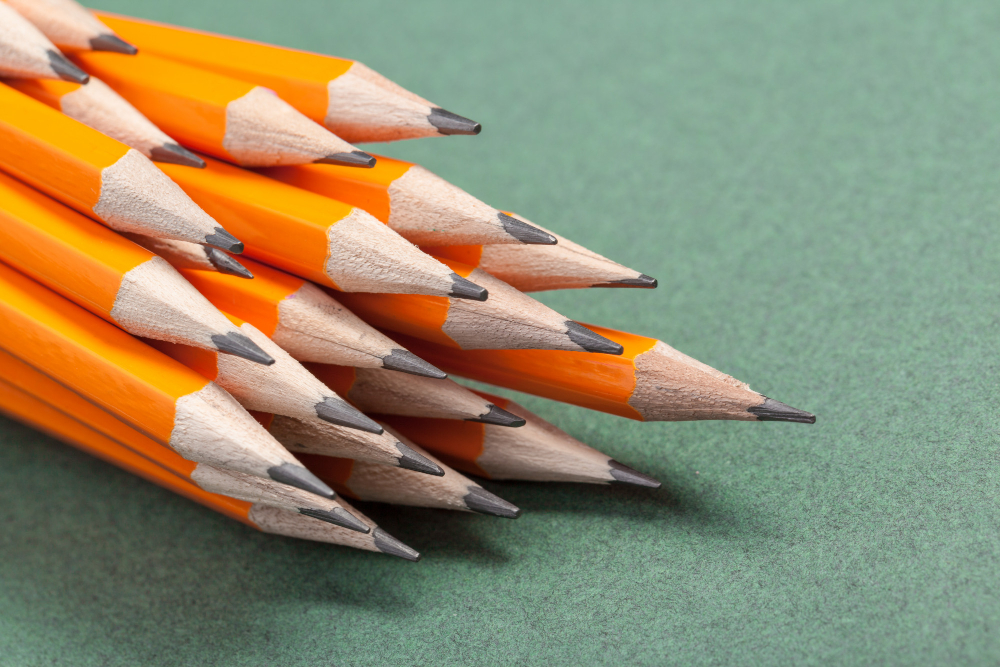
The chemistry explains both the usefulness and the difficulty.
Graphite is carbon arranged in flat sheets, with strong bonds within each sheet and very weak ones between them.
That structure means the sheets slide over one another readily, which makes the material soft, slippery and useful as a lubricant as well as a marker.
Drawing it across paper detaches sheets, which adhere to the fibres — so a pencil mark is a layer of material transferred rather than anything absorbed or chemically fixed.
That is why pencil can be erased. The material is sitting on the surface rather than bonded to it, and it can be lifted off.
And it is why pencil marks are durable in a different way from ink. There is nothing to fade chemically, nothing to run, and nothing that requires the paper to accept a liquid — which is why pencil is used where permanence under poor conditions matters.
Like our content? Follow us for more.
The Naming Mistake
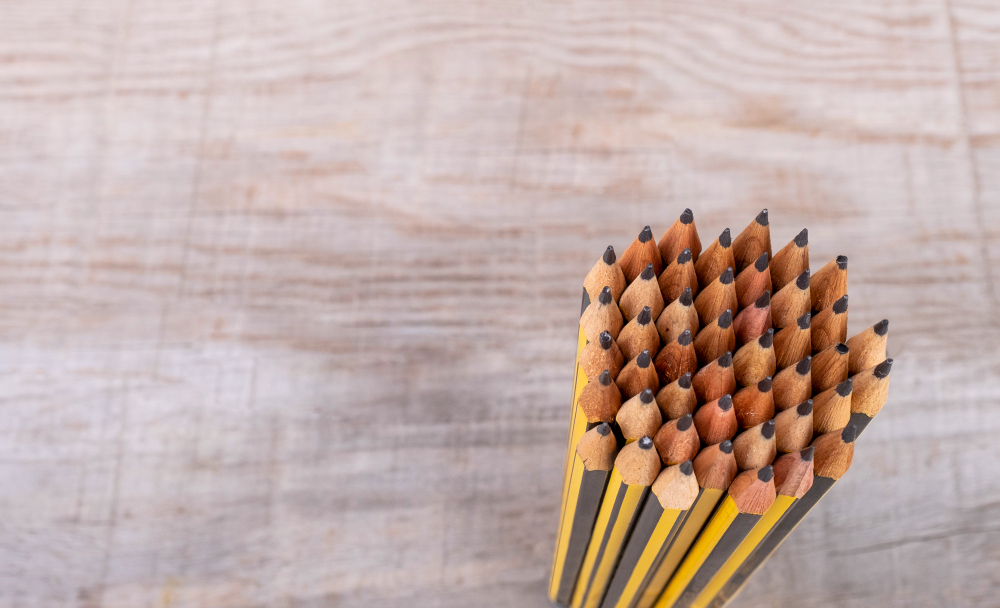
The misidentification has a specific history and it stuck.
A substantial deposit of unusually pure graphite was discovered, and the material was initially taken to be a form of lead — a reasonable error at the time, given that both are grey, soft, heavy-feeling and leave marks.
The name attached to the material and then to the writing instrument made from it, and survived the correction.
That has a practical consequence worth stating clearly: there is no lead in a pencil, there never was, and the concern people occasionally express about it is based entirely on the name.
The wooden casing was historically painted with various materials, and that is a different matter belonging to the history of paint rather than of pencils.
Solving the Softness
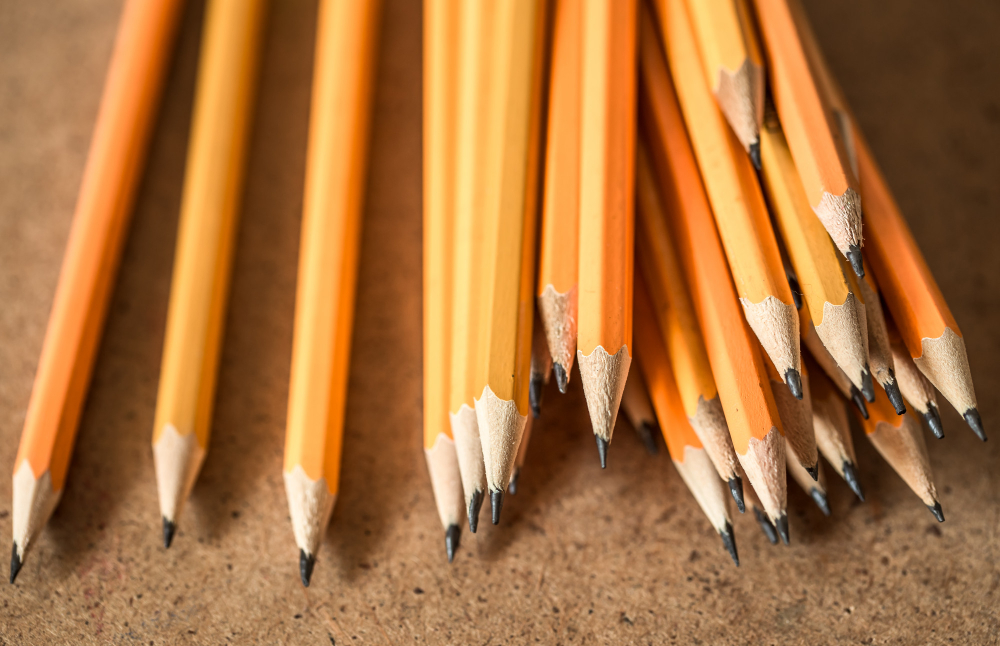
The engineering developed in stages, and each stage addresses the same problem.
The earliest approach was to use the material as found — sawn into sticks and wrapped in string or cloth to keep it off the hand.
Enclosing it in wood was the substantial improvement. A groove cut in a strip of wood, the graphite laid in, and a second strip glued over it produces a protected core that can be sharpened as it wears.
That arrangement solves several problems at once: it supports the brittle core along its length, it keeps the material off the hand, it provides something comfortable to hold, and it allows fresh material to be exposed by removing wood.
The remaining problem was supply. Pure natural graphite suitable for writing was scarce, and the deposits that existed were controlled and eventually exhausted.
There is a supply detail worth adding. The scarcity of usable natural graphite made it valuable enough to be smuggled, guarded and controlled, and access to a good deposit was a commercial advantage of real significance.
That is difficult to imagine now for a material used in the cheapest disposable objects on any desk.
The Process That Made It Ordinary
The solution to scarcity is the key development and it transformed the object.
Rather than using natural graphite in solid form, the material is ground to powder, mixed with clay, formed into rods and fired.
That process does two things. It allows lower-grade graphite to be used, since the material is being reconstituted rather than carved, which solved the supply problem entirely.
And it makes hardness controllable. The ratio of clay to graphite determines how hard the finished core is — more clay gives a harder core leaving a lighter mark, more graphite gives a softer core leaving a darker one.
That is the origin of the grading systems used since, and it means the range of pencils available is a consequence of a manufacturing method rather than of different materials.
Firing also makes the core stronger than natural graphite, which reduces breakage substantially.
There is a point about sharpening worth adding. Removing wood to expose fresh core is the only maintenance a pencil requires, and it consumes the object – which means a pencil has a definite finite life measured in how many times it has been sharpened.
That is unusual. Most writing instruments are refilled or replaced; a pencil is progressively used up by the act of keeping it working.
The Parts Everybody Ignores
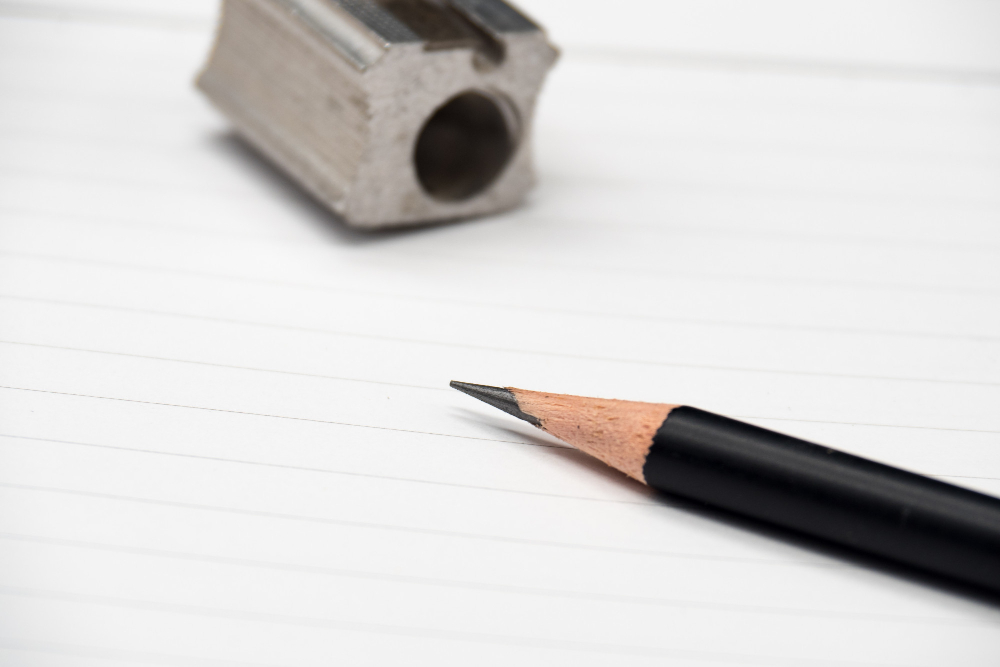
Several details of the finished object are more considered than they appear.
The wood is chosen for specific properties: it must be soft enough to sharpen cleanly without splintering, straight-grained enough to split evenly, and stable enough not to warp and crack the core inside it.
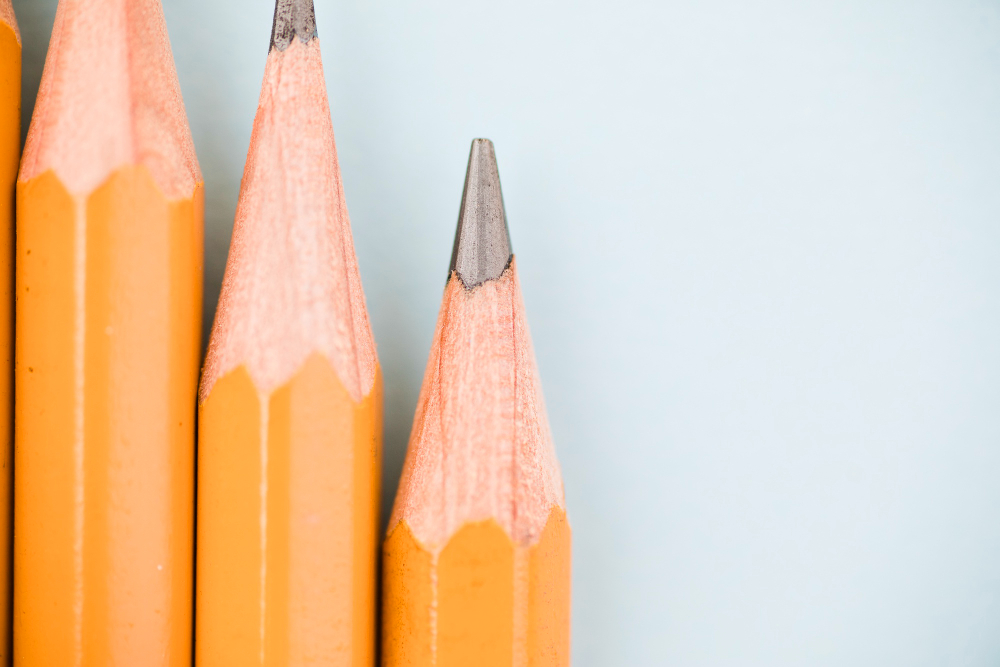
The hexagonal cross-section that most pencils have prevents rolling off a surface, uses material efficiently when cut from a block, and provides flat faces for printing.
Round pencils exist for specific uses where rotation in the hand is wanted, and triangular ones for grip.
The core is glued into the wood along its full length, without which it would break into pieces inside the casing at the first drop — and a dropped pencil frequently does exactly that, which is why one may break repeatedly at every sharpening afterwards.
And the eraser on the end, where present, is a later addition that was not universal and remains a regional preference rather than a standard feature.
The Marks It Leaves
The behaviour of the mark itself is worth examining, because it explains several practical properties.
A pencil line is a layer of loose material sitting on the surface of the paper, held mechanically by the fibres rather than bonded to them.
That means the darkness of a line depends on how much material has been transferred, which depends on pressure, on the softness of the core and on the texture of the paper. The same pencil on different papers produces noticeably different results.
Paper with more surface texture removes more material and produces a darker line; very smooth paper removes less and produces a lighter one, which is why some papers are described as suiting particular grades.
Erasing works by the eraser being stickier than the paper — the material adheres to the eraser preferentially and leaves with it, taking a small amount of paper surface as well.
That last point matters. Erasing is mildly destructive, removes a little of the surface each time, and repeated erasing in one place eventually produces paper that will not take a clean mark.
Smudging occurs for the same reason the mark works: the material is loose, so anything rubbing across it moves some of it sideways. Softer grades transfer more material and smudge correspondingly more, which is a direct trade against the darker line they produce.
And fixing a pencil drawing means spraying something that binds the loose particles in place, which converts an inherently unstable mark into a stable one at the cost of being able to alter it.
Why It Survived
The persistence of the object against every alternative is worth accounting for.
It requires no power, no ink, no maintenance and no preparation, and it works immediately after any length of storage.
It writes at any angle, including upward, which liquid-based instruments generally do not.
It functions across an enormous temperature range and in wet conditions, and the mark is not damaged by water once made.
It is erasable, which no permanent medium is.
And it is cheap enough to be disposable while being useful to the last few centimetres.
That combination is not matched by anything else, which is why the pencil is used in circumstances where more sophisticated instruments are available and unsuitable — on building sites, in aircraft, underwater, in extreme cold, and anywhere that a failure to write would matter.
For an object whose defining feature is that it is made of something too soft to use, and whose name refers to a material it has never contained, that is a considerable record.
Which is roughly the highest compliment available to a designed object. It solved a problem so completely that nobody thinks about the problem, and it has outlasted every technology that was supposed to make it unnecessary.
Like our content? Follow us for more.