There is a problem in measurement that comes up whenever something matters and cannot be instrumented reliably.
The problem is that a quantity may be important, variable and consequential while no practical device exists to measure it — and in that situation the options are to give up, or to define a scale based on what can be observed.
Wind at sea was exactly that problem. It determined how fast a ship travelled, what sail could be carried, whether an operation was possible and whether anybody was in difficulty, and for a long period there was no instrument that could measure it reliably on a moving vessel in the conditions where it mattered most.
The solution was to standardise the observation rather than the instrument, and the result is a piece of measurement design worth understanding.
Why Instruments Were Not the Answer
The obstacles were practical and severe.
A device measuring wind on a ship measures the wind relative to the ship, which is moving — so the reading combines the actual wind with the vessel’s own motion and heading, and separating them requires knowing both accurately.
The instrument itself must survive salt, spray, impact and continuous motion, and early mechanical designs did not.
Mounting position matters enormously, because sails, masts and the hull disturb airflow, so two devices on the same ship give different readings.
And the reading has to be taken and recorded by somebody with other responsibilities, in conditions where going on deck to read a dial may not be advisable.
Against all of that, the alternative was a trained observer who was already on deck, already assessing the conditions constantly, and already making decisions based on that assessment.
Like our content? Follow us for more.
How the Scale Worked
The design principle is what makes it interesting.
Each level of the scale was defined not by a speed but by what a specific reference object did — originally by how much sail a well-conditioned ship of a particular type could carry.
That is an unusual and clever choice. It tied the scale to something the observer was already thinking about, required no equipment, and produced a number that translated directly into an operational decision.
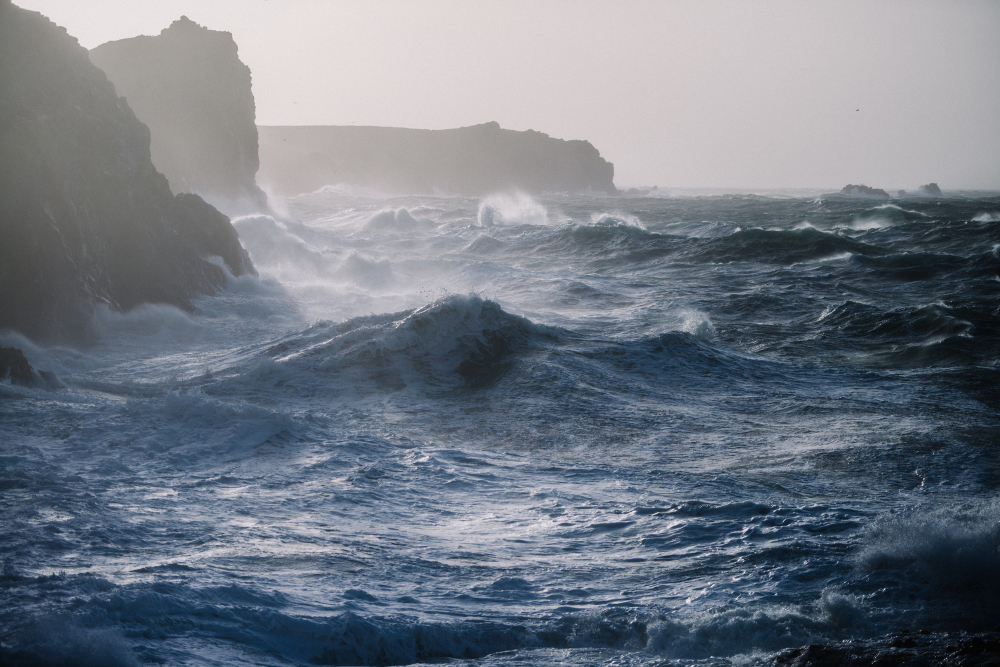
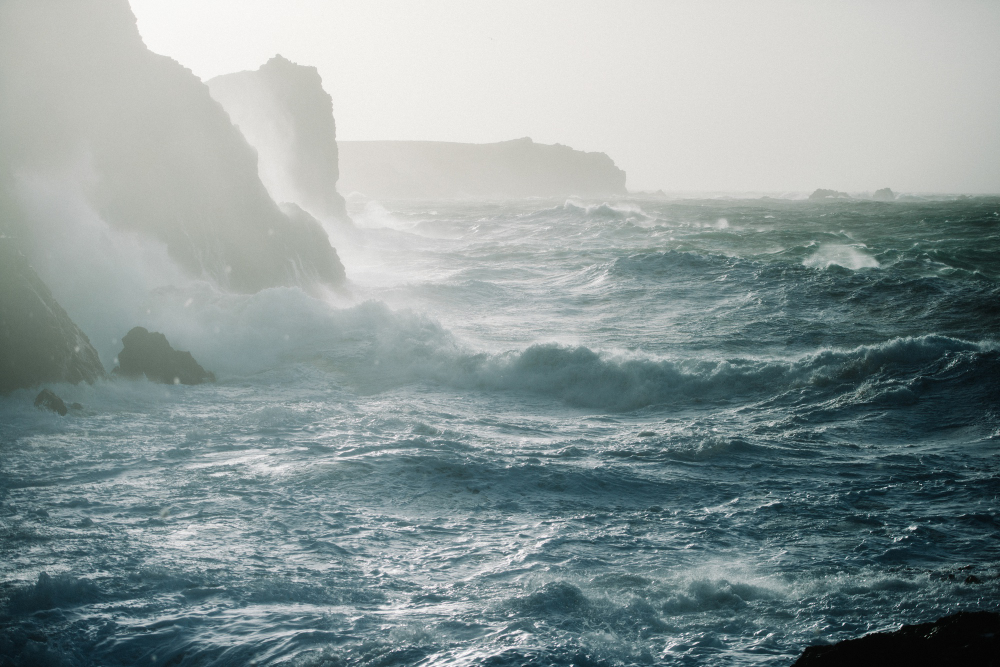
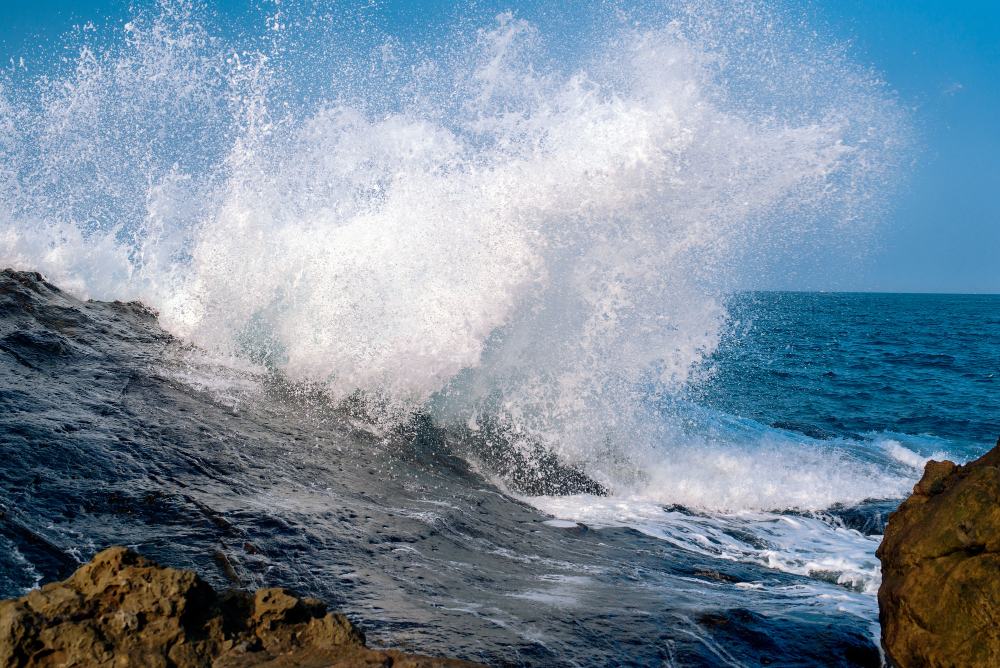
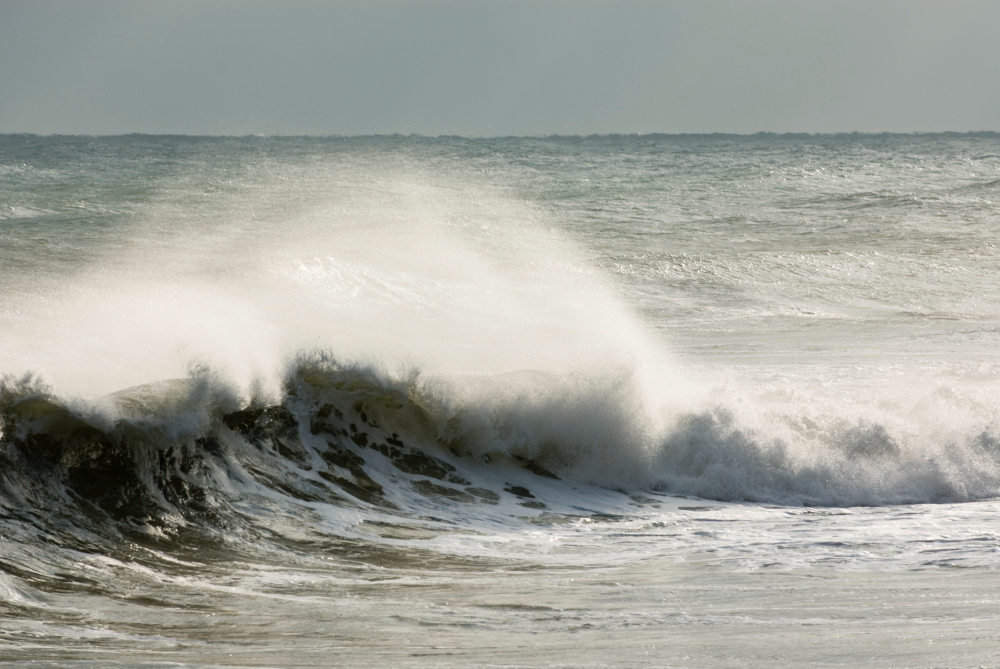
As ships changed, that definition became less useful, and the scale was redefined in terms of the appearance of the sea surface — the size and form of waves, the behaviour of crests, the presence and pattern of foam and spray.
That version is more durable, because the sea responds to wind in consistent ways regardless of who is watching, and the descriptions are detailed enough to distinguish adjacent levels reliably.
A land version was added, describing effects on smoke, leaves, branches, trees and structures, which allowed the same scale to be used ashore.
Why a Descriptive Scale Is Not Worse

The instinct is to regard a descriptive scale as a primitive stand-in for a proper measurement, and that instinct is worth examining.
A descriptive scale has advantages an instrument does not.
It integrates over time and space. An observer looking at the sea is seeing the accumulated effect of the wind over a period and an area, whereas an instrument reports an instantaneous value at one point, which may be a gust or a lull.
It requires no equipment, no calibration and no power, which means it works when everything else has failed — and the conditions where wind matters most are precisely the conditions where equipment fails.
It is directly operational. A level on the scale corresponds to what can and cannot be done, which is what the observer actually needs to know.
And it degrades gracefully. An instrument either works or does not; an observer under difficult conditions still produces a usable approximation.
The disadvantage is real and is the obvious one: it depends on the observer, it is not precise, and two people may disagree by a level.
There is a limitation worth acknowledging. The sea-state descriptions assume open water with the wind having blown for some time over a substantial distance, and they do not apply near a coast, in confined water or where the wind has just risen.
An observer in those conditions sees a sea that does not match any level, which is a known constraint rather than a failure of the scale.
What Happened When Instruments Arrived
The transition is instructive because the scale did not simply disappear.
Once reliable anemometers existed, the scale levels were assigned corresponding speed ranges, which allowed instrument readings and observations to be compared and combined.
That assignment is approximate by nature, since a range of speeds produces a similar sea state and the relationship depends on how long the wind has been blowing and over what distance.
The scale continued in use because it retained its advantages. Forecasts issued in scale terms convey what conditions will be like rather than what a device will read, which is more useful to somebody deciding whether to go out.
And it remains the standard vocabulary in marine forecasting in many places, alongside numerical speeds rather than replaced by them.
There is an observation about training worth adding. A descriptive scale only works if observers are calibrated, and the way that was achieved was largely by shared experience – people learning the levels from others who already knew them, at sea, over time.
That transmission is itself a form of standardisation, conducted without any document doing the work.
The Same Idea Elsewhere

The design principle recurs wherever a quantity resists direct measurement.
Scales describing observable effects exist for earthquake intensity, distinguishing what was felt and what was damaged from the energy released, which are different quantities serving different purposes.
Comparable scales exist for cloud cover, visibility, sea ice, and various other conditions where an observer can classify reliably and an instrument is impractical or measures the wrong thing.
The common feature is that they measure consequence rather than cause, and consequence is frequently what the user needs.
That distinction is the substantive lesson. An instrument measuring wind speed is answering a question about the air; a scale describing sea state is answering a question about what the wind is doing — and those are not the same question.
What the Descriptions Actually Contain
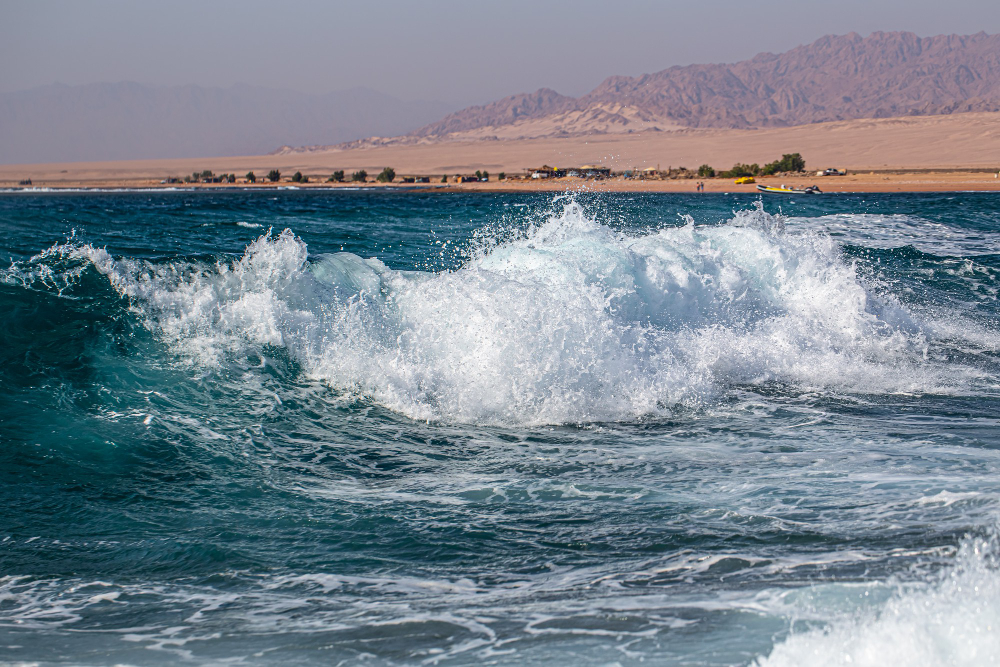
The detail in the sea-state descriptions repays a closer look, because it shows how carefully the scale was constructed.
Each level specifies several independent observable features rather than one, which means an observer has multiple cues and a mistake on one does not determine the result.
The features chosen change as the wind rises, which is the clever part. At low levels, the descriptions concern the appearance of the surface — ripples, small wavelets, whether crests have begun to break.
At moderate levels they concern the waves themselves — size, frequency of breaking crests, the appearance of white water.
At high levels they concern foam and spray — whether foam forms in streaks, the direction of those streaks, whether spray affects visibility.
That progression tracks what actually becomes distinguishable at each stage. Counting whitecaps is useful in moderate conditions and impossible in severe ones, where the whole surface is disturbed — so the scale switches to features that remain readable.
That is a sophisticated piece of design. The observer is never asked to judge something that has become indistinct, and the criteria hand off from one to the next as conditions change.
It also means the scale degrades sensibly rather than failing. An observer in conditions beyond their experience still has features to work from, because the descriptions at each level refer to things that are visible at that level and not at others.
Why It Is Worth Knowing About
The general point concerns how measurement systems are designed, and it is easy to get wrong.
The obvious approach is to measure the underlying physical quantity as accurately as possible and derive everything else from it.
The alternative is to measure what the user actually needs to know, even if that is a consequence rather than a cause, and even if it requires human judgement rather than an instrument.
For a great many practical purposes the second approach wins, because the number that matters is not the physical quantity but its effect — and a system that reports the effect directly removes a translation step that the user would otherwise have to perform under pressure.
Which is why a scale designed two centuries ago, for ships that no longer exist, defined by watching what the sea does, is still in the forecasts — not because nothing better came along, but because for the question people are actually asking, nothing better has.
Which is a useful thing to remember about measurement generally. An instrument answers the question it was built for, and if that is not the question anybody has, a well-designed observation can outlive it by a very long way.
Like our content? Follow us for more.