There is a difference between two ways of putting a mark on a surface, and almost everything about the history of writing materials follows from it.
The first is to lay something on top. Particles of a coloured solid, held in a medium, sitting on the surface and adhering to it. That is how most marks are made, and it is why they can be washed, scraped or rubbed away.
The second is to change the surface itself. A liquid that penetrates and then reacts, becoming part of the material rather than resting on it.
Both approaches produced writing inks, they behave completely differently, and the choice between them determined what survived, what could be altered, and what is now falling apart in archives.
The Ink That Sits On Top
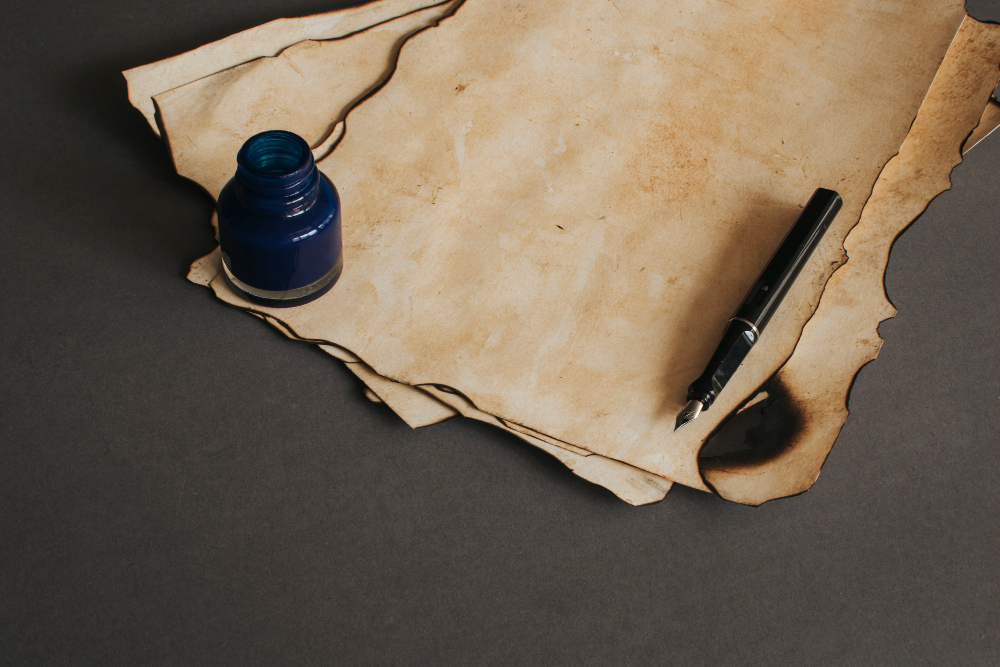
The older approach uses a solid pigment suspended in a binder.
Fine carbon particles — soot collected from burning material — are ground with a substance that keeps them dispersed and makes them adhere when dry.
That produces an ink which is intensely black, chemically inert, and does not react with what it is written on.
The advantages are considerable. It does not fade, because carbon does not change. It does not attack the material beneath it. And documents written in it can survive for extraordinary periods provided the substrate does.
The disadvantage is that it sits on the surface. It can be washed off, scraped off or rubbed away — which matters enormously if a document is meant to be tamper-evident.
It also behaves poorly on some surfaces. On a smooth hard material it adheres well; on a soft absorbent one it can flake or be disturbed, and it does not penetrate to grip.
Like our content? Follow us for more.
The Ink That Bites
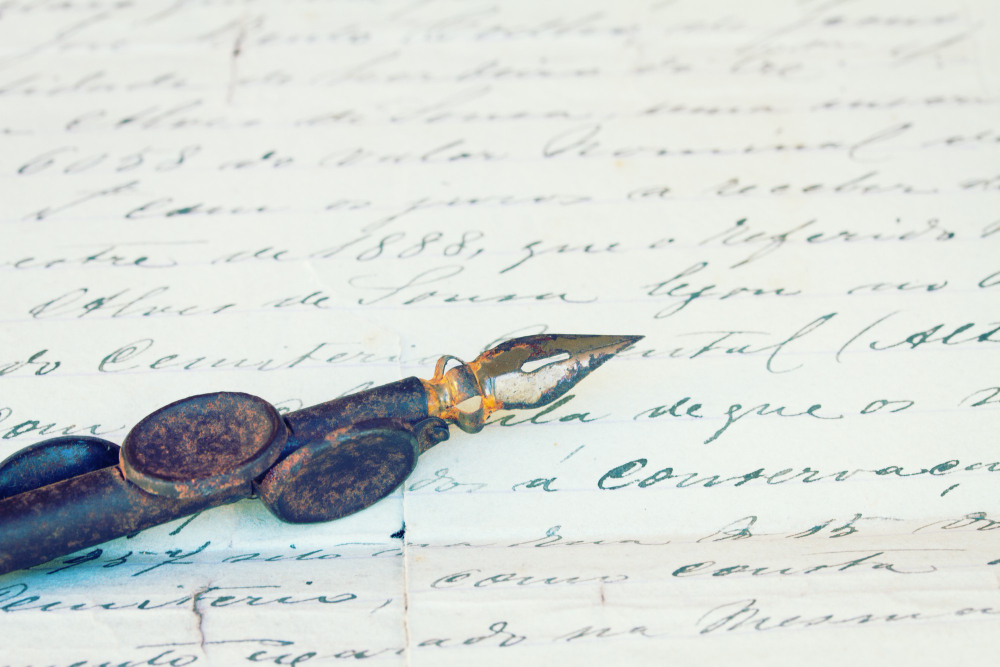
The alternative was adopted precisely because it does what the first cannot.
Growths that form on oak trees in response to insect activity are unusually rich in a group of compounds that react strongly with iron. An extract of those, combined with an iron salt, produces a solution that is pale when fresh and darkens as it oxidises.
Two things then happen on the page. The solution penetrates into the material rather than sitting on it, and the reaction continues after application, producing a dark compound bound within the fibres.
That is why the writing cannot be removed. Scraping the surface does not reach it, and washing does not dissolve it, because the coloured product is formed inside the material and is not soluble.
For any document where alteration matters — a contract, a record, an account, a legal instrument — that property is the entire point, and it is why this ink became the standard for official writing across an enormous span of time.
Why It Destroys What It Is Written On
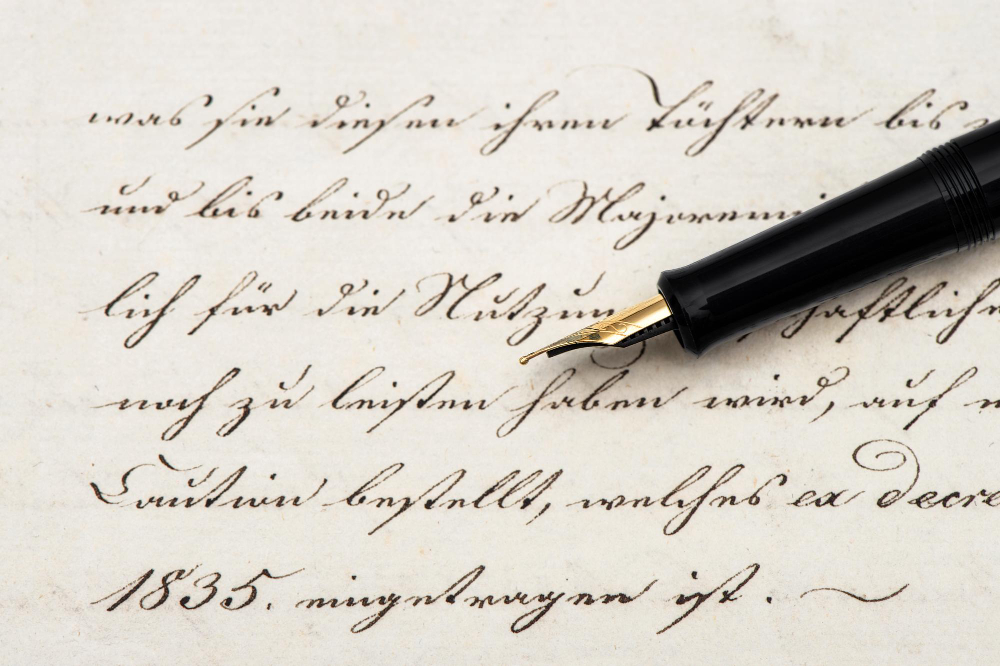
The same chemistry that makes it permanent makes it corrosive, and the mechanism is understood.
Recipes were generally made with an excess of iron salt beyond what the reaction required, partly because more produced a darker result and partly because the proportions were not measured.
That excess remains in the paper, along with acidity from the preparation, and both attack the material over time.
The acid breaks down the fibres directly. The surplus iron catalyses further degradation in the presence of moisture and oxygen, which continues indefinitely.
The result is that the written areas become brown, then brittle, then fragile — and eventually the writing falls out of the page, leaving the shape of the letters as holes.
That end state is the distinctive one. A document damaged this way is legible as a stencil, with every stroke missing, and the surrounding blank areas frequently intact.
There is a diagnostic point worth adding. The damage is visible before it is structural – the written areas turn brown and the colour spreads slightly beyond the strokes, which indicates the process is under way while the paper is still sound.
That browning is what conservators look for when deciding what needs attention.
What Can Be Done About It
The conservation position is worth stating because it is a live problem affecting an enormous quantity of material.
The degradation is driven by moisture, oxygen and the metal content, so controlling storage conditions — particularly humidity — slows it substantially, and that is the first and most widely applied measure.
Treatments exist that neutralise the acidity and that introduce substances binding the reactive metal so it cannot participate, and both are used on material considered at risk.
Digitisation does not stop anything and does preserve the content, which is a different objective and is frequently the practical answer for material too far gone to stabilise.
What cannot be done is reversal. The fibres that have broken down are gone, the losses are permanent, and conservation is entirely a matter of slowing what remains.
The scale of the problem is the difficult part. A substantial proportion of written material from a period of many centuries is affected to some degree, which makes triage rather than treatment the realistic approach.
There is a practical observation worth adding. Because the writing is inside the material rather than on it, an erased or scraped page written in this ink frequently retains a faint visible trace of what was removed.
That residue is why imaging techniques can recover text somebody deliberately removed, which is a direct consequence of the ink having penetrated.
The Other Colours
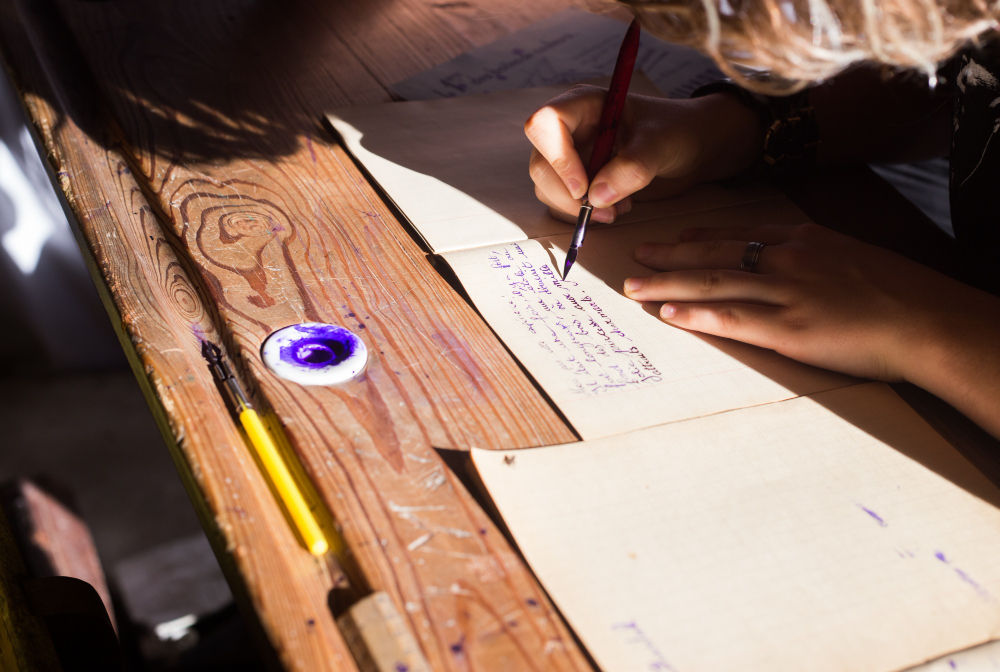
A note on coloured inks belongs here because their behaviour differs again.
Coloured writing and decoration used pigments — mineral, plant or insect derived — suspended in a binder, which is the same approach as carbon ink and behaves the same way.
Those pigments vary enormously in stability. Some are effectively permanent, others fade on exposure to light, and a few change colour entirely through chemical alteration over time.
That is why old illuminated work frequently shows one colour in perfect condition beside another that has faded to almost nothing, or that has darkened into something the maker did not intend.
Metallic decoration behaves differently again, since a beaten metal leaf does not fade at all and instead fails mechanically by lifting and flaking.
So a single page may contain several materials aging at completely different rates, which is why conservation of decorated material is so much harder than of plain text.
Writing on What
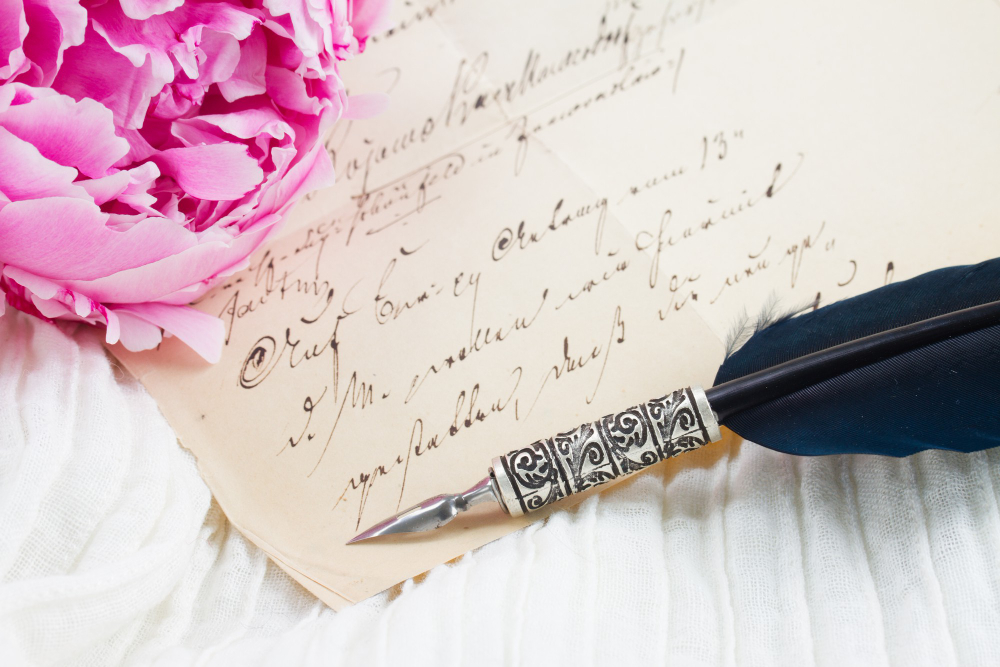
The surface mattered as much as the ink, and the pairing explains a good deal.
Animal skin prepared for writing is tough, has a surface that holds a mark well, and is durable enough to survive centuries of handling — but it is expensive, laborious to produce and available only in limited sizes.
Plant-fibre sheets are far cheaper and available in quantity, which is what made writing ordinary rather than exceptional, and they are more vulnerable to damp, to insects and to chemical attack.
That vulnerability is where the ink problem becomes acute. The same ink on skin does far less damage, because the material is structurally different and responds differently to acidity.
So the worst outcomes occur at a specific combination — a reactive ink on a vulnerable substrate — and a great deal of material from certain periods sits exactly there.
The surface also determines how an ink behaves on application. An absorbent one draws the liquid outward along the fibres, spreading the line, which is why sheets intended for writing are treated to reduce absorbency.
Without that treatment a line spreads and blurs, which is why the same pen and ink produce a crisp mark on one sheet and a fuzzy one on another.
And the treatment itself ages. As it breaks down, an old sheet becomes progressively more absorbent, which is why writing on a very old document may spread if anybody attempts to add to it.
Why This Is Worth Knowing
The general lesson concerns the cost of the properties we ask materials to have.
A permanent, tamper-proof mark required an ink that bonds chemically to the page. Bonding chemically to the page means reacting with it. Reacting with it means the page is now part of a chemical system that does not stop.
Nobody chose that trade-off, because nobody understood it for most of the period in which the ink was used. The property that was wanted and the property that is now destroying the material are the same property, observed over different timescales.
Which is a reasonable thing to consider about any material chosen for durability. The question is never simply whether something lasts, but what it is doing to whatever it is attached to while it does — and in this case the answer took several centuries to become visible, in the form of documents with the writing missing and the blank paper perfectly intact.
Which is a reasonable warning about durability generally. Something designed to be permanent is designed to resist change, and resisting change is a chemical commitment – one that carries on long after anybody has stopped caring what the document said.
Like our content? Follow us for more.