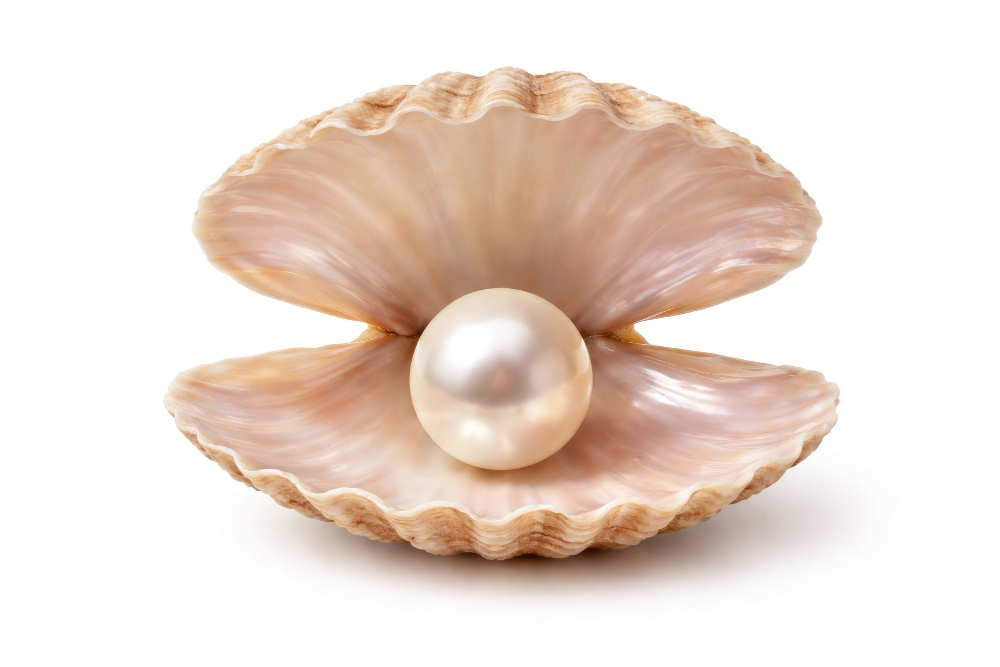
There is a recurring result in materials science that is worth stating as a general principle: arrangement frequently matters more than composition.
The lining of certain shells is the standard demonstration. It is made almost entirely of the same mineral as chalk and limestone — a substance that is brittle, breaks readily and is not regarded as a structural material in any ordinary sense.
Arranged in a particular way, that same mineral becomes a material with roughly three thousand times the resistance to fracture, capable of absorbing impact rather than shattering, and it does so while remaining more than ninety-five per cent mineral.
The remaining small percentage is a protein binder, and almost all of the improvement comes from how the two are put together rather than from what either of them is.
The Brick Wall
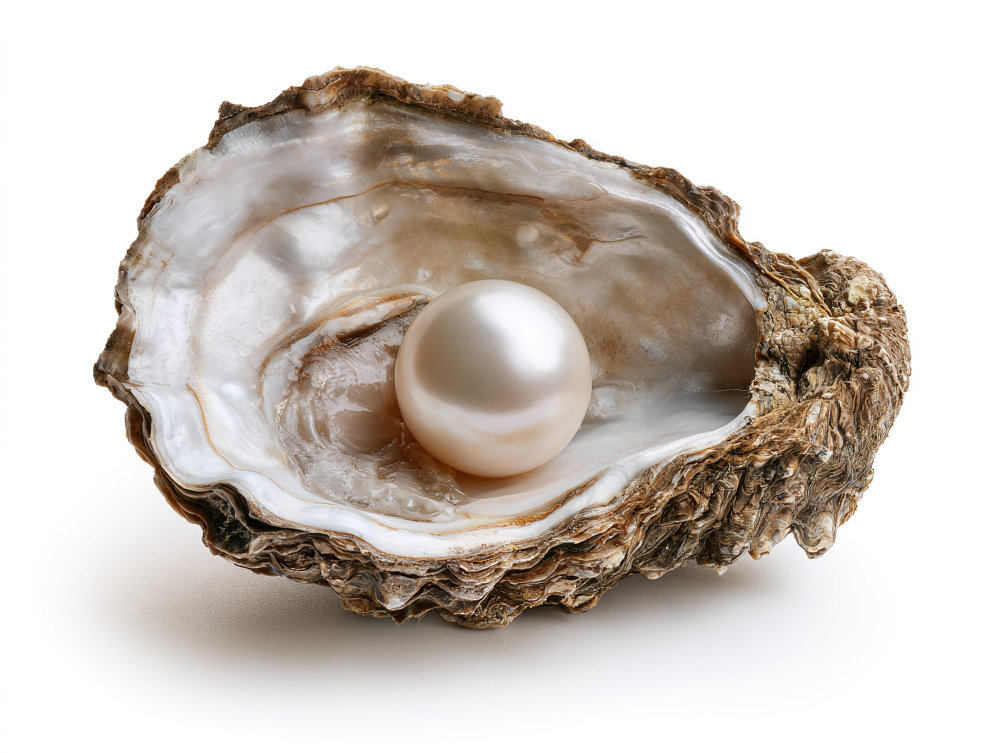
The structure is the point and the analogy is exact.
Flat crystal plates are laid in horizontal layers, each layer offset from the one beneath so that the joints do not align — which is the same arrangement as brickwork and works for the same reason.
Between the plates is a very thin layer of protein, which bonds them together while remaining slightly flexible.
The plates are extremely thin, and the layers are extraordinarily regular, with the whole structure built up gradually by the animal depositing material from a tissue layer in contact with the surface.
That regularity is what produces the optical effect discussed below, and the offsetting is what produces the mechanical one.
Like our content? Follow us for more.
Why It Does Not Shatter
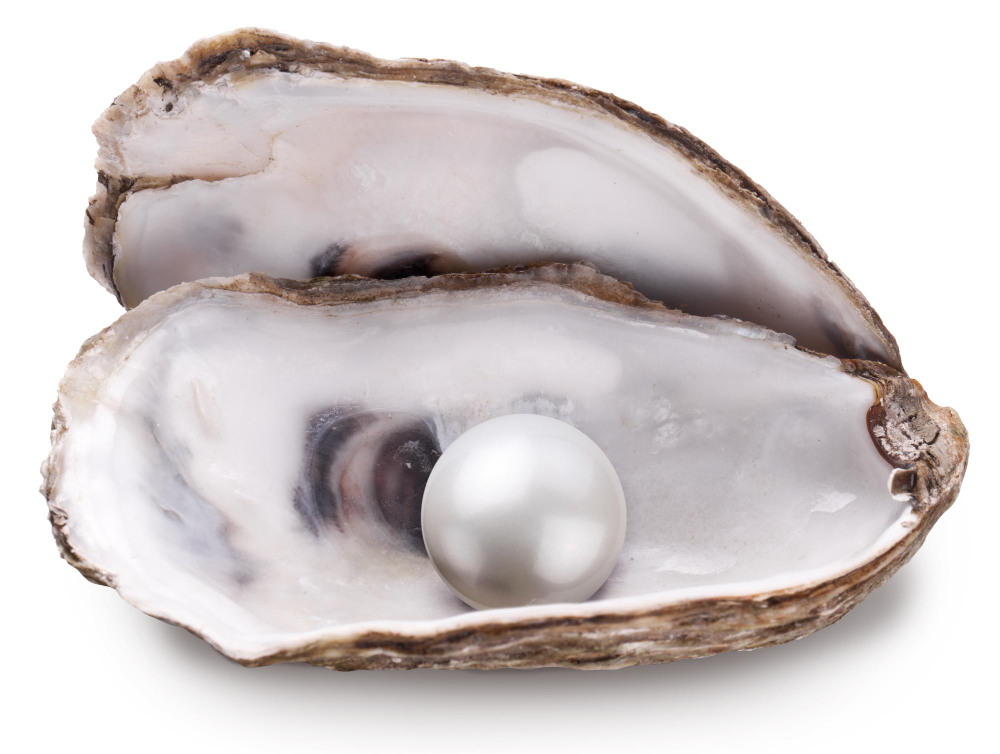
The toughening mechanism is worth explaining because it is the interesting half.
A crack in a uniform brittle material propagates straight through it, accelerating as it goes, because there is nothing to stop or divert it. That is why a piece of chalk breaks cleanly.
In this arrangement, a crack reaching the edge of a plate cannot continue in a straight line, because the next plate is offset and the path ahead is a layer of protein rather than mineral.
So it is deflected sideways along the protein layer, where it travels much further to achieve the same amount of separation, absorbing energy the whole way.
The protein layer also stretches rather than snapping, and the plates slide slightly against each other, both of which absorb further energy.
The result is a material that dissipates the energy of an impact through an enormous number of small deflections and small movements, rather than releasing it all through one clean fracture.
That principle — deliberately introducing weak interfaces to stop cracks travelling — is used in engineered composites, and it was arrived at biologically long before anybody worked it out.
Why It Shines
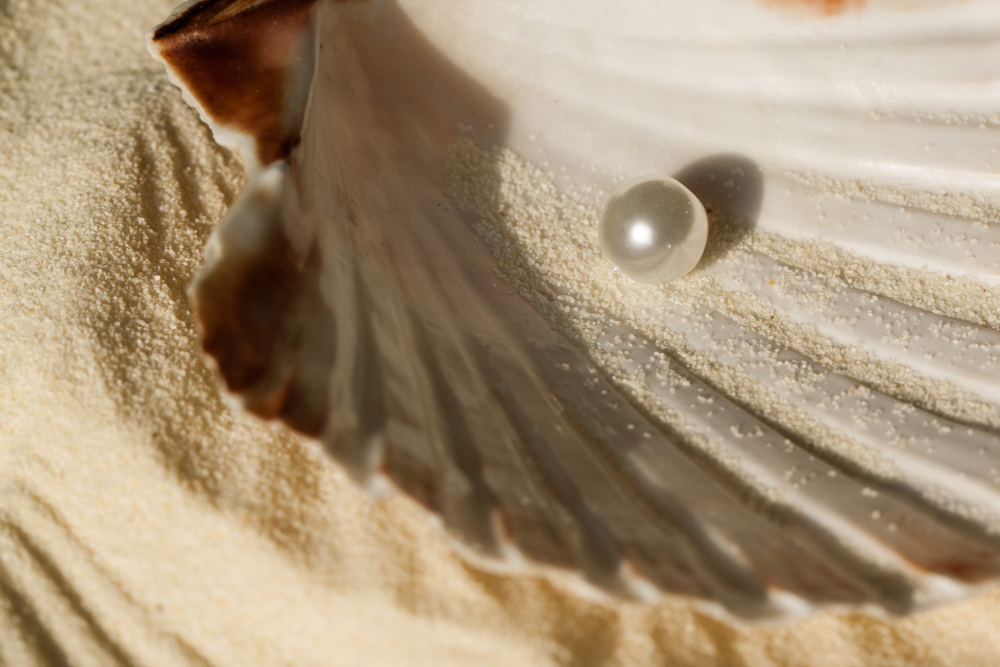
The optical behaviour comes from the same structure and involves no pigment at all.
Light striking the surface reflects off the top of each plate and also off the boundaries between layers beneath.
Those reflections interfere with each other — reinforcing at some wavelengths and cancelling at others, depending on the thickness of the layers and the angle of view.
Because the layers are regular and are comparable in thickness to the wavelength of light, the effect is strong and produces saturated colour.
And because the result depends on angle, the colour changes as the object or the viewer moves, which is the characteristic that distinguishes this kind of colour from any pigment.
That is the same mechanism that colours a soap film, an oil slick and certain insect wings — structural colour, produced by geometry rather than by any coloured substance.
Why It Is Built in Layers at All
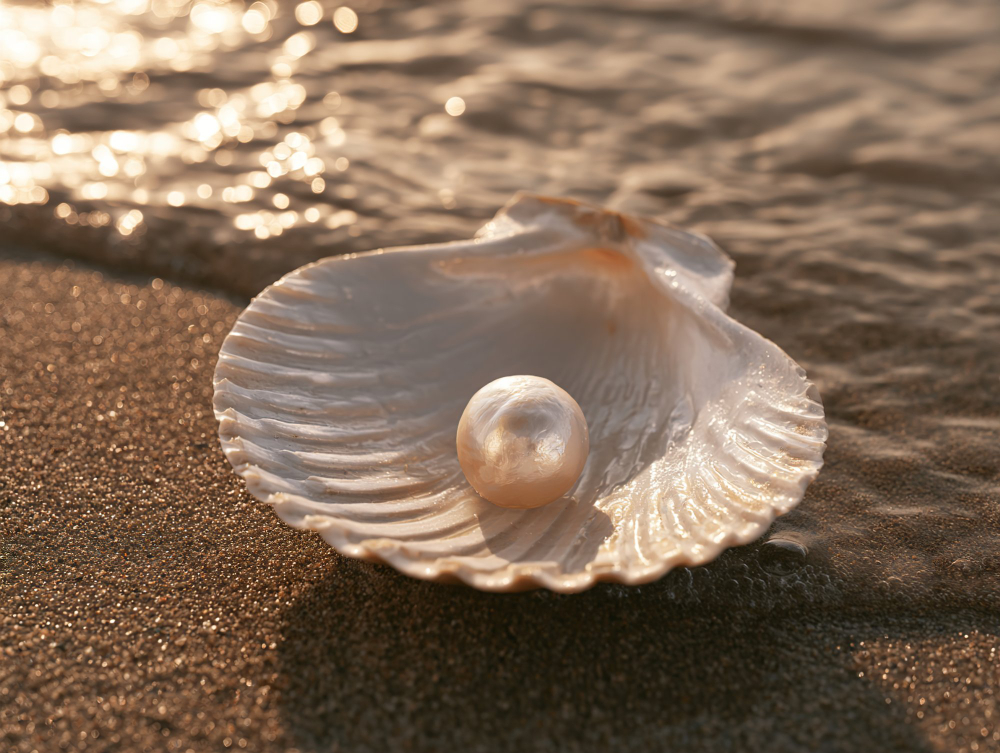
The construction sequence explains why the material comes out regular enough to work.
The animal deposits from a tissue layer in direct contact with the growing surface, which means each new layer is laid against the previous one across its whole area at once rather than being built up from a point.
That contact is what produces the regularity. The spacing between layers is set by the thickness the tissue deposits in one episode, and because the process repeats under similar conditions, the layers come out similar.
Deposition is not continuous. It proceeds in episodes governed by the animal’s activity, its food supply and conditions, which means the layer structure carries a record of those episodes.
That record is readable. Sectioned material shows banding at several scales, and the pattern reflects periods of faster and slower growth in the same way that tree rings do.
Interruptions show as well. A period of stress, a change in conditions or an injury produces a visible discontinuity in the layering, which is why material formed under variable conditions looks different from material formed under steady ones.
And that is directly relevant to the optical property. Regular layers produce strong saturated colour; irregular ones produce weaker and patchier colour, which means the appearance is a readout of how consistent the conditions were while it formed.
How a Pearl Happens
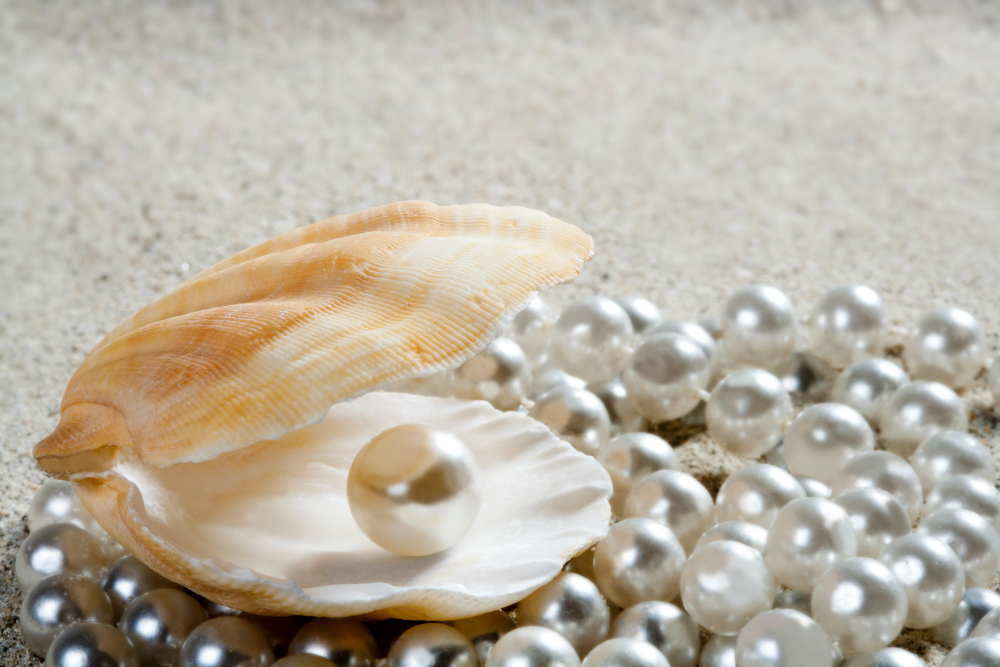
The formation is frequently misdescribed and the correct account is more interesting.
The animal produces this material as a lining, deposited by a tissue layer against the inner surface of the shell.
If a fragment of that tissue becomes displaced into the body of the animal, it continues doing what it does — depositing layers — but now with nothing to deposit against except itself.
The result is concentric layers building outward in all directions, which produces a rounded object rather than a sheet.
The popular account involves an irritant such as a grain of sand, which is not generally how it happens. The displacement of the tissue is the essential event, and an intruding particle may or may not be involved.
Cultured production works by inserting a small piece of that tissue deliberately, frequently along with a bead for the layers to form around — which means the process is the same and only the initiation differs.
That also explains why quality varies so much. The thickness of the deposited layers, their regularity and their freedom from interruption determine appearance, and those depend on the animal, the conditions and the time allowed.
The Rest of the Shell
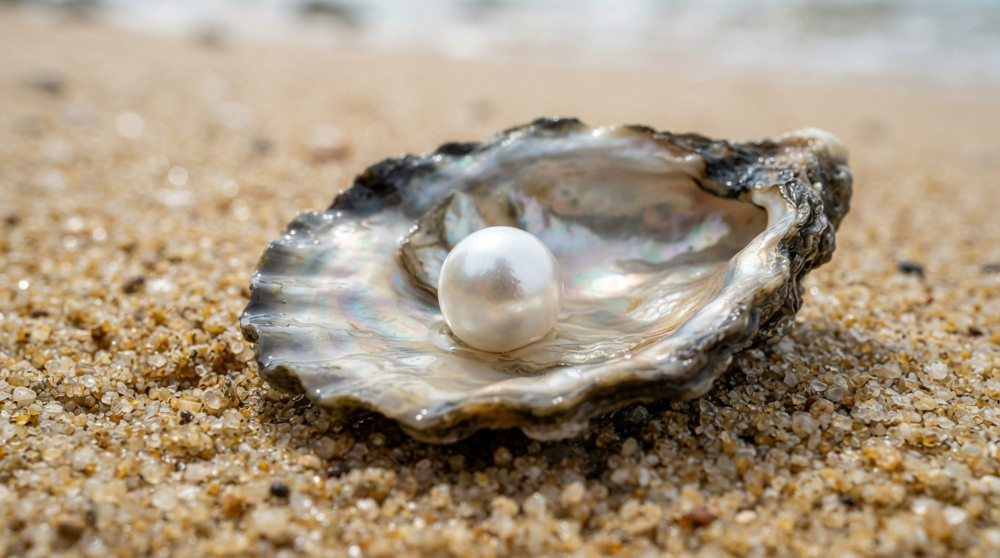
The lining is one layer of a structure with several, and the others are worth describing because the contrast makes the point.
The outer layer is a hard protective coating, frequently coloured and patterned, and structurally unremarkable — it is doing the job of a shield rather than anything sophisticated.
Beneath that is a thicker layer of the same mineral in a completely different arrangement: columns or prisms running perpendicular to the surface rather than flat plates.
That arrangement is strong in compression and is effectively a rigid wall, which is what resists crushing.
The lining discussed above is the innermost layer, and it is there because it is in contact with the animal itself — which means it has to be smooth rather than abrasive, and it has to be repairable.
So a shell is a composite of three materials, all made from the same mineral, arranged three different ways, each solving a different problem: an outer coating against attack, a rigid middle against crushing, and a tough smooth lining against everything else.
That is a layered composite with graded properties, assembled by an animal at ambient temperature out of dissolved minerals, and it is the same design philosophy used in engineered armour — different layers doing different jobs rather than one material attempting all of them.
And the animal has no choice about any of it. The arrangement is produced by which tissue is depositing at which surface, which means the entire design is a consequence of where the cells are.
What Has Been Copied and What Has Not
The engineering interest is substantial and the results are partial.
Materials built on the same principle — hard platelets in a flexible matrix, arranged in offset layers — have been produced in laboratories and do show the expected toughening.
Manufacturing them at scale is the difficulty. The natural version is assembled slowly, layer by layer, at ambient temperature, in water, by a process that places each plate individually.
Industrial processes do not work that way, and approximating the arrangement by other means produces something that captures part of the benefit.
The optical property has been copied more successfully, since layered coatings producing structural colour are manufacturable and are used widely in coatings, security printing and finishes.
That split is typical. The optical effect requires regular layers and the mechanical effect requires regular layers assembled with a specific interface chemistry, and the second is harder.
Which leaves the biological version still ahead on the property that matters most — and it is being made, slowly, by an animal that is not attempting to solve a materials problem at all, in the course of lining the inside of its own shell.
Which is the recurring lesson from biological materials. The performance comes from an arrangement assembled slowly under mild conditions, and the difficulty in copying it is almost never the chemistry – it is that industry does not have several years and an animal to do the assembling.
Like our content? Follow us for more.