

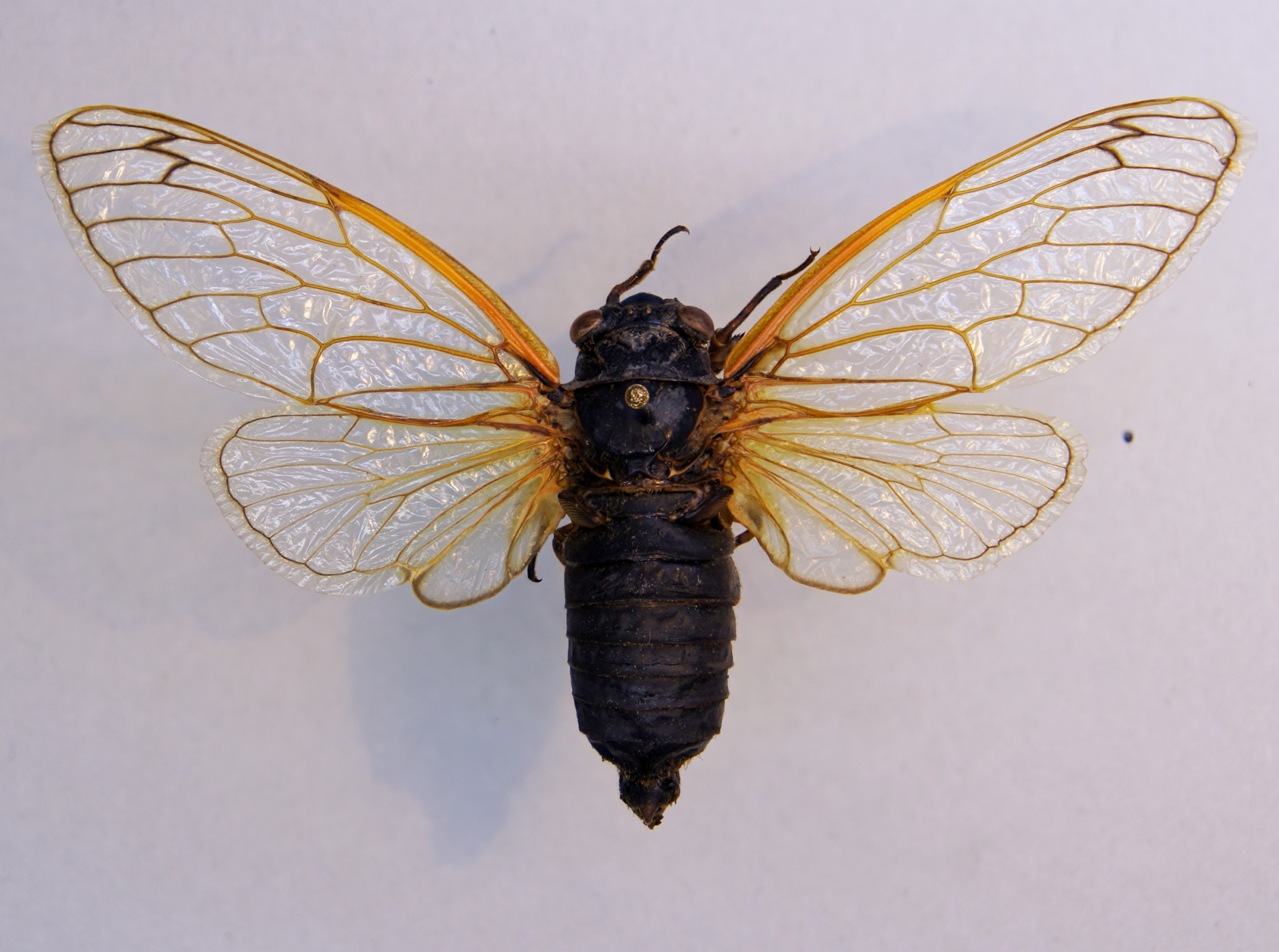
Most insects live fast. A mayfly is famous for having a day. Periodical cicadas run the opposite strategy to an extreme that has no real parallel: nearly two decades spent motionless in the dark, followed by a few weeks of the loudest, most conspicuous behaviour any insect manages, and then nothing again for another generation. Almost every part of that is doing something.
What the Seventeen Years Are Spent Doing
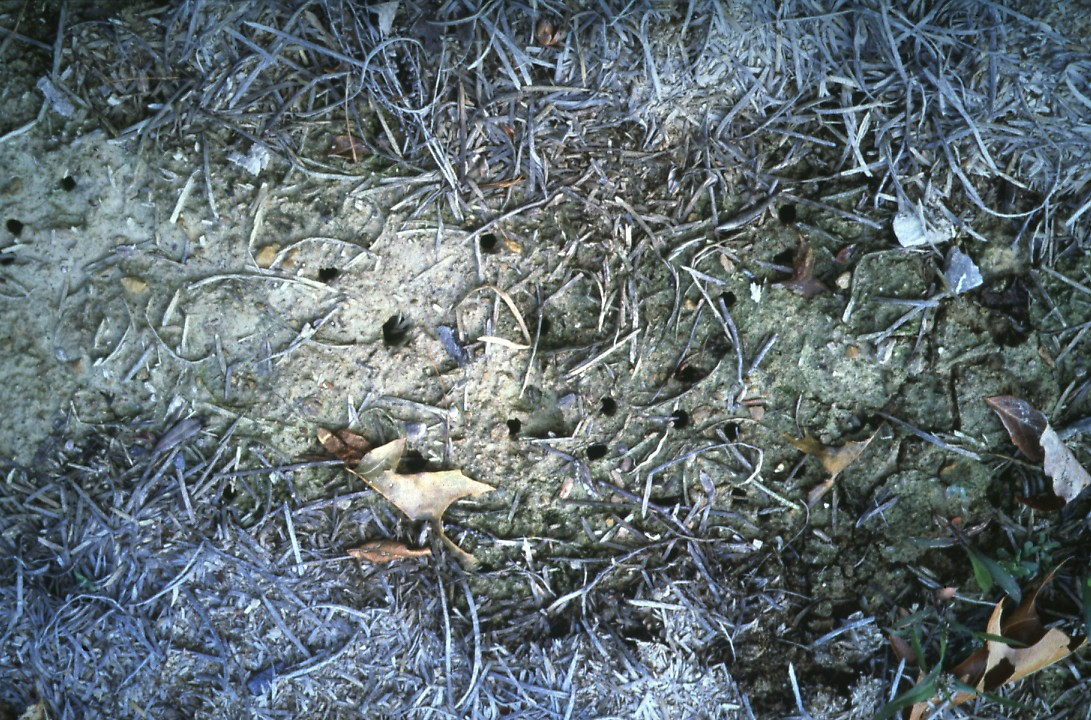
The underground phase is not dormancy. The juveniles are alive, feeding and growing the entire time.
After hatching, the tiny nymphs drop from the tree where the eggs were laid, burrow into the soil, and locate a root. They insert their mouthparts into it and feed on xylem fluid – the dilute sap moving up from the roots, which is mostly water with a small quantity of dissolved minerals and very little sugar.
That is an extremely poor diet, and it is a large part of the explanation for the timescale. An animal living on dilute root fluid grows slowly, and the nymphs pass through a series of stages over many years, moving deeper and shallower as they grow and as conditions change. They are not waiting out the years; they are taking that long to reach adult size on what is available.
They are also, somehow, keeping count. In the final spring, nymphs across an enormous area move toward the surface at the same time, having been separated and underground for seventeen years.
Like our content? Follow us for more.
How They Know When
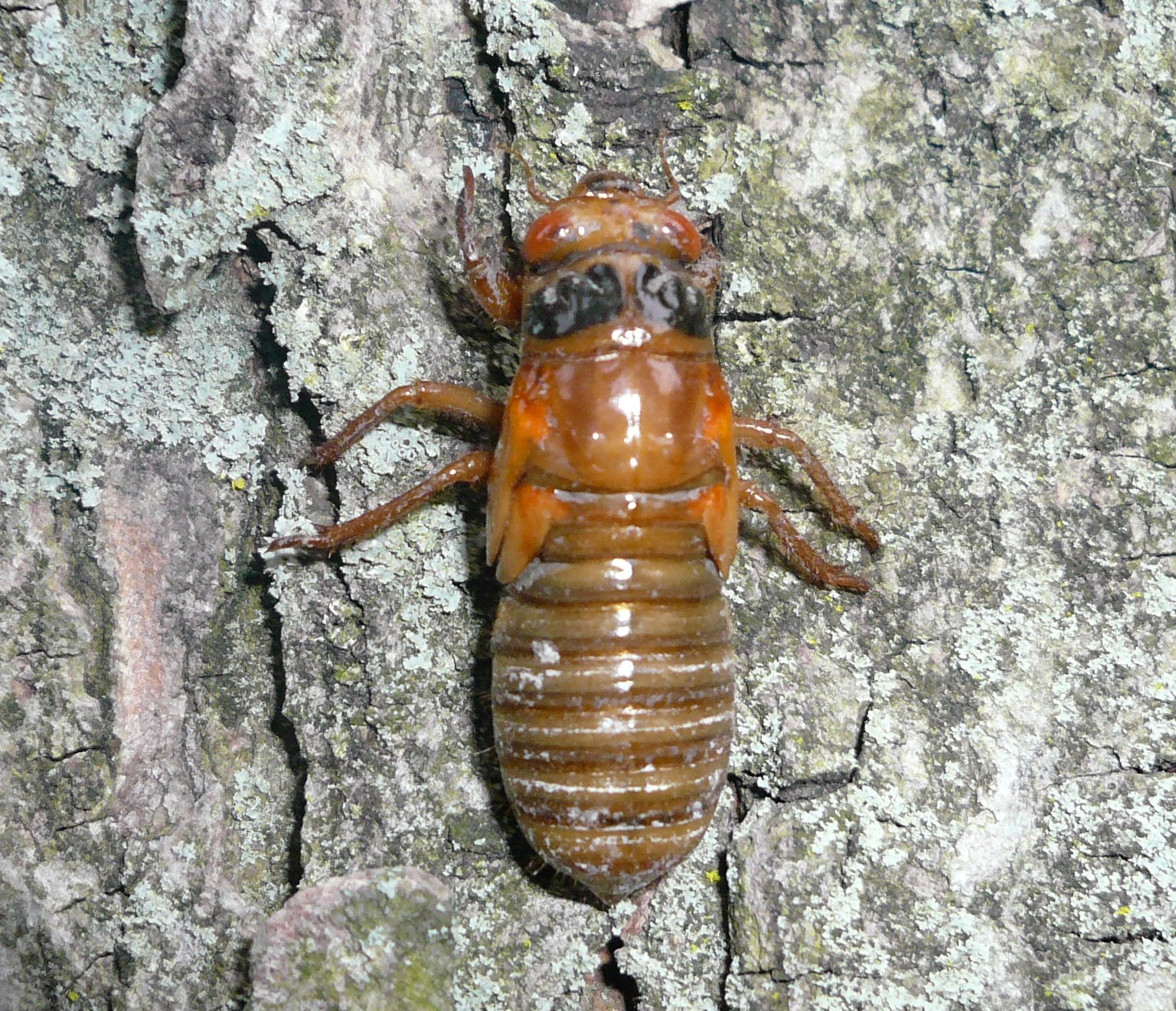
This is the part that is least resolved, and the honest answer is that nobody is certain.
Some form of annual cue is clearly involved. The trees the nymphs feed on are deciduous, and the flow of fluid through their roots changes with the seasons, effectively delivering a yearly signal to anything drinking from them. Experiments in which trees were manipulated to produce two growth cycles in one year have caused cicadas to emerge early, which is strong evidence that they are counting something about the tree rather than measuring time directly.
So the working model is that they count annual cues and emerge when the count reaches the right number. What is not understood is how a count of that length is maintained, or where it is stored.
Soil temperature then sets the precise timing. The emergence begins when the soil at nymph depth reaches a threshold, which is why the date shifts with latitude and with the particular spring, and why an emergence rolls northward over several weeks rather than happening everywhere at once.
The Prime Numbers
Thirteen and seventeen are both prime, and the coincidence has attracted a great deal of attention.
The leading explanation concerns predators. A predator population that builds up on cicadas would do best if it could match its own cycle to theirs. A predator with a two-year cycle would intersect a cicada with a twelve-year cycle every time, and one with a three-year cycle would too. A prime interval cannot be matched by any shorter cycle except one, so a predator that specialised would find its own cycle falling out of step almost every generation.
A related version of the argument concerns the cicadas themselves. Broods with different cycles, emerging in the same region, would interbreed if they coincided often, producing offspring with intermediate timing that emerged out of step with everybody and lost the protection of the crowd. Prime intervals minimise how often two different cycles coincide – a thirteen-year and a seventeen-year brood meet only once every two hundred and twenty-one years – which keeps the cycles from blurring into each other.
Both arguments are mathematically sound and both are inferences. No specialist predator with a matching cycle has been identified, which is consistent with the hypothesis working but is not the same as demonstrating that it was the cause. It remains the best available explanation rather than a proven one.
Why They All Come Out Together
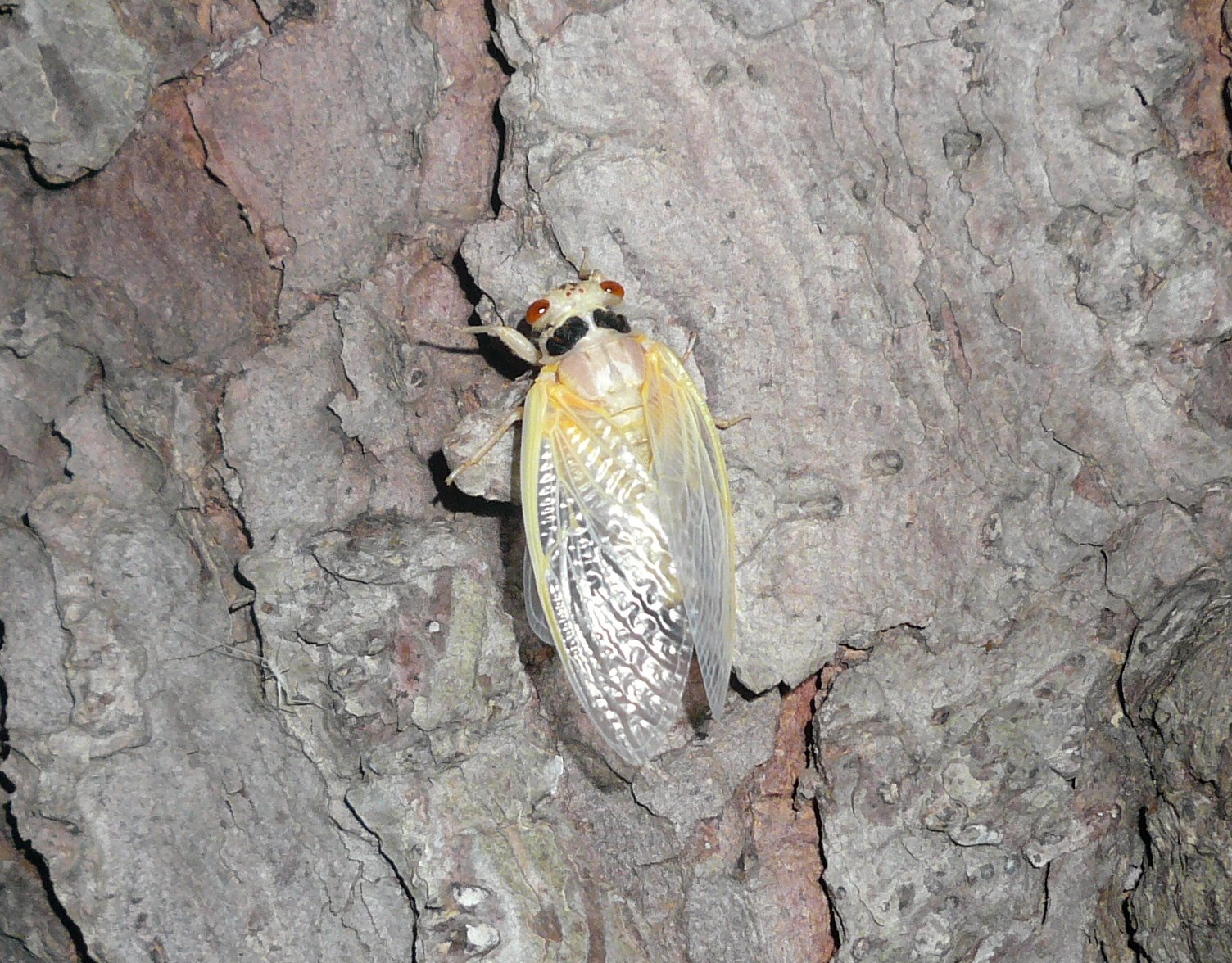
The synchronised emergence is the other half of the strategy, and it is a numbers argument.
The adults are almost entirely defenceless. They do not bite or sting, they fly poorly, they are large and slow and extremely noisy, and essentially everything that eats insects will eat them. Individually they are among the easiest prey available.
The defence is quantity. When densities reach hundreds of thousands per acre, local predators eat until they physically cannot continue, and the great majority of cicadas are simply not consumed because there is nobody left with the appetite. The term for it is predator satiation, and it only works if the emergence is both enormous and brief.
This makes the timing self-reinforcing. An individual that emerged a year early or late would find itself alone, conspicuous and eaten, and would contribute nothing to the next generation. The cost of being out of step is close to total, which is what holds the synchrony together across seventeen years and vast areas.
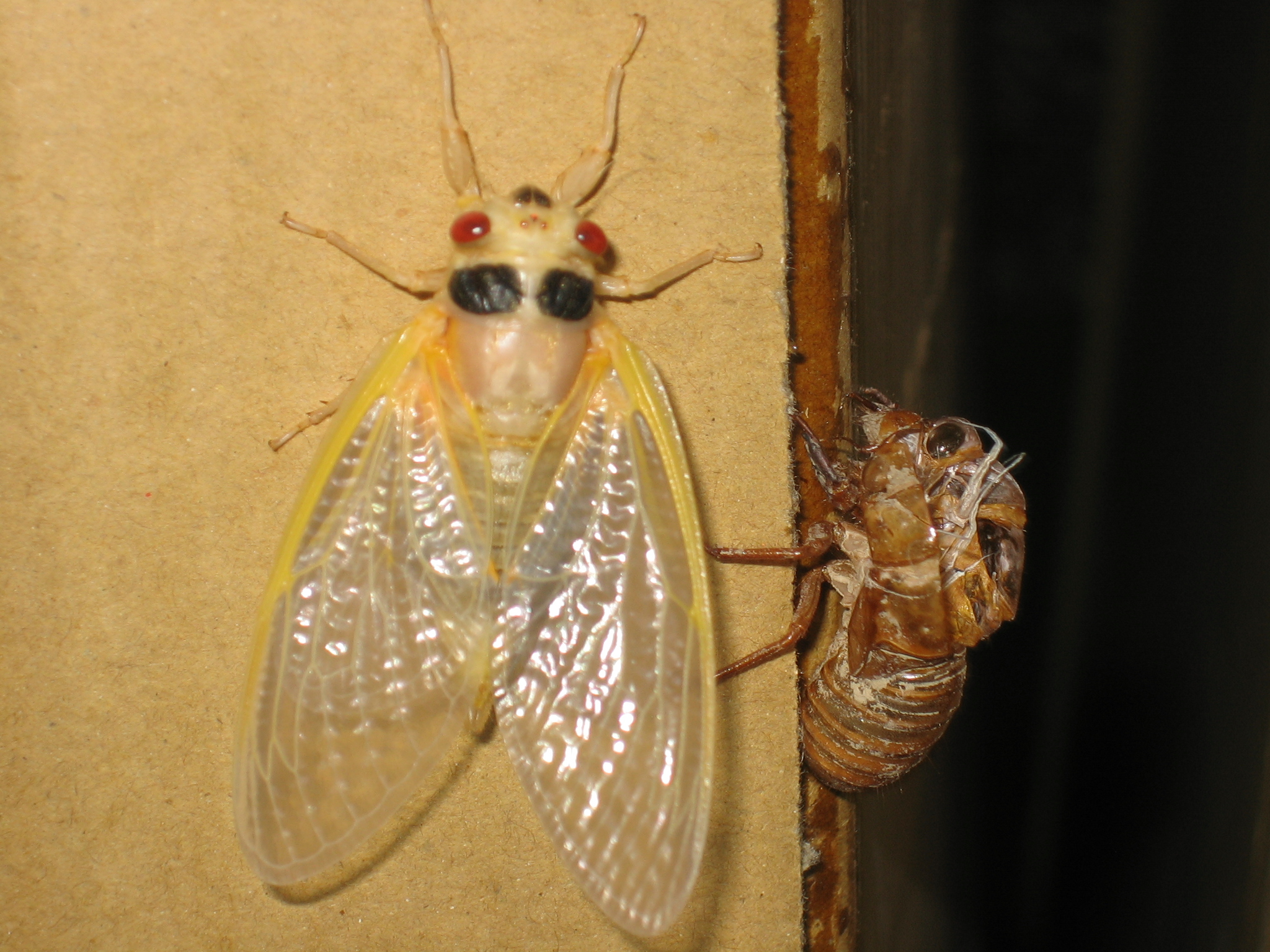
It is also why the aftermath is so striking. The adults live a few weeks, and the ground beneath the trees ends up covered in shed skins and dead insects – a large pulse of nutrients delivered to the soil in a single event, which has measurable effects on the growth of plants and on the animals that feed on them for a year or two afterwards.
The Noise Is a Structure, Not a Voice
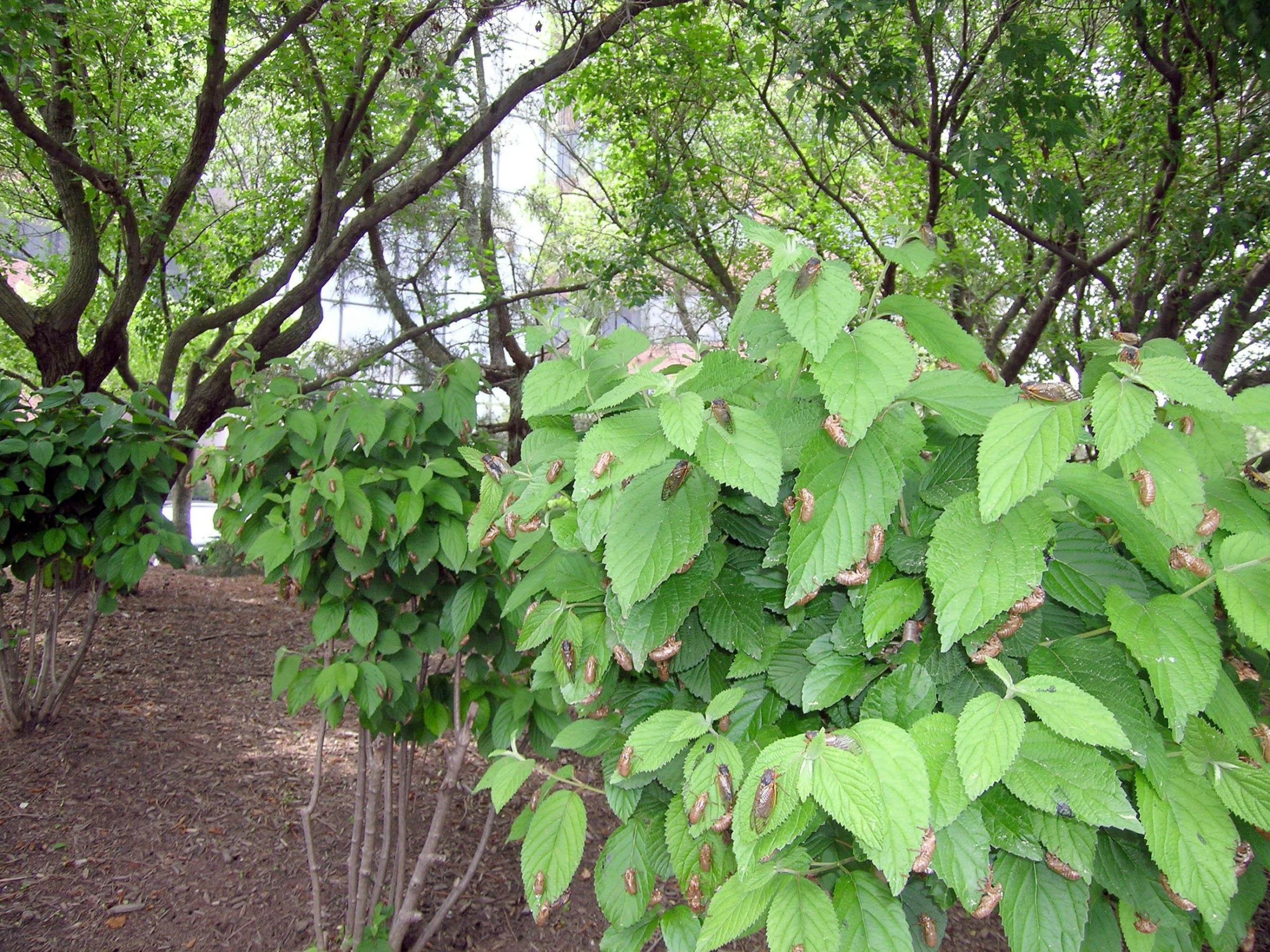
The sound is produced by organs that have no equivalent in most insects, and it is not made by rubbing anything together.
On each side of the abdomen is a tymbal: a curved, ribbed plate of stiffened cuticle attached to a muscle. When the muscle contracts, the plate buckles inward with a click, and when it relaxes, it snaps back with another. Contract the muscle rapidly and the clicks merge into a continuous tone.
The abdomen behind it is largely hollow and acts as a resonating chamber, amplifying the output enormously for the animal’s size. Some species reach sound pressure levels comparable to machinery, and a large chorus is loud enough to be uncomfortable to stand in.
Only the males sing, each species has its own pattern, and the females respond with a timed wing-flick rather than with sound. Since several species frequently emerge together, the distinct songs are what keeps them from pairing with the wrong one.
Males also have a mechanism for protecting their own hearing, folding part of the hearing organ during singing so as not to be deafened by themselves.
They Are Harmless, and the Damage Is Mechanical
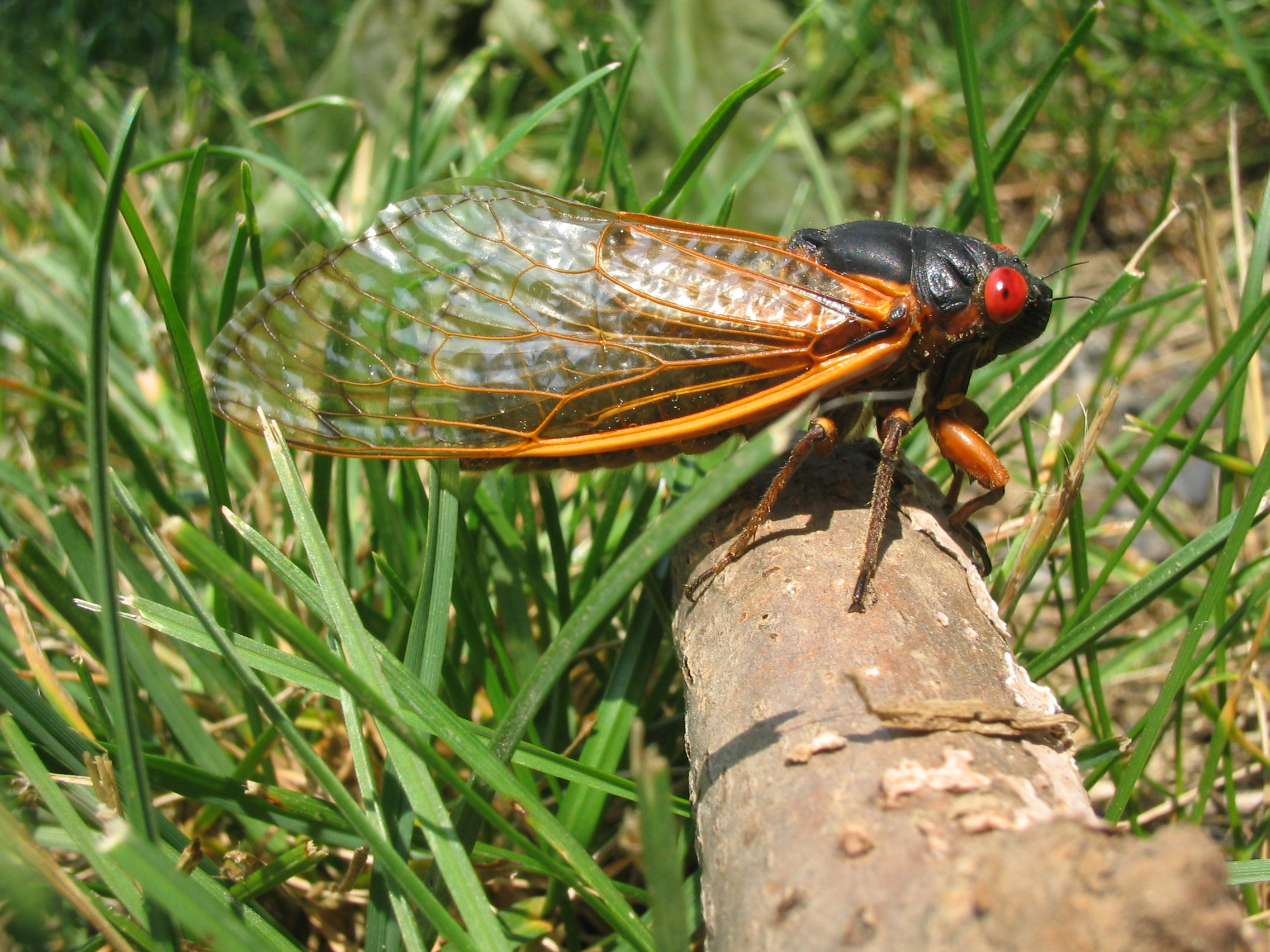
Periodical cicadas are frequently assumed to be a plague in the agricultural sense. They are not, and the distinction matters.
They do not eat leaves. Adults feed very little if at all, and the nymphs take dilute root fluid, which mature trees tolerate without difficulty.
The damage they do cause is physical and comes from egg-laying. A female cuts a series of slits into a young twig with a blade-like ovipositor and deposits eggs inside. On a mature tree this prunes some twig ends and has no lasting consequence. On a young sapling with few branches, the same treatment can be serious, which is why newly planted trees are sometimes protected during an emergence.
They are not locusts, which are swarming grasshoppers that consume crops. The confusion is old enough to have become embedded in the language in some places, and the two are not closely related and behave nothing alike.
The Broods Are Mapped, and Some of Them Have Gone
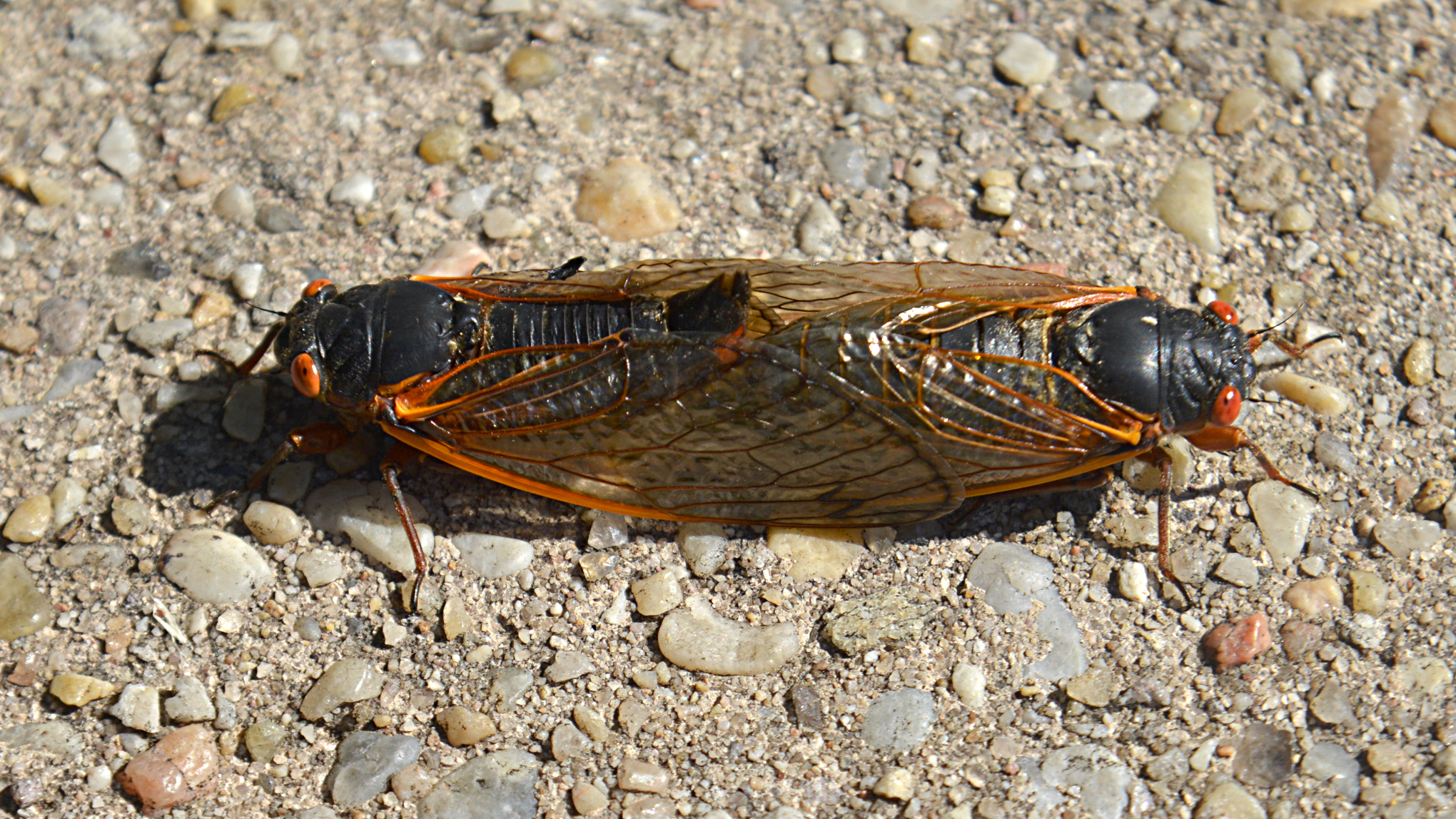
Because emergences are so regular and so conspicuous, they have been recorded for a long time, and the resulting maps are unusually complete for an insect.
Populations are organised into broods, each occupying a geographic area and emerging in its own year. A brood is not a species: several species emerge together within one brood, which is why the distinct songs matter. The numbering system used to label them dates from the nineteenth century, and records assembled from newspapers, diaries and naturalists’ letters extend the documented history back well beyond any scientific survey.
Several things are visible in that record. The areas do not overlap neatly, and the boundaries between adjacent broods can be sharp. A small number of individuals in every emergence appear four years early or four years late, which is thought to be how a brood can occasionally shift its schedule or found a new one. And at least one brood recorded in the nineteenth century has not been seen since, having apparently been lost as its habitat was cleared.
That last point is the vulnerability of the whole strategy. An animal with a seventeen-year generation and no capacity to disperse far cannot recover quickly from anything, and cannot relocate if the trees go. A population can be eliminated by a single change to a piece of land, and it will not be replaced from somewhere nearby within any useful timescale.
A Strategy That Only Works at Scale
What makes periodical cicadas worth understanding is that every element depends on every other.
The poor diet makes the long development necessary. The long development makes the count necessary. The prime interval makes the cycle hard to track. The synchrony makes the individual safe by making it one of millions. And the brevity of the adult phase is what makes satiation possible, because a predator can only be overwhelmed by something that arrives all at once.
Remove any one piece and the rest stops working. Stagger the emergence and the crowd protection disappears. Make the interval divisible and a predator can lock onto it. Give them a richer diet and there is no reason for the seventeen years in the first place.
It is one of the few cases in biology where a strange number turns out to be strange for a reason, and where the reason is arithmetic.
Like our content? Follow us for more.
