Twelve years old, and the only contact number reached a restaurant. Here are eleven.
1. She Was Twelve, and Nobody Checked Whether That Was Allowed

The hiring decision was made by a neighbour who knew the family, on the basis that the girl seemed sensible, and no minimum age was consulted because none was known.
There is still no single national age at which a child may be left responsible for another child in the United States – it is a state matter and in many states it is guidance rather than law. What changed is not primarily the rule. It is that the question now gets asked at all.
Like our content? Follow us for more.
2. She Was Given a Phone Number That Reached a Restaurant, Not a Person

The parents wrote down where they were going and the number of the establishment, and if she needed them somebody would have to be found and brought to the phone.
That is the detail that defines the whole arrangement. Contact was possible in principle and slow in practice, which meant that for several hours a twelve-year-old was the senior decision-maker in the house with no realistic prospect of consultation.
3. She Was Told the Children’s Bedtime and Almost Nothing Else

The briefing was typically under two minutes: when they go to bed, what they can have, do not open the door.
Modern babysitting handovers routinely include allergies, medications, emergency contacts, the location of a first aid kit, a doctor’s number, house alarm instructions and written permission to seek treatment. None of that existed as a practice, and the absence was not negligence. It was simply not yet the convention.
4. She Was Expected to Cook, On a Gas Stove, For Children Younger Than She Was
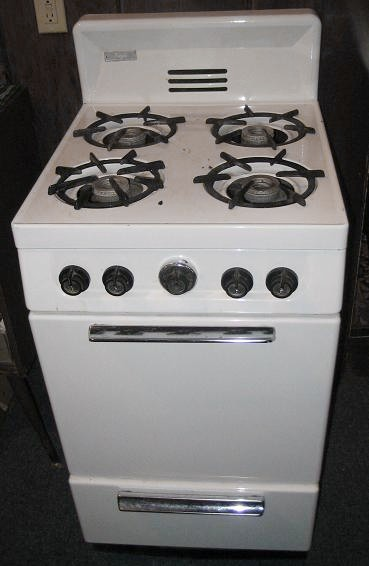
Dinner or supper for two or three small children was part of the job, prepared on the household’s own range, by a girl who had learned on her mother’s.
The cooking was rarely mentioned as a hazard and it was the single most skilled part of the work. It also explains why the job went overwhelmingly to girls: it was understood as a rehearsal for a role rather than as paid labour, and that framing determined both who did it and what it paid.
5. She Was Paid Fifty Cents an Hour and There Was No Negotiation

The rate was set by local custom, known to every family and every girl in the neighbourhood, and it did not vary by how many children there were or how late it ran.
The customary rate is the most interesting economic feature of the arrangement. It was not a market price – there was no bargaining – and it tracked what the neighbourhood thought was appropriate rather than what the work was worth, which is why it lagged so far behind the prevailing wage.
6. She Walked Home Alone in the Dark Afterwards

The job ended at eleven or midnight and the journey home was on foot, through the neighbourhood, by herself, and was considered the least remarkable part of the evening.
Being walked or driven home by the employing parent became standard practice later and is now essentially universal. The change happened quietly and nobody announced it, which makes it a good marker for when the general assumption about unsupervised young people shifted.
7. She Was Responsible for a Baby Without Ever Having Been Shown Anything

Infant care, including feeding, changing and settling, was handed over on the assumption that any girl of that age would know how, because most of them had younger siblings.
The assumption was frequently correct and it was still an assumption. The formalisation that followed – certified courses covering infant care, choking response and emergency procedure, taken before the first job rather than learned on it – represents a complete inversion of how the competence was acquired.
8. She Had a Standing Instruction Not to Open the Door, and That Was the Security Plan

There was no chain, no peephole in many houses, no alarm, no camera and no way to see who was outside. The entire protocol was a sentence.
It worked, overwhelmingly, which is worth saying. But the gap between the responsibility and the equipment provided to discharge it is the thing that reads most strangely now, and it is the same gap that appears in every item on this list.
9. She Ate Whatever She Was Told She Could Have and It Was Part of the Pay

Access to the refrigerator or a specific designated snack was a stated component of the arrangement and was understood by both sides as consideration.
In-kind payment was normal in this kind of informal domestic work and it is the clearest sign that nobody regarded it as employment. There was no record, no tax, no agreement and no recourse, and all four of those absences were mutual and unremarked.
10. She Was the Person Who Would Have Had to Decide What to Do

If something happened, the decision – whether to call anybody, who, and what to do in the meantime – was hers, made at twelve, alone, with a restaurant number as the only option.
This is the item the whole list exists to arrive at, and it is why the arrangement looks so different in retrospect than it felt at the time. Nothing about it was casual from the inside. A great many American women remember the specific weight of that responsibility with total clarity, decades later.
11. The Whole Arrangement Rested on One Thing That Has Actually Gone

Not rules, not equipment and not caution. It rested on a neighbourhood where the parents, the girl, her parents and the people on either side all knew each other.
That is what made it reasonable rather than reckless, and it is the thing that actually disappeared. The formal apparatus that replaced it – the courses, the certificates, the written permissions, the agencies, the background checks – is doing, imperfectly and expensively, exactly the job that mutual acquaintance used to do for nothing.
Mutual Acquaintance Was Doing All the Work

The temptation is to read this as a list of things nobody would permit now, and that is true but not the interesting part. What makes it worth looking at is what was holding it up.
There were no rules to speak of, no equipment, no training and no contact. What there was instead was a dense network of people who knew each other: the hiring parents knew the girl, knew her parents, and would see all of them at church or the store or the school gate the following week. That network did the vetting, set the customary rate, enforced the standards and provided the fallback, and it did all of it without a single document.
Everything that replaced it – certification, written authorisation, agencies, references, background checks, a phone in every pocket – is an attempt to reproduce that function in a world where neighbours are strangers. It mostly works. It is enormously more expensive and considerably less warm.
Ask an American woman in her sixties about the first time she was left in charge of somebody else’s children and watch how fast the detail comes back. None of them describe it as careless. They describe it as the first time anything was really up to them.
Like our content? Follow us for more.