

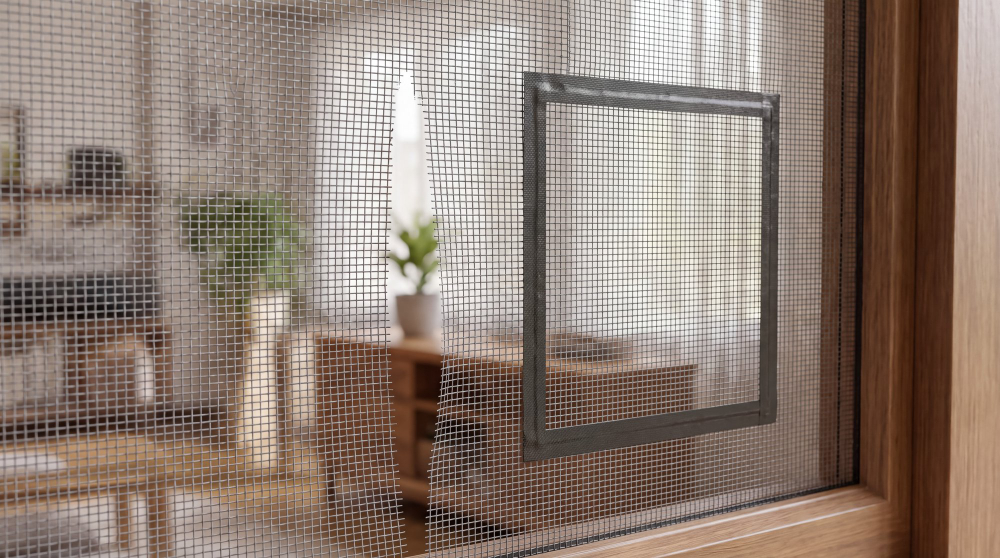
An American arriving in Italy or France in August and discovering that the windows have shutters, glass and nothing else is reliably astonished. An Italian arriving in Ohio and finding a layer of grey mesh between the room and the air is equally puzzled, and frequently notes that it makes everything look slightly dim.
The usual explanation is that America has worse insects. There is something to that, but it is not the cause. The cause is that at a particular moment the United States decided, as a matter of organised public policy, that screening every opening in every building was worth doing – and then did it.
What the Screen Is Actually For
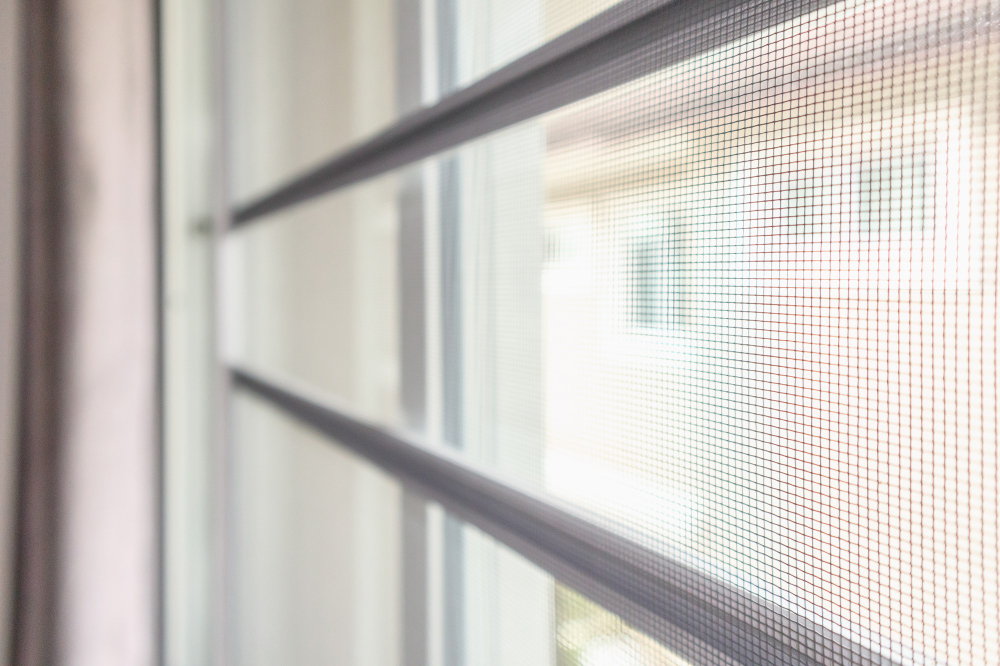
The first thing to be clear about is that the window screen was not introduced as a comfort measure.
Through the nineteenth century, a cluster of serious diseases were understood to be connected with warm, damp, low-lying places and with night air. The explanation available at the time attributed them to the air itself – to miasma rising from marshland – which is why the historical vocabulary for these illnesses refers to bad air rather than to anything living.
That explanation was wrong, and the correction is one of the most consequential findings in the history of medicine: the diseases were carried by insects, and the insects bred in the standing water of exactly those warm damp low-lying places. The night association was correct too, because the relevant insects are most active then.
Once that was established, the intervention became obvious and mechanical. If the disease arrives on an insect, and the insect has to get to a person to transmit it, then a physical barrier between the insect and the person is a complete intervention. No medicine, no behaviour change and no understanding on the occupant’s part is required. You simply have to stop the insect entering the room.
That is what a window screen is. It is not a convenience. It is a barrier in a disease transmission chain, and it was deployed as one.
Like our content? Follow us for more.
Why the United States and Not Europe
Two things made the American case different, and together they explain the whole divergence.
The first is geography. A very large part of the United States is warm and humid in summer, with extensive wetland, slow rivers and a long season – the South and the Mississippi valley in particular. Those conditions supported insect-borne disease at a scale that most of Europe, at a higher latitude with a drier and shorter summer, did not experience in the same way. There were outbreaks in southern Europe, and malaria was present in parts of the Mediterranean into the twentieth century, but the American problem was larger and more widespread.
The second is timing. The insect-transmission finding arrived at the end of the nineteenth century, and it arrived in a United States that was in the middle of an enormous construction boom, building out cities, suburbs and small towns at a rate nothing in Europe matched. Europe’s housing stock was substantially already built, in masonry, with window openings designed before anybody knew what a screen was for. America’s was going up right then, in timber frame, with standardised window units coming out of factories.
So the recommendation to screen every opening arrived in one country as a retrofit to centuries of existing buildings and in the other as a specification for the houses currently being framed. In the United States it simply became part of what a window was.
The Campaign Itself
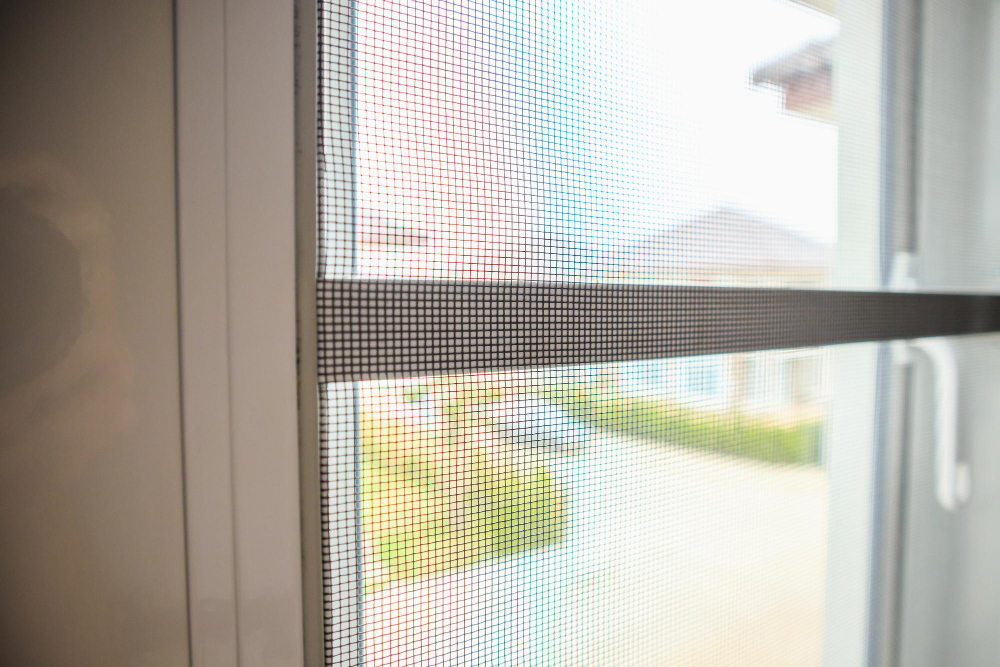
The scale of the effort is the part that has been forgotten, and it was considerable.
Screening was promoted through public health authorities, agricultural extension services, medical associations and government publications, as one element of a broader programme that also included draining standing water, treating breeding sites, clearing containers around dwellings and eventually large-scale application of insecticide.
The messaging was direct and it was aimed at households rather than at institutions. Screen your windows and doors. Keep the screens in repair. Do not leave water standing in a container near the house. The whole package was presented as something an ordinary family could do, which is why it worked – the barrier does not require anybody to understand the biology.
And the result was close to total. The insect-borne diseases that had shaped settlement patterns, military campaigns and the economy of the American South through the nineteenth century were effectively eliminated from the continental United States within a few decades. Screening was not the only reason – drainage, insecticide and improved housing all contributed, and it is hard to apportion credit between them – but the screen is the one that is still bolted to every window.
It is worth stating the cost comparison, because it is the thing that makes the episode remarkable. A sheet of mesh in a frame is one of the least expensive interventions available in public health, requires no maintenance beyond occasional repair, needs no compliance from the occupant, and keeps working for decades.
What Happened to the Screen Afterwards
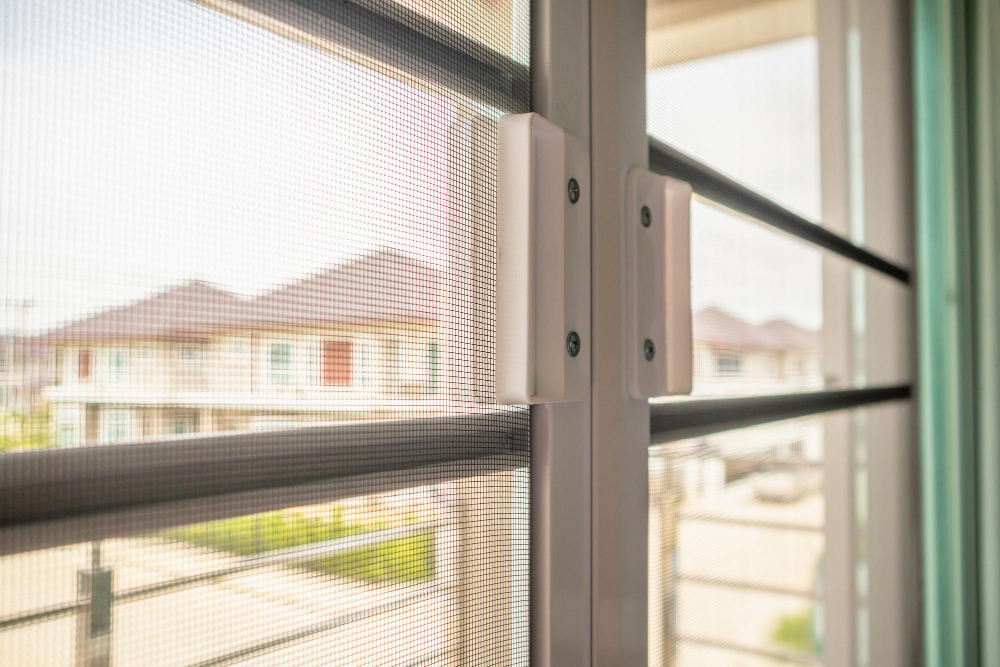
The interesting part is what the screen became once it was no longer needed for its original purpose.
It stayed, and it acquired a completely different set of justifications. It keeps out flies, wasps and mosquitoes as a comfort matter. It allows windows to be left open overnight and in rain. It lets a house be ventilated without being invaded. It keeps cats in and birds out. On a porch it converts an outdoor space into a usable room, which is a substantial piece of American domestic architecture in its own right.
And it became part of the building standard. Screens are expected in American rental housing, are supplied with new windows as a matter of course, and are specified in building codes in various forms. A new American window arrives with a screen in the same way it arrives with a lock.
Which means the original reason has been entirely forgotten by the people using it. Ask an American why their windows have screens and you will be told it is because of bugs, which is true and is the smaller half of the answer. The larger half is that a public health campaign a century ago installed a disease barrier in every house in the country, the disease went away, and the barrier stayed because it turned out to be useful for something else.
The Screen Door Was the Harder Problem
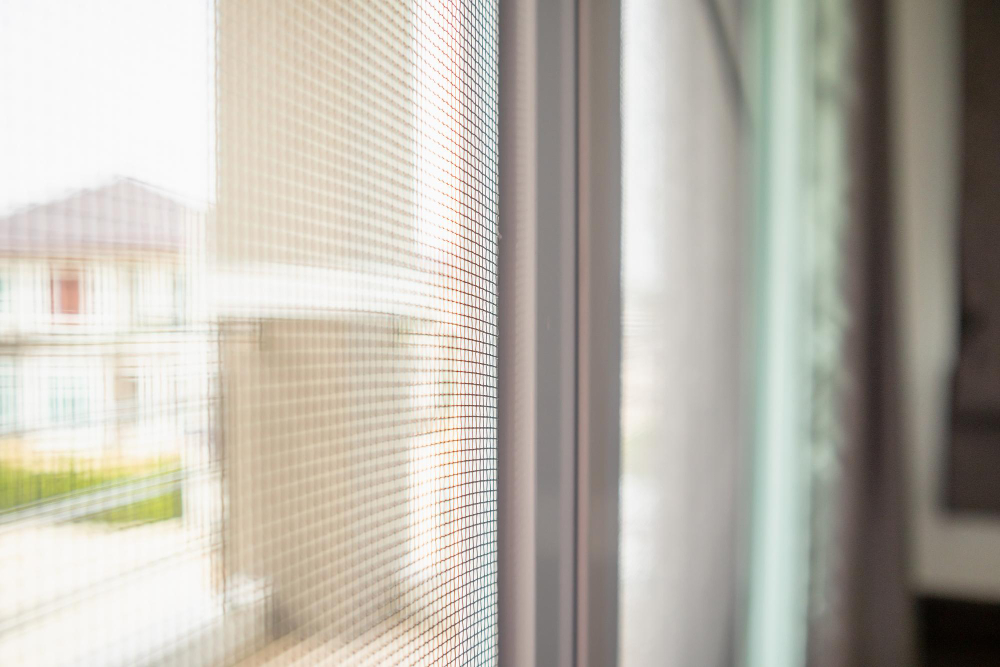
A window is easy to screen because it does not have to be walked through. A door is the difficult case, and the American solution to it is a distinct piece of hardware that barely exists elsewhere.
The problem is that a barrier in a doorway has to be opened constantly and must close itself every time, because the one thing guaranteed to defeat it is a person leaving it ajar. That is why the American screen door acquired two features that nothing else in a house has: a spring or pneumatic closer that shuts it without being asked, and a latch light enough for a child to work.
Both of those produce the sound. The long creak of the spring and the bang of the frame hitting the jamb are among the most recognisable domestic noises in American life, and they exist because the door was designed to shut itself rather than to shut quietly. A screen door that closed softly would be a worse screen door.
It also had to survive being walked into, which is why the lower half is usually protected by a kick plate or a heavier grille, and why screening a door costs several times what screening a window does.
None of this was necessary in a building tradition where the opening was already filled by a heavy timber or glazed door and a shutter. The screen door is specific to a house that wants its principal door standing open all summer, which is an American expectation rather than a universal one.
Why Europe Still Mostly Does Without

Europe’s alternative is worth describing, because it is a coherent system rather than an absence.
The European approach to a hot night is the shutter. External shutters closed during the day keep the sun off the glass and the wall, which is a far better cooling strategy than anything that happens after the heat is already inside. At night the shutters open, and the window is open behind them.
That works because the insect pressure is lower, and because the buildings are different: thick masonry walls with high thermal mass, tall ceilings, deep window reveals and in older houses a layout designed for cross-ventilation. A screen would contribute little and would interfere with the shutter.
It is also the case that screens are increasingly being fitted in parts of Europe, as summers lengthen and as insect ranges shift northward. Retrofit screens, roller screens and magnetic frames are a growing product category in exactly the countries that historically had no use for them, which is a reasonably good indication that the original divergence was about conditions and timing rather than about national preference.
The Honest Summary
The American window screen exists because at the end of the nineteenth century it was established that several serious diseases were carried by insects rather than by bad air, and a physical barrier at the window is a complete and extremely cheap way to break that chain.
The United States had the climate and the wetland to have a large problem, and – decisively – it was building most of its housing stock at precisely the moment the finding arrived, so the screen went into the specification rather than onto the retrofit list. Europe, at a higher latitude with its buildings already standing, had less reason and a harder job, and solved the heat with shutters instead.
The disease is gone from the United States and the mesh is still there on every window, now justified entirely by the convenience of being able to sleep with the window open. It is the rare case of a public health measure so successful that its purpose has been forgotten by everybody still using it.
Like our content? Follow us for more.
