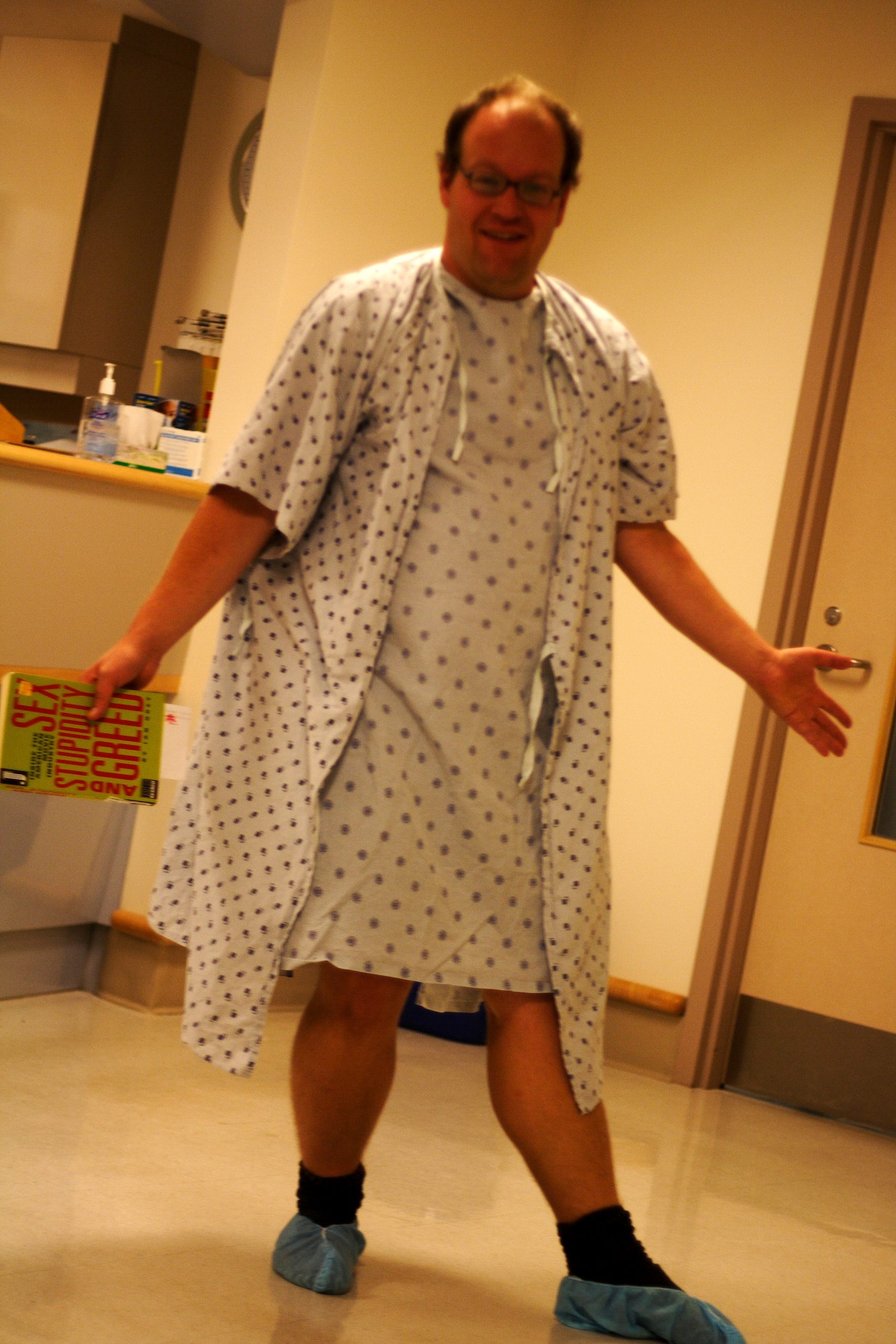
The hospital gown is probably the most disliked garment in widespread use. It is open at the back, it ties with cords most people cannot reach, it exposes exactly the part of the body nobody wants exposed, and it has to be held shut with one hand while walking down a corridor past strangers.
It is also an extremely well-designed object, provided you understand who it was designed for. It was not designed for the person wearing it.
What the Garment Is Actually Optimised For
Every irritating feature of the gown is the answer to a clinical requirement, and the requirements are real.
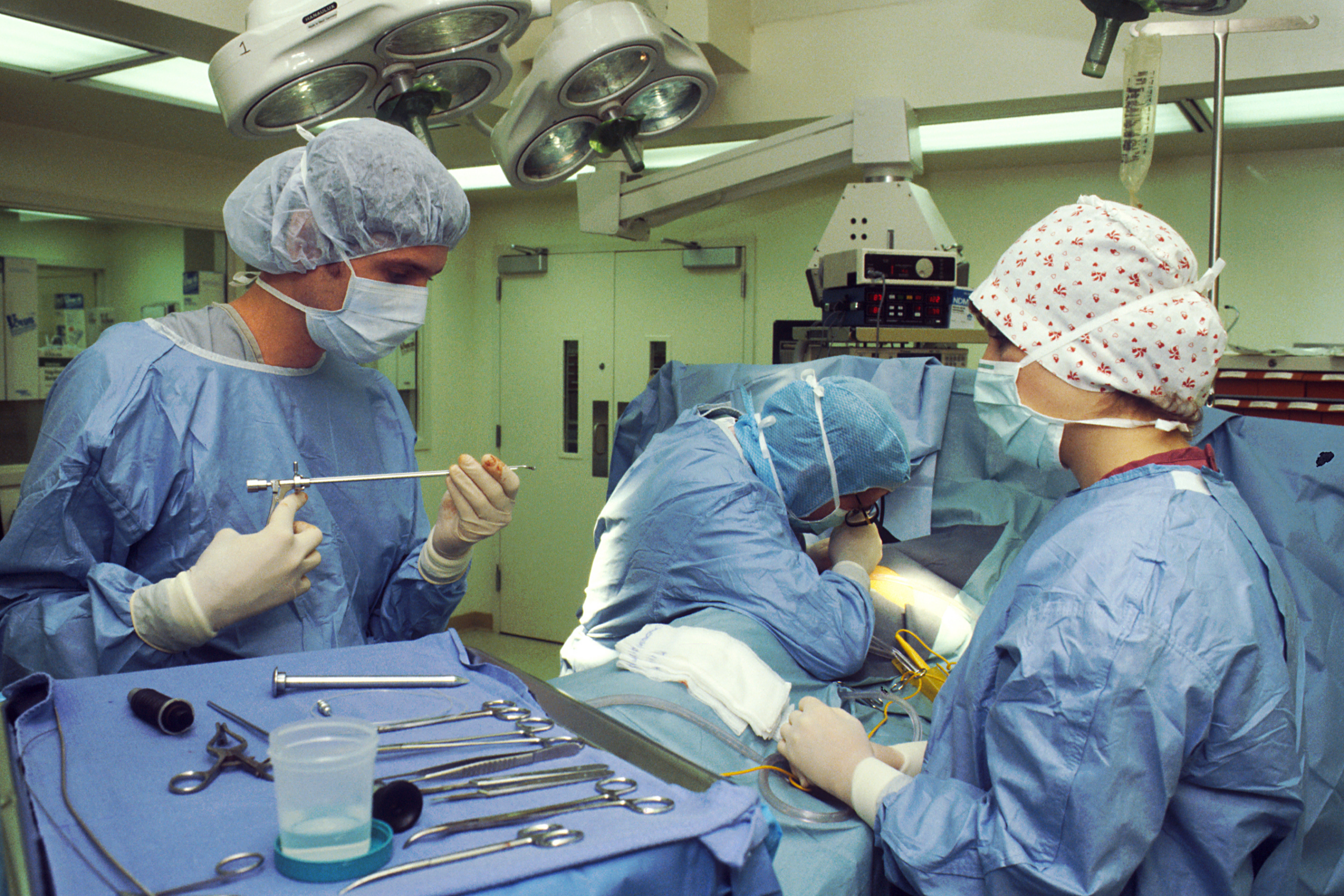
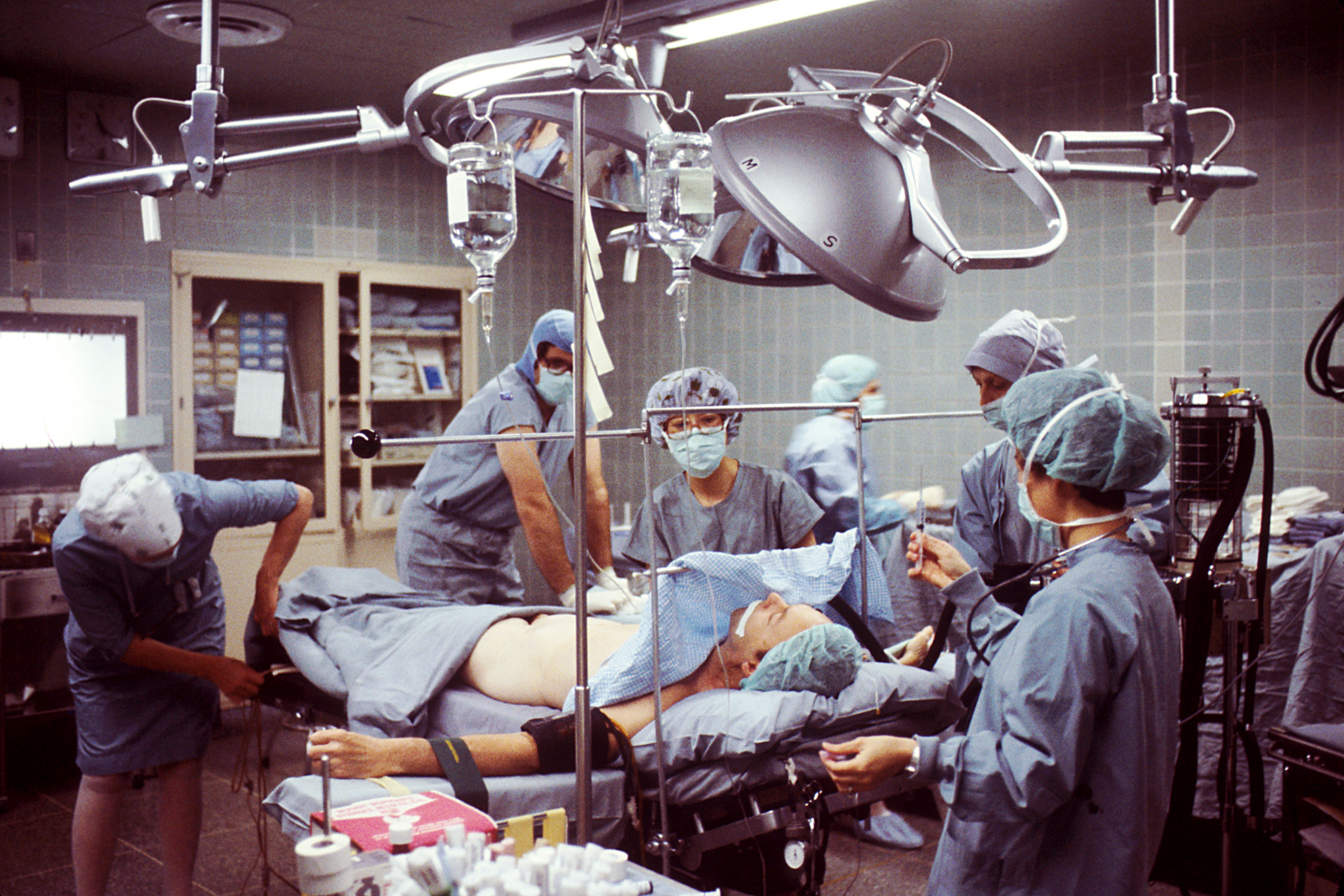
A gown that opens fully from neck to hem can be put on and taken off a person who cannot sit up, cannot lift their arms, is unconscious, is attached to a drip in one arm and a monitor on the other, or has a limb in plaster. Nothing has to pass over the head. Nothing has to be threaded along an arm with a cannula in it. Two people can change a gown on a patient who cannot move at all, which is a routine task performed many times a day in any hospital.
It gives access to the back, which is where a great deal of medicine happens – a stethoscope on the lungs, a spinal injection, an epidural, an examination of the spine, pressure sore checks on the sacrum and the shoulder blades, which have to be done on a schedule for anybody immobile.
It can be removed in seconds in an emergency, by one person, without scissors.
It is a single size that fits almost everybody, which means a hospital stocks one item instead of eight. It is flat when folded, so it stacks and launders efficiently. It has no zips, buttons, hooks or metal, which matters for an MRI scanner and for an industrial laundry. It is cheap enough to be disposable where it has to be and durable enough to survive hundreds of washes at high temperature where it does not.
Judged against that list, the gown is close to optimal. The list simply does not include dignity.
Like our content? Follow us for more.
It Was Standardised in a Period When Patients Were Not Asked
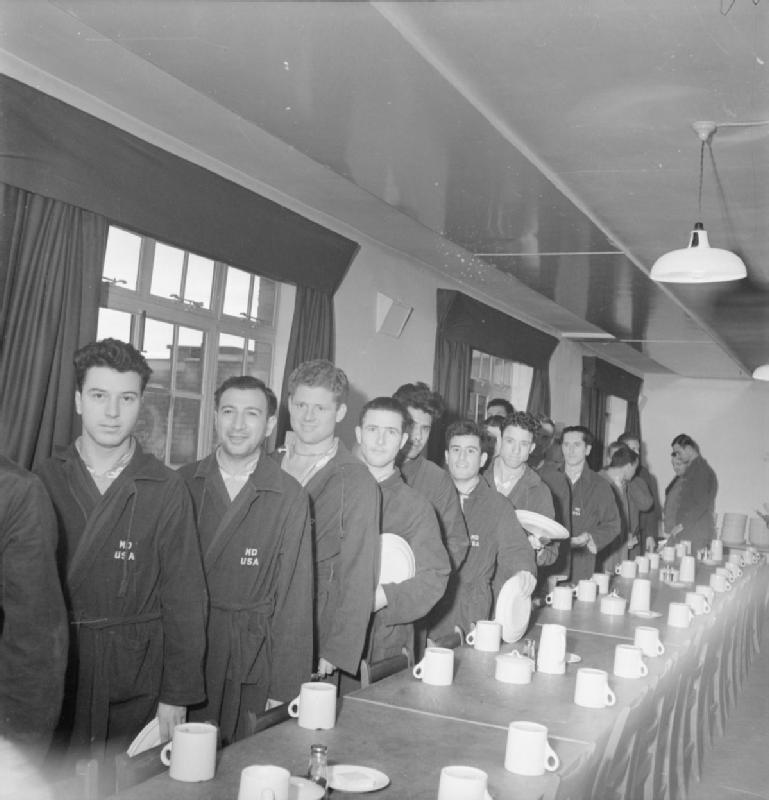
The gown’s design dates from the late nineteenth and early twentieth centuries, as hospitals shifted from charitable institutions where the poor went to die into places where surgery happened and infection control mattered.
Two things drove the design. Antisepsis meant that what a patient wore had to be laundered at temperatures that destroyed ordinary clothing, so hospitals began providing garments rather than letting people wear their own. And the growth of surgery meant patients needed to be got in and out of clothing while unconscious.
The patient’s opinion did not enter the calculation, because at that point almost nothing about hospital care involved asking the patient anything. The same era gave us wards of twenty beds with no screens, visiting hours of two hours a week, and a general practice of not telling people their own diagnosis. A garment designed for the convenience of staff was entirely consistent with everything else.
What is remarkable is not that it was designed that way. It is that it is still in use, more or less unchanged, after a century in which almost every other aspect of that culture has been dismantled.
The Redesigns Are Real, and They Keep Not Winning

There have been many serious attempts. Design schools set it as a brief. Major hospitals have commissioned replacements. Fashion designers have been brought in, with publicity. There are patented gowns with wrap fronts, with overlapping panels, with snap shoulders, with full back coverage, with integrated trousers, with access flaps positioned over the specific sites clinicians need.
Some of them are genuinely better. Several are in use in particular departments. None has displaced the standard gown at scale, and the reasons are consistent.
They cost more, often several times more, and a hospital buys these by the tens of thousands. They introduce sizing, which multiplies the stock a ward has to hold and guarantees that the right size is sometimes not available. Fasteners that are easy for a patient are frequently slower for a nurse changing a gown on a person who cannot help, and in a system where staff time is the scarcest resource, a garment that costs thirty extra seconds per change loses. Anything with press studs or hooks creates problems in an MRI suite and a laundry. And a gown that provides more coverage provides, by definition, less access.
The last point is the one that defeats most designs. Coverage and access are the same axis. You cannot have more of both, and the clinical side of the argument has the stronger claim, because the consequence of inadequate access is a delayed procedure and the consequence of inadequate coverage is embarrassment.
Embarrassment Is Not a Trivial Clinical Problem

That said, the trade-off is not as lopsided as it looks, and the research on this has shifted the conversation.
Patients who feel exposed move less. They decline to walk the corridor, and early mobilisation after surgery is one of the better-evidenced things in recovery – it reduces clots, pneumonia and length of stay. They delay asking for help with the lavatory. They avoid sitting up. They report worse experiences of care, which affects whether they come back and whether they comply with what they are told.
There is also a documented effect on how patients behave in consultations. A person who feels undignified is less likely to ask questions, less likely to disagree with a clinician, and less likely to mention a symptom they find embarrassing – which is the category of symptom most likely to matter.
So the gown is not purely a comfort issue with a clinical benefit on the other side. It has costs on the clinical side too, and once those are counted the case for redesign is stronger than it was when the only argument was that patients disliked it.
What Has Actually Changed
The practical fixes that have spread are mostly workarounds rather than redesigns, and they work.
The two-gown method – one worn normally, one worn backwards as a dressing gown – is near-universal, improvised by patients and then adopted and recommended by staff. It costs one extra gown and solves most of the problem for anybody mobile.
Dressing gowns and robes are now routinely offered or encouraged, and a great many hospitals tell patients to bring their own.
Patients are increasingly allowed to stay in their own clothes for anything that does not require access – outpatient appointments, a great many scans, large parts of a day-surgery pathway before and after the procedure itself. The single biggest reduction in gown-wearing has come not from a better gown but from a reduction in the number of situations where one is worn at all.
And specialist gowns have taken over in specific settings where the trade-off is clear: wrap-front gowns in maternity, shoulder-access gowns for dialysis and chemotherapy, trousers with side openings for orthopaedics.
The Colour and the Pattern Are Decisions Too

The pale blue, the washed-out green, the small repeating print – none of that is arbitrary either, and each choice is made for somebody other than the patient.
Pale blues and greens are the standard because they are the opposite of blood on the visible spectrum, which means a stain shows immediately and a surgeon’s eyes, fatigued by staring at red tissue, get relief rather than an afterimage when they look up. The same reasoning put scrubs and drapes in those colours.
The print exists to disguise the laundry. A plain white gown washed three hundred times at high temperature goes grey and shows every mark that did not come out, and a patient handed a visibly greying garment reads it as dirty whether it is or not. A small pattern hides wear, hides residual staining, and hides the difference between a gown on its fifth wash and its two hundredth.
Colour also does inventory work. Many hospitals run different colours for different departments or for different gown types, so a member of staff can tell at a glance whether a patient is dressed for theatre, for a scan, or for a ward, and so that gowns return to the right linen stream. A few use colour to flag a clinical status – a falls risk, an allergy – which is quicker to read across a ward than a wristband.
So the gown is carrying information for staff on its surface as well as providing access through its back. Almost every property of the garment turns out to be addressed to somebody at the foot of the bed.
Why It Survives
The hospital gown is a useful object to think about because it is a clear case of a design that is bad for its user, good for its system, and extremely hard to replace for reasons that have nothing to do with anybody being careless.
It is cheap, it is universal, it does a difficult clinical job well, it requires no training, it fits everyone, and it fails gracefully – a torn gown is still a gown. Every replacement has had to beat it on all of those at once while also being more dignified, and that is a much harder brief than it sounds.
The thing most likely to end it is not a better gown. It is the continuing shift of care out of beds and into day procedures, outpatient clinics and people’s own homes, where a patient keeps their own clothes on and the question does not arise.
In the meantime, the two-gown trick is free, nobody will object, and it is worth knowing that the staff will almost certainly offer you the second one if you ask. Which is a small piece of practical advice resting on a large piece of design history: the garment was never meant to be worn by somebody standing up and walking about, because when it was designed, patients mostly were not.
Like our content? Follow us for more.