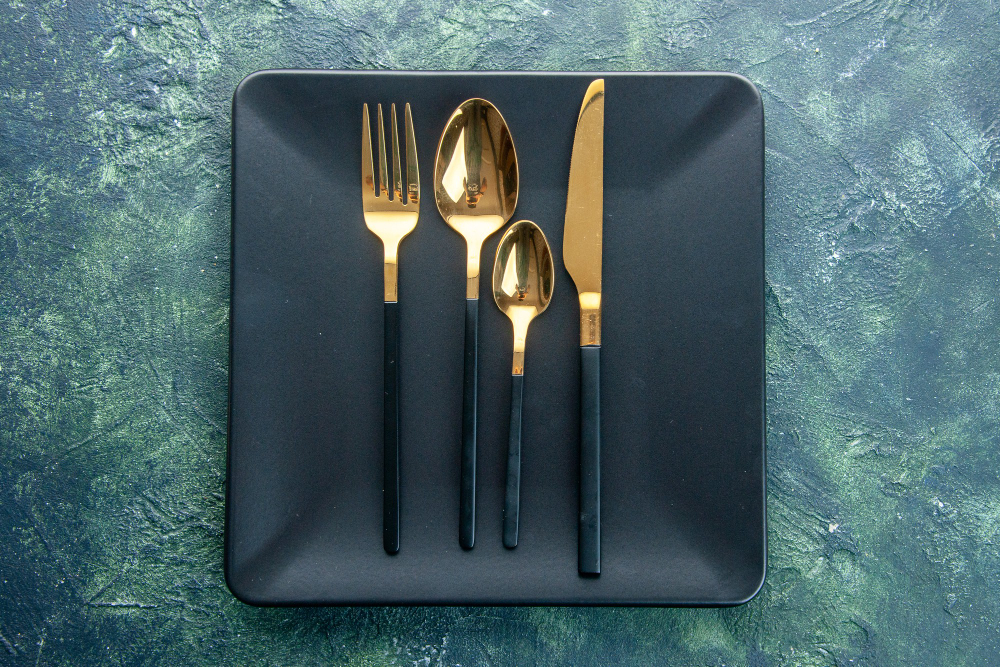
There is a useful question to ask about any everyday object: what did people do before it, and did they think they had a problem?
For most tools the answer is that the previous method was worse and everybody knew it. For the fork the answer is different, and it is why the object took so long to be accepted.
Before forks, food was held with the fingers and cut with a knife, and that worked. It was not experienced as a deficiency, it required no equipment, and the conventions around doing it cleanly were well developed.
So a device that did the same job with an implement was not obviously an improvement. It was an additional object, requiring manufacture, cleaning and storage, to accomplish something hands already did — and the resistance to it was correspondingly durable.
The Three Problems
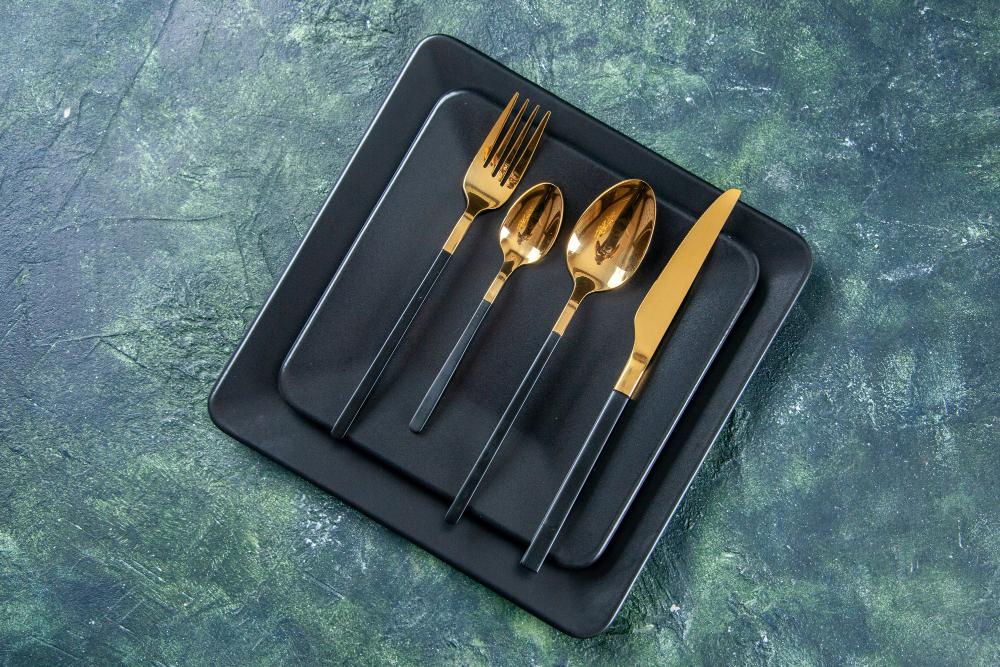
Separating what each implement solves makes the sequence comprehensible.
Cutting requires an edge and a way of applying force, which is the knife, and it is among the oldest tools there is.
Containing liquid requires a hollow, which is the spoon, and shells, gourds and hollowed wood provided one long before anybody manufactured anything.
Holding food steady while cutting, and conveying it, is the third problem — and hands solve it adequately.
That is why the sequence went knife, spoon, and then a very long gap, because the third problem was not experienced as unsolved.
What eventually changed was not the problem but the context: what people were eating, how they were eating it, and what was considered acceptable at a table.
Like our content? Follow us for more.
Why the Knife Came to the Table and Then Left
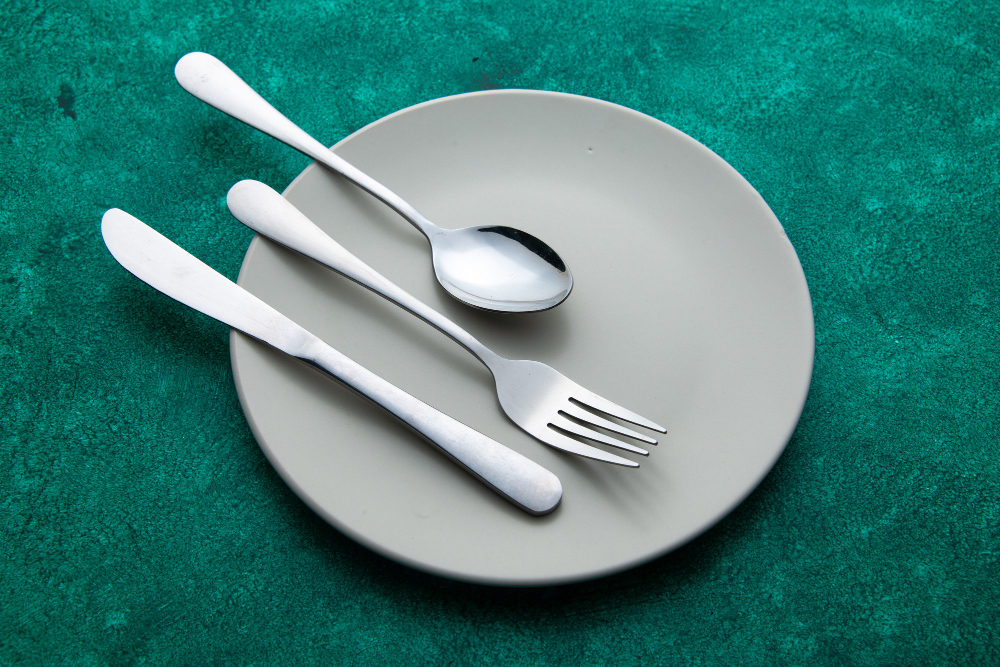
The knife has an interesting trajectory that most people do not know.
For a long period, people carried their own and brought it to the table, because a knife was a personal tool rather than tableware — used for everything during the day and for eating in the evening.
Table knives as a category, provided by a host, arrived later, and the point at which they did marks a shift in what a meal was.
More striking is the change in shape. Table knives were originally pointed, because the point was used to spear and lift food to the mouth, which is the job the fork later took.
Once forks were adopted, the point had no function — and the rounded end of a modern table knife is a direct consequence, with the pointed version becoming unnecessary and, in some accounts, discouraged.
So the shape of an object on any table now records the arrival of a different object entirely, which is the sort of thing that becomes invisible once a form has settled.
What the Fork Was Actually For
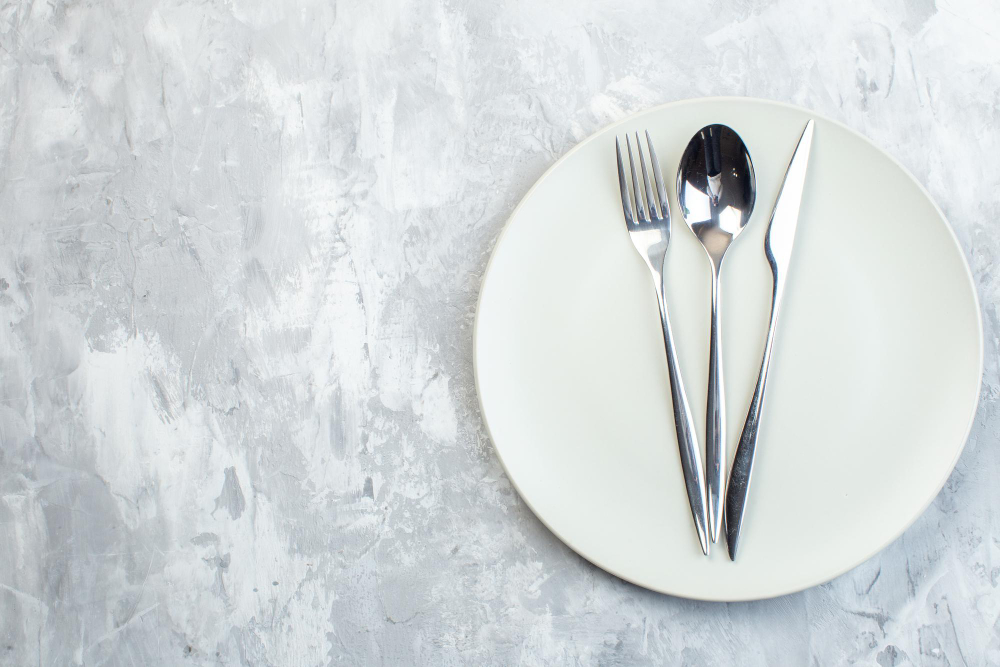
The early history of the implement is not about eating in the modern sense.
Forks existed for a long time as kitchen and serving tools — for holding meat while carving, for lifting things from pots, for handling food that was hot or awkward.
Those are entirely different objects from an eating implement, with different sizes and different numbers of prongs, and their existence does not mean anybody was eating with them.
The transition to an eating implement happened in specific places and spread unevenly, and the earliest adopters were associated with particular foods that are difficult to manage with fingers.
That is the practical driver. A food that is slippery, or served in a sauce, or long and awkward, makes the fingers method truly inconvenient — and where such foods were common, the implement was adopted earlier.
Which means the fork spread with a cuisine rather than being invented and distributed, and the resistance was strongest where it solved a problem nobody had.
There is a size point worth noting. Eating implements settled at dimensions set by the human mouth and hand, which have not changed – so the working parts of a modern set are close to those of a very old one.
What varies is the handle, which is where decoration and fashion went because nothing functional constrained it.
Why Two Prongs Became Four
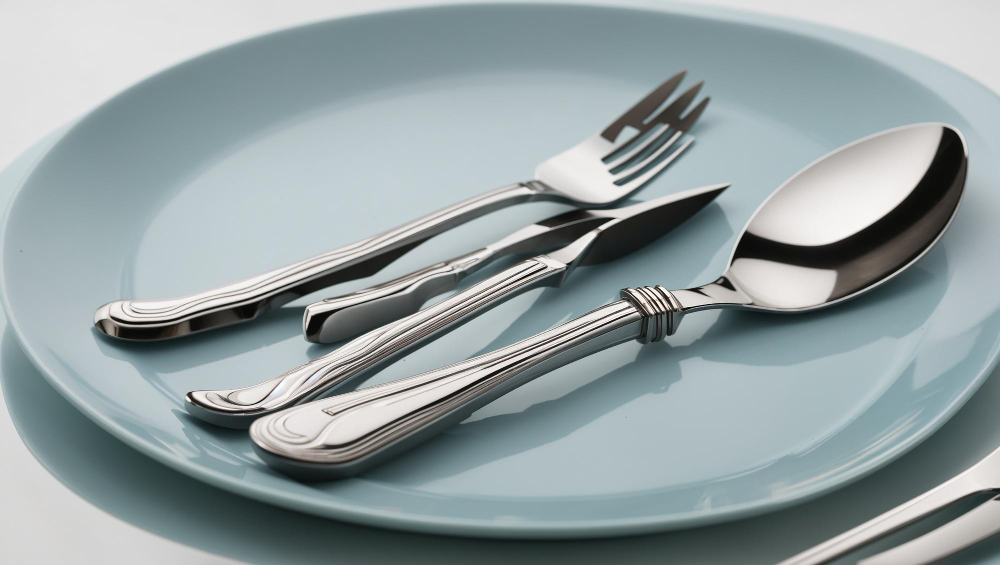
The form changed for a specific reason and it is a good example of a design refining itself.
Early eating forks had two prongs, which is adequate for spearing and poor for everything else — food rotates between the prongs and falls off, and nothing can be scooped.
Adding a third and then a fourth prong, and curving the whole head, changes the object substantially. A curved four-pronged head can spear, can hold food against rotation, and can lift material that is not speared at all.
That last capability is what made the fork general-purpose rather than specialised, because it can be used as a shallow scoop — which is how it is actually used most of the time.
So the modern form is a compromise between a spear and a spoon, and the curve is what allows it to be both.
Which explains why forks stopped changing once they reached that shape. It does all three jobs adequately, and no further addition improves it.
The Spoon Question
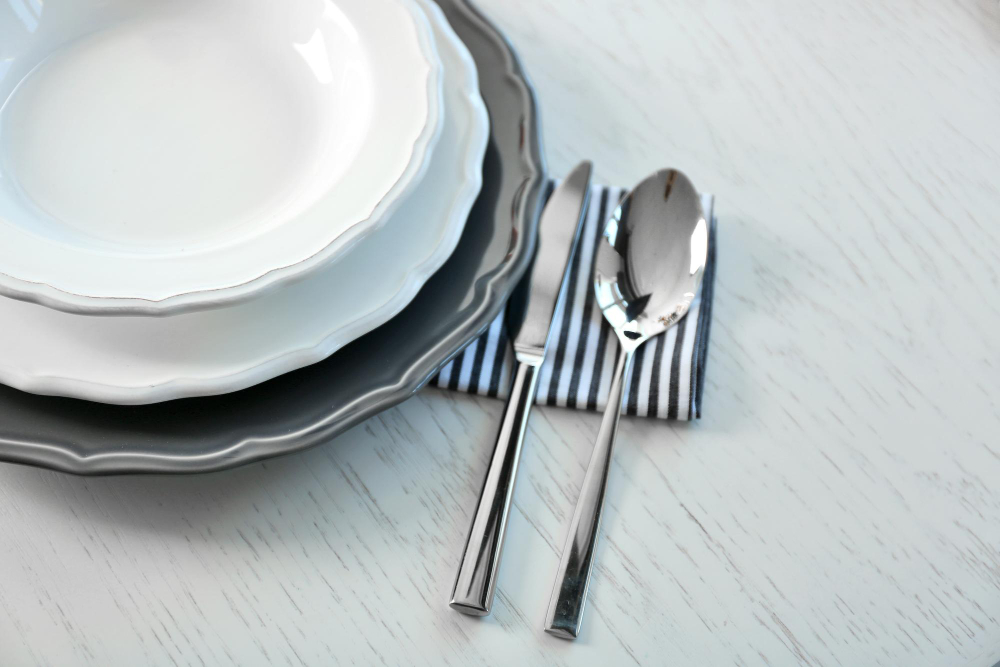
A detail about the oldest implement is worth including.
Spoons vary enormously in shape and the variation is functional rather than decorative.
A deep round bowl holds the most liquid and delivers it awkwardly; a shallower oval bowl holds less and fits the mouth better, which is why eating spoons and serving spoons differ.
The angle between bowl and handle matters, since it determines whether the bowl stays level when the handle is held comfortably — and a badly angled spoon spills before it arrives.
Length is set by the distance from hand to mouth for eating implements, and by the depth of a vessel for cooking ones, which is why the two categories look so different.
And the material affects use more than people expect, since a thin edge feels different against the lips from a thick one, and a conductive material makes a hot liquid uncomfortable to eat.
Those are all constraints on an object that appears to have no design content at all, which is generally the sign that the design settled a very long time ago.
Why It Is Made of What It Is Made Of
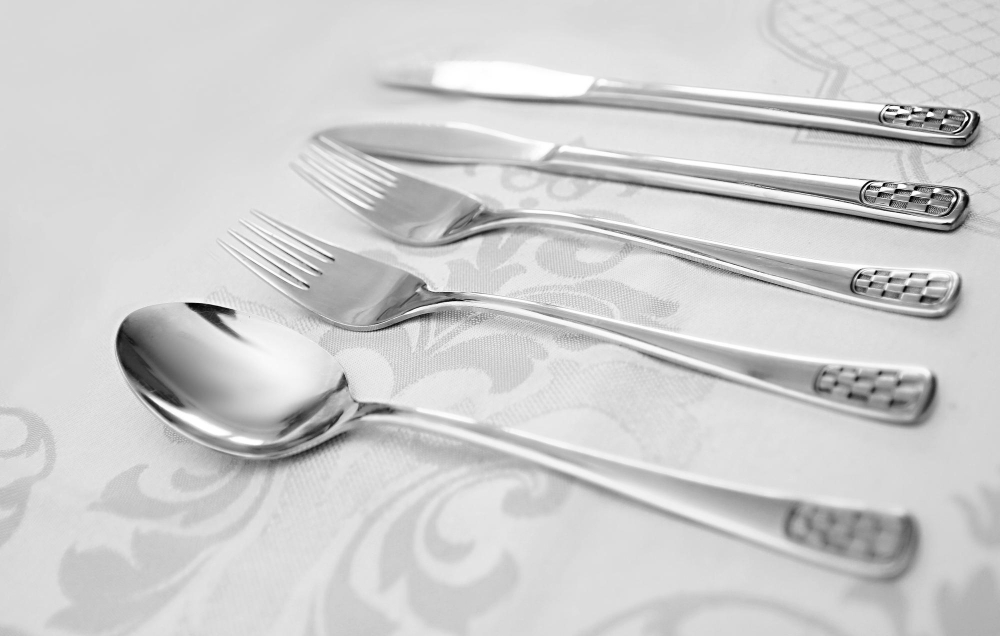
The material question is more consequential than it appears and it delayed the whole arrangement.
An eating implement must be hard enough to hold an edge or a point, must not corrode in contact with food and moisture, must not impart a taste, and must survive repeated washing.
Very few materials meet all of those, which is why the earliest implements were of materials that meet some and fail others.
Iron holds an edge and rusts, which means a knife had to be cleaned and dried immediately and still deteriorated, and food acids discoloured it and were tainted by it.
Precious metals do not corrode and are soft, expensive and restricted to households that could afford them, which is why a full set in such material was a marker rather than an ordinary possession.
Various platings placed a thin non-corroding layer over a cheaper base, which made the appearance affordable and wore through at the points of most contact.
The alloy that solved it properly — hard, edge-holding and non-corroding — arrived remarkably recently, and its arrival is what made a matched set an ordinary household possession rather than a significant investment.
Which is the usual hidden variable. The form of these objects had settled long before, and what changed was the material — after which a set of implements stopped being something a household saved for and became something it simply had.
What the Set Represents
The general point is about how conventions harden.
A knife, fork and spoon is now a standard, with agreed positions, agreed uses and agreed etiquette — and it is a recent arrangement assembled from implements of enormously different ages for reasons that were partly practical and partly social.
Other traditions solved the same problems differently and arrived at arrangements that work equally well, which is the clearest evidence that the set is a convention rather than an optimum.
And the conventions around it became a marker of conduct, which is what gave the whole thing a significance far beyond the practical — and which is why the arrival of an unnecessary implement was argued about for centuries rather than being adopted or ignored on its merits.
Which is a reasonable thing to consider looking at a laid table. Two of those objects are older than agriculture, one arrived comparatively recently and was thought ridiculous, and the shape of a third was changed by the arrival of the second — none of which is apparent from looking at them.
Which is the usual condition of a settled convention. It presents itself as the obvious arrangement, it is the residue of a long argument, and the only evidence left is a rounded knife nobody can explain.
Like our content? Follow us for more.