

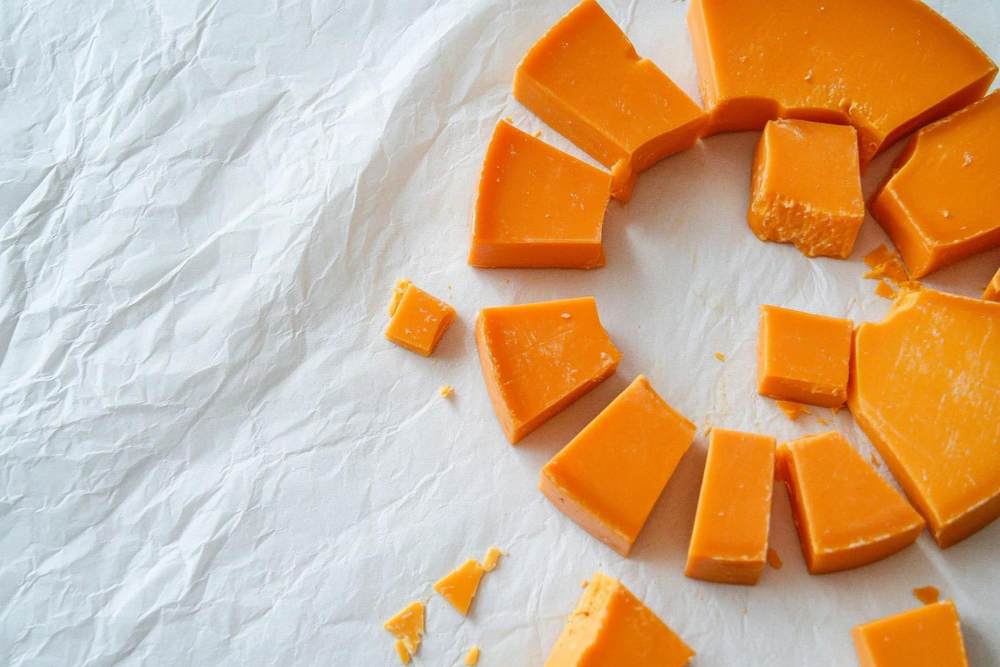
Hold a block of supermarket cheddar next to a block of English or Irish cheddar and one of them is a colour that does not occur in dairy. It is somewhere between apricot and traffic cone, it is completely uniform, and it has no effect whatsoever on the flavour.
Most people assume it is modern, industrial and American. It is none of those things. The practice is older than the United States, it started in England, and the reason behind it is a small piece of agricultural fraud that became a consumer expectation and then outlived its own purpose by two centuries.
Why Milk Is Sometimes Yellow in the First Place
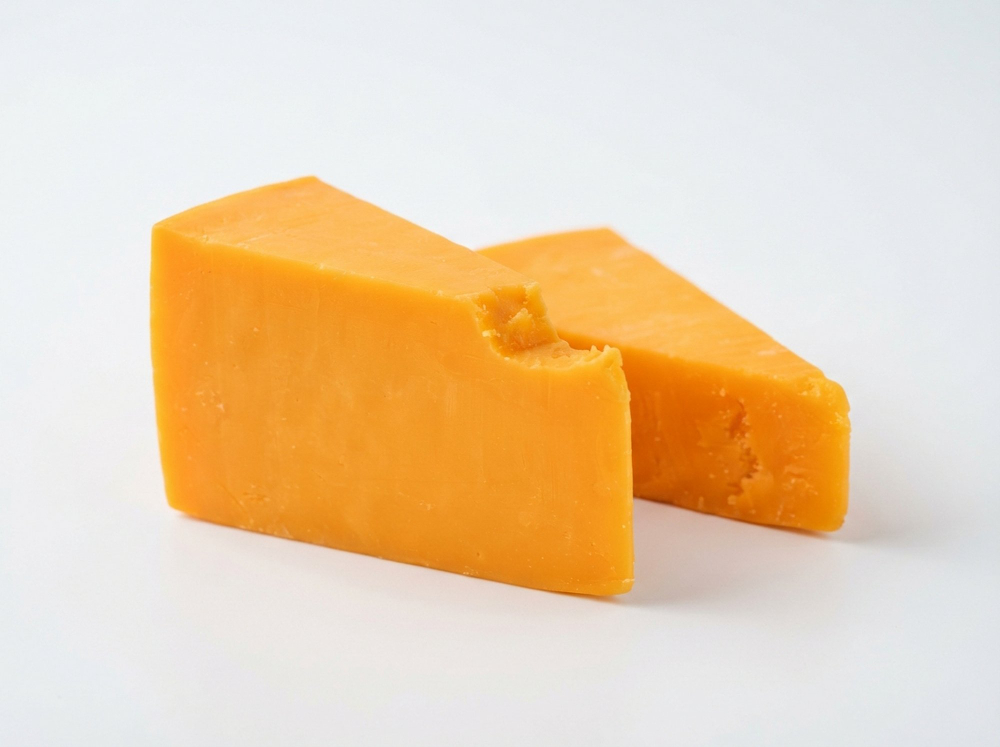
The whole story depends on one fact about cows, so it is worth getting straight.
Cattle eating fresh green pasture take in carotene, the orange pigment in grass and in a great many plants. Cows are relatively poor at converting carotene into colourless vitamin A, so a good deal of it passes through into the fat in their milk.
That is why butter and cream from grass-fed cattle have a yellow tint and why the tint varies through the year – strong in spring and early summer when the grass is growing, much paler in winter when the animals are on stored feed. It also varies by breed, because some breeds convert carotene more efficiently than others.
The pigment sits in the fat, which matters enormously for what follows. Butter is almost entirely fat, so it carries the colour strongly. Cheese is made from the whole milk, so a cheese made from rich spring milk comes out a deeper yellow than one made in February.
So a yellow cheese was a real signal, and what it signalled was high fat content from cattle on good pasture. A pale cheese meant winter, poor pasture, or something else.
Like our content? Follow us for more.
The Something Else

Here is the fraud, and it is simple.
Cream is the most valuable part of milk. A dairy farmer can skim the cream off the top, sell it separately at a premium, or churn it into butter, which keeps longer and sells for more – and then make cheese from what is left.
Cheese made from skimmed or partly skimmed milk is a worse cheese. It has less fat, so it is drier, harder, less flavourful and considerably less valuable. And it is noticeably paler, because the pigment went out with the cream.
Which creates an obvious temptation. If buyers are using colour as a proxy for quality, and if removing the valuable part makes the cheese pale, then adding colour back disguises the removal. The farmer gets to sell the cream and still get the price of a full-fat cheese.
That is what began happening in English dairying in the seventeenth and eighteenth centuries, and it is documented as a complaint at the time rather than reconstructed afterwards. The colouring was understood by the people doing it as a way of making a lesser cheese pass for a better one.
What They Coloured It With
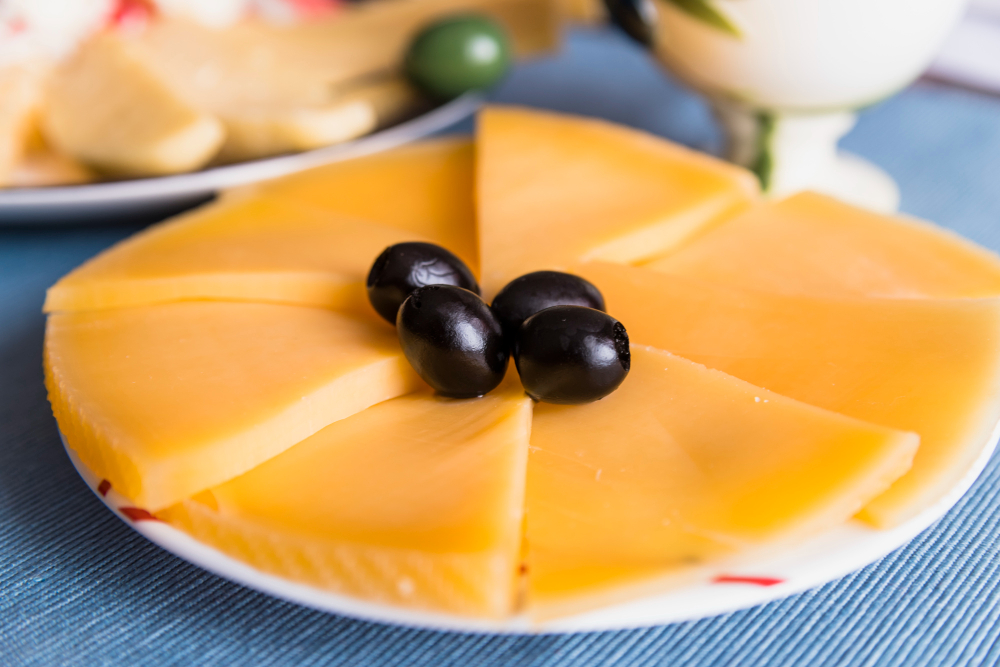
The colourant that won out is a seed, and it had been in use for a very long time before anybody put it in cheese.
It comes from the achiote tree of tropical America, whose seeds are surrounded by a waxy orange-red coating. The pigment had been used for centuries in Central and South America as a food colouring, a body paint and a dye, and it reached Europe through colonial trade.
It turned out to be close to perfect for the job. It is fat-soluble, which means it goes into the butterfat exactly where natural carotene sits, and distributes evenly through the curd rather than streaking. It is essentially tasteless at the concentrations used. It is stable, surviving the heating, pressing and long ageing of cheesemaking without fading or turning. It is cheap, and a very small quantity colours a large batch.
Before it became standard, dairies had used marigold petals, carrot juice and saffron, all of which are more expensive, less stable and more likely to affect flavour. The seed extract displaced them comprehensively, which is why it is still the colourant used.
How a Deception Became a Specification
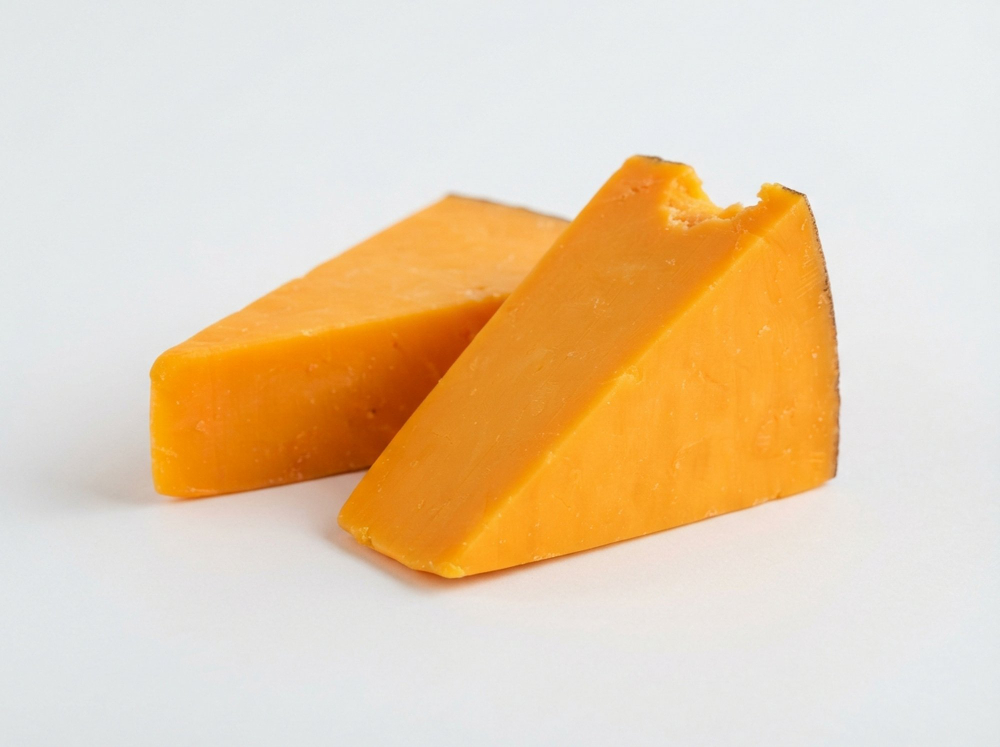
The interesting part is what happened once the trick stopped working as a trick.
Consumers came to expect the colour, and that expectation attached to the cheese rather than to what the colour had originally indicated. By the nineteenth century a buyer in England or America was not inferring fat content from an orange cheddar; they were simply expecting cheddar to be orange, because the cheddar they had always bought was.
At that point colouring stopped being a disguise and became a requirement of the market. A dairy making an honest full-fat cheese and leaving it its natural pale yellow would be selling something that looked wrong to its customers, so it coloured it too.
The practice then crossed the Atlantic with English cheesemaking methods, took hold in American commercial dairying, and was absorbed into American industrial cheese production as it scaled up – where it acquired a second and entirely legitimate function. A large manufacturer buying milk from many farms across a whole year has milk of constantly varying natural colour. Adding a measured amount of colourant makes every batch identical, which for a branded product sold nationwide is simply quality control.
Why Regional Patterns Survive
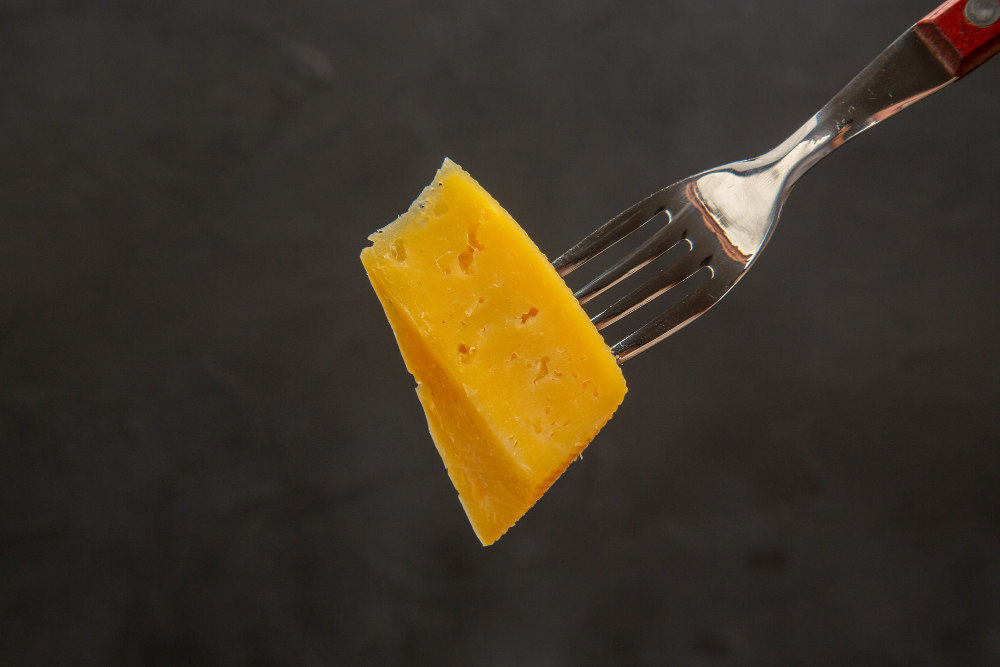
The geography of cheese colour is a map of which markets the expectation took hold in, and it is still visible.
In the United States, orange cheddar is the default and white cheddar is the variant that has to be labelled as such. In Britain and Ireland the pattern is mixed – some regional cheeses are traditionally coloured and others are not, and a well-known orange-red English cheese is coloured by exactly the same seed extract.
In most of continental Europe the practice never took hold at all, which is why a French, Dutch, Swiss or Italian cheese is the colour the milk made it. The exception is the wax or rind, which is frequently coloured for identification and has nothing to do with the paste inside.
And within the United States there is a real regional divide. Certain states and certain traditions kept white cheddar, and the preference maps onto which dairying tradition settled where – which is a more interesting thing to be able to read off a supermarket shelf than it sounds.
Does It Do Anything At All
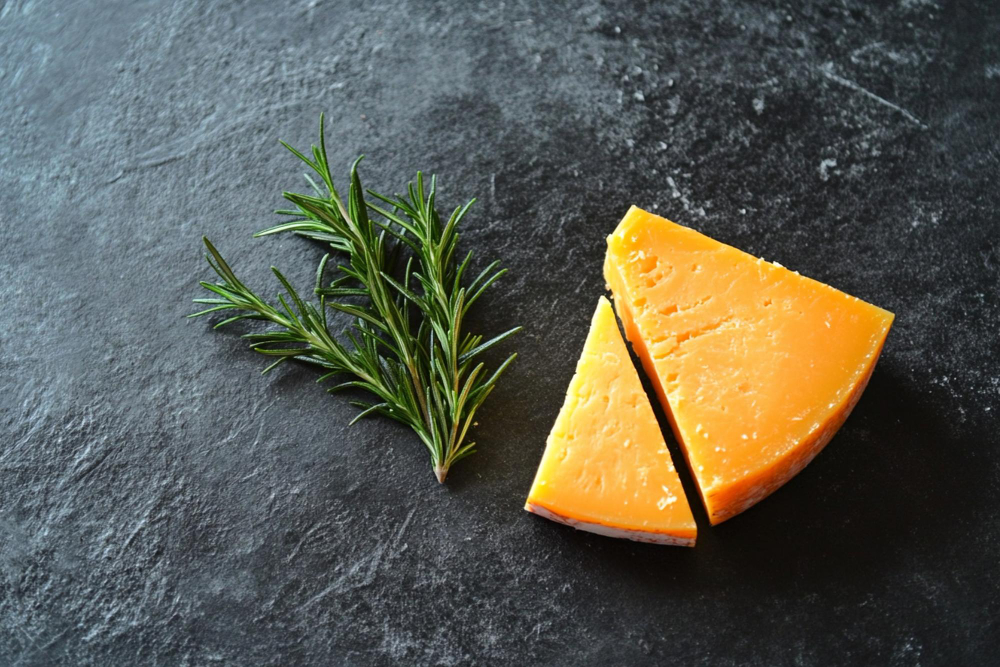
It is worth answering the practical questions directly, because there are three.
The colourant has no meaningful effect on flavour at the concentrations used. Blind comparisons of coloured and uncoloured cheese from the same make find no reliable difference, which is unsurprising given how little is added.
It has no effect on quality or on what is in the cheese. An orange cheddar and a white cheddar from the same dairy are the same cheese, and the colour tells you nothing about fat content, age, milk source or anything else – which is the final irony, since telling you about fat content was the entire original point.
And it is a food additive, which means it is regulated and labelled, and some people do react to it, as some people react to any additive. That is the one real reason to know it is there.
What the colour actually does is signal a tradition. An orange cheese tells you that it was made in a market where orange cheese is what cheese looks like, which is a fact about commercial history rather than about dairy.
The One Place the Colour Still Tells You Something
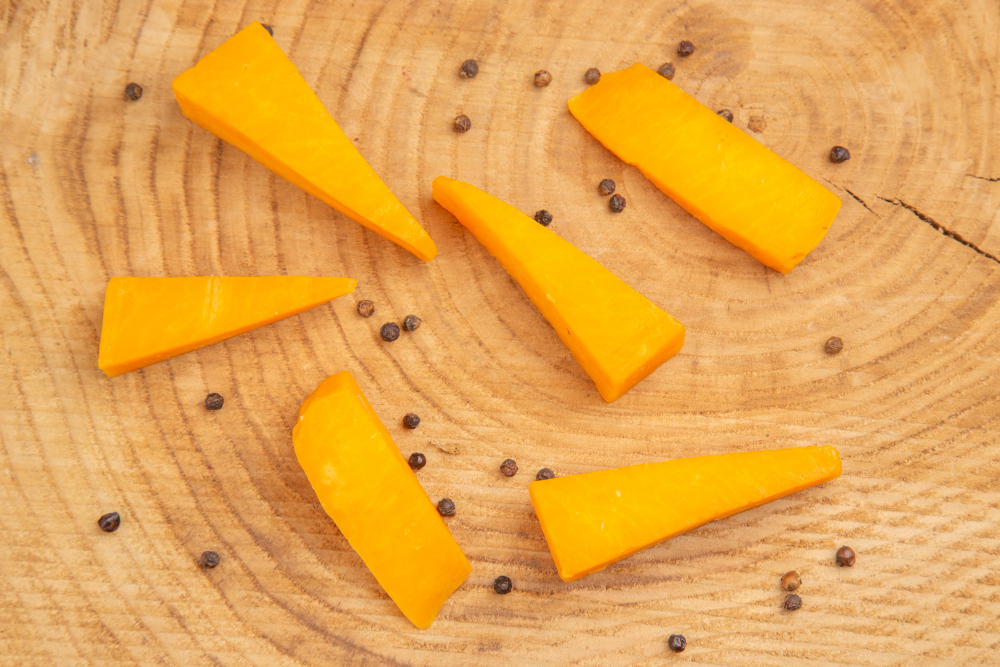
There is a surviving exception, and it is worth knowing because it is the only case where the colour is still doing its original job.
Butter has never needed the disguise, because butter is almost entirely fat and carries the natural pigment strongly. What butter needed instead was consistency, and the solution was the same: a measured amount of colour added in winter so that a brand looks the same in February as in June.
Which means that with butter, unlike cheese, you can still occasionally read something real off the colour – not from a supermarket block, which is standardised, but from a small producer who does not colour at all. Their butter is pale in winter and deep yellow in high summer, and that variation is the honest signal that the cheese trade spent three centuries erasing.
The same holds for farmhouse and artisan cheese made in small batches without colourant. A pale wheel from one month and a deeper one from another, from the same maker and the same herd, is the seasonal pasture showing through – which is precisely what a buyer in 1700 was trying to detect and what the seed extract was introduced to hide.
So the signal was never wrong. It was just made useless by being faked everywhere at once, and the only places it survives are the ones too small to bother faking it.
The Honest Summary
Milk from cattle on fresh grass carries carotene in its fat, so butter and cheese from good pasture are naturally yellow and the shade varies with the season.
Because buyers read that yellow as a sign of richness, English dairy farmers who had skimmed the cream off to sell separately began adding colour back to the resulting pale cheese, to make a lesser product pass as a better one. The colourant that won was an extract of a tropical American seed that is fat-soluble, tasteless, stable and cheap.
The deception then stopped working, because customers came to expect the colour for its own sake. Colouring became a market requirement, crossed to America with English methods, and acquired a legitimate second life in industrial production as a way of making every batch look the same regardless of the season.
So the orange in American cheese is the fossil of a swindle that stopped being a swindle, preserved because people got used to it. It tells you nothing about the cheese and quite a lot about three hundred years of selling it.
Like our content? Follow us for more.
