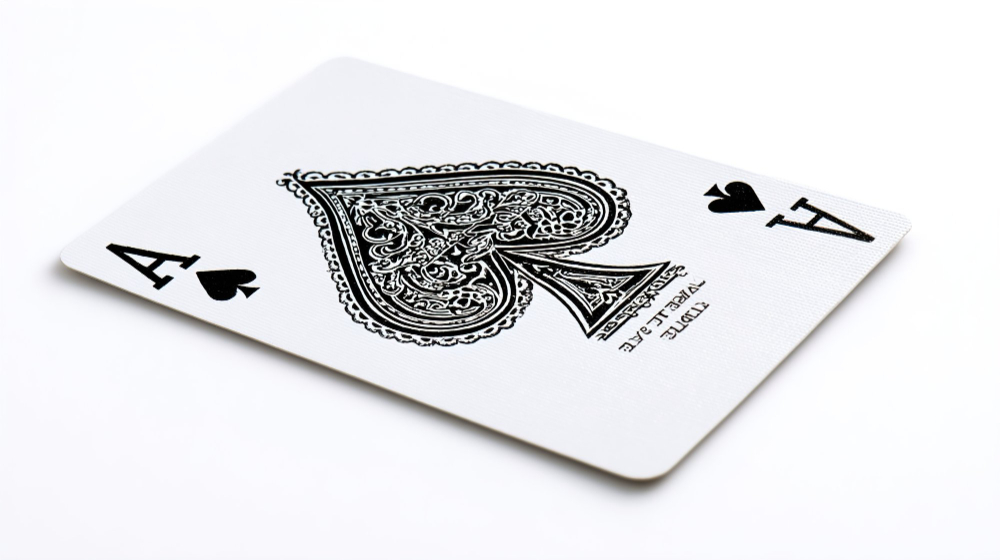
Every deck of cards has one card that does not match the others. The ace of spades carries an elaborate design – a large decorated spade, frequently the manufacturer’s name, scrollwork, sometimes a date – while the other three aces are plain.
It is not a design flourish and it was not the manufacturer showing off. It is the fossil of a tax, and for a period in the eighteenth and nineteenth centuries forging it was treated with extraordinary severity.
Cards Were Taxed Because They Were Everywhere
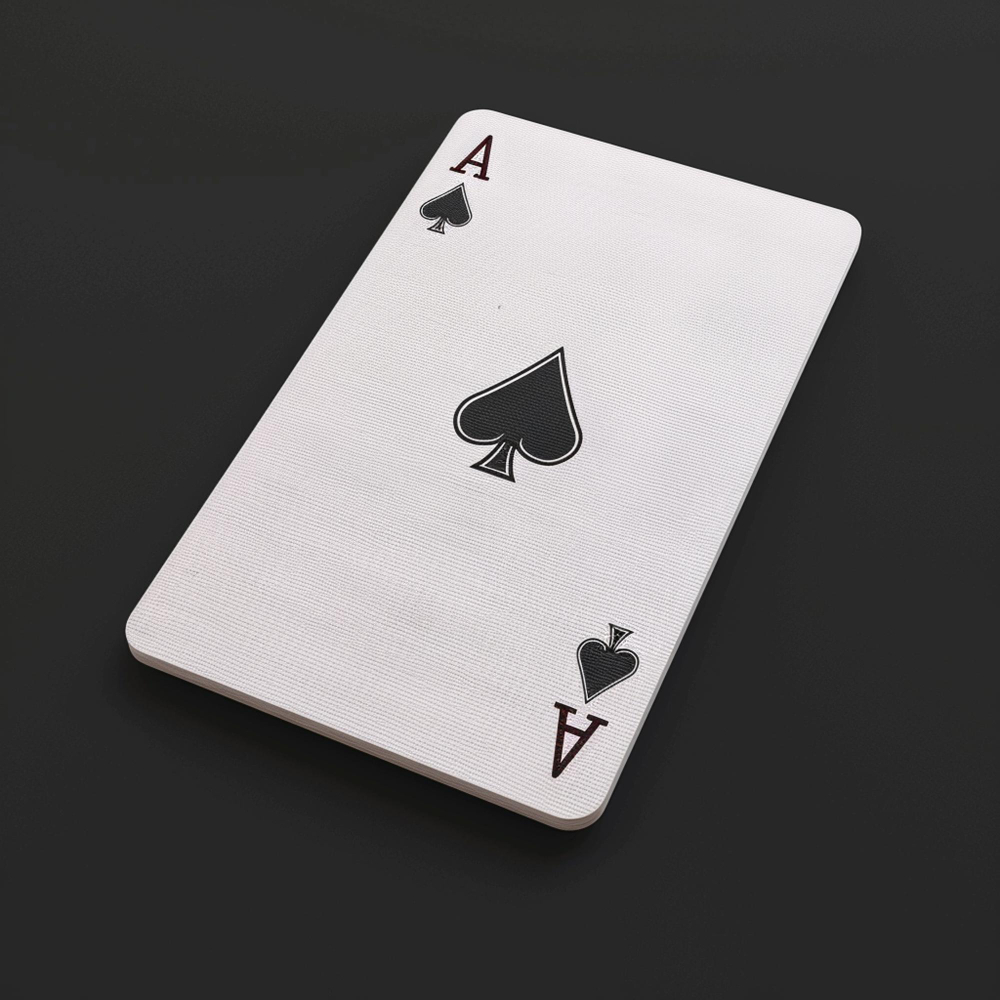
Playing cards were an obvious target for revenue. They were manufactured in quantity, consumed by people with money to spend on leisure, associated with gambling, and easy to identify at the point of sale.
Several European states taxed them, and the British duty on playing cards ran from the seventeenth century into the twentieth. The mechanism was a stamp: a deck could not legally be sold without evidence that duty had been paid, and the evidence was printed or impressed onto one particular card.
The ace of spades was chosen as the carrier. Once that was settled, the ace of spades stopped being a playing card that happened to have a mark on it and became a tax document that also worked in a game – which is why its design diverged so sharply from the rest of the pack.
Like our content? Follow us for more.
Forging It Was Punished as Forging Money
A tax stamp is a revenue instrument, and governments of that era treated counterfeiting revenue instruments as among the most serious offences available.
Forging the duty mark on playing cards was prosecuted and, in the period when forgery of government stamps carried the ultimate penalty, people were executed for it. The best-known case in Britain is that of a man hanged in the early nineteenth century for exactly this, and the story has been retold often enough that the detail is reasonably well known.
The severity is the explanation for the ornateness. A simple mark is easy to copy. A detailed one, engraved to a high standard and printed with equipment a small operator could not match, is a security feature – which is the same logic that puts fine engraving on banknotes, and for exactly the same reason.
So the decoration on that card is anti-counterfeiting design, applied to a tax stamp, enforced by a penalty that would now be regarded as grotesque.
The Tax Went and the Card Stayed
Duty on playing cards was eventually reduced and then abolished, and the legal requirement for the stamp disappeared with it.
The decorated ace did not. By the time the tax ended, the elaborate ace of spades had been the mark of a legitimate, properly manufactured deck for well over a century, and customers read it as a sign of quality. Manufacturers kept it and used it to carry their own name and trademark instead of the government’s.
That is why the ace of spades on a modern deck usually carries the maker’s brand. The space was created for the state, vacated, and occupied by the company – which is one of the tidiest examples anywhere of a regulatory artefact becoming a marketing one.
The King of Hearts Appears to Be Stabbing Himself
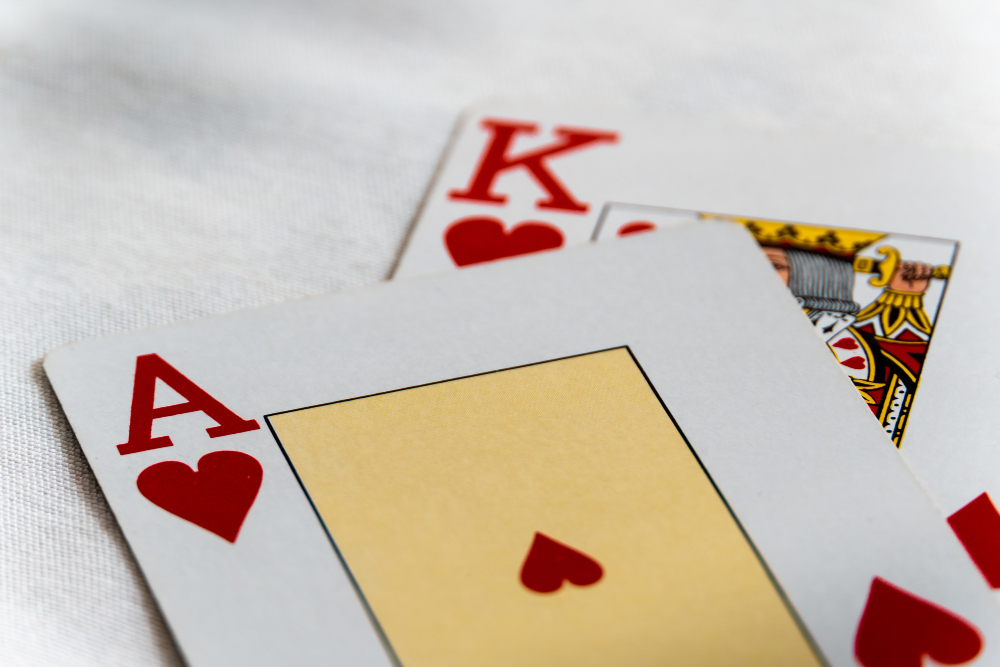
The other detail everybody eventually notices is that the king of hearts holds a sword behind his head in a way that looks as though the blade is going into his skull. He is widely called the suicide king.
The usual explanation is that it is a copying error. The standard English court card designs descend from French patterns, reproduced by engravers over several centuries, each working from a previous version rather than from an original. Details degraded. In earlier versions the king is generally understood to have held an axe, and successive redrawings lost the axe head and left the shaft, which eventually read as a sword.
The same process accounts for several other oddities. One of the jacks appears to be holding a leaf. The kings’ and queens’ hands do things that make no anatomical sense. Objects are held at angles no person would hold them. These are not symbolic – they are artefacts of a long chain of copying in which nobody went back to check.
It is worth being careful with the theory that the court cards depict specific historical figures. Names were attached to them in some French traditions, and those attributions circulate widely as fact. The association is real as a tradition; the idea that the designs were originally portraits of particular kings and queens is much weaker than the confident versions suggest.
The Joker Is the Newest Card in the Pack
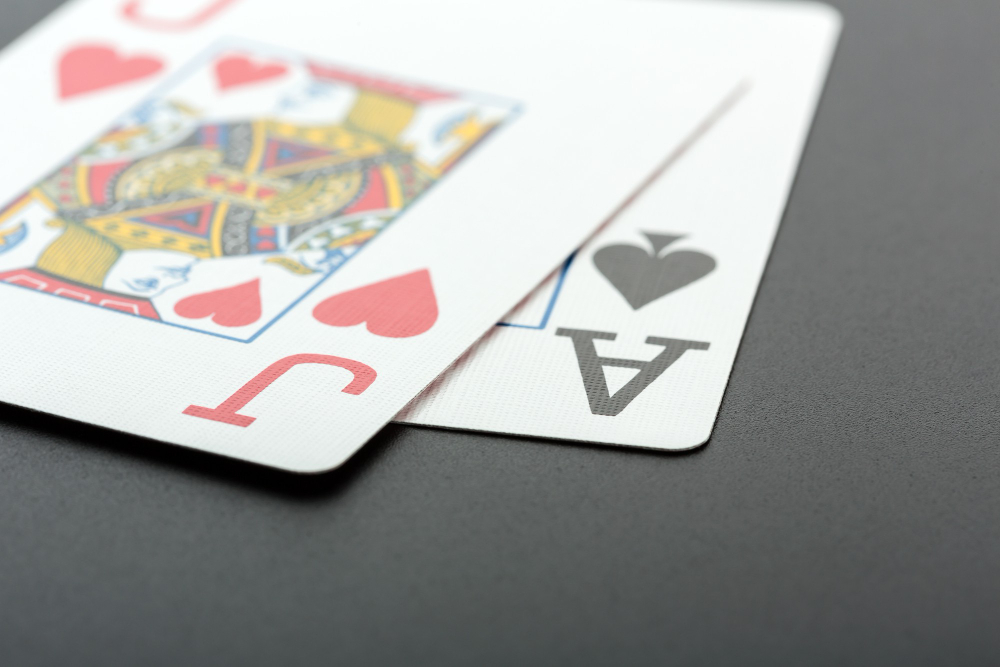
The joker is not an ancient figure and has nothing to do with medieval court jesters as an origin, whatever the illustration suggests.
It was added in the second half of the nineteenth century, in the United States, as a trump card for the game of euchre – a highest trump outranking the others. The name appears to derive from the game rather than from the fool of the tarot, with which it is frequently and incorrectly connected.
Having been invented for one game, it then spread because a spare card with no fixed value is useful. It became the wild card in a great many games, it became the replacement card when one is lost, and it became the place manufacturers print guarantee information.
Modern decks usually contain two, which is a convention that followed from the games that wanted two rather than from anything inherent.
The Corner Indices Are Younger Than the Tax Stamp
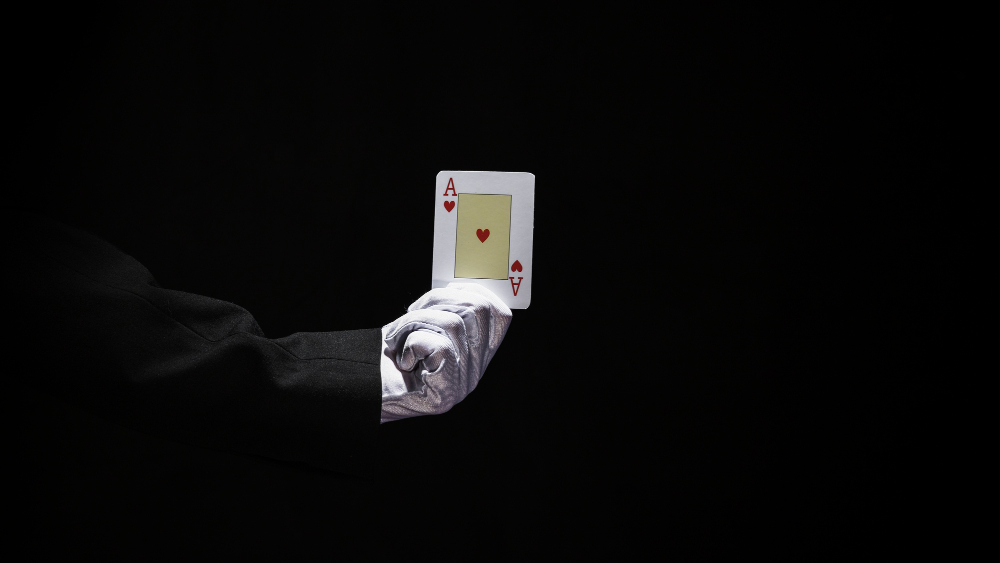
The small number and suit symbol printed in the corner of every card, which lets a hand be fanned and read with one thumb, is a nineteenth-century addition.
Before it, the value of a card could only be read by counting the pips across the whole face, which meant a player had to spread their hand widely enough to see each card almost in full. That is slower, it is tiring, and it makes it far easier for somebody sitting beside you to see what you are holding.
The corner index solved all three at once and was adopted rapidly. The cards that carry it are sometimes called squeezers, from the way a hand can be squeezed into a narrow fan, and the name was used as a selling point on nineteenth-century packs.
Two further refinements followed from the same thinking. The court cards became double-headed, mirrored top and bottom, so that a card is the right way up whichever end is drawn – which also removed the tell of a player turning a card around. And the corners were rounded, because square corners wear, fray and become identifiable, which turns a worn pack into a marked one.
Every one of those changes is about the same two things: reading a hand quickly, and stopping anybody else from reading it. The deck has been refined almost entirely around the problems of people playing for money.
Why There Are Four Suits and Why They Look Like That
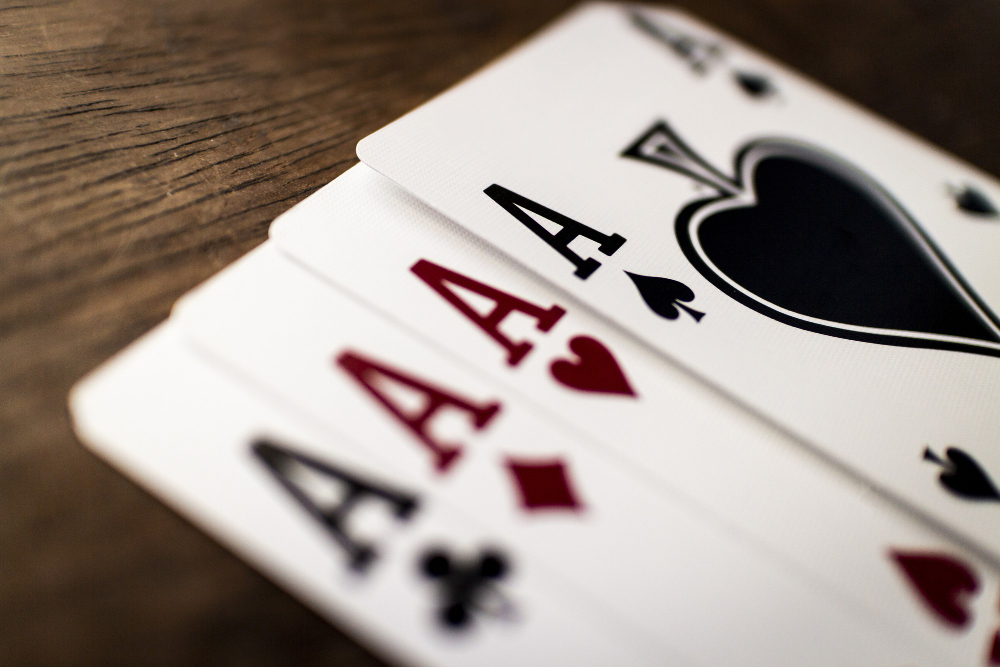
The four-suit structure arrived in Europe from the Islamic world in the fourteenth century, with suits that were roughly cups, coins, swords and polo sticks. Italian and Spanish decks still use recognisable descendants of those.
The familiar spades, hearts, diamonds and clubs are the French suits, developed in the fifteenth century, and their commercial advantage was decisive: they are simple flat shapes in two colours that can be printed from stencils and simple blocks rather than engraved. That made French-suited cards much cheaper to produce, and cheapness is why they spread across northern Europe and then worldwide.
The English names are a muddle of translations. Spades comes from the Italian or Spanish word for swords rather than from a digging implement. Clubs is a translation of the Italian suit of batons applied to a shape that is actually a trefoil or clover leaf. The shapes are French and the names are Italian, which is why neither matches the other.
What the Pack Actually Is
Taken together, a deck of cards is an unusually dense piece of accumulated history for something that costs almost nothing.
The structure is Islamic by way of fourteenth-century Europe. The suit shapes are a fifteenth-century French printing economy. The court figures are degraded copies of copies of French engravings. The ace of spades is an eighteenth-century British tax stamp that outlived its tax. The joker is a nineteenth-century American invention for one specific game. And the physical format – the size, the rounded corners, the indices in the corners so a hand can be fanned – is a set of nineteenth-century refinements driven by how people actually hold cards.
None of it was designed. All of it was arrived at, by different people in different countries over six hundred years, each solving a problem in front of them.
Which is why the deck in your drawer has an ornate ace, a king who appears to be killing himself, and two cards that were invented for a card game almost nobody plays any more – and why not one of those things can be explained by looking at the object.
Like our content? Follow us for more.