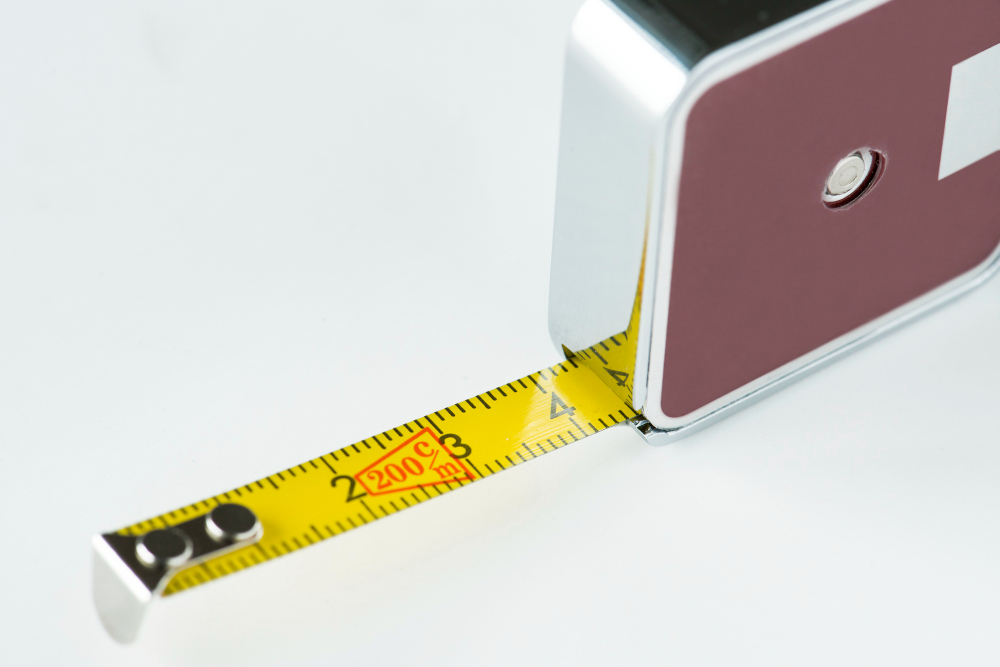
Pull the hook on the end of a tape measure and it moves. Push it and it moves back. The rivets that hold it on sit in slots rather than in round holes, and there is an obvious amount of play in it.
Almost everybody who notices assumes the tape is worn out or badly made. A fair number of people have tried to fix it by squeezing the rivets tighter.
It is deliberate, it is called true zero, and tightening it makes every measurement you take from then on wrong by about a millimetre.
Two Measurements, One Tape
A tape measure gets used two ways and they are geometrically different.
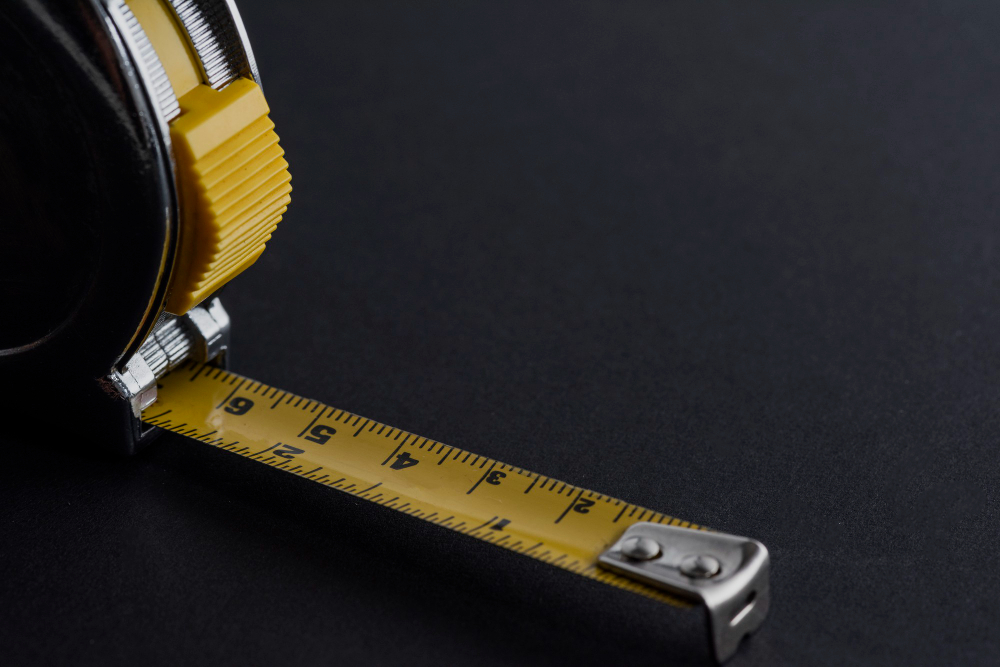
Pull a measurement off the edge of something – the end of a board, the side of a wall – and the hook catches on that edge. In that position the hook’s own material sits outside the thing being measured, so the tape needs to start reading from the inside face of the hook.
Push the tape into a corner – an internal measurement, a window reveal, the inside of a box – and the hook is compressed against the surface. Now the hook’s material sits inside the measurement, so the tape needs to start reading from the outside face of the hook.
Those two zero points differ by exactly the thickness of the hook, which on most tapes is a little over a millimetre. A fixed hook can only be correct for one of them.
The slotted rivets let the hook slide by precisely that thickness, so it is in the right place both times. Pull, and it slides out to compensate. Push, and it slides in. The tape is correct in both directions without the user doing anything or knowing why.
Like our content? Follow us for more.
How to Check Yours Is Right
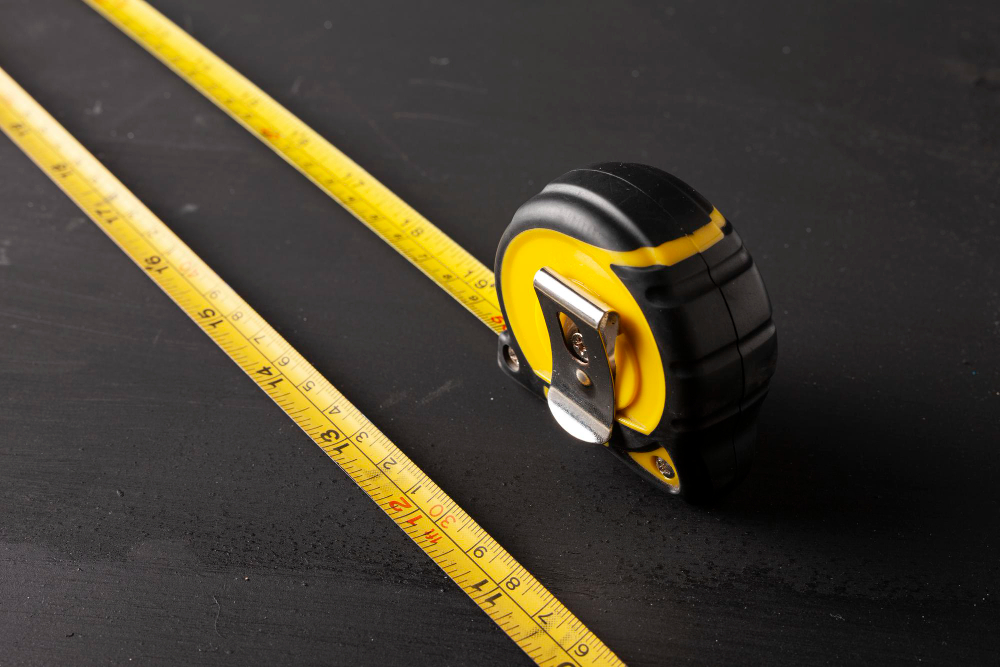
It is worth testing, because a dropped tape can bend the hook and a worn one can develop more play than it should.
Hook the tape over the edge of something flat and square and mark at a round number – say three hundred millimetres, or twelve inches. Then push the same tape into an internal corner against the same reference and check it reads the same.
If the two disagree, the hook is bent or the rivets have worn, and the tape is not reliable for whichever measurement it is getting wrong. A hook with so much slop that it rattles loosely is past it.
What you should not do is try to tighten it. The movement is the mechanism.
The Serrated Edge Is for Marking Without a Pencil
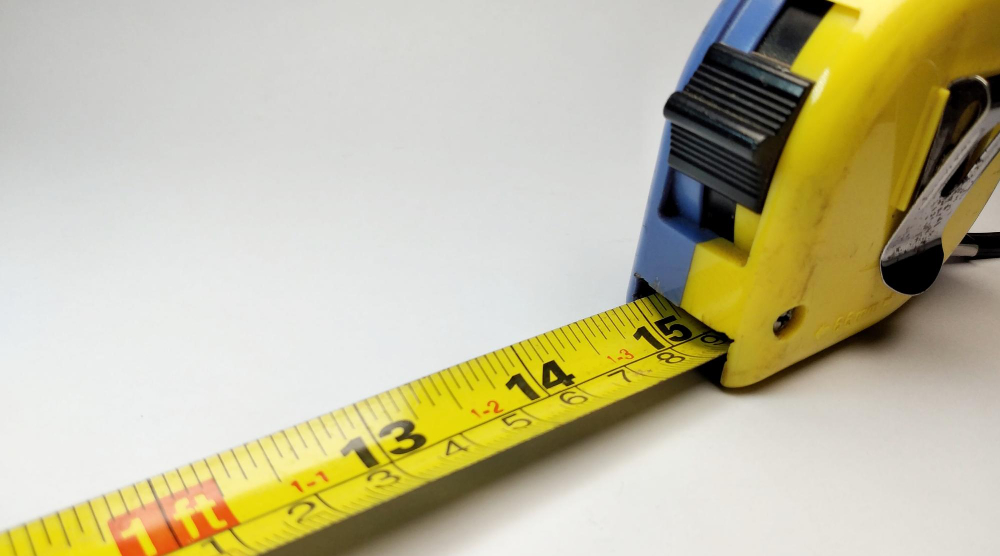
The bottom edge of the hook on most tapes is cut with small teeth. They are there so that you can press the hook against a surface and twist it slightly to scratch a mark, when you are up a ladder or under something and have no pencil hand free.
The hole in the hook is the other one people miss. It is sized to drop over a nail or a screw head, so that a tape can be anchored at one end and swung as a compass to scribe an arc, or held at a fixed point while you work alone at the other end.
Between them those two features mean a tape measure is a marking tool and a one-person measuring tool, not just a ruler on a spring.
The Black Diamonds Are a Spacing Mark Almost Nobody Uses
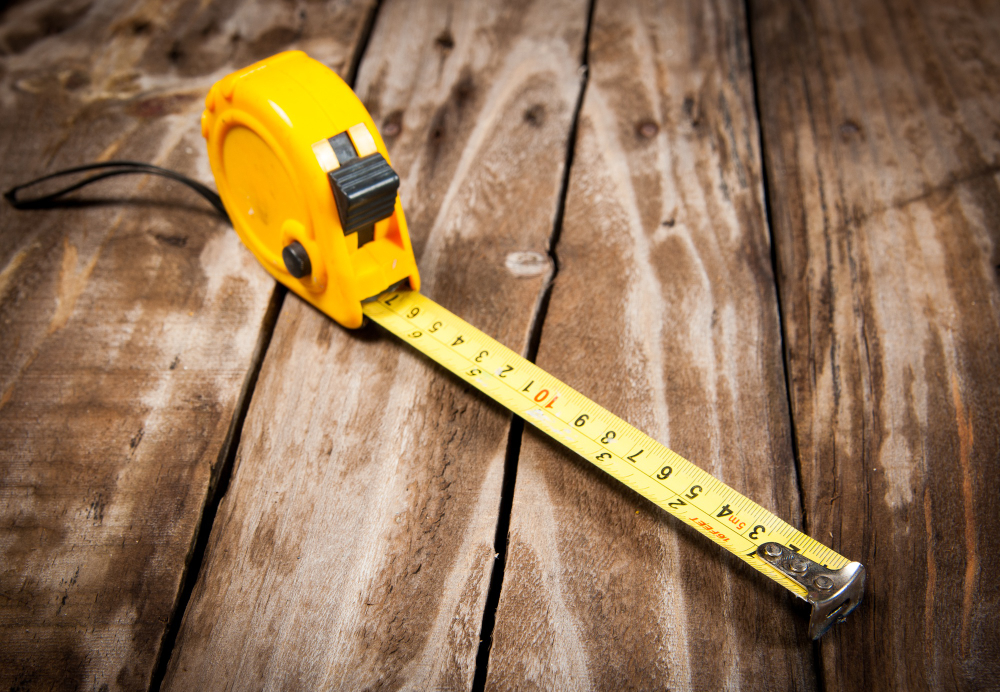
On tapes sold in markets that build in timber frame, there is a second set of marks – small black diamonds, appearing at intervals of nineteen and a fifth inches.
They mark five equal divisions of an eight-foot sheet. Standard framing spaces studs at sixteen inches, which gives six studs across eight feet. The diamond spacing gives five, which is sometimes used for floor joists and roof trusses where the load allows a wider spacing and the sheet still lands on a support at each end and in the middle of its run.
The red numbers every sixteen inches on the same tapes are the common stud spacing, highlighted so a framer can work along a wall without reading the small figures.
None of it is useful outside that construction system, which is why tapes sold elsewhere do not carry it and why most people who own one of these tapes have never worked out what the diamonds are.
The Case Length Is Printed on the Case for a Reason
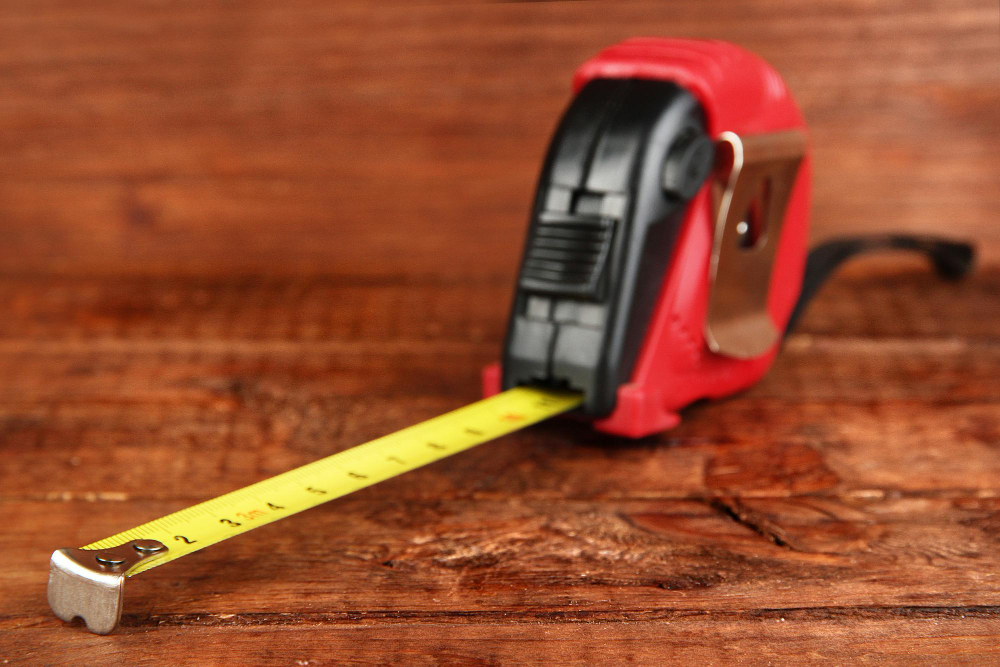
Look at the side or the back of the housing and there will be a number – commonly three inches, or seventy-five millimetres – printed somewhere on it.
That is the length of the case itself, and it is there so you can take an internal measurement by pushing the case into one corner, extending the tape to the other, reading the tape, and adding the case length. It is more accurate than bending a tape round a corner, which every amateur does and which is always wrong by an unpredictable amount.
Measuring a room this way – case against one wall, tape to the other, read, add the number on the case – is the single most useful thing on this list and almost nobody knows the number is there for that.
Before the Retracting Tape, Measuring Was a Two-Person Job
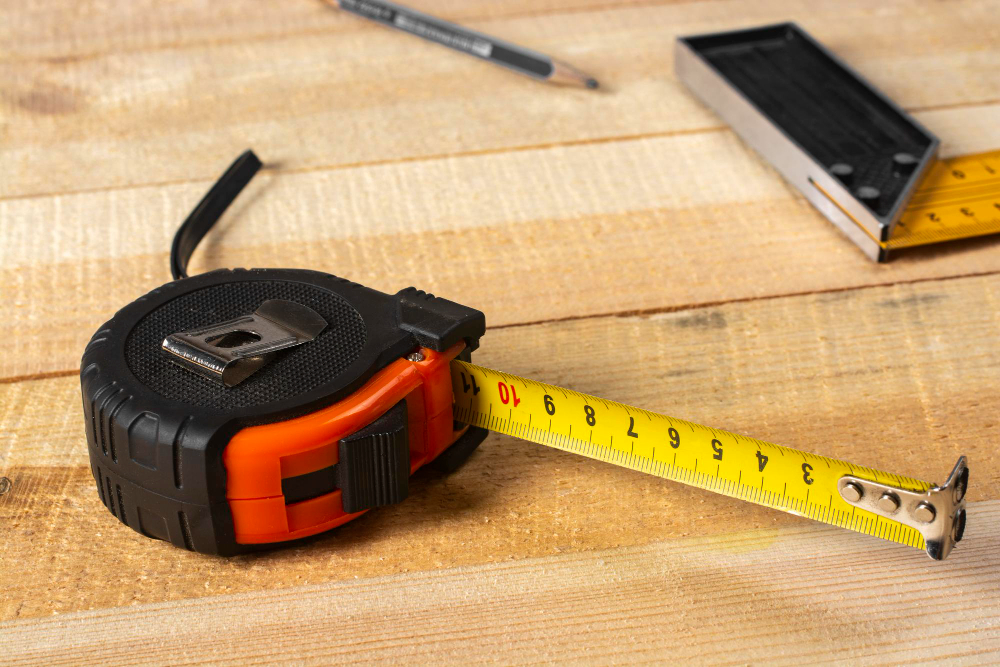
The spring-return steel tape in a pocket case is younger than most people assume, and what it replaced tells you why it took over so completely.
Carpenters used folding rules – boxwood or ivory, hinged in four or six sections, rigid when opened, two or three feet long. They are accurate, pleasant to use and still preferred by some joiners, and they will not reach across a room.
Anything longer meant a surveyor’s chain or a linen or steel band tape, which had to be unrolled along the ground, held at both ends, kept straight, and wound back on a reel by hand. That is a two-person operation and it is slow.
The retracting pocket tape collapsed all of that into one object that a person could carry, use alone, extend to twenty or thirty feet, and put away with their thumb. The hook made the one-person measurement possible, the curve made it stand out unsupported, and the spring made putting it away cost nothing.
Each of those three is the answer to a specific limitation of what came before, which is why the tool arrived in essentially its finished form and has barely changed since. There is very little left to improve, and the laser distance meter – which does genuinely replace it for room measurements – still cannot measure round a corner, across a curve, or along the edge of a board.
The Tape Is Curved and That Is Load-Bearing
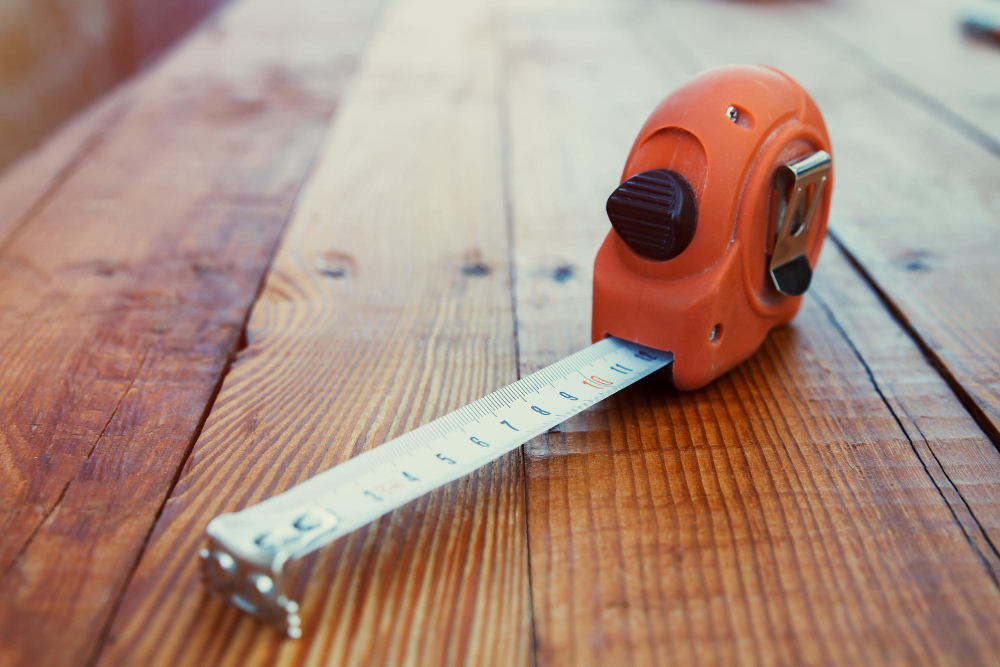
A steel tape has a concave cross-section, and it is not decoration. The curve is what lets several feet of thin steel stand out horizontally without collapsing – the same principle that makes a curved sheet stiffer than a flat one.
That is why standout, the distance a tape will extend unsupported before it buckles, is a specification manufacturers compete on, and why a wider, more deeply curved tape stands out further. It is also why a tape that has been kinked never works properly again: the kink is a flat spot in the curve, and the stiffness fails there.
And it is why you should not let a tape snap back at full speed. The impact at the end bends the hook, and the hook is the part everything else depends on.
The Whole Object Is a Measuring Instrument and Is Usually Treated as a Toy
Tape measures are classified and tested. In most markets they carry an accuracy class marked on the blade, with a permitted error over a given length, and a tape sold for trade use has to meet it.
Temperature matters more than people expect, because steel expands – a long tape used in the sun and then in the cold is measuring slightly differently, which is irrelevant for a shelf and not irrelevant over thirty metres.
Two tapes also frequently disagree with each other, usually because one has a damaged hook, and the standard advice on any job is to do all the measuring with one tape. The carpenter’s instinct not to let anybody else use theirs is not territorial – it is about not mixing instruments.
So the thing rattling in the bottom of the toolbox is a graduated steel instrument with a compensating zero, an integral marking edge, an anchor point, a stiffened cross-section and a printed offset for internal measurements. The only part most owners have noticed is the one they think is broken.
If you take one thing from this, make it the room measurement. Push the case into the corner, run the tape to the opposite wall, read the figure, add the number printed on the case. It is faster than anything else, it is accurate, it needs nobody holding the other end, and it is the reason the number is printed there at all.
And if somebody in your house has ever squeezed the rivets on a hook to stop it rattling, the tape they did it to is now reading long on every internal measurement and short on every external one, by the thickness of a piece of steel. It is a small error, it is consistent, and it is in the direction that makes a shelf not fit.
Like our content? Follow us for more.