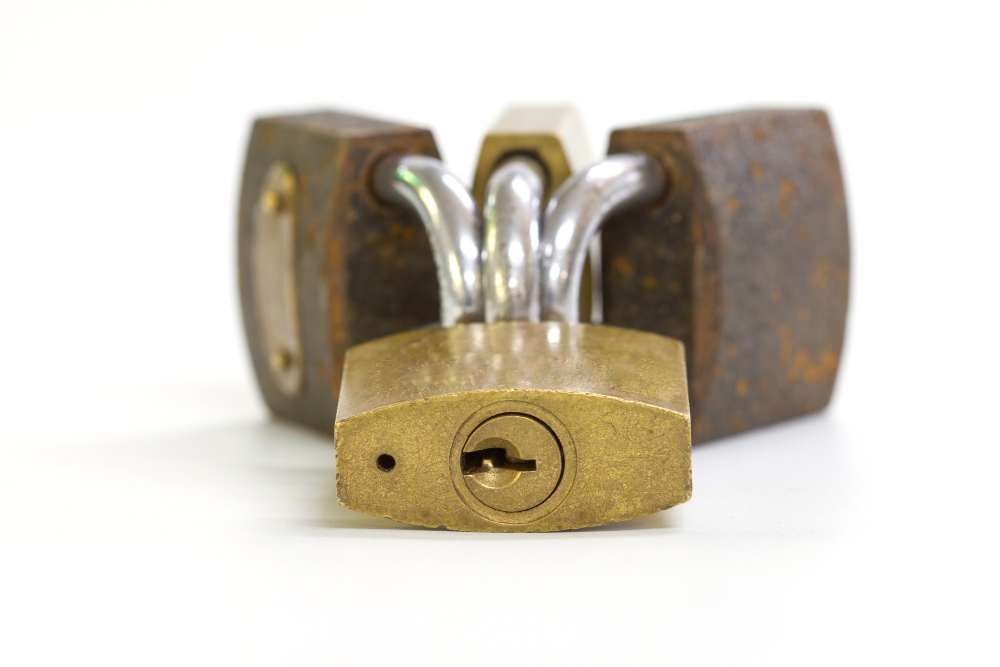
Turn a padlock over and there is a small hole in the bottom of the body, separate from the keyway.
It has two purposes and they are both important: water gets out through it, and lubricant goes in through it. Most people have never noticed it, and a good proportion of those who have noticed it have used it to apply exactly the wrong thing.
Why a Padlock Needs to Drain
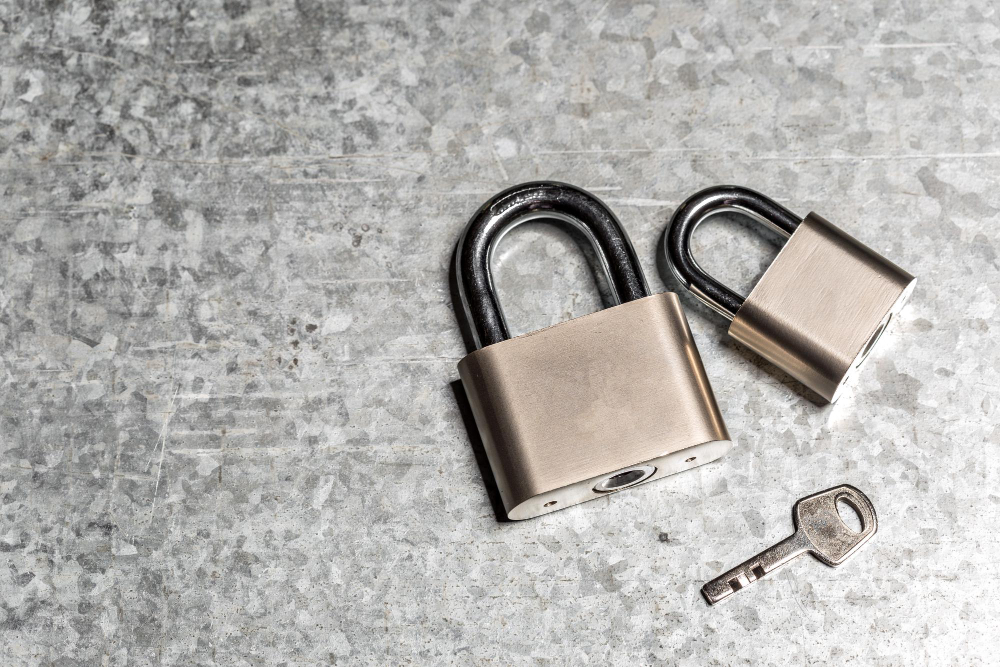
A padlock lives outdoors. It sits on a gate, a shed, a container, a bicycle or a locker, and it is rained on, splashed, washed and condensed on for its entire life.
Water gets inside, through the keyway, around the shackle and through the body joints, and there is no realistic way to prevent it on a device that has a hole in it for a key.
Water inside a padlock does two things. It rusts the springs and the pins, which are small steel components under light loads where a little corrosion is enough to stop them moving freely. And in cold weather it freezes, which locks the mechanism solid and, if there is enough of it, can split the body.
So the drain hole is not an optional refinement. It is the acknowledgement that water will get in and the recognition that the only available strategy is to let it out again quickly.
A padlock mounted with the keyway facing down drains better and admits less water in the first place, which is the single most useful piece of padlock advice there is and costs nothing to apply.
It is also worth noting where that water comes from in cold weather, because it is frequently not rain. A metal object outdoors drops below the air temperature overnight, and moisture in the air condenses on and inside it, which means a padlock in a dry but humid location accumulates water without anybody ever seeing it get wet.
Like our content? Follow us for more.
The Lubrication Part Is Where People Go Wrong
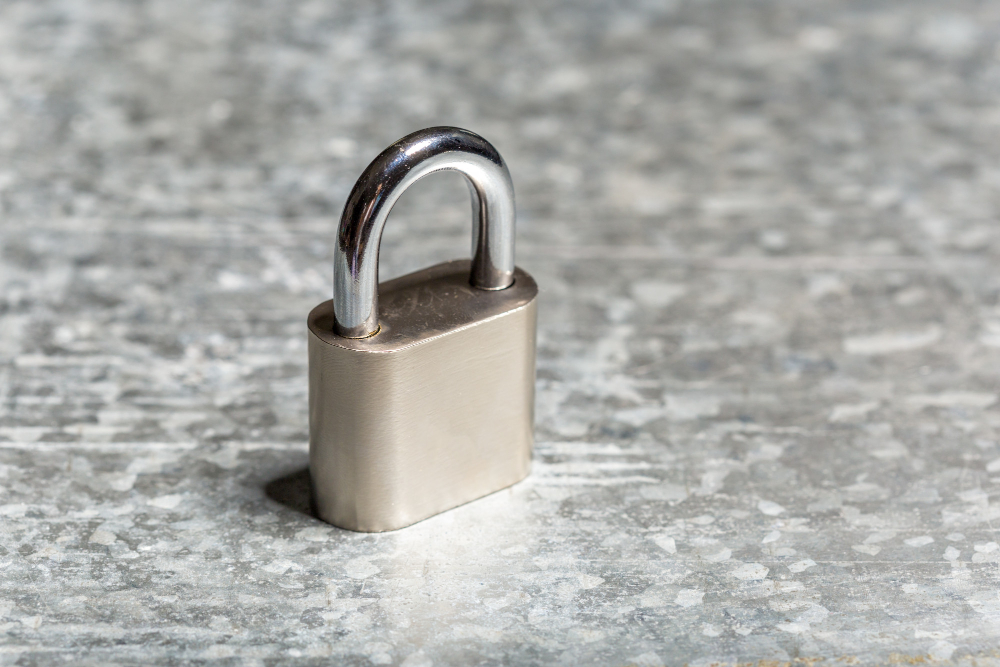
The hole is also the lubrication port, and this is where a great many locks are killed with kindness.
The common household spray lubricants that people reach for are, in many cases, primarily water-displacing penetrating fluids rather than lubricants. They are excellent at freeing something seized and at driving moisture out, and they leave behind a residue that is thin, slightly tacky and attracts dust.
In a lock mechanism, that residue is the problem. The pins and springs are tiny and operate with very small clearances, and a sticky film that collects dust turns into a grinding paste that stops them moving. A lock treated this way frequently works beautifully for a few weeks and then becomes progressively harder to operate until it fails entirely.
The appropriate treatment is a dry lubricant – graphite powder, or a dry film spray made for locks – which leaves no residue and nothing for dust to stick to. A small amount, through the drain hole and into the keyway, worked in by operating the lock.
This is one of the clearest cases of a well-intentioned maintenance action reliably causing the failure it was meant to prevent, and the reason is simply that the product is widely assumed to be a general-purpose lubricant and is not.
The Shackle Tells You What the Lock Is Worth
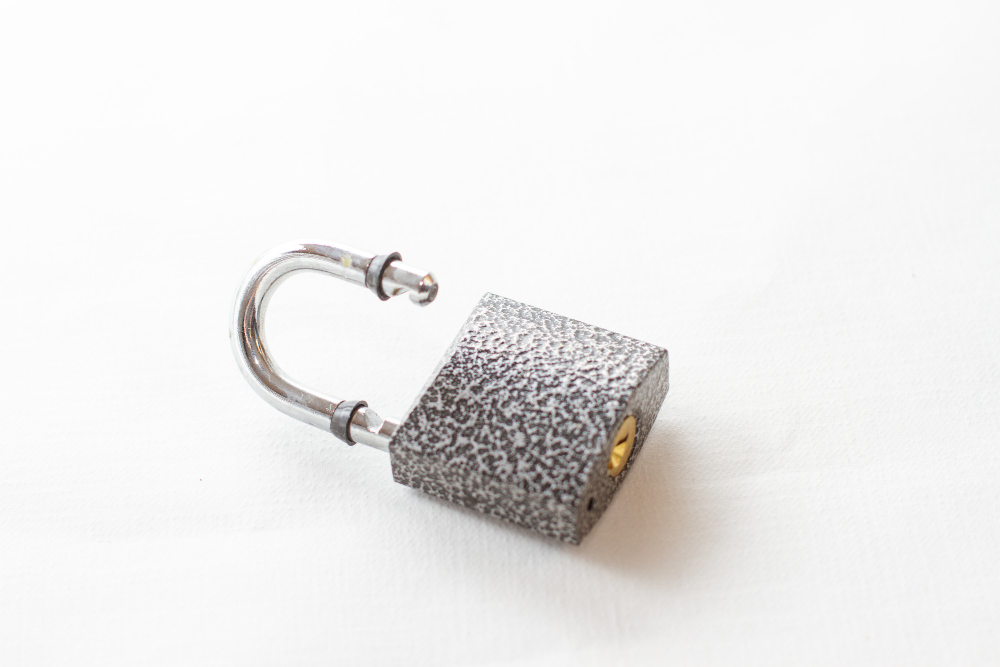
Since you are looking at it, the rest of the padlock carries more information than most people read.
The shackle is the part that gets attacked, and its material and diameter are the main determinant of how much resistance the lock offers. Hardened steel resists cutting far better than plain steel, and the difference between a shackle that defeats a hand tool and one that does not is substantial.
The shoulders matter as much as the shackle. A lock whose shackle is exposed on both sides can be cut or levered in ways that a shrouded or closed-shackle design cannot, and that difference frequently matters more than the price.
And the body is not just a container – it holds the locking mechanism that engages the shackle, and on cheaper locks it engages on one side only, so the shackle can be twisted out when one side is cut rather than requiring two cuts.
None of this is hidden. It is visible on the object, and almost nobody looks, because a padlock is bought as a generic item on price while the thing it is protecting is frequently worth several hundred times more.
The Lock Is Usually Not the Weak Part
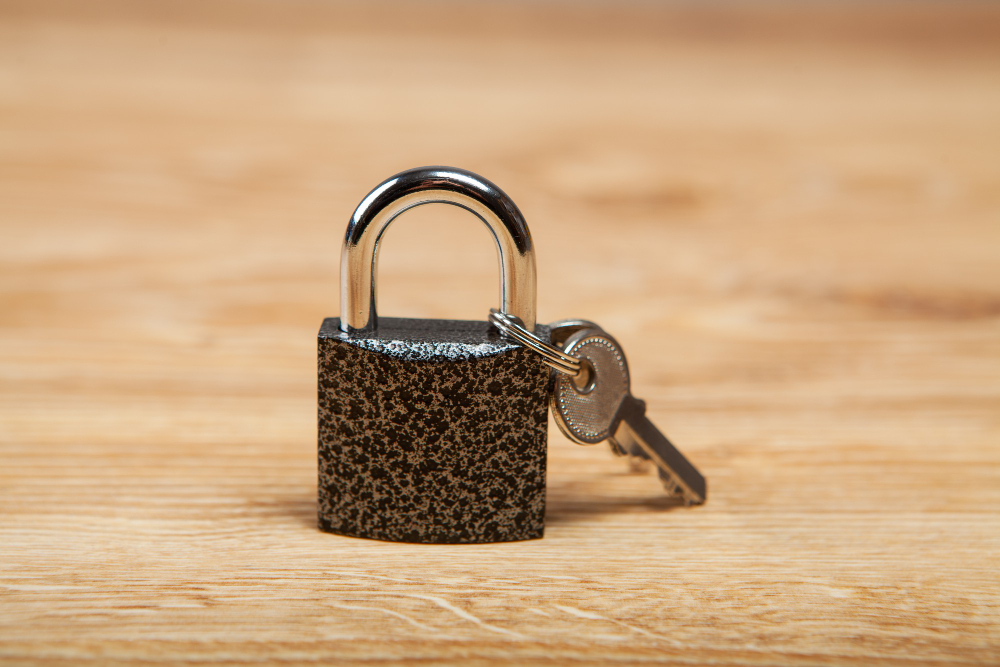
There is a point worth making about padlocks generally, and it is the one that most affects whether anything is actually protected.
A padlock secures by joining two things – a hasp and a staple, two links of a chain, the lugs on a container. Whatever those are made of, and however they are fixed, is part of the security, and in a great many installations it is substantially weaker than the lock hanging on it.
A good padlock on a hasp held by short screws into soft wood is protecting nothing in particular. A heavy chain through a gate whose hinge pins lift out is the same. The attacker does not have to engage with the strongest component, and will not.
This is the general principle of any protective arrangement: the resistance is set by the weakest element in the chain, and spending disproportionately on one element is a common and comfortable mistake because the lock is the part that feels like the security.
The useful habit when looking at any such arrangement is to ignore the lock entirely for a moment and ask what else is holding the two things together, and how that is fixed. The answer is frequently four screws.
None of which is an argument against buying a decent padlock. It is an argument for buying one appropriate to everything around it, which is usually a cheaper conclusion than people expect.
Weather Is What Actually Kills Most of Them
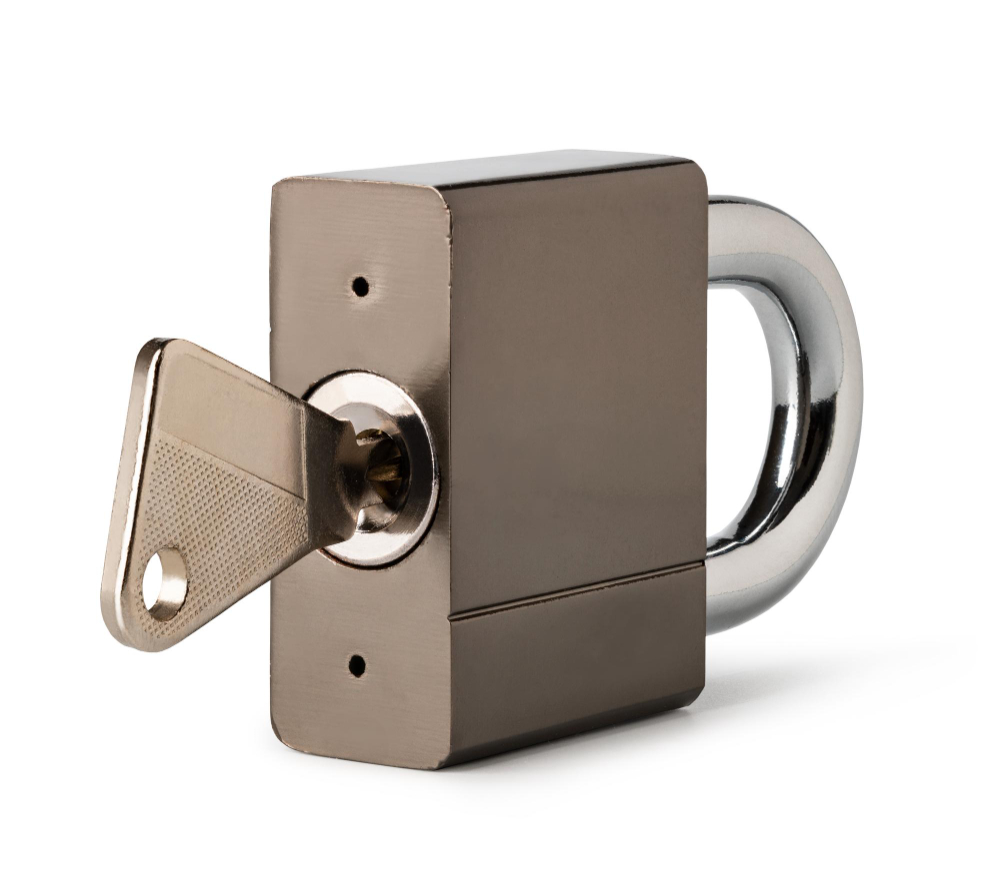
It is worth being realistic about how padlocks fail, because it is mostly not dramatic.
The overwhelming majority of padlocks that stop working were not attacked. They seized, because water got in, corrosion developed, dust accumulated, the wrong lubricant was applied, or all four over several years.
A seized padlock on something you need to open is its own small disaster, and the usual resolution is destroying the lock, which means the failure mode of a security device is frequently that it successfully keeps out its owner.
The preventive measures are unglamorous and effective: mount it with the keyway downward, use a cover if the location is exposed, apply a dry lubricant occasionally rather than a wet one ever, and operate it periodically if it is rarely used, because a mechanism that moves regularly stays free.
That last one catches people out on gates and outbuildings that are opened twice a year. A lock that is never operated is the one most likely to be seized when it is finally needed.
The Keyway Is the Other Hole and It Is Not the Same
Worth distinguishing the two openings clearly, because they get confused.
The keyway is on the face or the bottom depending on the design, and it is the slot the key enters. It is shaped to accept a particular key profile, which is a first line of defence in itself – a key of the wrong profile will not enter regardless of what cuts are on it.
The drain hole is separate, smaller, round, and leads into the body cavity rather than into the keyway. On some designs lubricant applied there reaches the mechanism more effectively than through the keyway, which is why it is the recommended route.
On a lock with a cover over the keyway – a rubber or plastic flap – that cover is doing real work in a wet location, and it is also the part most commonly torn off and discarded because it is slightly annoying. Removing it roughly doubles the rate at which water enters.
Which is the recurring theme with all of this. Essentially every feature on a padlock exists to address a specific predictable failure, none of them is explained anywhere on the product, and the commonest ways people ruin them are all actions taken with the intention of looking after them.
Turn one over and find the hole. Then check which way your padlocks are mounted.
If the keyway is facing up, that one is filling with water every time it rains.
And if you have a lock that has gone stiff, the instinct to reach for a spray can is the one to resist. A stiff lock that is cleaned out and treated with a dry lubricant usually recovers completely; one that is soaked in penetrating fluid will free up immediately, work well for a month, and then be worse than it started. The quick fix and the actual fix point in opposite directions, which is why so many locks end up in the bin.
Like our content? Follow us for more.