

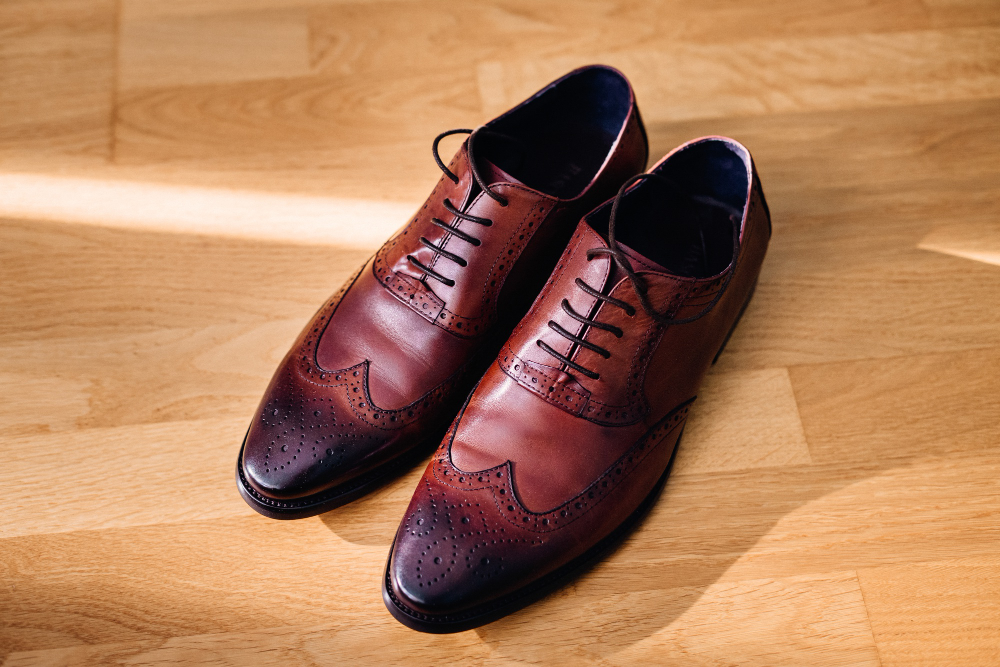
A brogue is a leather shoe decorated with patterns of punched holes along its seams and across the toe cap.
The holes are now purely decorative, and they go all the way through the leather. On a pair of shoes being worn into an office that is faintly absurd, which is the clue: nobody would deliberately perforate a shoe unless the holes were doing something.
They were. The shoes they descend from were made for walking across wet ground, and the holes let the water out.
The Original Shoe Was Made for Bog and Wet Pasture
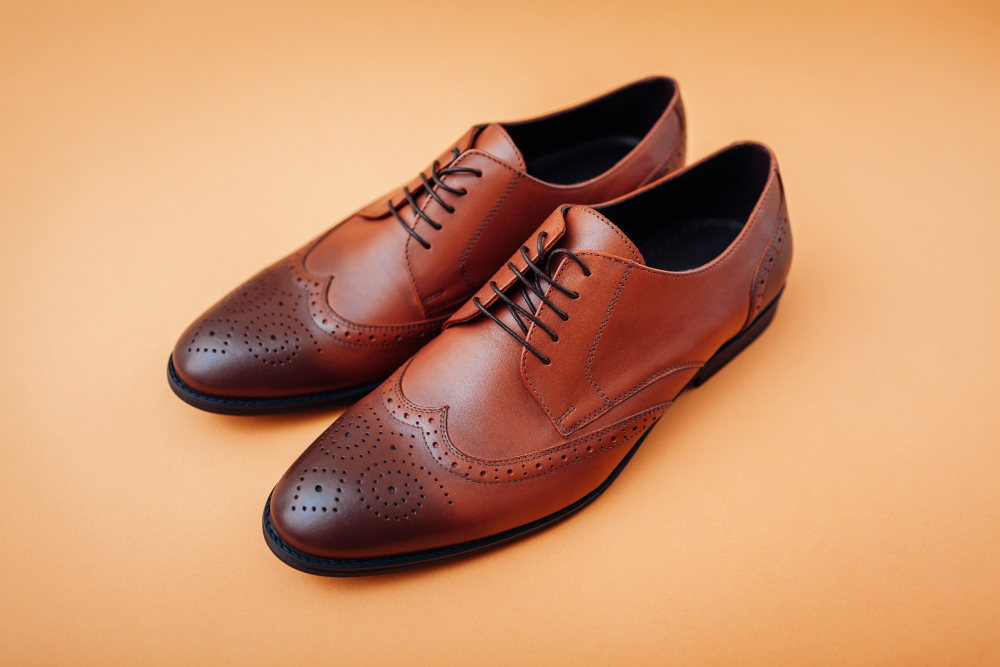
The ancestor is a simple untanned leather shoe worn for walking rough wet country, where the ground is saturated and anybody crossing it is going to be standing in water repeatedly.
A watertight shoe is exactly the wrong answer in that situation. Water will get in over the top regardless, and once it is in a sealed shoe it stays there, which means walking the rest of the day in a bag of cold water.
A perforated shoe fills and empties. Water comes in and goes straight out again, the leather drains as you walk, and the foot is wet rather than submerged – which is a considerably better outcome over a long day than the alternative.
So the holes were drainage, in footwear for people who had accepted that their feet were going to be wet and were solving the right problem instead of the impossible one.
Like our content? Follow us for more.
It Became Country Footwear, Then Sporting, Then Formal
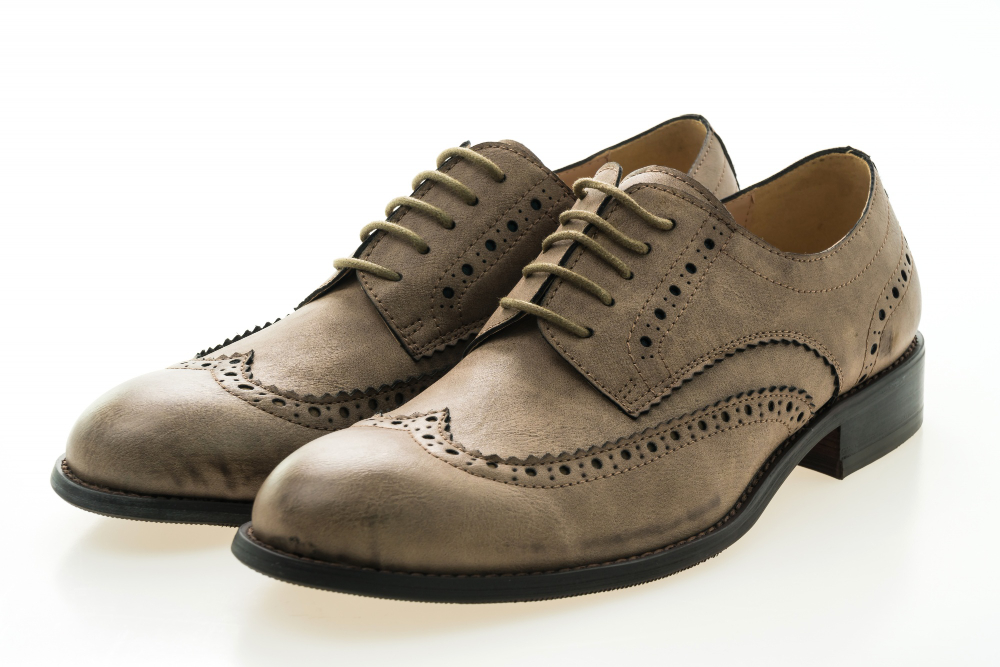
The progression from there is the standard one for this kind of detail.
The style was adopted into country footwear generally – shoes for walking, shooting and estate work – at which point the perforations were partly functional and increasingly a marker of what kind of shoe it was.
From country wear it moved into sport, particularly golf, where elaborate brogueing became standard and where the shoes were still being worn on wet grass.
And from sport it moved into town, which is where the function finally disappeared entirely and the pattern became purely a style. For a period that transition was socially legible – a brogue was a country shoe and wearing one in a city was a statement about informality – and that distinction has now gone too.
The holes survived every one of those moves because by the time anybody questioned them they were what made the shoe recognisable.
The Different Patterns Have Names and a Hierarchy
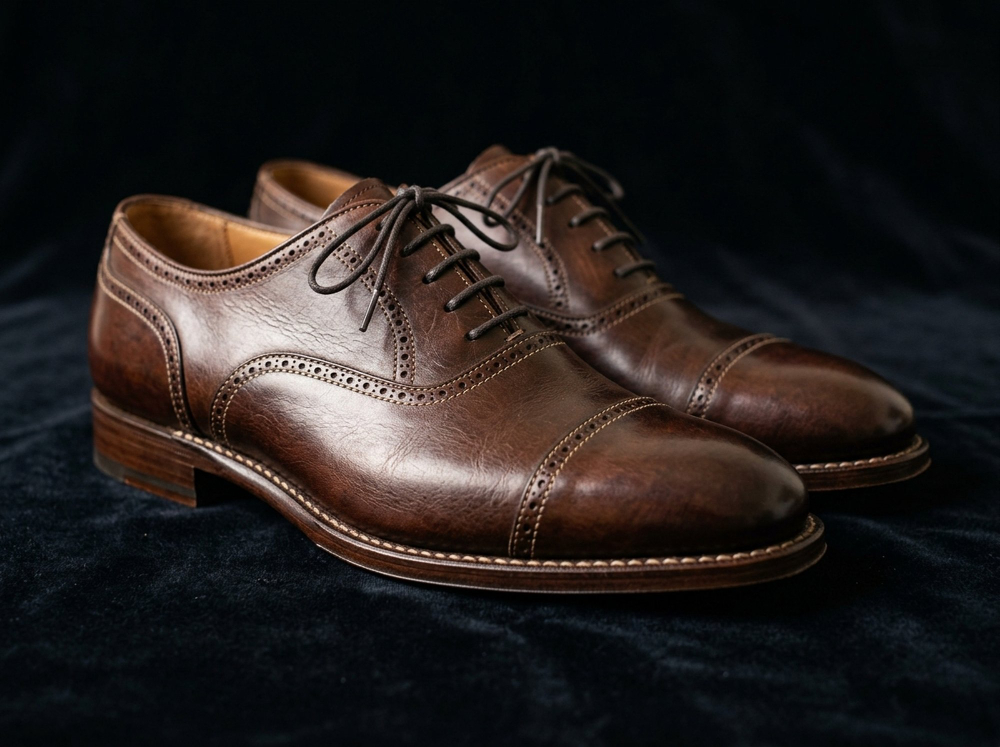
The amount and placement of brogueing is a graded system, and it still signals formality in menswear.
A full brogue has a toe cap shaped in a W or a wing across the front of the shoe, with perforations along all its seams and a punched pattern in the middle of the cap. It is the most decorated and the least formal.
A semi brogue has a straight toe cap with perforations along the seam and a pattern on the cap. A quarter brogue has the perforated seam and no pattern on the cap. And a plain shoe has neither.
The rule, broadly, is that less brogueing is more formal, and the reason is this history: the decoration came from country footwear, so the more of it a shoe has, the more it is referencing the country rather than the town.
That is a convention rather than a law, it is observed inconsistently, and it is genuinely useful to know because it explains why an otherwise identical pair of shoes reads as more or less formal depending on a pattern of holes.
The Holes Were Never the Only Thing Going On
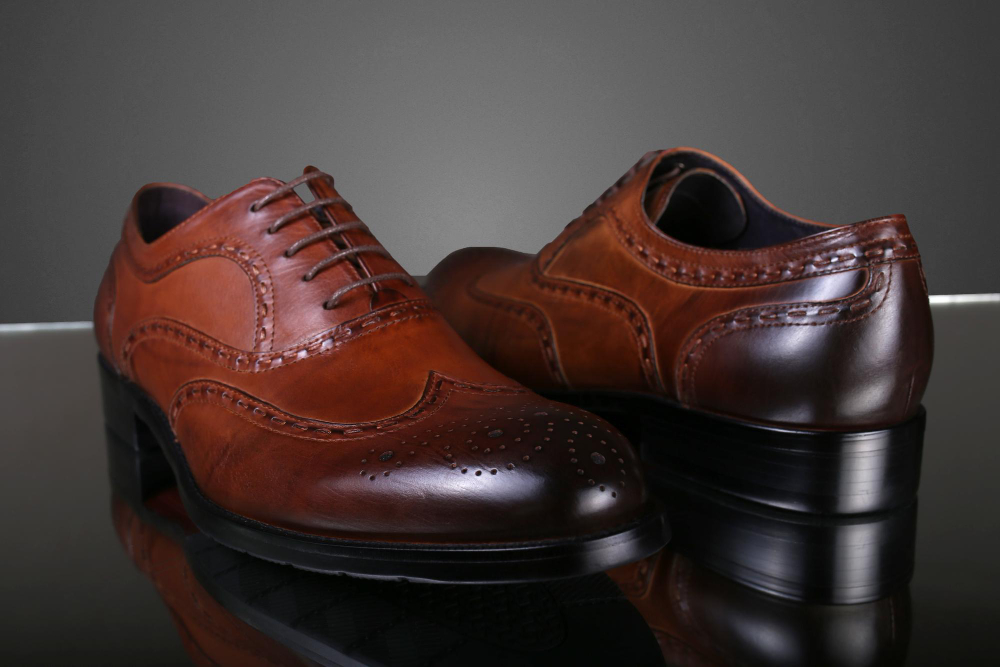
The perforations get the attention and the shoe carries two other features from the same origin.
The toe cap itself is one. An extra layer of leather across the front of the shoe is reinforcement at the point that scuffs, kicks and creases most, and on working footwear it is straightforwardly protective rather than decorative. The wing shape on a full brogue is an elaborated version of a reinforcing panel.
The pinking is the other – the zigzag or serrated edge where one piece of leather overlaps another. That is not decoration either. A cut edge of leather frays and curls, and a serrated edge both resists that and distributes the stress along the seam rather than concentrating it on a straight line, which is the same reasoning as the diamond-shaped reinforcement patch and the gradient on a windscreen.
So a brogue is a functional country shoe with three protective features – drainage, reinforcement and edge treatment – every one of which has become a style marker and none of which was decorative when it was introduced.
That is a denser concentration of surviving function than almost any other garment detail, which is part of why the shoe has lasted as a recognisable type for so long.
The Welt Underneath Is the Part That Actually Matters
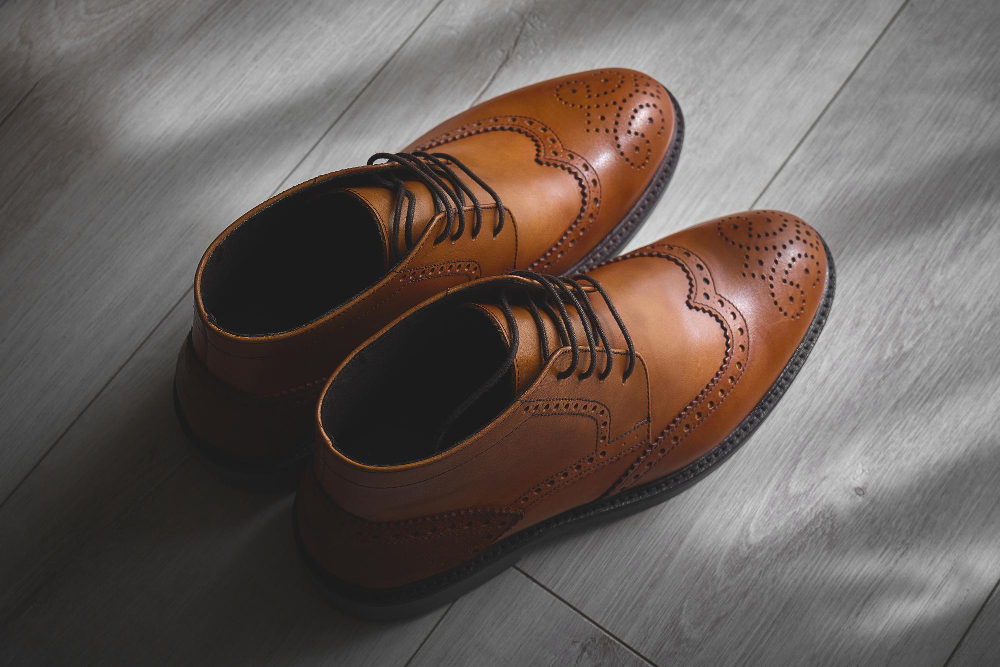
While we are looking at a brogue, the thing that determines whether it is a good shoe is not the pattern on top.
A welted shoe has the upper, the insole and a strip of leather stitched together, and the sole stitched to that strip. That construction means the sole can be removed and replaced several times without disturbing the upper, which is why a good pair of shoes can be resoled for decades and effectively outlive several soles.
A cemented shoe has the sole glued directly to the upper. It is cheaper, lighter and quicker to make, and when the sole wears through the shoe is finished, because there is no way to attach a new one without destroying what is there.
You can usually tell by looking at the edge of the sole for a line of stitching running round it, and by whether the sole projects slightly beyond the upper.
A heavily brogued cemented shoe is a picture of a country shoe. A plain welted one is a country shoe. The pattern tells you about style and the construction tells you about whether you will still own them in ten years.
Leather Shoes Are the One Thing That Still Rewards Care
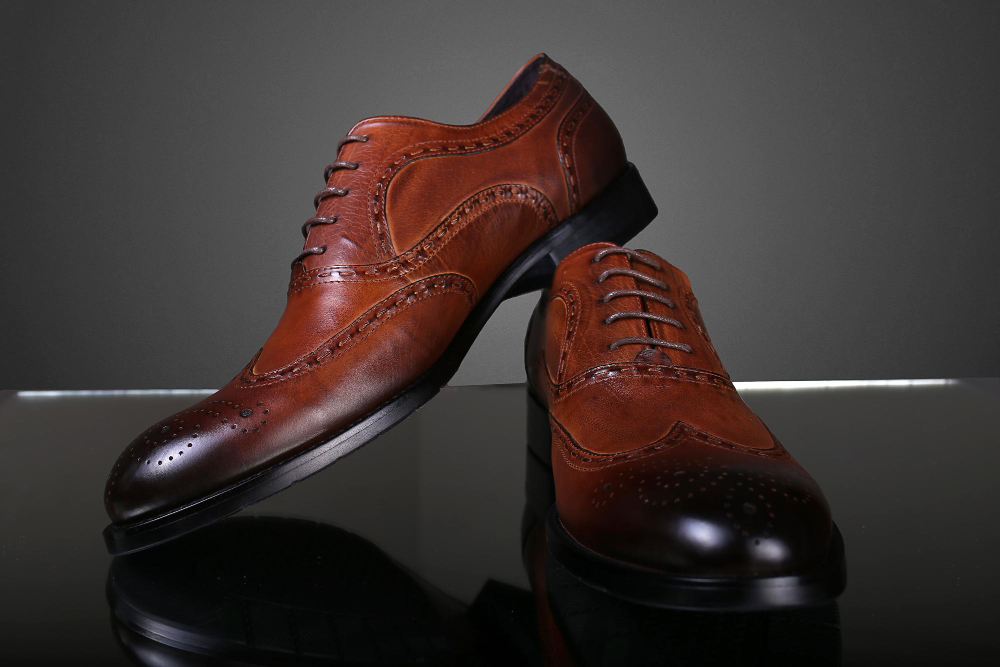
This is the practical part, and it follows from the construction rather than from the pattern.
Leather is a material that takes up and loses moisture, flexes with use and takes the shape of the foot inside it, and all three of those mean a leather shoe that is looked after gets better and one that is not deteriorates in a specific and avoidable way.
Three things do almost all of the work. Shoe trees in a shoe after wearing, which hold the shape while the leather dries from the inside and prevent the creases across the vamp from setting into cracks. Not wearing the same pair on consecutive days, which gives the lining time to dry properly rather than staying damp. And polish occasionally, which replaces the oils the leather loses and keeps it supple rather than brittle.
None of that is difficult or expensive and the difference it makes over a decade is the difference between a pair of shoes that has been resoled twice and one that cracked across the toe in year three.
It is worth saying because brogues in particular are frequently bought as a good pair of shoes by somebody who has not owned a good pair before, and the thing that determines whether they last is entirely what happens in the hour after each wearing.
Which is also why so many period brogues survive in wearable condition. They were owned by people for whom looking after shoes was simply what you did, because a replacement pair cost a week’s money.
Why the Holes Stayed When the Purpose Went
The brogue belongs with the sleeve buttons, the lapel notch, the lash tab and the shirt loop – features that outlived their function because they had become what the object looked like.
The mechanism is specific and worth naming. A decorative feature that originated in function carries a meaning: it says what kind of thing this is and what it is for. Once that meaning is established, the feature cannot be removed without the object becoming unrecognisable, regardless of whether the original purpose still applies.
So the question is never whether the holes are still needed. It is whether a shoe without them would still read as that kind of shoe, and the answer is no – it would read as a different shoe entirely, which is precisely why plain versions exist as a separate category rather than as brogues with the holes left off.
The useful habit is to look at any object’s decoration and ask what it used to do. In clothing the answer is almost always something, because garments are conservative and because every feature was once solving a problem for somebody who was outdoors.
And occasionally the answer is still relevant. A brogue on wet grass does drain, exactly as designed, four hundred years later, which is more than can be said for the sleeve buttons.
Look at the holes on a pair of brogues and notice that they go all the way through.
Which means that on a wet day, they still work – and if you have ever noticed that a pair of brogues lets water in during a downpour, that is not a defect in the shoes. It is the shoes doing precisely what they were invented to do, in a city, where nobody wants it.
Like our content? Follow us for more.
