The Cases Arrived and the Room Changed

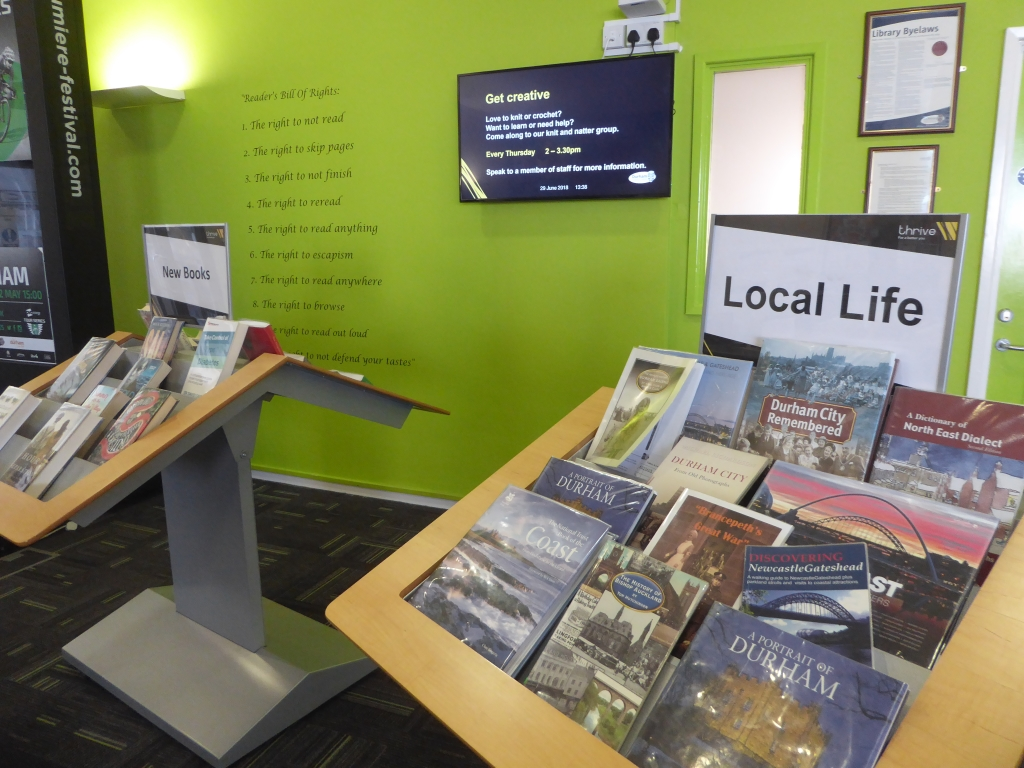
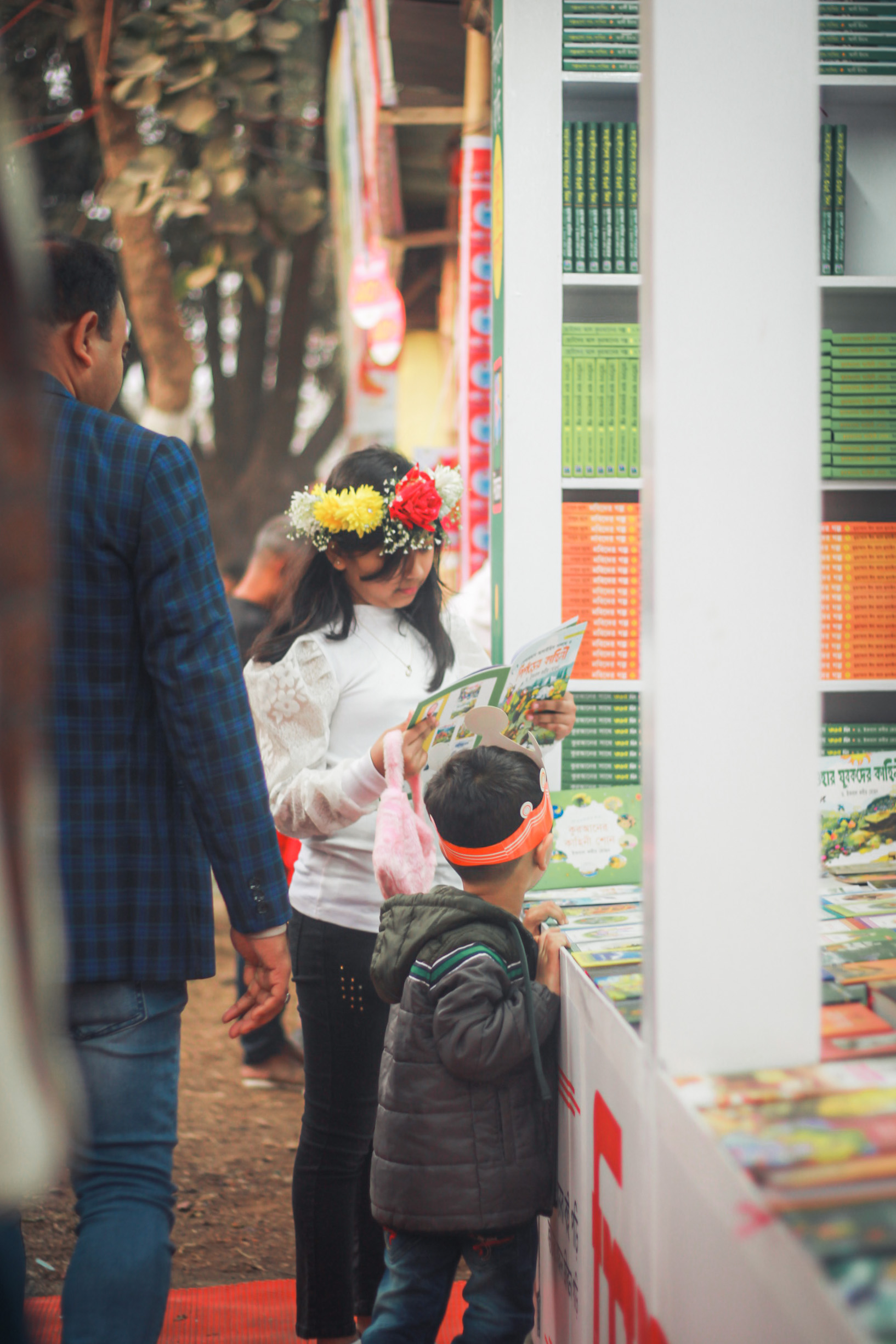
The book fair came in boxes that unfolded. Tall wooden or metal cases on castors, wheeled into the library or the hall, opened out like wardrobes to reveal shelves already stocked and faced out, with the covers showing rather than the spines.
That detail – covers facing out – is why the fair looked so unlike a library. A library shows you spines and expects you to know what you are looking for. The fair showed you a wall of pictures and invited you to want one.
There were spinner racks for the cheap items. There was a table at the front with a cash box, a float, a receipt book and whichever parent or teacher had agreed to run it. There were posters. There was frequently a cardboard standee of a character.
And it was there for two or three days only, which was the whole mechanism. A permanent bookshop in a school would have been background. A shop that appeared on Tuesday and was gone by Friday produced urgency in nine-year-olds, and the people who organised it understood that perfectly well.
Like our content? Follow us for more.
You Were Given Money and Then Left Alone With It

The thing that made the book fair unlike almost anything else in a child’s year was the autonomy.
Money came from home, in an envelope or a purse, in an amount a parent had decided. The child carried it to school, queued, and then made the decision themselves. No parent standing there. No teacher directing the choice. A fixed sum, a wall of options, and a genuine constraint – one good book or three cheap ones, the thing you wanted or the thing you could afford.
That is a real economic problem and children took it extremely seriously. People remember the deliberation far more vividly than the reading: walking the cases repeatedly, holding two books, putting one back, going to look at a third, asking a friend, changing their mind at the table.
It was also almost risk-free from the parents’ point of view, which is why the money was handed over so readily. Everything in the cases had been chosen by somebody. A child given the same sum in a town-centre shop was a different proposition; a child let loose at a book fair could not come home with anything a parent would object to.
So it was freedom inside a fence, and both halves of that mattered.
The Selection Was Not Neutral and That Was the Business
The fair was a commercial operation run through schools, and the selection reflected that.
What was on the cases was what sold: series fiction, humour, animals, ghost stories, sport, puzzle and fact books, novelty items, and whatever had a film or a television programme attached that year. Literary merit was present but was not the organising principle.
Attached to the books were the things that were not books: posters, pencils, erasers shaped like food, bookmarks, stickers, pens with multiple colours, and small plastic objects of no use whatever. These were cheap, highly visible, placed at child eye level, and a significant share of the money spent went on them.
A great many parents who thought they were funding reading were partly funding a pencil case, and a great many children made exactly that calculation deliberately.
The school’s share came back as books for the library or as credit against stock, which is the part that made the whole arrangement work. A school hosted a shop, the shop took money from the school’s own families, and the school was paid in books. Everybody involved could describe that as a good deal, and in a decade of tight library budgets it frequently was the only way new stock arrived.
The Wish List Was the Clever Part
Before the fair opened, children were given a flyer or a catalogue to take home – a folded sheet showing the stock with prices, to be gone through with a parent in advance.
This did several things at once. It told the parent what the money was for, which made the money more likely to appear. It let the child plan, which raised the intensity of the day. And it created a list of things already wanted before the cases were even open.
The flyer is the object a lot of people remember most precisely: circled items, a total added up in pencil at the bottom, a negotiation with a parent about which two of the four circled things were actually going to happen.
It also produced the characteristic disappointment of the whole institution, which is that the thing you had circled was frequently sold out by the time your class’s slot came round. Classes went through in sequence over two or three days, and if you were a Thursday class the good stuff had gone on Tuesday.
People still remember what they did not get.
The Prices Were Pitched at Exactly the Money a Child Had
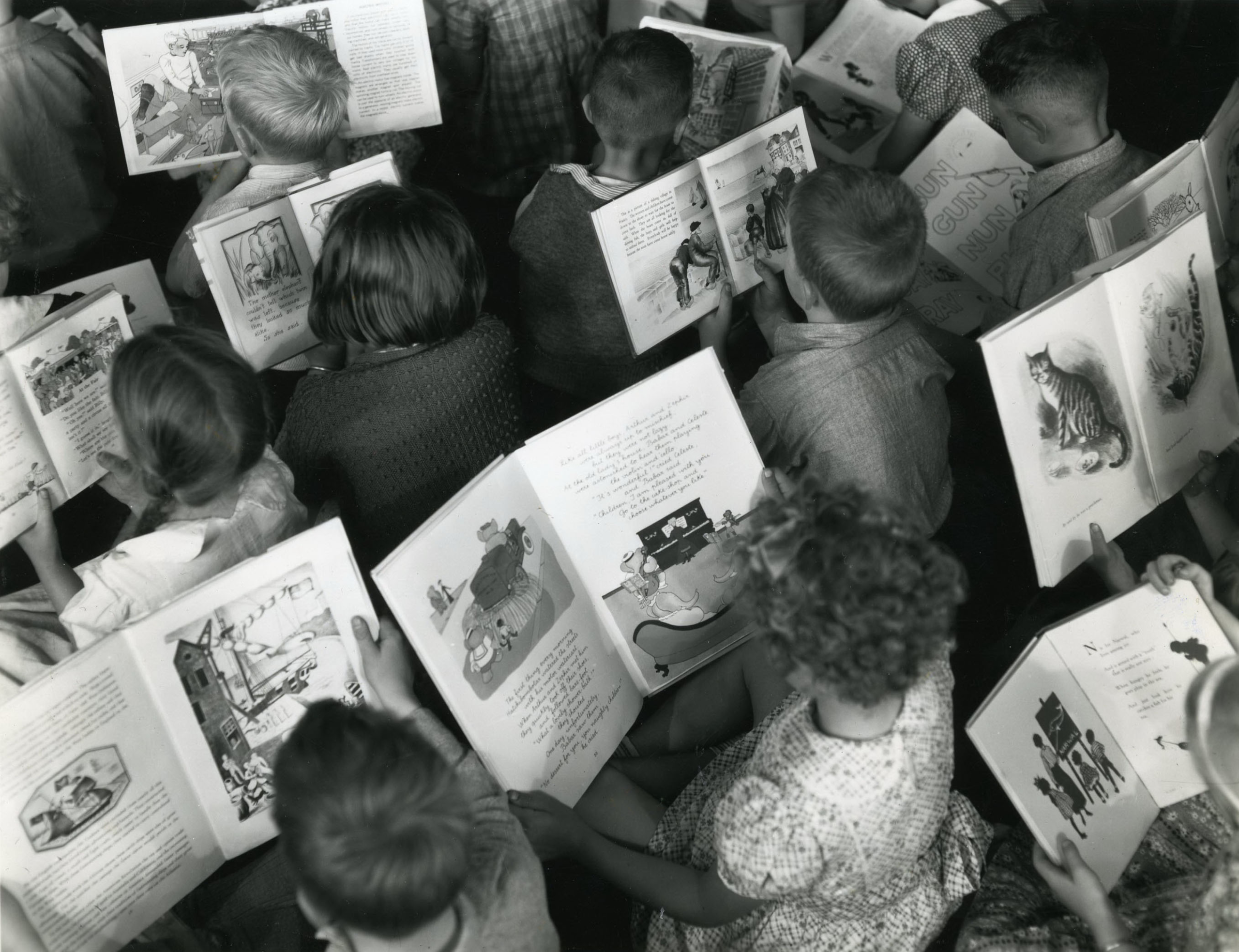
The pricing was not accidental and it is worth looking at, because it explains the whole shape of the day.
Stock was tiered deliberately. At the bottom, items priced at small change – a pencil, a bookmark, a sticker sheet – which meant nobody left empty-handed, including children sent with very little. In the middle, the mass of paperbacks at a price point two or three of which could be afforded by a child with a typical envelope. At the top, a small number of hardbacks, boxed sets and annuals that almost nobody bought and which were there to make the middle tier look reasonable.
That last point is the one people do not notice. A wall containing a few expensive items makes the ordinary items feel like good value, and a child comparing a paperback against a boxed set has been given a frame of reference rather than an absolute price.
The tiering also quietly managed the social problem. In a school where envelopes varied enormously, a floor of items priced at pocket change meant the difference between a child with a lot and a child with almost nothing was a difference in what they carried out, not in whether they carried anything out at all.
Whether that was kindness or merchandising is a fair question, and the honest answer is that it was both and that the two were not in conflict.
It Was Where a Lot of Children Discovered They Liked Reading
The genuine claim for the book fair, as against the commercial one, is about ownership.
A library book is borrowed. It has a date in it, it has to go back, it has been read by other people, and it is not yours. A book bought at the fair is yours permanently – your name in the front, kept on your shelf, re-readable whenever you like, lent to a friend on your terms.
For children in households with few or no books of their own, that distinction was significant. Owning a book changes how it is treated and in a lot of cases how often it is read, and the fair was the mechanism by which a very large number of children acquired the first book they owned rather than borrowed.
The selection being populist rather than improving is also part of the argument rather than against it. A child who buys a joke book, reads it forty times and then buys a novel next year has been produced by exactly the commercial logic that literary critics of the format object to.
Which is not to say the criticism is wrong. Both things are true: it was a shop, with a shop’s incentives, operating inside a school; and for a lot of people it is where reading for pleasure started.
It Still Exists, and the Economics Have Got Harder
Book fairs have not disappeared – they still run, in much the same physical format, with the same cases and the same flyer sent home.
What has changed is around them. Children’s spending now competes with devices and subscriptions. School fundraising has multiplied, so a family may face several appeals a term and a book fair is one of them rather than the main one. Online ordering means a parent can buy the same title more cheaply in ten seconds without leaving the house, which removes the convenience argument entirely.
And payment has moved. Cash handed to a child in an envelope was the whole experience, and much of the transaction is now cashless and routed through a parent, which quietly removes the autonomy that made the day what it was. A child spending a parent’s money on a parent’s device, with the parent present, is doing something different from a child with four coins and a decision to make.
So the institution survives and the thing people remember about it has partly gone. What is left is a book fair. What has been lost is the one morning a year when somebody handed you money, showed you a wall of things you might want, and walked away.
And if you want to know whether it worked, the test is simple enough. Ask anybody who went to school in the 1970s or 1980s to name a book they bought at one, and a surprising number can – title, cover, and roughly where it sat on the case.
Like our content? Follow us for more.