

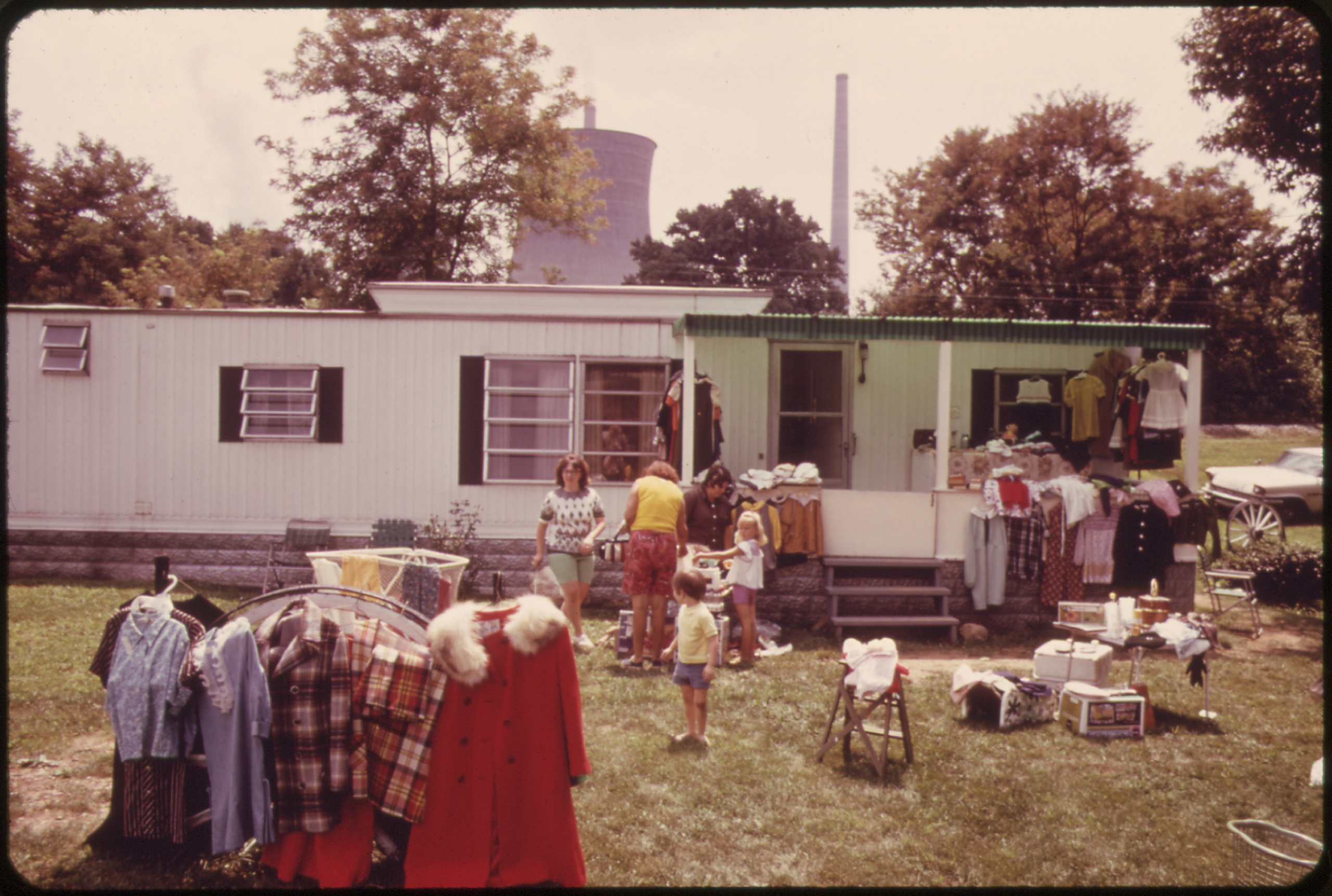
In 1976 a garage sale was advertised with a hand-lettered sign stapled to a telephone pole on Friday evening, and laid out on Saturday on card tables in the driveway with the car moved onto the street.
Prices were written on masking tape in marker, mostly in quarters, by somebody with no information about what anything was worth. The glass bakeware went by the boxful. The records were in a crate on the ground. And the dealers arrived before it opened, because they were the only people there who knew.
Here are fifteen things every family sold at a garage sale in 1976, and what became of each one.
1. The Sign Went Up on a Telephone Pole With a Staple Gun
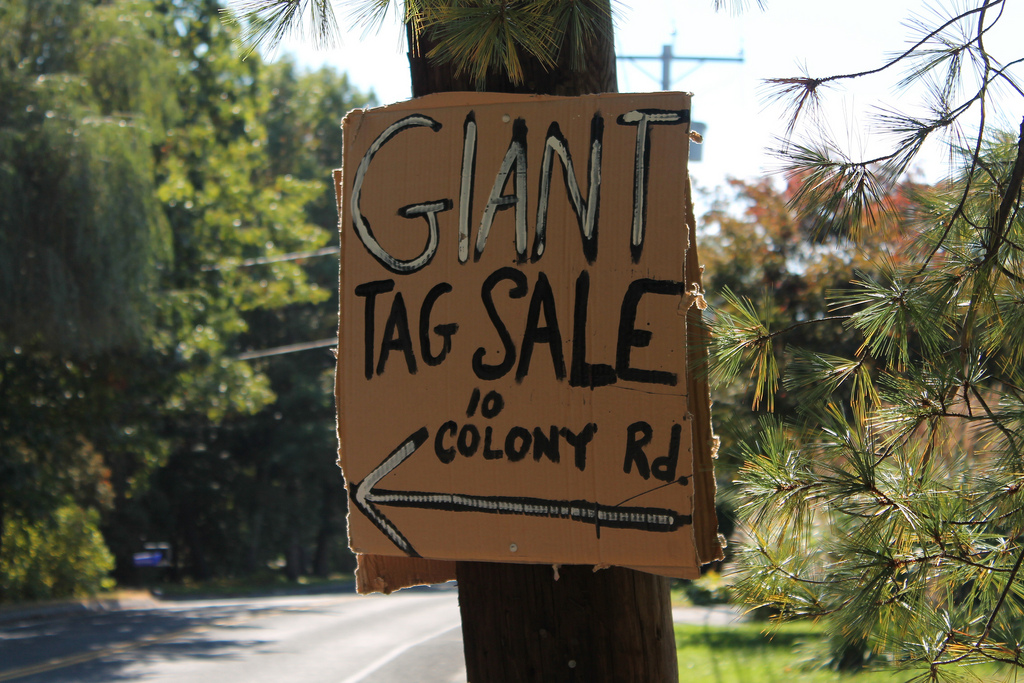
Advertising was a hand-lettered sign on cardboard or poster board, stapled or taped to a utility pole, a tree or a stop sign at the nearest intersection, with an arrow and the address, put up on Friday evening.
Online listings, neighbourhood apps and marketplace posts reach a far larger audience instantly, with photographs. The sign reached only people already driving past, which is why the intersection chosen mattered more than anything written on it.
Nobody ever took the signs down. Utility poles in a great many neighbourhoods carried a sediment of faded cardboard and rusting staples accumulated over years, and the staples are still in a lot of poles now – which is the only physical trace most of these sales left behind.
Like our content? Follow us for more.
2. Everything Was Laid Out on Card Tables in the Driveway
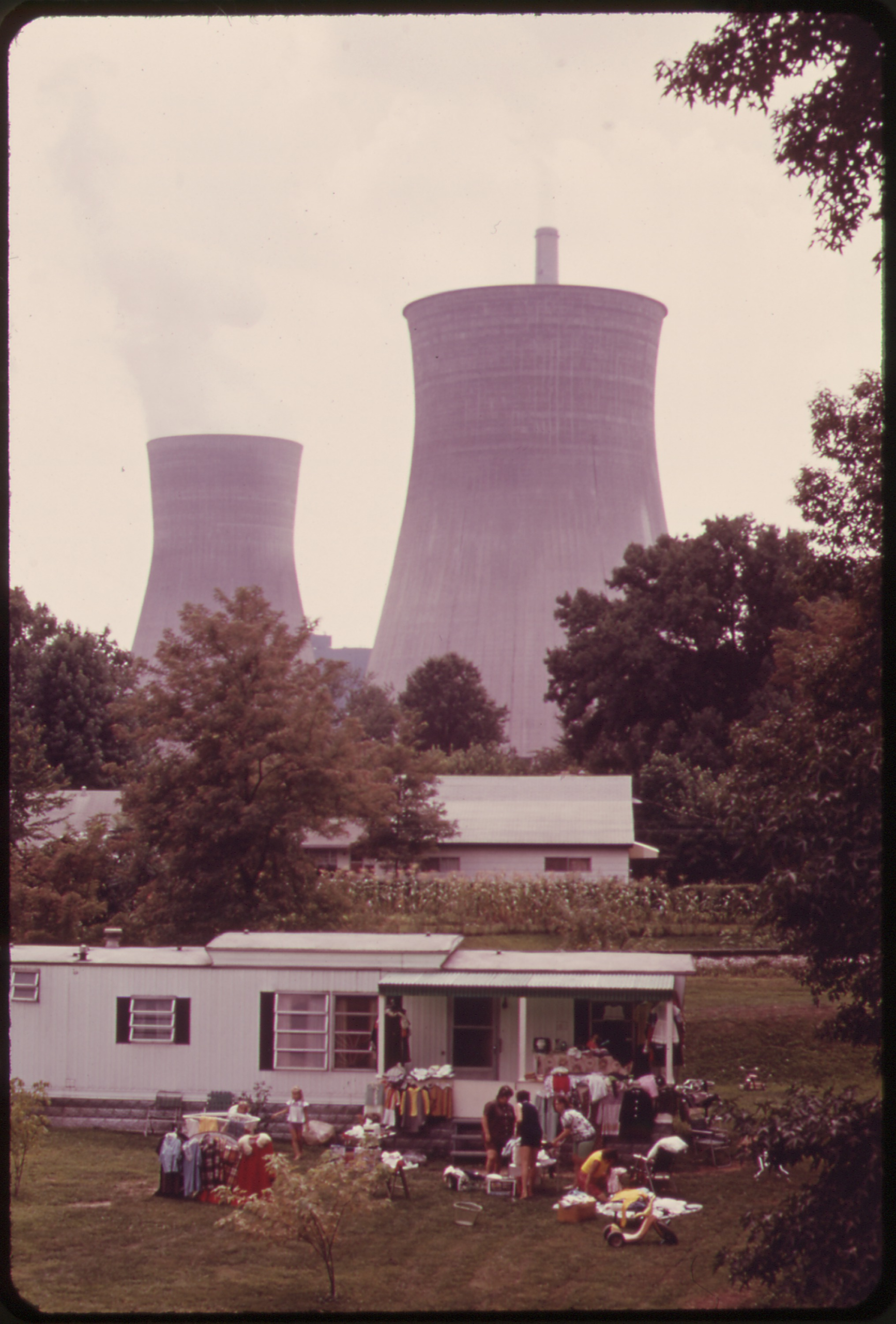
The display was folding card tables, a sheet on the grass, boxes on the ground, a clothes rail or a rope between two trees, and the open garage itself with the car moved onto the street.
Online resale requires no display at all, and organised estate sales are staged inside by professionals. The driveway layout was dictated by what furniture a household already owned, which is why every sale in the country looked broadly identical.
The weather was the whole risk and there was no contingency. A sale advertised for Saturday happened on Saturday, and a wet morning meant everything was carried back into the garage having been handled by nobody – with the signs already up and the neighbours already told.
3. The Prices Were Written on Masking Tape in Marker

Pricing was a roll of masking tape torn into squares, a marker, and a figure assigned by whoever was doing it – mostly in increments of a quarter, with larger items given a round dollar figure and a willingness to come down.
Online pricing is researched against comparable sales in seconds. The 1976 price was a guess made by somebody who had no information and no intention of finding any, which is the single most consequential fact about the whole institution.
That is why so much went for nothing. A household pricing its own possessions with no reference point systematically undervalues anything whose worth is not obvious, and overvalues anything it has sentimental attachment to – so the genuinely valuable items went for a quarter and the worthless ones sat on the table all day.
4. The Glass Bakeware Went for a Quarter a Piece
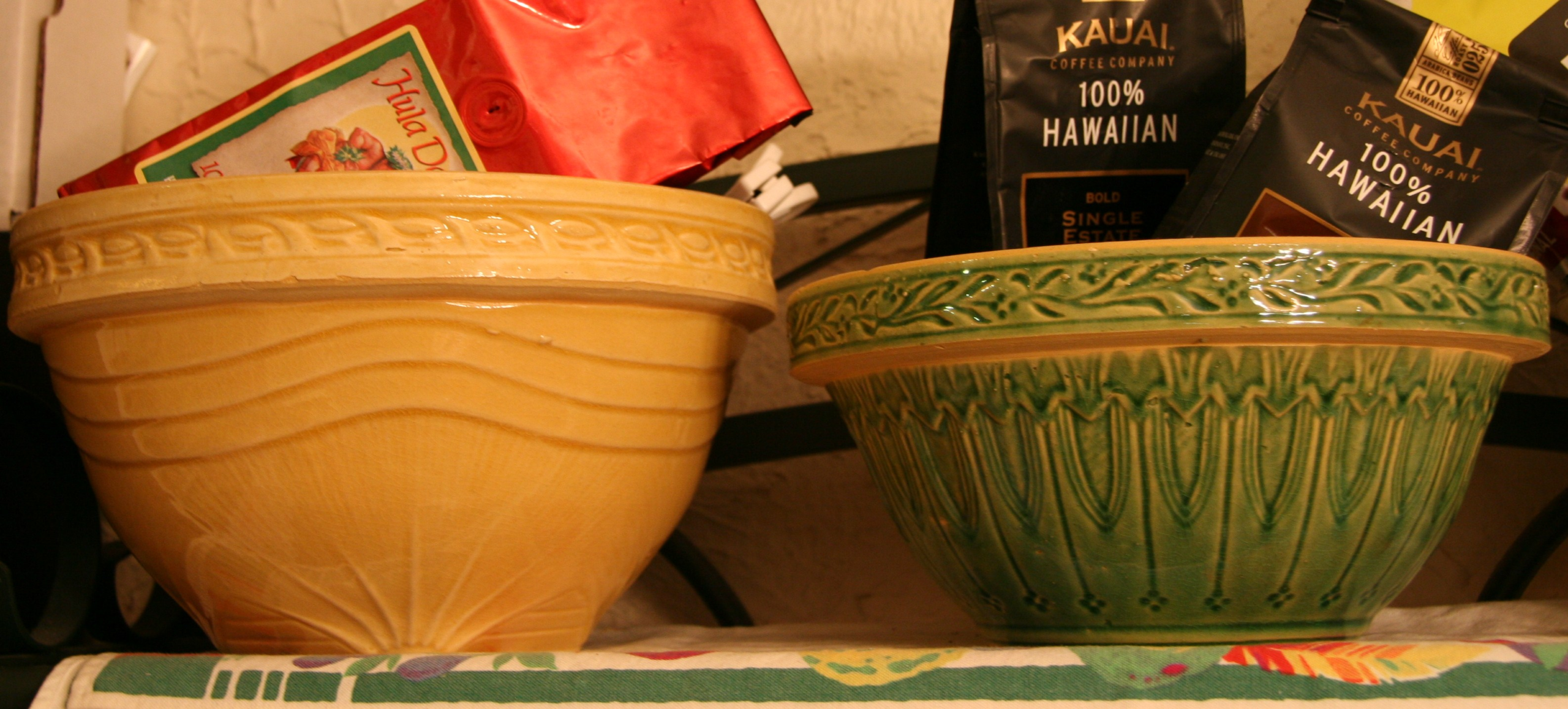
Patterned opaque glass mixing bowls, casseroles, refrigerator dishes and lidded baking dishes were cleared out by the boxful, priced at a quarter or fifty cents, as ordinary used kitchenware nobody wanted.
Certain patterns now trade for substantial sums among collectors, with the rarer promotional and limited patterns reaching figures that would astonish anybody who sold a set in 1976. A complete graduated bowl set in good condition is a recognised collectable.
The reason is the pattern rather than the glass. Thousands of patterns were produced over decades, some for very short runs or as promotional items, and scarcity was established entirely by accident – so whether the set on a particular card table was worth a dollar or several hundred depended on which design a household happened to have been given at a wedding twenty years earlier.
5. The Records Were in a Box on the Ground and Nobody Looked Twice
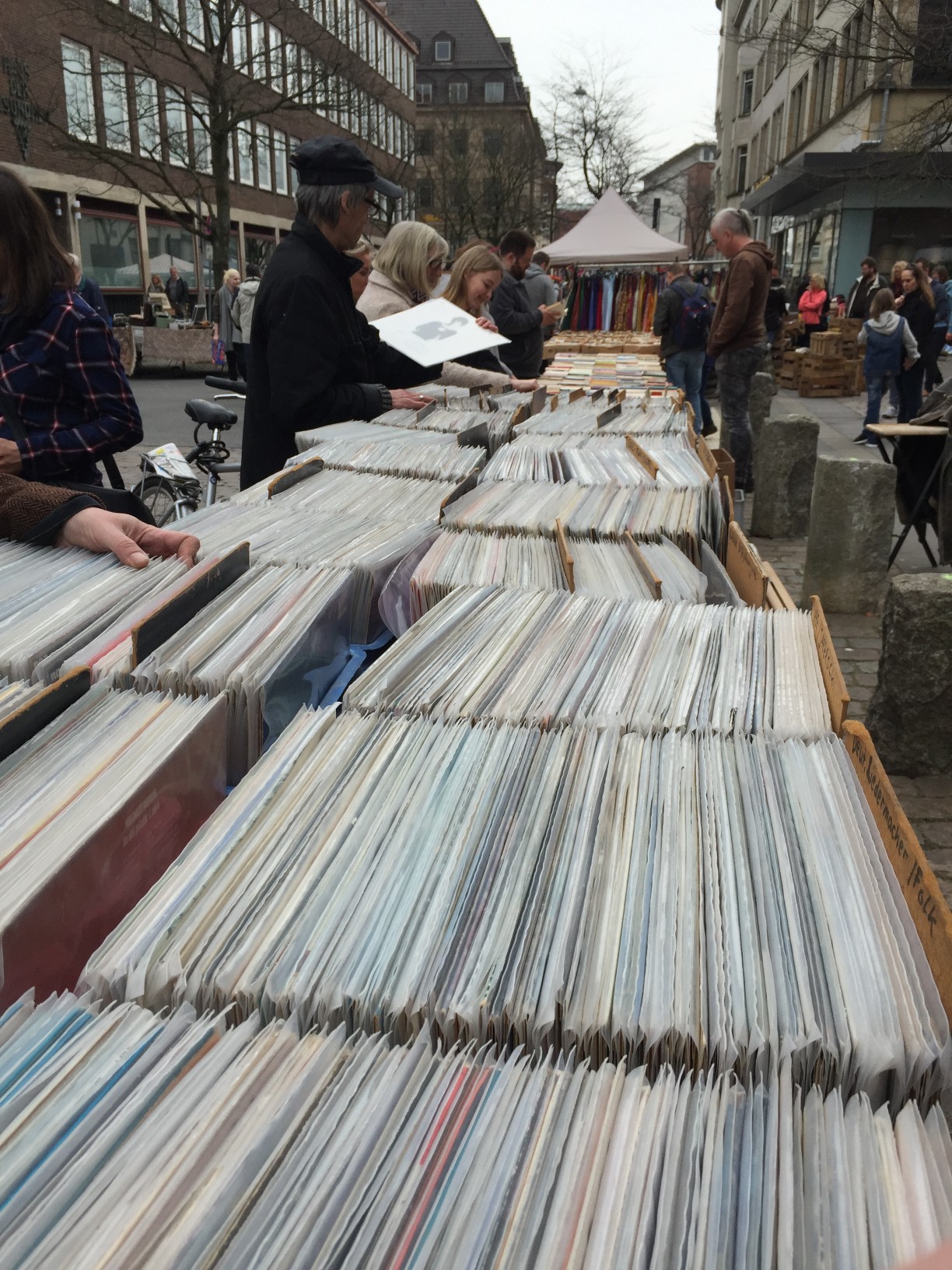
Vinyl albums were cleared out in bulk – crates and boxes of them, priced at a quarter or less, sold by the box at the end of the day, with sleeves creased and no particular care taken.
Certain pressings now carry significant value depending on label, matrix, pressing plant and condition, and record collecting is a serious market with established reference pricing. In 1976 a used album was a used album.
Condition is what destroyed most of the value and it was destroyed before the sale. Albums stored in a garage, played on a cheap changer, stacked without inner sleeves and handled by children are in the condition collectors call poor, and no amount of rarity rescues a scratched record – so the boxes that went for a dollar mostly deserved to.
6. The Toys Had Already Been Played With Into the Ground
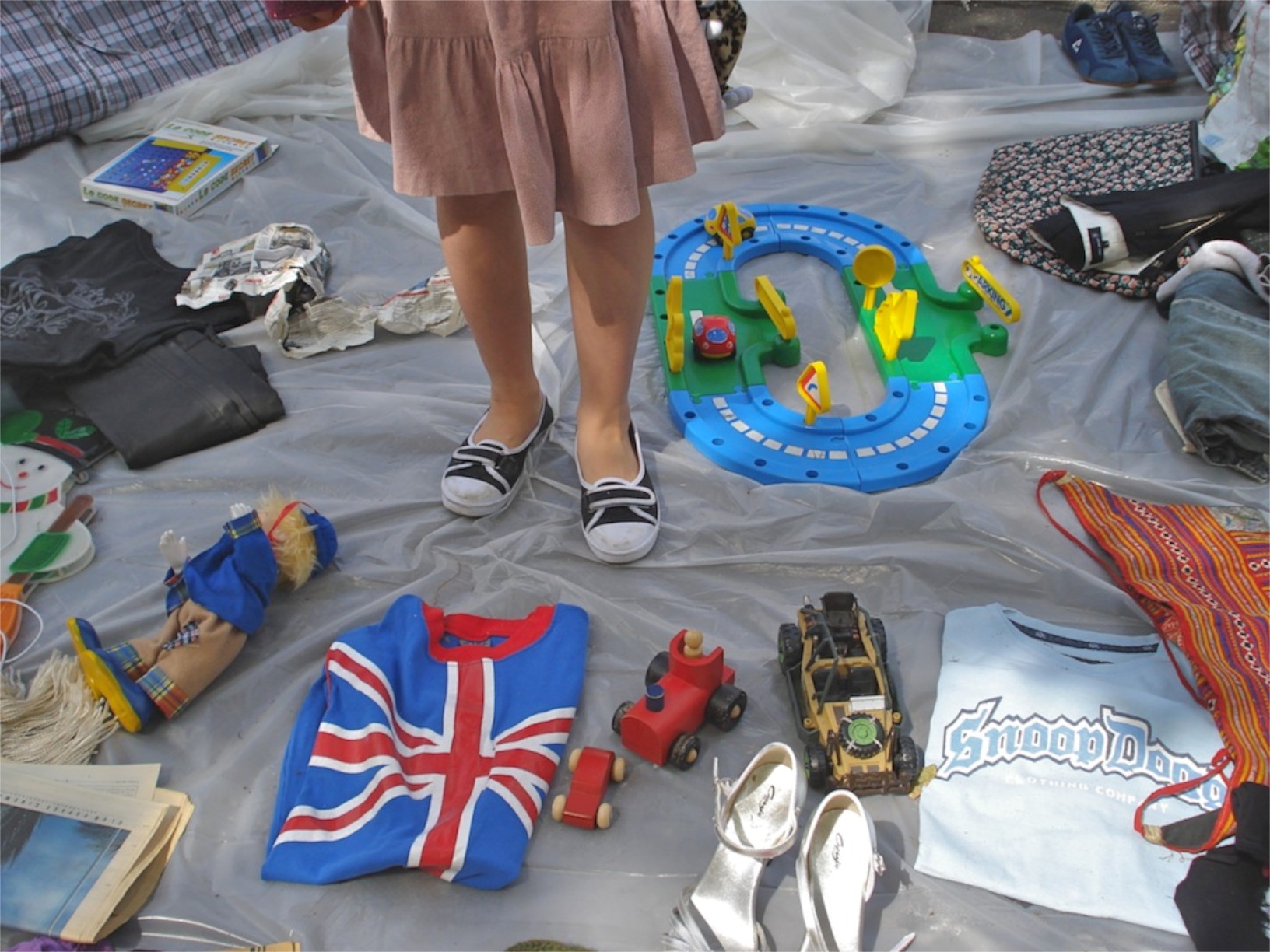
Children’s toys were sold once the children had outgrown them – metal and early plastic vehicles, dolls, construction sets, board games with pieces missing and figures with paint worn off.
Toys of this period in original condition command prices entirely disconnected from what they cost, and boxed unplayed examples reach figures that are genuinely hard to credit. Played-with examples are worth a fraction of that.
Which is the collector’s cruel arithmetic and it applied in reverse at a garage sale. The value is in the box, the completeness and the paint, and a toy that has done its job properly has none of those – so the household that let its children wear a toy out was behaving correctly and destroying an asset at the same time.
7. The Appliance Was Sold Because It Still Worked
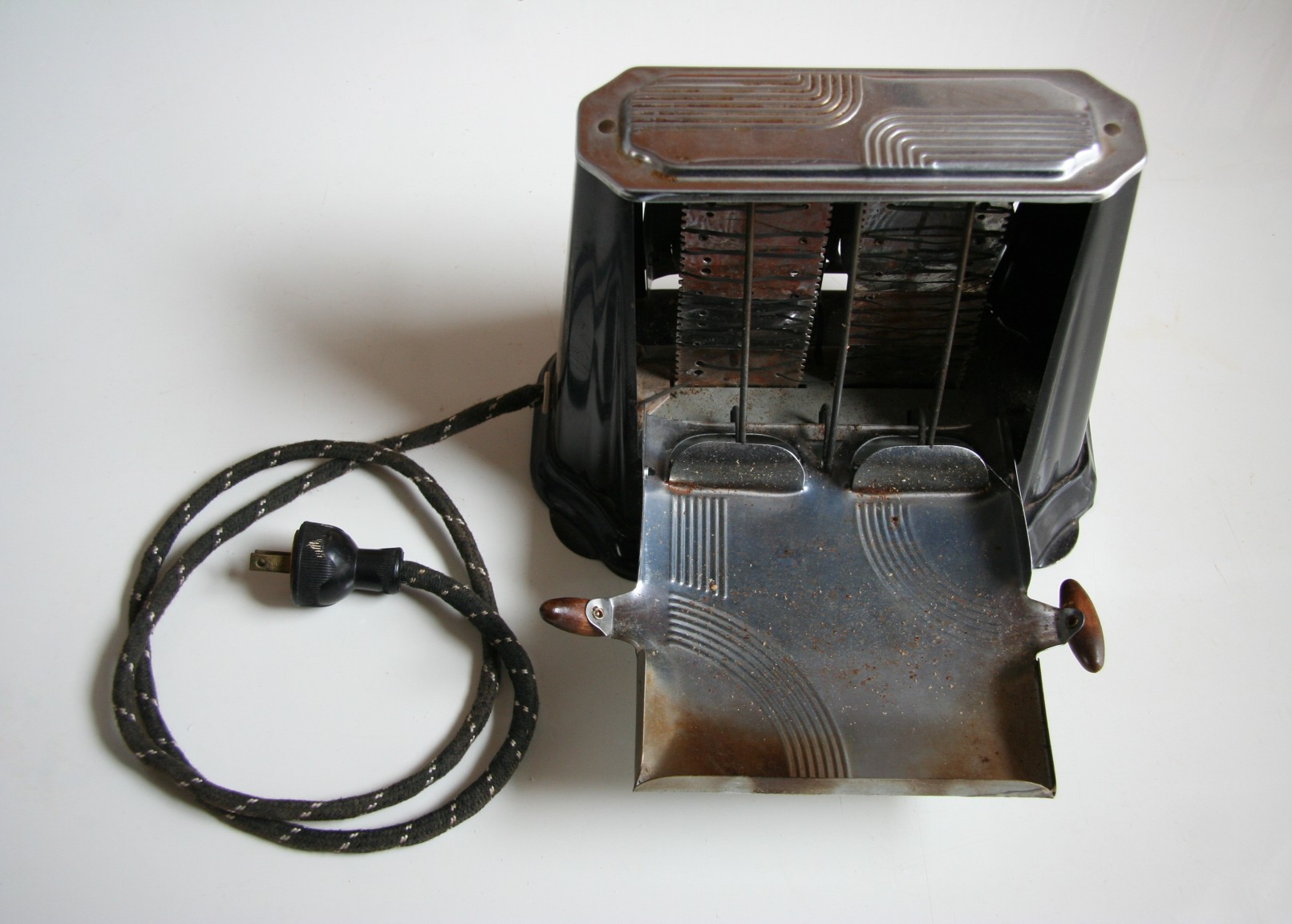
Small appliances were sold working – mixers, toasters, percolators, fans, radios, sewing machines – because they had been superseded rather than because they had failed, and they were demonstrated at the table by plugging them in.
Secondhand appliance resale is limited by electrical safety expectations, and demonstrating an unknown appliance from a household extension lead is not something anybody would now organise. These machines were built to be repaired and frequently had been.
The durability is the part that is genuinely gone. A mixer from the 1950s sold at a 1976 garage sale for two dollars is in many cases still working now, because it was built from metal with a serviceable motor and replaceable parts – which is why that category of object has a collector market and why its modern equivalent will not.
8. The Tools Were the Only Thing Priced Properly

Hand tools, garden tools and workshop equipment were sold by men to men, with the price negotiated on the basis of actual knowledge of what the item was worth and what it would do.
Tool resale remains active and well informed. Tools were the exception to the general ignorance because the buyers knew exactly what they were looking at, which meant the price found a realistic level through negotiation.
It also meant the tools went first. Dealers and knowledgeable buyers arrived early specifically for them, which is why a sale that opened at eight was stripped of anything mechanical by half past – and why the household’s judgement that their tools were worthless was corrected within thirty minutes.
9. The Haggling Was Expected and the Opening Price Reflected It

Every price was understood to be a starting point, buyers offered lower as a matter of course, sellers accepted or split the difference, and a final hour of the sale produced offers for whole tables at once.
Fixed-price online listings with offer functions, conducted in writing between strangers. The haggling was face to face, immediate, and conducted between neighbours who would see each other again, which limited how hard either side pushed.
The end-of-day collapse was the real market. A seller who did not want to carry everything back into the garage would take almost anything by three o’clock, and the buyers who understood this arrived late and bought in volume – which is the opposite strategy to the early dealers and worked just as well.
10. Dealers Arrived Before It Opened and Everybody Resented Them
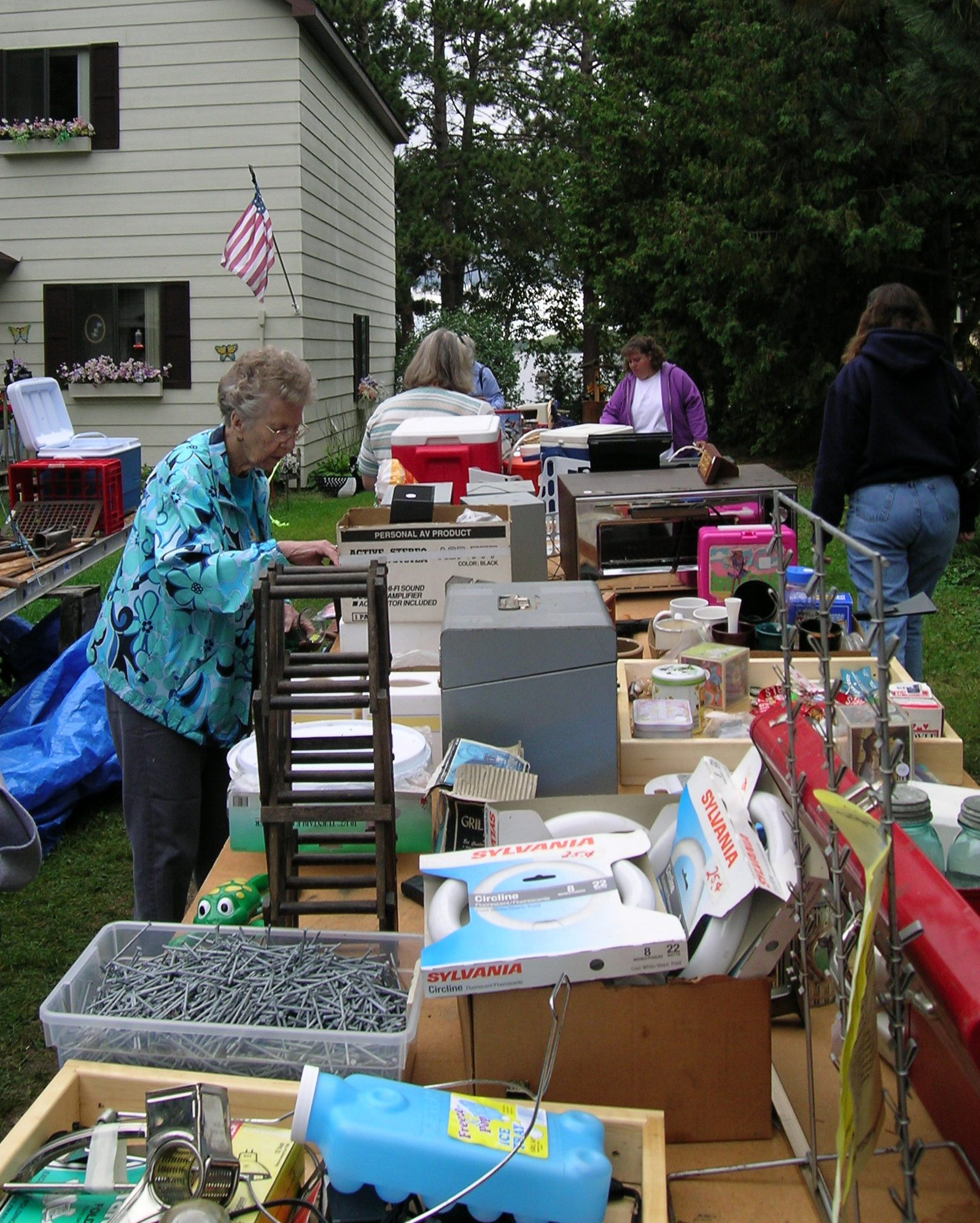
People who bought to resell – antique dealers, market traders, scrap men and knowledgeable amateurs – turned up early, sometimes before the advertised time, worked through everything quickly and bought anything underpriced.
Professional resale is an enormous and openly acknowledged business conducted largely online. The early dealer was the one participant who actually knew what things were worth, which is precisely why their arrival was unwelcome.
The resentment is worth examining because it was not really about fairness. A household that priced a bowl at a quarter and sold it at a quarter received exactly what it asked for, and the dealer’s knowledge was the only thing that had been added. What rankled was discovering afterwards that the information gap had been that wide – which is the same complaint people make about every market they have entered unprepared.
11. The Cash Box Was a Shoebox and the Change Ran Out by Nine
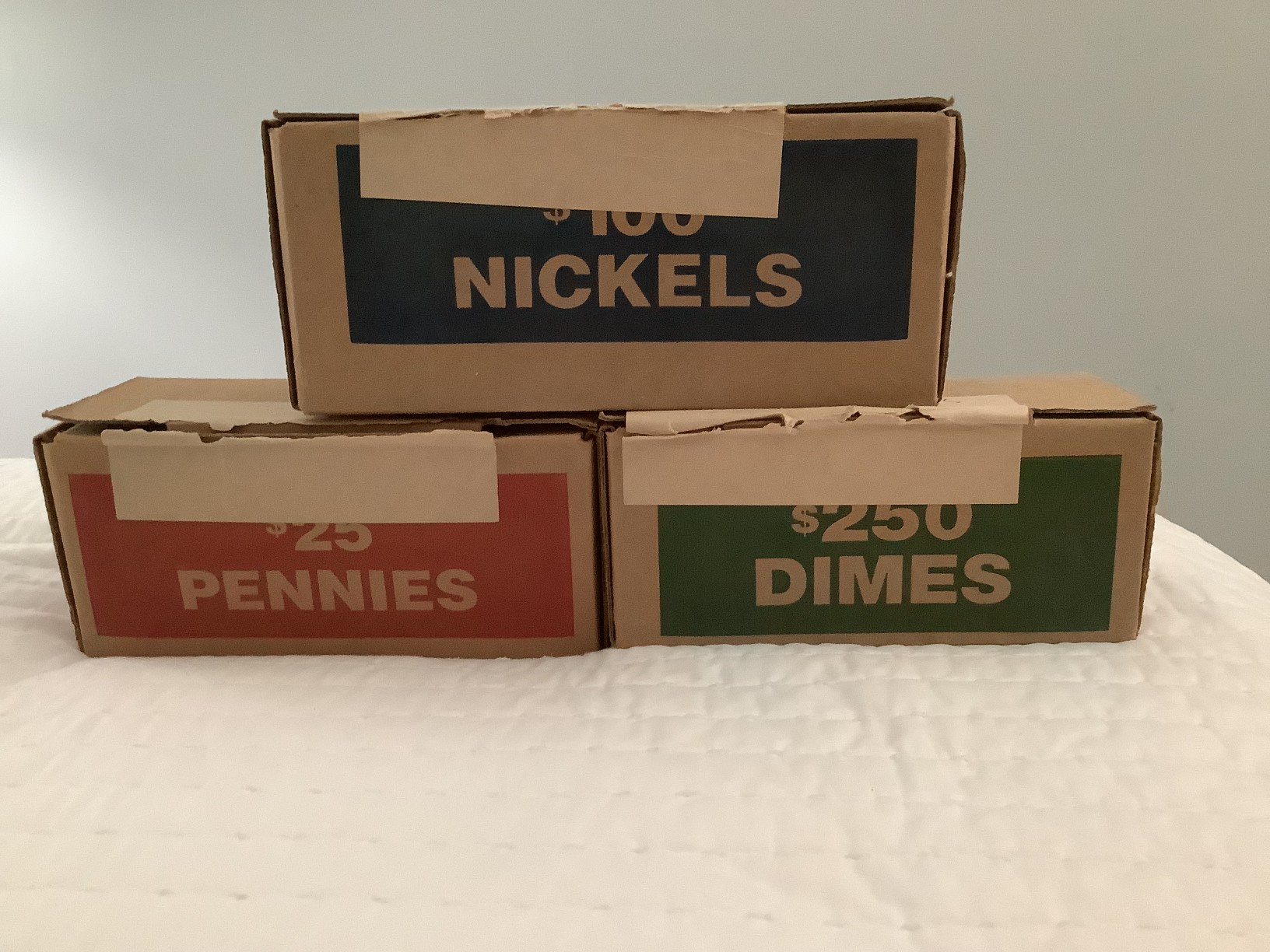
Takings were kept in a shoebox, a cigar box, a coffee can or an apron pocket, with a float of coins and small notes assembled the night before and always insufficient.
Card readers and payment apps with no float and no reconciliation. Running out of change was the universal operational failure, because a sale priced in quarters generates an enormous number of small transactions and almost everybody paid with a note.
The box was also left unattended regularly, on a table, in a driveway, while the seller fetched something – and the losses that resulted were common enough to be part of the shared memory of the institution, and were almost never pursued.
12. The Neighbours Came to Look Rather Than to Buy

A substantial share of attendance was local and social – people walking down to see what was for sale, who was there, and what the household was getting rid of, with no particular intention of buying anything.
Online resale is anonymous and reveals nothing to anybody nearby. A sale laid a household’s possessions out on the driveway for inspection by everybody on the street, which was understood by both sides.
That exposure is why some households would not hold one. A garage sale displays what a family owns, what it is replacing, what condition its things are in and in a reasonably legible way how it is doing – and for anybody who preferred not to broadcast that, the preferred option was to give things away or to drive them somewhere else entirely.
13. Whatever Was Left Went to Charity or Into the Trash
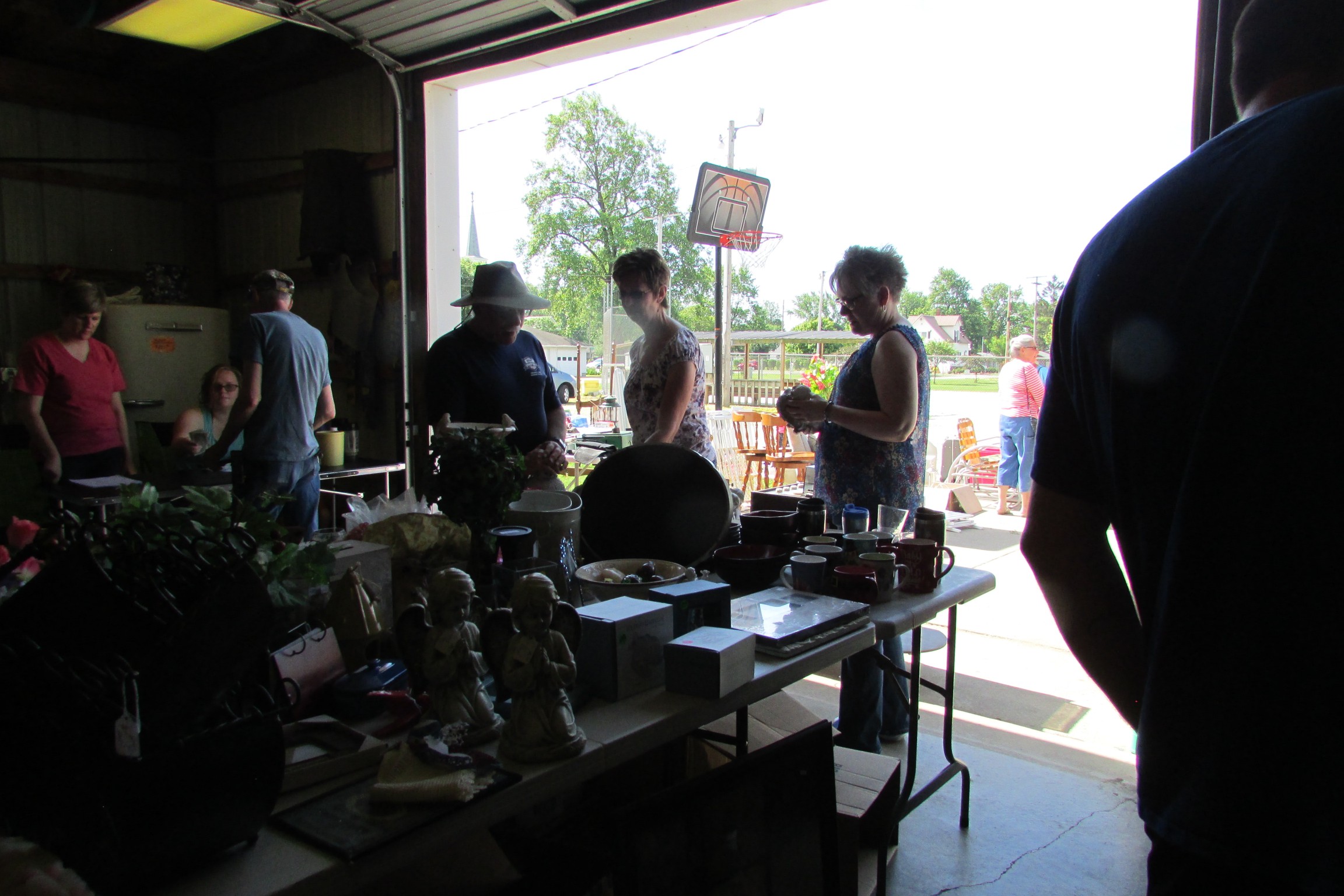
At the end of the day unsold items were boxed and either taken to a thrift store or charity collection, left at the kerb with a free sign, or simply thrown out – because the one thing nobody wanted was to put it all back.
Donation, resale listing or kerbside giveaway, with far more awareness of what can be recycled. The determination not to carry it back inside is the strongest force operating at the end of any sale and accounts for the final-hour prices.
An enormous quantity of the twentieth century’s domestic material culture was disposed of in exactly this way, on a Saturday afternoon, for nothing, by households who had correctly concluded that nobody wanted it – and the thrift stores and charity shops of the period were stocked almost entirely by that decision.
14. It Was Also How a Lot of Households Furnished Themselves
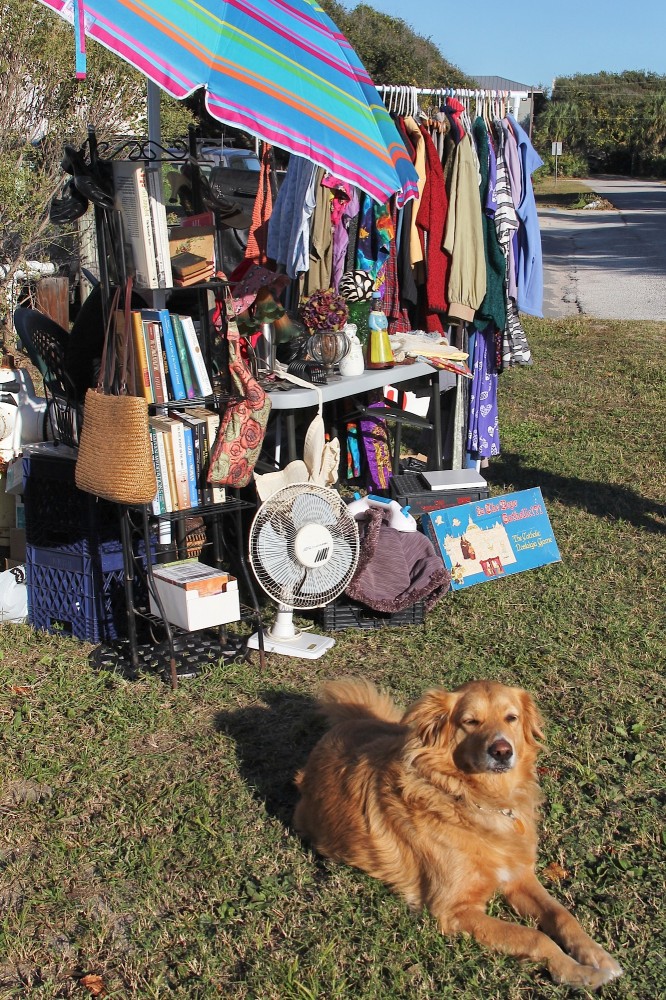
For young couples, students, first apartments and families on tight budgets, garage sales were a primary source of furniture, kitchen equipment, bedding, tools and children’s things.
Online marketplaces and charity retail serve the same function at far greater scale and with far better search. The sales were a genuine parallel economy, operating in cash, on Saturdays, with no overhead and no tax.
That function is the real justification for the whole institution and it is usually overshadowed by the collector stories. Household goods circulating locally at prices a household on nothing could afford is a straightforwardly useful thing, and the fact that an unidentified bowl occasionally went for a quarter is a footnote rather than the point.
15. Then It Moved Online and the Information Gap Closed

The model depended on local advertising, physical display, cash, face-to-face negotiation and a complete absence of pricing information on either side.
Online marketplaces replaced every component. Reach became national, listings carry photographs, prices are checked against completed sales in seconds, payment is electronic and the item is posted. Garage sales continue, in smaller numbers, as a local and social event rather than as the main channel for secondhand goods.
And the information gap has essentially closed, which is the change that matters. Nobody now sells a patterned bowl for a quarter without the option of discovering in thirty seconds what it is – which means the era of accidental bargains is over, and the stories about what somebody’s grandmother sold for fifty cents are from a period that cannot recur.
The Whole Institution Ran on One Information Gap

Every story about garage sales is a story about the same thing: somebody sold something for a quarter that turned out to be worth a great deal.
The reason is structural rather than anecdotal. A household pricing its own possessions in 1976 had no way to find out what anything was worth. There was no price guide for most categories, no completed-sales record, no way to identify a pattern or a pressing or a maker’s mark, and no reason to try. The price was a guess made in five seconds with a marker and a roll of masking tape.
And guesses made under those conditions are not random – they are systematically wrong in one direction. A seller can see that a dining table is worth more than a dish towel, so obvious value gets priced roughly correctly. What a seller cannot see is value that depends on information: which pattern of bowl, which pressing of a record, which year of a toy, which maker of a tool. All of that got priced as generic used goods, because to the household that is exactly what it was.
Meanwhile the early dealers possessed precisely that information and nothing else. They added no value, took no risk and did no work beyond arriving at eight o’clock – and they made money reliably, because the gap between what they knew and what the seller knew was the entire margin.
Which is why the tools were the one category priced properly. Tools were bought by men who knew exactly what they were looking at, negotiating with sellers in the same position, and the price found a sensible level in thirty seconds of conversation. Information on both sides produced a fair price; information on one side produced a transfer.
The internet closed that gap almost completely, and it is worth being clear that this is a good thing. A seller can now identify an object and check what comparable ones have actually sold for, in under a minute, for free. Households are no longer giving away value they do not know they hold.
It also means the era that produced all those stories is finished. Nobody is going to find a rare bowl on a card table for a quarter again, because the person who owns it has a phone.
If your family held one of these, something went out of the house that day that would now be worth more than everything else on the table combined.
And the staples from the sign are probably still in the telephone pole.
Like our content? Follow us for more.
