There was a small door in the hallway wall, about waist height, hinged at the bottom or the top, usually metal, sometimes with a little catch.
You opened it and dropped things in and they went away. If you put your head in you could hear the basement. If you were small enough, and several people were, you could get most of the way in – and the reason you knew that is that somebody had told you not to.
What Was Behind the Door
It was a shaft. A plain vertical duct, framed between the studs of the wall or boxed out in a corner, running from the upper floor straight down to the basement, where it ended either in a hole in the ceiling above the laundry area or in a wooden box or bin to catch what came down.
In better houses it was lined with sheet metal, smooth, so clothes slid rather than snagged. In most houses it was bare framing and board, which meant socks caught on splinters and stayed there for years.
A larger house might have openings on two floors, which required a slightly larger shaft and produced a specific hazard: something dropped from the top floor arriving at speed past the second-floor opening, which is how people discovered that a wet towel dropped from above sounds alarming on the way past.
Like our content? Follow us for more.
Why It Existed at All
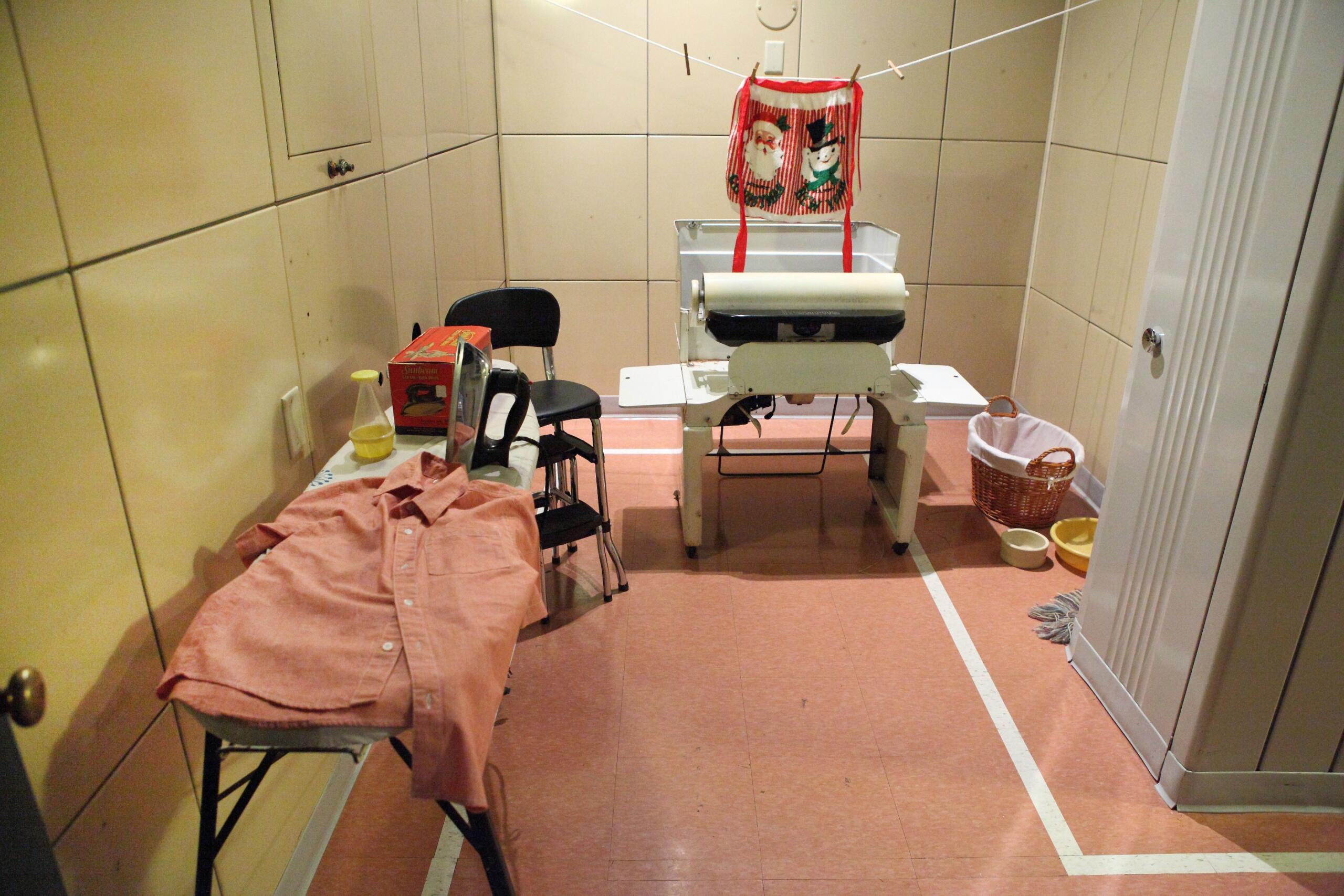
The chute was not a luxury. It was a solution to a problem that no longer exists, which is that the laundry was in the basement and the clothes were not.
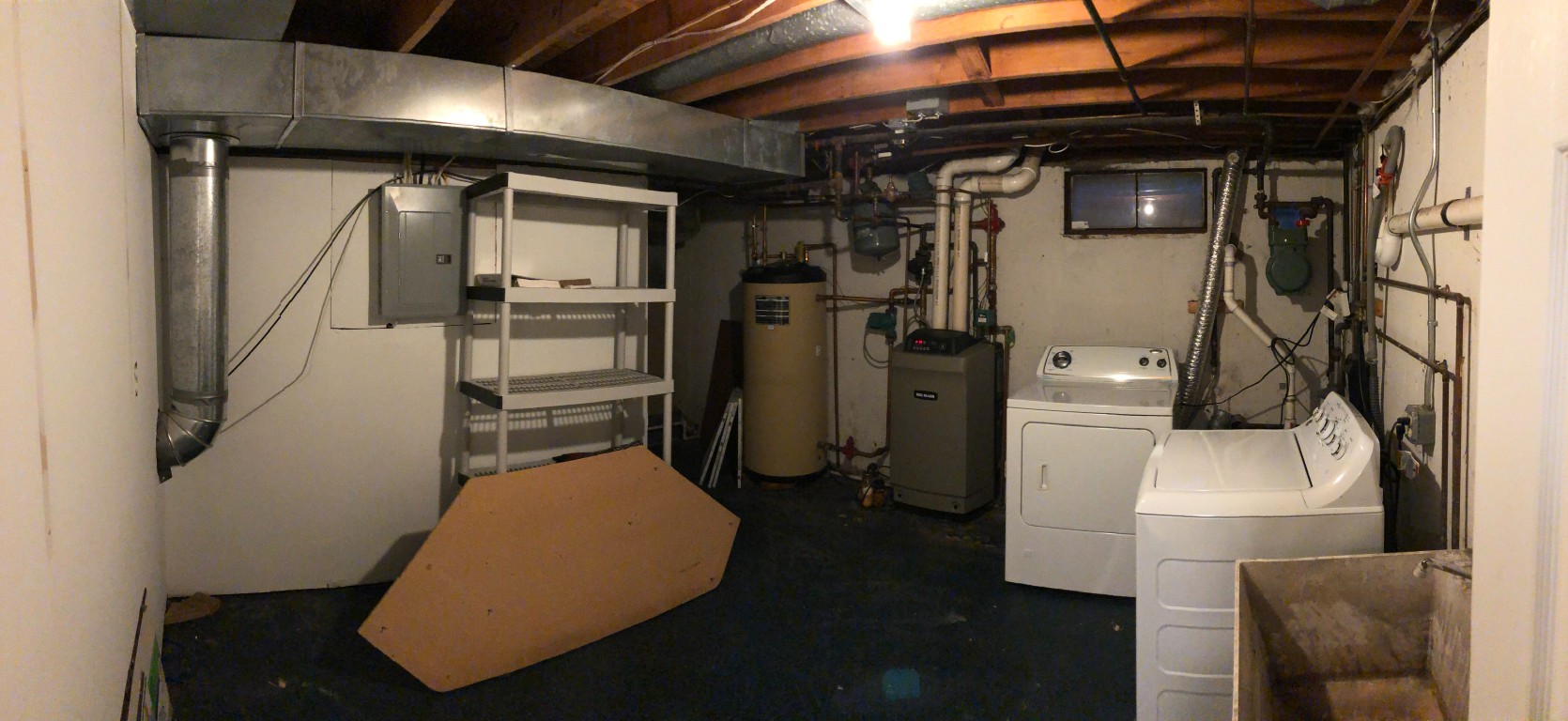
American houses of this period put the washing machine next to the furnace and the water heater, in an unfinished basement, for sound reasons: that is where the drains, the water lines and the floor you could get wet already were. A finished floor needs waterproofing, a drain pan and somewhere for a leak to go. A concrete basement floor with a drain in it needs none of that.
So the laundry happened two or three floors below the bedrooms, and somebody had to move a week’s washing for a family of five down two flights of stairs, in a basket, repeatedly.
The chute did that part for free, using gravity, with no moving parts, forever. For the cost of framing a shaft during construction it removed one of the most tedious recurring journeys in the house, and it is genuinely one of the better pieces of domestic engineering of the era.
And What Children Did With It

Every household with a chute has the same set of stories and they are all variations on one thing: it was a hole through the house.
Things went down it that were not laundry. Toys, to see what happened. Messages, when two children were on different floors. A cat, in some households, once. Water, which is how people found out that the shaft was not waterproof and that the basement ceiling was.
And it carried sound extremely well, which was its most interesting property to anybody under twelve. A chute connecting the upstairs hallway to the basement is an acoustic tube, and a child with their head in the upstairs door could hear a conversation in the basement clearly – and, more usefully, could hear a conversation in the kitchen if the basement door was open.
Parents understood this imperfectly and late.
The House Used to Be Full of Holes for Moving Things
The chute was not an oddity. It was the last survivor of a whole family of openings that older American houses had, all built for the same reason: things had to get in and out of a building, and people were the only alternative.
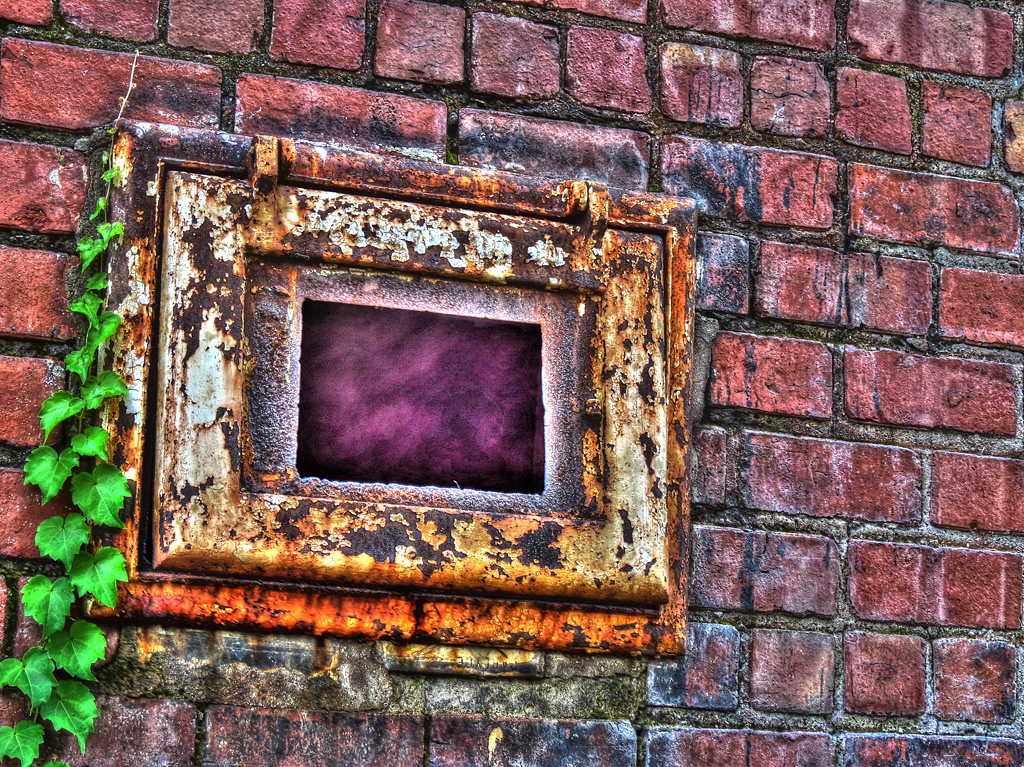
There was a coal chute: a small door low on the outside wall, opening into a bin beside the furnace, so that a delivery went in by gravity rather than by anybody carrying it.
There was a mail slot in the front door, which still exists in places, and in some houses a small hinged door for deliveries.
In larger and older houses there were dumbwaiters: a small cable-hauled platform in a shaft, worked by hand, for moving food from a basement kitchen up to a dining room, or coal up to bedroom fireplaces.
Some houses had an ice door – a small hatch in an outside wall or a back porch, opening into the back of the insulated cabinet in the kitchen. The delivery man put a block of ice in from outside, and the household took it out from inside, which meant a stranger carrying a wet fifty-pound block never had to come through the house at all. The same logic appears again and again: a hole sized for one specific thing, placed exactly where that thing needed to cross the wall, so that the person delivering it and the person using it never had to be in the same room.
What all of them share is that they were cheap to build and free to run. Each one was a gap in a wall, framed during construction, with no mechanism, no power and nothing to maintain – which is why a house of this period had several and a house built now has none.
Every one of these is the same idea. The house was designed around the fact that moving heavy or dirty things between levels was hard, and the answer was to build a dedicated hole for each kind of thing.
They went in the same order and for the same reasons. The coal chute went when heating stopped arriving as a solid delivered in bulk. The dumbwaiter went when kitchens came up to the ground floor. And the laundry chute went when the laundry came up to the bedrooms. In each case the hole became unnecessary because the problem moved, not because anybody objected to the hole.
The Reason They Stopped: It Is a Chimney
Here is the mechanism, and it is not a matter of taste or fashion.
A laundry chute is an unobstructed vertical shaft connecting the floors of a building. In a fire, that is precisely the geometry that kills people. Hot gas and smoke rise, and a vertical shaft gives them a clear path from the basement – where the furnace and the water heater are, which is where a large share of house fires start – directly to the bedroom floor, bypassing every door and every stair.
It also works the other way. A fire anywhere along the shaft gets a supply of air drawn up from below, which is what a chimney is for.
Building codes addressed this by requiring that any vertical opening between storeys be enclosed in fire-rated construction, with self-closing rated doors at each opening. That is not an unreasonable requirement and it can be met. But the cost of a rated shaft with rated self-closing doors at both ends, inspected, is a large multiple of the cost of a hole between some studs – for a convenience, in a house that has other options.
Builders simply stopped offering it. Not banned, in most places. Priced out.
The Twist: The Laundry Moved Upstairs and Took the Problem With It
The code is the reason you cannot cheaply build one. But it is not the reason nobody wants one, and this is the part that actually finished the chute off.
The laundry came out of the basement.
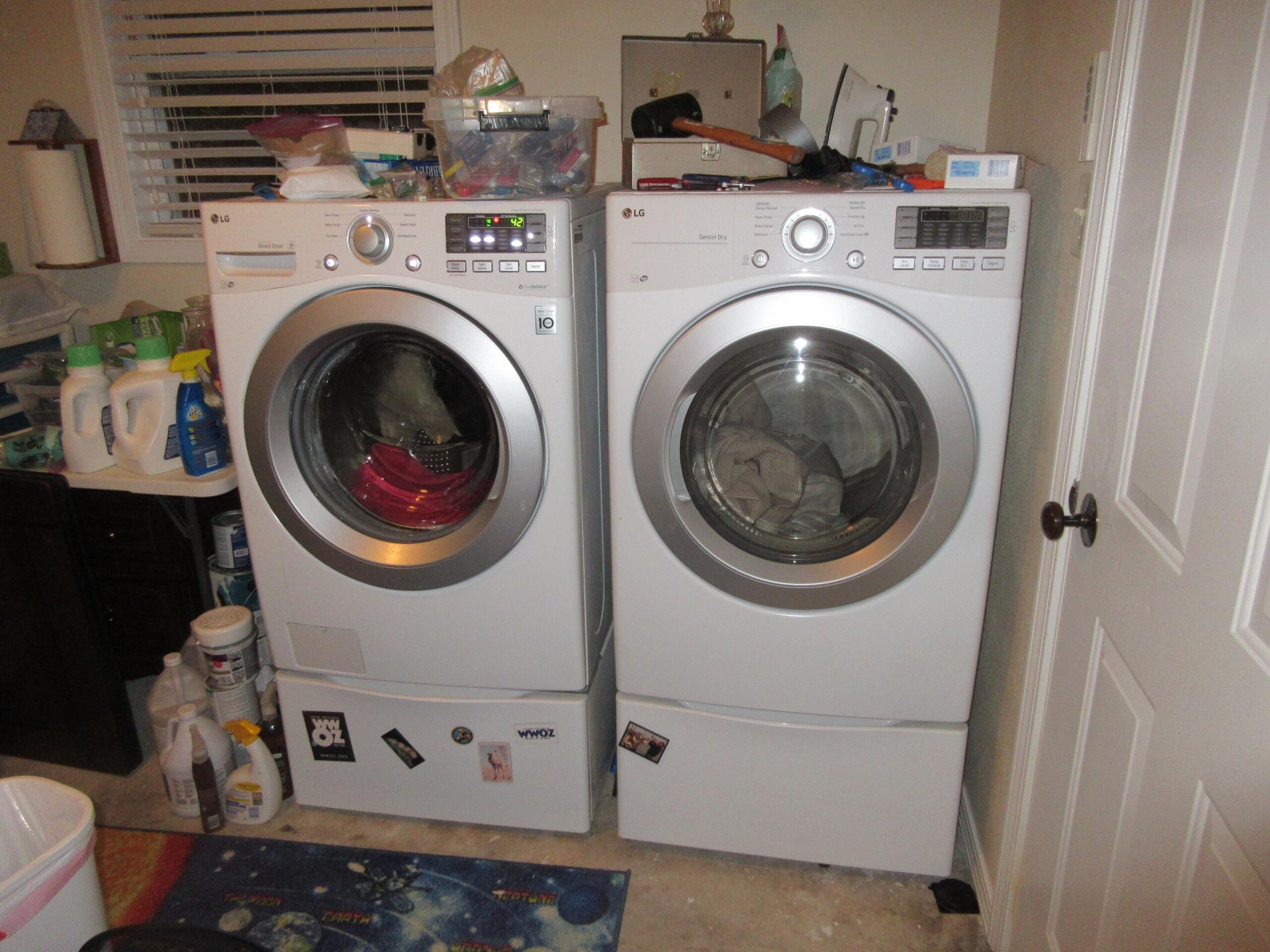
Through the later part of the century, American houses moved the washer and dryer upstairs – to a main-floor utility room, a hallway closet, or a dedicated room next to the bedrooms. Several things made that possible at once. Stacked and front-loading machines took far less floor space. Plumbing and drainage improved, as did the standard practice of fitting a pan and a drain under an upper-floor machine. Houses got larger, so the space existed. And basements stopped being the default – a great deal of American construction moved to slab foundations with no basement at all.
Once the machines are on the same floor as the bedrooms, the chute has nowhere to go and nothing to do. The journey it was built to eliminate is now about fifteen feet of hallway.
So the thing that killed the laundry chute was not the fire code. It was the solving of the original problem by a better route – moving the destination instead of improving the delivery.
Which is the usual way these things end, and it is almost always invisible in the nostalgia. People remember the little door in the wall and the sound of a towel going past, and read its disappearance as a loss of charm or an excess of regulation.
It is neither. The chute was an elegant answer to a long carry up two flights of stairs, and somebody eventually noticed that you could just not have the stairs in the problem.
The doors are still in a lot of walls. Painted over, screwed shut, or opening onto a shaft that now ends in a finished basement ceiling with nothing underneath it.
Like our content? Follow us for more.