

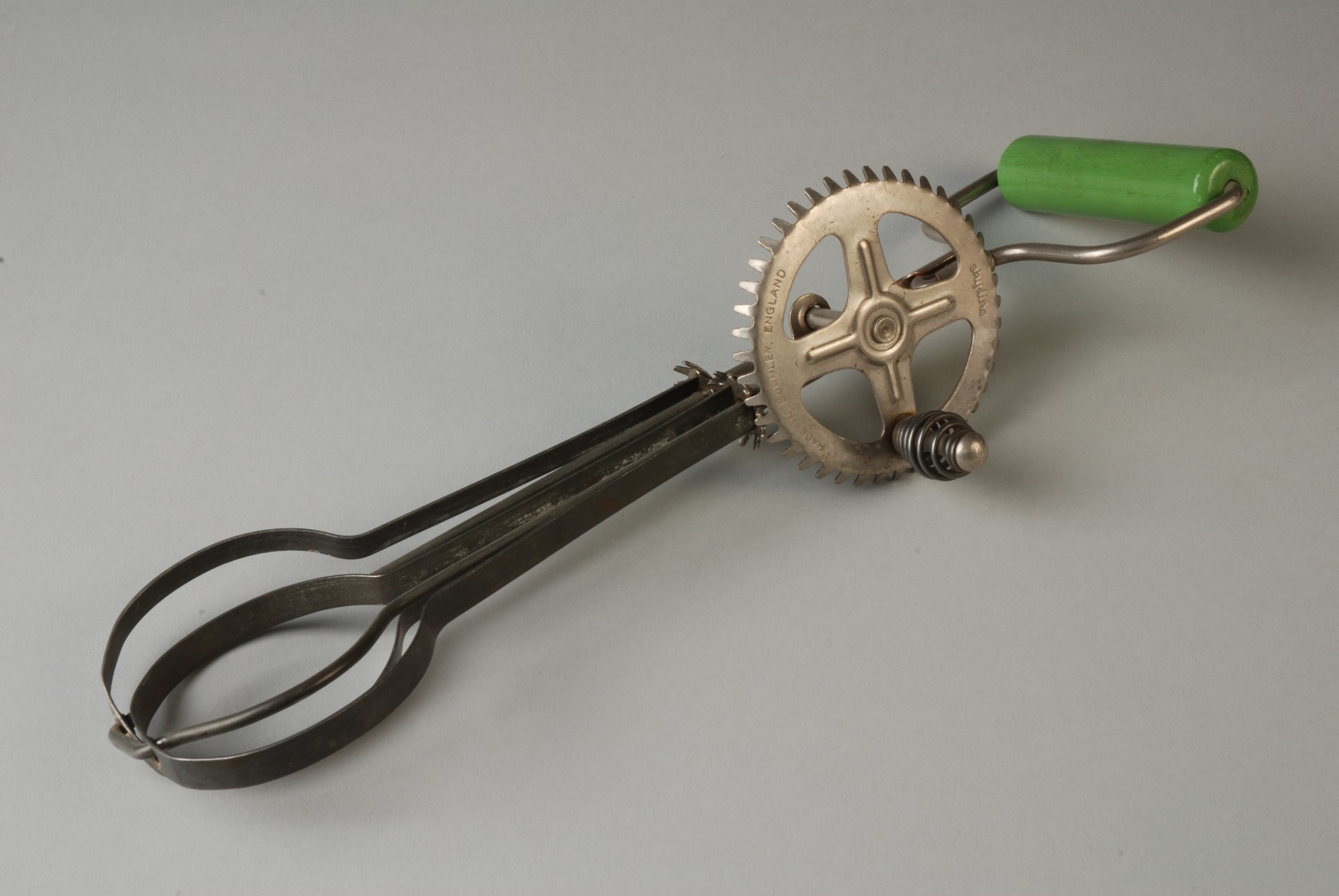
It lived in the drawer with the spatulas and the can opener, and it was always slightly bent.
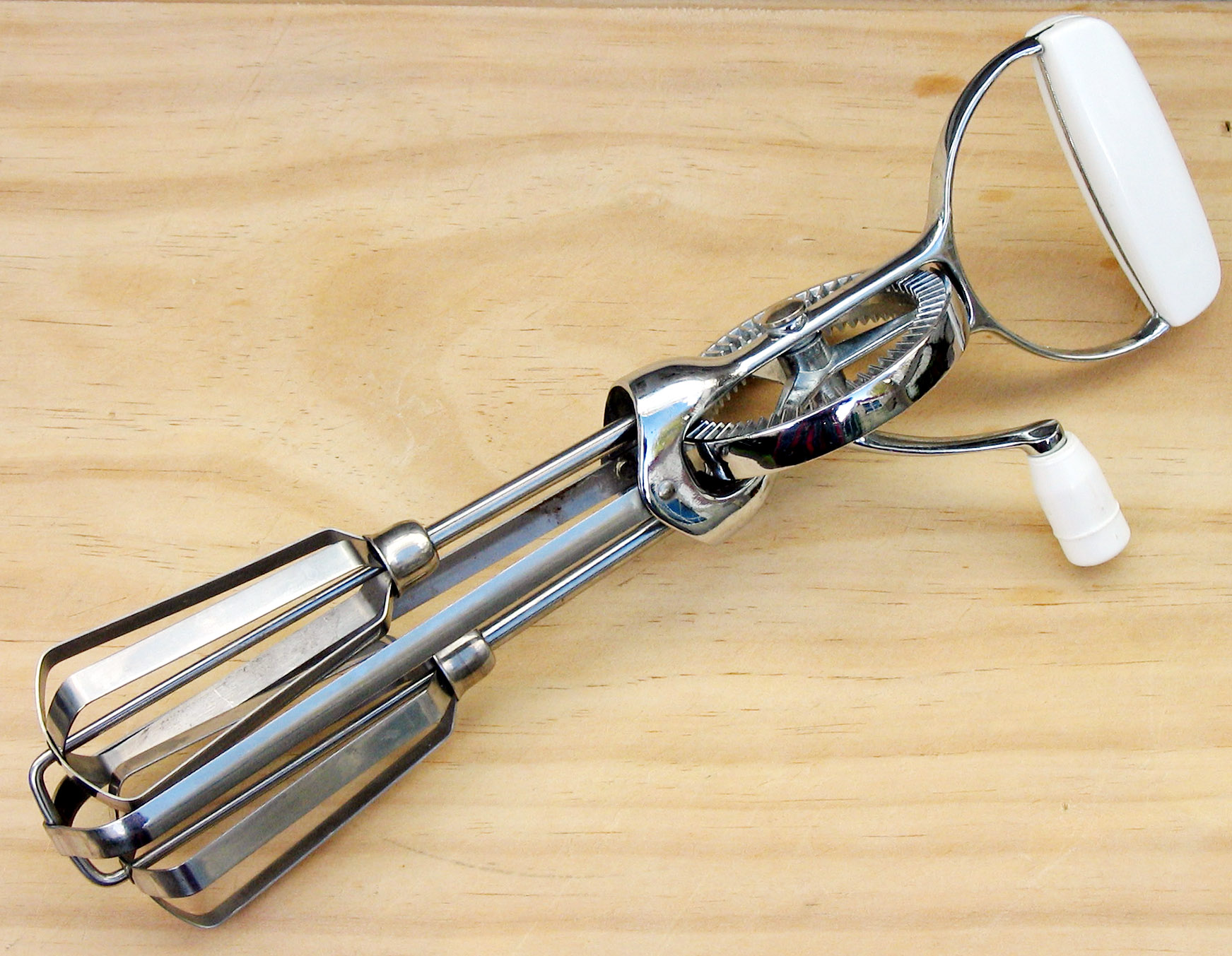
A wooden or painted handle at the top, a wheel with a crank on the side, and two wire beaters underneath that turned towards each other when you cranked. It made a specific whirring, clicking noise, and if you cranked too fast it wobbled and sprayed.
The Gearing Is the Whole Invention
This is a geared machine, and the gearing is why it worked at all.
You turn a large wheel by hand, perhaps two turns a second at a comfortable speed. That wheel engages small pinions at the top of each beater shaft, and because the driving wheel is much larger than the pinions, each beater turns several times for every turn of the crank – commonly four or five times, sometimes more.
So a hand moving at a leisurely pace produces beaters spinning fast enough to incorporate air into egg white or cream. That multiplication is the entire point, and it is the same principle as the gearing on a bicycle: trade the force your arm can easily supply for the speed the job actually needs.
The two beaters also counter-rotate, which matters more than it sounds. Each one throws material towards the other, so instead of the mixture simply swirling round the bowl – which is what a single whisk does, and why you have to chase it – the two sets of wires meet in the middle and the contents are repeatedly pulled through the point where they intersect. That is where the aeration happens.
Like our content? Follow us for more.
It Was in Every Drawer Because It Did the One Job Nothing Else Could
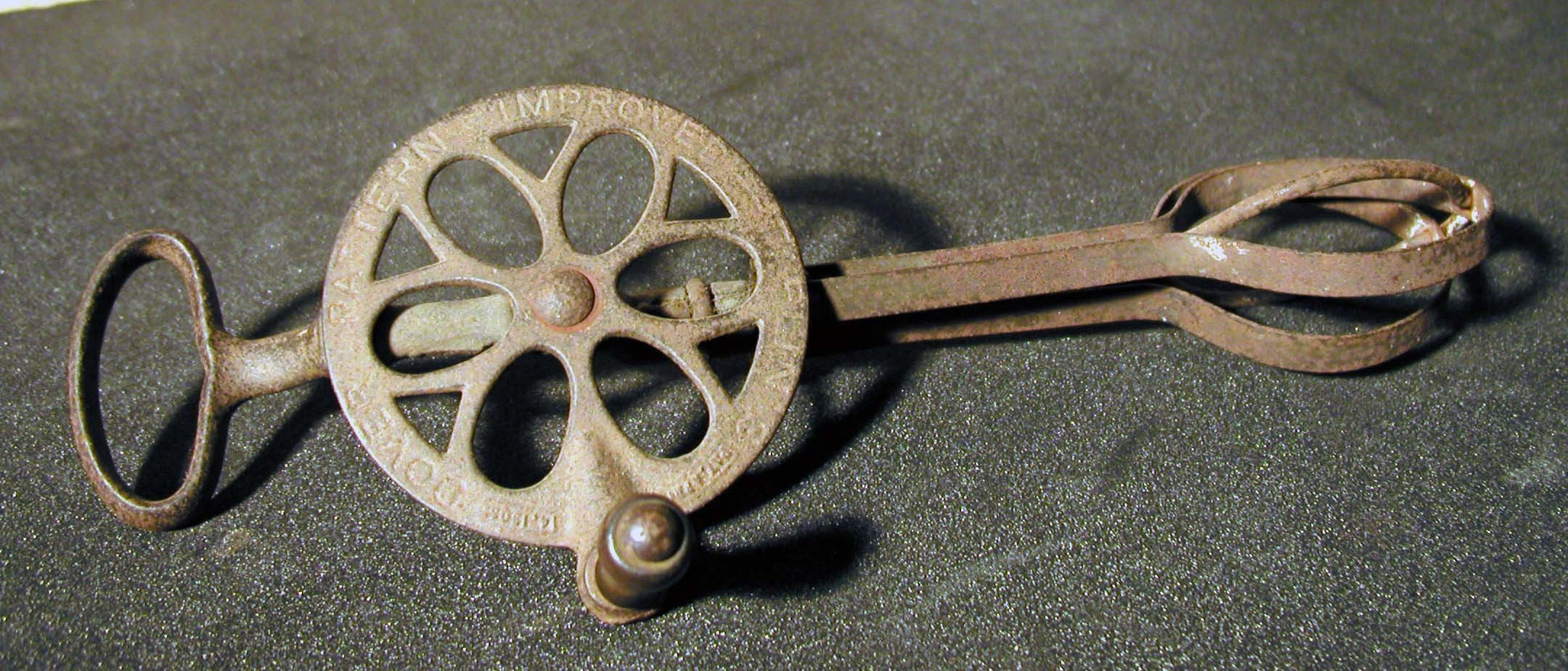
Before the electric mixer became ordinary, the alternatives were a fork, a flat wire whisk, or a balloon whisk, and all three require sustained arm work.
Whipping cream by hand with a balloon whisk is several minutes of genuine effort. Getting egg whites to stiff peaks is considerably more, and it is the sort of task that gets abandoned halfway through by anybody doing it at the end of a working day.
The rotary beater reduced both to something a person could do while holding a conversation. It is not effortless, but the gearing means the work is spread across a comfortable motion rather than concentrated in a wrist, and the effect on what households could reasonably cook was substantial. Meringue, sponge cake, whipped cream and mayonnaise all became weekday-possible rather than occasion-only.
It was also cheap, had no motor, needed no power, and would not break. The failure mode was that the gear teeth wore or the beaters bent, and even then it mostly kept working – which is why so many households had one that was visibly damaged and still in use.
The Bowl Was Half the Problem
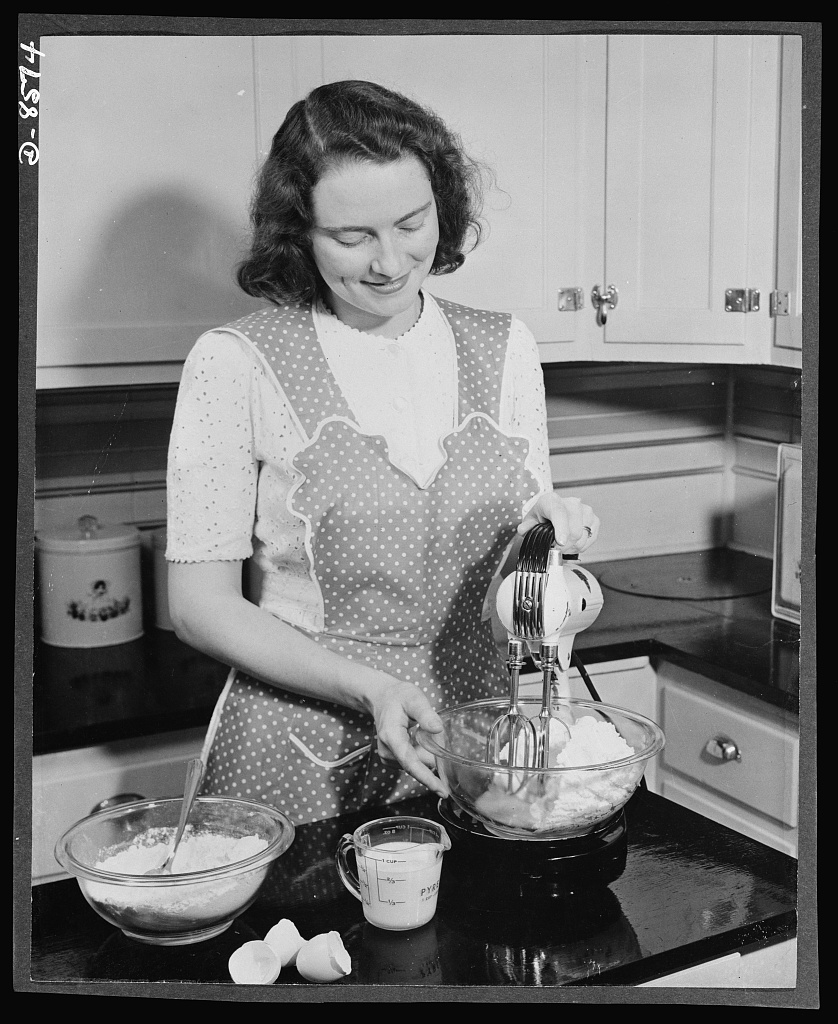
One thing the rotary beater demanded that nobody mentions is a bowl of the right shape, and getting that wrong is why some households found it frustrating.
The beaters occupy a narrow cylinder perhaps three inches across, and they only aerate what passes between them. In a wide shallow bowl, most of the contents sit outside that zone and never get worked, so you end up moving the beater round the bowl in circuits, chasing the mixture, and the result is uneven – stiff in the middle and liquid at the edges.
The tool wants a deep, narrow, round-bottomed bowl, where the contents are forced into the beaters’ path by the shape of the vessel. Which is exactly why the mixing bowls of that era are the shape they are: tall, heavy, steep-sided ceramic or glass bowls with a rounded base, frequently with a flat side or a lip to hold against the body.
The bowl and the beater were designed around each other, in effect, and a household that had both worked well. A household that had the beater and a modern wide salad bowl spent twice as long and got half the volume.
It Was the Standard Tool for the Mix-From-a-Box Era
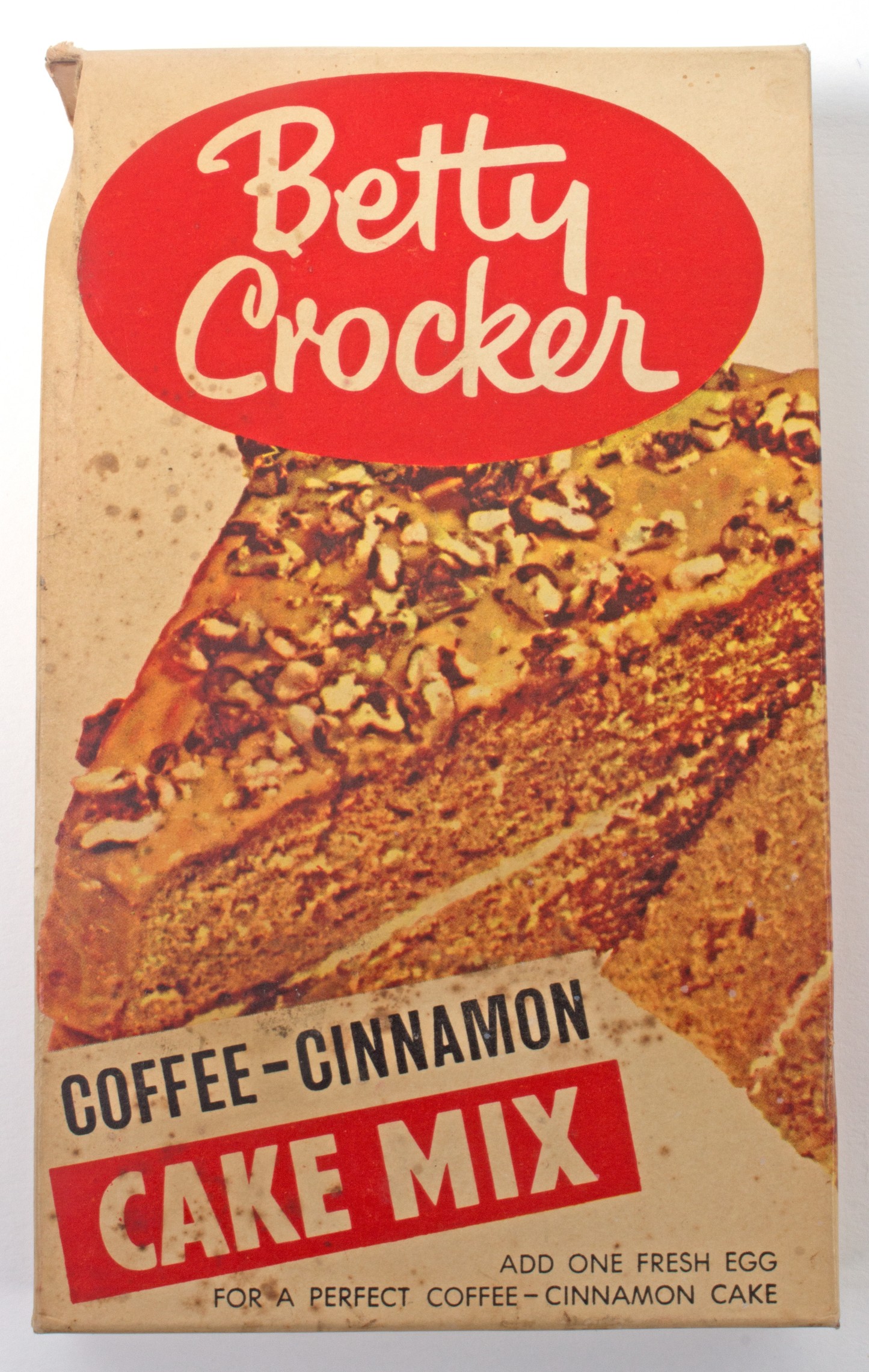
The beater’s heyday coincides almost exactly with the arrival of the packaged cake mix, and the two are connected.
A boxed mix is designed to be combined with water, oil and an egg and then beaten for a specified period – and the instruction on the box in that era assumed a hand tool. Two minutes of brisk beating is a reasonable amount of cranking, and the whole product was formulated so that a person with a rotary beater and a bowl could produce a reliable cake.
That matters because it put baking within reach of households that had not previously done much of it. The mix removed the measuring and the judgement, and the beater removed most of the labour, and between them they made a cake something you could decide to make after work rather than something planned.
When electric mixers became standard the instructions changed to specify mixer speeds and times, and the hand-beater figures disappeared from the boxes – which is a small, precise marker of the moment the household’s default tool changed.
Then the Electric Mixer Arrived and Won the Argument
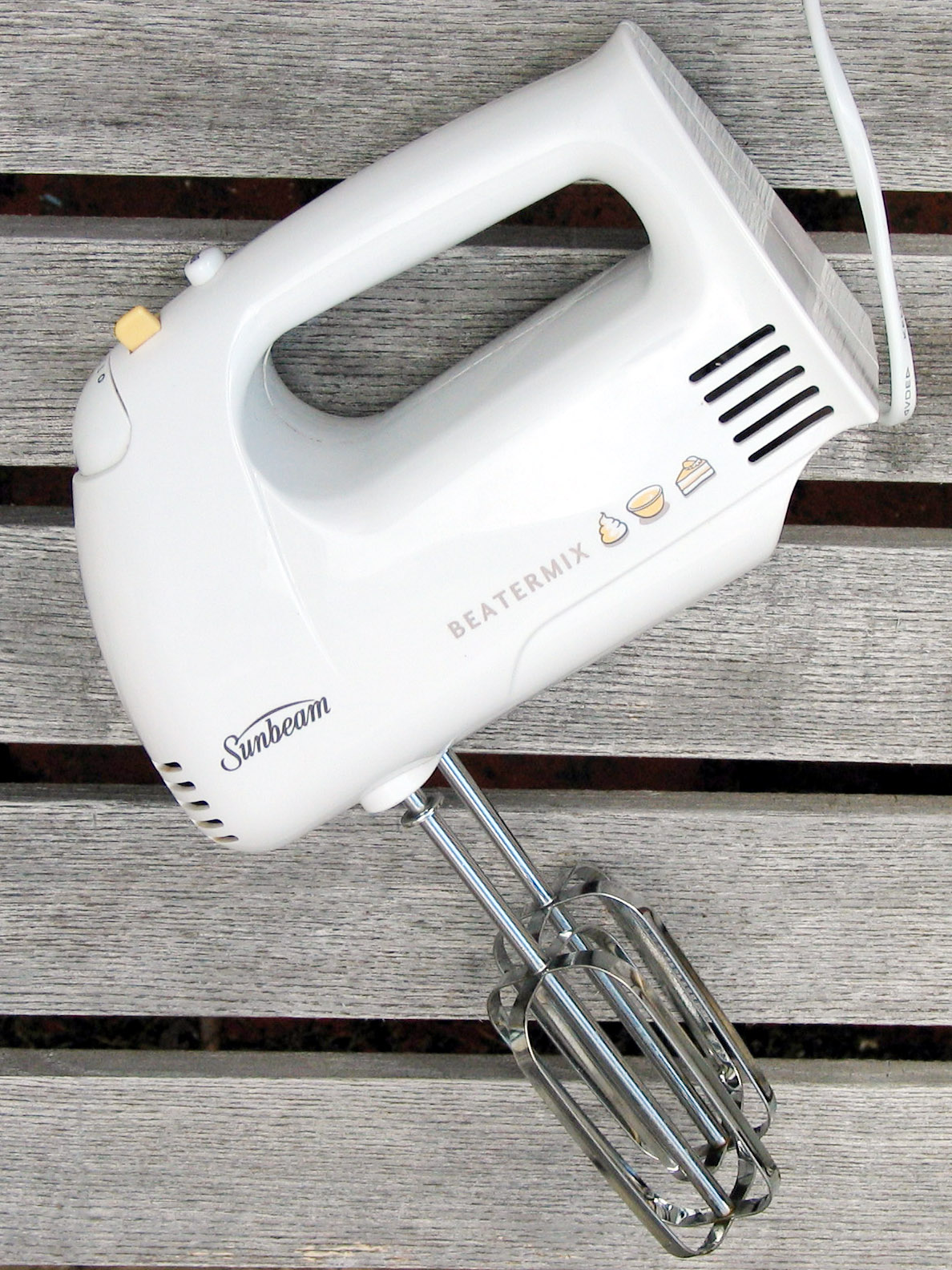
Hand-held electric mixers and stand mixers spread through American kitchens across the middle of the century, and on the merits they are better for most of what the beater did.
An electric mixer does not get tired, which is the decisive point. It will whip a large volume of cream or beat a cake batter for eight minutes without any decline in speed, and a human arm will not. For anything in quantity, or anything that needs sustained beating, the machine simply does the job and the hand tool does not.
A stand mixer goes further, because it leaves your hands free. You can add ingredients, scrape the bowl and read the next step while it runs, which changes not just the effort but the structure of the task.
So the rotary beater lost, and it lost fairly. By the 1980s it had gone from a standard drawer item to a thing in the back of a drawer, and from there to a yard sale.
The Twist: It Is Still the Fastest Tool for Small Amounts
Here is the part that is worth knowing, because it is a genuine case where the obsolete tool is still correct.
For a small quantity – one egg, half a cup of cream, a single serving of something – the hand beater beats the electric mixer on total time, and it is not close.
The reason is that almost none of a kitchen task’s time is the beating. It is fetching the appliance, finding the beaters, fitting them, plugging it in, beating for twenty seconds, removing the beaters, washing two beaters and wiping down a motor housing, and putting the whole thing away. Call it four minutes of handling for twenty seconds of work.
The hand beater is one object. It comes out of a drawer, does the same twenty seconds, and goes in the sink. There is nothing to assemble, nothing to plug in and nothing with a motor in it that cannot be submerged.
There are three further advantages that matter in a small bowl. It does not splash, because the speed is yours and you can start slowly. It gives continuous control, so you can stop at exactly the point where cream is thick but not grainy, which is a window of a few seconds that an electric mixer blows straight through. And it is quiet enough to use without waking anybody.
Which is precisely why professional kitchens never replaced the whisk. A cook making a small amount of anything reaches for a hand tool, every time, and the reason is the same arithmetic: the machine’s advantage is throughput, and throughput is irrelevant below a certain volume.
What the Household Actually Lost
The beater’s disappearance is a small example of a pattern that ran through the whole kitchen in this period, and the pattern is worth naming.
A hand tool is cheap, instant, controllable, silent, unbreakable and sized to a small job. A machine is faster at scale, requires no stamina, and costs you setup, cleaning, storage, noise and a power outlet.
Households acquired machines across the second half of the century, and for the big jobs that was straightforwardly correct. But each machine arrived with a fixed overhead, and the overhead does not shrink when the job does – which means a kitchen full of appliances is well equipped for large tasks and surprisingly badly equipped for small ones.
The hand beater is the clearest case because its replacement is so obviously superior for everything except the thing most people actually do, which is beat one egg.
They cost very little secondhand, there are a great many of them, and the gearing on a sixty-year-old one is usually fine.
The one in your grandmother’s drawer was bent because she used it, every week, for thirty years, and it still worked.
Like our content? Follow us for more.
