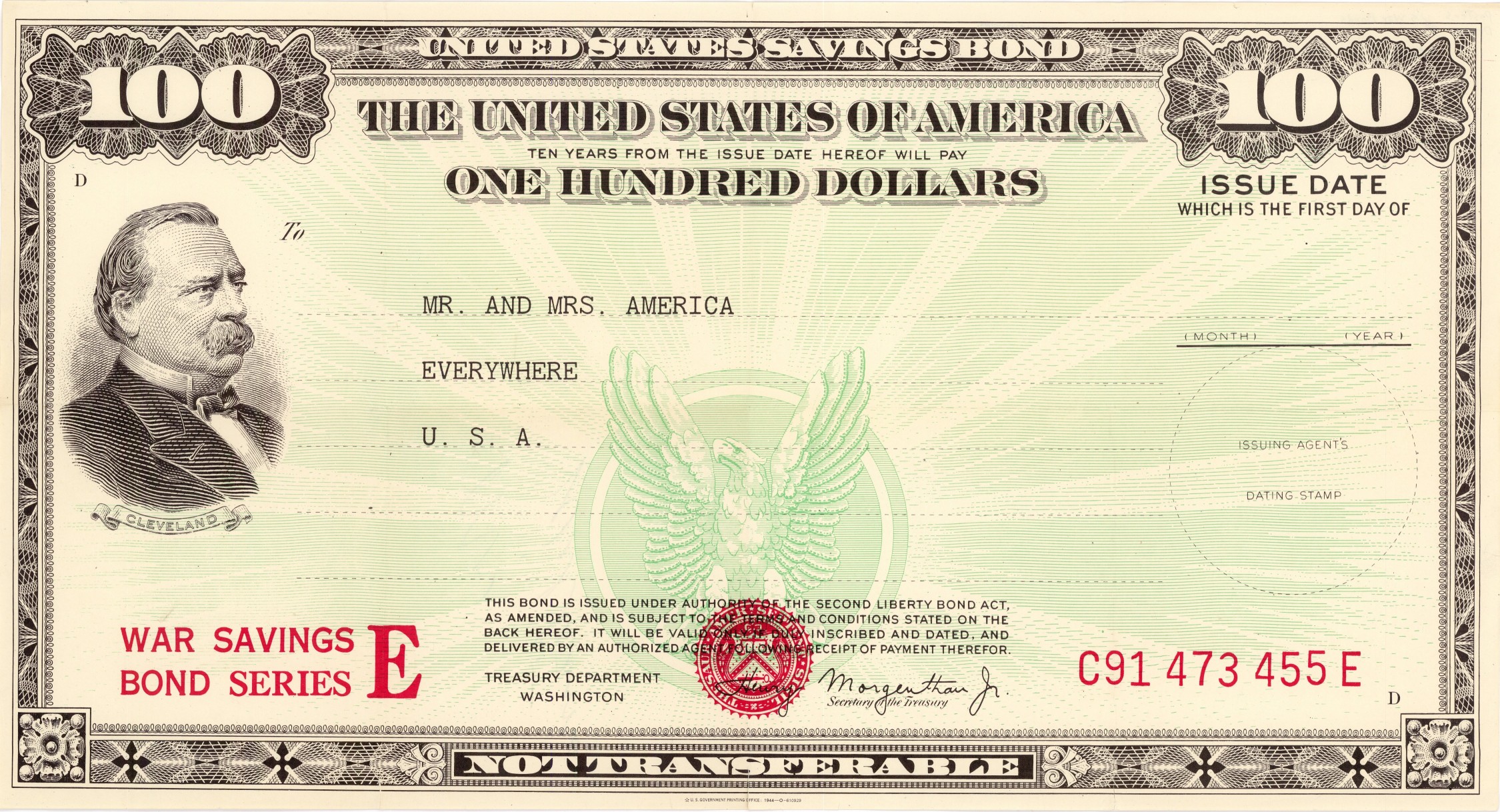
It arrived in an envelope at a birth, a christening, a graduation or a birthday, and it was a piece of engraved paper with your name typed on it.
Somewhere on it was a number – twenty-five dollars, or fifty, or a hundred – and somewhere else was the information that you could not have it yet. An adult explained this to you, and then the certificate went into a drawer, a folder or a safe deposit box, and you thought about it occasionally for the next decade.
The Arithmetic Was the Whole Trick
Here is the mechanism that made the savings bond such a good gift, and almost nobody receiving one understood it at the time.
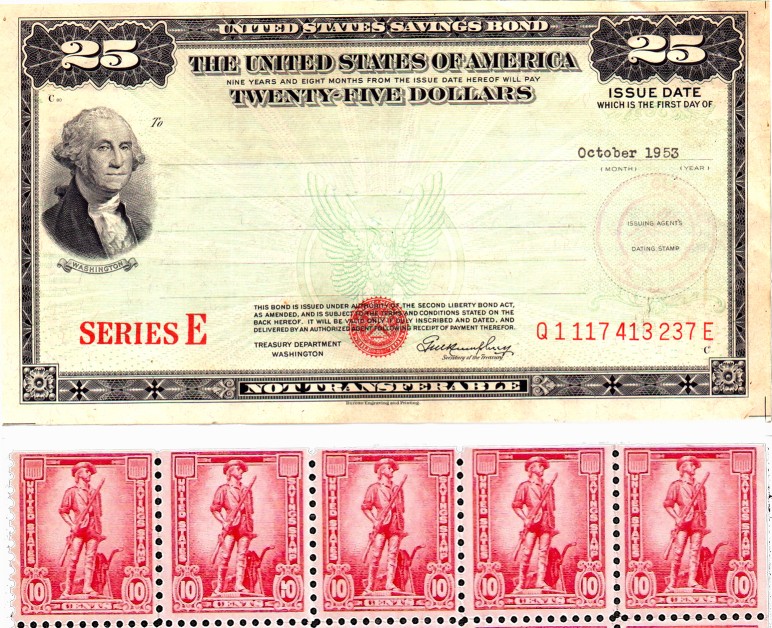
The standard series sold to households was issued at a discount. You did not pay the face value; you paid a fraction of it, and the bond grew to its face value over a fixed period. A twenty-five dollar bond cost eighteen dollars and seventy-five cents – three quarters of the number printed on the front.
So the giver spent eighteen dollars and the child received something that said twenty-five, and both of those statements were true. The gift looked larger than the outlay, legitimately, because the difference was interest the Treasury would pay over time rather than a discount or a trick.
There was no better present available on those terms. Eighteen dollars of anything else was eighteen dollars of thing, and it depreciated the moment it was unwrapped. Eighteen dollars of bond was a document with a bigger number on it that got bigger still if you did nothing at all.
Like our content? Follow us for more.
You Could Not Spend It, Which Was the Point
The second property was enforced patience, and that was a feature the adults were buying deliberately.
A bond could not be redeemed immediately – there was a minimum holding period – and redeeming early meant forgoing most of the growth. It was registered in the child’s name, so it could not be casually handed to somebody else, and it required a signature and an identity check at a bank to convert into money.
Every one of those is friction, and the friction was the product. A relative giving cash to an eight-year-old is giving them something that will be gone by Saturday. A relative giving a bond is giving them something that cannot be gone by Saturday, by construction, and that will be worth more at eighteen than it is at eight.
Children understood this perfectly and resented it exactly as much as you would expect. The standard reaction to receiving a savings bond was disappointment, expressed privately, and the standard adult response was that you would be grateful later – which, in a fair number of cases, turned out to be true.
It Was Sold Through Payroll, Which Is How It Reached Everybody
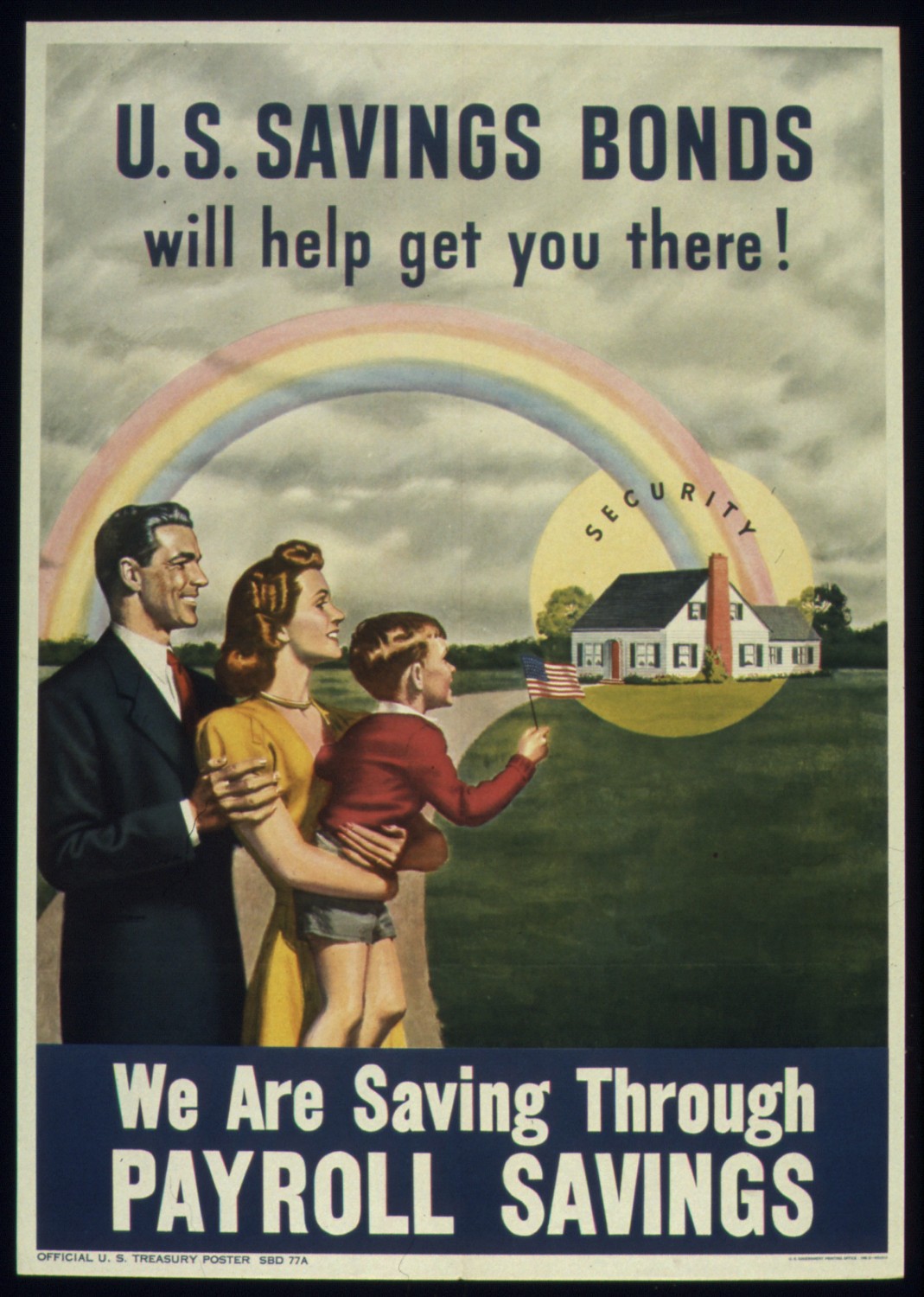
The reason savings bonds were in every American family’s drawer is not that households sought them out. It is that they were sold at work.
Employers ran payroll deduction plans, promoted in the workplace, under which a worker could set aside a small fixed amount from each pay period towards bonds, which were issued when enough had accumulated. The scheme was pushed hard by employers, by unions in many cases, and by a sustained public campaign.
That distribution method is what made the bond a mass product. It required no decision at a bank, no minimum lump sum, no financial knowledge and no visit anywhere – just a form at work and a few dollars a week off the top, which is the easiest saving anybody will ever do because the money never arrives.
It also means a great many bonds were bought by people who would not otherwise have saved at all, in small amounts, over years, and given away as they matured.
The Certificate Itself Was Doing Real Work
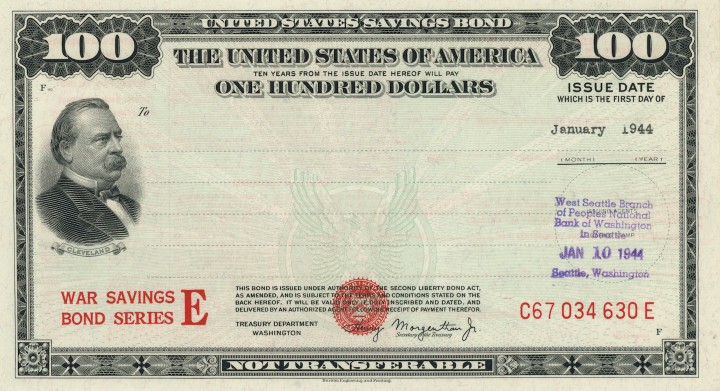
It is worth pausing on the object, because the object mattered more than the finance.
It was engraved, printed on heavy paper, with a portrait, a denomination in large figures, a serial number, an issue date stamped on it, and the registered owner’s name – the child’s name – typed or printed in the middle of it. It looked like a thing of consequence, and to a seven-year-old it looked exactly like money, only more official.
That appearance did two jobs. It made the gift feel substantial at the moment of giving, which is what a gift is for. And it made the thing memorable enough to survive a decade in a drawer, because a piece of engraved paper with your own name on it does not get thrown away by accident.
Households kept them in specific places – a particular drawer, a folder marked with the child’s name, a tin, a safe deposit box – and the location was known to everybody. Which is why, when the child turned eighteen or needed the money, somebody knew where to look.
Redeeming One Was a Small Ceremony

You took it to a bank, where a teller checked the identification, had you sign the back, computed what it was currently worth from a table or a schedule, and paid it out.
That computation was the interesting part for anybody paying attention, because the answer was rarely a round number. A bond’s value depended on how long it had been held, and the schedule stepped up at intervals – so a bond redeemed a month before a step was worth noticeably less than the same bond a month later, and a teller would sometimes tell you so and suggest you wait.
For a lot of young Americans this was the first financial transaction they conducted on their own behalf, with their own identification, over a counter, concerning an asset registered in their own name. The amount was usually modest. The experience of being the owner of something a bank had to pay out on was not.
What Went Wrong With It
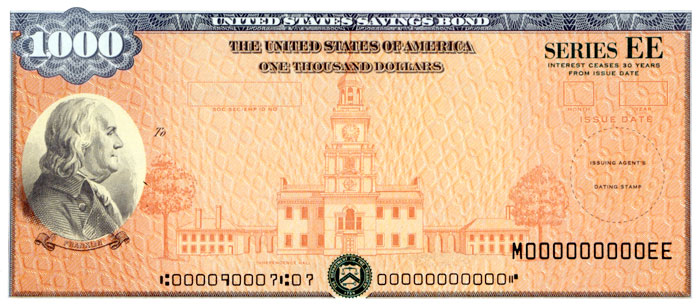
Several things, and the interest rate is the one people cite.
For long stretches the return on savings bonds was unremarkable, and in periods of high inflation it was poor in real terms. Anybody comparing them with other options available to a household by the 1980s and 1990s – money market accounts, mutual funds, employer retirement plans – could see that a bond was not a competitive investment, and the case for holding one shifted entirely onto safety and simplicity.
Then the administration got harder. The programme’s terms changed repeatedly across decades – different series, different rate structures, some fixed, some inflation-linked, with changing holding and redemption rules – and the result was that nobody could explain in one sentence what a bond paid, which is a serious problem for a product whose whole appeal was that it needed no expertise.
And the distribution collapsed. Employer payroll deduction plans for bonds were wound down, which removed the mechanism that had put bonds in front of ordinary workers with no effort. Once you had to seek them out, most people did not.
The Lost Ones Were a Real Problem

Paper has one failure mode that an account does not, and the programme spent decades dealing with it.
Bonds were lost in house moves, destroyed in fires and floods, thrown out by somebody clearing a relative’s papers, and simply forgotten in a deposit box whose rental lapsed. A bond registered in a child’s name, given by a grandparent who has since died, in a folder nobody knew about, is money that exists and that nobody can find.
Because the holdings were registered, they were replaceable – a lost certificate could be reissued on application, with the serial number if you had it and without if you did not, provided enough identifying detail survived. That is a genuine advantage of registration over a bearer instrument, and it is why the paper was not as fragile as it looks.
But it required somebody to know the bond had existed in the first place, and that is the step that failed. A child who was told at eight and never reminded is an adult who does not know to look.
The Twist: The Paper Went Away and the Gift Went With It
The decisive change was not financial. It was administrative, and it killed the thing stone dead as a present.
Paper savings bonds stopped being sold. The programme moved to electronic issue – bonds now exist as a holding in an online account with the Treasury, bought and redeemed through a website, with a login and a password.
On the finance, that is an improvement in every respect. Nothing is lost, stolen, destroyed in a fire or found in a drawer forty years later having long since stopped earning. Interest accrues without anybody having to remember. There is no certificate to misplace and no trip to a bank.
But the savings bond’s power as a gift was entirely in the paper.
You cannot hand a child a login. You cannot put an online account balance in an envelope, or on a bedroom shelf, or in a folder with their name on it, and you cannot give an eight-year-old something that looks like money and has their own name printed in the middle of it. The ceremony of giving, the decade of knowing it was in the drawer, and the day of taking it to a bank to be paid out – all three of those required an object, and there is no longer an object.
So what happened is not that the savings bond became a bad investment, although at times it was one. It is that a financial product which worked almost entirely as a social ritual was made more efficient, and the efficiency removed the ritual.
The old ones are still out there in their millions, in drawers and folders and deposit boxes, many of them long past maturity and earning nothing. There is a government search tool for finding out whether you are owed money on one.
Which is the last thing the paper does: it is still findable, decades later, by somebody clearing out a house.
Like our content? Follow us for more.