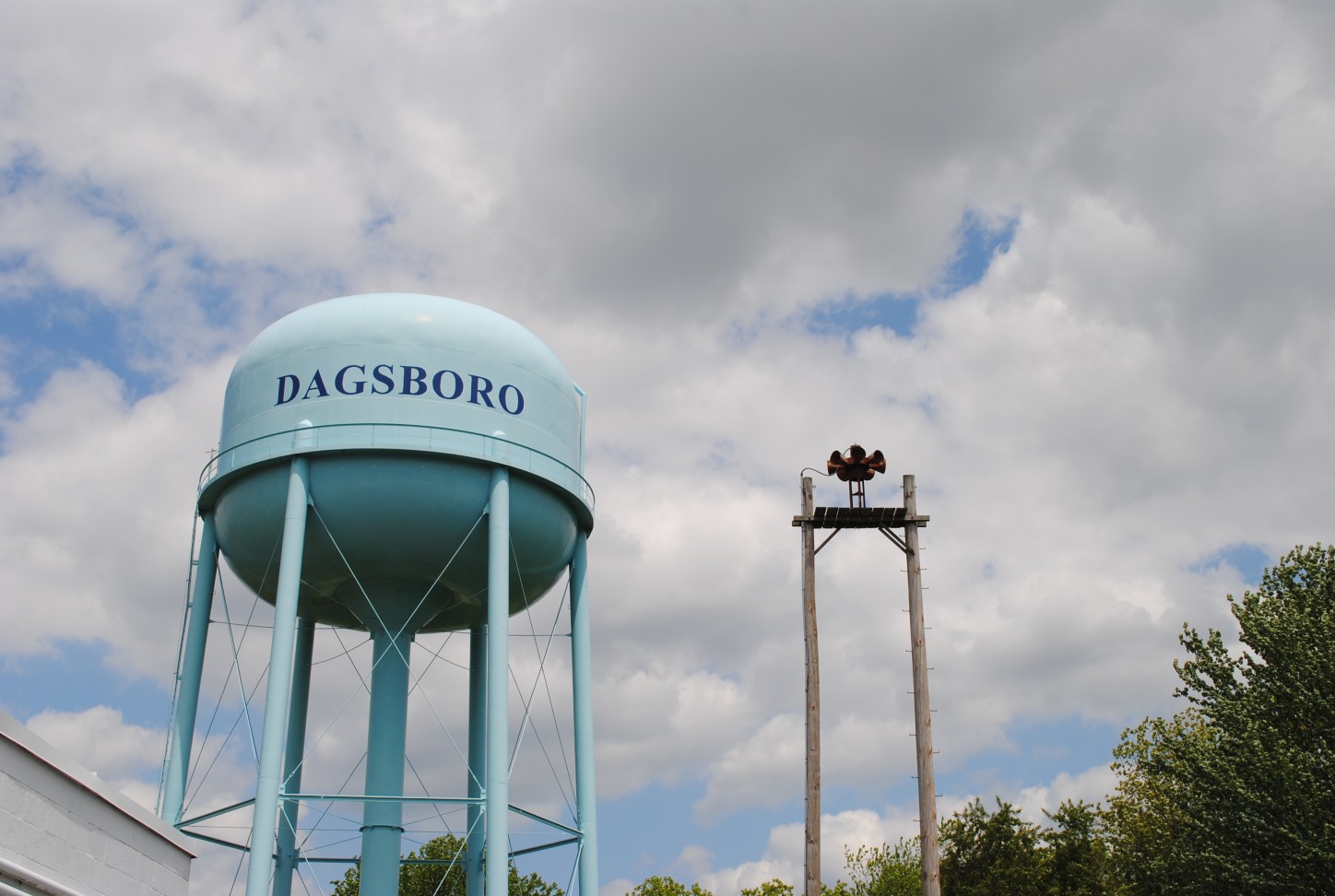
It was on the water tower, or the roof of the firehouse, or a pole in the middle of town – a grey or silver drum with horns radiating out of it, turning slowly when it ran.
And on a particular day of the week, at a particular time, it went off. Everybody in town knew when. Dogs reacted, conversations stopped for fifteen seconds, and then it wound down and everybody carried on.
It Was a Machine, Not a Loudspeaker
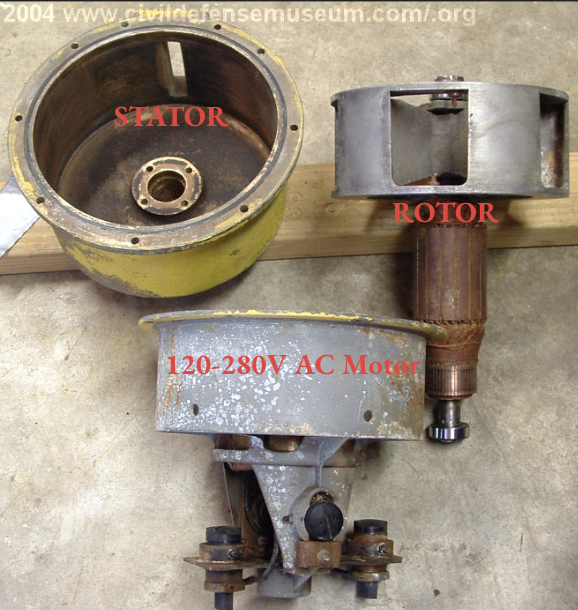
The thing on the tower was not an amplifier playing a recording, and the difference is why it was so loud.
A mechanical siren works by chopping an airflow. A motor spins a rotor with slots in it inside a fixed housing, the stator, which has matching slots. As the rotor turns, the slots align and misalign hundreds of times a second, and air forced through is interrupted at that rate – which produces an extremely loud tone directly, with no electronics in the path at all.
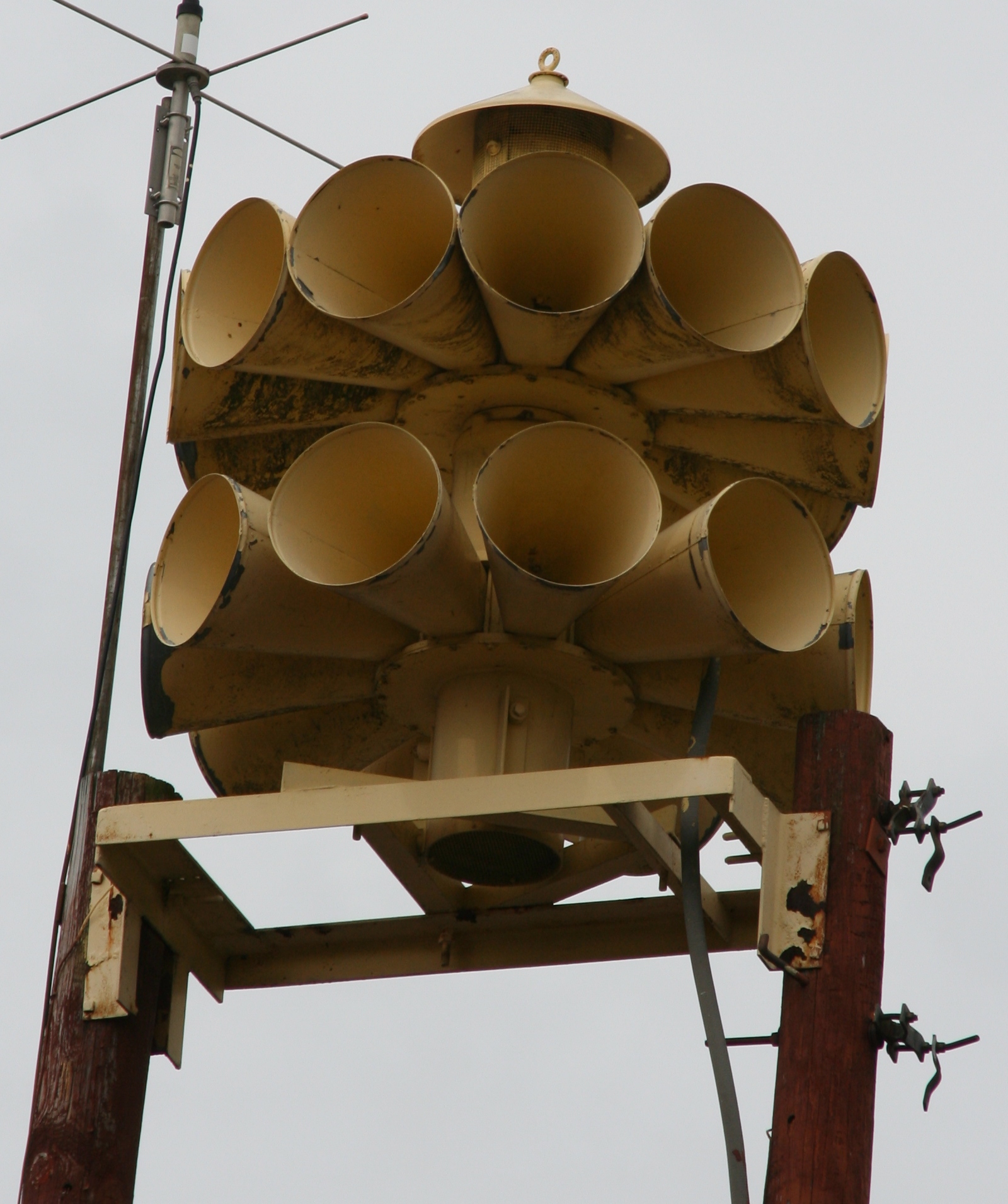
Many of the large ones were two-tone, with two sets of slots producing two pitches at once, which is why the sound has that characteristic clashing quality rather than being a clean note. The largest American models were driven by substantial engines and were among the loudest devices ever built for civilian use.
The rise and fall came from the motor itself. Spin up, and the pitch climbs as the rotor accelerates. Cut the power, and it falls away as it coasts down. That wail is not a designed effect; it is a machine starting and stopping, and the fact that it reads as dread to anybody who grew up with it is a learned association rather than anything in the sound.
Like our content? Follow us for more.
Two Signals, and You Were Taught Which Was Which
The system used distinct tones with distinct meanings, and American children were drilled on the difference.
A steady blast meant alert. A wavering, rising-and-falling tone meant the other thing – take cover. The distinction was taught in schools, printed in telephone directories, posted in public buildings and explained in pamphlets delivered to households.
It is worth saying plainly what the arrangement was for. These were installed through the late 1940s, 1950s and 1960s as part of a national civil defence programme, against the possibility of attack on American cities, and the warning network was built out across the country on that basis – tens of thousands of sirens, in towns of every size, funded in part federally and installed locally.
The weekly test was how the system stayed alive. A siren that is not run does not work, so it was run on a schedule – Saturday at noon in some places, Tuesday or Wednesday in others, usually at a fixed hour – and the test served three purposes at once: it proved the machine worked, it proved the activation circuit worked, and it kept the sound familiar to everybody within earshot.
The Hardware Was Installed Wherever It Could Be Heard
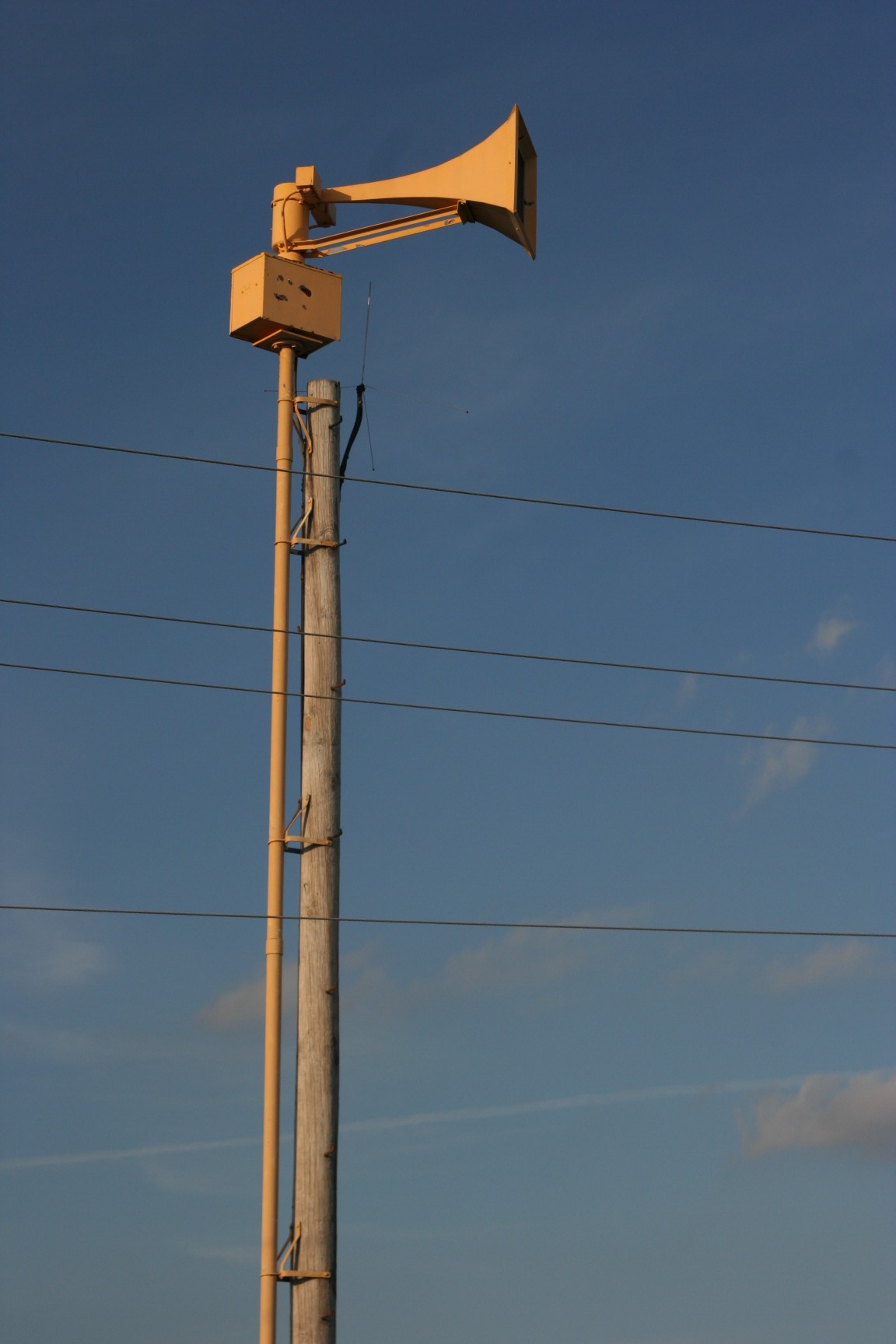
Siting was an acoustic problem solved with whatever structures a town already had.
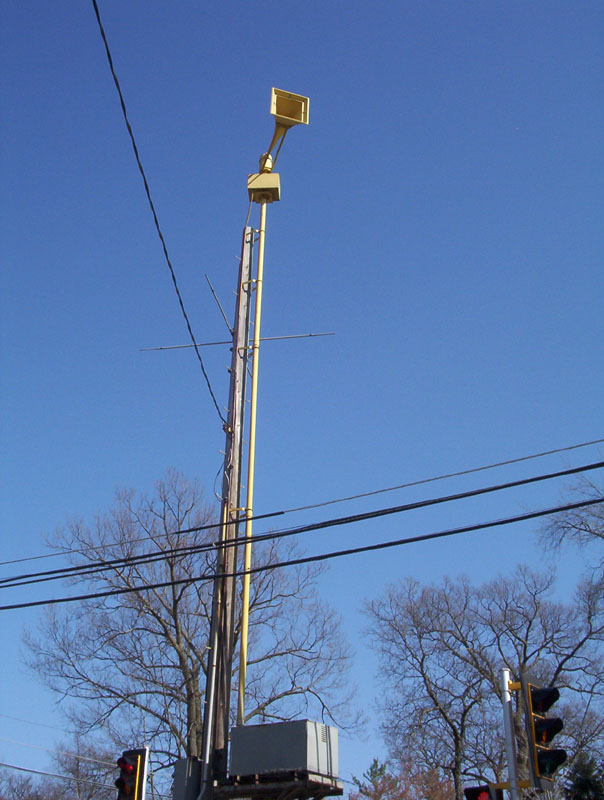
Water towers were ideal: tall, central, structurally capable of carrying a heavy machine, and already wired. Firehouses were the next choice, because the fire department was the operator. After that came utility poles, schools, municipal buildings, grain elevators and in rural areas purpose-built steel towers.
Coverage was calculated roughly and in practice determined by complaint and by geography. Hills blocked sound, dense buildings absorbed it, and prevailing wind carried it unevenly – so towns ended up with overlapping sirens, dead spots that everybody knew about, and at least one house where it was unbearably loud.
The activation was simple and local. A switch at the fire station or the police dispatcher, on a dedicated circuit, with a key or a cover over it. Later systems added radio activation so a county could set off many at once, which is the arrangement most places use now.
The Weekly Test Became the Town Clock
The side effect nobody planned is that the test turned into a piece of civic timekeeping.
A siren running at a fixed hour, every week, audible across a whole town, is a public clock whether anybody intended it or not – and people used it that way. Children were told to be home when the siren went. Workers in fields and yards used it to break for lunch. It marked the end of a Saturday morning in a great many households, and people who grew up with it can still name the hour without hesitating.
That gave the test a constituency, which matters for why so many survived. A machine maintained purely against an abstract threat is easy to cut. A machine that the whole town uses to tell the time, and notices immediately when it fails to sound, is considerably harder – and local officials received complaints when a test was missed, which is not the sort of pressure a disused system generates.
In some places the noon or evening whistle predated civil defence entirely, carried over from a factory or a fire whistle that had marked shifts for decades, and the new siren simply inherited the job.
The Fire Siren Did a Second Job Entirely
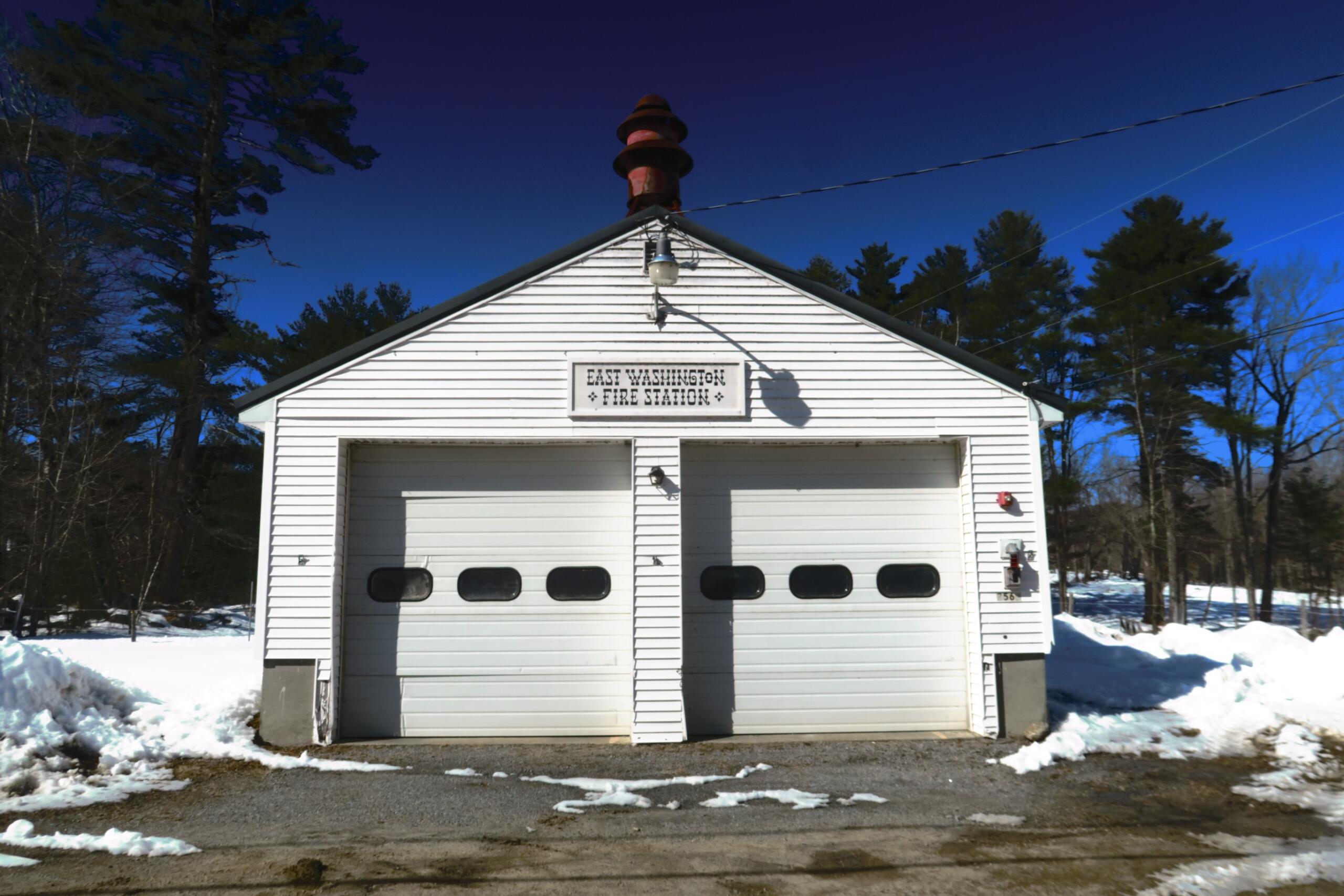
In smaller towns the same machine, or one beside it, was the fire call, and that is a separate history worth separating out.
Before pagers and radio, a volunteer fire department summoned its members by sounding a siren, and the pattern carried information – a number of blasts indicating a district or a type of call, which the volunteers had memorised. A man working in a shop or on a roof heard three blasts and knew where to go.
Which means a single pole in a small town could be carrying three distinct signalling systems at once: the fire call with its coded blasts, the civil defence alert and take-cover tones, and the daily or weekly time signal. Everybody within earshot had to be able to tell them apart, and everybody could.
That is a surprising amount of public information conveyed by one motor turning a slotted rotor, and it went when radio pagers arrived and the fire call moved off the pole and into the volunteers’ pockets.
Then the Threat It Was Built For Receded
By the 1970s the civil defence rationale was already weakening, and through the following two decades it effectively disappeared as a basis for public spending.
Federal funding changed and contracted. The doctrine shifted away from mass urban warning. And the sirens themselves aged – these are outdoor machines with motors, bearings and rotating parts, exposed to weather for decades, and keeping one working costs money every year.
A great many were simply abandoned where they stood. They are still visible on water towers and poles across the United States, unpainted, seized, wired to nothing – which is why people driving through small towns notice them and assume the whole network is dead.
The Twist: The Network Was Repurposed and It Saves Lives Now
It is not dead. In a very large part of the country those sirens are maintained, tested and used, and what they are used for has nothing to do with the reason they were installed.
They warn about weather.
Across the central and southern United States – and in storm-prone areas generally – the outdoor siren network is a tornado warning system. When a warning is issued for an area, the sirens sound, and the meaning everybody is taught is the same in structure as the old one: this is not a test, go indoors and get information. Many communities also use them for flash flooding, for hazardous material incidents, and in some places for a mandatory evacuation.
The weekly or monthly test continues, for exactly the reasons it always did.
And this is the part worth sitting with. The United States built, at considerable expense, a national network of outdoor warning devices for a specific threat, drilled a population on what they meant, and established a maintenance habit and a local operating authority for each one. That threat did not materialise in the form the network was built for.
What the country was left holding was the infrastructure – the towers, the mountings, the circuits, the dispatch arrangements, the test schedule, and above all a population that already understood that a siren means go inside and find out why.
Which turned out to be exactly what you need to warn a town about a tornado with fifteen minutes’ notice.
So the siren on the water tower is not a relic of a threat that never came. It is the surviving useful remainder of it – a piece of cold war hardware that spends its retirement doing something the people who installed it never considered, and doing it well enough that the test still goes off on Saturday at noon.
The association with dread is still there, for anybody who grew up with it. It is simply pointed at the weather now.
Like our content? Follow us for more.