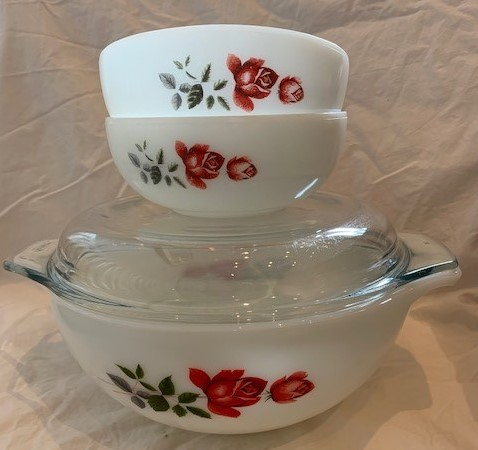
In 1974 an American kitchen contained a set of nesting opaque white glass bowls, a divided casserole in a wire cradle, a stack of lidded refrigerator dishes and a clear measuring cup with red markings.
Almost all of it arrived as a wedding present in a coordinated pattern. It went in the oven, the refrigerator and eventually the dishwasher, which quietly removed the decoration. And the glass it was made of is not the glass the same shapes are made of now.
Here are fifteen things every American kitchen had in printed glass ovenware in 1974, and what each one is worth today.
1. The Glass Itself Was a Different Material
American consumer glass ovenware of this period was made of borosilicate – a glass with boron oxide in the mix, which gives it a very low coefficient of thermal expansion, meaning it changes size very little when heated or cooled.
The American consumer line was changed to tempered soda-lime glass in the 1980s, which is strengthened by a different method – rapid cooling that puts the surface in compression – and which is tougher against impact but expands considerably more with temperature.
That substitution is the single most consequential fact about these pieces and almost nobody collecting them knows it. The pattern is why people buy them. The glass chemistry is why the ones that survived fifty years of ovens are still in one piece, and it is a genuinely different material from what the same shapes are made of now.
Like our content? Follow us for more.
2. The Patterns Were Printed on Opaque White, Not Clear Glass
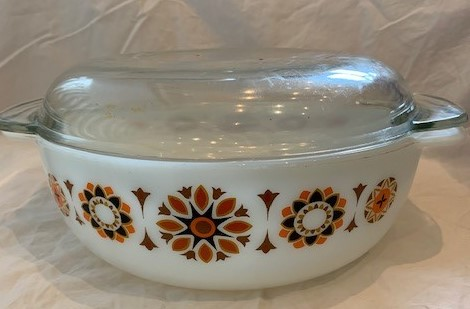
The decorated pieces were not transparent. They were opaque white glass with a design applied to the outside in coloured enamel and fired on – which is why the colours are solid, slightly raised to the fingertip, and sit on the surface.
Printed or decal-decorated bakeware in far smaller quantities, with most current ovenware sold plain and clear. The opaque white body was what made a bold printed design possible at all.
The two-part construction explains both the appeal and the fragility. A fired enamel print on white glass gives a flat graphic surface like a poster, which is why the designs are so striking – and it also means the decoration is a coating, and anything that abrades a coating takes the pattern with it.
3. Everybody Had the Nesting Bowl Set
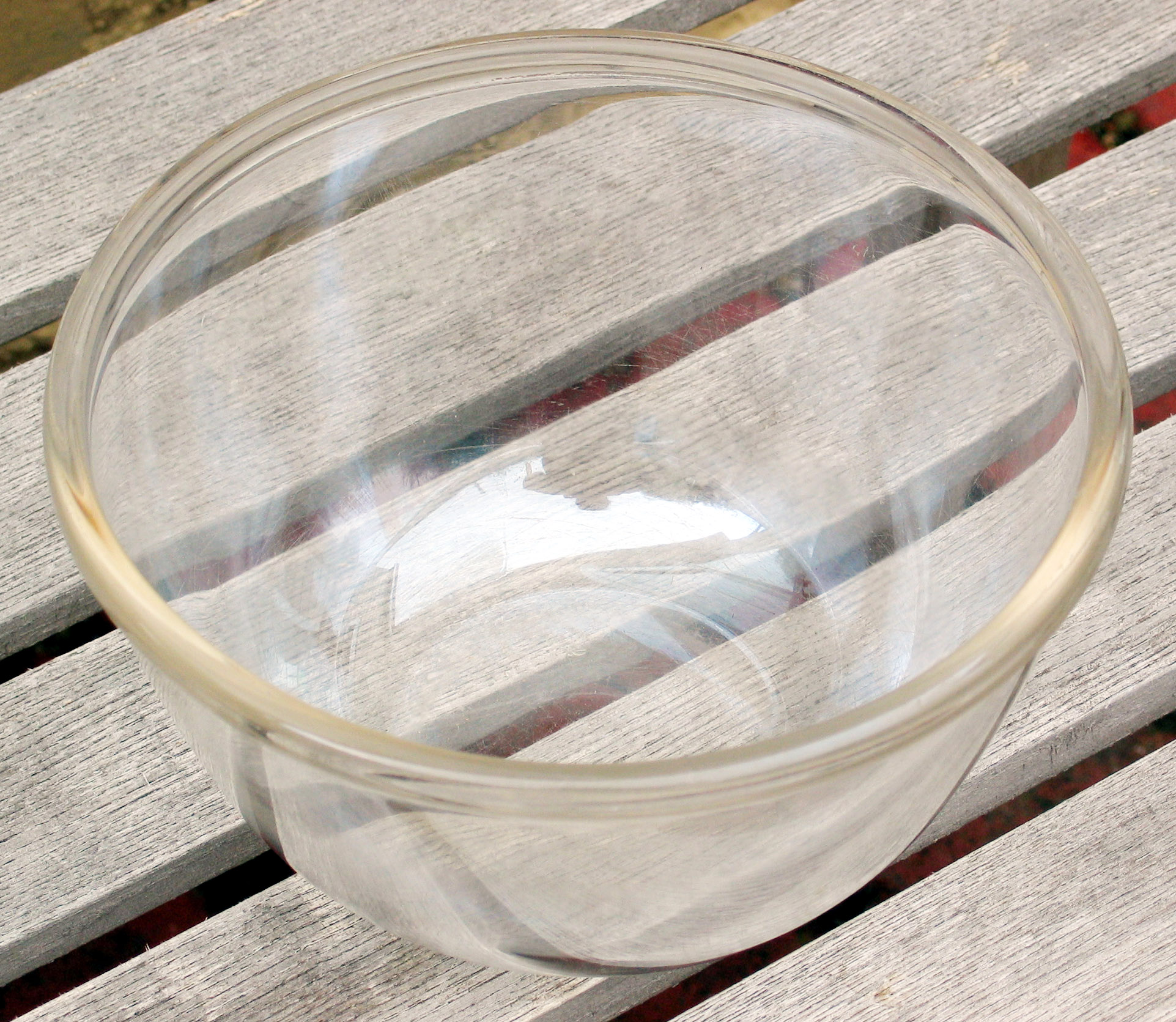
The four-bowl graduated set – a large mixing bowl down to a small one, each nesting inside the next, each a different solid colour or carrying the same pattern at a different scale – was the standard wedding gift of the era.
Mixing bowls in stainless steel, plastic or plain glass, generally bought singly rather than as a graduated decorative set.
The nesting is the reason so many survive as partial sets, and it is also why the missing sizes are the expensive ones. The largest bowl got the heaviest use and broke; the smallest got lost; the two middle sizes sat in a cupboard – so a complete set in good condition is scarce in a way the production numbers do not suggest.
4. There Were Dishes Designed to Go Straight Into the Refrigerator
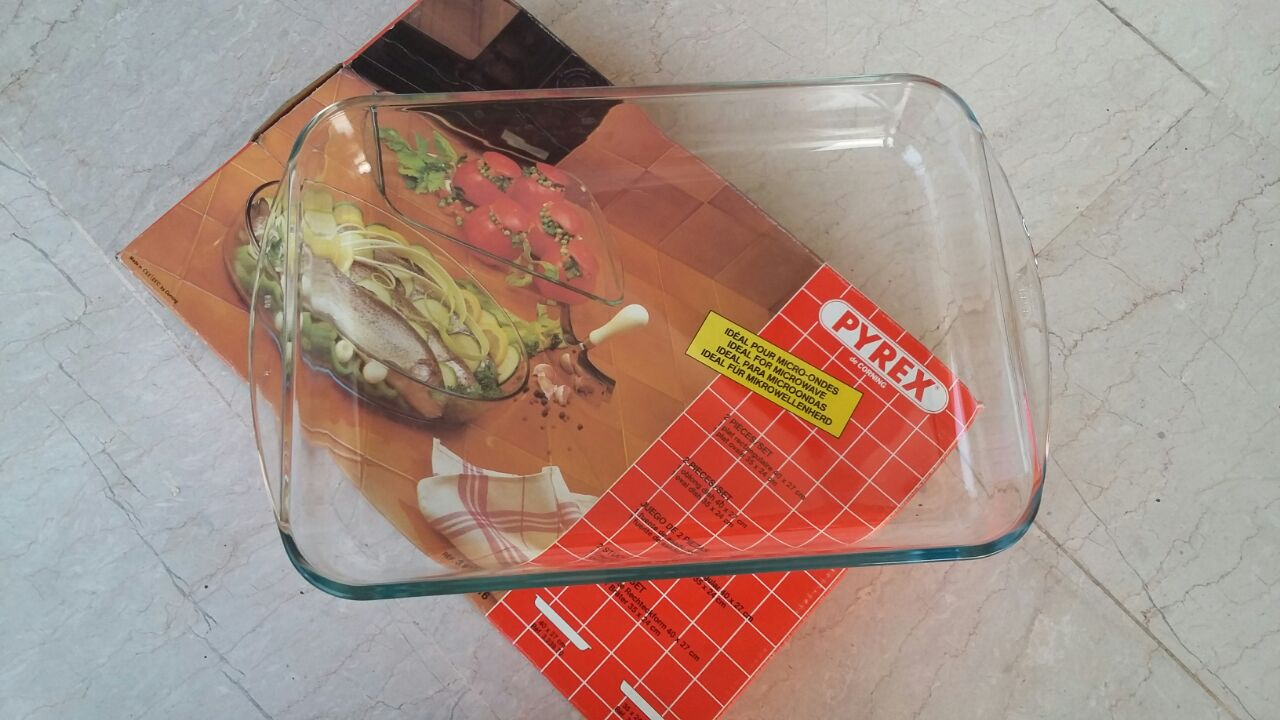
Rectangular and square dishes with fitted glass or plastic lids were sold specifically for storing food cold, in graduated sizes, and were in every household.
Plastic containers with sealing lids, which are lighter, cheaper, stackable and will not shatter. The glass refrigerator dish lost on every practical count except one.
The lids are what finished them, and the lids are also why the surviving pieces command what they do. A glass dish with its original matching lid intact is uncommon, because the lid was the part that got put down on a counter, knocked off and swept up – and a lidless dish is worth a fraction of a complete one.
5. The Divided Casserole Came With a Metal Cradle
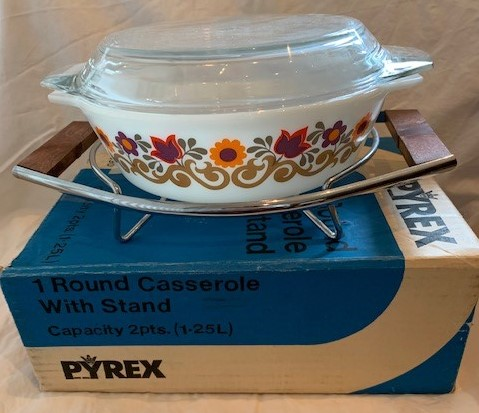
A long dish divided down the middle, for serving two vegetables at once, frequently sold with a chromed or brass-finish wire stand that it sat in on the table, sometimes with a candle warmer underneath.
Essentially nothing. The divided dish in a serving cradle belongs to a specific way of eating – a dish brought to the table and kept warm there – that household meals have largely abandoned.
It is a good index of how formal an ordinary weekday dinner was. A household that owns a cradle for its vegetable dish is a household that puts food on a table and serves it from there, rather than plating in the kitchen – which is a distinction that quietly separates these kitchens from modern ones.
6. The Measuring Cup Had Red Markings and Everybody Still Has One
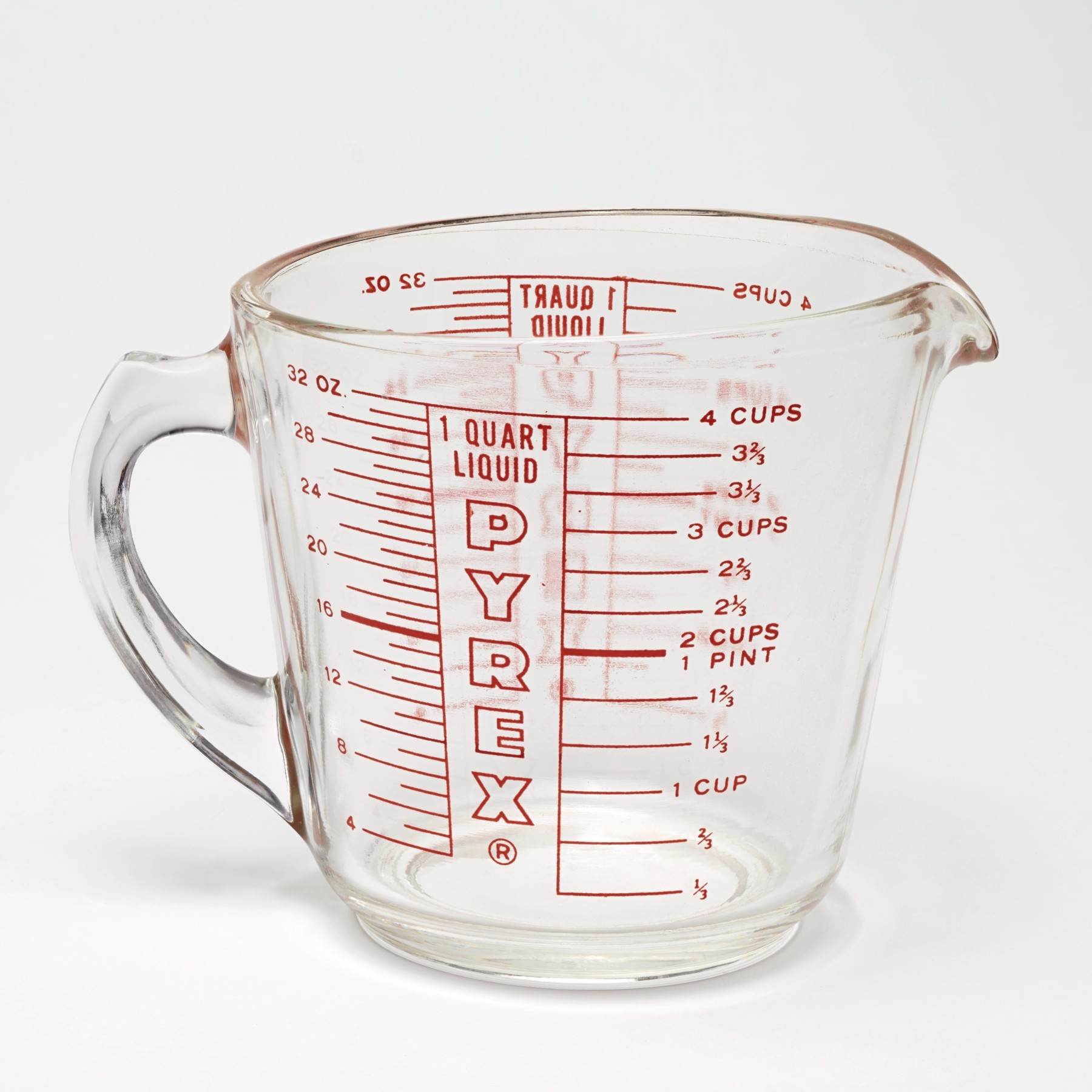
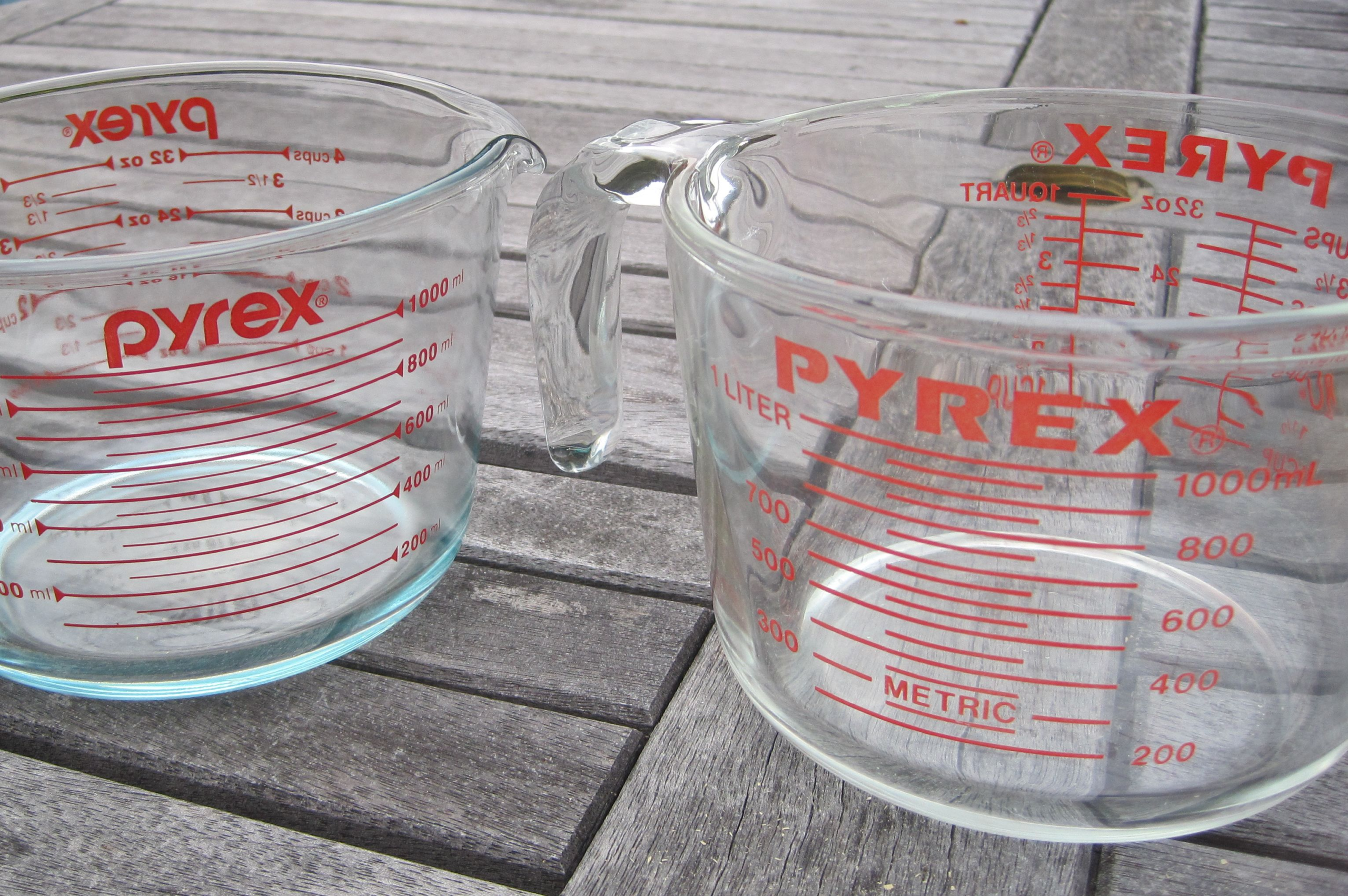
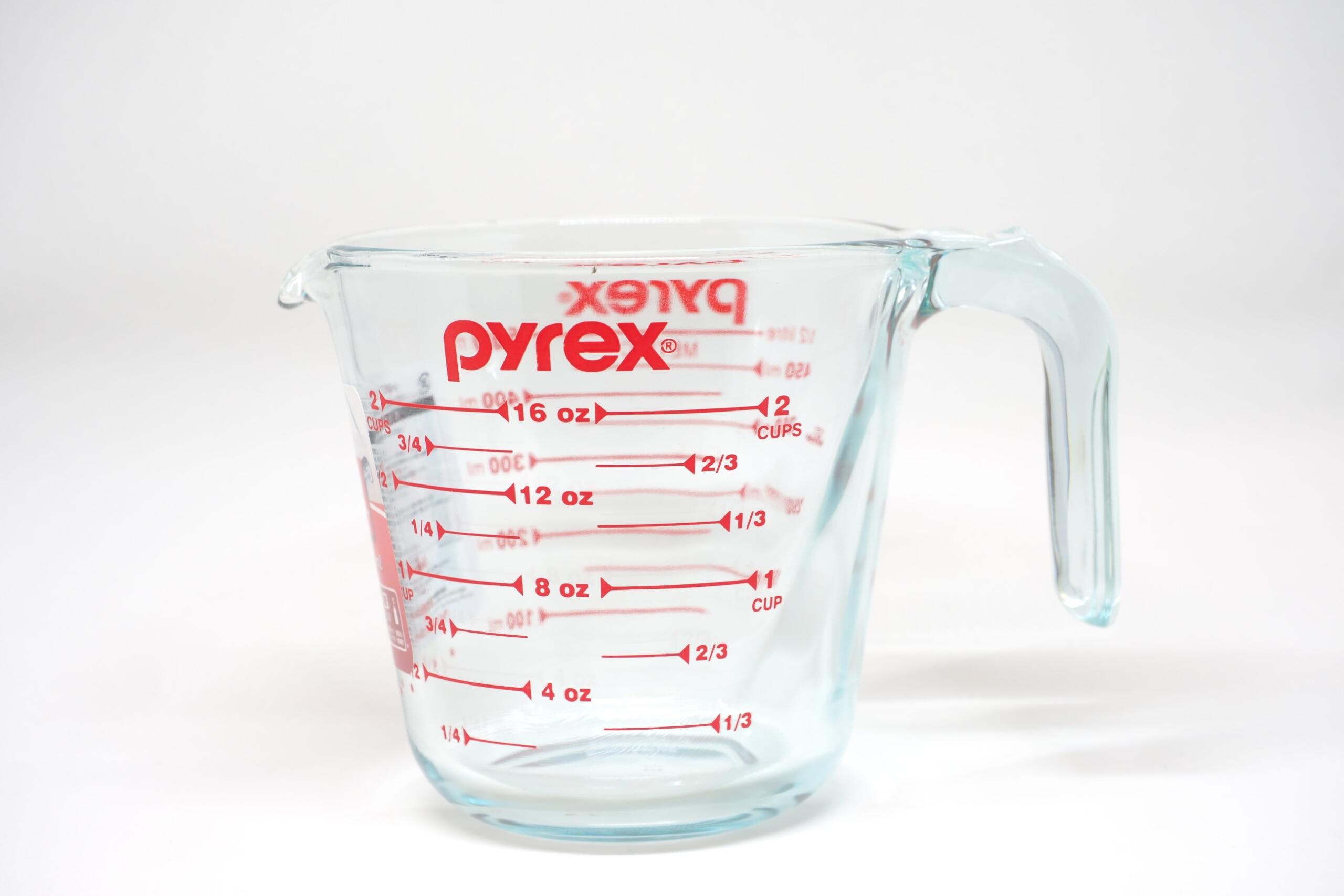
A clear glass measuring cup with a spout, a handle and red printed graduations was in every American kitchen, in one or two sizes, and was used for everything.
Exactly the same object, still made, still sold in quantity, and the single most durable survivor of the whole category.
It survived because it has no competition. Plastic measures scratch, stain and warp; metal ones cannot be read while filling. A clear glass cup you can see the liquid in, with a handle, that goes in a dishwasher and a microwave, has not been improved on in seventy years – which is why the one in your kitchen may well be older than you are.
7. The Pie Plate Was the One Piece That Was Actually Better
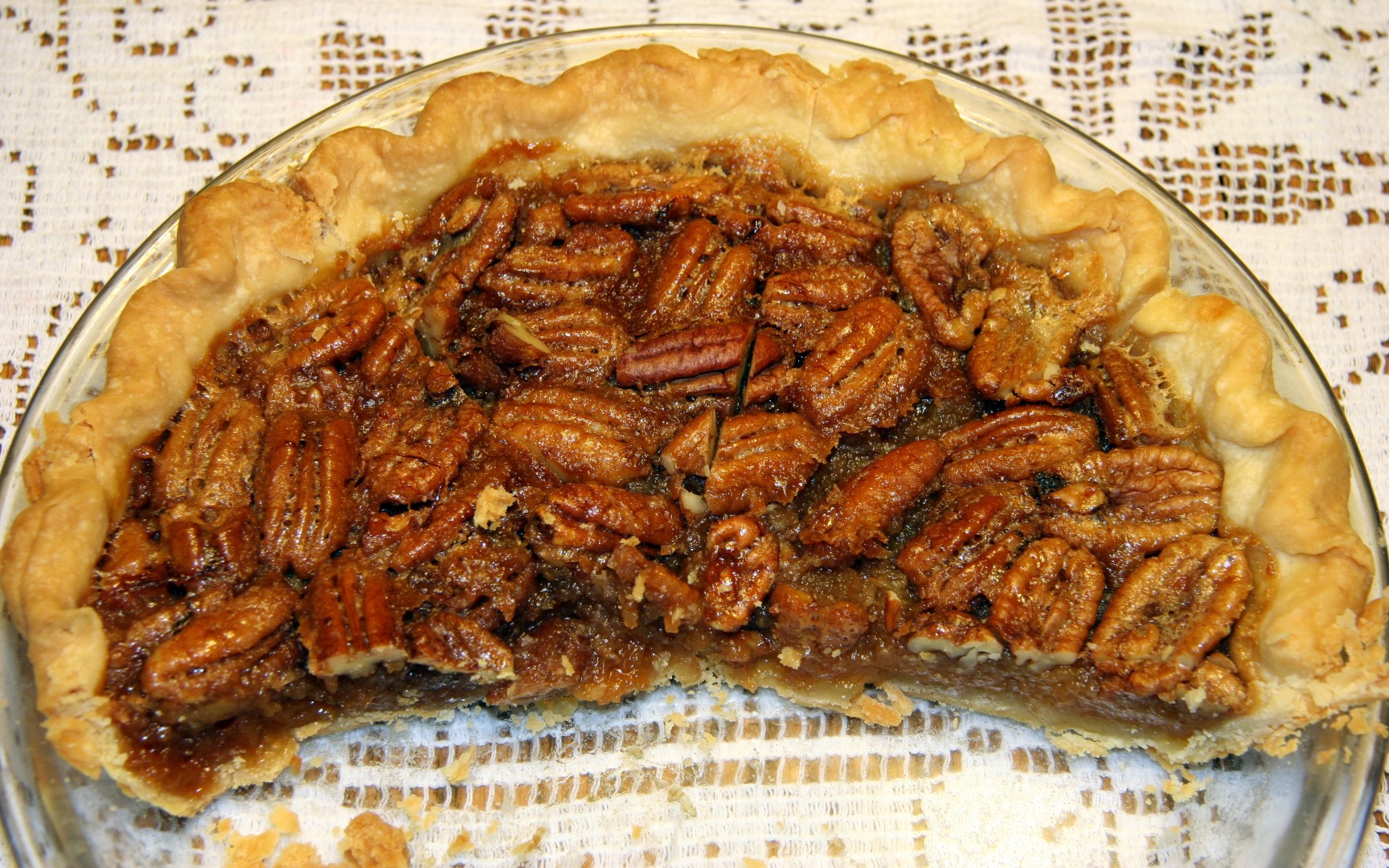
The glass pie plate – clear, fluted rim, nine inches – was not simply an alternative to a metal tin. It was functionally superior for the specific job of baking a pastry case.
The same object, still the recommendation. Glass transmits radiant heat and lets the baker see the crust’s colour from underneath, which metal does not.
That visibility is the whole argument and it is why the piece never went out of use. A pastry base browns from below, invisibly, in a metal tin – so you find out whether it worked when you cut it. In glass you can simply look, which is the kind of advantage that keeps a product in production for a century.
8. It Came as a Boxed Gift Set and That Is Why There Is So Much of It
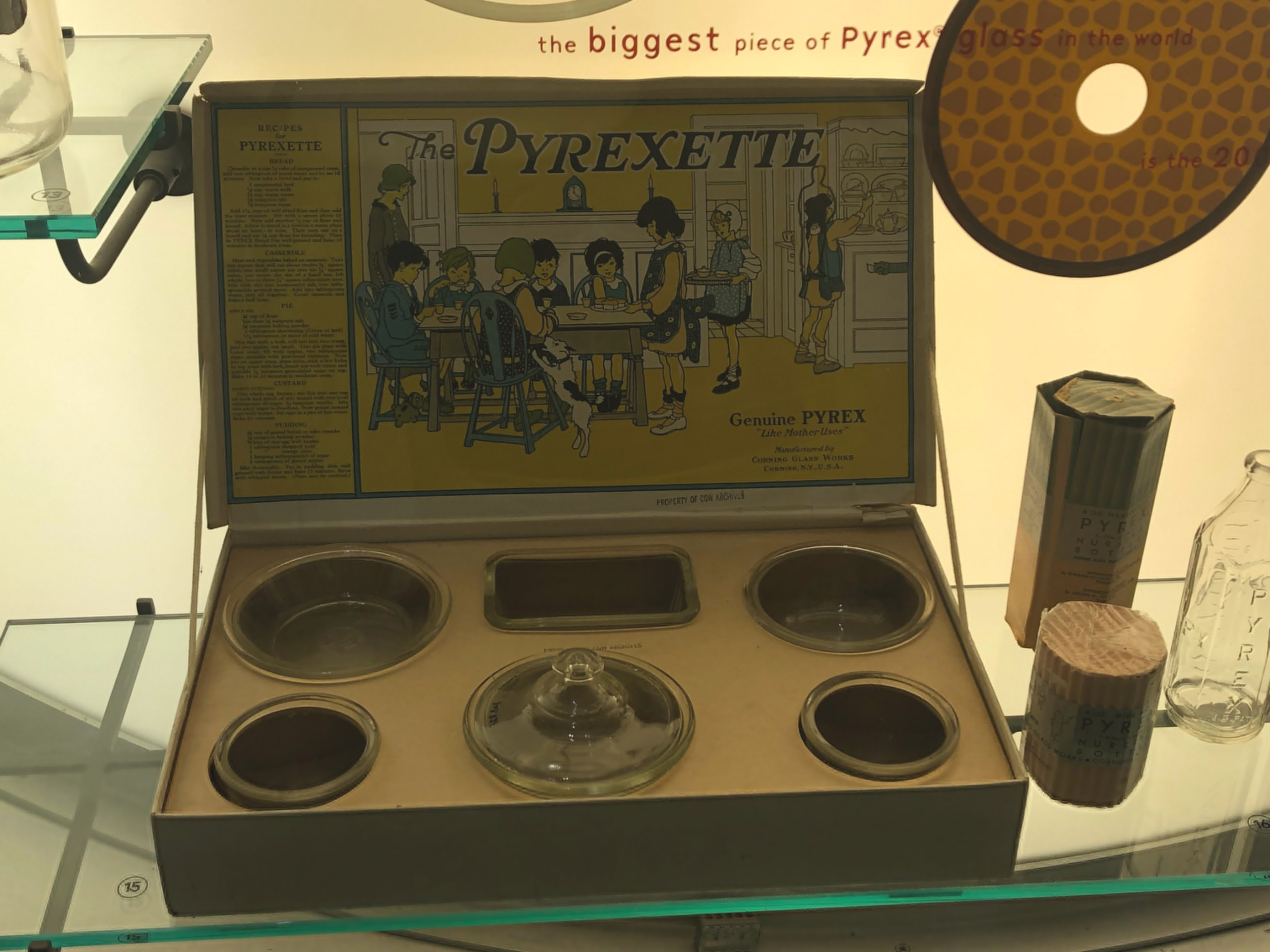
Sets were packaged and marketed as wedding, shower and Christmas gifts – three bowls in a box, a casserole with a cradle, a set of refrigerator dishes – in coordinated patterns released seasonally.
Registry purchasing across a much wider range of goods, with a single manufacturer’s coordinated set no longer the default present for a new household.
The gift channel is why the volumes were enormous and why patterns matter so much to collectors. A design released for one or two years and given away in quantity at weddings produces a cohort of near-identical sets scattered across a generation of households, and the scarce patterns are the ones that sold badly.
9. The Dishwasher Faded the Pattern and Nobody Was Warned
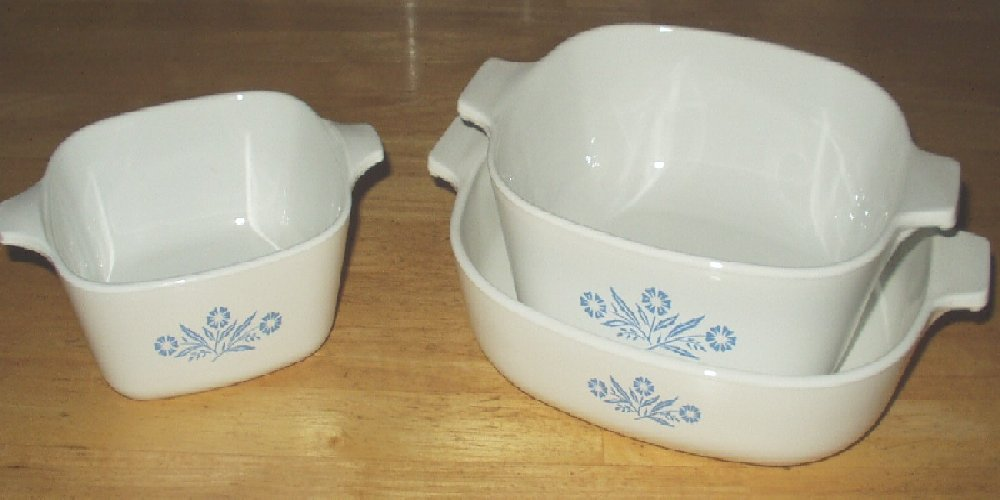
Fired-on enamel decoration is durable against ordinary washing and is not durable against sustained exposure to hot alkaline detergent and high-pressure water over hundreds of cycles.
The same vulnerability, now widely known among collectors, with the standard advice being to hand-wash decorated pieces and keep them out of a dishwasher entirely.
Which produces the familiar pattern of survival. The pieces with crisp bright decoration are overwhelmingly the ones that were used rarely and washed by hand, or kept in a cupboard – and the beloved everyday casserole that went through the machine twice a week for twenty years has a ghost of a design on it and is worth very little.
10. Pieces Did Shatter, and the Material Change Is Why

Glass ovenware fails by thermal shock: if one part of a piece changes temperature much faster than another, the resulting differential expansion creates stress that the glass releases by breaking, sometimes energetically.
A documented and widely discussed issue with modern tempered soda-lime bakeware, which is more resistant to being dropped and considerably less tolerant of temperature change than borosilicate – and the reason the material substitution is argued about.
This piece gives no guidance on using any particular dish, old or new, and that is deliberate: the safe handling of glass bakeware depends on the piece, its condition and the specific manoeuvre, and partial advice would be worse than none. Anybody with a question about a dish they own should follow the current manufacturer’s instructions for it.
11. The Patterns Had Names and Some Were Promotional Only
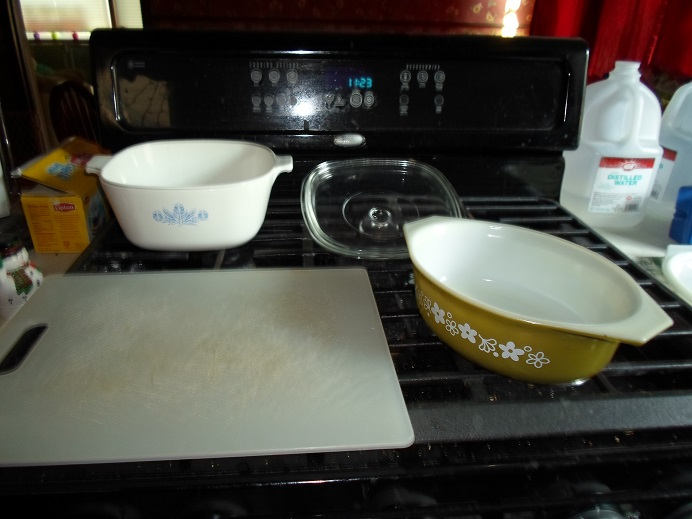
Designs were named, catalogued and released on a schedule, with some sold nationally for years and others produced briefly, issued regionally, or made as a promotional item attached to another purchase.
Nothing comparable. The named-pattern release cycle created a catalogue that collectors now use, and the short-run and promotional designs are the ones that command serious money.
Which means value here has very little to do with quality or usefulness. Two identical casseroles differing only in printed design can be separated by a factor of fifty in price, entirely because one pattern was made for eighteen months in one region and the other was made for a decade everywhere.
12. Every Household Has Grandmother’s and Knows Which Piece It Is
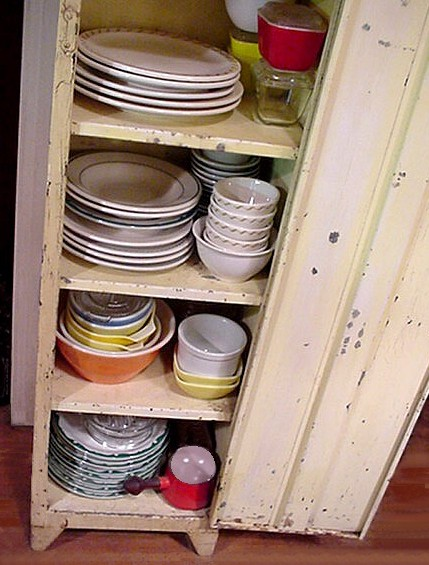
Because these were gifts, because they were durable, and because they were used for the dishes that got made at holidays, specific pieces became associated with specific people and specific meals.
The same thing happens with far less. Modern kitchenware is cheaper, replaced more often and rarely outlives its buyer, so it does not accumulate that association.
And it is why the collector market is as emotional as it is. A great many people are not buying a pattern; they are buying the exact dish their grandmother made something in, having lost or never inherited the original – which is a demand that production numbers and condition grading cannot explain.
13. The Lids Are Worth More Than the Dishes
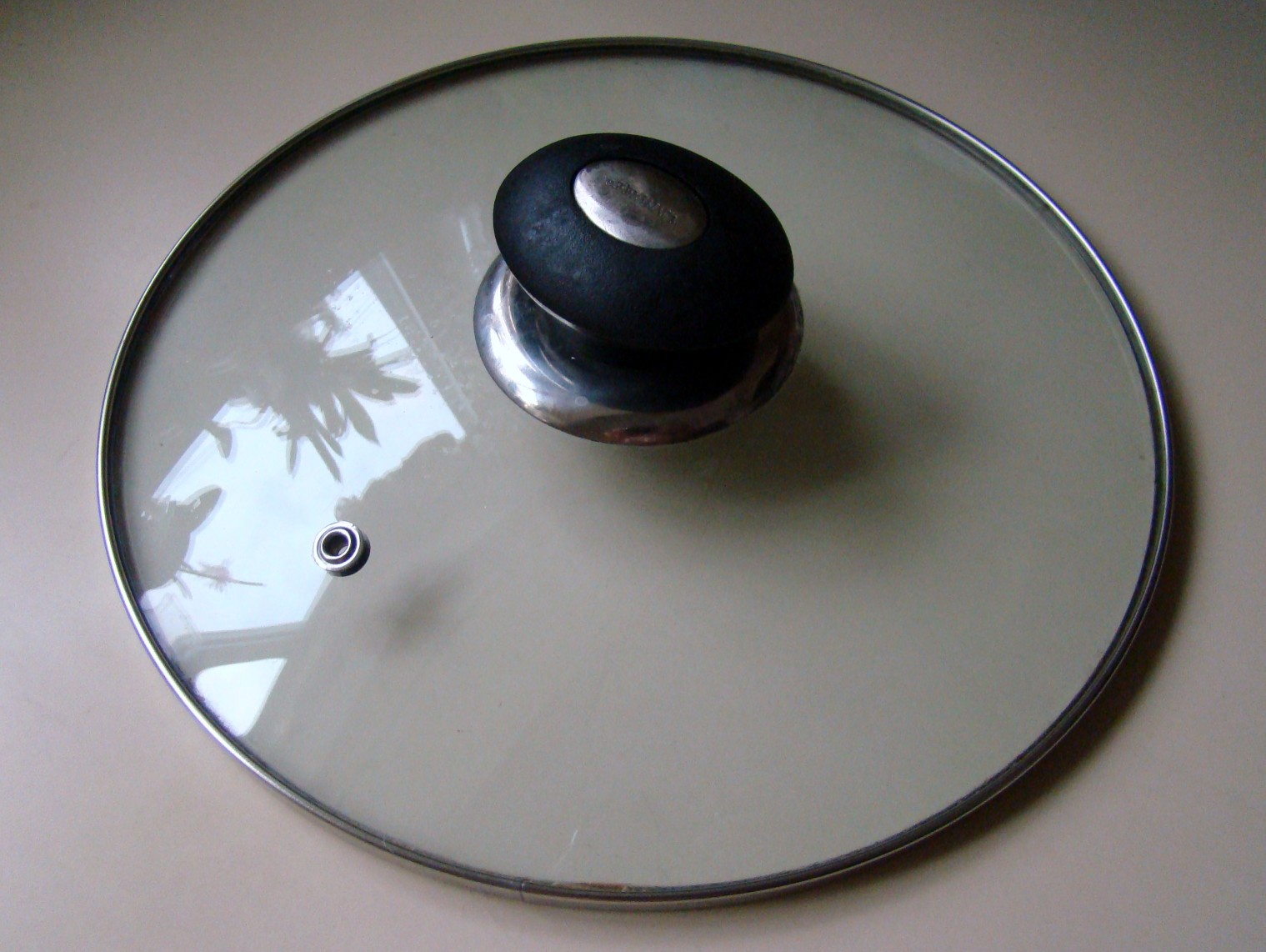
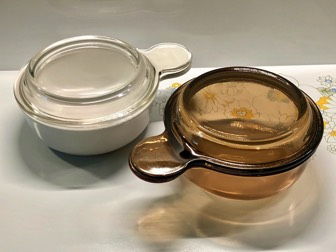
Across the whole category, the original fitted lid is the scarce component – glass lids chipped and broke, plastic lids cracked, warped, discoloured and were thrown out, and neither was ever treated as valuable.
The same market logic as any other object sold as a set. A lidded piece complete and undamaged can be worth several times the same piece without its lid.
The disproportion is genuinely striking. A common pattern’s casserole is a modest object; the same casserole with an intact matching lid is a different transaction – and the lids survived only where somebody stopped using the dish, which is the same accidental-preservation mechanism that governs every collectable.
14. Then It Became a Market and the Prices Stopped Making Sense
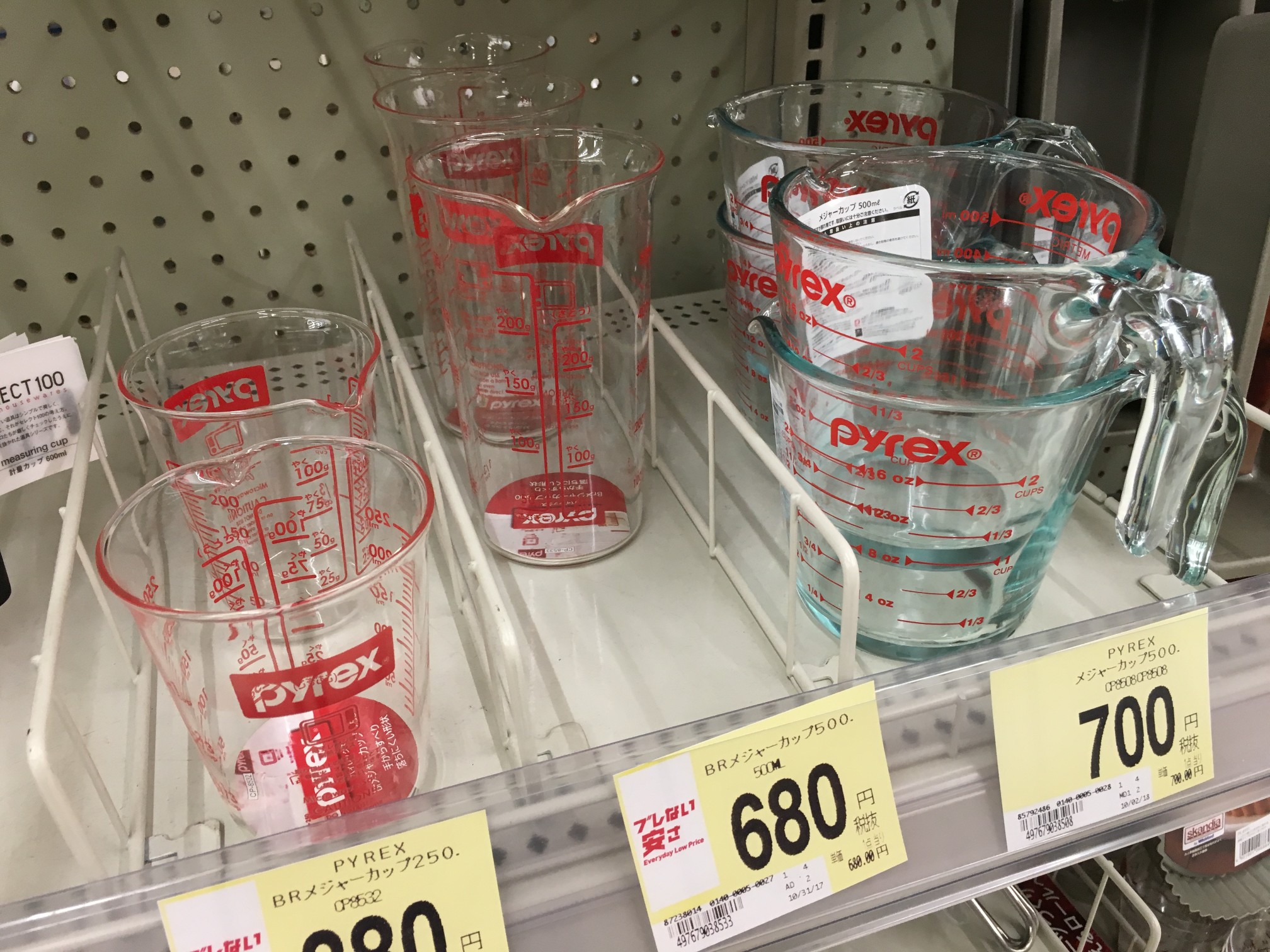
The whole category was ordinary equipment: gift-set kitchenware, produced in enormous quantity, used daily, chipped, faded, broken and replaced without ceremony.
An established collector market with pattern guides, dedicated groups, condition grading, auction records and prices for rare patterns in good condition reaching several hundred dollars and occasionally very much more.
And the pricing has the usual inversion in it. The pieces worth the most are the ones that were used least – unfaded, unchipped, complete with lids, in patterns that sold poorly. Which means the market systematically rewards the household that received a wedding gift, decided it was too good to use, and put it in a cupboard for forty years.
15. The Patterns Are the Reason and the Glass Is the Explanation
All of it rested on a material that tolerated oven heat, a white glass body that took a bold printed design, a gift-giving culture that moved it in enormous volume, and a durability that got it into the hands of grandchildren.
A collector market built almost entirely on the printed designs, a changed material in the current American product, and a generation buying back the specific dishes their families cooked in.
The two halves of that explain each other and are usually discussed separately. People collect these for the patterns – the graphics are genuinely good, they are legible across a room, and they date a kitchen instantly. But the only reason there are fifty-year-old pieces in sound condition to collect is the glass underneath the pattern, which was formulated to be put in an oven and taken out again indefinitely and which the American consumer line no longer uses. The decoration is what the market is buying. The chemistry is what made there be anything left to buy.
The Decoration Is the Market and the Chemistry Is the Reason
There are two separate stories here and they are almost always told apart. Together they explain the whole thing.
The first is the decoration, and it is the entire basis of the market. These designs are genuinely good – bold, flat, graphic, legible from across a room, and so precisely of their moment that a single bowl dates a kitchen to within a few years. They were named, catalogued, released on a schedule, and some were produced briefly or regionally or as a promotion attached to another purchase. That release pattern created a catalogue, the catalogue created scarcity, and the scarcity created prices that have nothing to do with how good a dish is at holding a casserole. Two identical pieces differing only in print can be fifty times apart in value.
The second story is the glass, and it is the one collectors mostly do not know.
American consumer glass ovenware of this period was borosilicate – boron oxide in the mix, giving a very low coefficient of thermal expansion. The material barely changes size when its temperature changes, which is precisely what you want in something that goes from a refrigerator into an oven. In the 1980s the American consumer line moved to tempered soda-lime glass, strengthened by rapid surface cooling, which is tougher if you drop it and expands considerably more when heated. That substitution is argued about, and this piece offers no advice about using any dish, because safe handling depends on the specific piece and its condition and partial guidance would be worse than silence.
What matters here is the consequence for the market.
The reason there are sound fifty-year-old pieces to collect at all is the glass underneath the pattern. It was formulated to be heated and cooled indefinitely, and it did that, in daily use, for decades, in millions of households – which is why a cohort of these objects outlived the people who were given them.
So the market is buying the decoration and it exists because of the chemistry.
And there is a final inversion stacked on top, which is the familiar one. Fired-on enamel is not durable against hundreds of dishwasher cycles. So the pieces with crisp bright patterns are the ones that were barely used, and the beloved everyday casserole that fed a family twice a week for twenty years has a ghost of a design on it and is worth almost nothing.
The market rewards the household that unwrapped a wedding present, decided it was too good to use, and shut it in a cupboard for forty years.
If you grew up with these, there is one specific piece you can picture, and you know what was in it.
And it either survived, or it did not, and you know which.
Like our content? Follow us for more.